Irresistible Evening Fragrance Companion Planting: 12 Dusk-Scented Pairings
Picture this: the sun dips, the air cools, and your garden flips a switch from pretty to intoxicating. That’s the magic of dusk-scented combos that work harder when you finally have time to enjoy them. We’re talking layered aroma, pollinator action, and low-stress beauty. Ready to build a night garden that smells like a secret?
1. Moonflower + Night-Blooming Jasmine: The Drama Queens Of Twilight
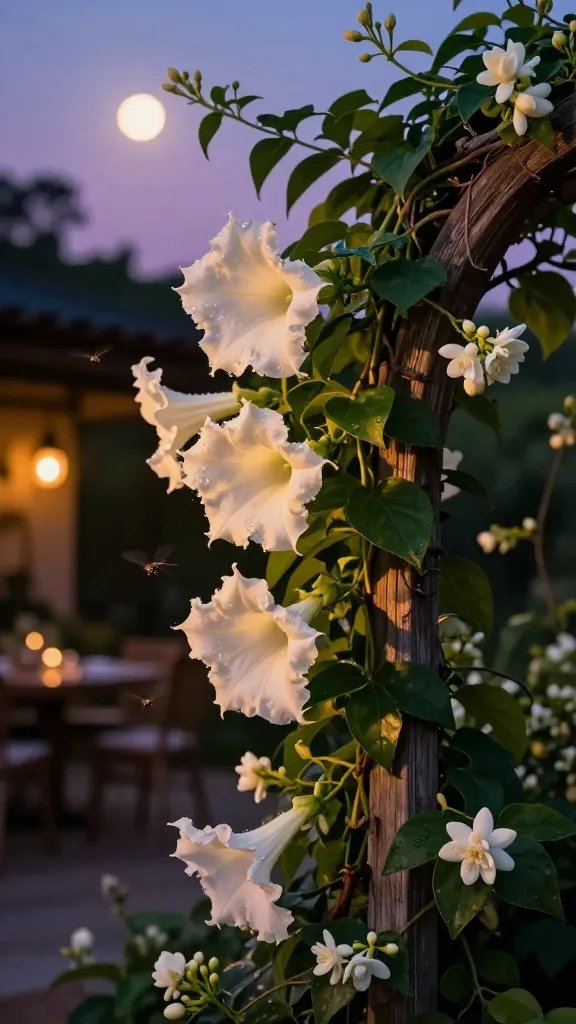
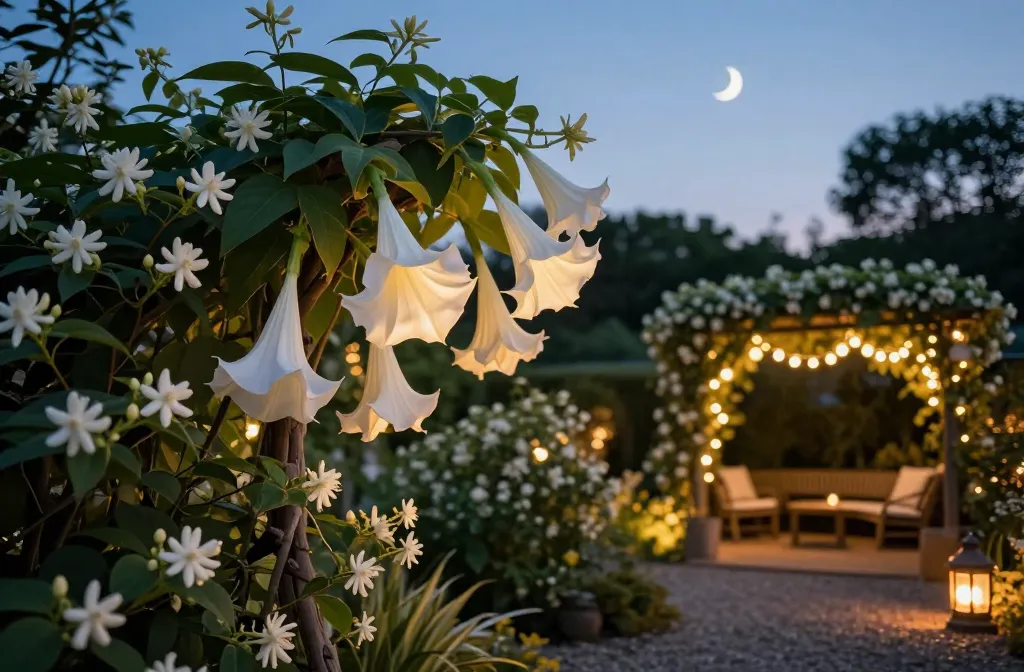
You want a garden that says “wow” after 7 p.m.? Pair twining moonflower with night-blooming jasmine and get white, luminous blooms plus a heady perfume that drifts like a love song. This duo ramps up scent as the sky darkens and creates a romantic focal point with almost zero effort.
Why It Works
- Moonflower (Ipomoea alba) opens giant white trumpets at dusk, reflecting moonlight for a glow effect.
- Night-blooming jasmine (Cestrum nocturnum) releases powerful fragrance after sunset, drawing moths.
- They climb and bush, so you get vertical and mid-level scent layers.
Tips
- Give them a trellis, arch, or fence; plant jasmine as the anchor and moonflower to weave through.
- Full sun for growth, a touch of afternoon shade in hot zones. Keep soil evenly moist.
- Use containers if you garden on a balcony—just pick a 15–20 inch pot and a slim obelisk.
Result: a fragrant gateway near seating or entry paths. FYI, this combo sets the mood for evening hangouts instantly.
2. Hummingbird Trumpets + Sweet Alyssum: Sweet Edges, Happy Pollinators
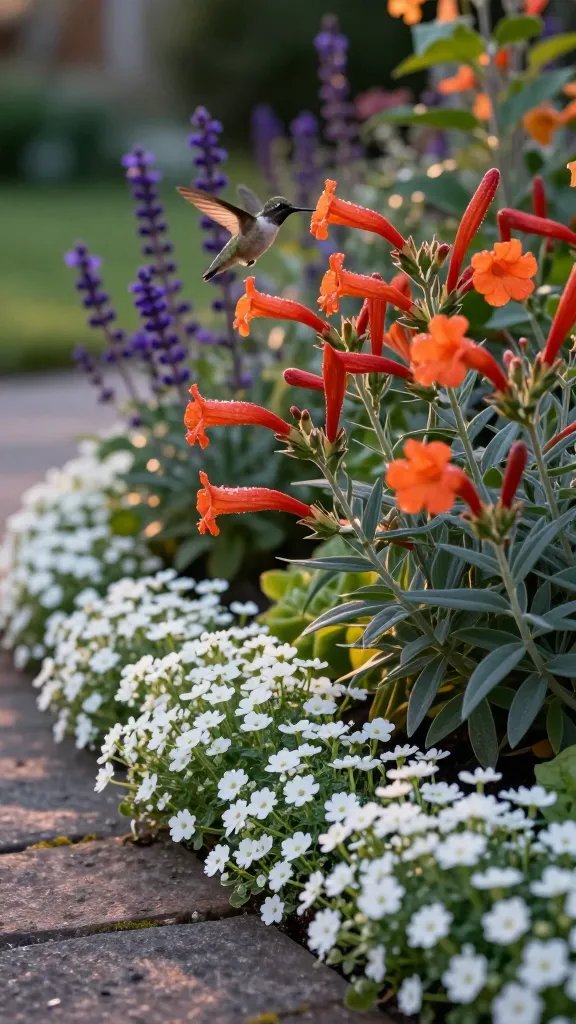
Want a low, sweet skirt of scent around taller stars? Combine a nectar machine with a honey-soft groundcover. The mix smells like a bakery at dusk and invites the last winged visitors of the day to swing by for dessert.
Winning Pair
- Hummingbird trumpet (Zauschneria/Epilobium canum) or Salvia ‘Amistad’ for vertical color and late nectar.
- Sweet alyssum (Lobularia maritima) for a low, continuous honey fragrance along edges.
How To Plant
- Border your taller plant with a 6–10 inch wide band of alyssum for a scented “frame.”
- Full sun to light shade; well-drained soil is non-negotiable.
- Deadhead alyssum lightly to keep blooms rolling; shear midseason if it sprawls.
Use this along paths, driveways, or patio perimeters. Benefit? You smell sweetness every time you walk by, and your evening garden buzzes with life. Seriously, it’s charming without trying.
3. Tuberose + Nicotiana Alata: White-Flower Power For Night Owls
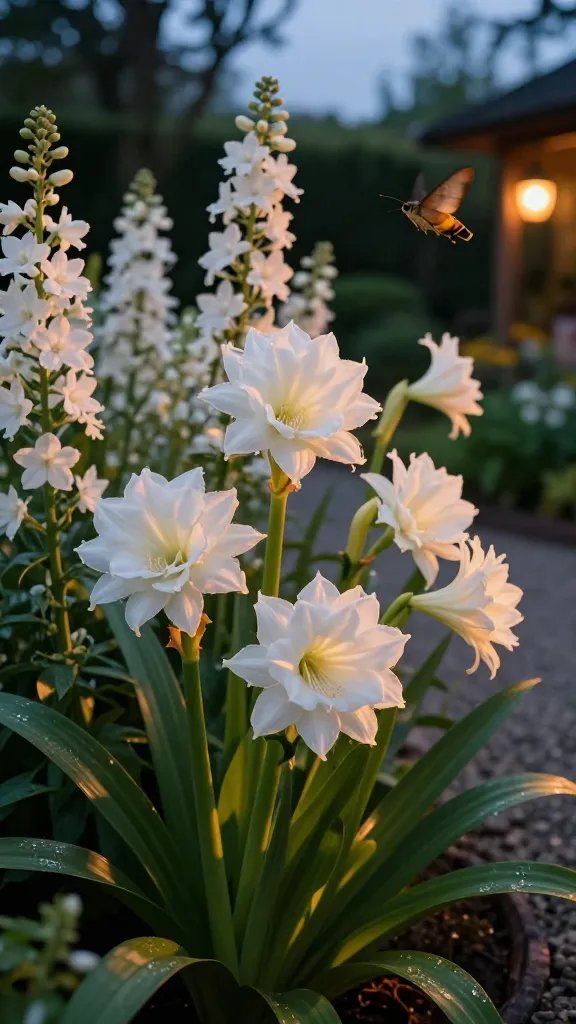
If you want that perfume-counter intensity—minus the headache—grow tuberose with flowering tobacco. They bring big fragrance energy, open later in the day, and layer into a complex scent that feels luxe, not fussy.
Key Notes
- Tuberose (Polianthes tuberosa): Spike flowers, rich creamy scent, peak perfume at night.
- Nicotiana alata or Nicotiana sylvestris: Starry white blooms, sweet evening aroma, attracts hawk moths.
Planting Setup
- Cluster in groups of 3–5 tuberose bulbs for impact; circle with nicotiana for a halo of scent.
- Full sun for tuberose; nicotiana tolerates light shade. Regular moisture, good drainage.
- Stake if windy—tall nicotiana can lean like a sleepy giant.
Place this combo near a patio or beneath a window you crack open at night. The payoff? A sophisticated scent cloud that says “evening garden, but make it couture.”
4. Lavender + Four O’Clocks: Mediterranean Calm Meets Sunset Surprise
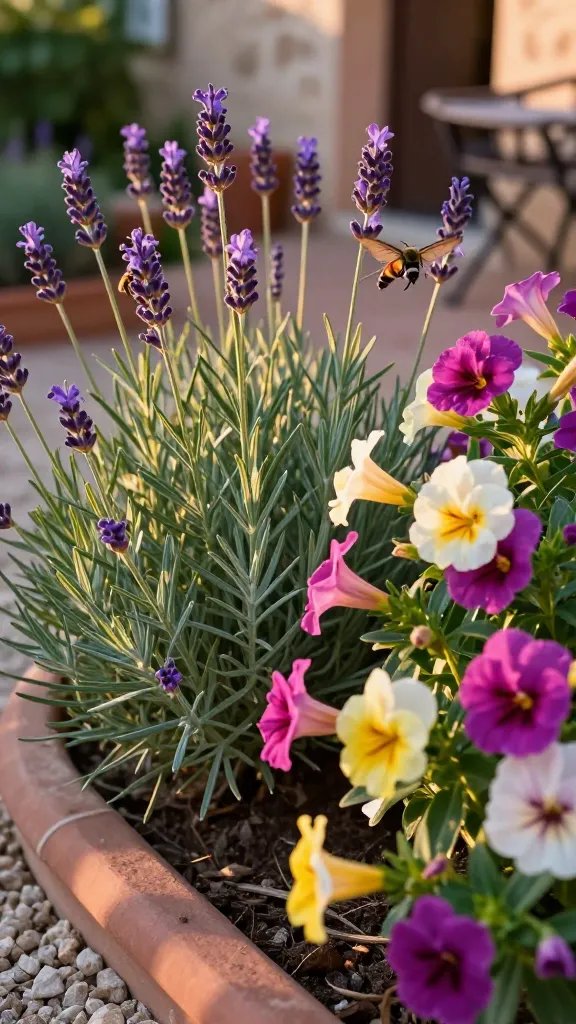
Prefer something easy-care that still puts on a nightly show? Try drought-tough lavender with quirky four o’clocks that literally punch in at late afternoon. You get herbal-cool notes plus a sweet candy vibe right when you settle outside.
What You’ll Love
- Lavender (Lavandula angustifolia or x intermedia): Calming, clean scent; evergreen structure; pollinator-friendly.
- Four o’clocks (Mirabilis jalapa): Trumpet blooms open late day; mixed colors; gentle evening sweetness.
Grower Tips
- Plant lavender as the backbone in a sunny, well-drained strip; add four o’clocks behind or between clumps.
- Lavender hates wet feet—use gravel mulch. Four o’clocks handle average soil and a bit of neglect.
- Deadhead lavender post-bloom to keep it tidy; allow some four o’clocks to reseed if you like surprises.
This pairing shines along warm, reflective surfaces like stone paths. Benefit: relaxed resort energy by day, soft sweetness by evening. IMO, it’s the easiest “I wake up gorgeous” combo out there.
5. Night Phlox + Evening Primrose: The Subtle Glow-Up You Didn’t Know You Needed
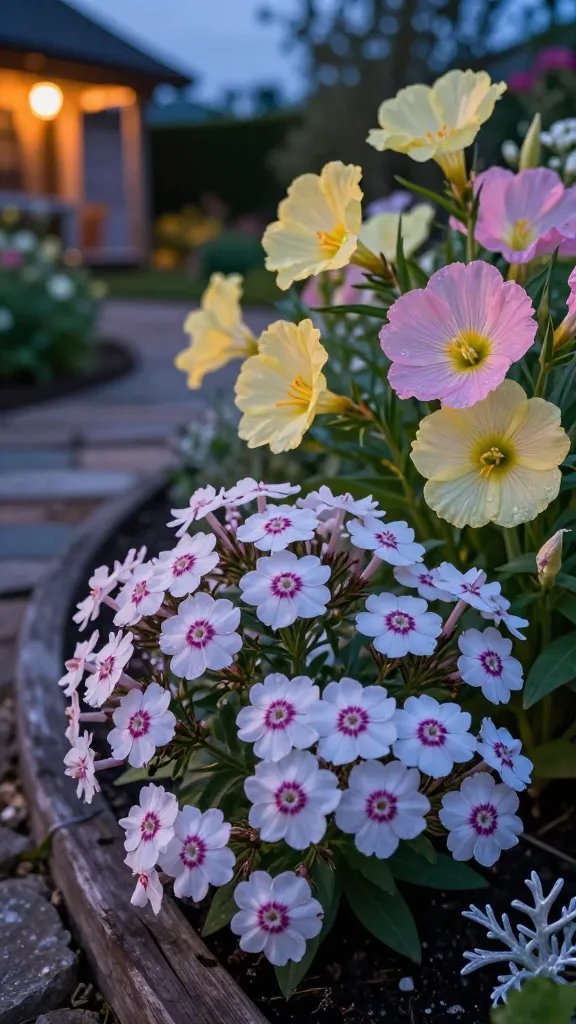
You want fragrance that sneaks up and makes you smile? Go with night phlox and evening primrose. They’re quietly luminous, they thrive with little fuss, and they turn the air into a gentle blanket of vanilla and lemony-floral notes after dusk.
The Duo
- Night phlox (Zaluzianskya capensis): Opens at dusk; smells like vanilla-marshmallow-cinnamon—yes, really.
- Evening primrose (Oenothera biennis or O. speciosa): Big butter-yellow or soft pink blooms unfold at twilight; lightly sweet scent.
Placement & Care
- Great for rock gardens, raised beds, or the front of borders where you can catch the perfume.
- Full sun for best show; well-drained soil; moderate water.
- Cut back spent stems on primrose; succession-sow night phlox for a longer season.
Use this near outdoor dining spots where subtle fragrance wins over heavy perfume. Benefit: a mellow, mood-lifting scent that keeps evenings cozy without stealing the spotlight. Trust me, it’s the sleeper hit.
Ready to turn your yard into a dusk-scented oasis? Mix one or two of these pairings near the places you actually sit at night, and let the fragrance do the flexing. A few well-placed plants, and your evenings will go from “nice” to “no, we’re never going back inside.”