Viral Guide 5 Container Combinations That Look Good and Grow Well Together — Companion Planting for Pots
I started mixing plants in one pot because I only had a tiny balcony and two spare containers. The first season, my basil sulked under a tomato jungle and my marigolds fried by July. Since then, I’ve learned exactly which plant partners share space, water, and light without fighting. You’ll learn five proven container combinations that look great and actually produce, with simple steps you can follow using basic pots, good potting mix, and regular watering.
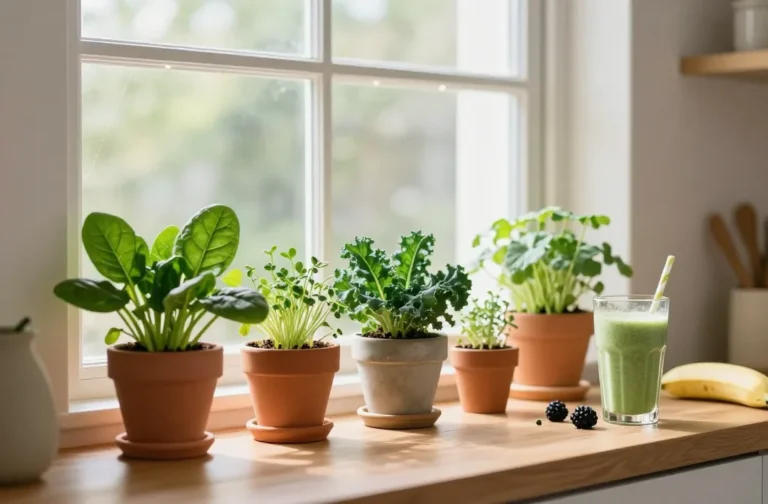
1. Salad Bowl: Cut-and-Come-Again Greens With Edible Flowers
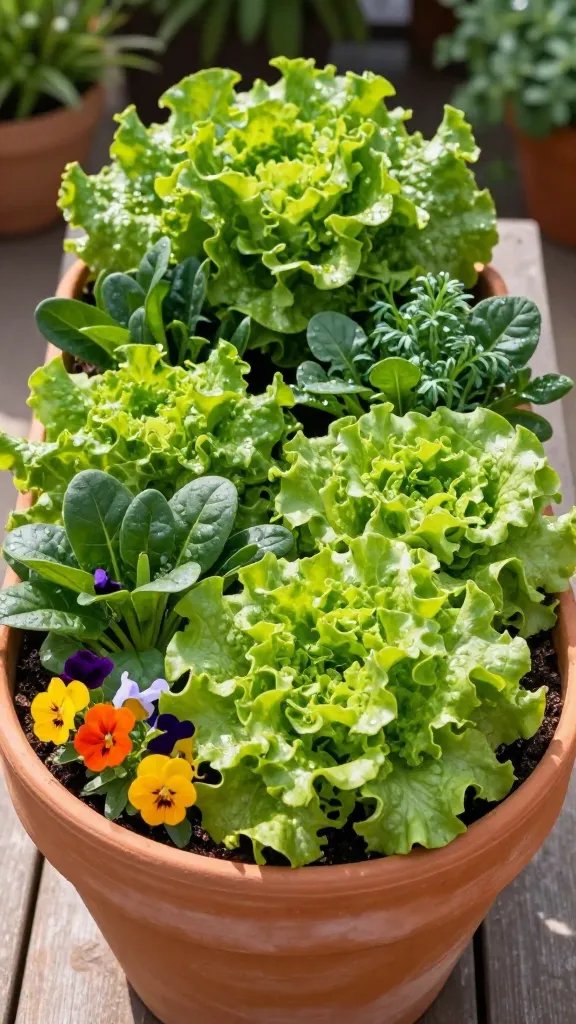
A single lettuce variety in a pot bolts fast and leaves gaps. Mixing textures and heights creates shade for tender leaves, fills soil surface to reduce weeds, and stretches the harvest for weeks. This combo delivers nonstop bowls of greens that look like a mini ornamental border.
What to Plant Together
- Leaf base: 3-4 starts of loose-leaf lettuce (like ‘Green Oak’) or butterhead in a 12–14 inch wide pot
- Fillers: 6–8 plugs of baby spinach or mizuna tucked between lettuces
- Edible flowers: 2 plugs of viola or calendula for color and gentle pest distraction
How to Set It Up
- Use a good quality potting mix, not garden soil. Fill to 2 cm below the rim.
- Space lettuces evenly around the pot’s edge, spinach in the gaps, flowers in opposite corners.
- Place in bright indirect light (east window, shaded patio) to slow bolting.
Care Routine That Works
- Water: Keep soil evenly moist; water when the top 2 cm feel dry. Morning watering keeps leaves crisp.
- Feed: Every 2 weeks, use a half-strength liquid fertilizer for edibles.
- Harvest: Snip outer leaves every 3–4 days. Pinch violas regularly to keep blooms coming.
Action today: Fill a medium bowl-shaped pot with mixed lettuces, tuck in violas, and place it where it gets gentle morning sun and afternoon shade.
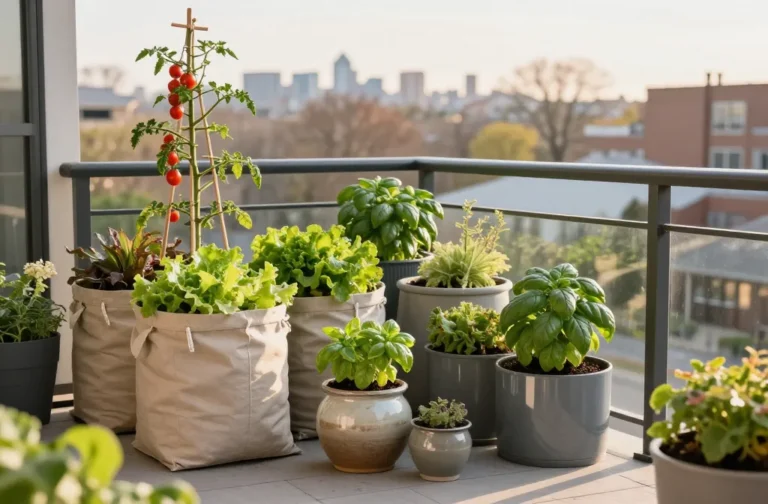
2. Mediterranean Trio: Tomato, Basil, and Marigold That Don’t Compete
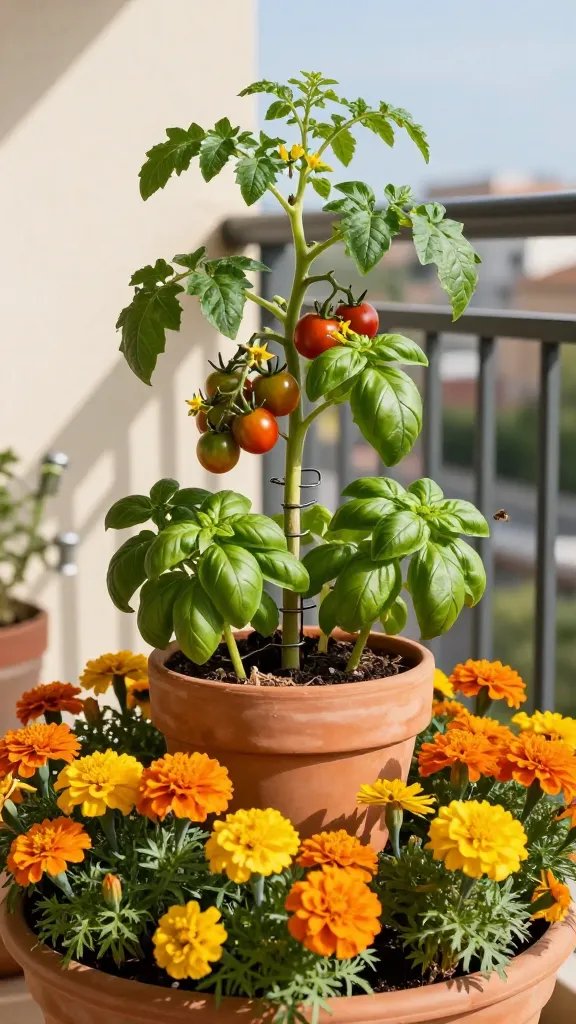
A lone tomato in a small pot becomes a thirsty, messy tower with bland fruit. Pairing it with the right companions improves pollinator visits, reduces hornworm pressure, and keeps soil covered so it doesn’t dry out fast. When you choose the right tomato size and spacing, basil thrives instead of getting smothered.
Choose the Right Sizes
- Tomato: One determinate or dwarf cherry tomato (e.g., ‘Tiny Tim’ or ‘Patio Choice’) in a 14–16 inch pot with a simple stake or small cage
- Basil: 2–3 plants of Genovese or compact Greek basil around the rim
- Marigold: 2 dwarf French marigolds opposite each other for color and pest distraction
Placement and Planting
- Set the tomato slightly off-center with a stake in place at planting.
- Plant basil on the sunny side where it gets at least 6 hours of direct light.
- Marigolds fill remaining rim spaces to shade soil and attract beneficial insects.
Care and Yield Tips
- Light: Full sun outdoors or the sunniest spot you have — at least 6 hours.
- Water: Check daily in hot weather; water when the top 3–4 cm are dry. Deeply soak until water runs from the drainage holes.
- Feed: Mix slow-release tomato fertilizer into the potting mix at planting; top up with a monthly liquid feed when fruit sets.
- Prune: Remove tomato suckers below the first flower cluster to keep airflow and give basil space.
- Harvest: Pick basil tips twice a week to keep it bushy and prevent shade creep.
Takeaway: Pick a compact tomato and give basil the sunniest rim spots so all three plants share water and light without crowding.
3. Pollinator Pot: Lavender, Strawberry, and Thyme for Beauty and Berries
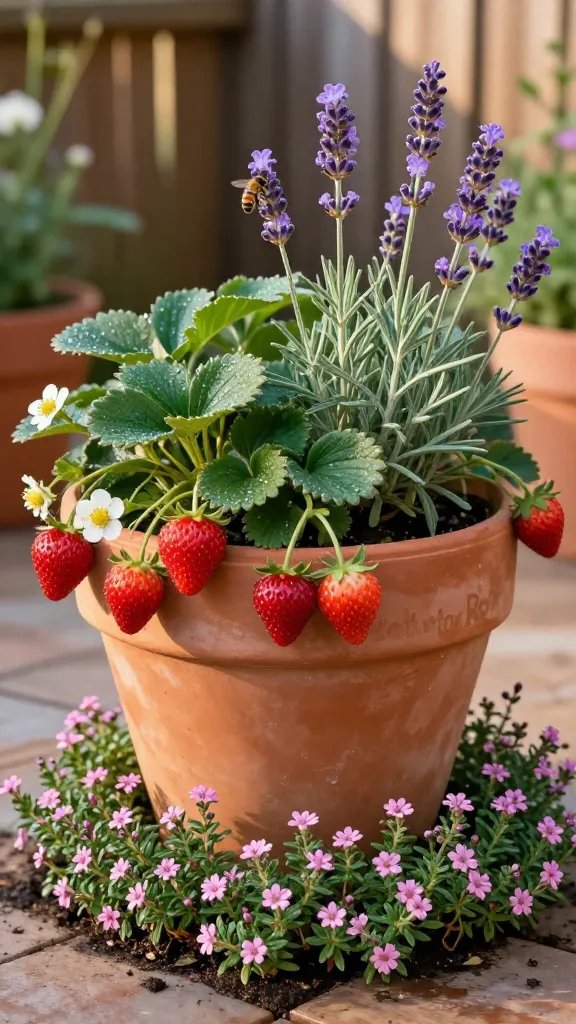
Strawberries in a pot often give a small first flush and then stall. Add nectar-rich lavender and ground-hugging thyme to pull in pollinators and keep soil warm and dry around crowns. The mix smells fantastic and produces sweet berries without a dedicated bed.
The Trio and Why It Works
- Strawberry: 3 everbearing plants (e.g., ‘Albion’ or ‘Seascape’) for fruit through summer
- Lavender: 1 compact English lavender (e.g., ‘Munstead’) as the vertical centerpiece
- Thyme: 2–3 plugs of creeping thyme to spill over the rim
Pot and Mix
- Use a 14–16 inch pot with excellent drainage.
- Blend standard potting mix with a few handfuls of coarse perlite or fine bark for extra drainage — lavender hates wet feet.
Care Routine
- Light: Full sun for at least 6 hours.
- Water: Water when the top 3 cm are dry; allow the lavender’s root zone to dry slightly between waterings.
- Feed: Use a balanced slow-release fertilizer at planting; no heavy feeding for lavender.
- Maintenance: Snip spent lavender blooms; remove strawberry runners you don’t want to root in the pot.
Action today: Plant strawberries around the edge, set lavender in the center, and tuck thyme near the rim to cascade and attract pollinators to your fruit.
4. Pest-Savvy Herbs: Dill, Nasturtium, and Chives That Protect Brassicas
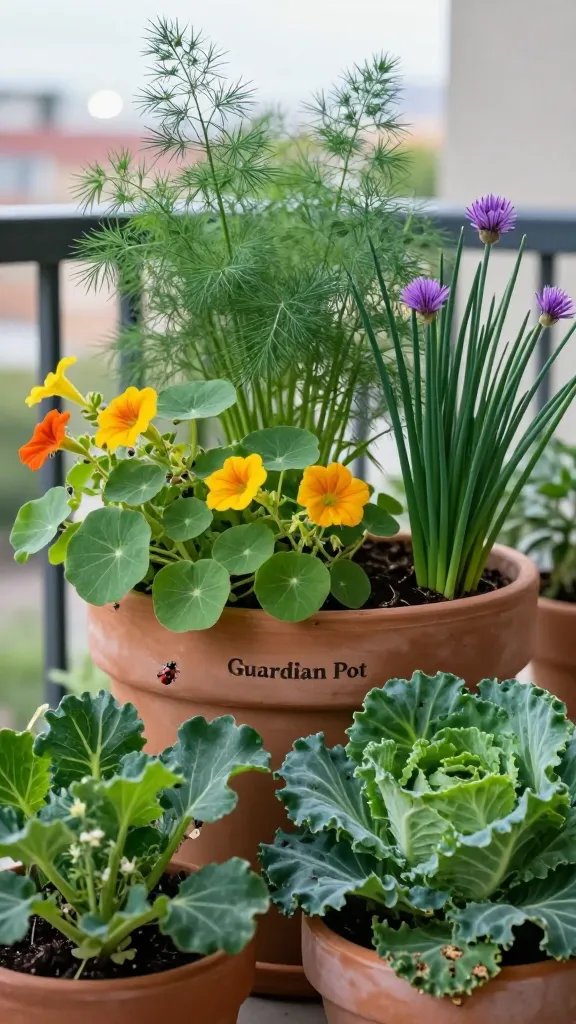
Growing kale or cabbage in a pot often ends with lace-like leaves from caterpillars and aphids. An herb-and-flower guard pot set next to your brassicas pulls pests away, provides predator habitat, and gives you herbs for the kitchen. This sacrificial, attractive planter reduces sprays and hand-picking.
Build the Guardian Pot
- Dill: 1–2 plants for height and beneficial insect nectar
- Nasturtium: 2–3 trailing plants to lure aphids away and spill over the edge
- Chives: 1 clump for onion scent and edible flowers
Placement and Use
- Place this 10–12 inch pot right beside your kale, broccoli, or cabbage container.
- Let aphids colonize nasturtiums; they become a buffet for ladybirds and lacewings drawn by dill blooms.
Care and Harvest
- Light: 5–6 hours of direct sun is ideal.
- Water: Moderate — water when the top 2–3 cm are dry.
- Harvest: Snip dill fronds weekly; cut chives 2–3 cm above the soil; pick nasturtium leaves and flowers for salads.
Takeaway: Set a dill–nasturtium–chives pot as a living decoy next to your brassica container to slash aphid and caterpillar damage.
5. Shade-Tolerant Beauty-and-Tea: Mint, Lemon Balm, and Violet
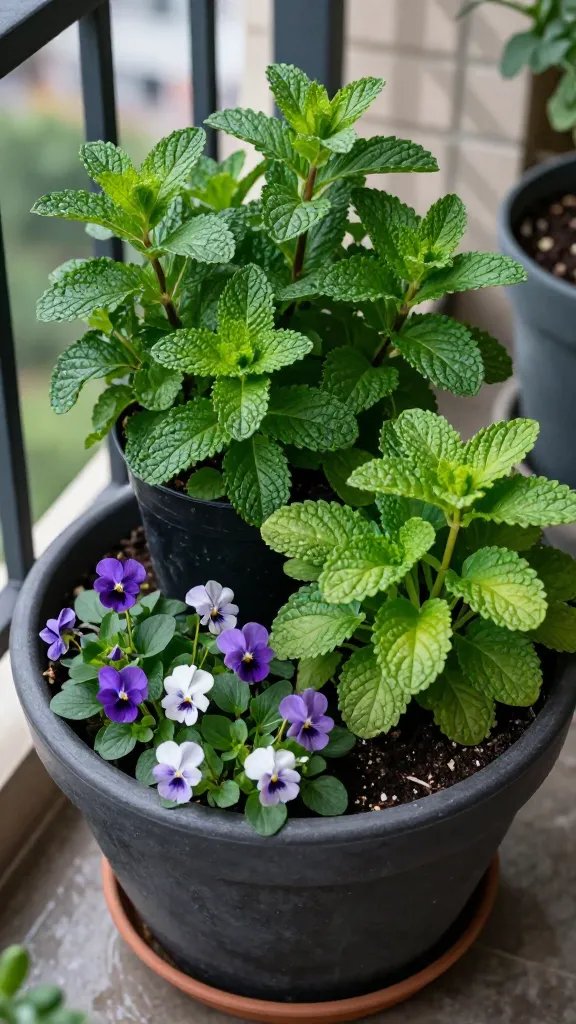
Shady balconies and north-facing stoops often look bare and unproductive. This aromatic trio thrives in lower light, fills a pot quickly, and gives you leaves for tea with edible violet flowers. The key is controlling mint’s spread and keeping growth lush, not leggy.
Right Plants, Right Pot
- Mint: 1 plant of peppermint or spearmint kept in its own nursery pot and then set inside the larger container to limit roots
- Lemon balm: 1 plant for citrus aroma and gentle mound
- Violets (Viola odorata or bedding violas): 3–4 plugs to bloom and edge the pot
- Container: 12–14 inch wide, with drainage
Light and Water
- Light: Bright indirect light or 2–4 hours of soft morning sun.
- Water: Keep evenly moist — water when the top 2 cm are dry. These plants flag quickly if they dry out hard.
- Feed: Monthly half-strength liquid feed during active growth.
Growth Control
- Leave mint in its plastic sleeve pot and bury it to the rim inside the main container to prevent takeover.
- Pinch lemon balm tips every week to keep it compact.
- Deadhead violets to keep flowers coming.
Action today: Corral mint in its own inner pot, tuck in lemon balm and violets, and slide the container where sun is gentle and indirect.
Frequently Asked Questions
How big should the pot be for companion planting?
Use at least a 12–14 inch wide pot for two to three small plants, and 14–16 inches for a dwarf tomato mix. Bigger pots hold more soil, which means steadier moisture and fewer problems. If you’re unsure, step up one size — crowded roots lead to weak growth and faster drying.
Can I use one potting mix for all these combinations?
Yes, start with a good quality potting mix from the garden centre. For lavender or other dry-loving plants, stir in a few handfuls of perlite or fine bark to improve drainage. Avoid garden soil in containers — it compacts and stays wet too long.
How often should I water mixed containers?
Check moisture with your finger daily in warm weather. Water when the top 2–4 cm are dry, then soak until you see water from the drainage holes. In heat waves, tomatoes and strawberries may need water every day; shade pots usually every 2–3 days.
Do I need fertilizer if I used slow-release granules?
Yes, but lightly. Slow-release granules at planting provide a baseline; add a half-strength liquid feed every 2–4 weeks for leafy mixes and monthly for fruiting combos once buds appear. Stop heavy feeding of lavender and thyme — they prefer leaner soil.
Will these combinations work indoors?
Yes if you have strong light. Place sun-loving mixes like the tomato trio in the brightest window you have, ideally south or west facing with at least 6 hours of direct sun. Shade-friendly mixes like mint–lemon balm–violet do well near bright indirect light, a meter from a sunny window.
What’s the best way to prevent pests without sprays?
Start with healthy plants, don’t overcrowd, and water in the morning to keep leaves dry by evening. Use companion plants that attract predators, like dill and marigolds, and remove yellowing leaves promptly. For aphids, a firm spray of water and a weekly check under leaves keeps populations in check.
Conclusion
Great-looking, productive containers come from smart pairings, not guesswork. Pick one of these five combinations, match the pot size and light, and plant it this weekend — you’ll see the difference in both harvest and looks within two weeks.