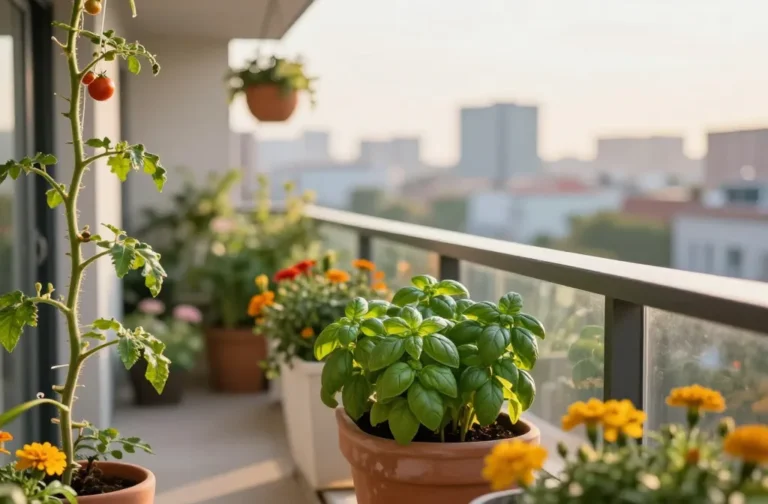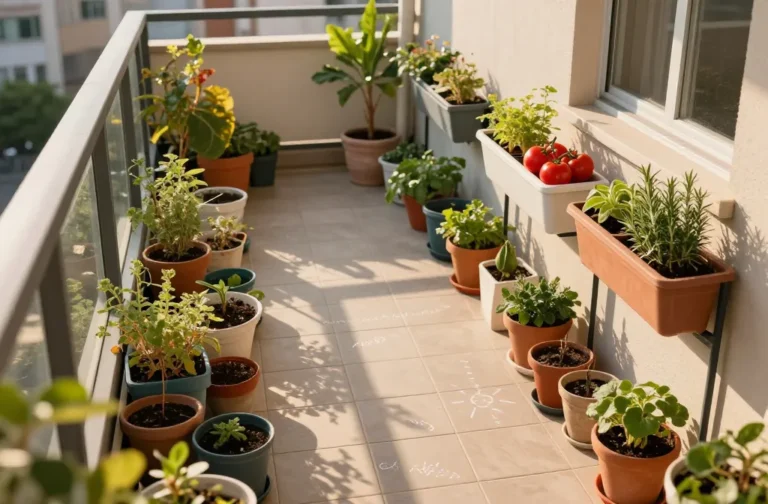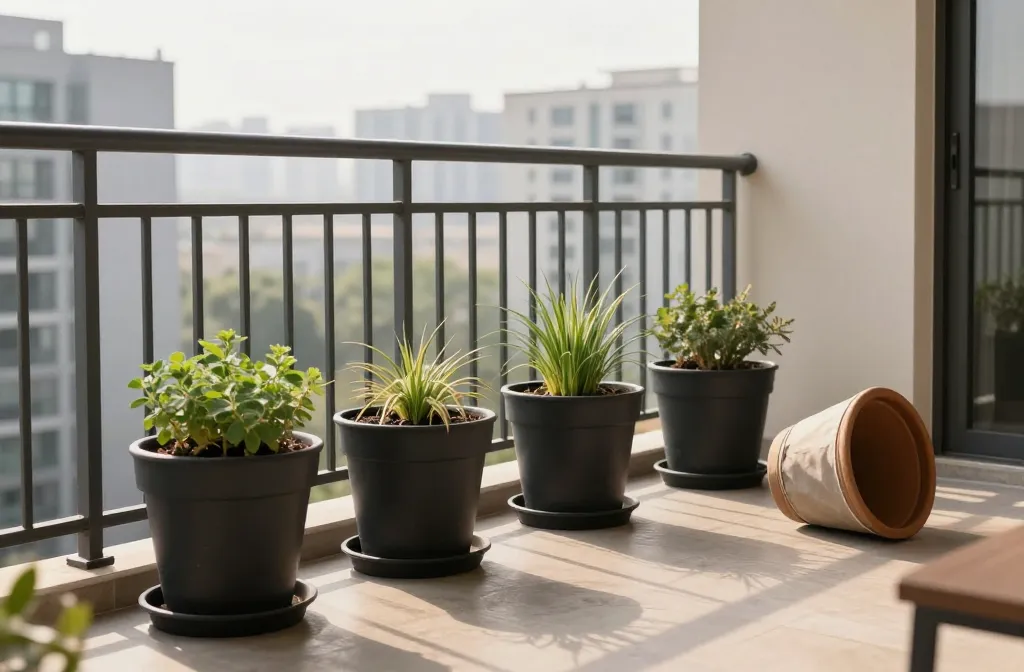
The Secret to How to Choose a Pot for a Balcony — Weight Limits, Wind Exposure and Drainage Requirements
When I moved into a fourth-floor walk-up, my first balcony pots toppled in a gust and soaked my downstairs neighbor. I learned fast that balconies aren’t little patios; they have strict limits and brutal microclimates. In this guide I’ll show you exactly how to pick pots that stay put, don’t overload your structure, and drain without making a mess. You’ll finish ready to buy the right container, the right saucer, and the right soil today.
Know Your Balcony’s Real Weight Limits Before You Buy
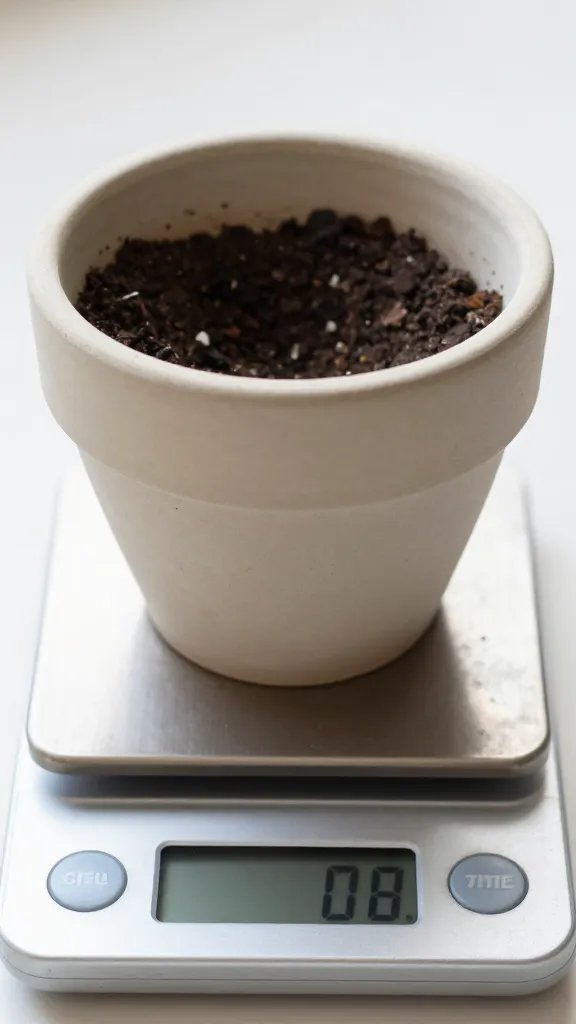
Every balcony has a safe load, and pots get heavy fast when wet. A 40 cm (16 in) ceramic pot filled with damp mix can weigh 18–25 kg (40–55 lb), and stone or soil-heavy mixes push that higher.
I work with a simple rule when no paperwork is handy: spread weight and stay conservative. I avoid any single pot over 25 kg (55 lb) and keep total planters under the weight of two adults standing in one area.
Practical Ways to Check and Reduce Weight
- Check documents: Look for your building manual or ask management for balcony load info in kilograms per square meter (kg/m²). If unavailable, assume light loads only and space pots apart.
- Pick lighter materials: Choose plastic, fiberglass, or fabric grow bags over ceramic or concrete.
- Use lighter fill: Fill the bottom third with upside-down nursery pots or perlite-packed mesh bags to cut weight while preserving drainage volume.
- Size smart: Most herbs and patio tomatoes thrive in 25–35 cm (10–14 in) wide pots; trees need more but often outgrow balconies anyway.
Action today: Weigh one of your current pots on a bathroom scale when dry, then after a full watering. Use that difference to estimate how many similar pots your balcony can safely host.
Beat Wind Exposure With Stable Shapes and Secure Placement
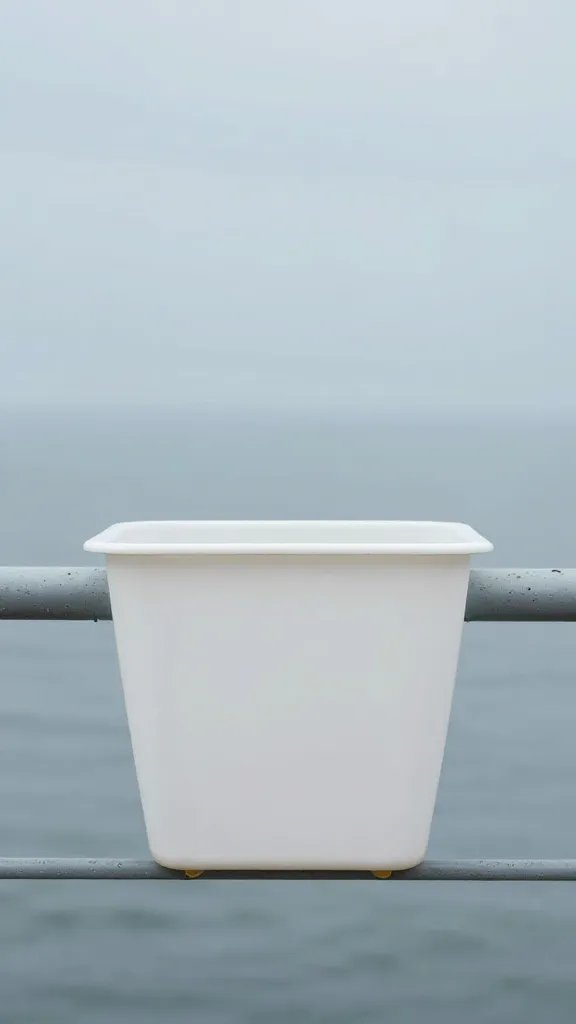
Balcony wind behaves like a tunnel — it accelerates and swirls. Tall, narrow pots act like sails and tip. Wide, low shapes grip the surface and keep a low center of gravity.
I favor squat cylinders or troughs with more width than height. I position them against walls or rails where wind is broken, not out on open corners.
Stability Upgrades That Don’t Add Much Weight
- Shape: Choose pots where width ≥ height. Trough planters 60–80 cm (24–32 in) long with 25–30 cm (10–12 in) height resist tipping.
- Feet and risers: Use rubber pot feet or composite decking shims for grip and drainage without weight.
- Tethers: For railing planters, use the included metal brackets and add a secondary Velcro garden strap around the rail as a backup.
- Avoid saucers that skate: Pick rubberized saucers or add non-slip pads underneath.
Action today: If a pot wobbles when you nudge it with your knee, move it to a corner or add rubber feet — don’t trust it through the first big storm.
Drainage That Protects Plants and Neighbors
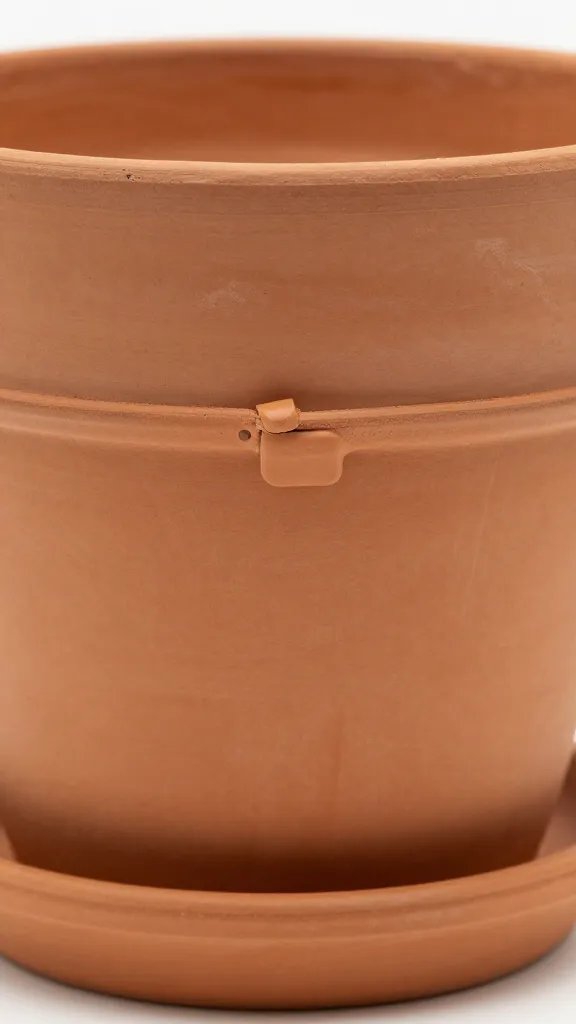
Balconies punish poor drainage. Overwatering kills roots and overflow annoys the downstairs unit. You need a pot with real holes, a way to lift the pot off the floor, and a saucer that holds a known volume.
I want at least one 1 cm (3/8 in) hole in small pots and two to four in larger ones. I always raise pots 1–2 cm to let water escape and air move.
Set Up a Clean, Reliable Drainage Stack
- Pot choice: Buy containers with pre-drilled holes or drill them yourself with a standard 6–10 mm bit for plastic or wood. Do not use pots with only “optional” dimples still sealed.
- Mesh layer: Cover holes with a piece of window screen or a coffee filter to stop mix washing out, not rocks (rocks create perched water).
- Feet: Add rubber feet or tile spacers to lift the pot.
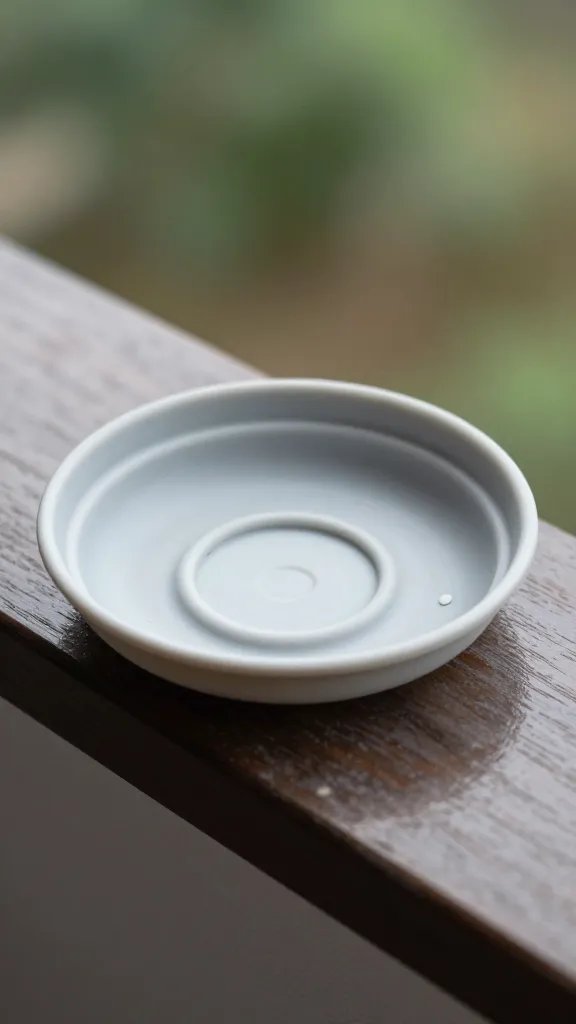
- Saucer: Choose a saucer that holds at least 5–10% of one watering. For a 30 cm pot, that’s roughly 250–500 ml.
- Emptying plan: After every deep water, wait 15 minutes, then pour off all water from the saucer. Standing water breeds fungus gnats and root rot.
Action today: Tip a full glass of water into your saucer and time how long it takes to evaporate; if it lingers more than a day, upgrade to a deeper saucer you can easily pour out.
Choose Materials That Withstand Sun, Freeze, and Daily Watering
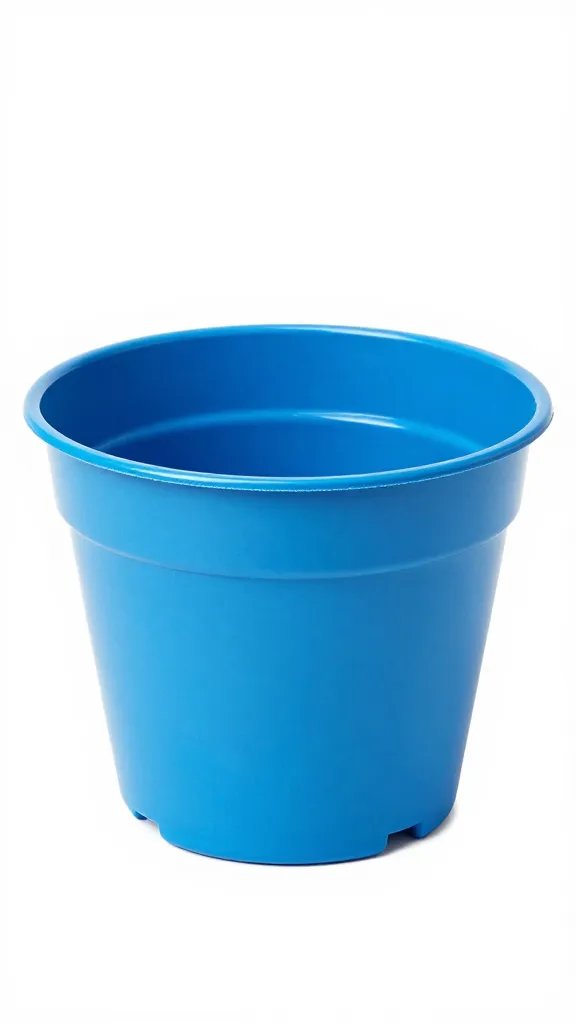
Balconies swing hot to cold, and sun breaks down weak plastics. I pick UV-stable plastic or fiberglass for lightness and durability, glazed ceramic for looks where weight allows, and avoid cheap thin terracotta that cracks in frost and dries soil too fast in wind.
Wood planters work if they’re lined with plastic (with holes) to protect the boards. Metal pots heat roots; I only use them with a plastic nursery pot nested inside.
Material Quick Picks
- Best all-rounder: Double-walled UV-stable resin or fiberglass with drainage.
- Cold climates: “Frost-proof” labeled plastic or glazed ceramic; store ceramic off the balcony in hard freezes.
- Hot, full sun: Light-colored pots to reduce root temperatures; avoid thin black plastic.
Action today: Press your thumb into the side of a plastic pot at the garden centre — if it folds sharply or turns chalky, skip it; it won’t last a season of sun.
Match Pot Size and Shape to Your Plant and Schedule
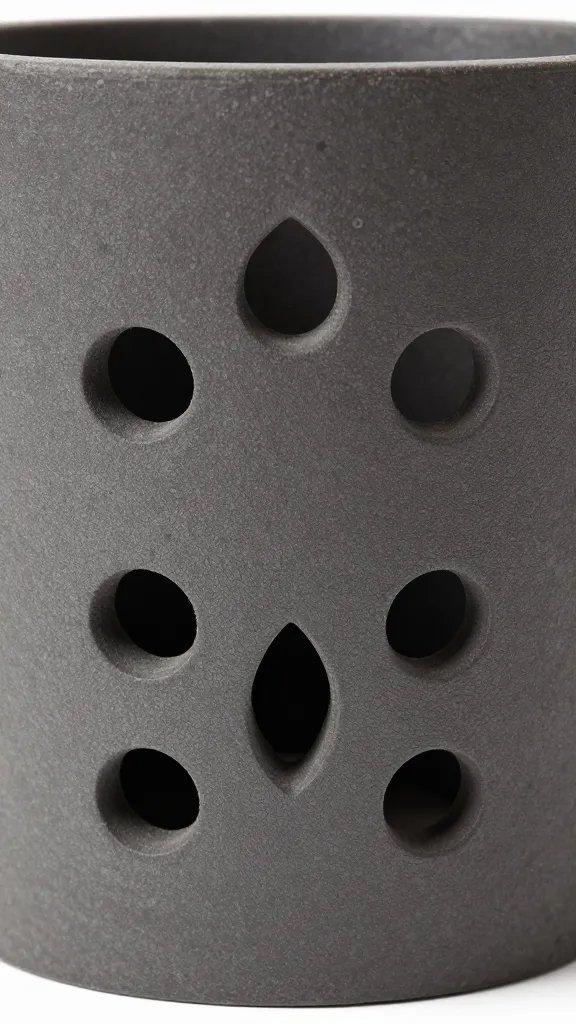
On balconies, a pot that’s too big stays wet and drowns roots, and one that’s too small dries out by lunchtime. I size by rootball: pick a pot 5–8 cm (2–3 in) wider than the current root mass for most plants.
Shallow-rooted herbs and flowers thrive in 20–25 cm deep pots. Fruiting plants need volume: bush tomatoes and peppers do best in 25–35 cm wide, 25–30 cm deep pots with strong drainage.
Plant-Friendly Shapes
- Herbs/leafy greens: 20–25 cm wide bowls or troughs; quick to water, fast to drain.
- Tomatoes/peppers: 25–35 cm wide cylinders; stake attachment points matter.
- Climbers (beans, cucumbers): 30 cm wide pots with a trellis anchored to the pot, not the railing.
Action today: Measure your plant’s rootball. Choose a pot one size up — not more — to balance moisture and growth.
Use Potting Mix and Watering Habits That Suit Balconies
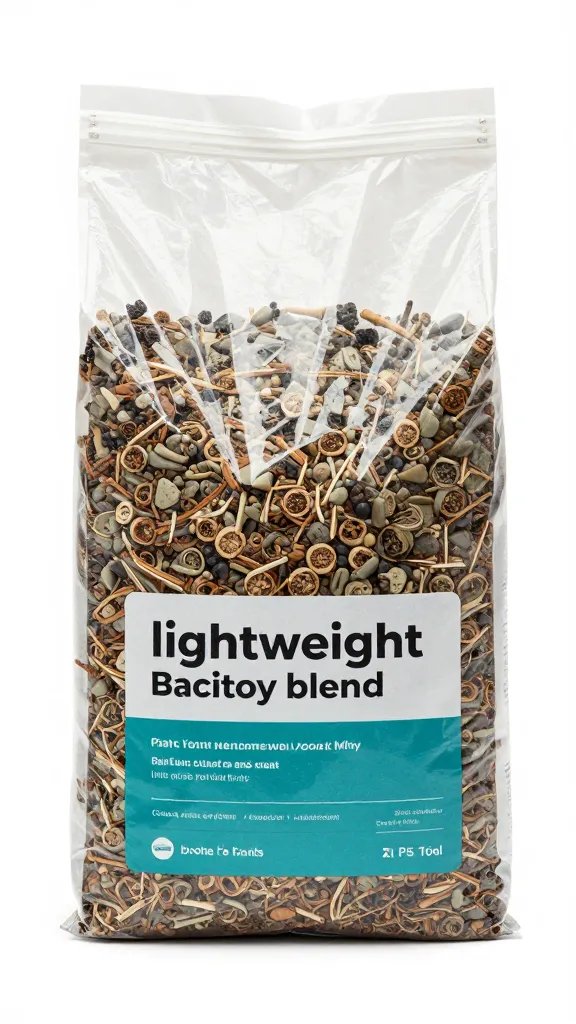
Forget garden soil; it compacts and drowns roots in containers. I use a quality potting mix from the garden centre and add perlite by eye until the mix feels airy and springs back when squeezed.
Wind dries pots from the sides as well as the top. I water deeply until I see runoff, then empty the saucer. In summer heat, most balcony pots need checking daily.
Moisture Control Without Gadgets
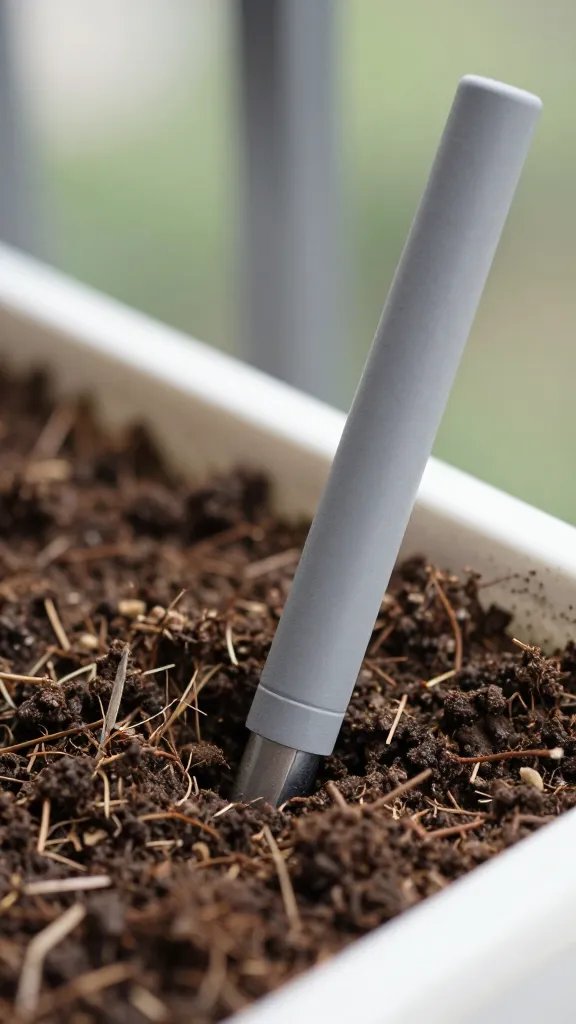
- Finger test: Poke 5 cm (2 in) into the mix. If it feels dry and your finger comes out clean, water now.
- Mulch layer: Add 1–2 cm of bark chips or coco husk to slow evaporation and reduce splash.
- Self-watering inserts: Only if labeled with an overflow hole. Fill the reservoir, then water from the top once a week to flush salts.
Action today: Mix one bag of potting mix with roughly one-third bag of perlite in a trug before potting — your plants will drain better and weigh less.
Plan for Water Runoff and Building Rules
Many buildings forbid dripping onto neighbors. Your setup must collect and control water. I use deep saucers or capillary mats sitting in shallow trays to catch stray drips.
Never hang heavy planters on old or loose railings. Use manufacturer-rated brackets and keep loads inside the balcony footprint if your rules require it.
Neighbor-Proof Layout
- Indoors edge: Set pots at least a hand’s width back from the outer edge so wind-blown water lands on your floor, not the street.
- Catchment: One shared boot tray under a group of small pots simplifies cleanup.
- Rain plan: If storms blow in, move sensitive pots against the wall or under an overhang to prevent overflow.
Action today: Place a dry paper towel below your saucer and water normally; if the towel wets, upgrade the saucer or add a tray.
Frequently Asked Questions
How do I stop my railing planter from dripping on people below?
Use planters with an internal reservoir and a marked overflow hole that drains back toward your balcony. Add a fitted liner and a deep clip-on saucer designed for that model. Water slowly until you see the first sign of moisture in the saucer, then stop. Empty the saucer after 15–30 minutes.
What pot size do I need for a balcony tomato?
For compact or bush varieties, choose a 25–35 cm (10–14 in) wide pot that holds at least 15–20 liters of mix. Install a stake or cage tied to the pot, not the railing. Use a light-colored container and add 20–30% perlite to keep roots aerated. Expect daily watering in hot weather.
Are fabric grow bags good for windy balconies?
Yes, if you secure them well. Fabric bags are light and drain beautifully, but they dry out faster in wind. Place them in a low-sided tray with rubber feet to add grip, and mulch the surface 1–2 cm to slow evaporation. Choose double-stitched bags with sturdy handles to reposition after storms.
Can I put stones at the bottom of the pot for drainage?
No. A rock layer creates a perched water table that keeps roots sitting in water. Use a uniform potting mix and cover the holes with a small square of window screen or a coffee filter to stop particles. Lift the pot on feet and rely on proper hole size instead. Your roots will get more oxygen and fewer rot issues.
How do I keep large pots from blowing over without adding a ton of weight?
Choose wide, low pots and add stability with shape and grip, not mass. Use rubber feet, non-slip pads under the saucer, and position pots tight to walls. For climbers, anchor trellises to the pot itself to keep the center of gravity low. Avoid tall, narrow containers entirely in exposed spots.
Conclusion
You don’t need special tools to get balcony containers right — just smart choices about weight, wind, and drainage. Pick one stable, lightweight pot with proper holes, set it on rubber feet with a deep saucer, and place it where the wind breaks. Plant it today and watch how it handles one full watering and one breezy afternoon; that real-world test will guide every other pot you add.