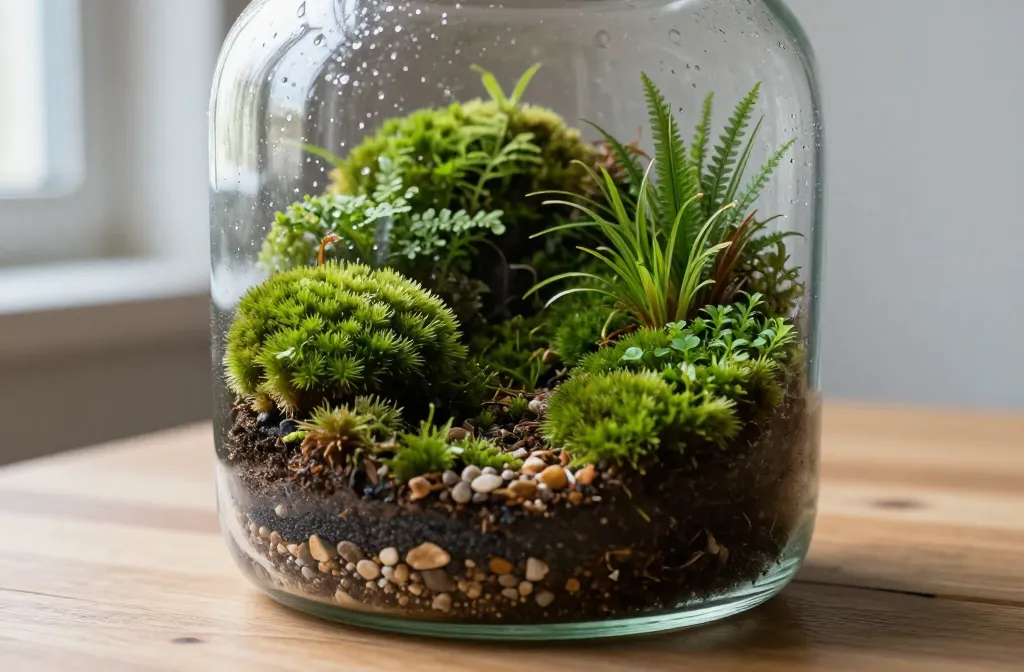
The Secret to How to Build a Moss-Only Terrarium — Species Selection, Substrate and the Self-Sustaining Setup
I built my first moss-only terrarium on a rainy Saturday with a pickle jar and a handful of foraged tufts. It looked perfect for two weeks, then turned brown and fogged up like a bathroom mirror. What fixed it wasn’t fancy gear — it was choosing the right mosses, laying a precise substrate, and sealing the water cycle correctly. In this guide, I’ll show you the exact setup that keeps moss lush for years with almost no maintenance, using only what you can buy at a garden centre or find around the house.
Pick Mosses That Thrive in Glass, Not Just in the Yard
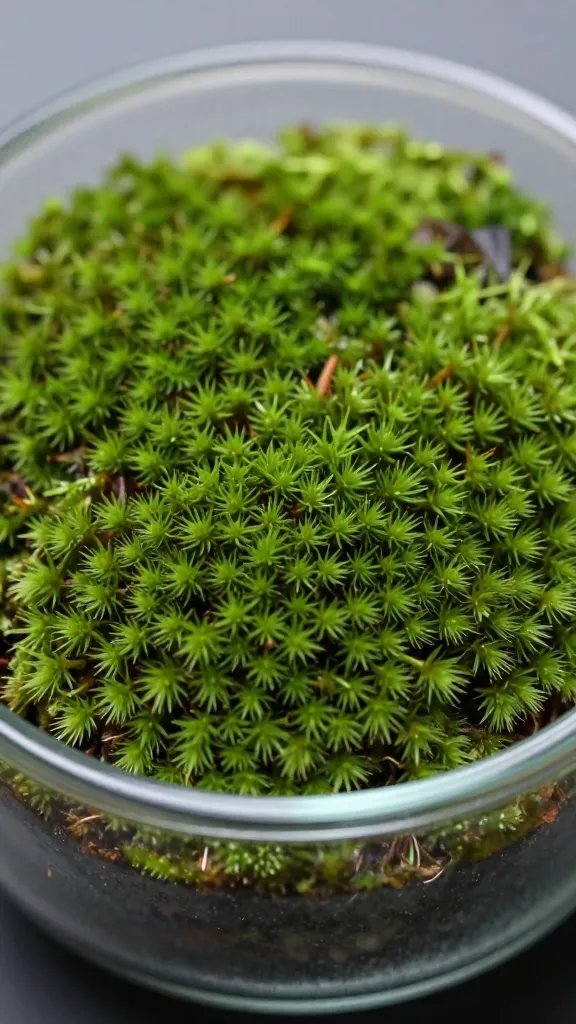
Most lawn mosses sulk in jars because they prefer moving air and seasonal drying. In a closed container, you need species that enjoy steady humidity and low airflow.
Choose compact, shade-loving species that stay small and dense. I reach for Leucobryum glaucum (pincushion moss), Hypnum cupressiforme (sheet moss), Thuidium delicatulum (fern moss), and Dicranum scoparium (broom moss). They tolerate bright indirect light and recover fast after handling.
Avoid fast-spreading liverwort mats unless you want a monoculture, and skip sun-crusted driveway moss — it collapses in constant humidity.
Plant List: Reliable Garden-Centre or Foraged Options
- Leucobryum glaucum (Pincushion Moss): Mound-forming, excellent focal clumps.
- Hypnum (Sheet Moss): Carpet for paths and slopes; easy to press onto substrate.
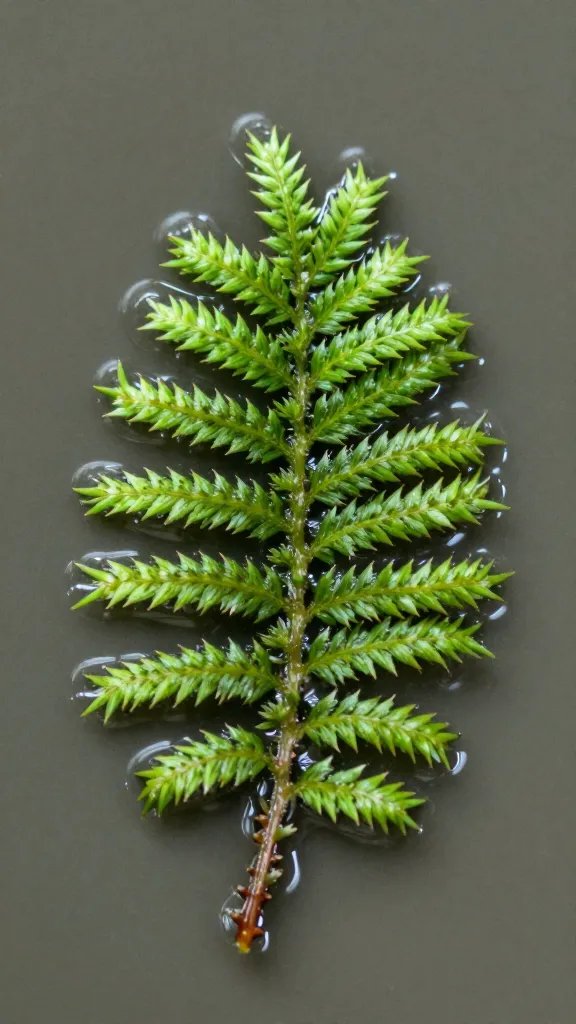
- Thuidium (Fern Moss): Feathery texture; great for layering around stones.
- Dicranum (Broom Moss): Upright tufts that add height without crowding.
Action today: Buy one brick of sheet moss and one cushion-forming species — mixing a carpet and a clump gives depth and prevents a flat, “green pancake” look.
Build a Substrate That Drains, Breathes, and Stays Clean
Moss has no true roots — it anchors and drinks from the surface. Your substrate must hold gentle moisture without turning to sludge.
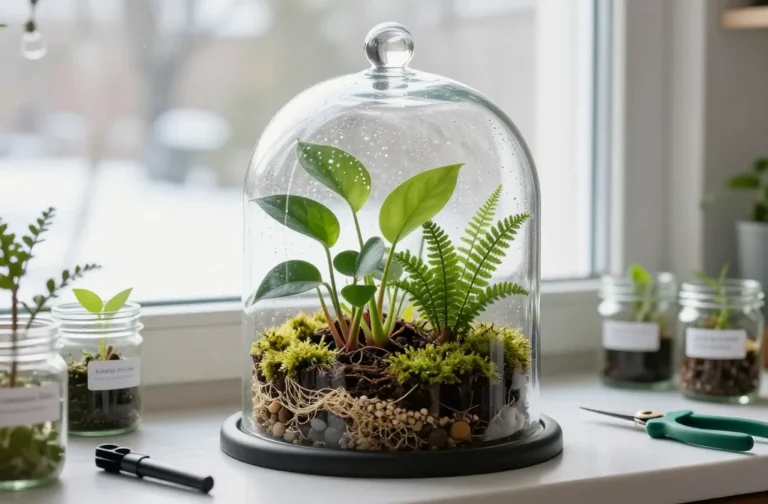
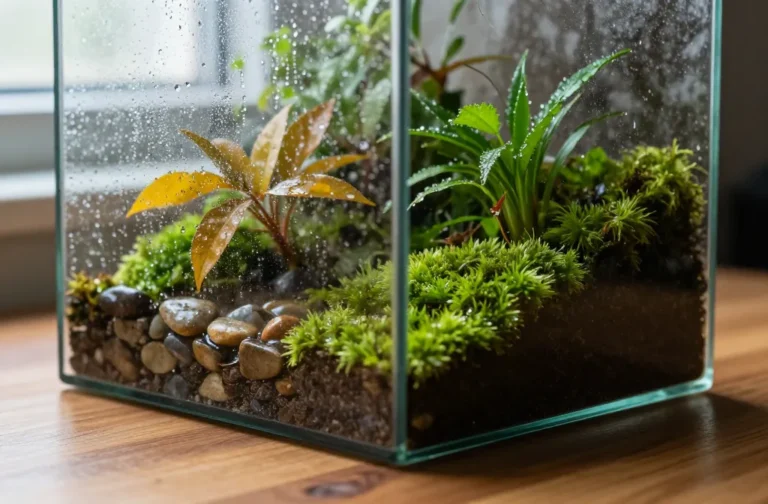
Use a simple three-layer system in any clear glass jar with a lid:
- Drainage Layer (1.5–2 cm): Aquarium gravel or rinsed pea gravel. This catches excess water so the top never floods.
- Barrier (thin): A circle of fine mesh, window screen, or a coffee filter. It keeps soil from sinking into the gravel.
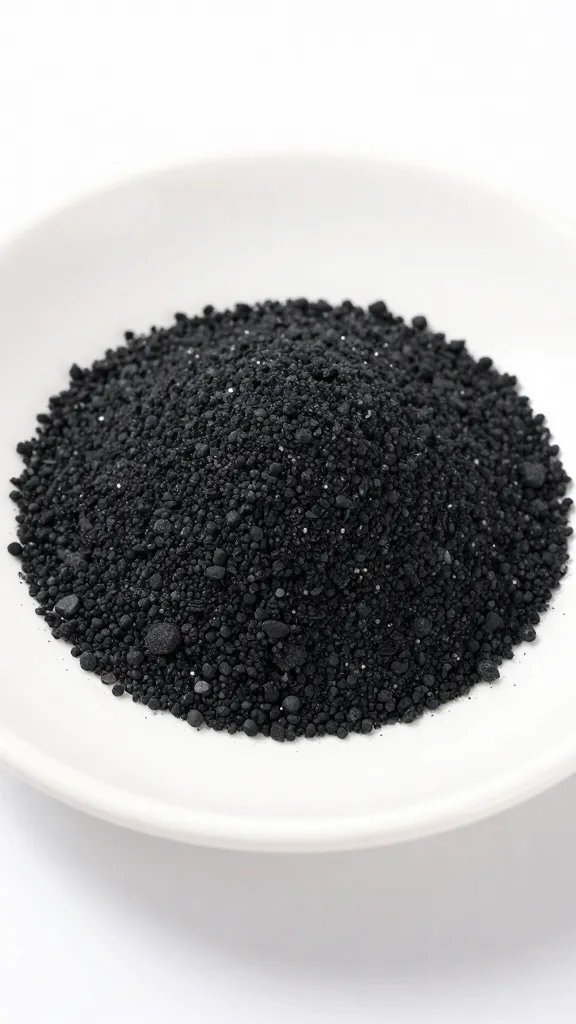
- Capillary Layer (1–1.5 cm): Pre-rinsed horticultural charcoal or activated charcoal from the aquarium aisle. This reduces odors and keeps water fresher.
- Top Layer (1–2 cm): A lean mix: 2 parts good-quality potting mix + 1 part fine orchid bark or coco coir + 1 part fine sand. Slightly damp, never muddy.
Firm the top layer with your fingers so it’s level but springy. Moss prefers a stable bed that doesn’t shift when you press it down.
Action today: Rinse your gravel and charcoal in a colander until the water runs clear — cloudy wash water means future fog and grime on your glass.
Set Moisture Correctly Once — Then Stop Watering
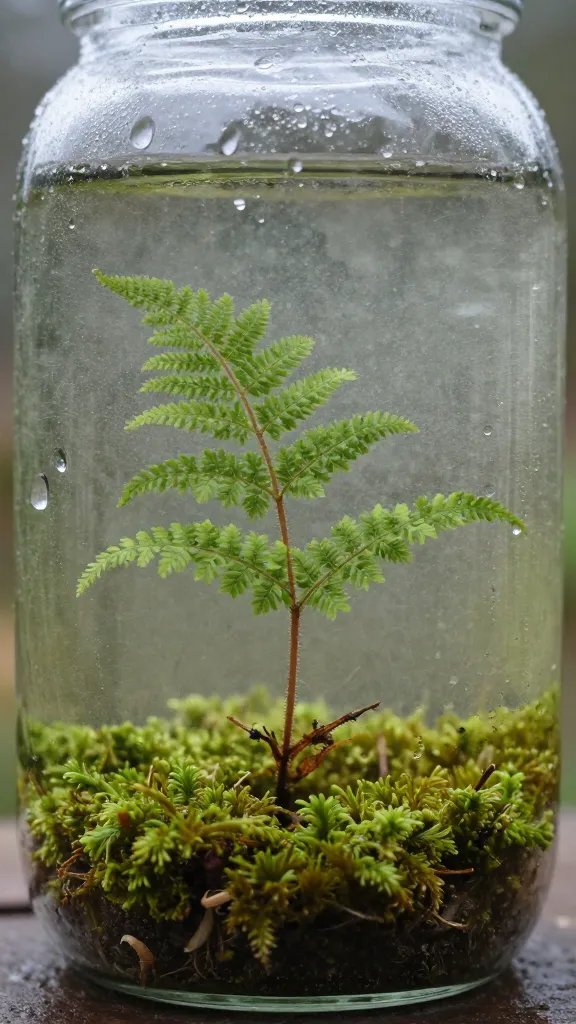
The most common failure is starting too wet. In a closed terrarium, water doesn’t escape quickly; extra moisture becomes fog, algae, and rot.
Before planting, pre-moisten the top layer so it feels like a wrung-out sponge. If you squeeze a handful and see more than one or two drops, it’s too wet — add dry mix and blend.
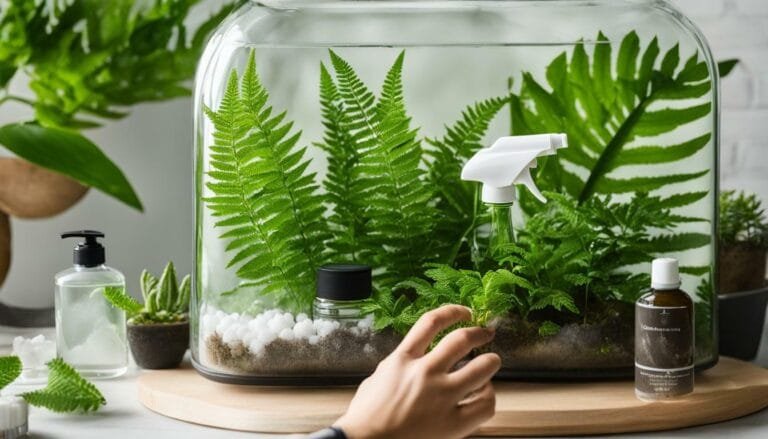
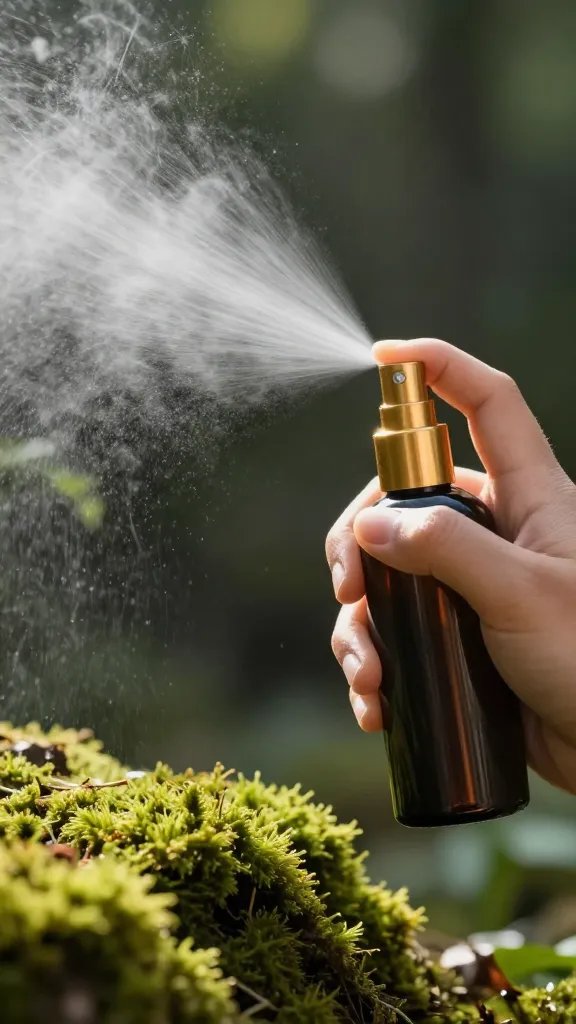
After planting, mist lightly until the moss darkens evenly. Seal the lid. At midday the next day, aim for light speckled condensation on 10–30% of the glass, not a constant drip.
Warning Signs and Fixes
- Heavy fog or drips: Open the lid for 2–4 hours and blot the moss gently with a paper towel.
- No condensation at all after day two: Mist 6–8 sprays around the moss, not into the gravel.
- Mold threads: Remove the affected tuft, dab area with diluted hydrogen peroxide (1 part 3% peroxide to 4 parts water), and air out 2 hours.
Action today: Do a midday glass check — if more than one-third is fogged, vent the lid for two hours to reset the water cycle.
Light the Moss Like a North-Facing Forest Floor
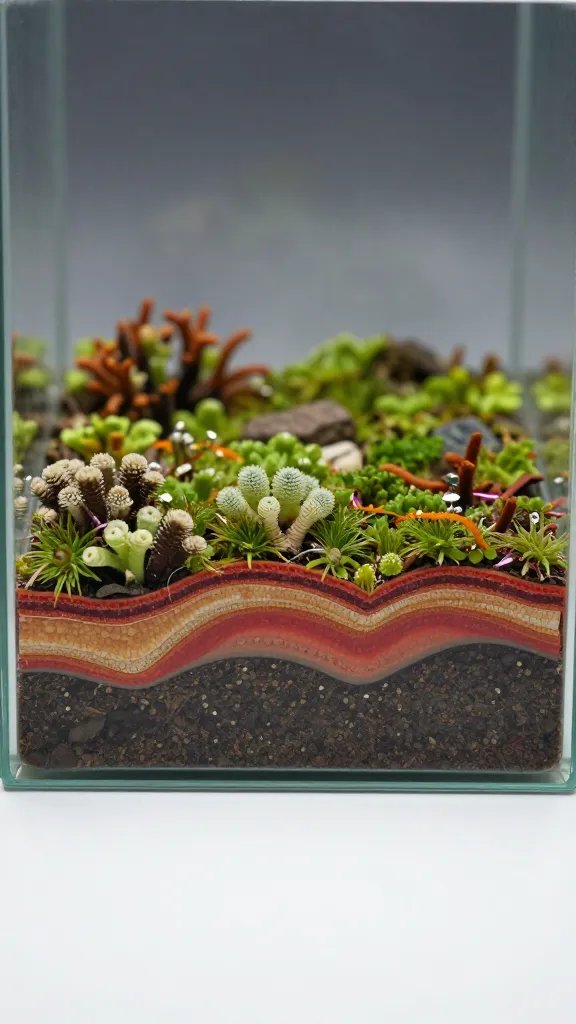
Moss loves brightness without harsh sun. Direct sun through glass cooks it and feeds algae.
Place the terrarium near a bright window with indirect light — one to two metres from an east or north window is perfect. If your only option is a sunny south or west window, keep it back 2–3 metres or behind a sheer curtain.
Under room lamps, aim for 10–12 hours daily. A basic LED desk lamp with a cool-white bulb placed 30–45 cm above the jar works well.
Action today: Hold your hand where the terrarium will sit at noon; if the light feels bright but not hot after 30 seconds, it’s a safe spot.
Planting Technique: Press, Don’t Bury
Healthy moss needs tight contact with the surface to wick moisture. Loose placement dries out the base and invites mold.
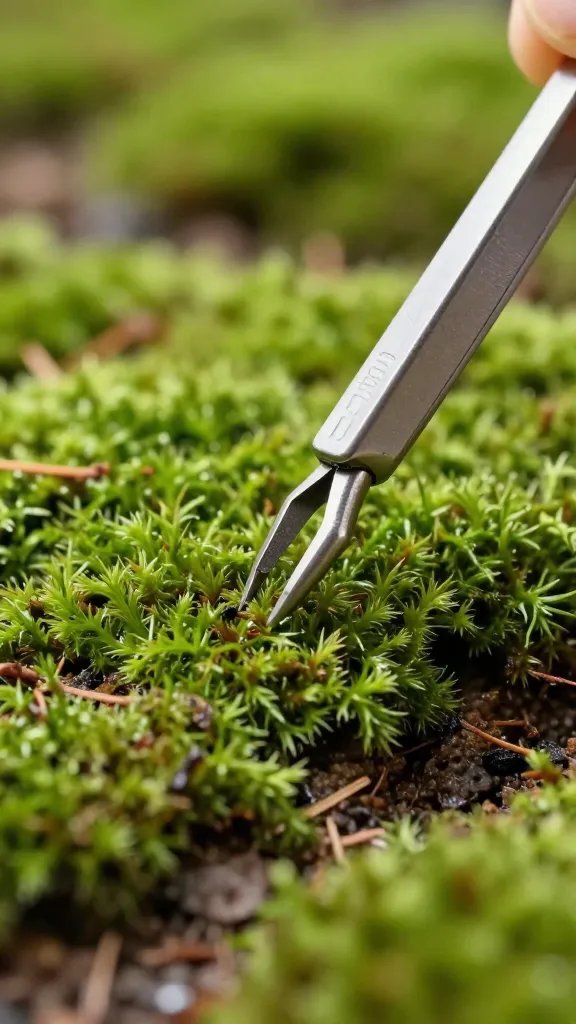
- Break moss into palm-sized pieces and pick out dead brown bits.
- Lay pieces like shingles, edges slightly overlapping to avoid seams.
- Press each piece firmly with fingertips or the back of a spoon for 5–10 seconds. You should see the texture imprint.
- Fill gaps with small tufts; avoid burying stems in soil.
- Add one or two clean stones or a small branch to break up airflow and create microclimates.
Action today: After pressing, tug gently on a corner — if it lifts easily, press again until it “grabs.”
Keep It Self-Sustaining: Minimal Care, Max Stability

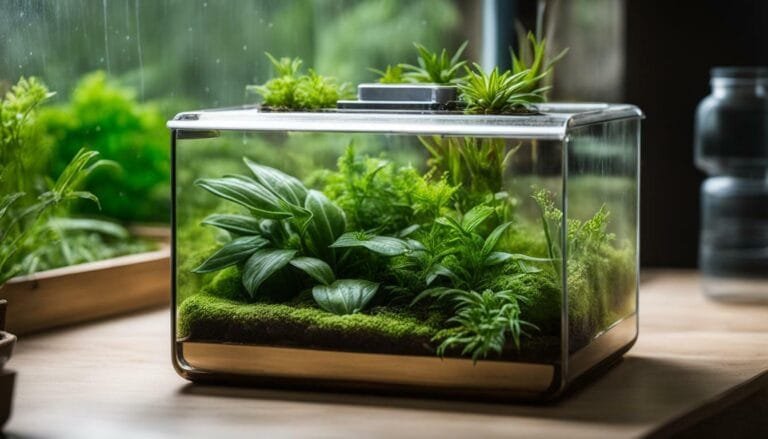
A closed moss terrarium runs on a simple loop: evaporate, condense, return. Your role is to maintain balance, not to tinker weekly.
Open the lid only for corrections. Wipe inside glass monthly with a soft cloth wrapped around chopsticks to keep viewing clear. Trim stray growth with small scissors and remove fallen debris to starve mold.
Do not fertilize. Fertilizer fuels algae and breaks the low-nutrient balance that moss prefers.
Simple Maintenance Schedule
- Weekly glance: Check condensation and color. Vivid green = good; dull gray-green = needs a light mist.
- Monthly: Wipe glass, remove any decaying bits, and rotate the jar a quarter turn.
- Seasonal: Shift 30–60 cm farther from windows in summer to avoid heat, and closer in winter for brightness.
Action today: Set a recurring phone reminder for a 60-second monthly glass wipe and debris check.
Prevent Pests and Mold Without Chemicals
Moss rarely attracts pests, but fungus gnats and mold thrive in overly wet, nutrient-rich setups.
Rinse all materials thoroughly and avoid soil with slow-release fertilizer balls. If gnats appear, you introduced them with houseplants — air the terrarium for a day, let the surface dry slightly, and use a yellow sticky trap nearby.
For mold, remove the affected tuft and increase airflow for 12–24 hours. A light mist of diluted peroxide (1:4) on the bare substrate helps, but keep it off healthy cushions.
Action today: Inspect your potting mix for visible fertilizer pellets; if you see them, switch to a plain mix before you start.
Frequently Asked Questions
Can I use moss from my yard?
Yes, if you collect responsibly and choose shade-loving species. Take small patches from multiple spots, rinse gently in clean water, and remove soil and critters. Quarantine in a separate container for a week to watch for pests. If it browns indoors, replace with a garden-centre sheet moss that’s already adapted.
How do I stop the glass from fogging up all day?
Start by venting the lid for 2–4 hours to release excess moisture. Wipe the inside glass dry and blot the moss surface with a paper towel. Move the terrarium slightly farther from direct light to reduce midday temperature spikes that drive condensation. If fog returns, you started too wet — leave the lid ajar overnight.
Do moss terrariums need fertilizer?
No. Moss thrives on low nutrients and clean moisture. Fertilizer triggers algae and mold and can bleach moss tips. If growth slows, increase light duration to 10–12 hours or shift to a brighter indirect spot instead of feeding.
What kind of water should I use?
Use rainwater, distilled, or tap water that tastes clean and not salty. Hard water leaves mineral spots on glass and can gray the moss over time. If tap water leaves white residue on your kettle, switch to distilled for misting. Always mist lightly rather than pouring.
Why is my moss turning brown at the tips?
Brown tips usually mean heat or direct sun. Move the terrarium back from the window and keep the lid on to stabilize humidity. Trim crisped tips with small scissors and mist once to rehydrate the surface. Check at midday — glass should feel cool, not warm.
How big should the container be?
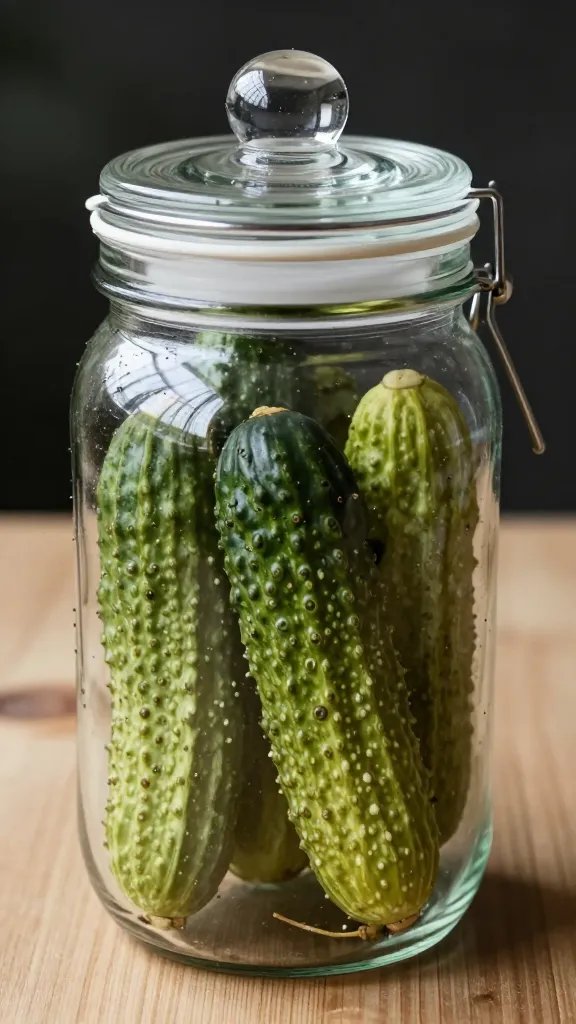
Anything from a 500 ml jar to a 5-liter cookie jar works. Taller jars create more stable humidity and better viewing angles. Wide mouths make planting easier and reduce accidental damage. Always choose clear glass with a snug lid for a consistent water cycle.
Conclusion
You now have the exact blueprint for a moss-only terrarium that stays green without constant fuss: the right species, a clean layered base, precise initial moisture, and steady indirect light. Pick up two moss types and a bag of charcoal today, build a small jar to practice the process, and place it where you can check the glass at midday. Once you see that light speckled condensation and rich green color, scale up to your showpiece container with confidence.