7 Tillandsia Species That Mount Successfully on Wood — Ranked by Root Grip and Weight Secrets for Grip That Never Slips
I’ve mounted more air plants on driftwood than I can count, and I’ve watched some leap into growth while others slid off after the first watering. If you’ve ever found a favorite Tillandsia on the floor the next morning, you know the disappointment. In this guide I rank seven reliable species by how firmly their roots or bases cling and how well their weight balances on wood. You’ll learn exactly which ones stay put, how to secure them with basic supplies, and what care keeps them tight and thriving.
1. Tillandsia ionantha: Compact Rosette With Fast Root Grip
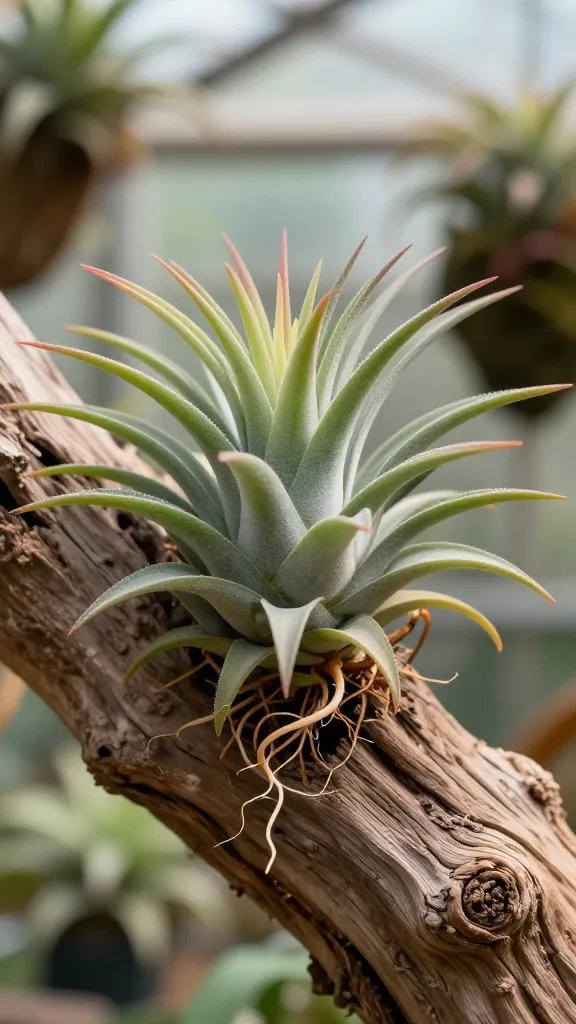
When you want zero drama, Tillandsia ionantha stays put. Its compact rosette and lightweight body don’t torque off the mount after misting. It throws out fine holdfast roots within weeks on rough bark, cork, or driftwood, so it transitions from tied to self-secured faster than most.
Why It Holds So Well
- Small center of gravity — no toppling as it drinks
- Short, stiff leaves that don’t act like sails in a breeze
- Readily produces holdfast roots on textured wood
Mounting Tips
- Place the base tight to a notch or fork in the wood so it can wedge naturally.
- Use a single wrap of clear fishing line or brown florist wire; remove after 6-8 weeks when roots grab.
- Avoid hot glue directly on living tissue; if you must, use a pea-sized dab on the outer, dry sheath only.
Care Once Mounted
- Light: Bright indirect near an east or bright north window.
- Water: Thorough mist until dripping, 2-3 times weekly; shake off excess.
- Air: Good airflow so leaves dry within 3-4 hours.
Takeaway: Start with ionantha for guaranteed success; one wrap of fishing line on rough bark is enough to keep it steady until it roots.
2. Tillandsia bulbosa: Flexible Body, Strong Purchase in Wood Crevices
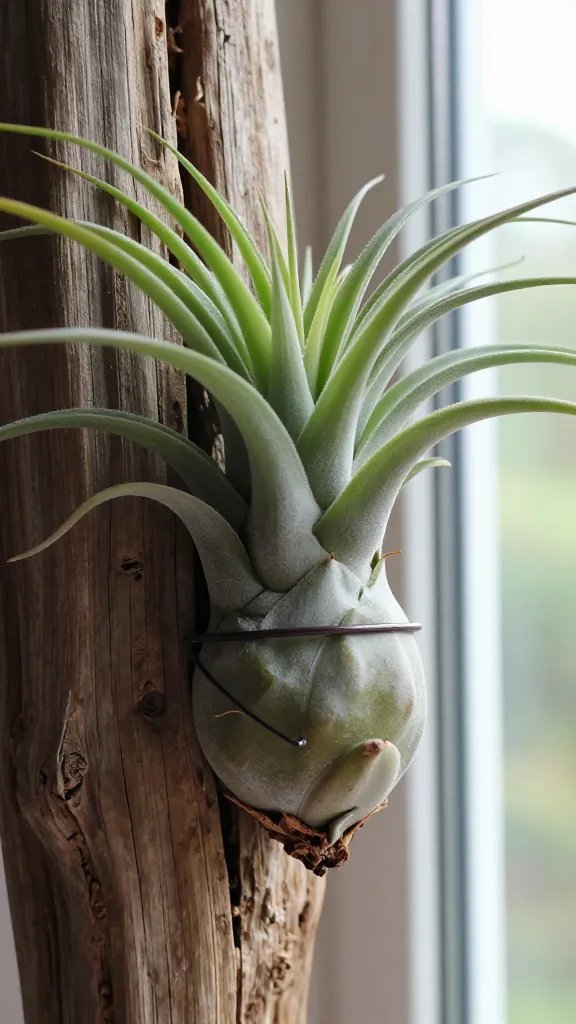
Tillandsia bulbosa looks wavy and delicate, but its bulbous base wedges securely into wood hollows. It’s still light enough to avoid sagging after watering, and its twisting leaves reduce wind drag indoors.
Positioning That Locks It In
- Nest the bulb in a shallow cup or knot hole; the shape resists sliding.
- Angle the plant 10-20 degrees downward so water drains from the bulb.
- Use a small U-shaped loop of wire across the bulb shoulders rather than around the neck.
Signs to Watch For
- Bulb filling with water after soaking — tip and shake thoroughly.
- Wrinkled bulb = thirsty; increase misting or do a 15-minute soak weekly.
Action today: If your bulbosa sits on a flat spot, move it into a shallow knot and add a single cross-brace of florist wire — it won’t budge.
3. Tillandsia caput-medusae: Corkscrew Leaves, Reliable Rooting on Bark
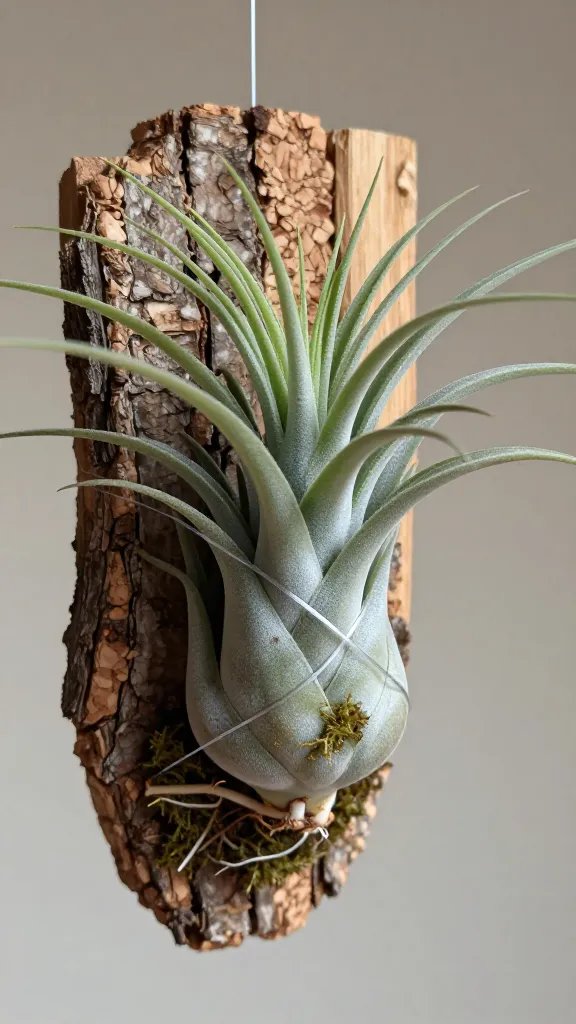
The flared base of Tillandsia caput-medusae presses snugly against uneven wood, and new roots form along the sheath. It’s bulkier than ionantha but still light enough for simple ties. Once fixed, it handles indoor air well as long as it dries after watering.
Mounting Materials That Work
- Rough cork bark or sandblasted grape wood for maximum grip
- Two crossing wraps of fishing line forming an “X” over the base
- Optional: a thin pad of sphagnum under the base only in dry homes, kept barely damp
Post-Mount Care
- Mist heavily 2-3 times weekly; soak 10 minutes every 10-14 days if leaves curl.
- Place 1-2 feet from a bright window; avoid hot midday sun on glass.
Takeaway: Seat the plant so its flared base contacts bark on three sides; an “X” wrap holds it perfectly until roots anchor.
4. Tillandsia stricta: Light Rosette With Quick Holdfasts on Rough Wood
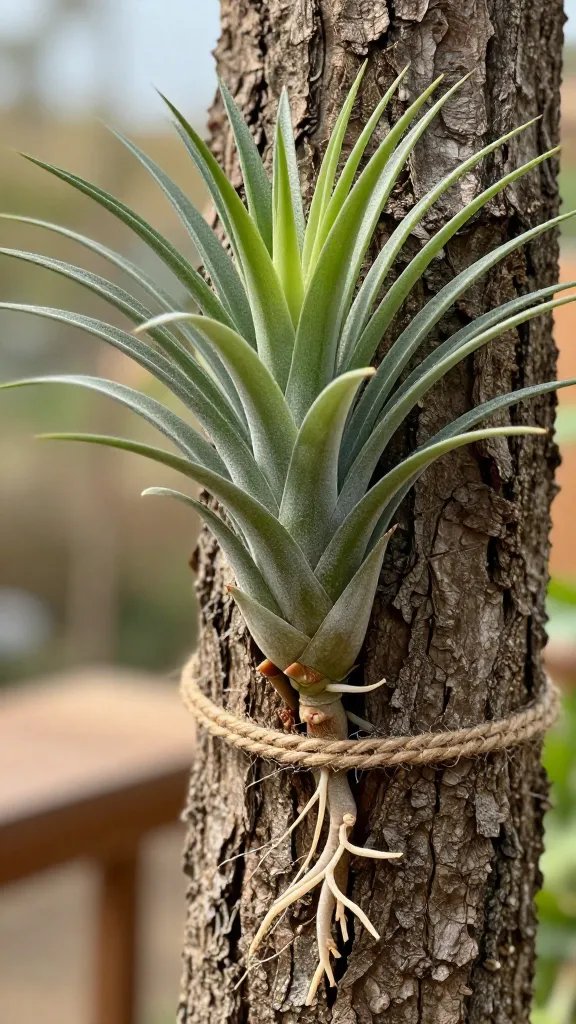
Tillandsia stricta stays light as it matures, so the mount doesn’t need to fight gravity. It throws roots readily into textured surfaces, forming a lasting bond. The rosette form spreads force evenly, so one tie is enough if the surface has tooth.
How to Fix It Right
- Choose bark with a sandpaper feel; smooth driftwood looks pretty but delays grip.
- One wrap of jute twine blends in and expands slightly when wet, tightening the hold.
- Keep the growth point upright so new leaves don’t push the plant off-balance.
Watering Routine
- Mist 3 times weekly; add a 10-minute soak every 2 weeks in dry apartments.
- Shake firmly after soaking so the core doesn’t stay wet.
Action today: If your wood is slick, scuff a quarter-sized patch with sandpaper before tying stricta — roots grip faster on a roughened spot.
5. Tillandsia fasciculata: Larger, But Balanced When Wedged and Double-Tied
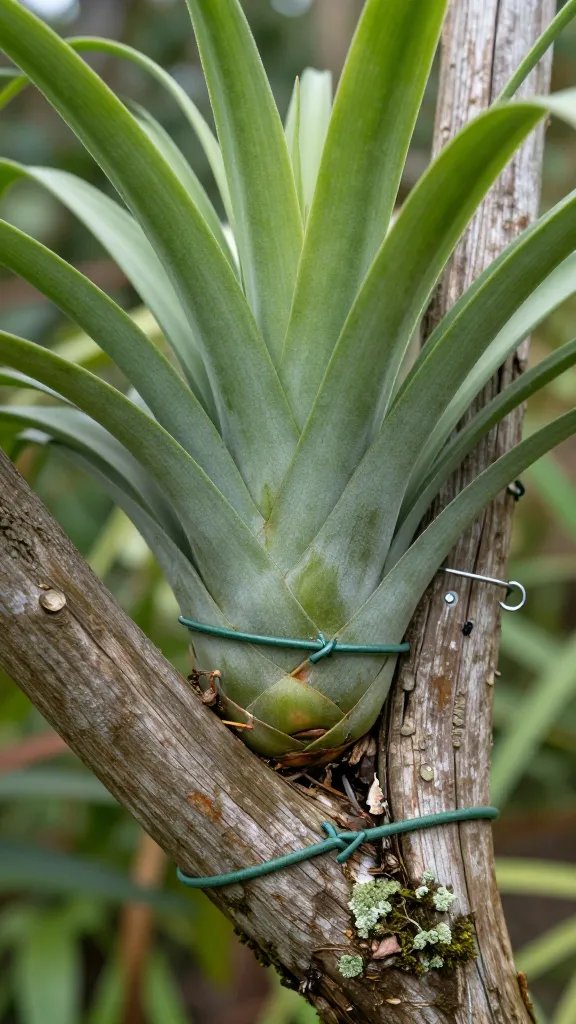
Tillandsia fasciculata brings architectural size, but weight becomes the issue. Unsecured, it will tilt as the leaves take on water. The fix is mechanical: wedge the base and use two ties. Once rooted, it’s rock solid and rewarding.
Mounting for Heavier Plants
- Find a fork or crotch in the wood and seat the base deeply.
- Use two anchor points: one below the base, one mid-rosette with soft-coated wire.
- If needed, add a discreet wood screw and loop of wire behind the plant (not through it) for a failsafe.
Care Specifics
- Light: Bright indirect, with 1-2 hours of gentle morning sun from an east window.
- Water: Full drenching mist 3 times weekly; soak 15 minutes weekly in very dry rooms.
Takeaway: For fasciculata, commit to a forked mount and two-point tie — that counters weight and keeps alignment true while roots form.
6. Tillandsia bergeri: Tough Workhorse That Clumps and Self-Secures
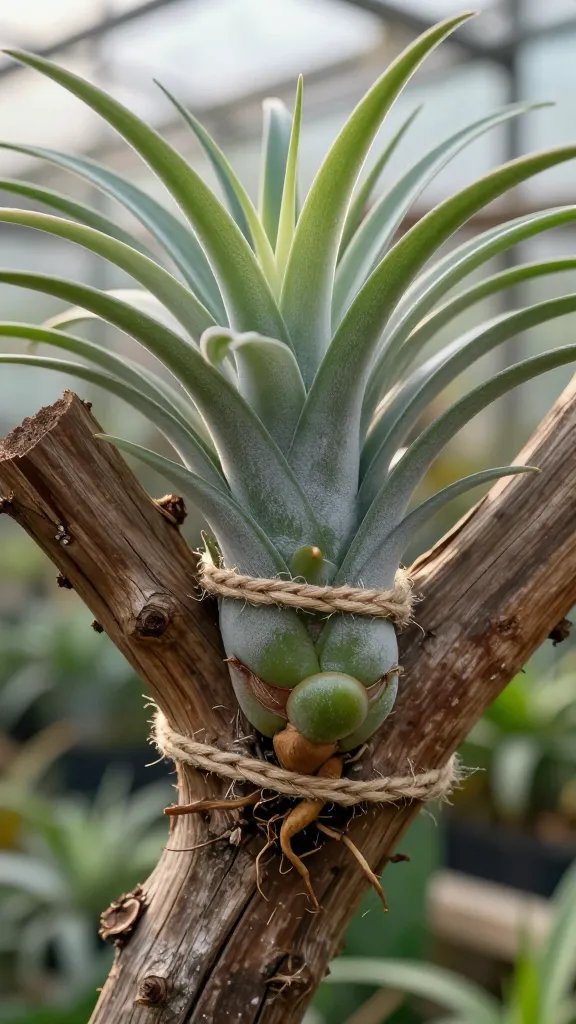
Tillandsia bergeri is forgiving and vigorous, forming clumps that eventually lock around the mount. Early on, individual offsets may shift if you only secure the base. Tie the mother and the largest pup so the cluster doesn’t twist when wet.
Best Setup for Clumps
- Choose a branch where the clump can expand on two sides.
- Use a figure-eight tie: loop once around the base, once around the offset, cross between them, and secure behind the wood.
- Plan for growth: leave 2-3 inches of open wood around the plant.
Water and Feeding
- Mist 3-4 times weekly to satisfy the growing cluster.
- Feed with a half-strength orchid or air plant fertilizer once a month during spring and summer.
Action today: Add a figure-eight tie that includes one mature pup — it prevents the whole clump from twisting off after a soak.
7. Tillandsia juncea: Tall and Feather-Light, Needs a Channel or Collar
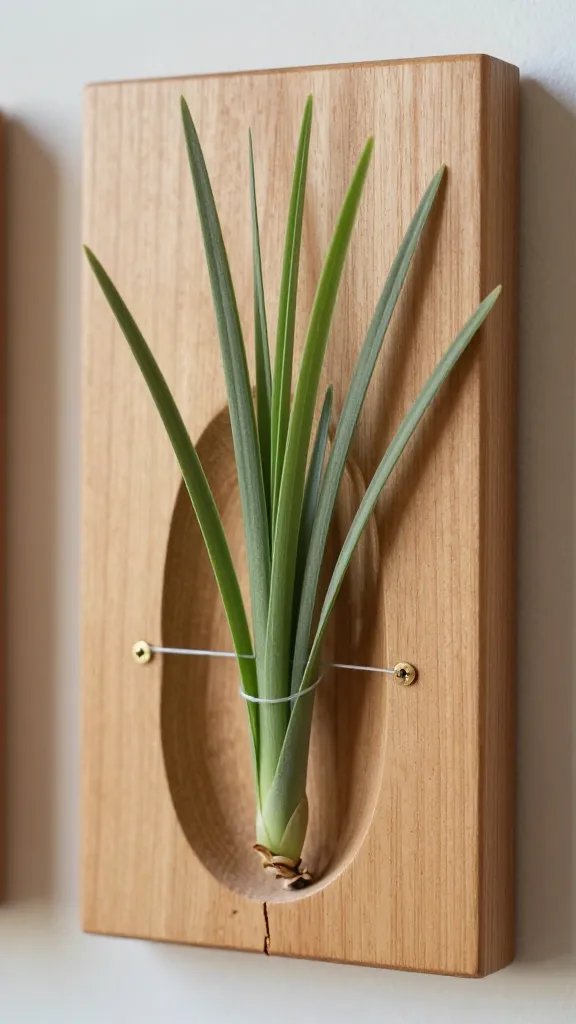
Tillandsia juncea is long and reed-like, which means leverage is the challenge even though it weighs little. A straight tie across a round base lets it spin on smooth wood. A carved channel, natural crack, or collar solves this immediately.
Stability Tricks
- Seat the base into a shallow groove or between two small screws used as posts.
- Run fishing line in a narrow band around the lower third of the leaves to create a gentle collar without pinching.
- Keep it out of strong drafts so the tall leaves don’t act like a sail.
Moisture Management
- Mist every other day in a bright spot; skip soaking unless leaves feel crispy.
- Always tip the mount and shake downward so water runs off the tall leaves quickly.
Takeaway: Give juncea a groove or two-post collar so the tall leaves can’t torque the plant — a 30-second tweak that prevents spin-outs.
Frequently Asked Questions
How do I mount air plants without using glue?
Use clear fishing line, brown florist wire, or jute twine from a hardware or garden centre. Wrap gently around the base or across the shoulders and tie behind the wood so the front looks clean. For heavier species, add a second tie point. Remove or loosen ties after 6-10 weeks once holdfast roots appear.
What kind of wood works best for air plants?
Rough, rot-resistant wood with texture works best: cork bark, grape wood, manzanita, or driftwood with natural grooves. Avoid pressure-treated lumber and freshly sappy branches. If your piece is slick, lightly scuff the contact spot with sandpaper so roots have something to grip.
How often should I water mounted Tillandsia indoors?
In a typical apartment, mist thoroughly 2-4 times per week so the plant darkens and drips, then shake off excess. If leaves curl tightly or feel papery, add a 10-15 minute soak once a week. Always allow plants to dry within 3-4 hours — place near a fan or an open doorway after watering.
Can I keep mounted air plants in a bathroom?
Yes, if the bathroom gets bright indirect light and the plant dries between showers. Steam alone doesn’t count as watering, so still mist 2-3 times weekly. Choose species with strong grip like ionantha or bulbosa, and avoid placing directly above the shower where constant humidity keeps crowns wet.
What’s the safest adhesive if I really need glue?
Use a small dot of clear, non-toxic aquarium-safe silicone on the dry outer sheath only, never on living green tissue. Let it cure 24 hours before watering. I reserve glue for awkward shapes or vertical displays and prefer ties whenever possible for plant health and future repositioning.
How do I feed mounted air plants without making a mess?
Mix a half-strength orchid or air plant fertilizer in a spray bottle and mist once a month during spring and summer. Wipe any overspray from shelves to prevent residue. Feed in the morning so leaves dry by afternoon, and skip feeding in the first two weeks after mounting to avoid salt buildup at the contact point.
Conclusion
Mounting Tillandsia that actually stay put comes down to choosing species with good grip-to-weight ratios and giving them a secure seat on textured wood. Start with ionantha or bulbosa, practice a clean tie, and add one heavier showpiece like fasciculata once you’ve got the feel. Your next step: pick a rough piece of cork bark, tie one plant well, and watch it root in over the next month.