The Secret List of 6 Vegetables That Produce Well in Containers Under 30cm Deep
When I first gardened on a tiny balcony, I crammed deep-rooted crops into shallow pots and wondered why they stalled. Once I switched to vegetables that actually thrive in under-30cm containers, harvests became steady and space finally worked for me. In this guide I’ll show you exactly which six vegetables excel in shallow pots, the container sizes that prevent disappointment, and the watering and feeding routine that keeps them producing. You’ll skip the trial-and-error and go straight to reliable harvests.
1. Leaf Lettuce: Fast, Continuous Harvests in Tight Spaces
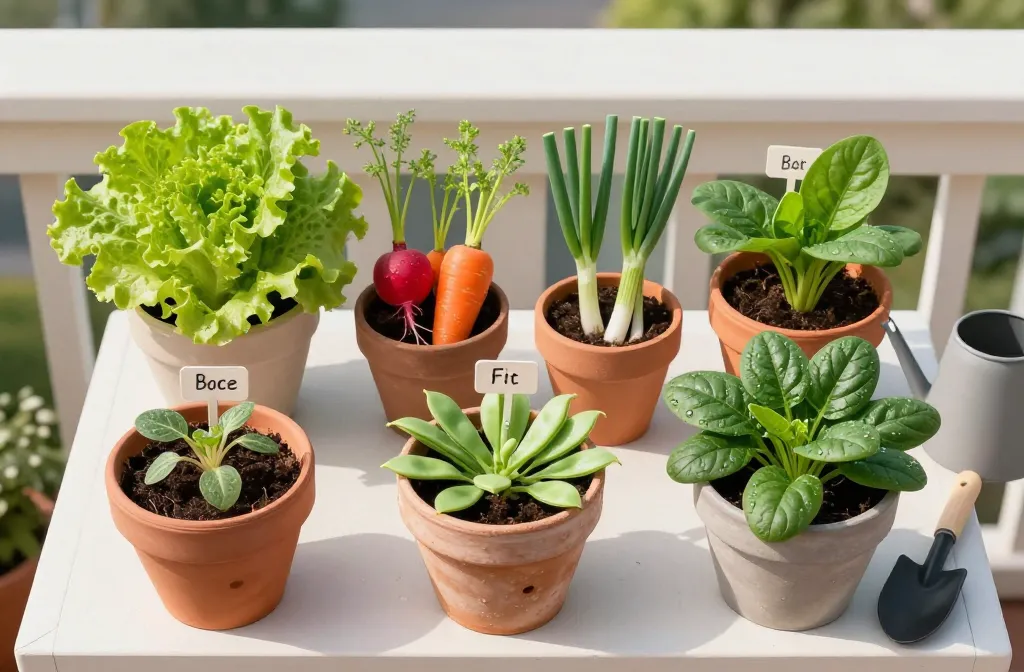
Leaf lettuces (like ‘Salad Bowl’, ‘Black Seeded Simpson’, or mixed baby leaf blends) thrive with shallow roots and quick growth. In a pot that’s too deep, you waste soil; in a pot that’s too shallow and cramped, leaves taste bitter and bolt early. Kept evenly moist and cool, they deliver bowl after bowl for weeks.
Container and Spacing That Work
- Container depth: 15–25 cm; width: at least 20–30 cm across
- Spacing: broadcast-sown for cut-and-come-again, or 10–15 cm between plants
- Drainage: 3–5 holes in the base; add a thin layer of coarse bark or broken terracotta to prevent blockage
Light and Water Routine
- Light: bright indirect light or 3–4 hours of gentle morning sun; afternoon shade prevents bitterness
- Water: keep soil evenly moist — top 2 cm should never fully dry; typically every 1–2 days in warm weather
- Feeding: every 10–14 days with half-strength liquid feed labeled for vegetables
Harvest Method for Ongoing Yields
- Start cutting outer leaves when they’re 10–15 cm long
- Leave the center intact so plants regrow for 3–5 more cuts
Action today: Fill a 20–25 cm deep, 30 cm wide container with a good quality potting mix and sow a thick band of leaf lettuce; set it where it gets morning sun and afternoon shade.
2. Radishes: Crisp Roots in 25 Days Without Deep Soil
Radishes are built for shallow containers and fast results. If they sit in compacted soil or uneven moisture, they turn woody or split. In loose mix with steady watering, you’ll pull perfect, peppery bulbs within a month.
Choose the Right Types
- Quick salad types: ‘Cherry Belle’, ‘French Breakfast’, ‘Rover’
- Avoid large winter daikon in shallow pots — they want deeper soil
Sowing and Care
- Container depth: 15–20 cm minimum; width: any size pan or window box
- Sow 1 cm deep, 3–4 cm apart in rows 10 cm apart
- Water daily or whenever the top 1–2 cm begins to dry; uneven watering causes spongy roots
Timing the Harvest
- Check size at 22–28 days; harvest when bulbs are 2–3 cm across
- Do not wait for “bigger” — overmature radishes turn hollow
Takeaway: Set a reminder for 25 days after sowing and start pulling; timely harvest is the difference between crisp and pithy.
3. Baby Carrots: Sweet, Snack-Sized Roots in Short Pots
Standard carrots resent shallow containers and fork in tight spaces. Baby and mini varieties stay short and plump, delivering tender roots without needing more than 20–25 cm of depth. Poor thinning and dry spells cause runts and bitterness.
Pick Suitable Varieties
- Round or short types: ‘Paris Market’, ‘Thumbelina’, ‘Adelaide’, ‘Little Finger’
Soil and Sowing
- Container depth: 20–25 cm; width: at least 25–30 cm
- Fill with fresh potting mix; avoid adding garden soil that compacts
- Sow very thinly 0.5–1 cm deep; keep moist until germination (7–14 days)
- Thin to 3–4 cm between seedlings to avoid twisted, undersized roots
Watering Discipline
- Never let the top 3 cm fully dry once roots are bulking
- Water lightly every day or every other day; heavy, infrequent soaking splits roots
Action today: Choose a 25 cm deep window box, sow a short-root variety thinly, and schedule thinning once seedlings reach 3–4 cm tall.
4. Spring Onions (Scallions): Dense Plantings, Steady Cuttings
Spring onions tolerate crowding and grow upright, perfect for shallow rectangles and round pots. If you underplant or let them dry out, they stall and stay pencil-thin. With regular watering and light feeding, you harvest fistfuls every couple of weeks.
Container and Planting
- Container depth: 15–20 cm
- Broadcast sow thickly or plant sets/starts 2–3 cm apart in bands
- Use a fine-textured potting mix so slender roots establish quickly
Light, Water, and Feed
- Light: bright spot with 4–6 hours of sun, or brightest window indoors
- Water: every 1–2 days in warm weather; don’t allow full dry-down
- Feed: half-strength liquid feed every 2 weeks keeps greens tender
Harvest Smart
- Pull the largest plants and let the rest size up
- Alternatively, snip greens 5 cm above the base for a second flush
Takeaway: Plant thickly (2–3 cm spacing) to maximize a shallow container’s footprint and harvest progressively from the biggest stems.
5. Bush Beans (Dwarf French Beans): Compact Plants With Reliable Pods
Bush beans produce well without climbing support, and their roots are shallow enough for 25–30 cm pots. Starving them of sun or crowding them reduces pod set and invites mildew. Give them warmth, airflow, and consistent moisture for weeks of picking.
Container and Variety
- Container depth: 25–30 cm; width: 30–40 cm minimum
- Choose compact types: ‘Mascotte’, ‘Provider’, ‘Contender’, patio/balcony-labeled beans
Planting and Care
- Sow 2–3 cm deep, 12–15 cm apart; 6–8 plants in a 40 cm wide pot is plenty
- Light: at least 6 hours of direct sun; beans need strong light to flower
- Water: thoroughly when the top 3–4 cm dries; keep leaves dry to avoid disease
- Feed: light feeding only; too much nitrogen gives leaves, not pods
Harvest on Time
- Pick when pods are slender and crisp, before seeds bulge
- Frequent picking triggers more flowers and pods
Action today: Place a 30 cm deep, wide pot in your sunniest spot and direct-sow a compact bush bean variety; set a twice-weekly harvest check once pods start forming.
6. Dwarf Chilli or Patio Pepper: High Yields From Compact Plants
Dwarf chillies/patio peppers set flowers and fruit even in 25–30 cm deep pots. Underfeeding and erratic watering cause blossom drop and thin walls. Given bright light and a simple feeding routine, a single plant can supply dozens of fruits.
Right Plant, Right Pot
- Choose compact varieties: ‘Basket of Fire’, ‘Numex Twilight’, ‘Apache’, or any “patio”/“basket” pepper
- Container depth: 25–30 cm; width: 25–30 cm for a single plant
Light, Water, and Feeding
- Light: 6–8 hours of direct sun outdoors, or the brightest south-facing window
- Water: allow top 2–3 cm to dry, then water until it drains; avoid constant sogginess
- Feed: tomato/vegetable liquid feed every 7–10 days once flowering starts
Pollination and Pruning
- Gently tap flowers or brush them with a fingertip to help set fruit indoors
- Remove the first few flowers on very small plants to build size before fruiting
Takeaway: Start one dwarf chilli in its own 30 cm deep pot and commit to a weekly tomato-feed schedule once you see buds.
Frequently Asked Questions
What size container is best if I only have 20–25 cm depth?
Go wider to compensate. A 20–25 cm deep container that’s 30–40 cm wide supports leaf lettuce, spring onions, radishes, and baby carrots easily. Always ensure several drainage holes and use a saucer only to protect floors — empty it after watering so roots don’t sit in water.
Can I reuse potting mix for the next crop?
Yes, for leafy crops and radishes if the previous plants were healthy. Top up with 3–5 cm of fresh potting mix and blend in a handful of slow-release fertilizer according to the label. For root crops like carrots, refresh at least half the mix to keep it loose and avoid forking.
How do I water shallow containers without overdoing it?
Use the finger test: check the top 2–3 cm of soil. If it feels dry and the pot feels noticeably lighter, water until it runs from the bottom, then stop. In hot, breezy weather, expect daily watering; in cool, overcast conditions, every 2–3 days is typical.
Do I need to line the bottom with stones for drainage?
No. Stones create a perched water layer that actually reduces root space. Instead, rely on a good quality potting mix and adequate drainage holes. If holes are large, cover them with a piece of mesh, a coffee filter, or broken terracotta to stop mix from washing out.
What fertilizer should I use without fancy equipment?
Use a balanced, all-purpose liquid feed at half strength every 10–14 days for greens, and a tomato/vegetable feed for flowering crops like beans and peppers once buds appear. Slow-release pellets mixed into the top 5 cm of soil also work well for low-maintenance feeding. Always water first, then feed to avoid root burn.
My balcony gets harsh afternoon sun. Which of these crops will cope?
Spring onions and bush beans handle full sun best if watered consistently. Leaf lettuce and baby carrots prefer morning sun and afternoon shade to avoid bitterness and stress. For hot spots, add a light shade cloth during peak hours or place pots behind a balcony railing that casts shade mid-afternoon.
Conclusion
Shallow containers aren’t a limitation when you choose crops that fit them. Start with one pot each of leaf lettuce, radishes, and a dwarf chilli, and you’ll see harvests within weeks and months, not seasons.
Next step: set a simple weekly routine — check moisture, feed on schedule, and harvest on time — and expand to baby carrots, spring onions, and bush beans once your first trio is humming.