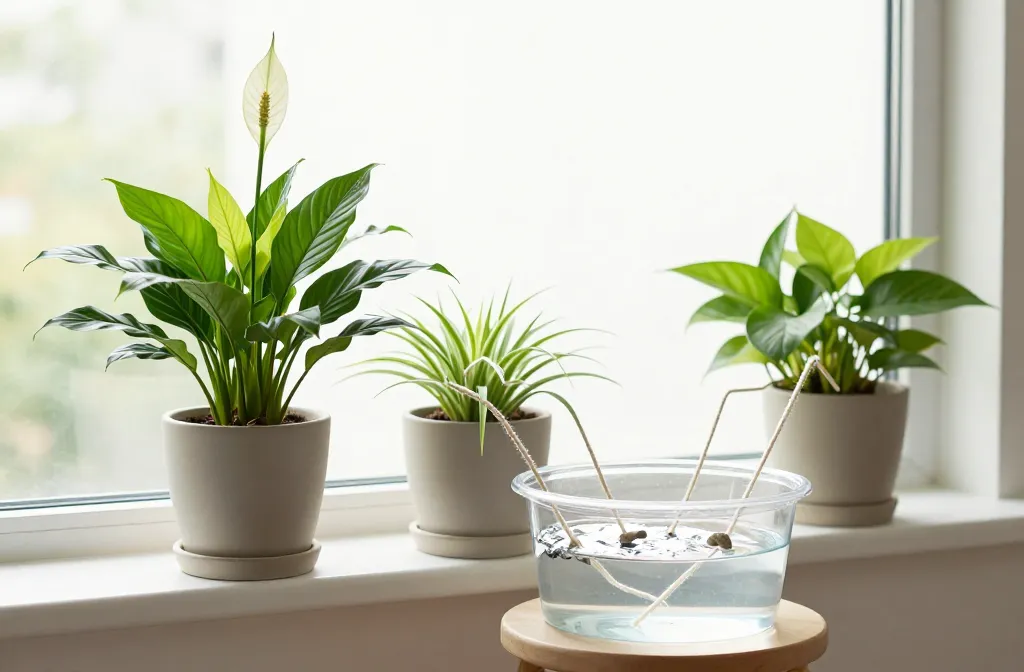
The Truth Behind 4 Vacation Plant Care Methods Ranked — Which Actually Works for More Than a Week
I’ve come home from trips to crispy spider plants and swampy pothos — both fail for the same reason: I assumed “one big water before I go” would carry them. It never does. After dozens of departures and a lot of trial runs, I’ve tested every common vacation setup with real houseplants in real apartments. Here’s what actually keeps plants alive for 7–21 days, what quietly kills them, and exactly how to set each method up with simple gear from a garden centre or hardware store.
1. Self-Watering With Capillary Wicks: Reliable For 7–14 Days If Set Correctly
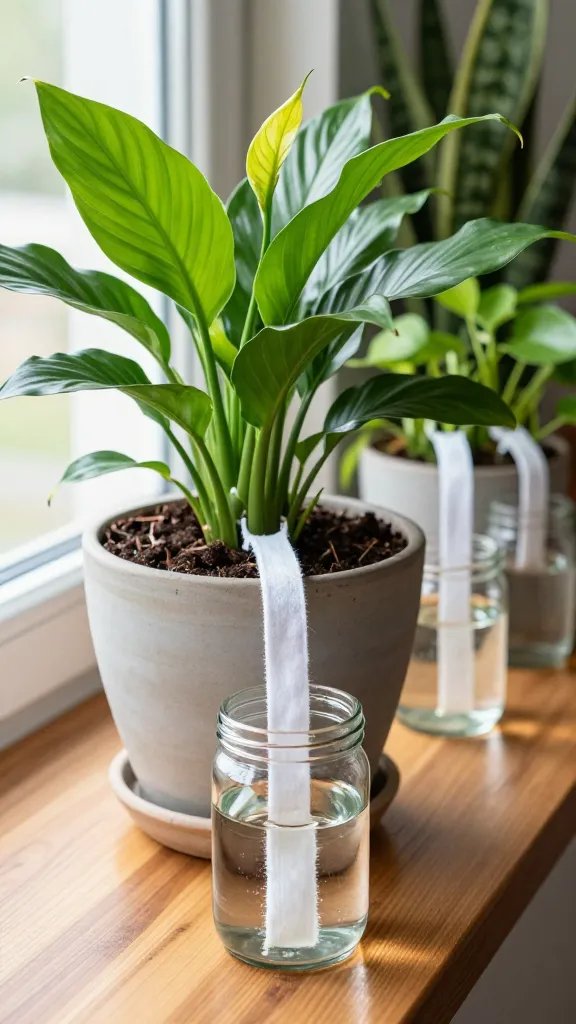
The biggest vacation killer is not dryness — it’s uneven moisture. Some pots dry in three days while others sit wet for two weeks. A simple wicking system evens that out, pulling water only as the soil dries. When I set this up right, even thirsty peace lilies stayed steady for two weeks without yellowing or drooping.
How It Works
A fabric wick bridges a water reservoir and the pot’s soil. Dry soil pulls water up the wick; wetter soil pulls less. You get a self-throttling supply with no timers or electricity.
What You Need
- 1–2 metres of braided cotton cord, nylon paracord with a cotton core, or dedicated “capillary wick” from a garden centre
- A bucket, clean paint tray, or large bowl placed below pot level
- Small stones or an upside-down saucer to keep wicks in place
- Aluminium foil or a lid to reduce evaporation from the reservoir
Setup Steps
- Water plants thoroughly the day before you leave so soil is evenly moist, not soggy.
- Cut a 45–60 cm length of wick per plant. Pre-wet the wick so it starts wicking immediately.
- Lay one end 5–8 cm deep against the root zone: poke a hole near the pot edge and tuck the wick in, or snake it under the surface. Weigh it down with a pebble.
- Place the reservoir 5–15 cm below the pot rim so water flows upward without flooding. Elevate pots on a book or tray if needed.
- Submerge the other end in the reservoir, ensuring 10–15 cm of wick stays underwater.
- Cover the reservoir to limit algae and evaporation. Top it up to last longer than your trip (1–2 litres per medium plant for 10–14 days).
Common Mistakes and Fixes
- Wick not pre-wet: Dry wicks don’t start. Soak them for 5 minutes first.
- Reservoir level too high: If it’s level with the pot soil, you get constant saturation. Keep water surface below the pot’s soil line.
- Wrong material: Slick synthetics won’t wick well. Choose braided cotton or labelled wicking cord.
- Crusted soil: Hydrophobic soil repels water. Pre-water and poke small holes to help contact.
Plant Suitability
- Great: Pothos, philodendron, peace lily, herbs in potting mix, spider plant
- Use caution: Succulents, cacti, snake plant — reduce wick thickness or skip this method
Takeaway: Pre-wet braided cotton wicks, set the reservoir below pot level, and expect a steady 7–14 days of coverage for most leafy houseplants.
2. Grouping With Humidity Tents: Extends Moisture 7–10 Days Without Overwatering
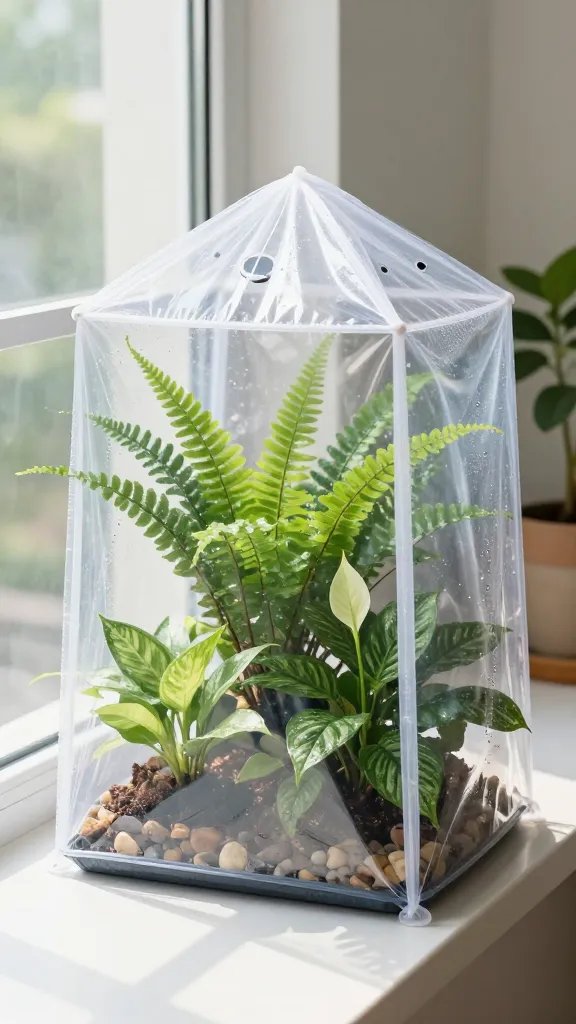
Most homes evaporate water fast — airflow and sun pull moisture from leaves and soil. Grouping plants and using a light, ventilated cover slows this loss and smooths temperature swings. I’ve cut watering needs by about a third this way, which buys a week even for ferns without creating a fungus factory.
How It Works
Plants clustered together raise local humidity. A loose plastic tent creates a mini-greenhouse while vents prevent stagnant air, which avoids rot.
What You Need
- Transparent plastic drop cloth or clear trash bags
- Chairs or stakes to hold the plastic off foliage
- Clothespins to secure vents
- Clean trays with a thin layer of pebbles for drainage
Setup Steps
- Water plants the day before until water runs through, then empty saucers. Soil should be evenly moist, not dripping.
- Place plants together in bright, indirect light — one step back from a window where you can read a book without direct sun on leaves.
- Set pots on a pebble tray. Add water to the tray until pebbles are half-submerged so pots aren’t sitting in water.
- Drape plastic to form a tent, keeping it off leaves. Open 2–3 hand-sized vents at the top with clothespins.
- Keep out of direct midday sun to prevent heat buildup under the plastic.
Warning Signs
- Foggy condensation all day: Open larger vents or move farther from the window.
- Musty smell in 24–48 hours: Too wet. Remove the cover for half a day and let the topsoil dry slightly.
- Sun scorch patches: Light is too strong. Shift to bright shade.
Plant Suitability
- Great: Ferns, calatheas, pilea, peperomia, tradescantia, seedlings
- Use caution: Succulents, cacti, snake plant — tents trap too much humidity for them
Takeaway: Cluster plants on pebble trays, tent loosely with vents, and keep out of direct sun — you’ll gain a safe 7–10 days with minimal risk.
3. DIY Drip Bottles and Spikes: Unreliable Flow, Best as Backup for 5–9 Days
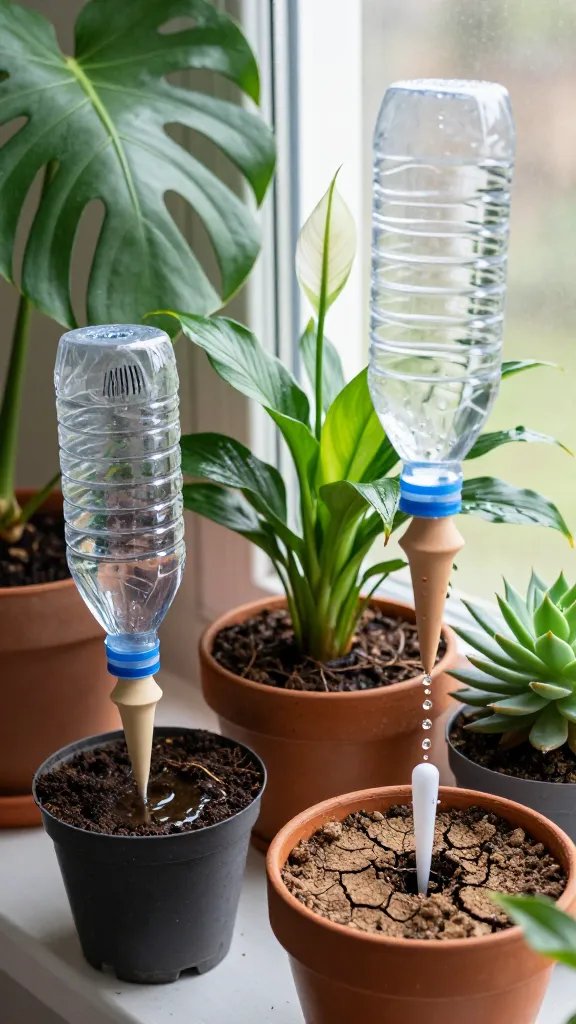
Bottle spikes promise “set and forget,” but I’ve watched them dump a litre overnight or barely drip at all. Soil texture, spike design, and bottle height change the flow wildly. This method can help for a short trip, but only if you test it a full day before you go.
Why They Fail
- Inconsistent flow: Clay spikes slow with fine potting mix; plastic spikes gush if the air vent is too open.
- Vacuum lock: Without a small air hole in the bottle, water stalls.
- Top-heavy bottles: A full 2-litre bottle can tip a light pot and tear roots.
How to Make It Work
- Use a small bottle (500 ml to 1 litre) per medium plant.
- Drill or poke a pin-sized vent near the base of the bottle (if using spikes without vents).
- Insert spike at the pot edge, angled toward the root zone, 5–8 cm deep.
- Set the bottle at soil level, supported by a stake or brick so it cannot tip.
- Test for 24 hours and measure loss. Aim for 50–150 ml/day for medium tropicals.
Better Off-the-Shelf Option
A basic drip kit from a garden centre, connected to a gravity-fed tank, is more consistent than spikes, but it needs a bit more setup and space. If you go this route, run it for 2–3 days before leaving and check each dripper for steady output into the soil, not onto leaves.
Plant Suitability
- Works OK: Pothos, philodendron, peace lily, large floor plants
- Avoid: Small pots (under 12 cm), succulents, orchids — too easy to overwater
Takeaway: If you must use bottle spikes, downsize the bottle, add a tiny vent, and test-run for a full day — count on roughly a week, not longer.
4. Heavy Pre-Watering and Closed Rooms: The One-Week Trap That Over or Undershoots
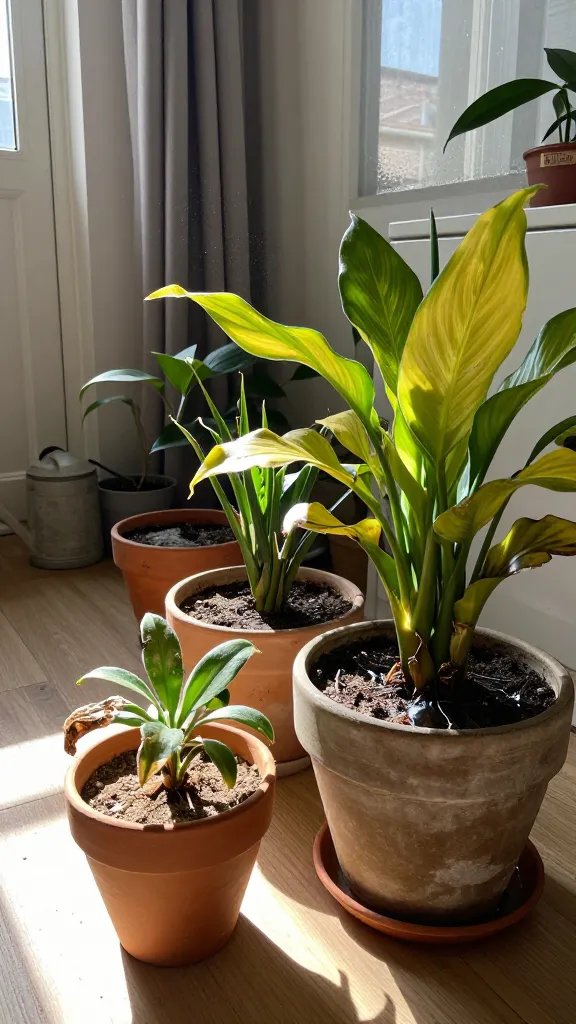
The most common plan is also the riskiest: drown everything the night before and shut the door. I used to return to half-dead plants and musty rooms. Saturating soil before leaving invites root rot for moisture-sensitive plants, while sunny windows still dry out small pots in five days.
Why It Fails
- Uneven pots: Big planters hold water for weeks; small ones dry in days, so one schedule fits neither.
- Stale air: Closed rooms with curtains shut can still heat up and cook plants mid-afternoon.
- Soil collapse: Repeated over-watering compacts potting mix, reducing air around roots and causing yellowing.
What to Do Instead
- Water to even moisture 24 hours before leaving, not to runoff saturation the morning of.
- Move pots one step back from direct sun to reduce daily evaporation.
- Mulch lightly with 1–2 cm of bark chips or decorative stones to slow surface drying.
- Combine with wicks or a humidity tent for anything that droops within 4–5 days between waterings.
When This Still Works
- Succulents, cacti, snake plant, ZZ plant: Water 3–4 days before leaving so the surface dries; then leave them alone for 2–3 weeks.
- Cool, shaded rooms: If a room stays steady and bright without direct sun, a single moderate watering can last a week for most medium pots.
Action today: Stop the “last-minute soak.” Water moderately the day before, pull plants out of direct sun, add a thin mulch, and pair with a wick or tent for anything thirsty.
Frequently Asked Questions
How do I know which plants need wicks versus a humidity tent?
Check how often each plant droops or the top 2–3 cm of soil dries between regular waterings. If it normally asks for water every 3–5 days (peace lily, fern), use a wick or a wick plus tent. If it lasts 7–10 days already (pothos, philodendron), a tent or simple relocation out of direct sun is enough. Succulents and snake plants do best with no wick and no tent — just water well 3–4 days before leaving and keep them bright but not hot.
Can I use tap water in the reservoir without it going slimy?
Yes. Use clean tap water that tastes normal (not salty), and keep the reservoir covered with foil or a lid to block light. Algae needs light, so shading the water prevents most slime. Rinse the reservoir when you return and let it dry before storing your wicks for next time.
What if my apartment gets strong afternoon sun while I’m away?
Pull plants 1–2 metres back from west or south-facing windows, or behind a sheer curtain. Group them on pebble trays and use a vented plastic tent to cut heat stress. Avoid sealing the tent — leave two hand-sized vents at the top. This change alone can extend water reserves by several days.
Do self-watering pots replace wicks?
If your planter has a built-in reservoir and a raised platform or wicking columns, treat it like a permanent wick system. Fill the reservoir, water the soil from the top once to start wicking, and you’ll often get 10–14 days. Confirm by checking the indicator or lifting the pot to feel weight before you go. If a plant is extra thirsty, add a temporary external wick to a larger bucket for a longer trip.
How do I keep small pots (under 12 cm) alive for more than a week?
Small pots dry fastest. Nest them together under a vented tent, set them on a damp towel on a tray (not dripping), and use thinner wicks to a shared reservoir so you don’t swamp them. Move them out of direct sun, and consider double-potting: place the nursery pot inside a slightly larger cachepot with a 1–2 cm gap lined with damp sphagnum moss.
What’s the minimum prep I should do the day before leaving?
Water evenly, empty saucers, move plants out of direct sun, set up wicks for thirstiest pots, and group the rest on a pebble tray under a loose tent with vents. Top off reservoirs and test any drip spikes for 24 hours. Snap a quick photo of each setup so you can adjust faster next time based on what worked.
Conclusion
For more than a week away, wicks plus smart placement beat last-minute soaking every time. Set one plant up tonight as a rehearsal, and you’ll travel knowing exactly how long your collection can cruise without you. When you’re back, note what stayed happiest — that’s your personal template for the next trip.