The Easiest Kitchen Garden 6 Herbs That Grow in Water — No Soil, No Drainage, No Mess
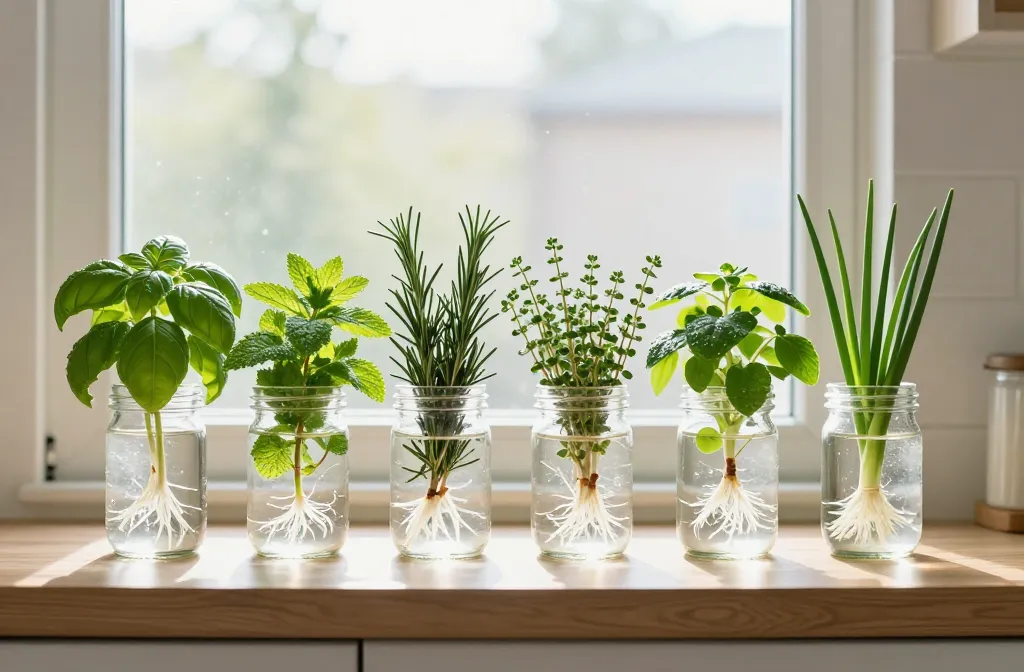
I started a windowsill “water garden” during a kitchen renovation when every pot was boxed up. Within two weeks I had jars of lush stems and a cutting board that never ran out of garnish. If you’ve avoided growing herbs because of messy soil or poor drainage, this guide shows you exactly which herbs thrive in plain water and how to keep them productive for months. You’ll learn the setup, the light, and the simple re-cut-and-refresh rhythm that keeps your jars clean and your meals fragrant.
1. Basil: Fast Growth, But Prone To Slimy Stems Without Clean Cuts
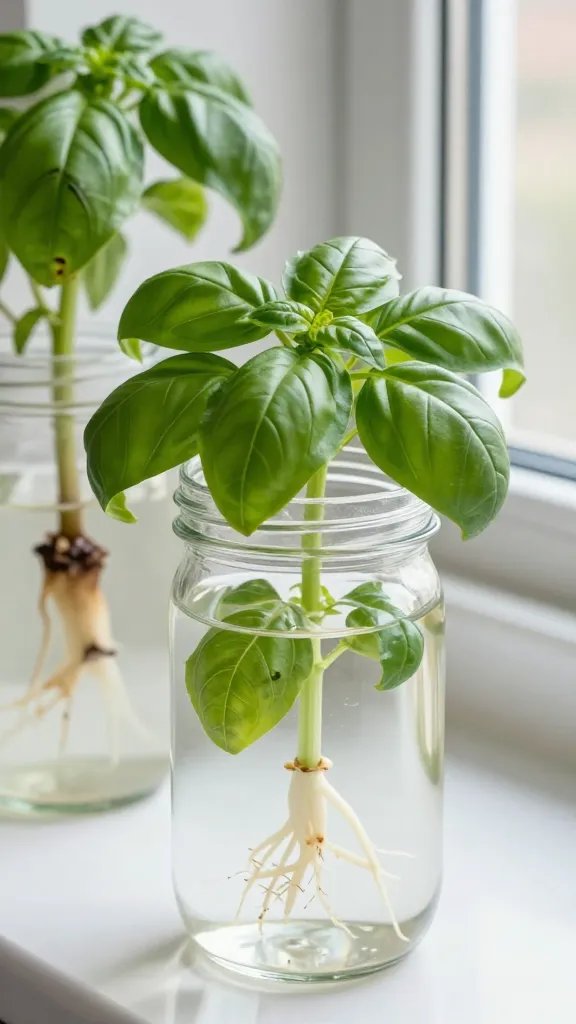
Basil explodes with new roots in water, then collapses if you ignore hygiene. Cloudy jars and slimy stem bases choke oxygen and invite rot, turning leaves black at the veins and ruining the aroma.
Signs To Watch For
- Stem bases turning brown or translucent within a week
- Water smelling sour or “pondy” by day 5–7
- Leaves curling and darkening along the midrib
How To Fix It
- Take 10–15 cm (4–6 in) tip cuttings from a healthy plant. Remove all leaves that would sit below the waterline.
- Re-cut stems underwater at a 45° angle with a clean knife to prevent air bubbles blocking uptake.
- Use clear glass or food-safe jars filled with room-temperature tap water that tastes clean, not salty.
- Place in bright, indirect light near an east or bright north window. Avoid hot midday sun that cooks the jar.
- Change water every 3–4 days and rinse stems. Wipe the jar with a bottle brush to break biofilm.
- Pinch off any flower buds immediately to keep growth leafy and sweet.
Action today: Snip two basil tips, strip lower leaves, and stand them in a clean jam jar beside a bright window; set a phone reminder to change the water in 3 days.
2. Mint: Vigorous Roots That Starve Without Enough Light
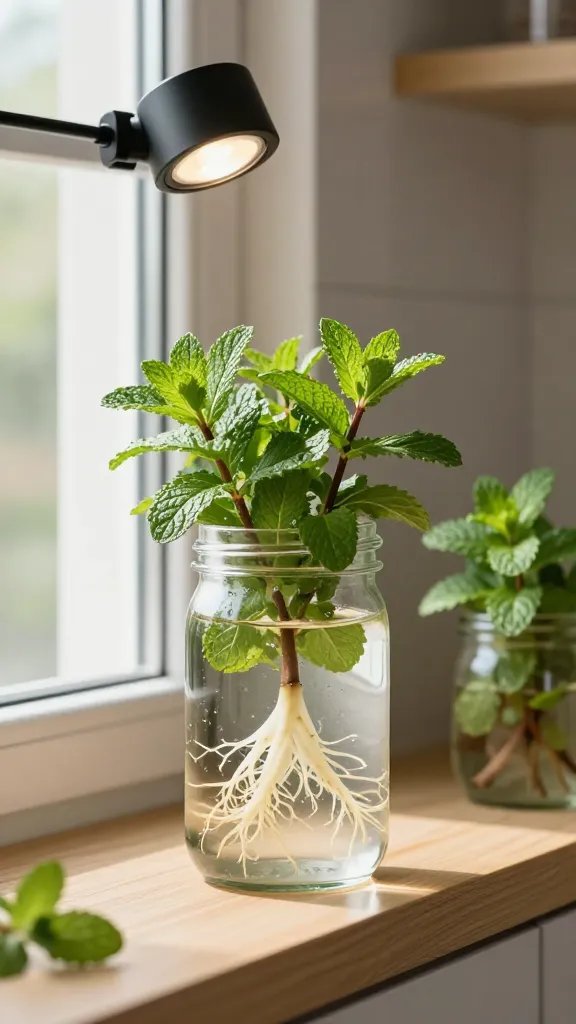
Mint roots almost anywhere and overgrows its jar, but the leaves turn thin and bland if you park it in a dim corner. Without steady light, you get lanky stems that flop and lose that cool punch.
Give It The Right Spot
- Choose spearmint, peppermint, or chocolate mint tips 10–12 cm (4–5 in) long.
- Set them 30–60 cm (1–2 ft) from a bright window that gets at least 4–6 hours of indirect light daily.
- If your window is weak, add a simple clamp light with a 9–12 W LED “daylight” bulb, 20–25 cm (8–10 in) above the jar, on for 10–12 hours.
Routine Care
- Change water weekly if light is strong, every 3–4 days if the jar warms up in sun.
- Trim back to a pair of leaves every 10–14 days to keep stems compact and tasty.
- Rinse off any algae from glass under the tap; it’s harmless but competes for nutrients and light.
Takeaway: Put mint where you can comfortably read a book by daylight at midday; soft, pale leaves mean you need a brighter spot or a cheap LED clamp light.
3. Oregano: Woody Stems Rot If You Submerge The Nodes
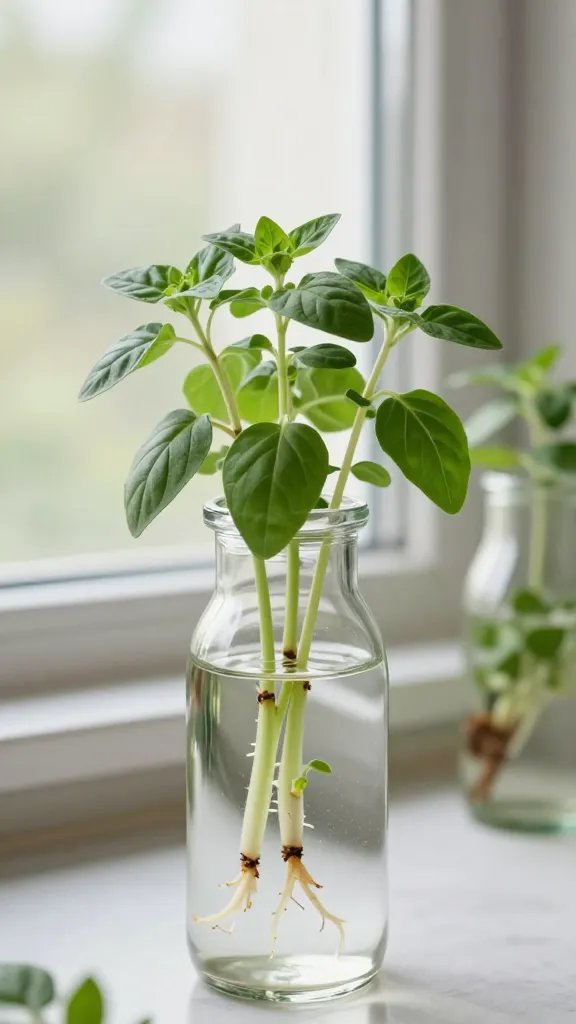
Oregano delivers rich flavor in water, but its semi-woody stems decay fast when leaves and nodes sit underwater. Rot creeps up the stem and stops new root nubs before they form.
Stem Prep That Prevents Rot
- Choose soft, green tips 8–10 cm (3–4 in) long, not the older woody base.
- Strip all leaves from the bottom half of each cutting so no foliage sits below the waterline.
- Use a narrow-neck bottle to hold stems upright and keep nodes just at or slightly above the water surface.
Light And Harvest
- Give oregano the brightest window you have without midday scorch—south or west window with a thin curtain works.
- Snip 2–3 cm (about an inch) from multiple stems instead of taking one big cut; this encourages branching.
- Refresh water every 4–5 days and top up only with fresh water, never backfilling old water.
Action today: Move oregano cuttings into a taller, narrower bottle so only bare stem touches water—no leaves under the surface.
4. Rosemary: Slow To Root, Suffocates In Warm, Stagnant Water
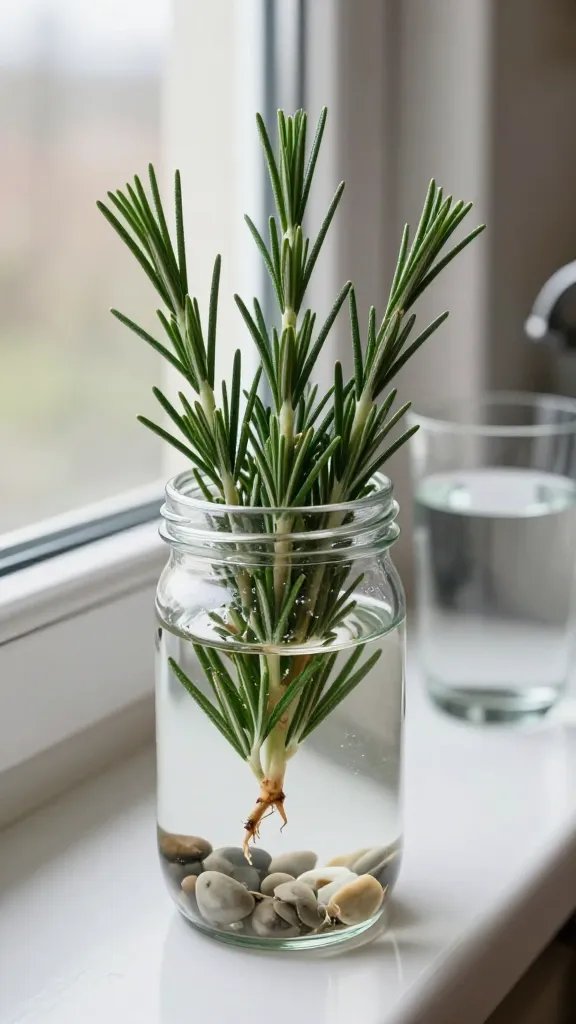
Rosemary can grow in water, but it sulks if the jar heats up or goes stale. Warm, oxygen-poor water blackens the cut end and the whole sprig dries from the tip down.
Keep It Cool And Oxygenated
- Use 8–10 cm (3–4 in) semi-soft green tips. Avoid stiff, woody pieces for water culture.
- Stand the jar away from radiators and ovens; target a cool windowsill around 15–21°C (60–70°F).
- Change water every 3 days for the first two weeks. Swish vigorously to oxygenate before refilling.
- Add one pebble layer at the bottom of the jar to slightly lift stems and improve water circulation.
Patience And Placement
- Expect visible roots in 3–4 weeks, sometimes 6. Don’t tug; look for white bumps at the nodes.
- Give bright light with a few hours of gentle morning sun. Harsh afternoon sun overheats the jar.
- Harvest sparingly—just the soft tips—until you see a good root beard forming.
Takeaway: If rosemary water feels warm to the touch at midday, move it to a cooler window and shorten the water-change interval to every 3 days.
5. Thyme: Tiny Leaves Mold Quickly Without Airflow And Clean Waterlines
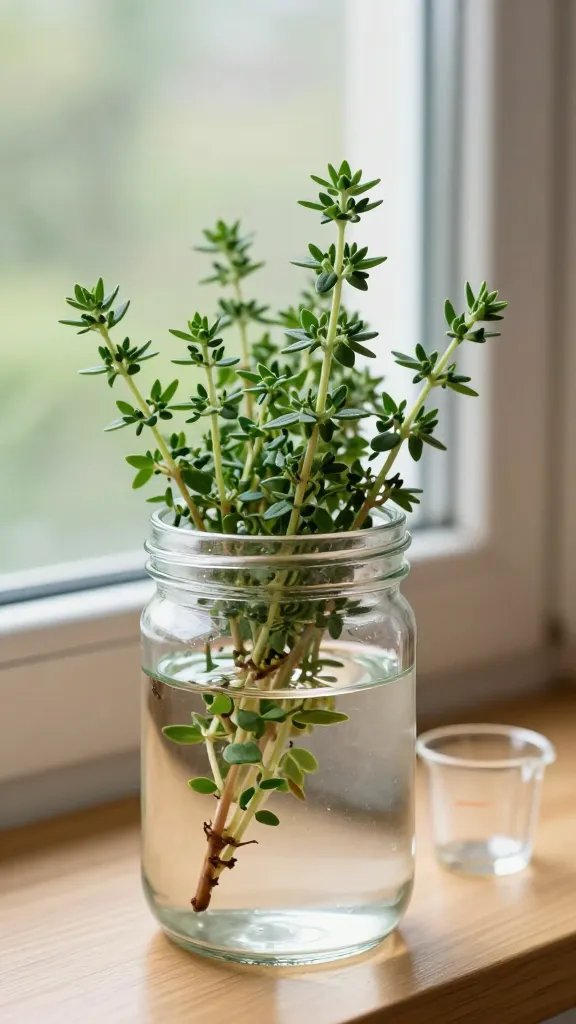
Thyme offers big flavor from small stems, but its tiny leaves trap moisture and invite gray fuzz if they touch water or glass film. Once mold appears, the whole sprig declines fast.
Prevent Mold With Clean Margins
- Clip 8–10 cm (3–4 in) flexible tips. Strip the lower 4–5 cm (1.5–2 in) bare.
- Use a wide-mouth jar so stems splay rather than clump. Clumps trap humidity.
- Keep the waterline 1–2 cm (½–¾ in) below the lowest leaf. Top up carefully with a small measuring cup.
- Position near a window that opens. Crack it for 10–15 minutes daily when weather allows for airflow.
Sanitation Routine
- Every 3–4 days: dump water, rinse the jar, finger-wipe the glass, and refill.
- Remove any leaf that drops into the jar immediately. Dead bits feed bacteria.
- If you see fuzz, trim below it into clean tissue, rinse the cutting, and restart in fresh water.
Action today: Lower your thyme waterline so no leaves touch water; leave a clear gap you can see at a glance.
6. Green Onions: Endless Regrowth If You Keep The White Base Clean And Fed
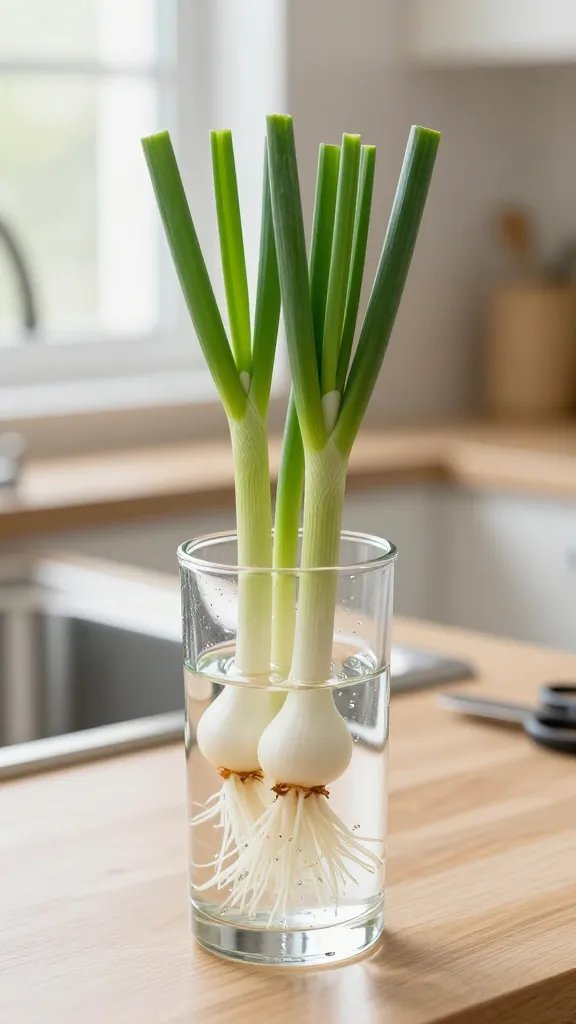
Green onions (scallions) regrow practically forever in water, but they slow down or stink if the base sits in murky water. Slime blocks new growth and the tops yellow from lack of simple nutrients.
Simple Kitchen Setup
- Save the white bulb and 2–3 cm (1 in) of the pale green. Rinse off soil.
- Stand bulbs upright in a glass with just enough water to cover the roots and the very base—about 1–2 cm (½–¾ in).
- Place in bright indirect light on the kitchen counter or a windowsill you walk past daily.
Keep Them Productive
- Change water every 2–3 days. Rinse off any slime under cool running water.
- Harvest with scissors from the top, leaving at least 5 cm (2 in) to regrow.
- Every second week, add one drop of standard liquid houseplant fertilizer per cup of water to replace lost minerals. The water should still look clear and taste neutral.
Takeaway: Trim, rinse, and refresh your scallion jar twice a week; you’ll keep crisp greens coming for months.
Frequently Asked Questions
Do herbs in water need fertilizer?
Yes, after the first 2–3 weeks of rooting. Add a tiny amount of standard liquid houseplant fertilizer—about one drop per cup of water—every other week. If the water clouds or smells, you used too much; dump, rinse, and refill with plain water. Most leafy herbs stay happy on this light schedule.
How often should I change the water?
Every 3–4 days for soft herbs like basil and thyme, and every 2–3 days for green onions. Rosemary prefers very fresh water during the first few weeks—change it every 3 days. If the jar warms in direct sun or smells off, change it immediately. Always rinse stems and wipe the jar before refilling.
What kind of container works best?
Any clean, food-safe glass jar or bottle works. Use clear glass so you can see waterlines and root health. Narrow-neck bottles help support taller stems like oregano and rosemary; wide-mouth jars prevent crowding for thyme and mint. Avoid metal containers that can rust and leach into the water.
Where should I place jars for the right light?
Choose bright indirect light close to a window—east or bright north is ideal. South or west windows work if you diffuse the light with a sheer curtain and keep jars from heating up. If your space is dim, add a simple clamp light with a daylight LED bulb on for 10–12 hours. Weak, pale leaves tell you to move closer to the light.
How do I stop algae in the jars?
Algae thrives in light and still water. Keep water fresh, wipe the glass at each change, and avoid sugary additives. If algae persists, switch to an amber bottle or wrap the lower half of the jar with paper to shade the water while keeping leaves in the light. Rinsing stems under the tap breaks up film and restores clarity.
Can I plant the water-rooted herbs into soil later?
Yes, but transition gently. Pot into a small container with good quality potting mix, burying only the rooted section, and keep the mix barely moist for the first week. Place in the same bright spot to reduce shock. Expect a brief pause in growth as water roots adapt to soil.
Conclusion
You don’t need pots, drainage trays, or a balcony to harvest fragrant herbs—just clean jars, bright light, and a rinse-and-refill habit. Start with one jar each of basil and mint this week, and add a new herb every time you change the water. In a month, your windowsill will be your freshest aisle in the kitchen.