Stop the Plant Crash: 10 Signs Your Container Soil Is “Spent” and Needs Replacing
Your plants look tired, and no amount of pep talk—or fertilizer—fixes it. Sound familiar? Container soil doesn’t last forever, and spent mix quietly sabotages your greens. Let’s decode the red flags so you can revive your pots before they turn into sad, crunchy memorials.
Catch these signs early, swap or refresh your mix, and watch your plants bounce back. Ready to spot trouble like a pro? Let’s dig in—figuratively and literally.
Why Do Leaves Yellow Even When You’re Watering Right?
Capsule: Bottom-up yellowing despite decent watering usually means nutrient-depleted soil — container mixes lose their charge fast as water flushes nutrients out with every watering cycle.
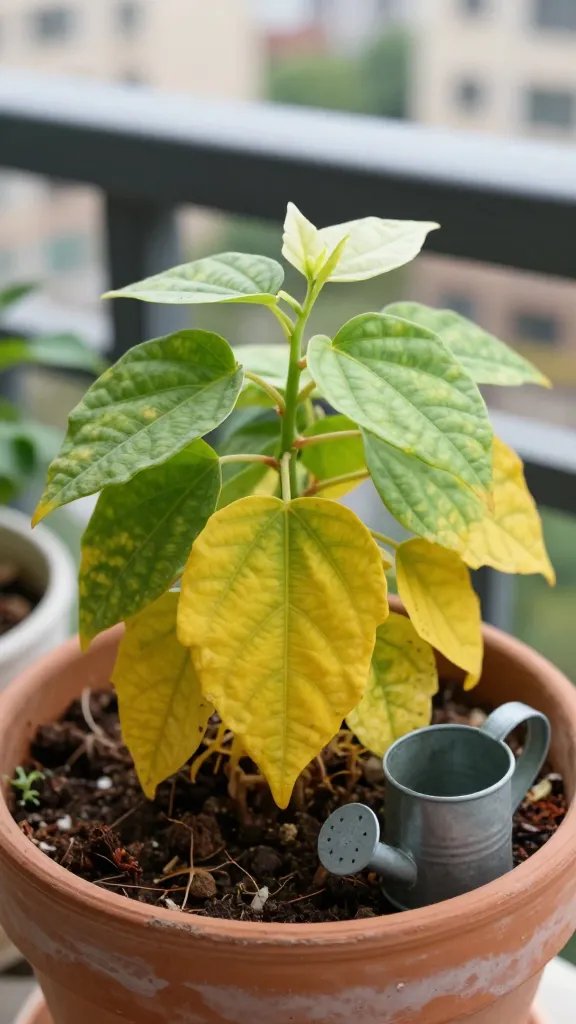
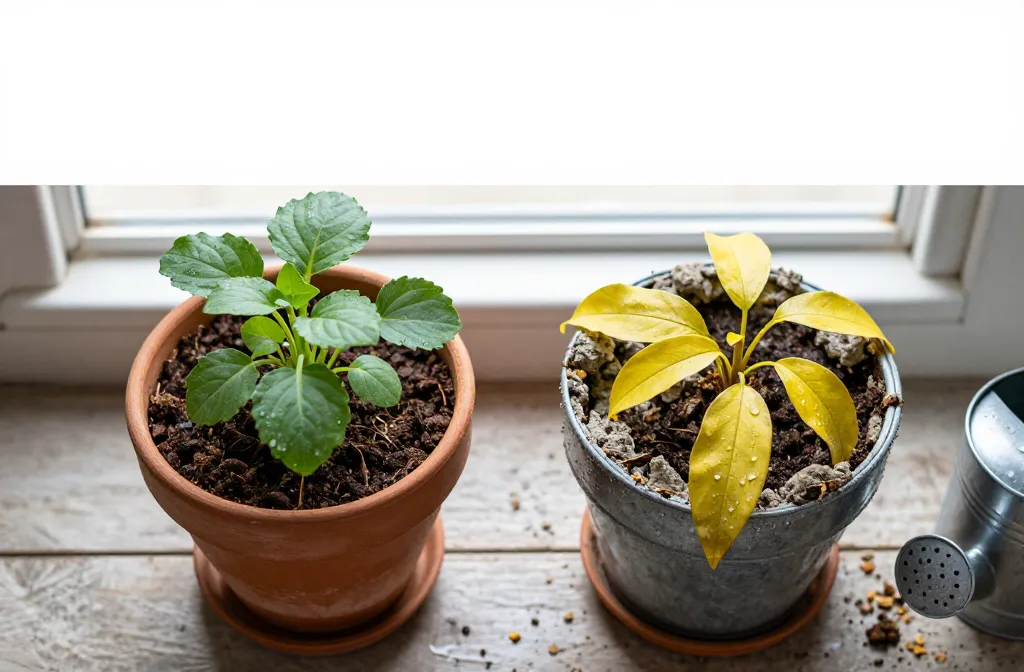
When leaves yellow from the bottom up despite decent watering, your soil likely lacks nutrients. Container mixes lose their charge fast because water flushes nutrients out. If you’ve tried adjusting water and light and nothing changes, blame the mix. As Clemson Extension notes, nutrient depletion in container media happens faster than most growers realise — often within a single growing season.
What To Look For
- Lower leaves yellowing while new growth looks small or pale
- No improvement after feeding with a balanced fertilizer
- Slow growth even in prime season
Bottom line: nutrient-depleted, overworked soil stops supporting healthy growth. Refreshing or replacing it gets color and vigor back quickly.
Why Does Water Run Straight Through the Pot?
Capsule: Water shooting out the drainage holes means your peat-heavy mix has gone hydrophobic — it repels water instead of absorbing it, and roots can’t drink no matter how much you pour.
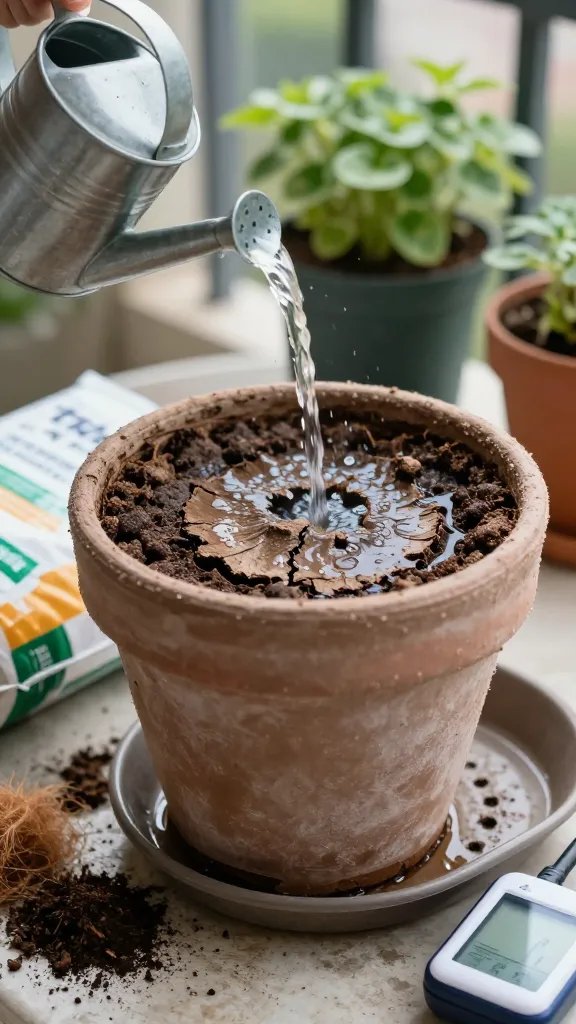
Pour water in, and it shoots right out the drainage holes? That’s hydrophobic soil. As peat-heavy mixes age and dry out, they repel water like a cat dodging bath time. The U.S. Sphagnum Peatland Association explains that aged peat loses its ability to rewet evenly, which is exactly what causes this frustrating run-off.
Fix-Or-Replace Test
- Rehydrate method: Set the pot in a tray of water for 20–30 minutes. If the surface still beads water after, the mix is done.
- Structure check: If the mix feels crusty or powdery, it won’t hold moisture evenly again.
Use a fresh mix with better water retention and add coco coir or compost for stable moisture. Your roots will actually drink instead of watching water speed by.
When Has Potting Mix Turned Into Dust or Sludge?
Capsule: If your mix collapses into fine dust or compacts into heavy, smeary clumps, its structure has failed — roots can’t breathe or anchor, and no amount of fertiliser will fix it until you replace the medium.
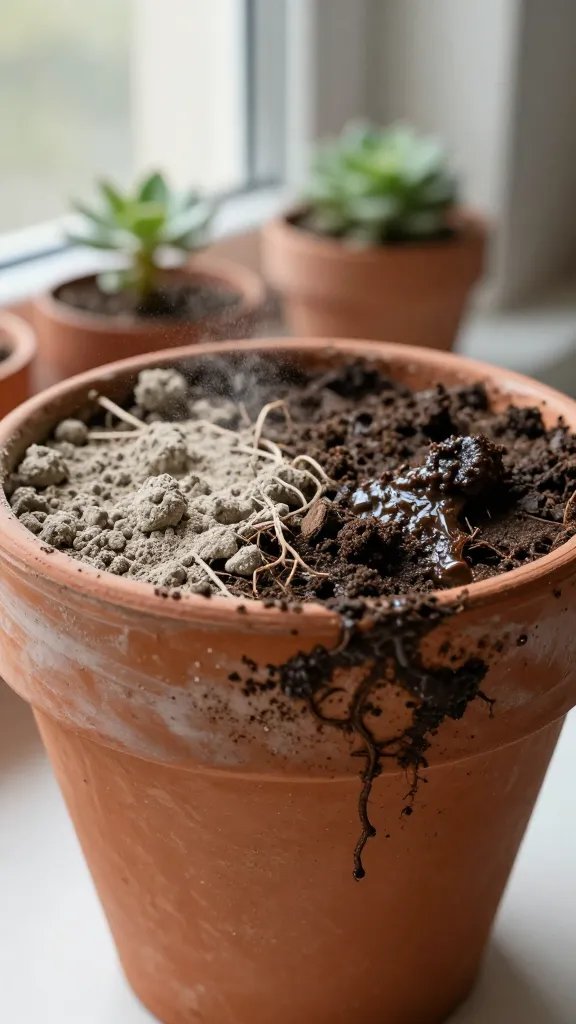
Healthy mix has spring. Spent mix either collapses into fine dust or compacts into sludge. Both extremes choke roots and wreck airflow.
Signs Of Structural Breakdown
- Dusty, ash-like particles that fly around when you stir it
- Heavy, sticky clumps that smear when wet
- Shrinking soil level well below the rim (more than 1–2 inches)
When the structure fails, roots can’t breathe or anchor. Replacing the mix restores porosity and boosts growth immediately. You can compare different substrate options in our guide to container soil types.
What Does White Crust on the Surface or Pot Rim Mean?
Capsule: A chalky, salty crust is mineral buildup from fertiliser, hard water, and evaporation — excess salts burn roots and lock out nutrients, so flush or replace the mix before leaf edges start crisping.
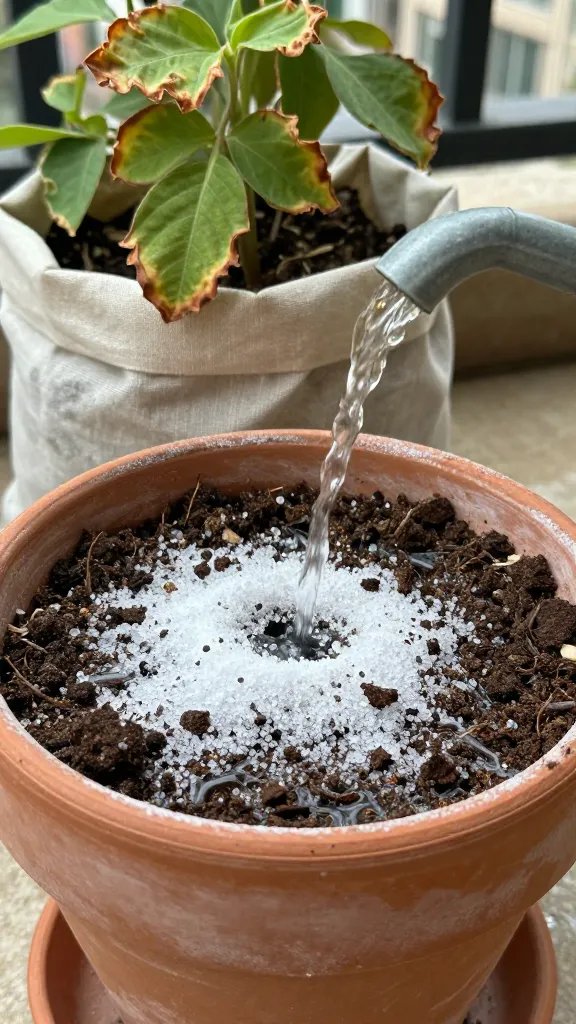
See a salty, chalky crust? That’s mineral buildup from fertilizer, hard water, and evaporation. Excess salts burn roots and lock out nutrients.
What To Do
- Flush test: Run water through the pot for a few minutes. If the crust returns fast, your mix is saturated with salts.
- Check drip lines: Mineral rings on terra cotta or fabric pots = heavy buildup.
Replace at least the top third of the mix or repot entirely. Your plants get a clean slate and fewer crispy leaf edges, FYI.
Why Are Mushrooms, Fungus Gnats, or Sour Smells Showing Up?
Capsule: Mushrooms, gnat clouds, and swampy smells all mean your mix stays wet too long and organic matter is decomposing anaerobically — replace it with a fresh, airy blend to starve the pests and let roots breathe again.
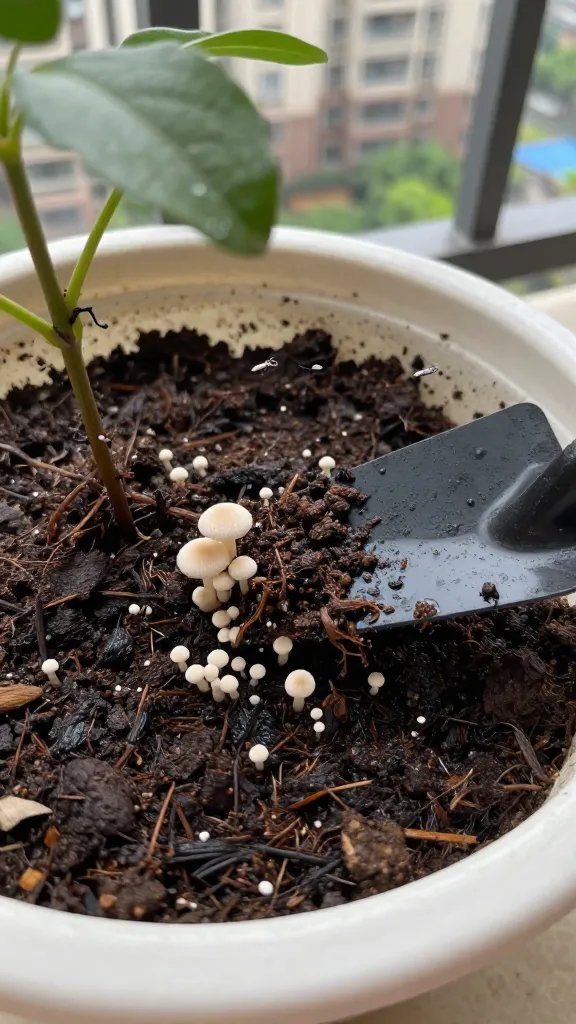
Life in the soil is good—until it’s the wrong kind. Mushrooms popping up, clouds of fungus gnats, or a sour, swampy smell mean your mix stays wet too long and organic matter is decomposing hard.
Quick Diagnostics
- Fungus gnats swarm when you disturb the soil
- Mushrooms appear after watering or rain
- Rotten smell when you dig an inch down
Overly broken-down mix holds water like a sponge and starves roots of oxygen. A fresh, airy blend starves gnats, settles the smell, and keeps roots happy.
What Does It Mean When Roots Circle the Pot Like a White Net?
Capsule: A white mat of circling roots means the soil inside has basically retired — the plant is rootbound and screaming for a bigger home, fresh media, and room for new root growth.
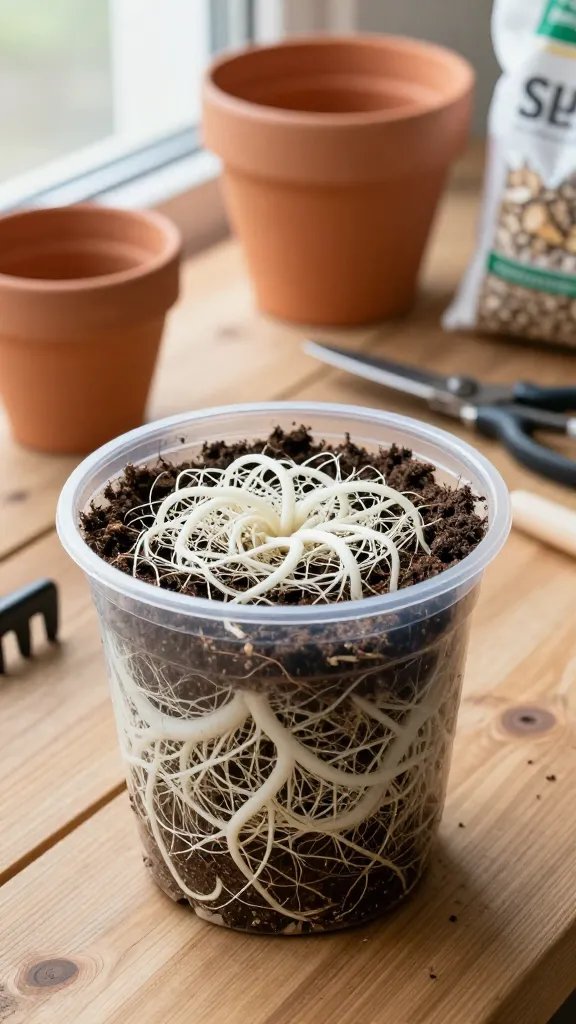
Rootbound plants scream for a bigger home and fresh media. When you slide the plant out and see a white mat circling the outside, the soil inside has basically retired.
Repotting Tips
- Tease or trim the outer roots to encourage new growth
- Up-pot one size and replace at least 50–70% of the old mix
- Add perlite or bark for structure and long-term airflow
New soil gives roots room, nutrients, and oxygen. You’ll see a growth spurt within weeks, seriously.
Why Do Plants Wilting Fast After Watering Point to Soil Problems?
Capsule: If a plant perks up for an hour after watering then slumps again, the mix has lost its balance between drainage and retention — old soil develops dry pockets and wet clumps that roots can’t use evenly.
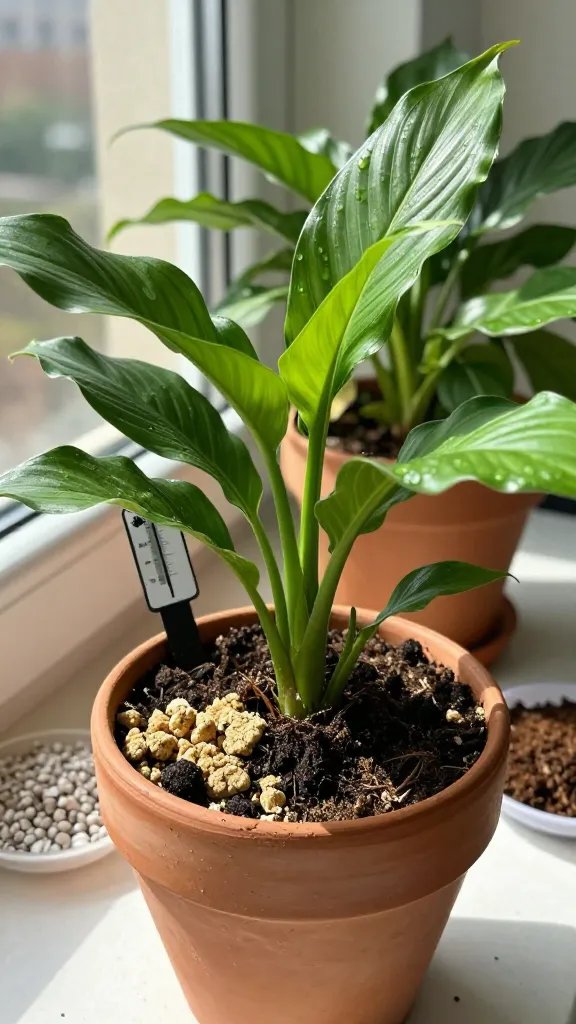
If your plant perks up for an hour after watering and then slumps again, the mix might not retain moisture evenly. Old mixes lose their balance between drainage and retention.
Check These Variables
- Hot, dry air? Normal to dry fast, but not within hours
- Small pot + big plant? Also dries quickly—but spent soil exaggerates it
- Soil feel: Dry pockets with wet clumps = uneven texture
Replace with a fresh blend tailored to the plant: more perlite for succulents, more coco coir/compost for thirsty annuals. Balanced moisture equals steadier growth.
When Does Fertiliser Stop Doing Anything?
Capsule: When regular feedings don’t move the needle, the soil is likely so depleted or pH-imbalanced that nutrients get locked up — fresh mix with a stable pH resets the growing medium so fertiliser actually works again.
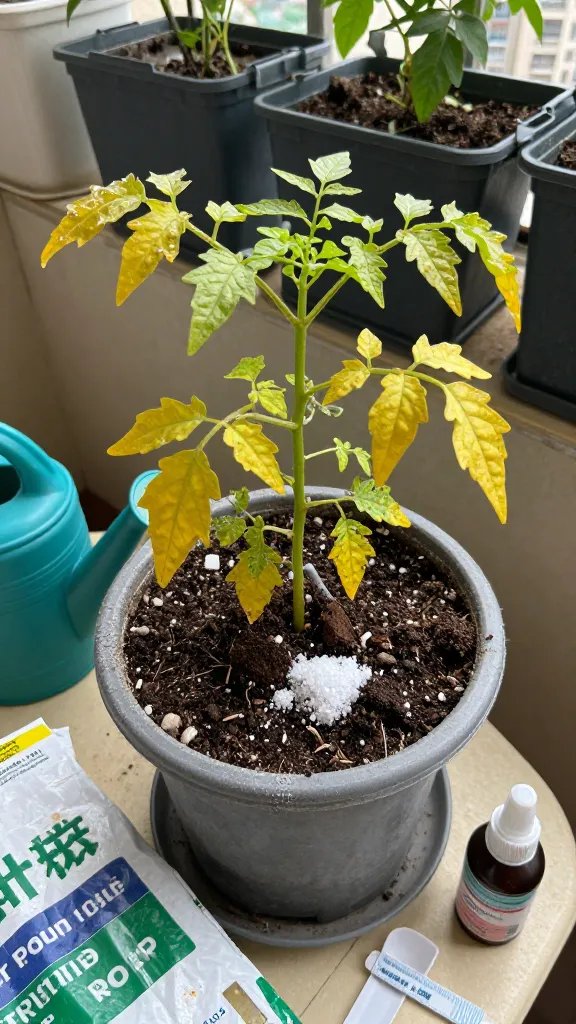
When regular feedings don’t move the needle, the soil might be so depleted or imbalanced that nutrients get locked up. Old mixes acidify or become too saline, and plants shrug at your efforts.
How To Confirm
- pH drift: Leaves look nutrient-deficient across the board
- Salt history: You’ve been feeding heavily or using hard water
- No response even with foliar feed or slow-release pellets
Fresh mix with a stable pH and clean starting point lets fertilizing actually work again. Consider mixing in a slow-release fertilizer for consistent results.
Why Does the Soil Level Keep Sinking and Exposing Roots?
Capsule: Dropping soil levels and exposed roots mean your organic materials are collapsing as they decompose — that’s less volume, less air space, and fewer nutrients with every passing week.
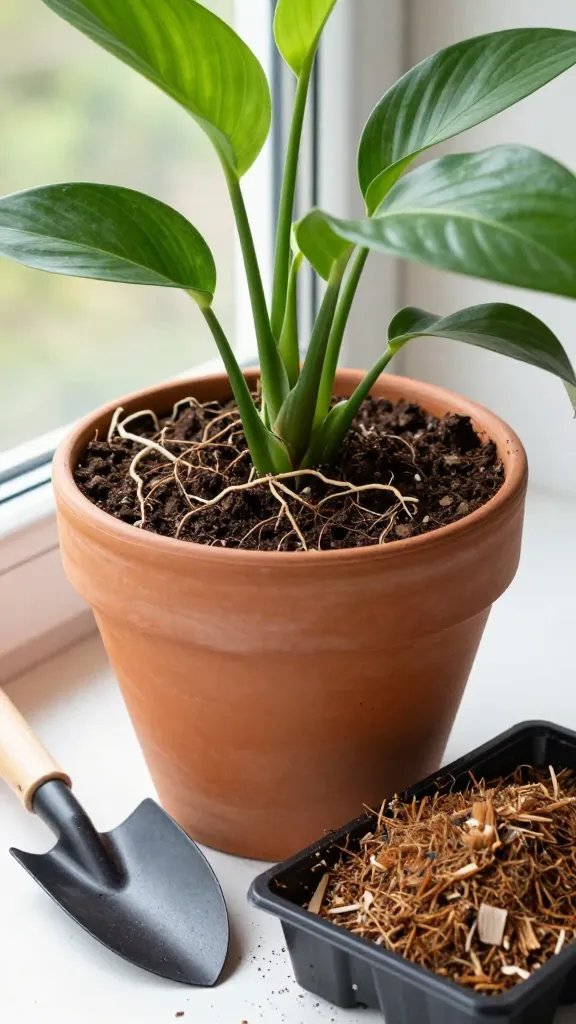
If the soil drops every few weeks and roots peek out, your mix is collapsing as the organic materials decompose. That means less volume, less air space, and fewer nutrients.
Quick Fix Vs. Long Fix
- Top-up strategy: Add 1–2 inches of fresh mix around the base (short-term)
- Full refresh: Replace 50–100% for pots older than one season
- Amendment combo: Add pine bark fines for structure that lasts
Refilling protects roots and restores structure. You’ll also reclaim the pot’s original capacity for water and nutrients.
Why Do Pests and Diseases Keep Coming Back?
Capsule: Recurring spider mites, mealybugs, or root rot often trace back to stressed plants growing in tired soil — weak plants attract trouble like a porch light attracts moths, and refreshing the mix is the real fix.
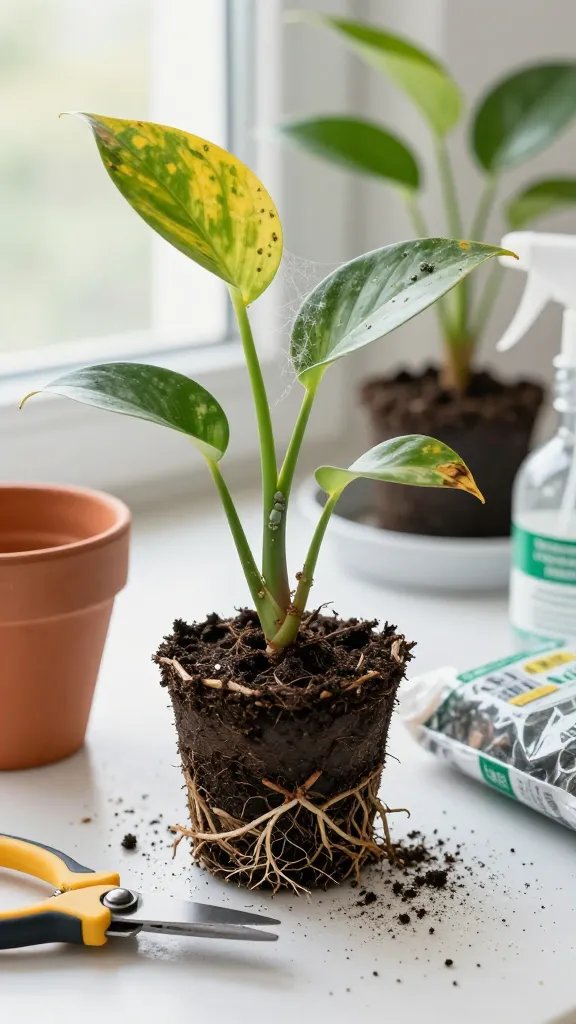
Recurring spider mites, mealybugs, or root rot often point to stressed plants living in tired soil. Weak plants attract trouble like a porch light attracts moths.
Reset Protocol
- Inspect roots: Trim brown, mushy sections
- Sanitize pots: Wash with soapy water, then a 10% bleach solution
- Repot with fresh, sterile mix and isolate for a week
Healthy, refreshed soil helps plants fight off pests and bounce back faster. Think of it as a hard reset with better defaults, IMO. For a deeper look at fixing root-level problems, check out our guide on soil add-ins to prevent root rot.
How Do You Refresh or Replace Container Soil Like a Pro?
Capsule: Replace 100% of the mix for severe salt crust, hydrophobic soil, or root rot; do a partial top-third refresh for minor compaction or seasonal top-ups — and always match your amendments to the plant’s watering style.
Ready to swap out the spent stuff? Here’s how to keep it quick and clean.
| Sign | Partial Refresh OK? | Full Replace Needed? |
|---|---|---|
| Minor yellowing | ✓ Top third | — |
| Slight compaction | ✓ Top third + perlite | — |
| Salt crust | — | ✓ If flush doesn’t fix it |
| Hydrophobic mix | — | ✓ |
| Sour smell / gnats | — | ✓ |
| Root rot | — | ✓ |
| Soil older than 12 months | — | ✓ |
When To Replace 100%
- Severe salt crust, hydrophobic mix, or sour smell
- Root rot or heavy pest pressure
- Soil older than 12–18 months, especially outdoors
When A Partial Refresh Works
- Top third looks compacted but no smell
- Minor nutrient depletion
- Seasonal top-up for annuals and heavy feeders
Smart Mix Add-Ins
- Coco coir: Moisture retention without compaction
- Perlite or pumice: Drainage and airflow
- Compost: Nutrients and microbes (use 10–20% by volume)
- Pine bark fines: Long-lasting structure
- Slow-release fertilizer: Consistent feeding
Tailor your blend to the plant—succulents crave grit, veggies love rich, well-draining mix. Your future self will thank you.
Can You Reuse Old Soil Without Regrets?
Capsule: You can recycle old mix smartly — solarise it to kill pests, cut it 1:1 with fresh mix for ornamentals, or compost it — but never reuse soil that had disease or root rot straight back into hungry plants.
Hate waste? Me too. You can recycle old mix smartly, just not straight back into hungry plants.
Safe Ways To Reuse
- Solarize: Spread moist soil in a clear bag in full sun for 4–6 weeks to reduce pests
- Cut with new: Mix old soil 1:1 with fresh mix for ornamentals
- Use for non-edibles: Shrubs, perennials, or pathways
- Compost it: Blend into your compost pile to rebuild life
Avoid reusing in pots that had disease or root rot. Fresh start = fewer headaches, trust me.
When Should You Time Your Soil Refresh for Maximum Payoff?
Capsule: Early spring is ideal — plants wake up and root fast into new media. After harvest and during mild weather also work well. Mid-season repots are fine if you keep roots shaded and skip heavy feeding for a week.
Plant timing matters. A strategic repot beats a panic repot every time.
Best Times
- Early spring: Plants wake up and root fast into new media
- After harvest: Clear out annuals and reset pots
- Mild weather: Avoid heat waves and cold snaps
If you must repot mid-season, keep roots shaded, water deeply, and skip heavy feeding for a week. Your plant will handle the glow-up just fine.
How Do You Choose the Right Fresh Mix for Each Plant?
Capsule: Match the mix to how your plant drinks — herbs and veggies need all-purpose plus compost and perlite, succulents want 40–60% grit, and acid lovers need a mix labelled for low-pH tolerance.
Not all bags are equal. Pick the mix that matches how your plant drinks and breathes.
Quick Guide
- Herbs/veggies: All-purpose potting mix + compost + perlite
- Houseplants: All-purpose + coco coir + perlite + a bit of bark
- Succulents/cacti: Gritty mix with 40–60% perlite/pumice and coarse sand
- Acid lovers (blueberries, azaleas): Mix labeled for acid-loving plants
Match the mix to the plant’s lifestyle and you’ll dodge most soil dramas before they start. For the full rundown on watering practices once you’ve repotted, see our container watering guide.
There you go: the telltale signs your container soil is tapped out and how to fix it without chaos. Swap, refresh, or rebuild, and your plants will repay you with fresh growth and fewer tantrums. Ready to give those pots a second life? Let’s get your hands a little dirty and your plants a lot happier.
Frequently Asked Questions
How often should I replace container soil?
Most container mixes need a full replacement every 12–18 months, though outdoor pots and heavy feeders may need it sooner — as little as one growing season in extreme cases. A partial top-third refresh once a year keeps things steady between full repots.
Can I reuse soil from a dead plant?
Only if the plant died from drought or environmental stress — if there was any sign of root rot, pests, or disease, solarise the mix or compost it rather than risking contamination. For healthy old soil, cut it 1:1 with fresh mix and use it for ornamentals, never straight back into hungry edibles.
How do I know if my soil is truly spent or just needs fertiliser?
If the mix has structural problems — compaction, hydrophobia, sour smell, or visible salt crust — it’s spent and no amount of feeding will fix it. If the texture is still springy and moist but growth has stalled, start with a balanced fertiliser and reassess in two weeks before pulling the plant.
What’s the fastest way to rehydrate hydrophobic soil?
Set the pot in a tray of room-temperature water for 20–30 minutes so the mix absorbs from the bottom up, then check if the surface is finally moist. If it still beads water after that soak, the peat has broken down past recovery and a full mix replacement is your best move.