How to Grow Tomatoes on a Balcony — Variety Selection, Support Systems and the Watering Reality Secrets
My first balcony tomato looked great until July, then collapsed under its own weight and dried out in a weekend heatwave. I had picked the wrong variety, tied it to a flimsy stake, and watered like a houseplant. If that sounds familiar, this guide fixes all three failure points. You’ll learn exactly which tomatoes thrive in containers, how to build reliable supports with hardware-store parts, and a watering routine that survives summer heat.
Choose Tomato Types That Earn Their Space in Containers
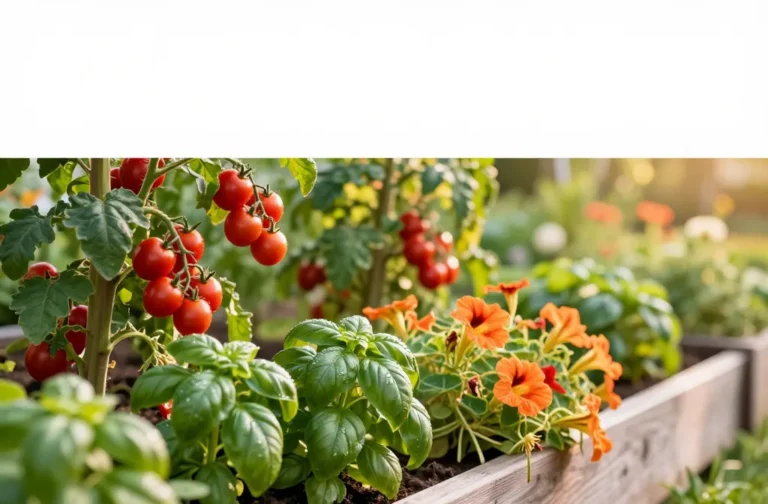
On a balcony, you don’t have unlimited soil or airflow. I focus on compact determinates and restrained dwarf indeterminates bred for pots. They fruit heavily without turning into a 10-foot tangle.
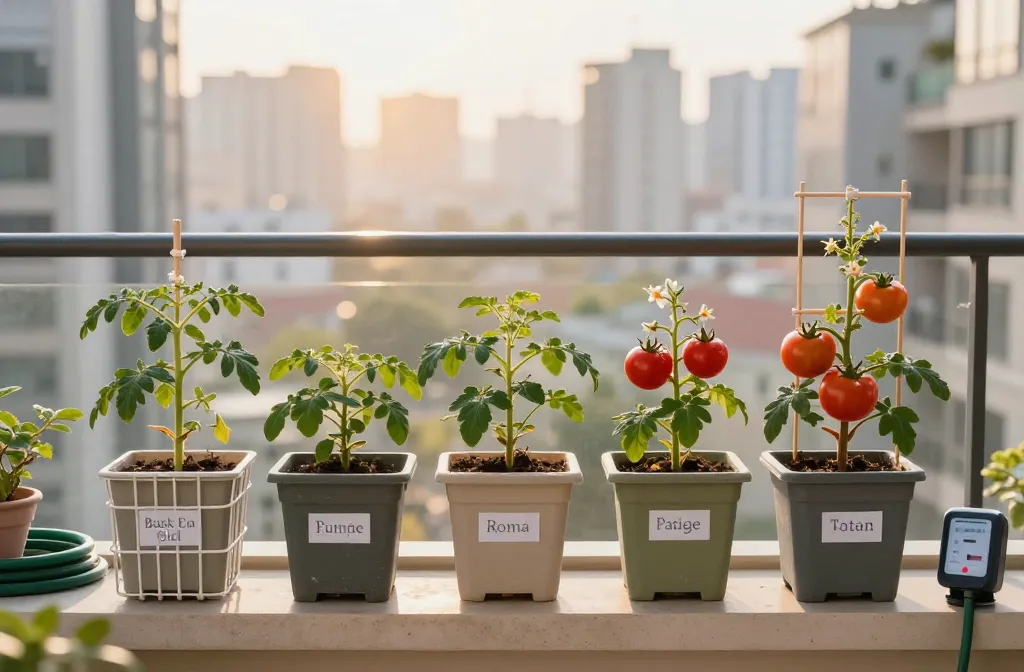
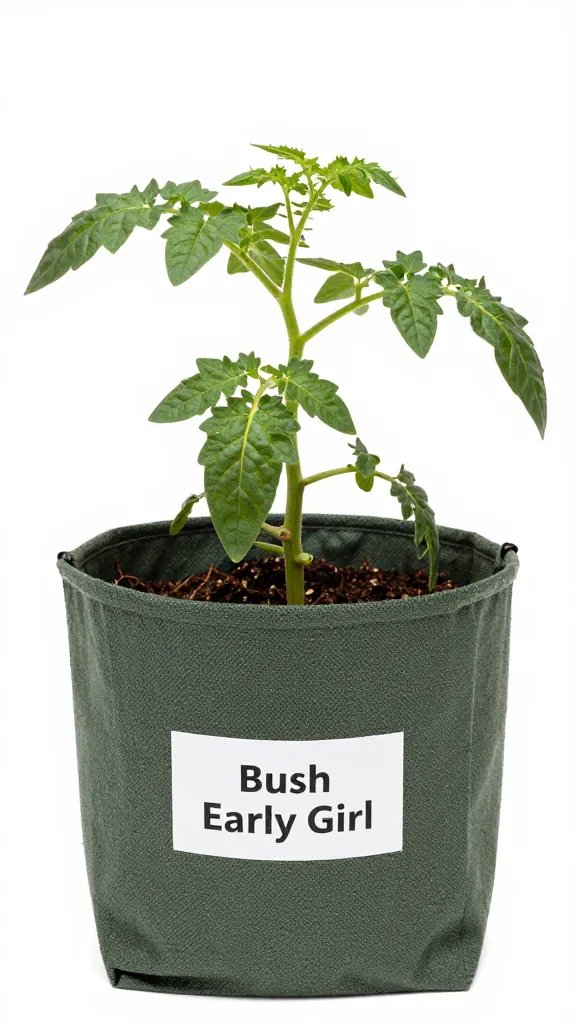
Reliable choices from any garden centre seed rack: ‘Bush Early Girl’ (salad slicer, determinant), ‘Roma’/‘San Marzano Bush’ (paste), ‘Patio’ or ‘Totem’ (compact cocktail), and dwarf indeterminate lines like ‘TastyWine’ or ‘Tasmanian Chocolate’. For cherries on railings, I use ‘Tumbling Tom’ or ‘Maskotka’.
Match pot size to plant energy. True dwarfs do well in 10–15 L (3–4 gal) pots; standard determinates need 20–30 L (5–8 gal). Anything smaller forces constant watering and stunts yield.
Action today: Pick one compact determinate or dwarf indeterminate and secure a 20 L (5 gal) pot before you buy anything else.
Use the Right Container and Potting Mix for Balcony Conditions
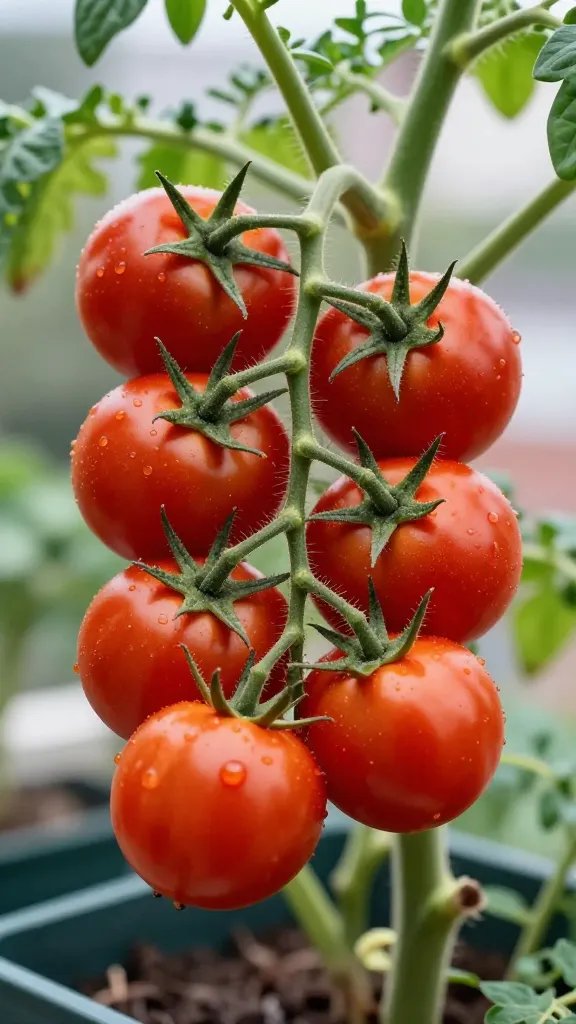
Balconies heat up. Thin black nursery pots cook roots and dry out fast. I use light-coloured plastic or fabric pots with sturdy handles; both drain well and don’t overheat as fast.
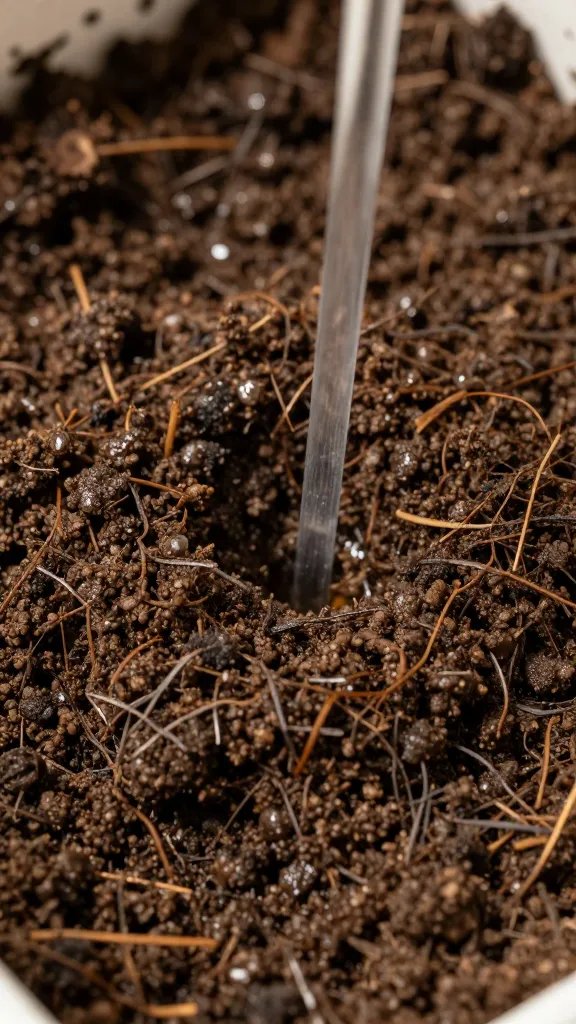
Fill with a good quality potting mix from the garden centre — not topsoil or “raised bed soil.” I blend in one bagged tomato/vegetable slow-release fertiliser per label for 3–4 months of feeding. If wind is fierce, add 10–15% bagged compost for weight and water-holding.
Ensure at least five drain holes. If using a decorative cachepot, raise the grow pot on two wooden paint stirrers so it never sits in runoff.
Action today: Press your finger into a bagged potting mix at the store; choose one that feels springy and light, not clumpy or muddy.
Sun, Wind, and Heat: Set the Plant Where It Can Actually Produce
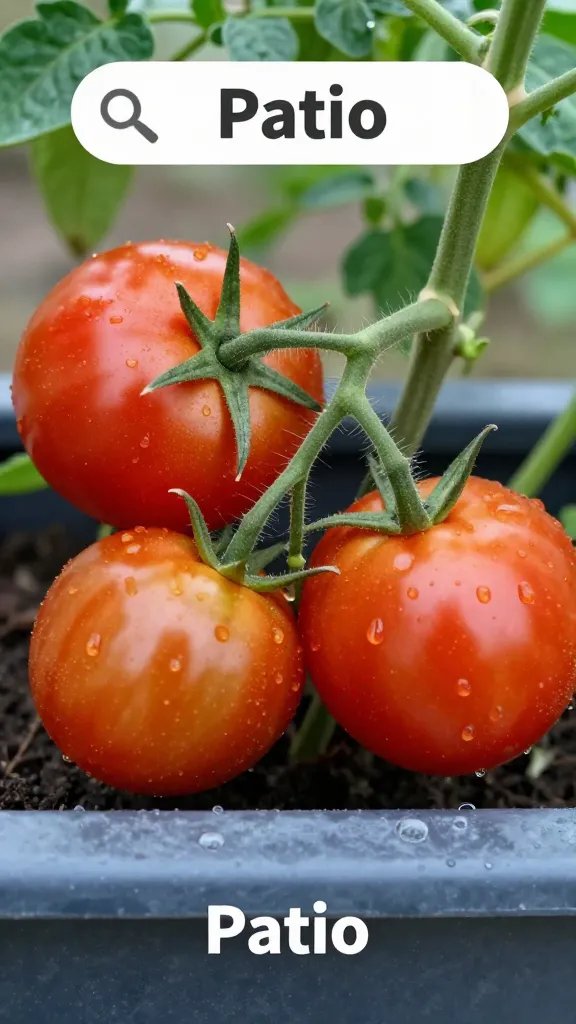
Tomatoes need 6–8 hours of direct sun. East-facing balconies grow cherries well; west and south grow anything but need heat management. If your spot gets less than 5 hours, choose cherries and dwarfs only.
Wind strips moisture and snaps stems. I tuck pots against the railing base or wall for shelter and anchor supports to the container itself. In heat waves over 32°C (90°F), I shift pots 30–60 cm back from reflective glass and add a light-coloured cloth to shade the pot, not the plant.
Action today: At noon, stand where your pot will live and count hours of sun until 4 pm. If it’s under 6, choose a cherry or dwarf and manage expectations.
Support Systems That Don’t Fail in July
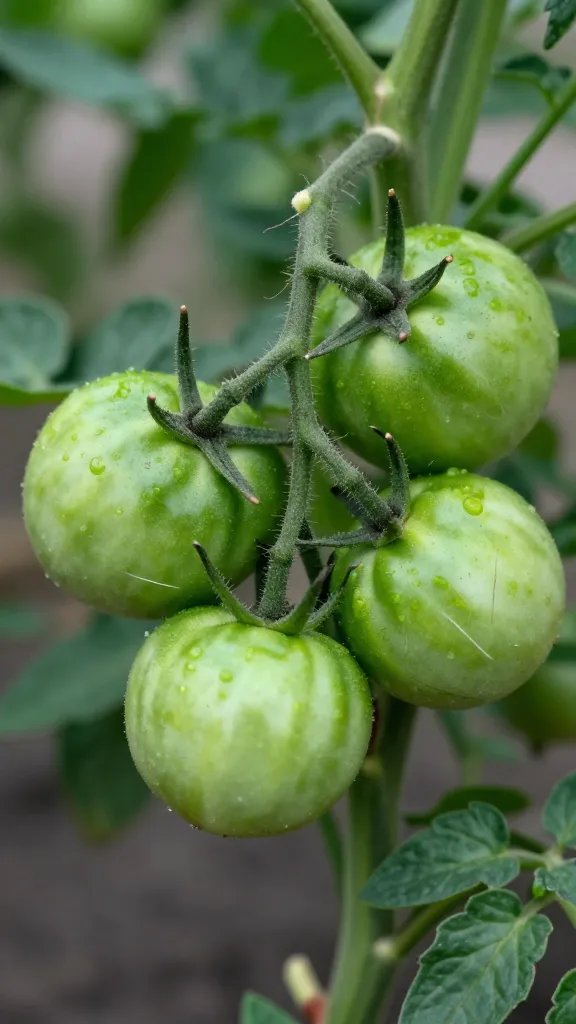
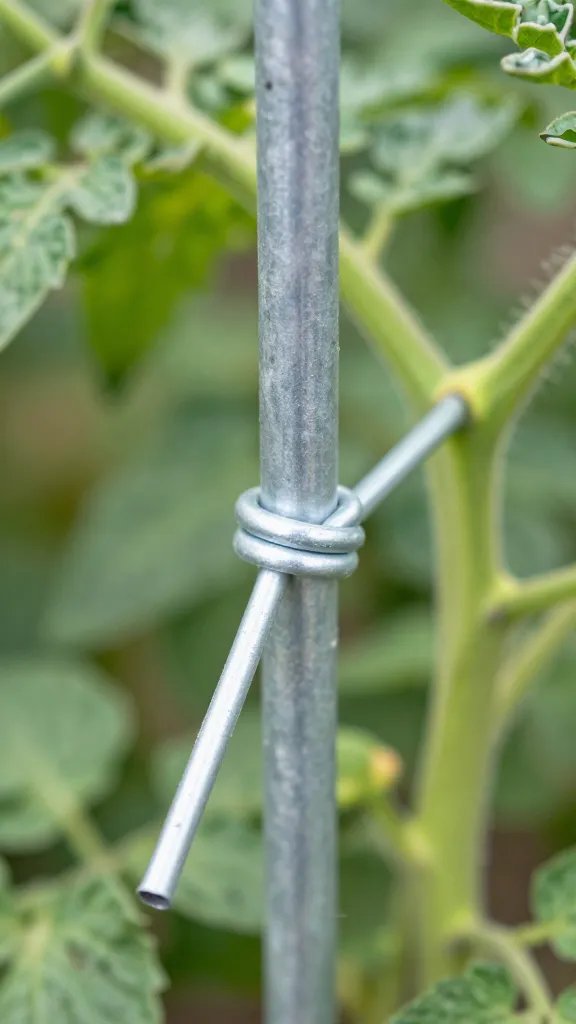
Most balcony tomatoes fail because the support leans, loosens, or slices stems. I build supports that lock into the pot and grow with the plant.
Two Reliable Setups from a Hardware Store
- Sturdy cage + tie system (determinates/dwarfs): Use a heavy-gauge, 60–90 cm tomato cage, flipped so the narrow end is down, and push legs to the pot’s bottom. Add two 90–120 cm bamboo stakes outside the cage and tie the cage to them with cable ties. Use soft Velcro plant ties every 20–30 cm on main stems.
- Central stake + side guy-lines (taller dwarfs/cherries): Sink a 150 cm hardwood stake to the pot’s bottom. Add two 120 cm bamboo stakes opposite each other and run cotton clothesline from the main stake to the side stakes as guy-lines. Spiral-tie the main stem up with Velcro; prune lightly to keep one or two leaders.
Warning Signs Your Support Is Failing
- Cage wiggles when you nudge it — roots will loosen soon.
- Ties cut into stems — switch to soft Velcro or fabric strips.
- Plant leans after rain — add a second stake and re-center the leader.
Action today: Buy a heavy-gauge cage and a pack of 120 cm bamboo stakes; cable-tie the cage to two stakes before planting.
The Watering Reality on a Balcony: Plan for Daily Checks
Containers lose water fast in sun and wind. I water early morning, aiming to wet all the soil until a small amount drains from the bottom. On hot, windy days, I check again at sunset.
Use the knuckle test. Push a finger 5 cm deep: if it feels dry or barely damp, water now. In peak summer, expect daily watering in 20 L pots; after a cool, cloudy day, you may skip.
Set up a simple routine. Place a 10 L watering can beside the door. Add a saucer only if you can empty it after 15 minutes — never let roots sit in water. For longer weekends, use a basic garden-centre drip kit with a mechanical tap timer set for 10–20 minutes every morning and test it before leaving.
Step-by-Step: Watering for Deep, Even Moisture
- Lift the pot slightly; if it feels noticeably lighter than yesterday, prepare to water.
- Water slowly around the stem’s perimeter, not just at the base, to wet the whole root zone.
- Pause 30 seconds and water again until a small trickle drains.
- Empty any saucer after 15 minutes.
Action today: Do the 5 cm knuckle test at breakfast and dinner for three days; note how fast your pot dries in your conditions.
Feeding Without Guesswork
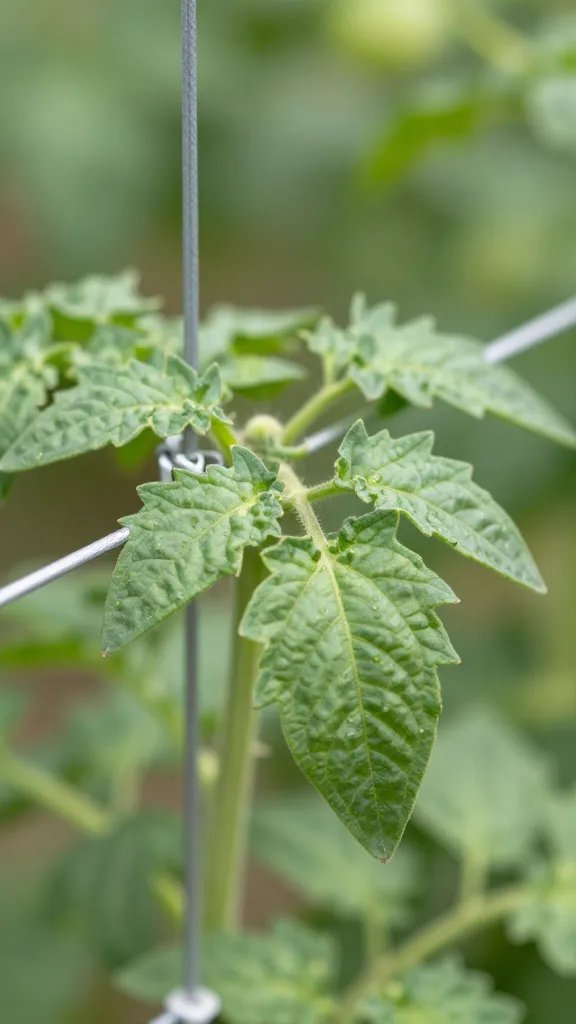
Tomatoes in pots use nutrients fast. I start with a bagged slow-release fertiliser for vegetables mixed into the potting mix. When the first flowers appear, I add a liquid tomato feed every 7–10 days at the watering can, following the label.
Watch for pale new growth or yellowing lower leaves — both mean the plant is hungry. Don’t overthink N-P-K numbers; a tomato-labelled liquid feed paired with slow-release granules keeps things steady.
Action today: Buy one slow-release tomato fertiliser and one liquid tomato feed; mark Sundays for liquid feed on your calendar.
Pruning and Pollination on a Small Balcony
Determinates need only tidying: remove leaves touching soil, thin dense interior leaves for airflow, and keep one main stem. Dwarf indeterminates benefit from removing the small side shoots (“suckers”) below the first flower cluster to focus growth.
Tomatoes self-pollinate, but balconies lack bees. I tap the support or the main stem at midday every sunny day during bloom. That shaking releases pollen and improves fruit set.
Action today: Sanitize a pair of scissors with rubbing alcohol and remove any leaf that touches soil or blocks airflow around the center.
Common Balcony Problems and Fast Fixes
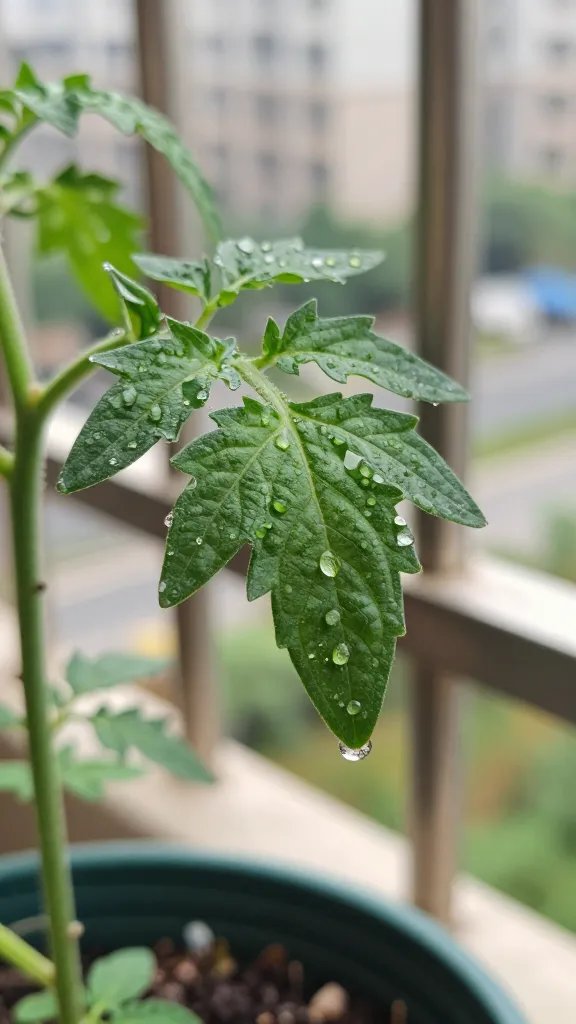
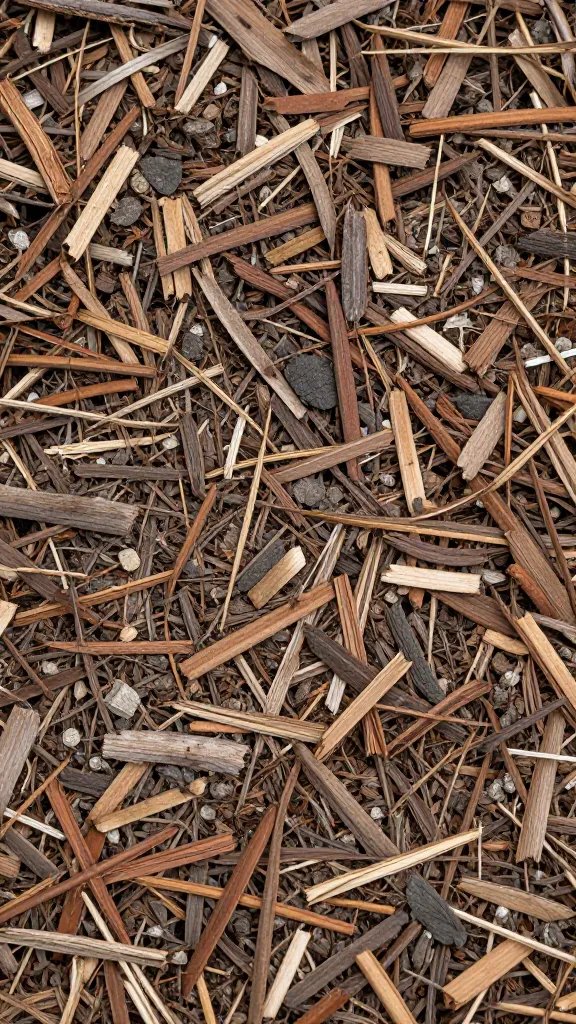
Blossom-end rot (black, sunken spot on the fruit’s bottom) isn’t a calcium shortage in the bag; it’s inconsistent watering. Keep soil evenly moist and mulch the pot surface with 2–3 cm of straw or coco chips.
Leaf scorch shows as crispy edges after hot, windy afternoons. Water early, shade the pot (not the plant) with a light cloth, and move the container 30–60 cm away from reflective glass.
Aphids or whitefly cluster on new growth and undersides of leaves. Rinse with a strong spray, then use garden-centre insecticidal soap every 5–7 days until clear.
Action today: Add a 2–3 cm mulch layer on your potting mix to stabilise moisture through heat spells.
Frequently Asked Questions
Can I grow tomatoes on a north-facing balcony?
It’s tough. If you get 3–4 hours of dappled light, try a cherry like ‘Tumbling Tom’ and keep expectations modest. Move the pot to the sunniest edge and use a light-coloured pot to reduce heat stress. If foliage stays dark green but flowers drop, you need more light or daily midday tapping for pollination.
How often should I water during a heatwave?
Check morning and evening. In 30+°C heat with wind, a 20 L pot often needs water every morning and sometimes a top-up at sunset. Use the 5 cm knuckle test and water until a small drain appears. Shade the pot, not the plant, to reduce losses.
Do I need to hand-pollinate balcony tomatoes?
You don’t need a brush. Tap the main stem or the support lightly at midday on sunny days when flowers are open. Do this daily during peak bloom. You’ll see better fruit set within a week.
What size pot is the minimum for decent yields?
For determinates and dwarf indeterminates, 20 L (5 gal) is the real minimum for consistent watering and feeding. Smaller pots dry too fast and limit roots, cutting yield. For true dwarfs and trailing cherries, 10–15 L works if you accept more frequent watering. Always ensure strong drainage and a sturdy support anchored to the pot.
Why are flowers dropping without fruit?
Heat above 32°C, low light, or underwatering causes blossom drop. Water deeply in the morning, tap the plant at midday, and improve airflow by removing crowded interior leaves. Move pots a bit back from reflective glass and add a 2–3 cm mulch to stabilise moisture.
Can I reuse last year’s potting mix?
Yes, but refresh it. Remove old roots, mix in one-third fresh potting mix, and add slow-release fertiliser per label. If you dealt with pests or disease, replace the top 10–15 cm entirely and solarise the old mix in a clear bag in summer sun for two weeks before reuse.
Conclusion

You don’t need a yard or fancy gear to harvest real tomatoes — just a variety that suits containers, a support that won’t buckle, and a watering rhythm you can stick to. Set up one pot correctly this week and learn your balcony’s sun, wind, and drying pattern before scaling up. When you harvest your first bowl of cherries, add a second pot with a compact paste variety and repeat the same system — reliable, simple, and built for your space.