Grow Fresh Inside 7 Vegetables You Can Actually Harvest From a Windowsill Container
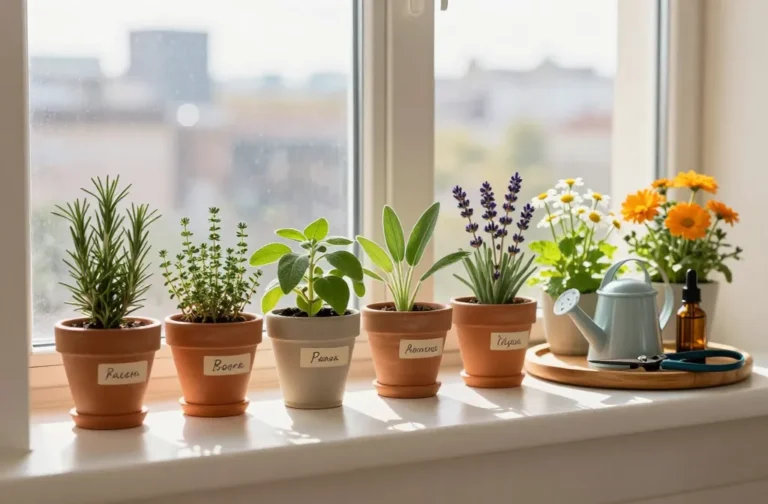
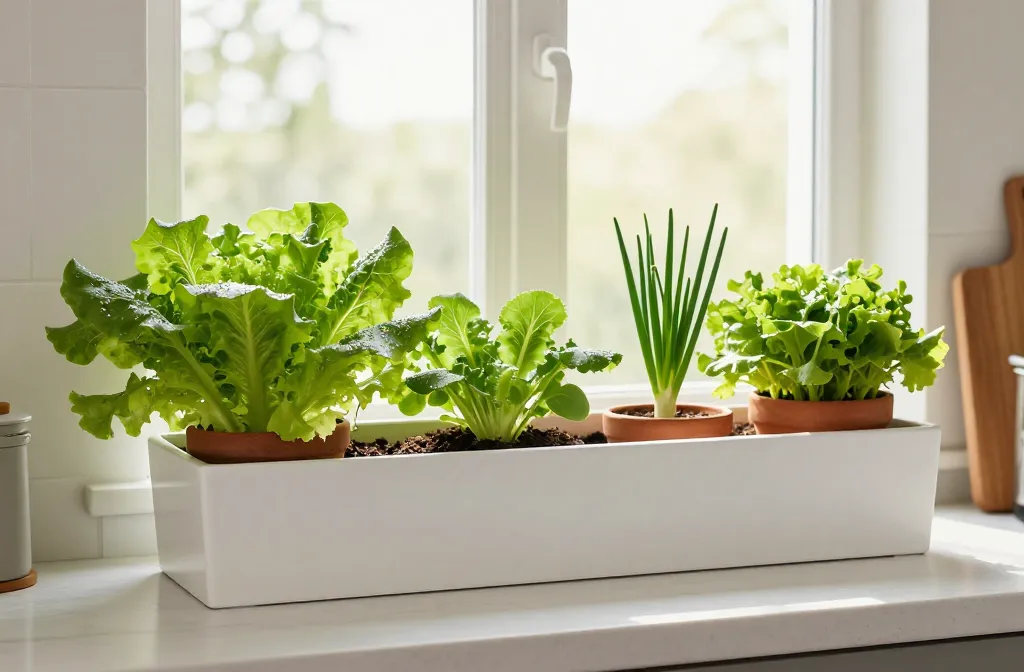
I started growing food on a narrow kitchen sill because I was tired of limp, pricey herbs. Within six weeks, I was snipping salad greens and adding fresh onions to eggs without leaving the apartment. If your brightest window gets a few solid hours of sun, you can do the same. I’ll show you exactly which seven vegetables thrive in small containers, how to plant them, and the simple routines that keep them producing.
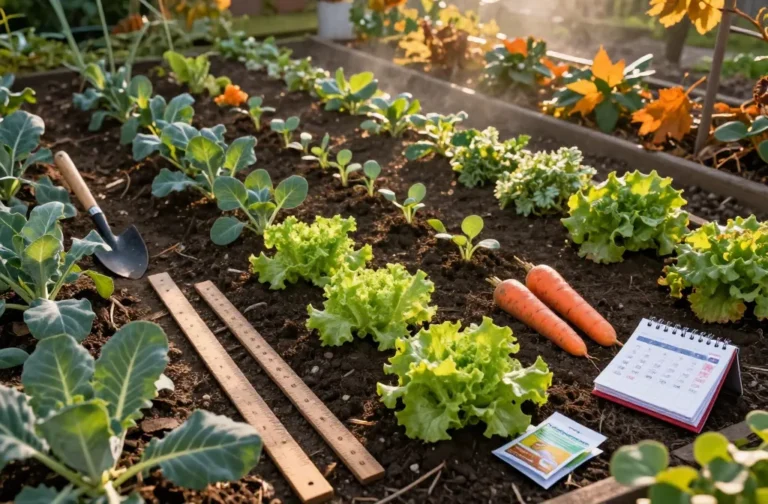
1. Leaf Lettuce: Cut-and-Come-Again Salads in 30 Days
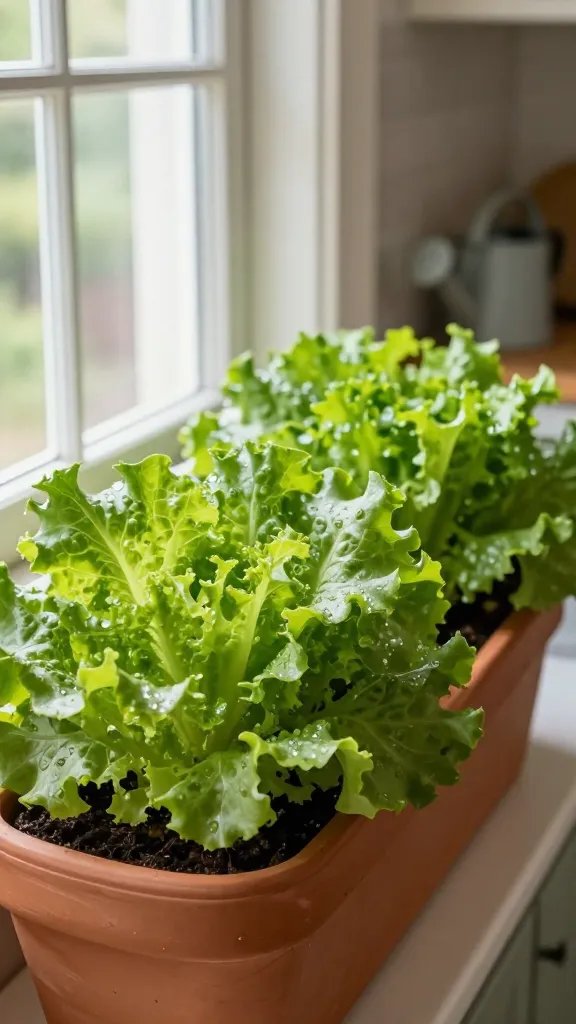
Bagged greens wilt in days and cost more than they’re worth. A windowsill container of leaf lettuce gives you crisp harvests every week without fuss.
What Works on a Sill
- Choose loose-leaf types: ‘Salad Bowl’, ‘Green Oakleaf’, ‘Black-Seeded Simpson’. They regrow after cutting.
- Use a 6–8 inch deep pot or window box with drainage holes and a quality potting mix from the garden centre.
- Place in bright indirect light near a window, or a sunny east/north window that avoids harsh afternoon scorch.
How to Plant and Harvest
- Sow seeds in a grid, 1 inch apart, barely covered with mix.
- Keep the top inch of soil evenly moist. Water when the surface feels dry to the touch — usually every 2–3 days indoors.
- Harvest at 4–6 inches tall by cutting outer leaves 1 inch above the crown. New leaves return in 7–10 days.
Action today: Fill a window box with potting mix, scatter a pinch of loose-leaf lettuce seeds, mist, and set it in your brightest non-blazing window.
2. Baby Kale: High Yield from Tight Spaces
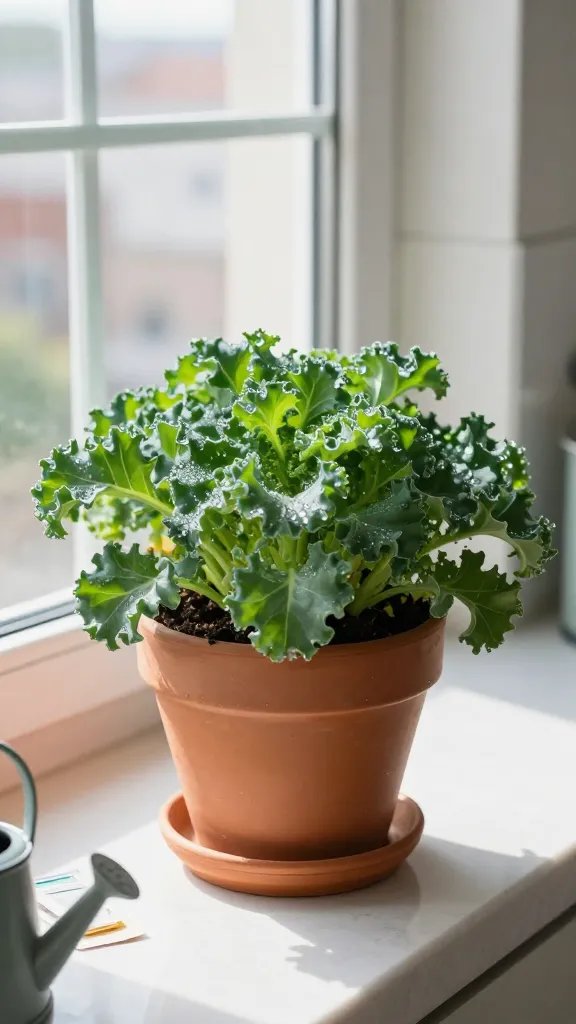
Mature kale needs a garden bed, but baby kale thrives in a 6–8 inch pot. You’ll harvest nutrient-dense leaves in a month and keep them coming for weeks.
Signs to Watch For
- Pale leaves mean not enough light — move closer to the glass or pick a brighter window.
- Tough or bitter leaves mean heat stress — keep the pot away from radiators and oven heat.
Planting Routine
- Sow seeds thicker than you think: a light peppering across the surface for a “cut-and-come-again mat.”
- Water when the top 1 inch feels dry; avoid soggy trays to prevent root rot.
- Cut at 3–5 inches tall with scissors. Leave stubble to regrow twice more.
Takeaway: Treat baby kale like lettuce — frequent trims and steady moisture keep it tender and productive.
3. Green Onions (Scallions): Regrowables That Never Leave You Empty
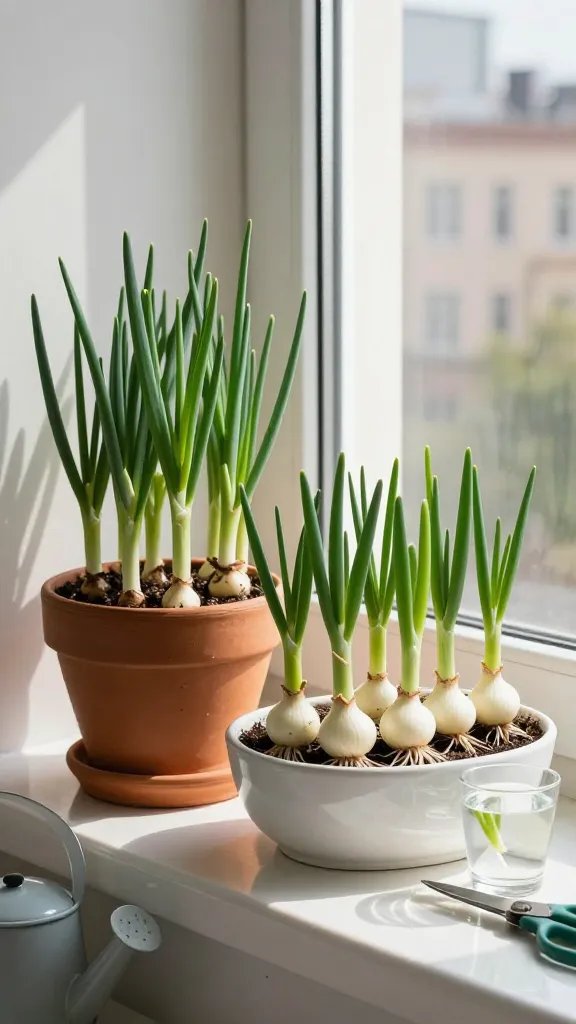
Running out of onions ruins weeknight cooking. Green onions regrow from store-bought roots and deliver constant flavor in tiny spaces.
Two Easy Sources
- From seed: Sow thickly in a 4–6 inch deep pot. Trim at pencil thickness.
- From kitchen scraps: Save 1–2 inch white root ends from a bunch, set in water overnight, then plant root-down 1 inch deep.
Care and Harvest
- Give them a sunny window if you have one; otherwise bright indirect light still works.
- Water when the top half-inch dries. They prefer moist but not waterlogged soil.
- Cut greens as needed with scissors, leaving 1 inch; they’ll regrow 2–3 times.
Action today: Plant a mug’s worth of saved scallion bases in a 6-inch pot — you’ll have snips within 10–14 days.
4. Radishes: 25-Day Crunch in a Short Pot
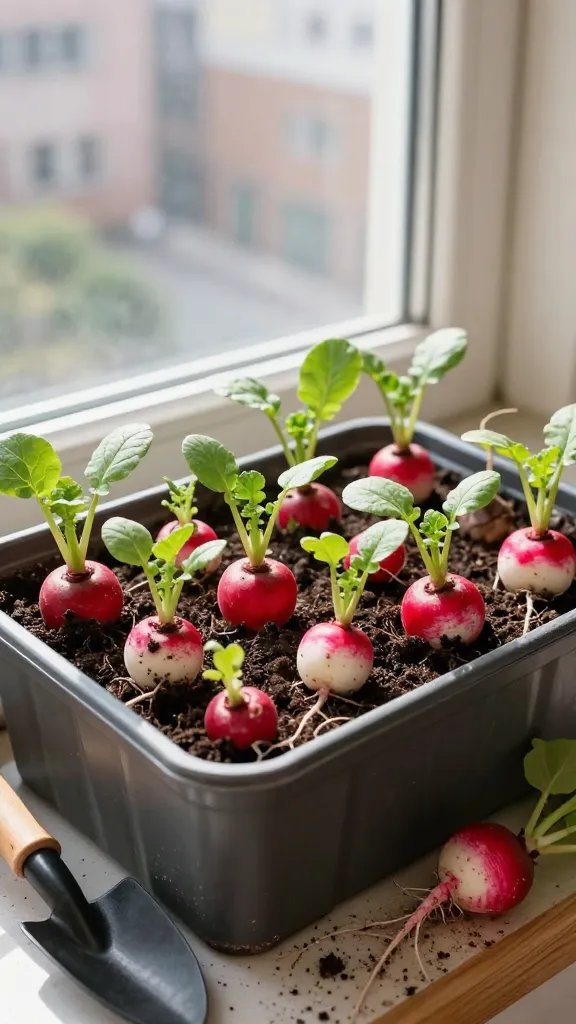
“Root crops need deep beds” is only half true. Radishes mature fast and form good bulbs in a 6-inch container if you don’t crowd them.
Common Pitfalls
- All leaves, no bulb: Too warm or too cramped. Give each seed 1–2 inches of space and avoid hot glass at midday.
- Pithy texture: Left too long. Harvest around day 25–35, depending on variety.
How to Get It Right
- Pick quick varieties: ‘Cherry Belle’, ‘French Breakfast’.
- Sow 1/2 inch deep, 2 inches apart in rows or a grid. Thin ruthlessly to 2 inches.
- Water consistently so the soil stays evenly moist; dry-wet swings cause spongy roots.
Takeaway: Mark your calendar at sowing — start checking for radish shoulders at day 25 and harvest promptly for best crunch.
5. Baby Carrots: Snack-Size Roots That Fit a Windowsill
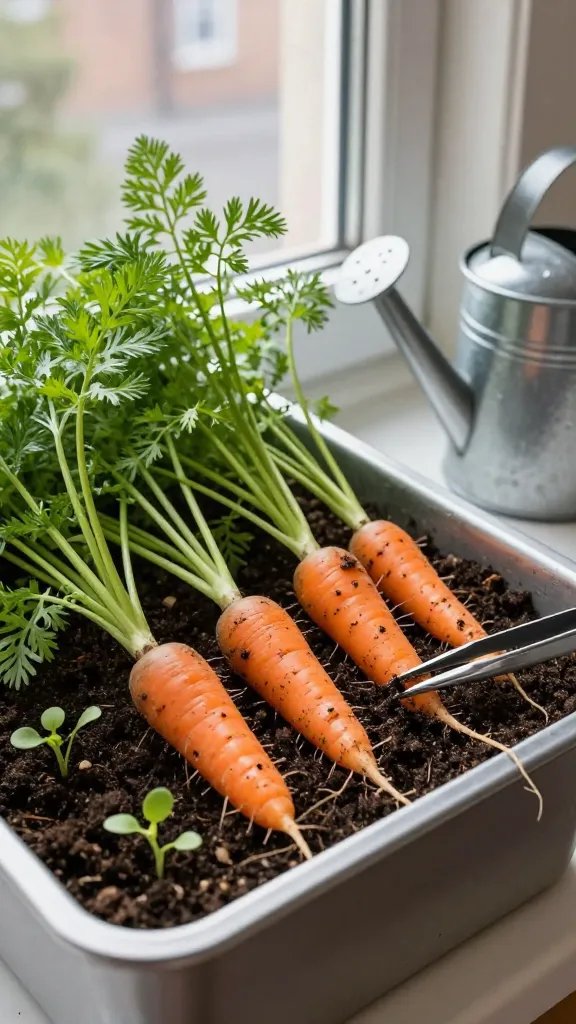
Full-size carrots struggle in shallow pots. Boutique “mini” or “thumb” carrots stay short and flavor-packed, perfect for 8–10 inch deep window boxes.
What to Use Instead of a Deep Bed
- Choose varieties bred for containers: ‘Parisian Market’, ‘Thumbelina’, ‘Short ‘n Sweet’.
- Loosen fresh, good-quality potting mix. Don’t amend with garden soil — it compacts and forks roots.
Planting and Care
- Sow thinly, 1/4 inch deep. As they sprout, thin to 2 inches apart. Use tweezers or pinch out extras.
- Keep evenly moist the entire time. Drying causes stunting and cracks.
- Harvest at golf-ball size for round types or at 3–4 inches long for short types — usually 50–60 days.
Action today: Dedicate one deeper window box to a single mini-carrot variety and commit to strict thinning in week 2.
6. Compact Bush Tomatoes: Real Fruit on a Sunny Sill
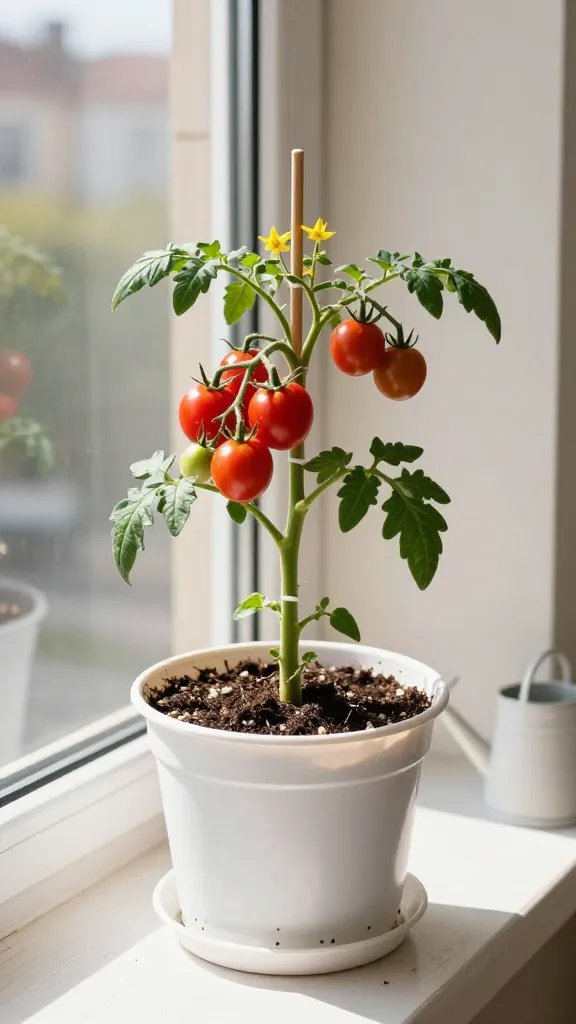
You don’t need a balcony for tomatoes if you pick the right type. Compact determinate or micro-dwarf tomatoes set fruit in 1–2 gallon pots right on a bright sill.
Choose the Right Plant
- Look for names like ‘Tiny Tim’, ‘Micro Tom’, ‘Patio’, ‘Red Robin’. These stay under 18 inches.
- Use a 1–2 gallon pot with drainage, filled with a quality potting mix.
Care That Actually Delivers Fruit
- Sun matters: aim for a south or west window with 4–6 hours of direct sun behind glass. Rotate the pot weekly for even growth.
- Feed every 2 weeks with a balanced liquid fertilizer at label rate once flowers appear.
- Water when the top 1 inch is dry; avoid daily sips. Deep water until it drips, then let it drain fully.
Takeaway: Plant a micro-dwarf in a 2-gallon pot today and set a reminder to feed lightly every other week once it blooms — that routine equals bowls of cherry tomatoes indoors.
7. Pea Shoots: Sweet Greens in 10 Days, No Trellis Required
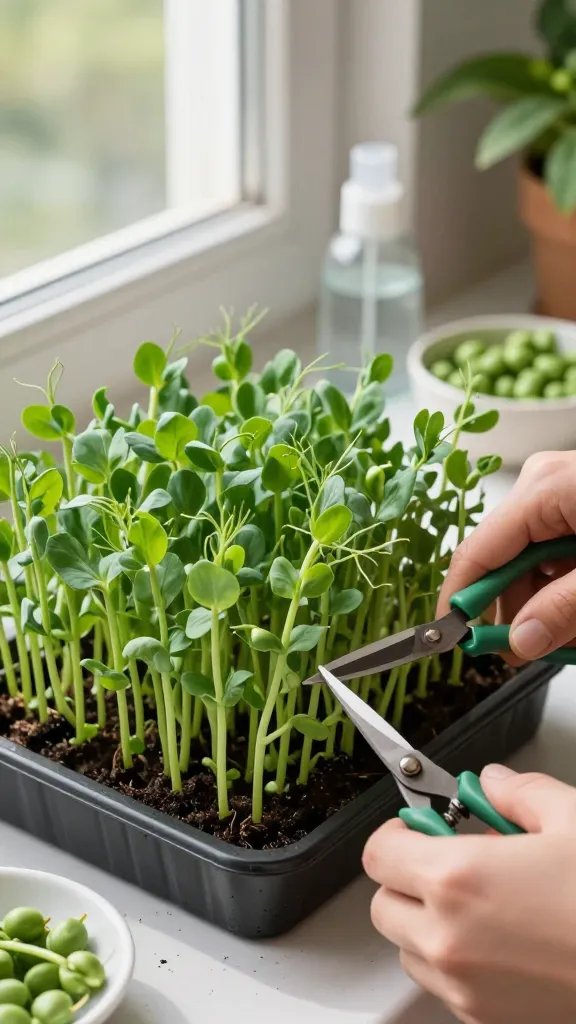
When you want a fast win, pea shoots beat every crop on this list. You’ll harvest tender, sweet tops in 10–14 days from a shallow tray.
Simple Tray Method
- Soak dried garden pea seeds (labeled for planting) in water for 6–8 hours.
- Fill a low container (2–4 inches deep) with potting mix. Scatter peas shoulder-to-shoulder, then cover with 1/2 inch of mix.
- Mist daily to keep the surface moist. Place in bright light; they don’t need deep sun for shoots.
Harvest
- Snip when 4–6 inches tall, just above the first set of leaves. Regrowth is modest; plan to resow every 2–3 weeks.
Action today: Start a tray of pea shoots now and a second tray one week later — that stagger keeps a continuous supply.
Frequently Asked Questions
Do I need special grow lights for a windowsill garden?
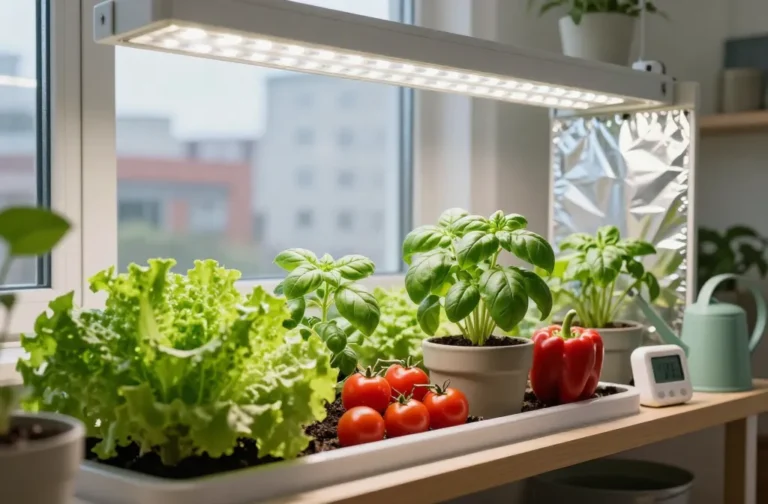
No, not for leafy greens and scallions. Place containers in bright indirect light near a window, or an east/south window with several hours of sun. For fruiting crops like compact tomatoes, a south or west window with 4–6 hours of direct sun makes the difference. If your only window is dim, add a simple clamp-on shop light with a daylight LED bulb positioned 6–10 inches above the plants for 12–14 hours a day.
How do I water without overdoing it?
Use your finger: water when the top 1 inch of soil feels dry for leafy crops, and when the top 1–2 inches are dry for tomatoes and carrots. Water until you see a little drain from the bottom, then empty the saucer after 10 minutes. In most homes, that’s every 2–4 days for greens and every 3–5 days for larger pots. Consistency beats frequency — avoid daily sips.
What potting mix should I buy?
Pick a good quality potting mix from the garden centre labeled for containers. It should feel light and springy, not heavy like topsoil. For tomatoes and carrots, choose a mix that mentions vegetables or indoor containers. Skip garden soil or compost-only blends indoors — they compact and invite gnats.
How do I keep fungus gnats away?
They love constantly wet soil. Let the top half-inch dry before watering greens and use bottom watering every second or third watering to keep surfaces drier. Cover new seedings with a thin layer of coarse vermiculite or sand, and place yellow sticky traps near the pots to catch adults. Remove any fallen leaves promptly.
How often should I fertilize indoor vegetables?
Leafy greens and pea shoots need very little — mix a gentle liquid fertilizer at half strength every 2–3 weeks after the first harvest. Green onions usually do fine with a monthly feeding. For compact tomatoes, switch to a balanced liquid fertilizer at the first flowers and continue every 2 weeks. Always water with plain water once between feedings to avoid salt buildup.
My window gets hot at midday — will that hurt the plants?
Yes, glass magnifies heat and can scorch leaves, especially lettuce and kale. Move pots 6–12 inches back during the hottest hours or hang a sheer curtain to diffuse light. Rotate containers weekly so one side doesn’t bake. Keep them off radiators and away from oven heat.
Conclusion
You don’t need a yard to harvest real vegetables — just a bright sill, a few right-sized pots, and the seven crops above. Start two today: a tray of pea shoots for next week and a pot of leaf lettuce for the month after, then add tomatoes if your sun allows. Once you taste your own windowsill harvest, expanding to a second sill or a deeper window box becomes the obvious next step.