Experts Reveal 6 Vegetables That Actually Produce on a Shaded Balcony
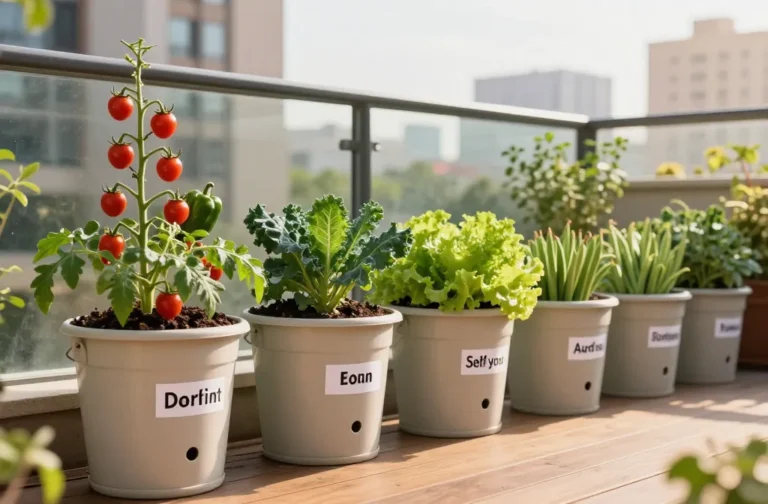
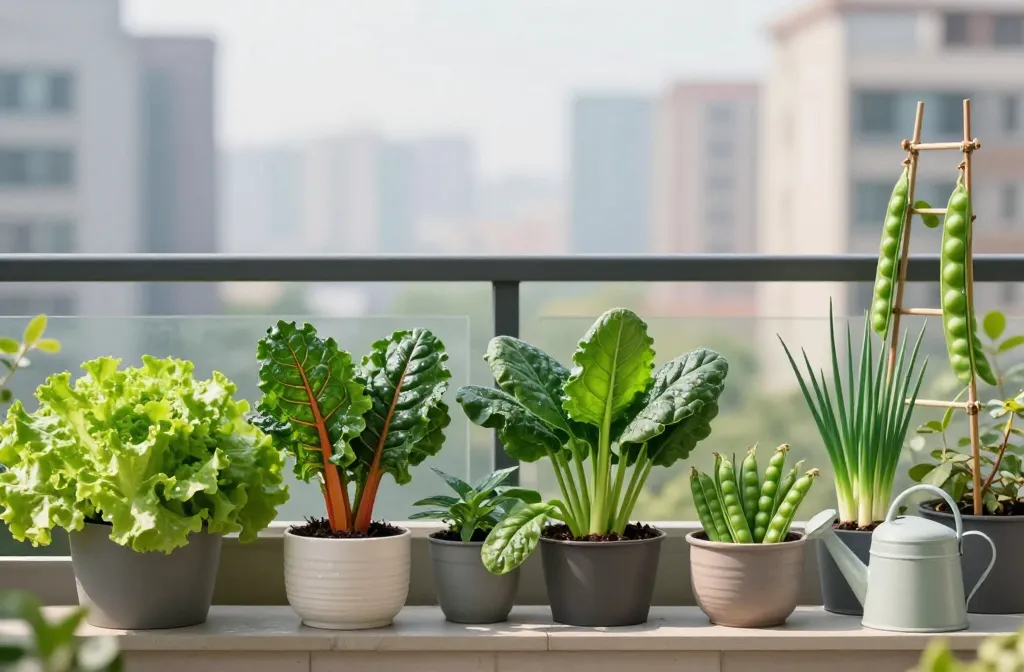
I’ve gardened on north-facing balconies where midday sun never touches the railing. I learned fast that most “full sun” advice doesn’t help when your tomatoes sulk and cucumbers refuse to flower. In this guide, I’ll show you six vegetables that still deliver edible harvests in bright shade or a few hours of morning/late-afternoon sun. You’ll know what to plant, how to set up simple containers, and exactly how to keep harvests coming all season.
1. Leafy Lettuce: Fast Greens That Don’t Bolt in Shade
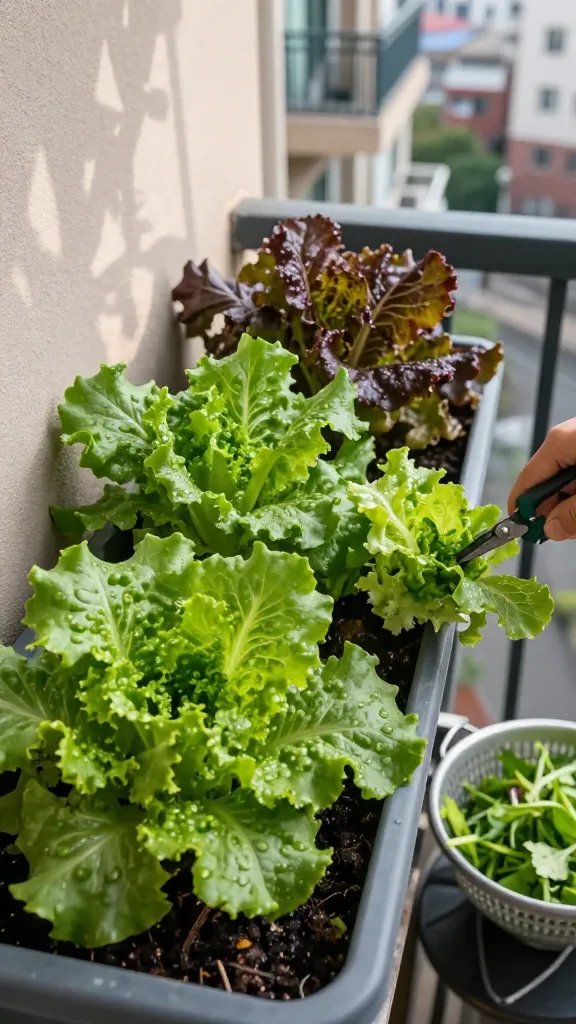
Full sun pushes lettuce to bolt and turn bitter, especially in summer. On a shaded balcony, lettuce stays tender longer and resists turning into a tall, seedy tower. The tradeoff is slower growth, but you still harvest weekly if you plant densely and cut often.
How to Plant and Place
- Use a wide 30–40 cm planter at least 15–20 cm deep with a good quality potting mix from the garden centre.
- Choose loose-leaf types: ‘Green Oakleaf’, ‘Red Sails’, ‘Salad Bowl’, or mixed baby-leaf blends.
- Place near the brightest window or balcony edge with bright indirect light; 1–3 hours of morning sun is a bonus.
Watering and Feeding
- Water when the top 2–3 cm feels dry; usually every 2–4 days in mild weather.
- Feed every 2 weeks with a half-strength liquid organic fertiliser.
Harvest Method
- Start snipping outer leaves when they reach hand length (10–15 cm).
- Leave the centre to regrow for repeat harvests every 5–7 days.
Takeaway: Fill a shallow, wide container with a loose-leaf mix today and plan to harvest your first bowl in 3–4 weeks.
2. Spinach: Cool-Weather Workhorse for Tight Shade
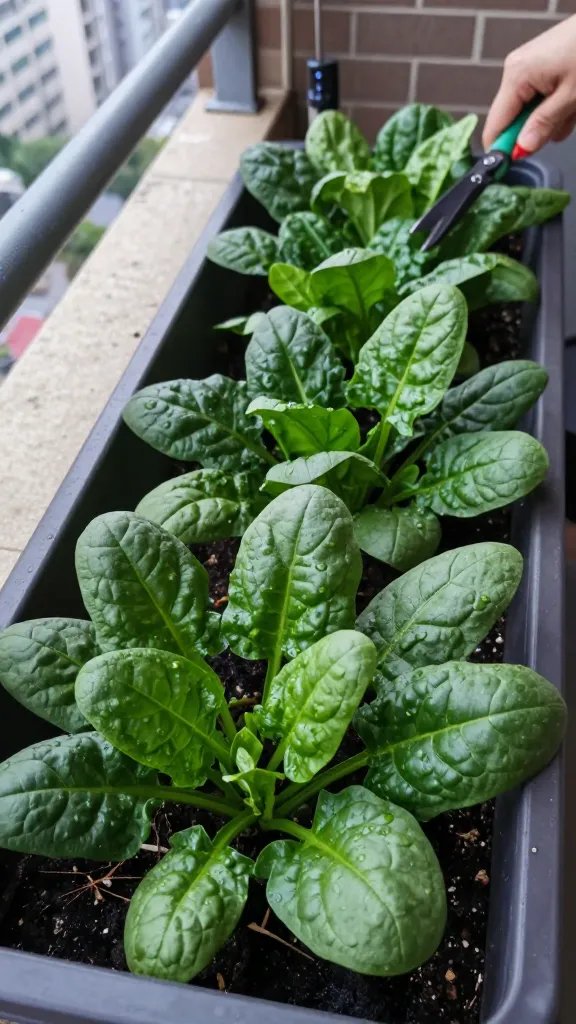
Spinach fails in summer sun on balconies, but shade extends its season dramatically. In low light, leaves stay thick and mild, and plants focus on foliage instead of rushing to seed. You give up big, fast heads, but you gain steady cut-and-come-again leaves.
Planting Timing and Varieties
- Plant in early spring and again in late summer for autumn harvests.
- Choose bolt-resistant types: ‘Bloomsdale Long Standing’, ‘Tyee’, or ‘Space’.
- Container depth: 20–25 cm minimum.
Moisture Control
- Shade slows evaporation, so overwatering becomes the risk. Ensure your pot has several drainage holes.
- Water when the top 2 cm is dry; leaves should feel firm, not floppy.
Feeding and Harvest
- Feed lightly every 3 weeks; spinach dislikes heavy feeding.
- Harvest outer leaves at 8–12 cm; avoid stripping more than one-third at a time.
Action today: Sow a row of spinach seeds 1 cm deep along the long edge of your shadiest planter and mark a reminder to thin seedlings to a finger’s width apart in two weeks.
3. Scallions (Green Onions): Slim Footprint, Constant Repeats
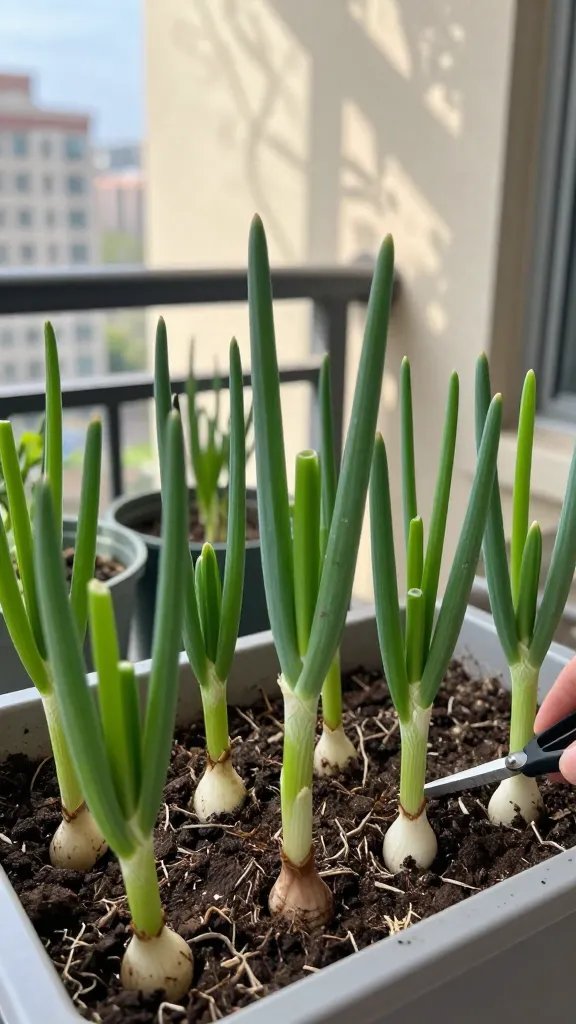
Scallions tolerate shade better than bulb onions because you’re growing leaves, not bulbs. In low light they won’t swell, but you still get flavour-packed greens for soups and stir-fries. They take little space and regrow after each cut.
Easy Sourcing and Planting
- Buy a bunch of store scallions with roots. Trim tops to 10–12 cm and plant the rooted ends 2–3 cm deep, 3–5 cm apart.
- Or sow packet seed thickly in a 15–20 cm deep box; thin to a thumb’s width apart.
- Place where they receive the brightest part of your balcony light.
Care and Re-Growth
- Water when the top 3 cm is dry; shade means every 3–5 days for most balconies.
- Snip outer stalks at the base; leave inner shoots to regrow. Expect repeats every 10–14 days.
- Feed lightly monthly; too much nitrogen makes floppy, weak tops.
Takeaway: Plant a tight grid of rooted store-bought scallions tonight and start snipping fresh greens in 10–14 days.
4. Peas (Sugar Snap or Snow): Sweet Pods With Only Morning Sun
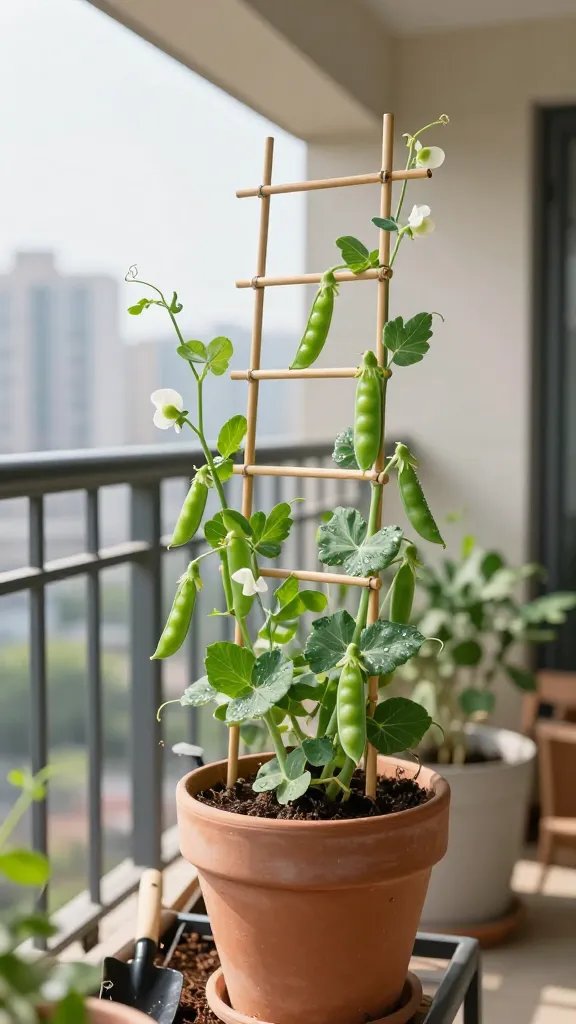
Peas set pods in cool, gentle light and stall in heat. Shade delays heat stress, so they flower and fill pods even on sheltered balconies. You won’t get the heaviest yields, but a compact trellis will still give bowlfuls across several weeks.
Support and Container Setup
- Use a 25–30 cm deep pot with a lightweight trellis or bamboo grid 90–120 cm tall.
- Choose dwarf or bush types: ‘Sugar Ann’, ‘Little Marvel’, ‘Oregon Sugar Pod’.
- Position where they receive 2–4 hours of morning sun or very bright open shade.
Watering and Feeding
- Keep soil evenly moist; water when the top 2–3 cm dries. Peas sulk in soggy soil—ensure strong drainage.
- Feed sparingly; excess nitrogen gives leaves, not pods. A light liquid feed monthly is enough.
Harvest Timing
- Snow peas: pick when pods are flat but full-sized.
- Snap peas: pick when pods feel plump but still crisp when bent.
- Harvest every 1–2 days to keep vines producing.
Action today: Tie a simple string trellis to your balcony rail and direct-sow peas 2–3 cm deep along the base—no special tools needed.
5. Kale: Cut-and-Come-Again Leaves All Year in Soft Light
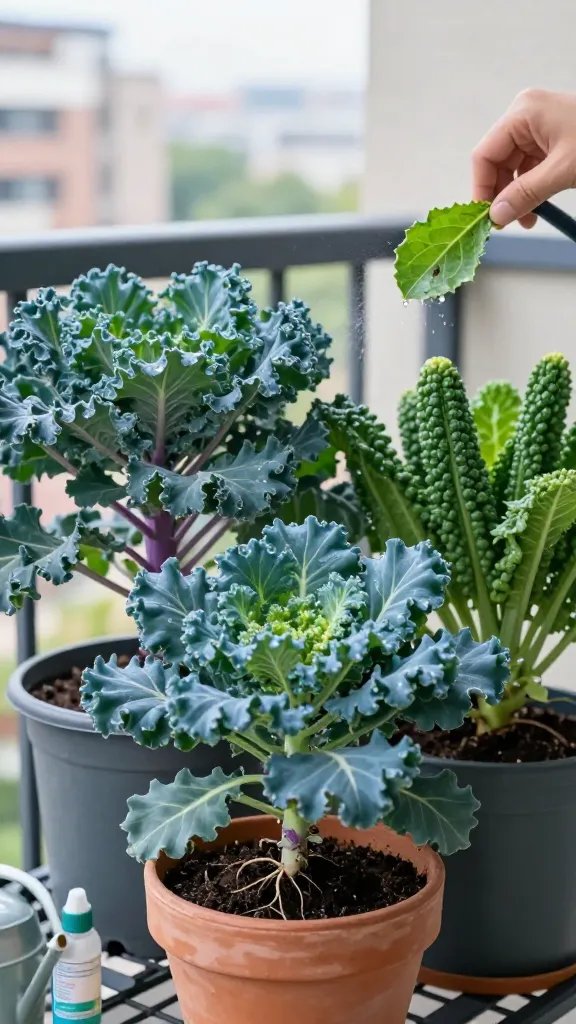
On balconies, kale in full sun gets tough and pest-prone. In bright shade, leaves stay tender and grow steadily without bolting. You won’t get massive fronds, but you will pick reliable handfuls for months.
Varieties and Pot Size
- Choose compact types: ‘Dwarf Blue Curled’, ‘Red Russian’, ‘Lacinato Baby’.
- Use a 30–40 cm deep pot; kale has a taproot and appreciates depth.
Feeding and Pests
- Feed with a balanced liquid fertiliser every 3 weeks.
- Check undersides of leaves weekly for aphids; rinse off with a strong water spray or use insecticidal soap from the garden centre.
Harvest Method
- Pick lower leaves when they reach 15–20 cm. Keep the central crown intact.
- Rotate harvest around the plant to maintain a skirt of mature leaves.
Takeaway: Plant one kale in a deep pot this weekend and schedule a light feed every third Sunday for steady, tender leaves.
6. Herbs You Eat Like Vegetables: Parsley and Chives for Bulk Harvests
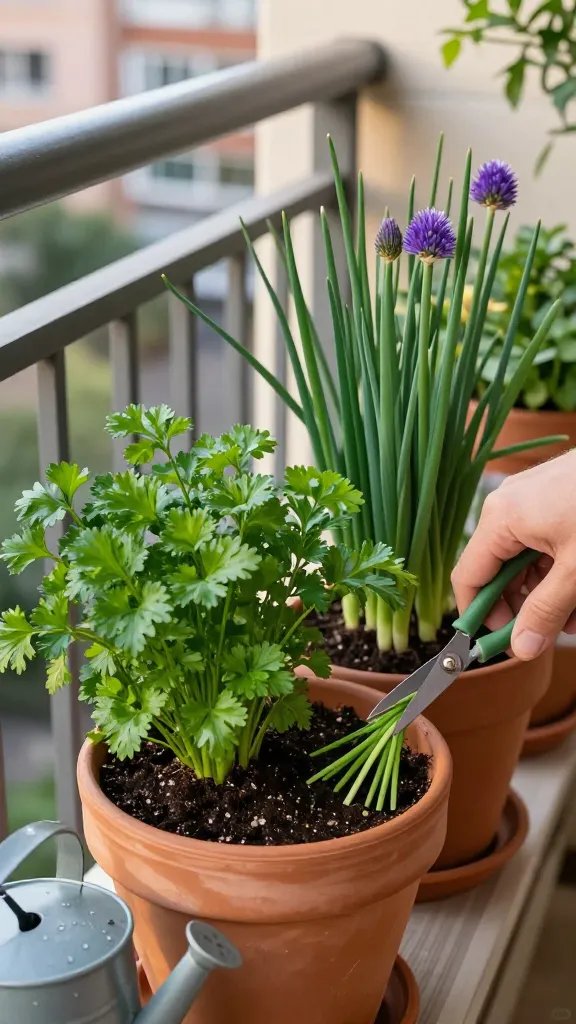
Many herbs act like vegetables when you harvest them by the handful. Parsley and chives both thrive in partial shade and provide volume for salads, sauces, and egg dishes. You won’t miss the sun-hungry herbs when these deliver weekly.
Container and Planting
- Parsley: 20–25 cm deep pot; flat-leaf types have stronger flavour.
- Chives: 15–20 cm deep pot; plant several clumps for volume.
- Good quality potting mix; avoid garden soil.
Care and Cutting
- Water when the top 2–3 cm is dry; both dislike waterlogged roots.
- Feed lightly every 4 weeks to keep growth fresh.
- Parsley: cut outer stems at the base; leave inner stems.
- Chives: shear a handful 2–3 cm above soil; they regrow in 10–14 days.
Storage and Use
- Rinse, pat dry, and store in a glass with a splash of water in the fridge for 3–5 days.
- Freeze chopped chives and parsley in ice cube trays with water or olive oil for easy use.
Action today: Plant one pot of flat-leaf parsley and one pot of chives beside your kitchen door for weekly snips without fuss.
Frequently Asked Questions
How much light do these vegetables actually need on a shaded balcony?
Aim for bright indirect light most of the day, plus 1–4 hours of morning or late-afternoon sun if possible. Place containers at the brightest edge of your balcony or just inside the sunniest window. If direct sun never hits, prioritize lettuce, spinach, parsley, and chives—they handle the lowest light. Rotate pots 90 degrees each week so plants grow upright instead of leaning.
What size containers should I use if space is tight?
Use wide, shallow planters for lettuce and spinach (15–20 cm deep) to maximise surface for dense sowing. Go deeper for kale and peas (25–40 cm) to support stronger roots and trellising. Scallions and chives do fine in 15–20 cm deep window boxes. Always choose pots with multiple drainage holes to prevent root rot in shade.
How do I avoid overwatering in low light?
Overwatering is the most common failure in shade. Before watering, press a finger 2–3 cm into the soil; water only if it feels dry at that depth. Use light, even watering until a little drains from the bottom, then wait again until the top layer dries. Elevate pots on small feet or tiles so excess water can escape easily.
Can I boost growth with a simple, balcony-safe light?
Yes, a small clamp-on LED grow bulb from a garden centre can help in winter or very dim spots. Aim the bulb 20–30 cm above the leaves for 10–12 hours daily, using a basic plug-in timer. Focus supplemental light on seedlings, lettuce, and herbs for the best payoff. Keep leaves from touching the bulb to avoid heat stress.
What should I feed shade-grown vegetables, and how often?
Use a general liquid fertiliser at half strength every 2–4 weeks, since plants grow slower in shade and need less. Look for organic options labeled for vegetables at your garden centre. Flush pots with plain water once every 6–8 weeks to prevent fertiliser buildup. If leaves yellow uniformly, feed the next watering; if tips brown, back off on fertiliser and water thoroughly.
How can I increase harvests without adding more pots?
Stagger sowing every 2 weeks for lettuce and spinach so you always have a fresh patch coming in. Harvest little and often—light cuts stimulate regrowth. Add a simple trellis to peas to grow vertically without using extra floor space. Tuck scallions along the front edge of larger pots to use otherwise empty soil.
Conclusion
You don’t need full sun or fancy gear to harvest from a shaded balcony. Start with one container of lettuce, a pot of parsley and chives, and a pea trellis—then add kale or spinach as you gain confidence. When you see those first steady snips, you’ll know exactly which shade-ready crops to scale up next.