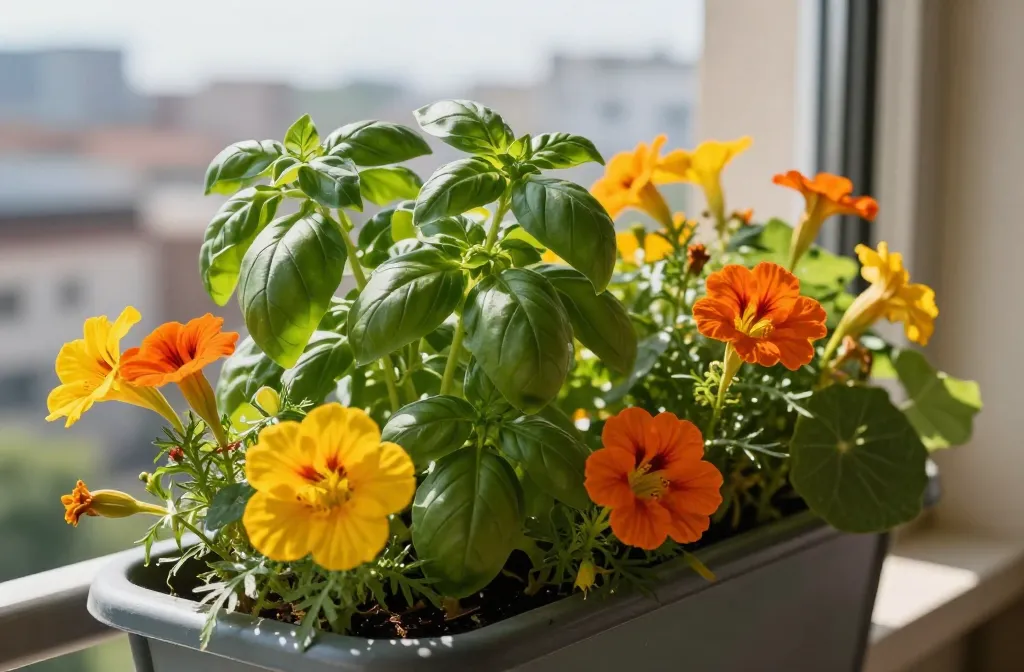
5 Best Window Box Combinations for a Pest-Free Balcony
I learned the hard way that a sunny balcony can quickly turn into a pest magnet if you mix the wrong plants with the wrong companions. I’ve since tested combinations that deter common balcony pests while keeping soil and leaves clean. This list shows practical plant pairings you can buy at any garden centre and use with everyday pots and soil.
1. Basil, Marigold, and Nasturtium Combo: Fragrance, Color, and Pest Deterrence
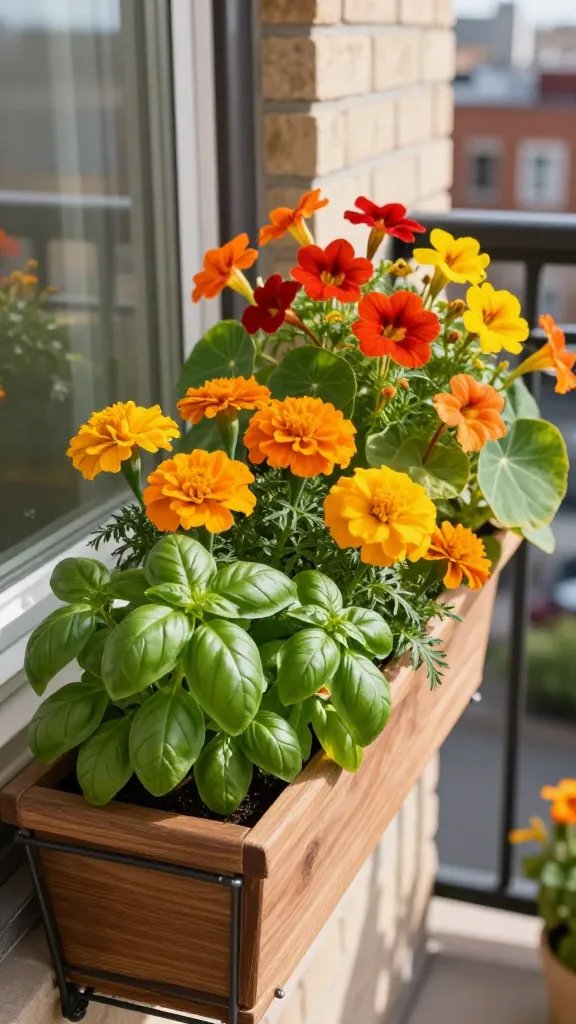
When basil, marigolds, and nasturtiums share a window box, pests like aphids, whiteflies, and beetles tend to stay away. The strong scents and diverse growth habits disrupt pest colonization and confuse pests that rely on specific plant cues. This trio also provides ongoing edible and decorative value.
Signs to Watch For
- Thin, chewed leaf edges on nearby plants
- Unusually slow growth or leaf curling without visible pests
- Sticky residue on leaves or pot surfaces
How to Fix It
- Replace any stressed plants promptly with healthy basil, marigold, or nasturtium starts
- Rotate the arrangement each planting season to prevent pest adaptation
- Ensure good air movement by spacing plants a thumb-width apart
What to Use Instead
- Other strong pest-repellent companions like rosemary or chrysanthemum if you don’t have marigolds
- Bright yellow marigolds and compact nasturtium varieties that suit window boxes
Takeaway: Plant this trio together to create a fragrant, multi-layered barrier that reduces pest pressure in a single box.
2. Lavender, Sage, and Verbena: Aroma Barrier for Aphids and Moths
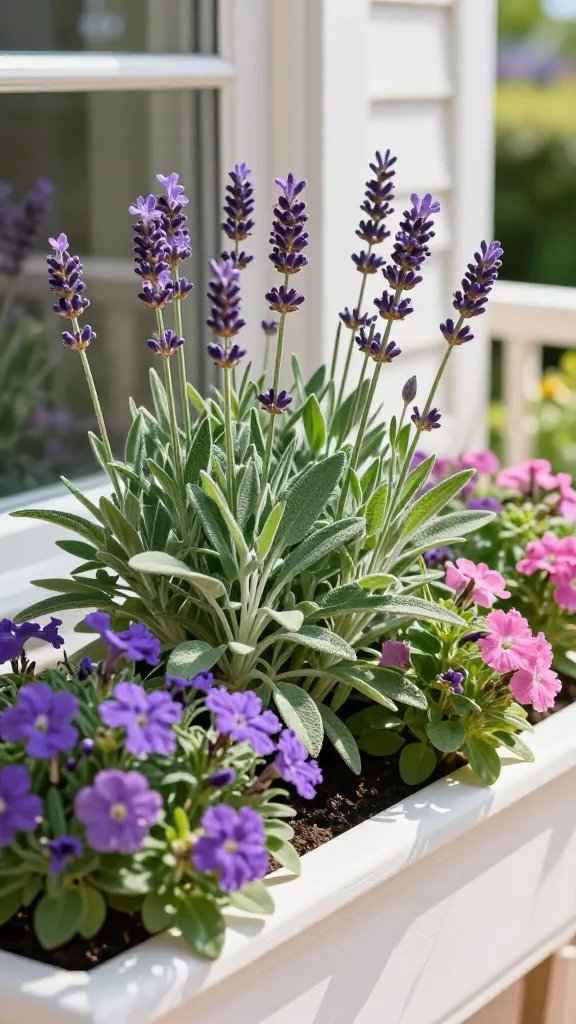
Lavender and sage emit powerful scents that confuse or repel aphids and moths, while verbenas provide a sturdy, compact filler that tolerates full sun. This combination thrives in bright indirect light near a window and keeps pests at bay without chemical sprays.
Signs to Watch For
- Aphids on new growth despite steady watering
- Powdery mildew beginning on sage leaves in dry, dusty air
- Sparse flowering indicating root stress
How to Fix It
- Water when the soil begins to feel just moist to the touch; do not let the box stay soggy
- Remove any heavily infested leaves and prune lightly to improve airflow
- Dust lavender and sage with a leaf-cleaning rinse if pollen buildup occurs
What to Use Instead
- If you can’t grow lavender, try rosemary as an aromatic pest barrier
- Replace verbenas with salvia for a similar scent profile with robust bloom
Takeaway: A scent-focused trio creates a natural pest barrier while keeping flowers and foliage visually appealing.
3. Ornamental Oregano, Thyme, and Lobelia: Ground Cover Barrier Against Slugs and Thrips
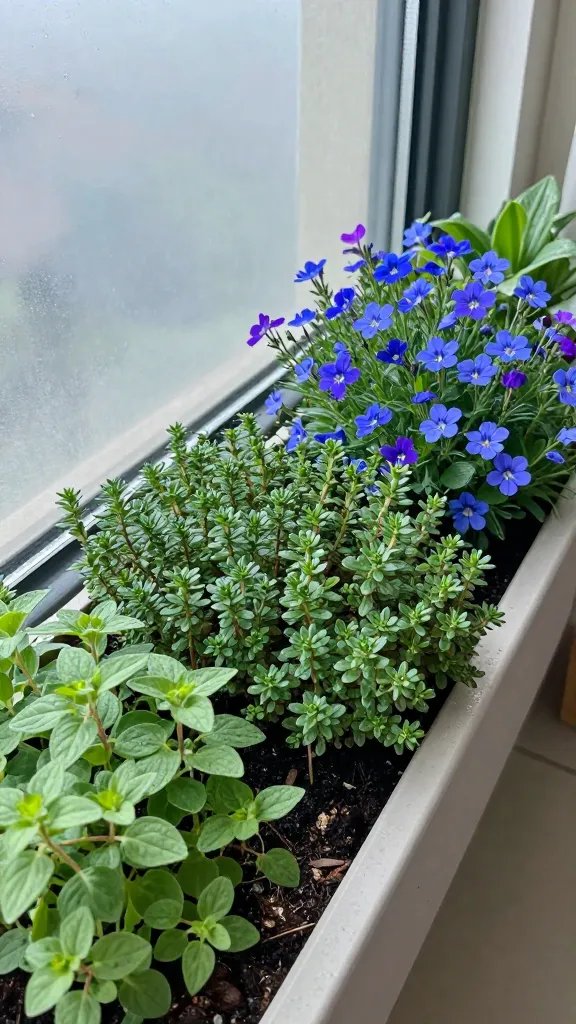
Oregano and thyme form a dense, low-growing mat that limits moisture pockets where slugs thrive, while lobelia adds color and air circulation. This combination works well in cooler, breezier balconies and deters many common pests when used as a ground cover in a shallow window box.
Signs to Watch For
- Slime trails on the soil surface or holes in leaves
- Small thrips scarring on leaf undersides
- Dry patches on soil that attract soil pests
How to Fix It
- Mulch lightly with a thin layer of organic compost to improve soil health
- Water at soil level and avoid overhead spraying to minimize leaf damage
- Trim oregano and thyme to maintain a tight, dense mat
What to Use Instead
- Replace with creeping thyme varieties if oregano or thyme sprawls too aggressively
- Introduce catmint for additional pest deterrence if you have space
Takeaway: A dense, aromatic ground-cover mix reduces moisture pockets and deters pests while adding visual texture.
4. Dill, Anise, and Calendula: Companion Planting That Deters Moths and Beetles
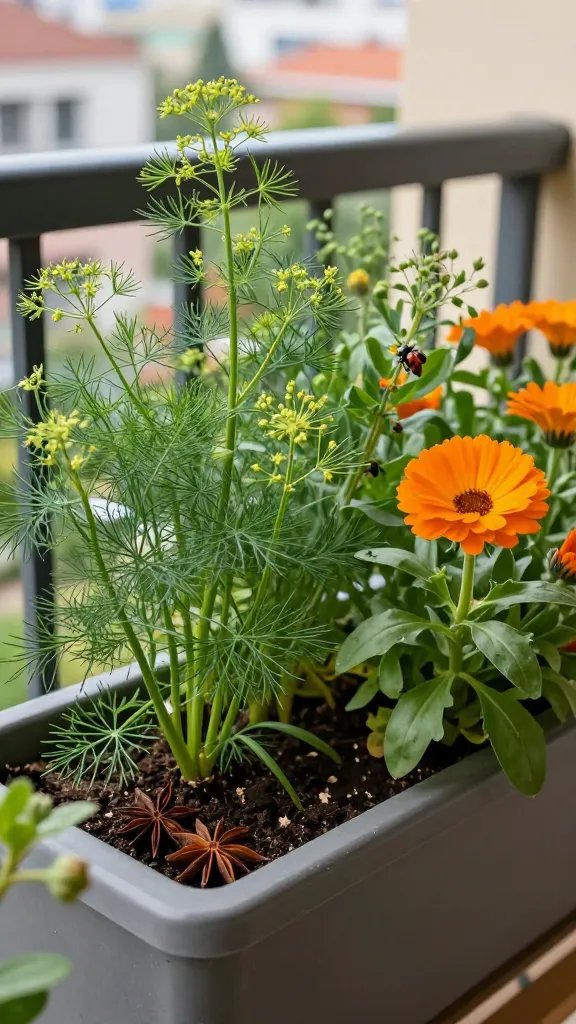
This scent profile confuses moths and some beetles, while calendula flowers attract beneficial insects that prey on pests. Dill and anise release compounds that can disrupt pest host-location behavior, providing a practical, edible, and ornamental balance in a balcony box.
Signs to Watch For
- Leaf holes from beetles or caterpillars despite absence of large pests
- Discolored calendula petals with no obvious cause
- Weak or distorted growth in the middle of the box
How to Fix It
- Trim damaged leaves to encourage new growth and reduce pest habitat
- Replace spent calendula with fresh seedlings mid-season for continuous bloom
- Space plants to ensure airflow and reduce humidity pockets
What to Use Instead
- If calendula is unavailable, use calendula substitutes like borage or cosmos for color and beneficial insect attraction
- Swap dill for cilantro if you need a shorter plant with a similar scent profile
Takeaway: This pairing leverages scent and beneficial insects to keep moths and beetles away, while still offering edible and decorative value.
5. Cilantro, Begonia, and Spider Plant: Cool-Season Pest-Resistant Trio
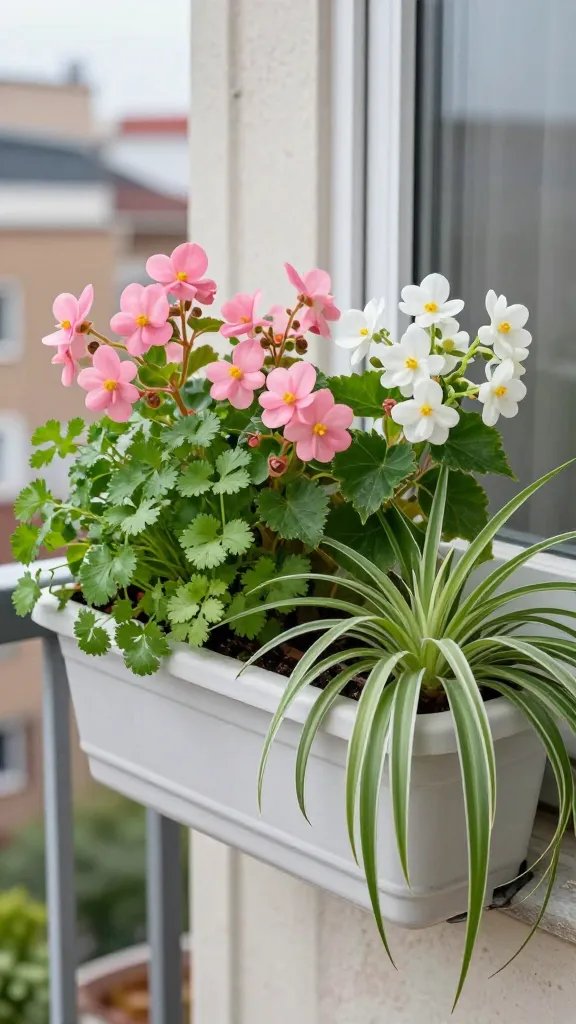
For balconies with cooler iterations or late-season light, cilantro and begonia provide a striking contrast, while spider plants act as air-purifying anchors that help reduce dust and minor pest presence. This trio is beginner-friendly and translates well to standard window boxes.
Signs to Watch For
- Leaf tip scorch on cilantro from dry air
- Drooping begonias despite adequate watering
- Dust accumulation on spider plant leaves indicating poor airflow
How to Fix It
- Water cilantro early in the day to reduce leaf burn
- Move begonias to a brighter location if possible; prune leggy growth
- Wipe spider plant leaves with a damp cloth to keep photosynthesis efficient
What to Use Instead
- If coriander doesn’t suit your climate, substitute parsley for fragrance and pest resistance
- Replace spider plant with pothos if you need a sturdier, trailing option
Takeaway: A cool-season ready mix that adds variety, reduces dust, and keeps pests at bay with robust filler plants.
Frequently Asked Questions
What window box size works best for pest prevention?
A 12- to 14-inch square box with drainage holes is a good starting point. It offers enough soil volume for robust root systems and allows for proper airflow. Use a fast-draining potting mix and a lightweight fertilizer to keep plants healthy without encouraging pests.
How often should I water these window boxes?
Water when the top inch of soil feels dry to the touch. On a sunny balcony, this usually means every 2–4 days for the top layer, less in cooler weather. Ensure drainage holes are clear to avoid soggy roots that invite fungus gnats.
Can I mix more than one of these combinations in same balcony?
Yes, as long as you maintain adequate spacing and light. Avoid overcrowding which creates humidity pockets that pests love. Use separate pots or distinct boxes to keep airflow high and make pest monitoring simpler.
What are quick signs that pests are winning in my box?
Look for sticky residue, distorted new growth, hidden insects on the undersides of leaves, and sudden drops in flowering. Address early by removing affected leaves and inspecting neighbors to catch a creeping issue before it spreads.
Do I need chemical sprays for these boxes?
No. Start with physical controls like removing infested leaves, improving airflow, and adjusting watering. If pests persist, opt for garden-centre friendly, plant-safe products and follow label directions precisely, applying in the cool part of the day.
Conclusion
With these five practical window box combinations, you can enjoy a pest-resistant balcony that remains vibrant and productive. Start with one tested pairing, observe how your space responds, and adjust plant placement to suit your light and wind conditions. Ready for the next step? Try a matching pruning routine and companion planting calendar to keep pests out and your balcony thriving.