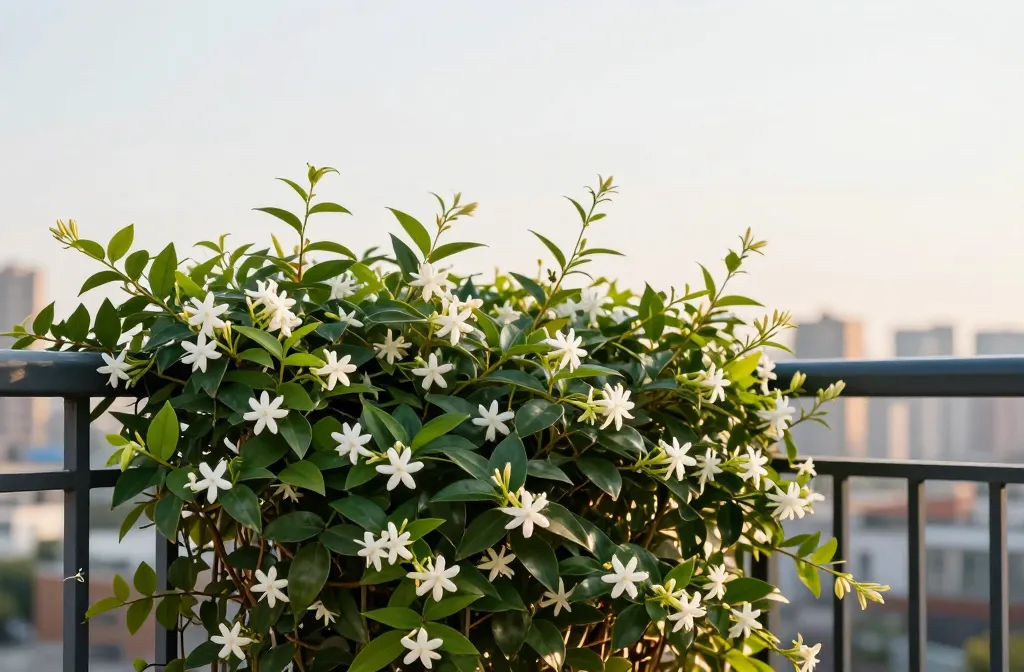
Windproof Winners: 6 Climbing Plants for a Balcony Trellis — Ranked by Wind Tolerance and Growth Speed
I garden on a sixth-floor balcony that turns into a wind tunnel by lunchtime. My first trellis snapped under a tangle of plants that grew fast but shredded in gusts. After a few seasons of trial and error, I’ve learned which climbers shrug off wind and which ones belong in sheltered courtyards. Here are the six best options, ranked for wind tolerance and growth speed, with exact planting and training steps.
| Plant | Wind Tolerance | Growth Speed | Evergreen? | Min Pot Width |
|---|---|---|---|---|
| Star Jasmine | ★★★★★ High | Moderate (first year), fast after | Yes | 40–50 cm |
| Boston Ivy | ★★★★★ High | Fast | No (autumn colour) | 45–60 cm |
| Honeysuckle | ★★★★☆ Good | Medium-fast | Semi-evergreen | 40–50 cm |
| Ivy (Hedera) | ★★★★★ High | Moderate | Yes | 30–40 cm |
| Black-Eyed Susan Vine | ★★★☆☆ Moderate | Very fast (annual) | No (annual) | 30–40 cm |
| Climbing Hydrangea | ★★★★☆ Good (once mature) | Slow (1–2 years to establish) | No | 50+ cm |
1. Star Jasmine (Trachelospermum jasminoides): Evergreen Workhorse With High Wind Tolerance
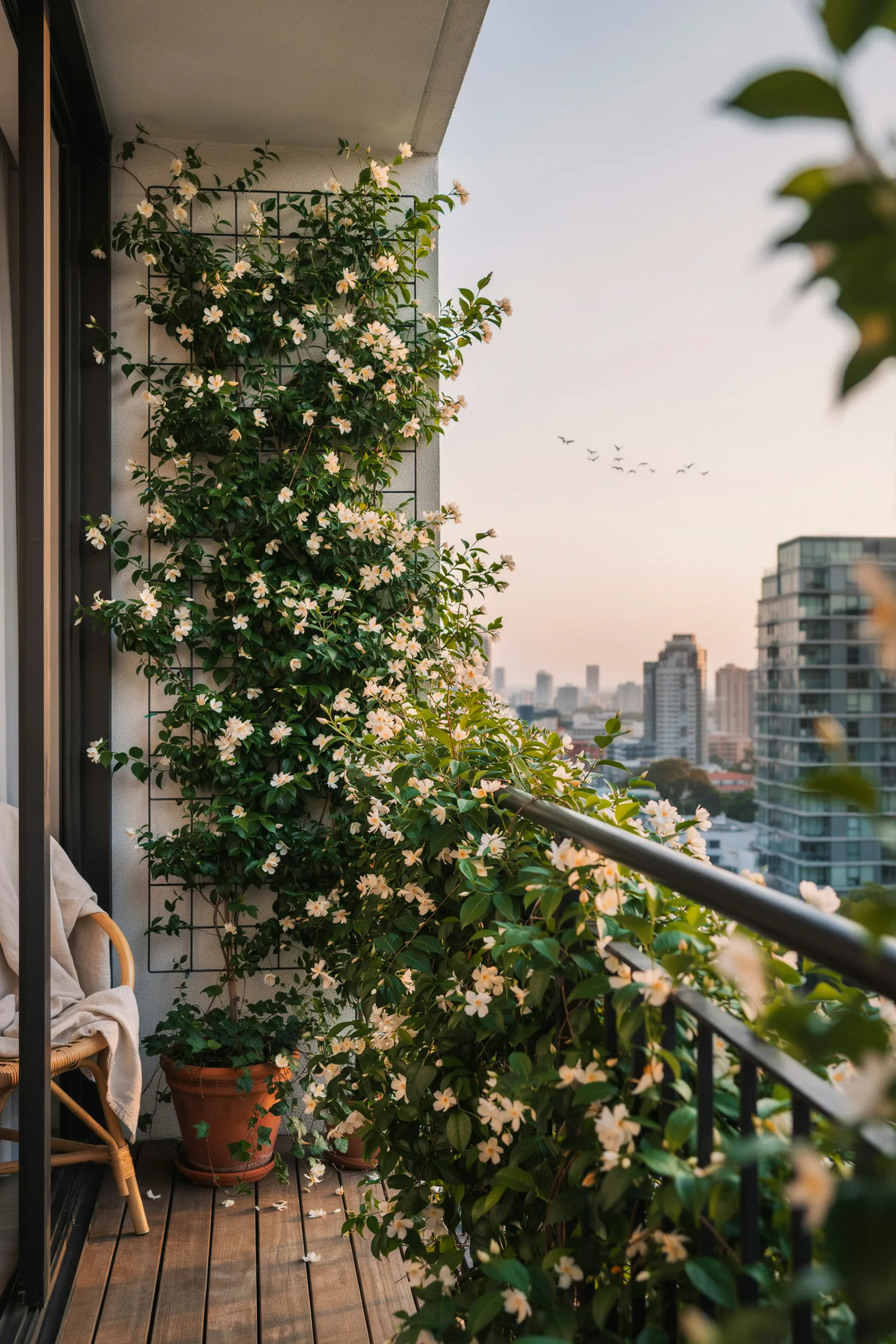
Capsule: Thick, leathery leaves that don’t shred in wind, woody stems that stiffen quickly, and fragrant white flowers in summer. The number one choice for windy balconies. Use a 40–50 cm container, sturdy trellis anchored top and bottom, and tie stems every 20–30 cm.
When wind rips through a balcony, flimsy vines tear and brown. Star jasmine holds its leaves, keeps looking tidy year-round, and still perfumes summer evenings. It grows at a moderate pace the first year, then picks up once roots settle. Gardening experts consistently rate it as the safest bet for exposed balcony trellises across UK, US, and Australian sources.
Why It Handles Wind
- Thick, leathery leaves that don’t shred
- Woody stems that stiffen quickly
- Clings by twining, so it rides out gusts instead of snapping
Planting and Training
- Use a 40–50 cm wide container with drainage and a good quality potting mix from the garden centre.
- Set a sturdy trellis or wire grid anchored to the railing or wall with metal brackets and cable ties.
- Train new shoots with soft plant ties every 20–30 cm so wind can’t whip them loose.
Care in Real Conditions
- Water deeply when the top 3–4 cm of mix feels dry; in summer, that’s usually every 4–7 days.
- Feed with a balanced granular fertiliser in spring and mid-summer as per packet rate.
- Prune lightly after flowering to keep it flat to the trellis.
Action today: Add two vertical tie points per 30 cm of stem to lock jasmine to the trellis before peak wind hours.
2. Boston Ivy (Parthenocissus tricuspidata): Fast Cover and Tough in Gusts
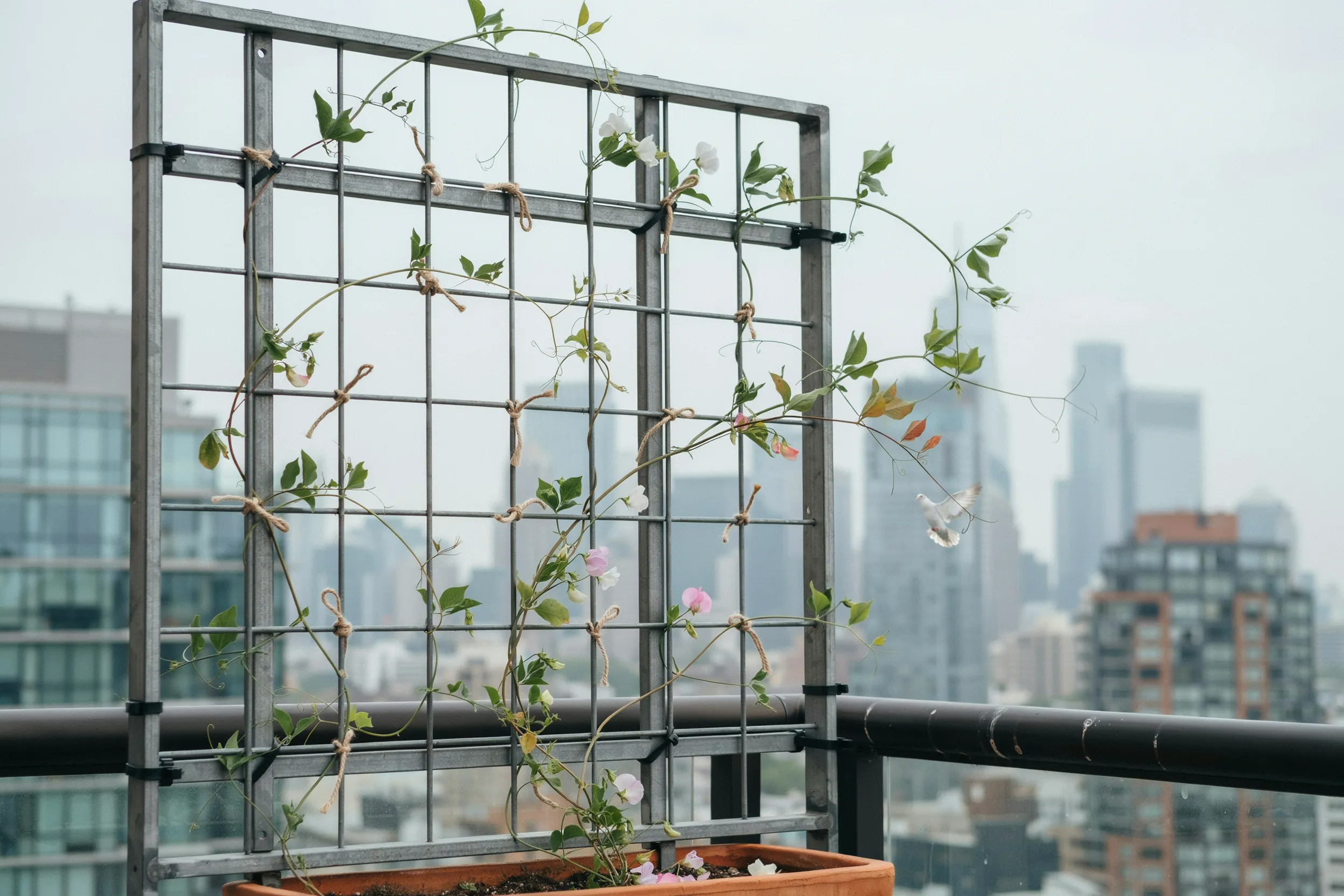
Capsule: Flexible, fast-growing shoots that bend rather than snap, adhesive pads that grip smooth surfaces, and brilliant autumn colour. Races up supports and laughs at drafts. Use a 45–60 cm trough for ballast and pin shoots to mesh every 15–20 cm. Warning: keep it on installed supports — don’t let it root into building render.
If you need quick green coverage that doesn’t fuss about wind, Boston ivy races up supports and laughs at drafts. It drops leaves in winter but delivers dense summer shade and brilliant autumn colour.
Planting and Training
- Use a 45–60 cm trough for root run and ballast against wind.
- Install a rigid mesh panel (galvanised wire panel from the hardware store) and secure it top and bottom.
- Pin new shoots to the mesh with soft ties every 15–20 cm to establish a flat screen.
Care in Real Conditions
- Water when the top few centimetres dry; in hot spells, expect every 3–5 days.
- Clip wayward shoots monthly during peak growth to prevent tangles that act like a sail.
- Warning: Avoid letting it root into your building’s render or guttering; keep it on installed supports.
Takeaway: The more anchor points you add early, the less the wind can grab and tear later. Our heatwave balcony guide covers watering adjustments for wind-dried containers.
3. Honeysuckle (Lonicera periclymenum): Fragrant, Hardy, and Forgiving
Capsule: Pliable, twining stems that handle airflow well, generous fragrant flowers, and tolerance for partial shade. Naturally grows in exposed hedgerows. Run horizontal steel wires every 25–30 cm, use soft rubber-coated ties, and mulch 3–5 cm to stabilise moisture against drying winds.
Balcony wind dries leaves and snaps brittle stems. Honeysuckle bounces back, flowers generously, and twines firmly around rails or wires. Growth speed is medium-fast once established, giving you scent and cover the same season.
How to Wind-Proof It
- Run horizontal steel wires (clothesline wire works) every 25–30 cm up the wall; fix with wall hooks and wall plugs rated for outdoor use.
- Use soft rubber-coated ties; avoid thin twist ties that cut into stems.
- Mulch the soil surface with 3–5 cm of bark or decorative pebbles to stabilise moisture.
Action today: Add a 3–5 cm mulch layer to buffer roots from drying winds and cut watering frequency.
4. Ivy (Hedera canariensis or H. helix): Rugged Foliage Screens Year-Round
Capsule: The ultimate wind-proof climber — waxy, leathery leaves prevent desiccation, evergreen year-round coverage, and tolerates shade better than most climbers. Keep it on freestanding trellis panels or mesh within your container. Choose smaller-leaved cultivars for pots.
When you want a permanent green wall that shrugs off rough weather, ivy delivers. It doesn’t win awards for flowers, but it absolutely wins for wind tolerance and steady growth.
Manage It Responsibly
- Warning: Ivy can creep into crevices. Keep it on freestanding trellis panels or mesh within your container.
- Never let it root into walls or rooflines; prune edges monthly during the growing season.
- Wear gloves when pruning; sap can irritate skin.
Container and Support
- Use a heavy planter (ceramic or concrete-look composite) to resist tipping.
- Install a double-panel trellis: one fixed to the planter, one fixed to the railing; join with zip ties for rigidity.
- Weave stems through the grid instead of tying every piece — creates a wind-permeable mat.
Takeaway: Keep ivy on its own support structure so wind movement doesn’t pry it into building cracks.
5. Black-Eyed Susan Vine (Thunbergia alata): Fast, Cheerful Annual Cover
Capsule: Races up strings and flowers for months — ideal if you want instant colour and don’t mind replanting each year. Long, soft shoots whip in wind, so fan five strings from pot to a top crossbar and tie in new growth every 10–15 cm. Treat as annual in cool climates.
Sometimes you want instant colour and don’t mind replanting each year. Black-eyed Susan vine races up strings, flowers for months, and handles breezy balconies as long as you give it frequent tie-ins.
How to Set It Up Right
- Use a 30–40 cm pot minimum; bigger holds water longer in heat.
- String a fan of natural jute twine from pot to a top crossbar; replace string each season.
- Tie in new growth every 10–15 cm; snip stray whips to keep a flat layer.
Action today: Add a top crossbar (bamboo cane or timber strip) and fan five strings down to the pot to spread wind load.
6. Climbing Hydrangea: Slow Starter, Big Payoff on Sheltered Balconies
Capsule: A handsome woody climber with lacey summer blooms that tolerates wind once mature — but starts slow (12–18 months of root-building before strong growth). Needs a solid trellis bolted to a wall and consistent moisture. Best on east or north exposure.
For sturdy railings and patient gardeners, climbing hydrangea becomes a handsome, woody climber with lacey summer blooms. It tolerates wind once mature, but it starts slow and needs firm support.
Support and Care
- Use a solid trellis panel bolted to a wall or a freestanding lattice in a heavy planter.
- Gently tie stems flat to the trellis — adhesive roots help but need time to attach.
- Keep soil consistently moist, not soggy; water when the top 3–4 cm are dry.
Takeaway: Commit to firm, early tie-ins and even moisture for the first two seasons to earn long-term stability.
Frequently Asked Questions
How do I stop balcony climbers from acting like a sail?
Make the whole setup wind-permeable and heavy at the base. Use a broad, heavy container and secure the trellis at both the top and bottom. Train plants as a single flat layer, not a billow. If tipping is a risk, add two paving slabs on the soil surface as ballast.
What size pot do I actually need for climbers in wind?
A minimum of 40–50 cm width for woody climbers prevents tip-over and holds enough moisture. Fast annuals like black-eyed Susan do fine in 30–40 cm. Make sure the pot has drainage holes and elevate it on pot feet so water can escape during storms.
How often should I water in a windy spot?
Wind dries soil faster than sun alone. Check with your finger 3–4 cm down; if dry, water until it runs from the base. In summer, expect every 3–5 days for woody climbers and daily for fast annuals during heat. Mulch 3–5 cm deep to extend intervals.
Can I grow these on a north-facing balcony?
Yes — focus on star jasmine, ivy, and climbing hydrangea, which handle bright indirect light well. Honeysuckle and Boston ivy still perform with half-day light. Avoid deep recesses where wind funnels but light is poor.
How do I anchor a trellis without drilling into the building?
Use a freestanding trellis panel set into the pot, then lash its top to the balcony railing with heavy-duty cable ties. For wire systems, run clothesline wire between two removable clamp-on railing posts. Always spread the load across multiple ties and add a safety tether.
Which climbers should I avoid on a windy balcony?
Sweet pea, morning glory, passion flower, and large-flowered clematis hybrids all have soft stems and large petals that shred easily in sustained wind. Stick to plants with leathery or flexible foliage — those traits predict wind tolerance better than flower size.
Conclusion
You don’t need exotic gear to build a wind-proof green screen — just the right climber, a solid trellis, and regular tie-ins. Pick from this ranked list, secure your support at the top and bottom, and train a single flat layer. By next season, your balcony will be sheltered, green, and far easier to live with on blustery days.