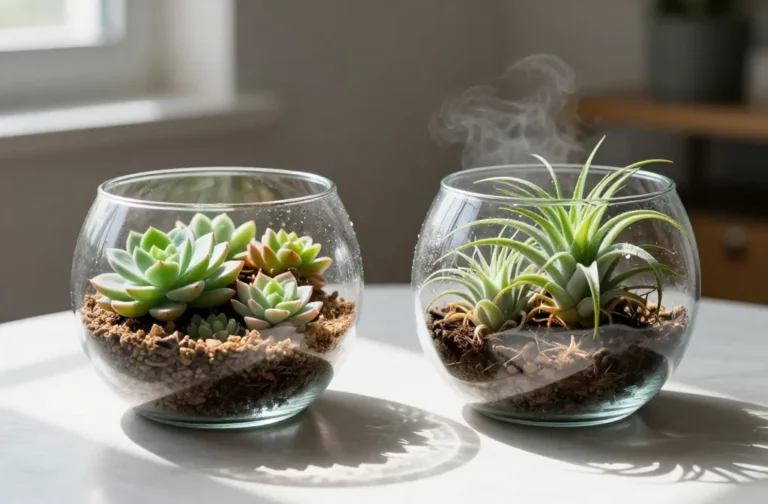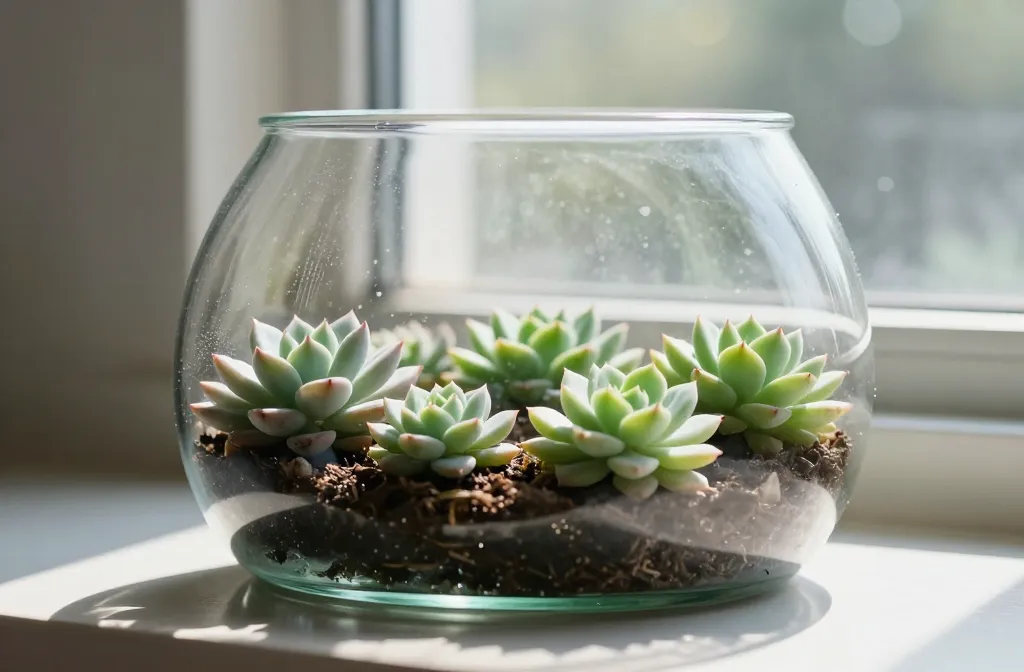
Why Etiolation Happens in Terrariums — How Insufficient Light Causes Leggy Succulent Growth
I’ve watched more than one cute desktop terrarium turn into a jar of stretched, floppy succulents. The plants weren’t “sick” — they were starving for light. Once I understood how glass, distance from a window, and closed lids change light, my terrariums stopped growing like spaghetti. In this guide, I’ll show you exactly why etiolation happens in terrariums and the simple, non-technical ways to stop it fast.
Etiolation Explained: Plants Stretch When They Can’t See Enough Light
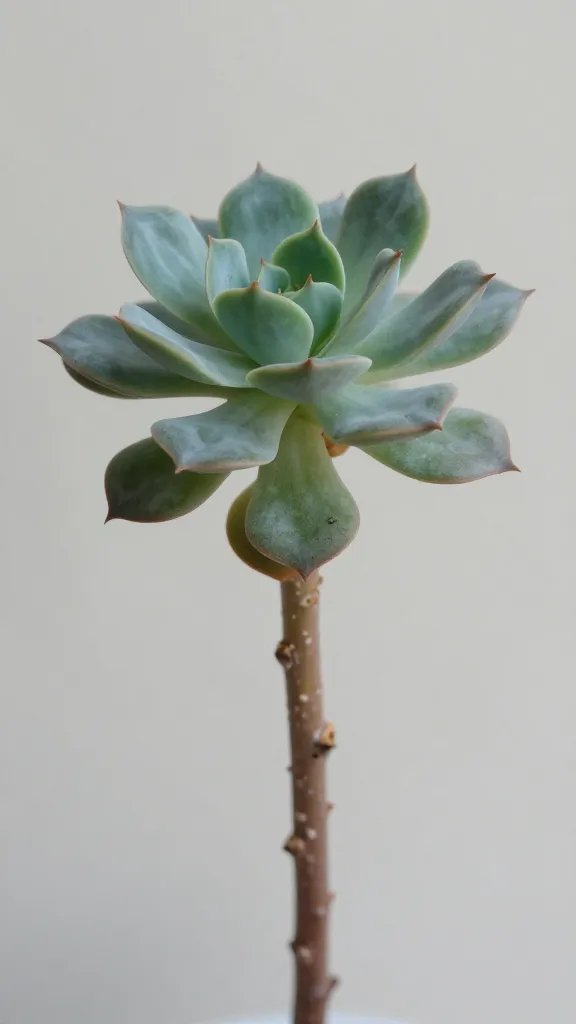
Etiolation is a plant’s emergency reach for light. Stems lengthen, spaces between leaves widen, and color fades because the plant reallocates energy to grow taller instead of stronger.
Terrariums are notorious for this because glass filters and scatters light, and many jars sit far from bright windows. Succulents evolved under open skies; inside glass, they receive a dim, indirect trickle instead of the strong light they expect.
Action today: Move your terrarium to the brightest spot you have — within arm’s length of a sunny window — and note the change in stem stretching over the next two weeks.
The Glass Problem: Why Containers Reduce Light More Than You Think
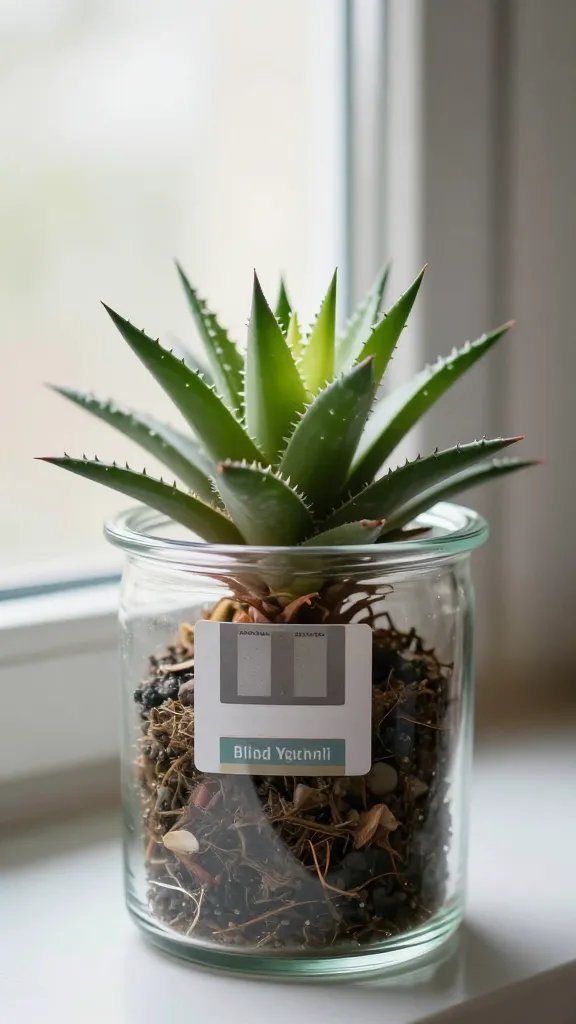
Even clear glass cuts usable light. Curved walls bend and scatter rays, lids fog up with condensation, and any tint further dims intensity. Thick jars, apothecary lids, and double walls reduce light the most.
Dust, fingerprints, and hard-water spots matter. That thin film can shave off a surprising chunk of brightness, especially for light-hungry Echeveria, Haworthia, and other succulents.
Warning Signs You’re Losing Light at the Glass
- Persistent midday condensation on the lid or upper walls.
- Noticeably dimmer look through the jar compared to open air.
- Plants tilt toward the brightest side of the glass within days of a move.
Action today: Clean the inside and outside of the glass with a vinegar-and-water wipe, dry to a squeak, and leave the lid off for two hours at midday to clear excess condensation.
Window Reality Check: Distance and Direction Decide Everything
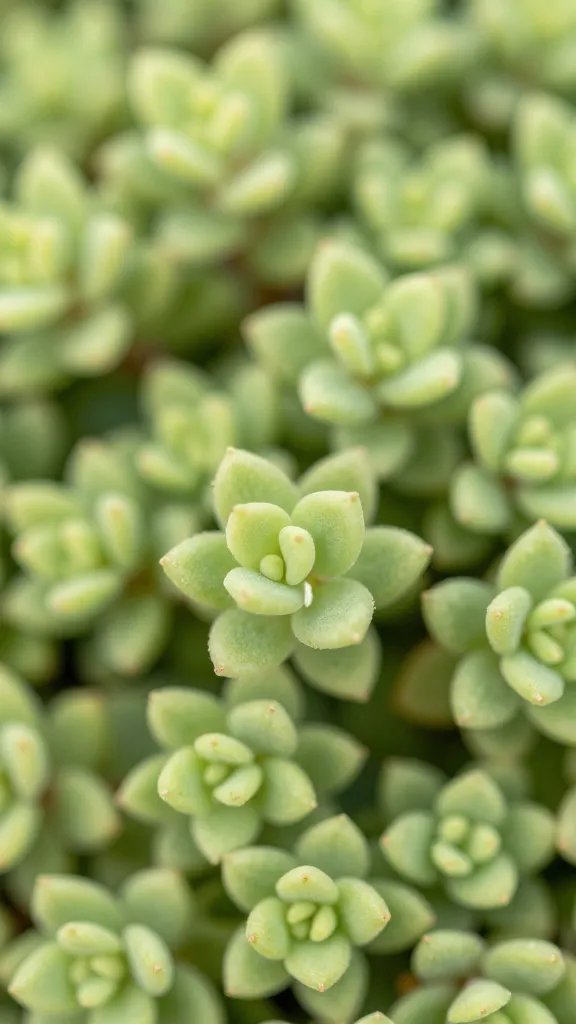
Light drops fast with distance. A terrarium 3 feet from a window gets a fraction of the light compared to being on the sill. Glass plus that distance equals etiolation for succulents.
Direction matters. A south-facing window provides the brightest light all day. East gives gentle morning sun, usually safe but less intense. West brings strong late-afternoon light that can be hot. North is generally too dim for succulents behind glass.
Action today: Put your terrarium where you can read small print without turning on a lamp at midday — ideally a south or east window within 12–18 inches.
Closed vs. Open Terrariums: Why Succulents Struggle Under Lids
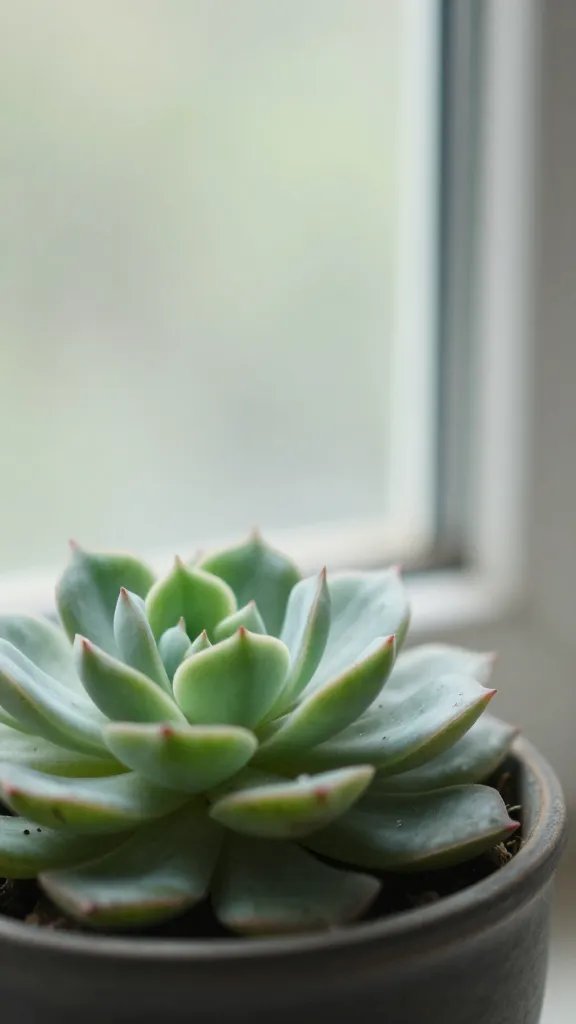
Closed terrariums trap humidity and reduce airflow. That’s fine for mosses and ferns that like shade and moisture. Succulents want bright, dry air and strong light. A lid also fogs, cutting light every day during peak hours.
In closed setups, succulents soften, pale, then stretch. Leaves thin out and point upward, and rosettes lose their tight shape. You end up pruning constantly to keep anything compact.
Action today: If your terrarium has succulents, run it open-top or vent it daily at midday for 2–4 hours to clear condensation and increase light penetration.
Practical Light Fixes Without Fancy Gear
You don’t need meters or specialized fixtures to solve this. Use window placement and a simple lamp to bridge the gap.
Step-by-Step: Brighten a Succulent Terrarium
- Relocate to a bright window: south is best; east is second. Aim for a spot where the sun actually hits the glass for at least 1–2 hours daily.
- Raise the terrarium: a stack of books or a small stand can put it right in the bright zone on the sill.
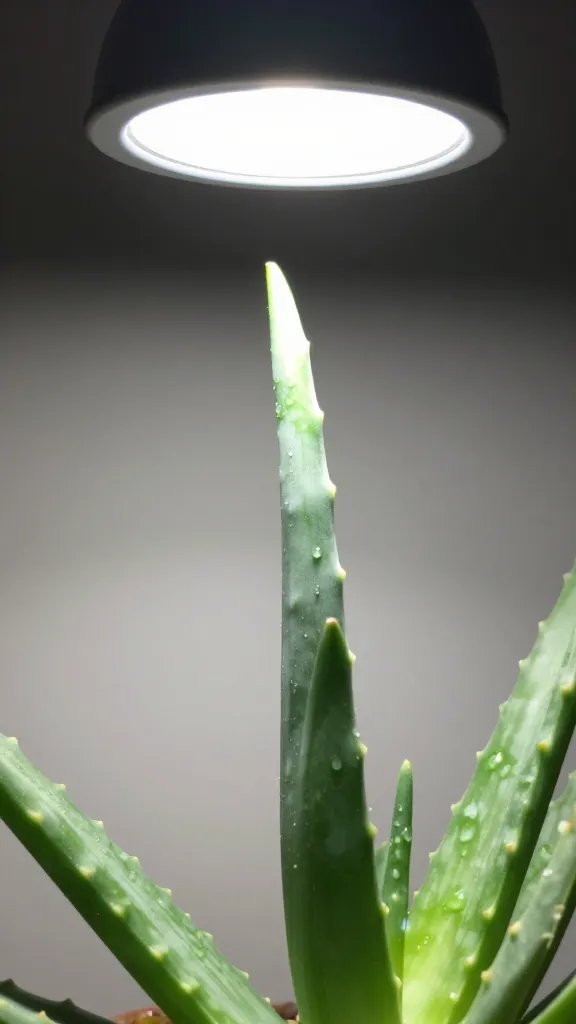
- Add a basic desk lamp with an LED “daylight” bulb labeled 5000–6500K. Position the bulb 6–10 inches above the plants, angled slightly off-center to reduce glare on the glass.
- Run the lamp 10–12 hours daily on a plug-in timer. Consistency prevents stretch.
- Rotate the container a quarter turn once a week so growth stays even.
Action today: Install a 5000–6500K LED bulb in a desk lamp and set a timer for 12 hours — start at noon to overlap natural light.
Choosing Plants That Don’t Etio late As Easily in Glass
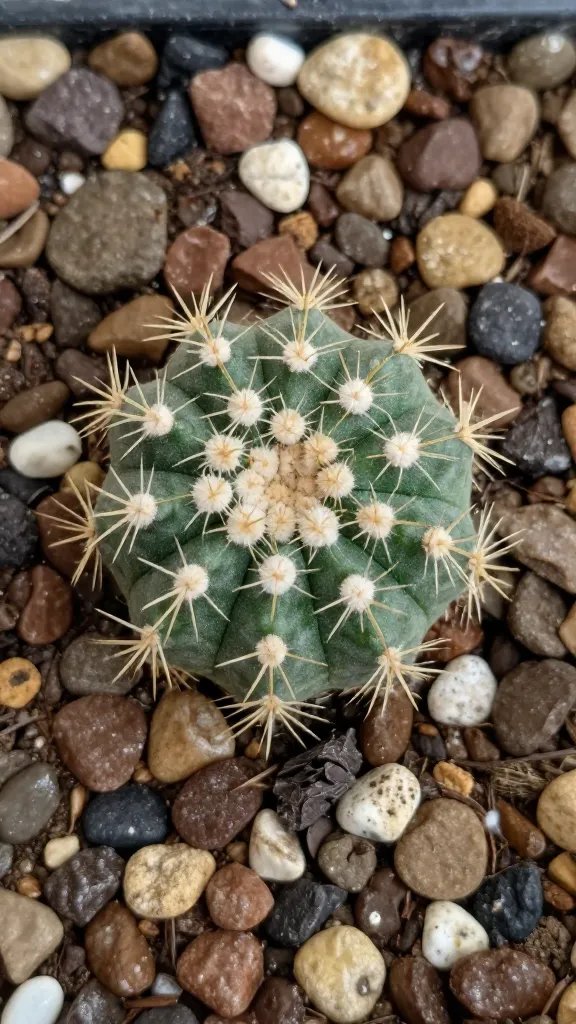
Not every “succulent” belongs in a terrarium. Many classic rosette types demand stronger light than glass setups usually provide. Compact, shade-tolerant species stay tighter under indirect light and occasional lamp help.
Reliable Picks for Brighter Terrariums
- Haworthia cooperi and Haworthia fasciata — tolerate bright indirect light well.
- Gasteria hybrids — thick leaves, slow to stretch.
- Peperomia (not a succulent, but succulent-like) — compact under indirect light.
- Crassula ovata ‘Gollum’ (small cuttings) — slower stretch than rosette Crassula.
Action today: If your rosettes have already stretched, take healthy head cuttings and re-root them in an open pot near a bright window; replace the terrarium with Haworthia or Gasteria.
Rescuing Leggy Growth: Cut, Replant, and Reset the Light
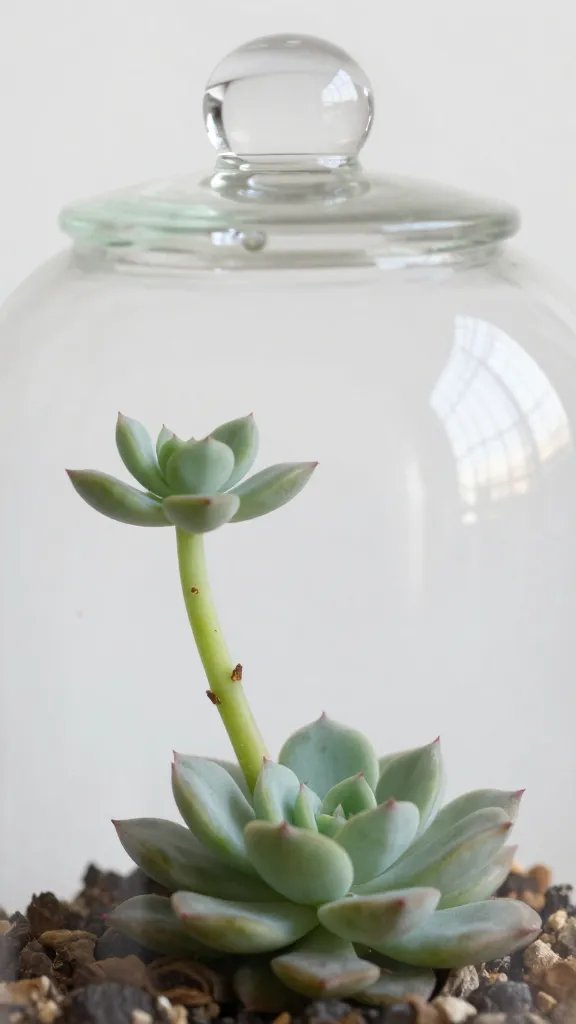
Once a succulent etiolates, it won’t shrink back. You fix the shape by pruning and restarting under better light. The good news: succulents root easily, and a single plant can become several.
Step-by-Step: Fix a Stretched Succulent
- Use clean scissors to cut the stem 1–2 inches below a healthy rosette.
- Let the cutting dry on a paper towel for 24–48 hours until the cut end feels dry and slightly firm.
- Plant in a small pot with a well-draining cactus mix from the garden centre, not inside the terrarium yet.
- Water lightly after one week, then every 10–14 days; keep it in bright indirect light near a window.
- Once roots are established (about 3–4 weeks), decide: keep it as a potted plant near the window or return it to an open-top terrarium under a lamp.
Action today: Take one head cutting from your leggiest plant and start the 48-hour callus period — it’s the fastest path back to a compact rosette.
Soil, Water, and Spacing: Small Tweaks That Support Compact Growth
Heavy, moisture-holding terrarium substrates encourage soft, stretchy growth. For succulents, use a cactus/succulent mix from the garden centre and add a thin top layer of aquarium gravel to keep leaves dry.
Water sparingly. In an open terrarium, a light drink every 2–3 weeks is enough. Crowding also causes shade; give each rosette a thumb’s width of space so lower leaves still get light.
Action today: If your mix feels spongy, scoop and replace the top 1–2 inches with cactus mix and add a gravel top-dressing for faster surface drying.
Frequently Asked Questions
Can I keep succulents in a fully closed terrarium?
I don’t recommend it. Closed lids trap humidity, fog the glass, and cut light during peak hours, which drives etiolation. Run it open-top or use a lid only as a decorative cover you remove daily for several hours. If you want a closed build, switch to mosses and ferns instead of succulents.
How close should my terrarium be to a window?
Place it within 12–18 inches of the brightest window you have, ideally south-facing. If you can feel gentle sun on the glass for 1–2 hours daily, that’s enough with a supplemental lamp. Farther than 2 feet, plan on using a desk lamp for 10–12 hours a day.
What bulb should I buy if I don’t want special grow lights?
Use a standard LED “daylight” bulb labeled 5000–6500K from any hardware store. Choose 60–100W equivalent for brightness and place it 6–10 inches above the plants. Put it on a simple plug-in timer set for 12 hours daily.
How do I know if my succulent is already etiolating?
Look for longer stems with more space between leaves, a paler or washed-out color, and rosettes that lose their tight shape. Compare new growth to the older base — if gaps are wider on top, it’s stretching. Fix it now with more light and consider taking a head cutting.
Will rotating the terrarium stop leggy growth?
Rotation keeps growth even, but it doesn’t replace strong light. Use rotation weekly to prevent leaning, but prioritize placement near a bright window and a lamp on a timer. Rotation is the polish; light is the cure.
Do tinted or patterned jars affect light?
Yes. Tinted, frosted, or thick patterned glass reduces and scatters light significantly. Clear, thin glass gives the best transmission and more even lighting inside. If your jar is tinted, compensate with closer window placement and reliable lamp hours.
Conclusion
Etiolation in terrariums isn’t mysterious — it’s a light shortfall you can correct with placement, a basic desk lamp, and better plant choices. Start today by moving your terrarium to the brightest window, cleaning the glass, and setting a 12-hour lamp schedule. From there, decide which plants truly fit a glass home and which deserve a sunny pot on the sill — you now have the clarity to keep both thriving.