Viral Guide to 7 Desert Terrarium Plants That Tolerate Neglect and Tight Containers
I’ve built desert terrariums for busy friends who forget to water for weeks and only own a teaspoon and a spray bottle. The right plants shrugged at the missed care and stayed compact in jam jars and fishbowls. In this guide, you’ll learn exactly which species thrive in tight containers with irregular watering — and the simple setup that keeps them healthy. You’ll finish with a plant list, care timings, and troubleshooting steps that fit real life, not a greenhouse.
1. Haworthia: Compact Rosettes That Stay Petite Under Glass
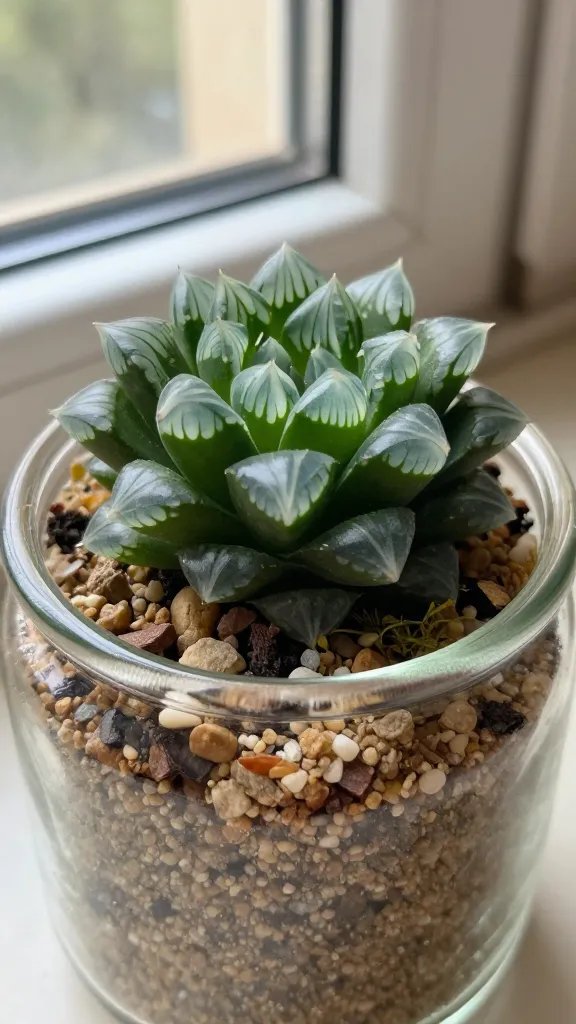
Big succulents stretch and flop in terrariums, but Haworthia holds tight rosettes and keeps its shape even when light isn’t perfect. If you forget to water for a month, it doesn’t sulk — leaves stay firm and patterned. It also tolerates cramped roots, which makes it perfect for narrow jars and small bowls.
Signs to Watch For
- Leaf wrinkling lengthwise means it wants a small drink.
- Pale or elongated leaves show it needs brighter placement near a sunny window.
- Brown, translucent leaves signal overwatering in a container with poor drainage.
How to Grow It in Tight Containers
- Use a shallow layer (1.5–2 cm) of small aquarium gravel, then a coffee-filter circle to keep mix out of the gravel.
- Fill with a cactus/succulent mix from the garden centre. If it feels peaty and heavy, blend in a handful of perlite.
- Water with a teaspoon every 3–4 weeks. Aim for the soil, not the rosette.
Action today: Place a Haworthia 30–60 cm from a bright south or west window and set a calendar reminder to give 2–3 teaspoons of water every 3–4 weeks.
2. Gasteria: Bulletproof Leaves That Laugh at Missed Waterings
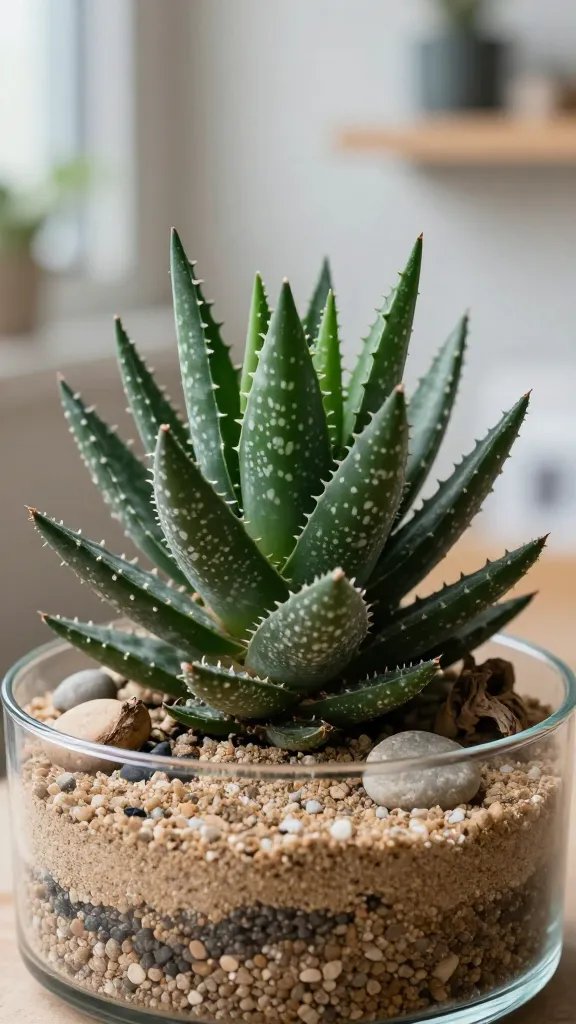
Gasteria looks like a tougher cousin of Aloe but stays much smaller and thicker-leaved. In under-lit apartments, it holds color and resists the stretched, floppy look. The chunky leaves store enough moisture that a skipped month doesn’t cause collapse.
What Makes It Neglect-Proof
- Thick, strap-like leaves store water for long gaps between drinks.
- Slow root growth tolerates crowded containers for years.
- Low-light tolerance suits shelves that get bright indirect light rather than direct sun.
Simple Care Routine
- Pot in a low bowl or jar with cactus mix plus extra pumice or perlite if available.
- Water sparingly — 1–2 tablespoons every 3–4 weeks in winter, every 2–3 weeks in summer.
- Rotate the container a quarter-turn each week to prevent leaning.
Takeaway: Choose Gasteria for spots that are bright but not sunny; it keeps a tidy form and forgives long dry spells.
3. Zebra Cactus (Haworthiopsis fasciata/attenuata): Patterned Foliage That Stays Photo-Ready
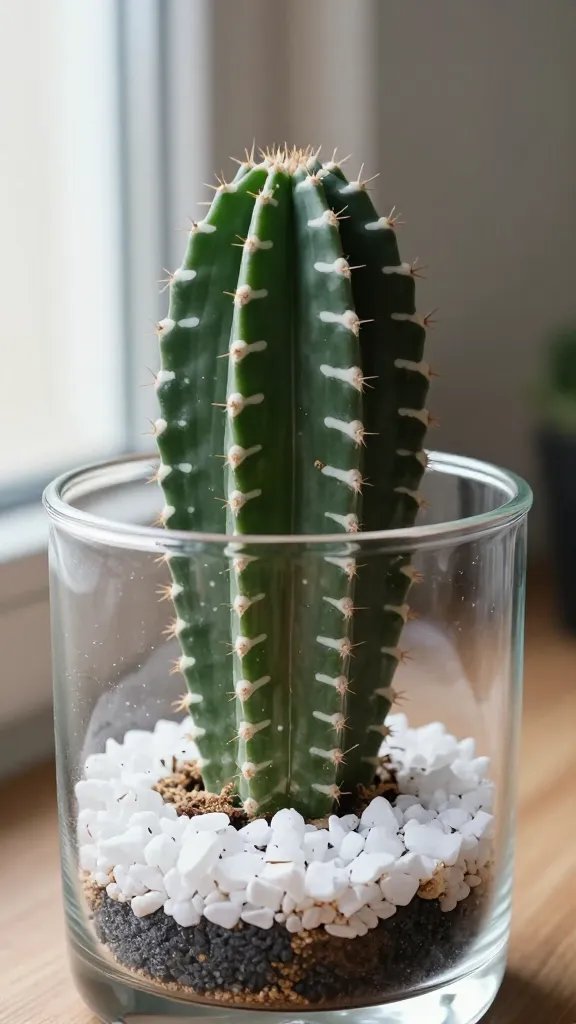
The zebra cactus gives you bold white banding that looks great through glass even when dusty or under-watered. It holds a vertical rosette, so it won’t press against the glass and rot. Its small footprint means you can tuck it into teacup-sized terrariums without crowding.
Common Problems and Fixes
- Condensation build-up in closed jars can cause crown rot. Crack the lid daily for 30–60 minutes in bright light.
- Leaf base mushiness follows overwatering. Let soil dry fully to the bottom gravel before watering again.
- Stretching toward the light means move it closer to the window, not to a grow light you don’t own.
Planting Tip
- Keep the rosette above the soil line. Do not bury the base; top-dress with pea gravel to stabilize.
Action today: If your zebra cactus sits farther than an arm’s length from a bright window, move it closer and open a closed terrarium lid for 30 minutes at midday.
4. Echeveria ‘Lola’ or ‘Perle von Nürnberg’: Rosettes That Forgive Dry Weeks
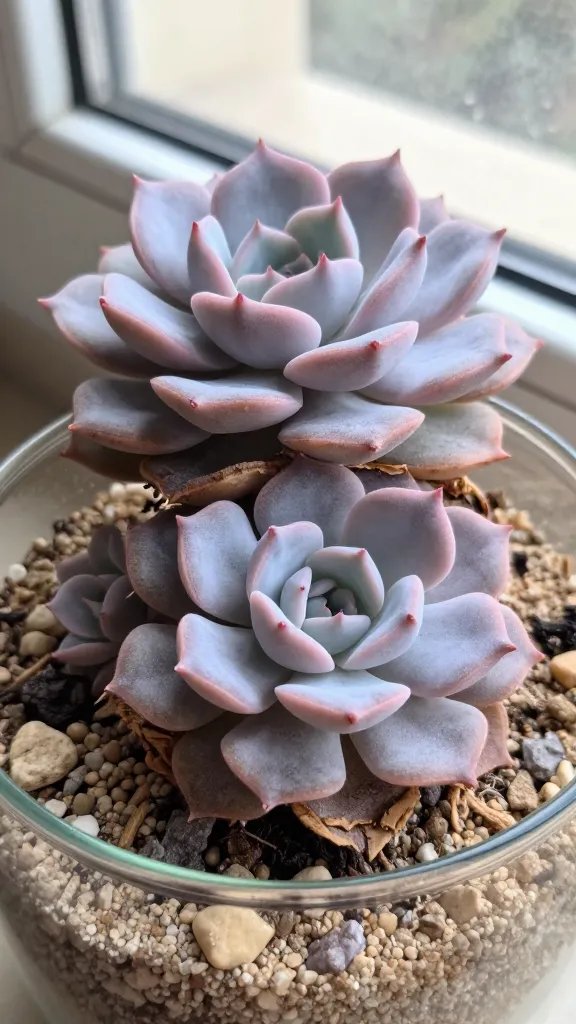
Many Echeveria varieties stretch indoors, but compact types like ‘Lola’ and ‘Perle von Nürnberg’ hold a tight rosette if they get bright light. They look high-maintenance but accept infrequent watering without complaint. In a container, they stay under 10–12 cm wide for a long time.
Signs to Watch For
- Lower leaf crisping after 3–4 weeks is normal; pluck off dried leaves with tweezers.
- Rosette opening wide and flattening indicates more light is needed.
- Leaf drop from the center suggests trapped water in the rosette — always water the soil line.
Light and Water Plan
- Place within 30 cm of a south-facing window or directly in an east window.
- Water every 2–3 weeks spring–summer, every 4 weeks fall–winter. Use 1–3 tablespoons depending on container size.
- Dust leaves with a soft makeup brush to keep pores clear.
Takeaway: Select a compact Echeveria cultivar and commit to soil-only watering on a 2–4 week schedule to keep the rosette tight.
5. Living Stones (Lithops): Pebble-Sized Survivors for the Smallest Jars
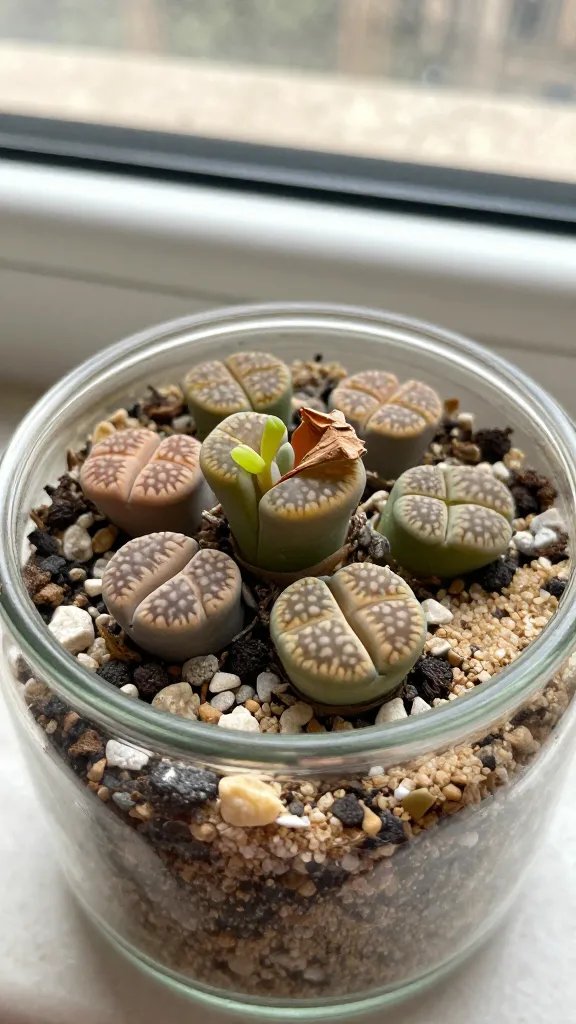
Lithops thrive on neglect so strongly that overwatering is the only real way to kill them. They barely grow, so they never outpace small terrariums. Their annual cycle rewards patience and punishes fussing — perfect if you water forgetfully.
Critical Care Rules
- Winter–spring (leaf change): Do not water until the old leaf pair shrivels paper-dry.
- Late spring–early fall: Light drinks every 4–6 weeks if leaves wrinkle.
- Container: Use a very shallow jar with excellent airflow; keep the crown level with grit.
What to Use Instead of Fancy Gear
- Top-dress with aquarium sand and fine gravel from a pet store.
- Use a plastic syringe or teaspoon to deliver tiny, targeted sips.
Action today: If your Lithops still has plump old leaves, stop watering completely until the old pair dries to a husk.
6. Tiger Jaws (Faucaria tigrina): Chunky Jawed Rosettes That Handle Heat and Dry Air
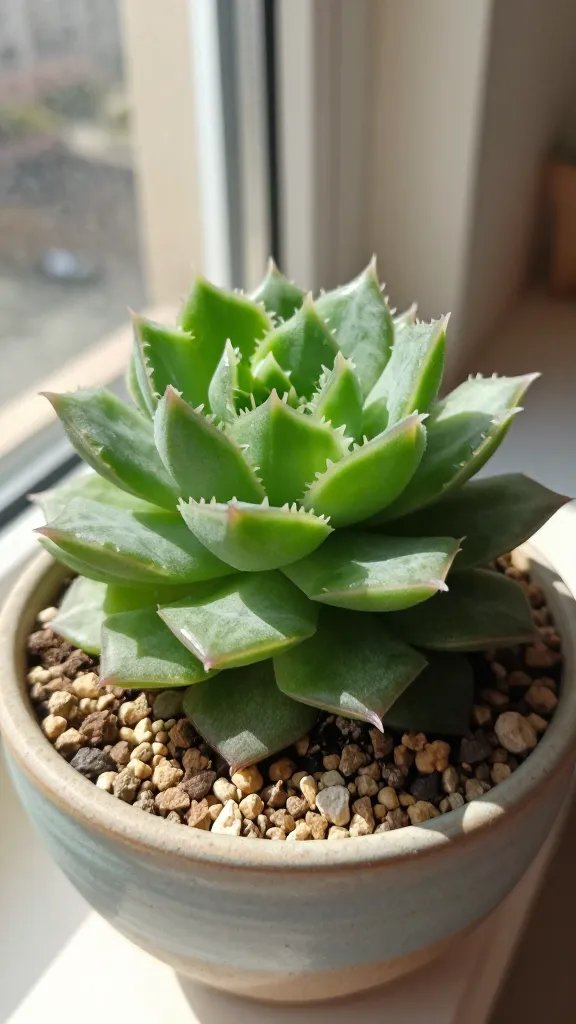
Tiger Jaws packs thick leaves with soft “teeth,” which store water and tolerate dry apartments and sunny sills. In tight containers, it fills space without shooting long stems. It forgives missed waterings and bounces back with a single deep sip.
Placement and Watering
- Give direct sun through glass for 2–4 hours daily if possible (south or west window).
- Water every 3–4 weeks; add roughly 2–4 tablespoons for a 10–15 cm bowl.
- Let the top dressing dry bone-dry before the next drink.
Warning Signs
- Teeth browning at tips = chronic dryness; give one moderate watering.
- Leaf splitting = too much water at once; reduce volume, not frequency.
Takeaway: Pair Tiger Jaws with a sunny window and a once-a-month watering habit for a resilient focal plant.
7. Burro’s Tail (Sedum morganianum, dwarf forms): Trailing Beads That Cope With Neglect
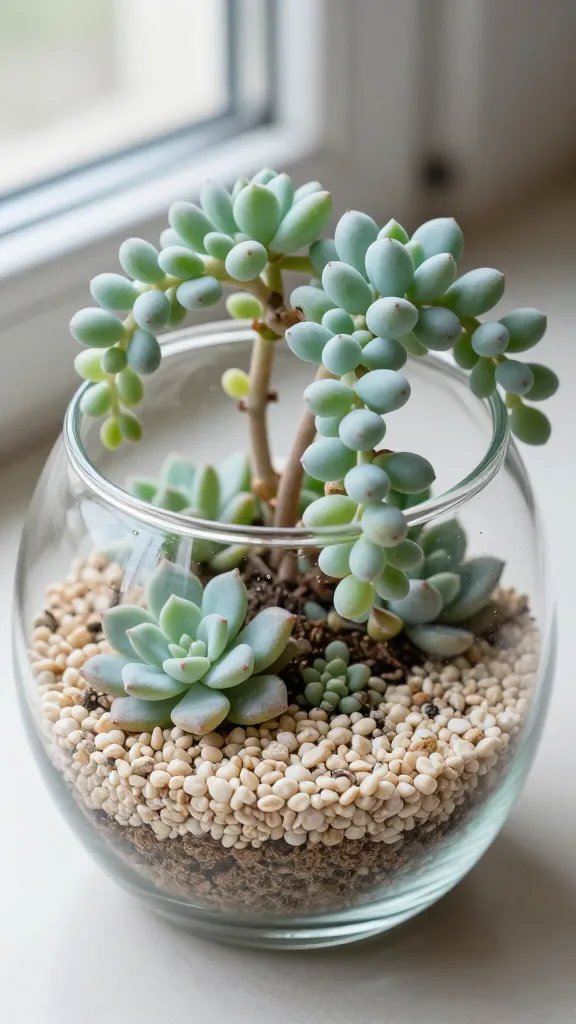
Burro’s Tail drops leaves when handled, but it excels in low-care, bright spots and tolerates forgotten waterings. Dwarf or “mini” forms stay compact in small terrariums and drape attractively without crowding neighbors. Once settled, it barely needs anything except light.
How to Keep It Happy in Glass
- Choose a bowl with a wide opening for airflow; avoid sealed lids.
- Top-dress heavily with pea gravel to anchor fragile stems.
- Water every 3–4 weeks with a gentle trickle at the soil line; never splash the leaves.
Propagation Bonus
- Collect dropped leaves, lay them on dry soil, and mist once weekly until you see tiny roots.
Action today: Move your Burro’s Tail to bright, indirect light right beside a window and stop touching it — hands-off care keeps it lush.
Frequently Asked Questions
Do desert terrarium plants need drainage holes?
Drainage holes help, but you can succeed without them by building a simple layer system. Add 1.5–2 cm of small gravel, cover with a coffee filter, and then use cactus mix. Water in tablespoons, not cups, and wait until the top dressing is bone-dry before watering again. If you overdo it, tilt the container and wick out extra moisture with a folded paper towel.
How close to a window should I place a desert terrarium?
Place it within arm’s length of a bright south or west window for best results. If the plants stretch or pale, move 15–30 cm closer. East windows work for compact Echeveria and Haworthia if they get morning sun. Avoid deep interior shelves unless they receive strong, all-day brightness.
How much should I water a small, enclosed terrarium with succulents?
Very sparingly. For a 10–15 cm container, start with 1–3 teaspoons every 3–4 weeks, then watch the leaves. If they wrinkle slightly, add a teaspoon; if they feel soft and translucent, stop watering and ventilate by opening the lid for an hour daily until the glass clears of heavy condensation. Always deliver water to the soil, not into rosettes.
What soil should I buy if I don’t want to mix my own?
Pick a bag labeled “Cactus, Palm & Citrus” or “Succulent & Cactus Mix” from a garden centre. If it feels spongy, stir in a few handfuls of perlite straight from the bag to loosen it. Top with aquarium gravel or pea gravel to keep leaves off damp soil and make watering easier. Avoid moisture-retentive potting soil blends.
Can I keep these plants in a fully closed terrarium?
Most desert species prefer airflow and a dry surface, so a fully closed setup risks rot. If you love the look, leave the lid slightly ajar or open it daily for 30–60 minutes in bright light. Choose the toughest candidates — Haworthia, Gasteria, and Lithops — and keep watering minimal. Watch for persistent condensation and vent promptly.
What if my plants are already stretched and floppy?
Move the terrarium closer to a bright window and rotate it weekly. Prune off the worst stretched sections with clean scissors and re-root healthy rosettes or leaf cuttings on dry cactus mix, then mist lightly once a week until anchored. Top-dress with gravel to keep stems upright and tidy. Reset your watering to a measured tablespoon schedule.
Conclusion
You don’t need perfect conditions or special tools to grow a striking desert terrarium — just the right plants and a measured teaspoon. Start with one or two species from this list, set a 3–4 week watering reminder, and place the container near your brightest window. When you see how well they hold up, expand to a second jar and try a different texture or color.