
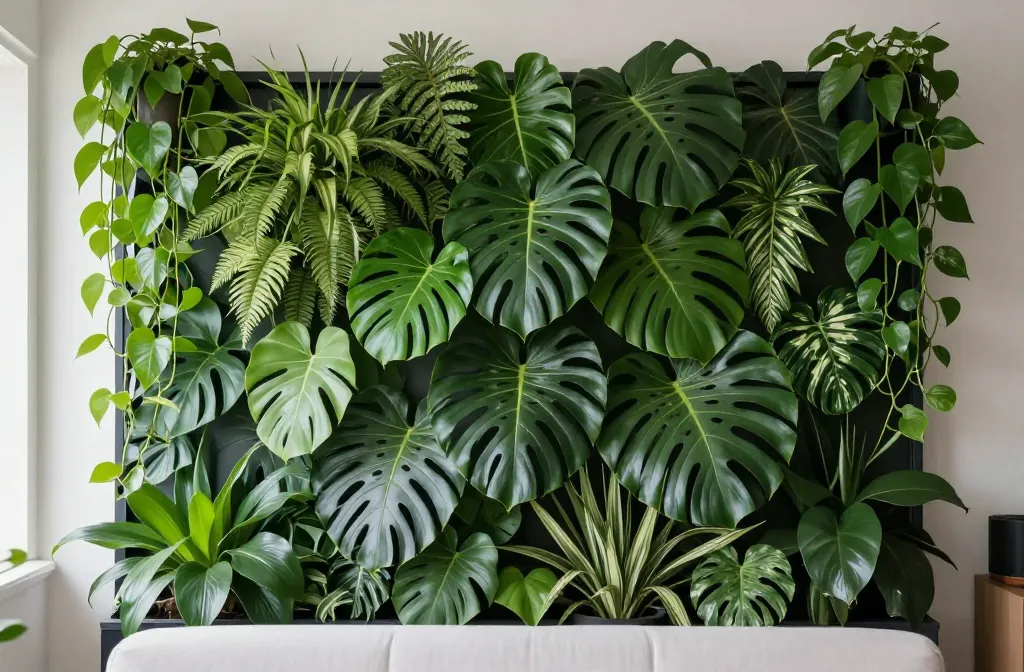
You want a living wall that turns heads and doesn’t turn into a sad, crispy mess? You need smart plant pairings. These combos love the same light, water, and vibe—so they grow together instead of competing. Think lush texture, balanced color, and plants that actually make each other look better. Ready to build a wall that thrives (and makes your guests suspiciously jealous)? Let’s go.
1. Tropical Glow-Up: Pothos + Philodendron + Monstera
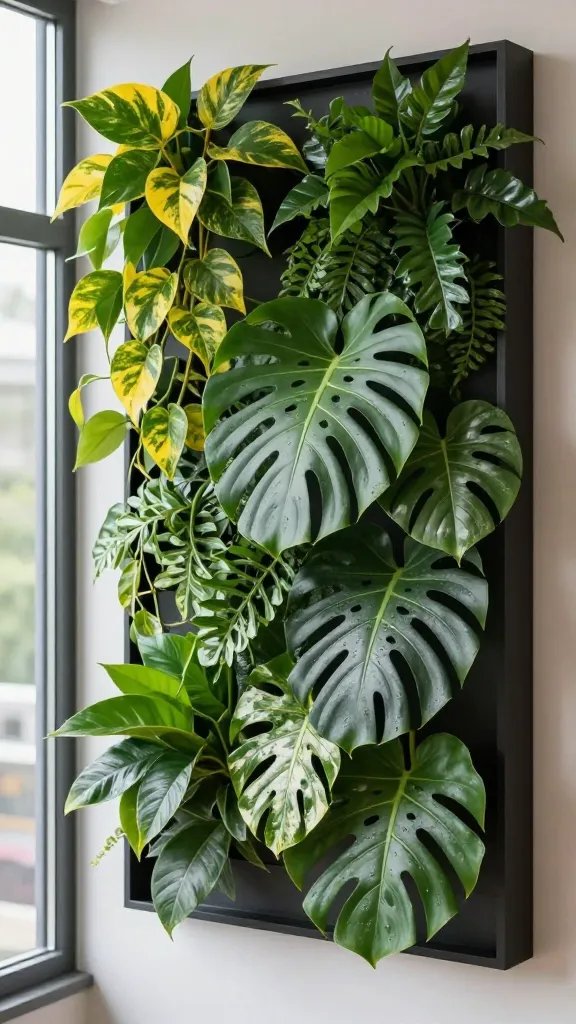
Want that lush, jungle-meets-art-gallery look? This trio delivers big leaves, trailing drama, and fast growth. They all adore medium to bright indirect light, handle occasional neglect, and forgive the learning curve of living walls.
Why It Works
- Pothos (Epipremnum aureum) cascades to soften edges.
- Heartleaf Philodendron (Philodendron hederaceum) fills gaps with velvety leaves.
- Monstera deliciosa or adansonii anchors the composition with perforated, sculptural foliage.
These plants share similar watering needs and humidity preferences. They’re also manageable growers, so you can trim and train for a tailored shape without drama.
Tips
- Place Monstera toward the middle or bottom for structure; trail Pothos along edges.
- Use a mix of green and variegated varieties for subtle contrast.
- Fertilize monthly during spring/summer with diluted balanced fertilizer.
Best for big impact without high maintenance. Perfect if your wall sits in bright rooms but never sees direct sun.
2. Low-Light Luxe: Ferns + Maranta + Peace Lily
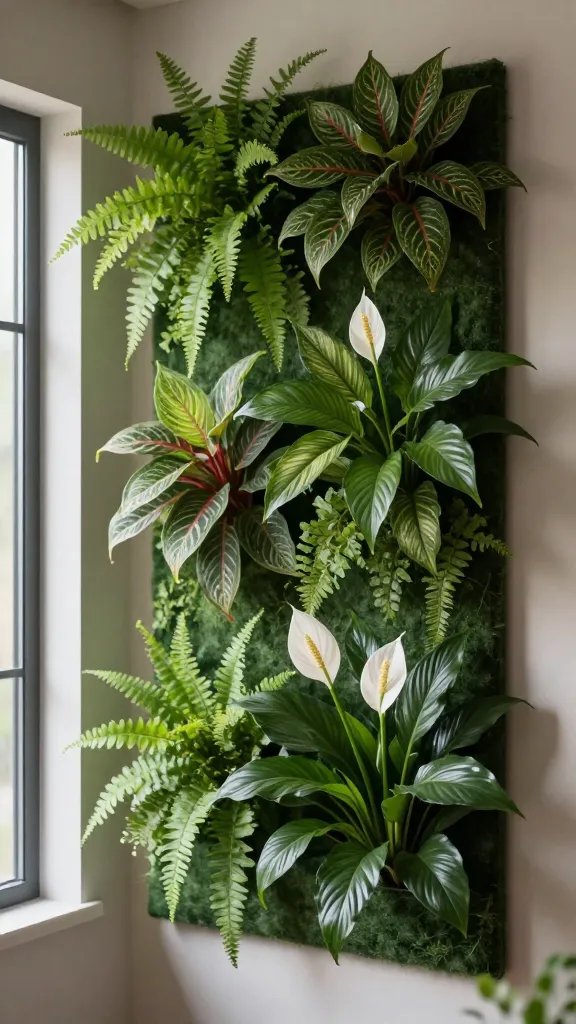
Got a wall that never gets full sun? No problem. This combo thrives in low to medium light and brings soft movement, pattern, and blooms—yes, indoors.
Why It Works
- Boston or Button Fern adds airy texture and humidity-happy fronds.
- Maranta leuconeura (Prayer Plant) adds patterned leaves that fold at night—tiny show-off.
- Peace Lily (Spathiphyllum) gives glossy leaves and white blooms that brighten the whole wall.
They all love consistent moisture and high humidity—a living wall’s sweet spot. Grouping them helps stabilize moisture and reduces crispy-leaf drama.
Moisture Management
- Install a drip or wick system to keep moisture consistent.
- Use a peat-free, moisture-retentive mix with perlite and coco coir.
- Mist lightly in the morning or place a small humidifier nearby.
Great for bathrooms, hallways, or offices with softer light. If you want lushness without sun-soaked windows, this is your move.
3. Sleek and Architectural: Snake Plant + ZZ Plant + Bird’s Nest Fern
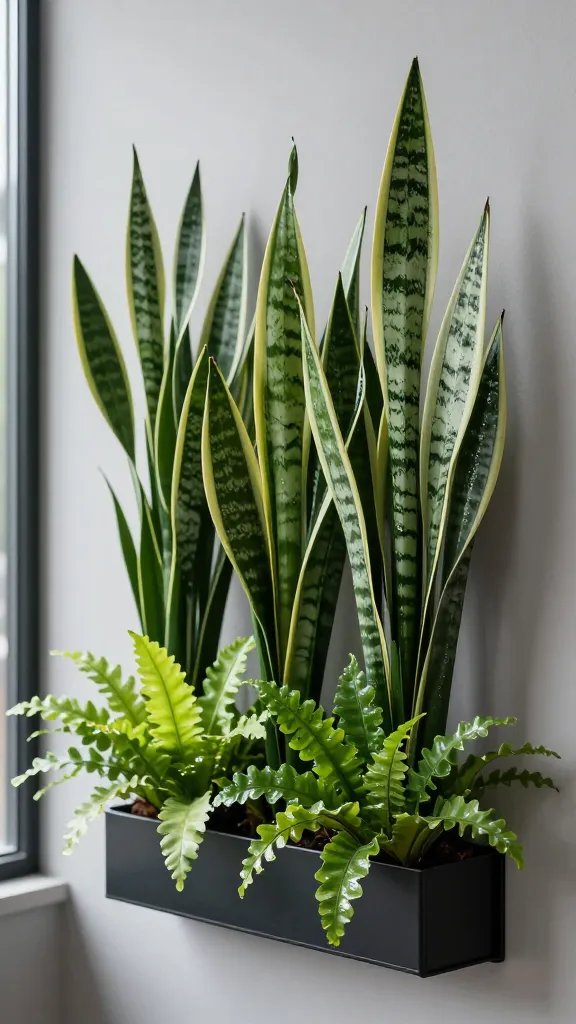
Crave clean lines and modern vibes? This trio brings structure, shine, and an easy-care routine that even your busiest week can handle. It’s the minimalist’s living wall—no fuss, just style.
Why It Works
- Snake Plant (Sansevieria/Dracaena trifasciata) stands tall with graphic stripes.
- ZZ Plant (Zamioculcas zamiifolia) offers deep green, glossy leaves that handle low light.
- Bird’s Nest Fern (Asplenium nidus) softens the edges with waves of fresh green.
They all tolerate lower light and less frequent watering. In a wall, that’s gold—fewer irrigation worries and fewer sad surprises. FYI: don’t overwater the ZZ; it hates soggy roots.
Design Notes
- Cluster Snake Plants in vertical bands for height rhythm.
- Dot ZZ Plants evenly to add depth and shine.
- Use Bird’s Nest Ferns to break up the geometry with organic shapes.
Ideal for entryways, living rooms with indirect light, and anyone who loves a crisp, sculptural look with minimal upkeep.
4. Texture Playground: Fittonia + Peperomia + Ficus pumila
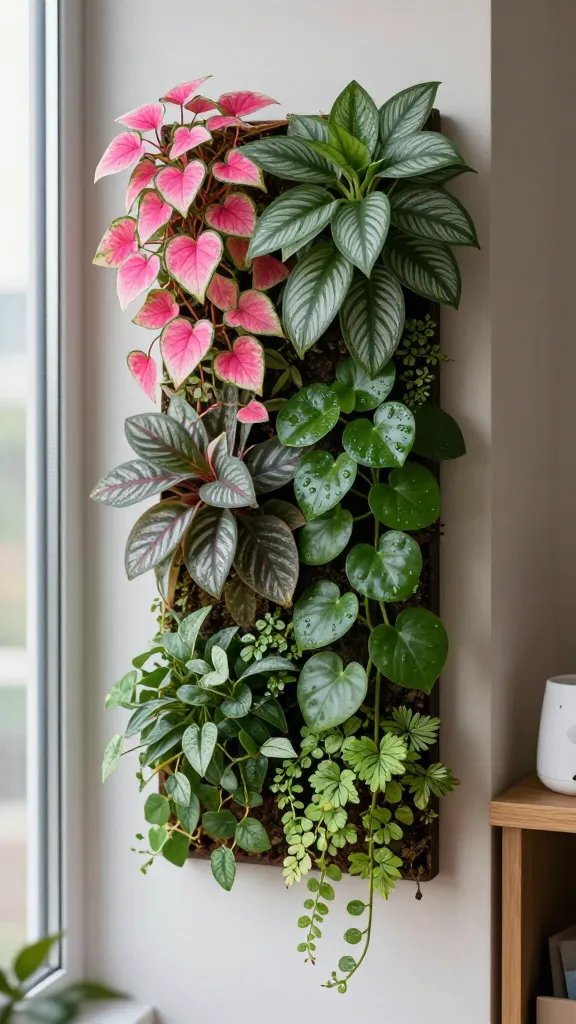
If you geek out over textures and tiny details, meet your dream squad. This trio keeps things compact and intricate—perfect for small living walls or tight spaces where big leaves feel overwhelming.
Why It Works
- Fittonia (Nerve Plant) delivers neon-veined leaves that pop on camera and IRL.
- Peperomia (e.g., obtusifolia, watermelon, or pixie) brings chunky, juicy leaves with sweet patterns.
- Ficus pumila (Creeping Fig) threads through gaps to create a seamless tapestry.
They prefer bright indirect light and moderate moisture. Keep air movement gentle to avoid fungal issues—think small fan, not wind tunnel. Seriously, your leaves will thank you.
Care Shortcuts
- Use LECA or chunky mix in wall pockets for even drainage.
- Trim Ficus pumila often—it can get grabby and shade others.
- Rotate Peperomias monthly to keep their growth symmetrical.
Perfect when you want a plush, curated mosaic. Great for accent walls near windows with filtered light.
5. Fragrant and Functional: Herbs + Trailing Greens + Edibles
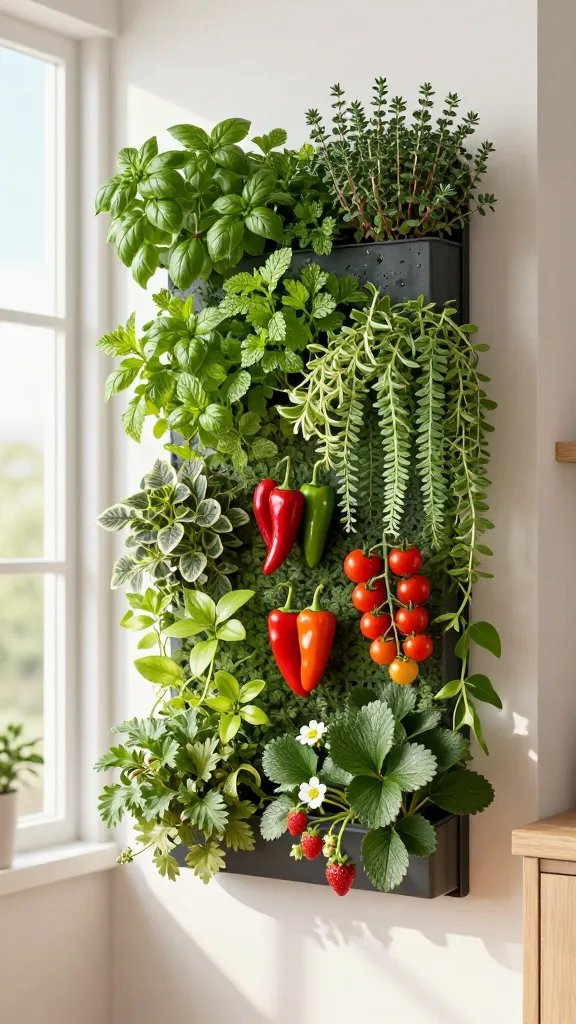
Yes, you can have a living wall that smells amazing and flavors dinner. This combo mixes soft-leaved herbs with supportive trailers and a few compact edibles for a mini indoor kitchen garden.
Why It Works
- Herbs: Basil, mint, parsley, thyme, oregano—choose 3–5 that share light needs.
- Trailing Greens: Variegated Oregano, Thyme, or even Pothos N’Joy to frame the edges.
- Compact Edibles: Dwarf chili, micro tomatoes, or strawberries if the light is strong.
Herbs crave bright light—ideally a south or west window or grow lights. Keep air moving to reduce mildew, and harvest regularly to keep plants bushy and productive. IMO, a wall that seasons your pasta sauce wins every time.
Setup Tips
- Install full-spectrum grow lights on a 12–14 hour schedule.
- Use a well-draining herb mix—coco coir, perlite, and a touch of compost.
- Feed lightly every 2–3 weeks; herbs taste better when not overfed.
Best for sunny kitchens or dining areas. You’ll cook more at home, and your living wall will smell like a Sicilian market—no fancy candle required.
Bonus Know-How: Matching Microclimates Without Tears
- Light: Group plants by light tolerance. Mix shadows lovers together and sun chasers together.
- Water: Build zones—thirsty plants near emitters, drought-tolerant higher up or on outer edges.
- Airflow: Use a silent clip fan on low to keep foliage dry and happy.
- Soil: Choose a base mix, then tweak pockets—more perlite for succulents, more coco for ferns.
- Maintenance: Monthly trim, quarterly flush with plain water, and wipe leaves for better photosynthesis.
Ready to build your wall? Start with one section and scale up. Pair plants that like the same lifestyle, and they’ll reward you with insane growth and magazine-worthy looks. Trust me, once you nail one combo, you’ll start plotting a second wall—because why stop at one jungle?