Vibrant 10 Summer Echinacea Cones for Long-Lasting Blooms
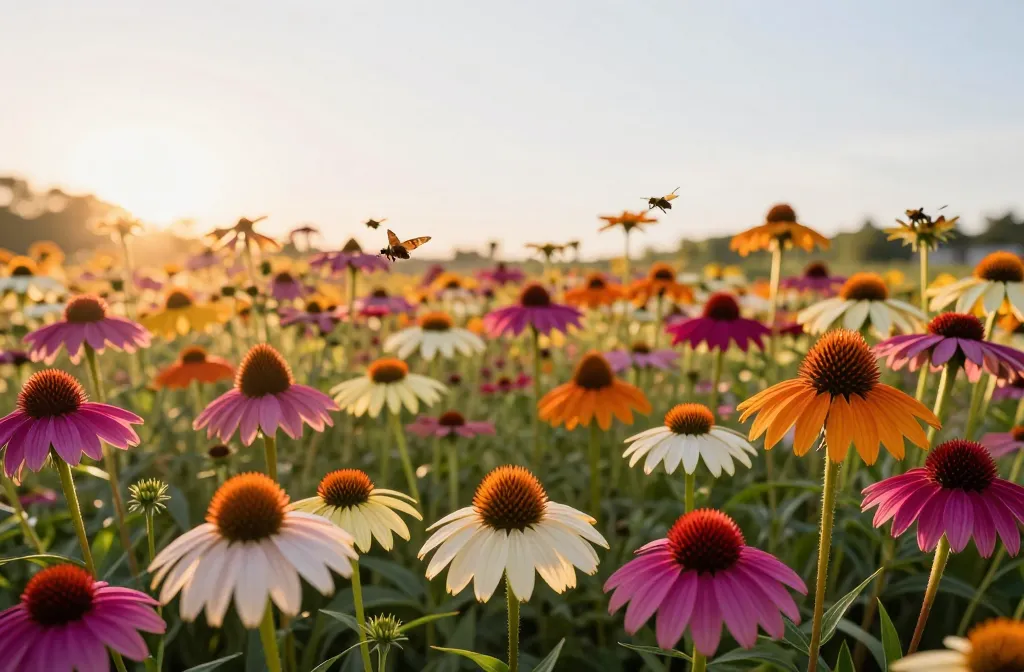
Want color that doesn’t quit when summer gets spicy? Echinacea (aka coneflowers) bring fireworks-level blooms with zero diva behavior. They thrive in heat, sip water modestly, and keep pollinators buzzing all season. If you want a garden that basically runs itself, these ten coneflowers deliver big-time.
We’re talking rich colors, sturdy stems, and nonstop flowers that look good in beds, borders, and vases. Ready to plant once and enjoy for months? Let’s pick your new favorites.
1. Cheyenne Spirit: The Rainbow Workhorse
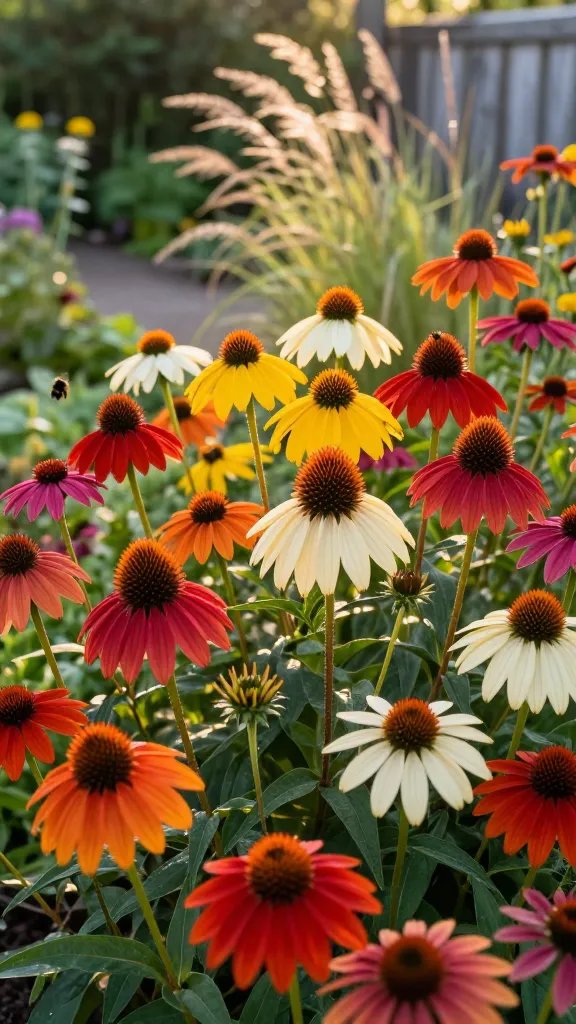
Cheyenne Spirit tosses out a surprise mix of reds, oranges, yellows, creams, and magentas from a single seed packet. It grows vigorously, stands upright, and pumps out blooms from early summer to frost. No deadheading required—but doing it gives you even more flowers.
Why It Slaps
- Seed-grown mix gives you variety in one purchase.
- Sturdy stems hold well in wind and rain.
- Long bloom season = summer through fall with good care.
Use it when you want a cottage-garden vibe without fussy upkeep. FYI, great for first-time coneflower growers.
2. PowWow Wild Berry: Compact And Crazy Reliable
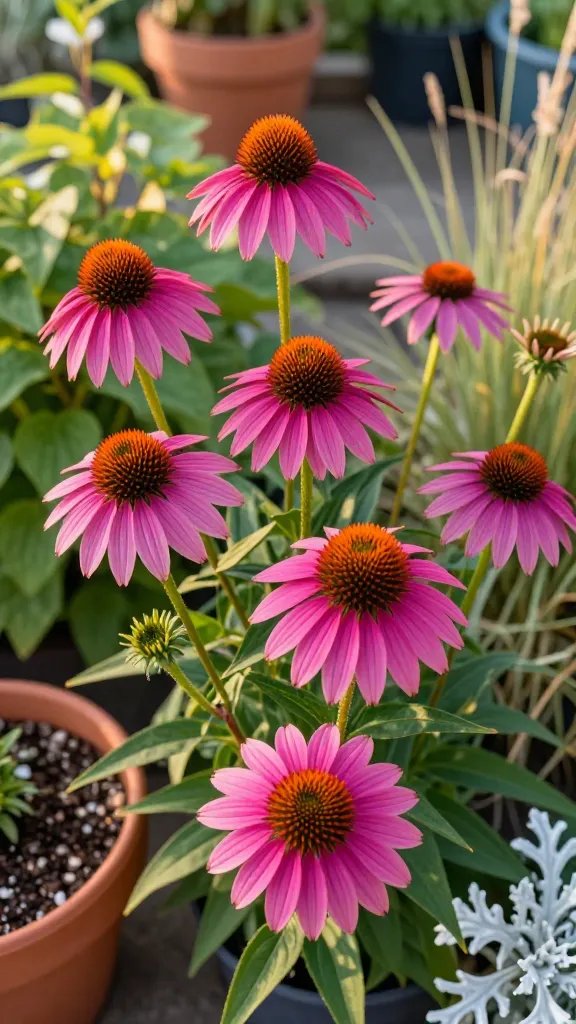
PowWow Wild Berry brings neon-magenta blooms on a tidy, compact plant. It snaps into color fast and keeps going even if you forget to water one weekend. It’s perfect for containers, front borders, or that spot that needs a pop.
Tips
- Plant in full sun for maximum saturation.
- Deadhead every week to keep the bloom train rolling.
- Give it a well-drained mix if using pots.
Use it where you need reliable, intense color that plays nice with neighbors. Great gift plant, too.
3. Sombrero Hot Coral: Tropical Heat Without The Drama
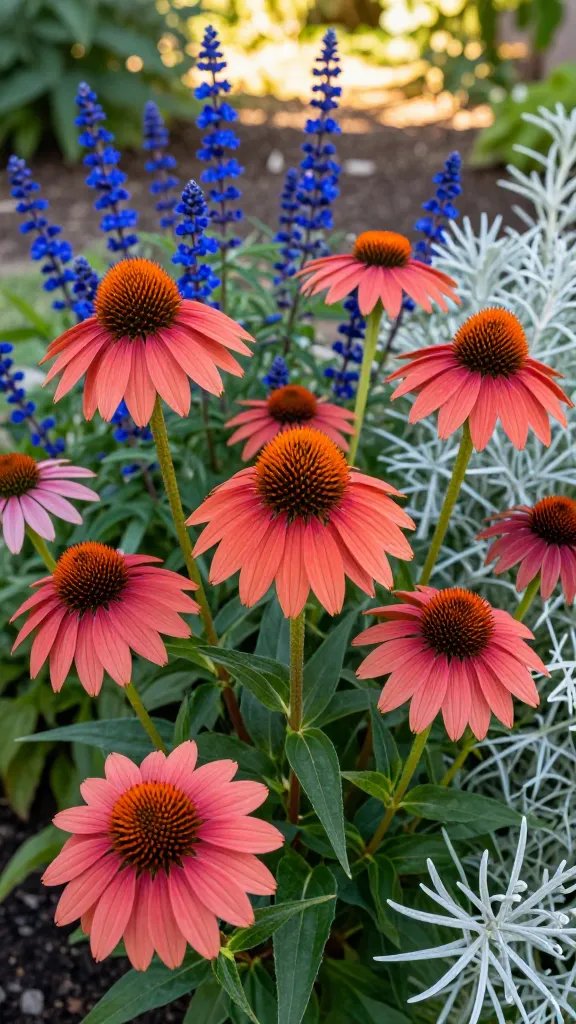
Sombrero Hot Coral delivers rich salmon-coral petals with a warm copper cone—total head-turner. It flowers earlier than many varieties and holds color even in scorching sun. The series also resists flopping, which is code for “no staking, ever.”
Key Points
- Early bloomer starts the show ahead of the pack.
- Strong, upright habit handles storms and hoses like a champ.
- Bold color pairs beautifully with blue salvia and silver artemisia.
Use it to build hot-color palettes or to warm up cool borders. Seriously, it photographs like a model.
4. White Swan: The Chic Minimalist
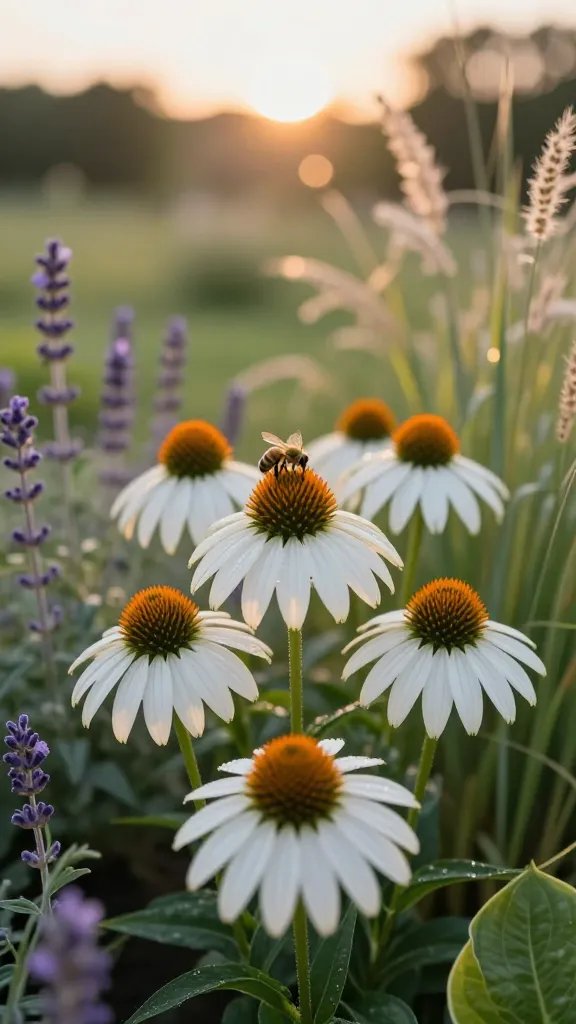
White Swan brings cool white petals and amber cones for a clean, modern look. It calms loud borders and glows at dusk. The fragrance? Lightly sweet if you get close, which bees definitely will.
Design Moves
- Moon garden must-have—white reads bright at night.
- Pair with lavender, catmint, or airy grasses.
- Mix with bold foliage like hosta for contrast.
Use it when your garden needs a breather between saturated colors. Classy, timeless, and very photogenic.
5. Green Jewel: The Unexpected Showstopper
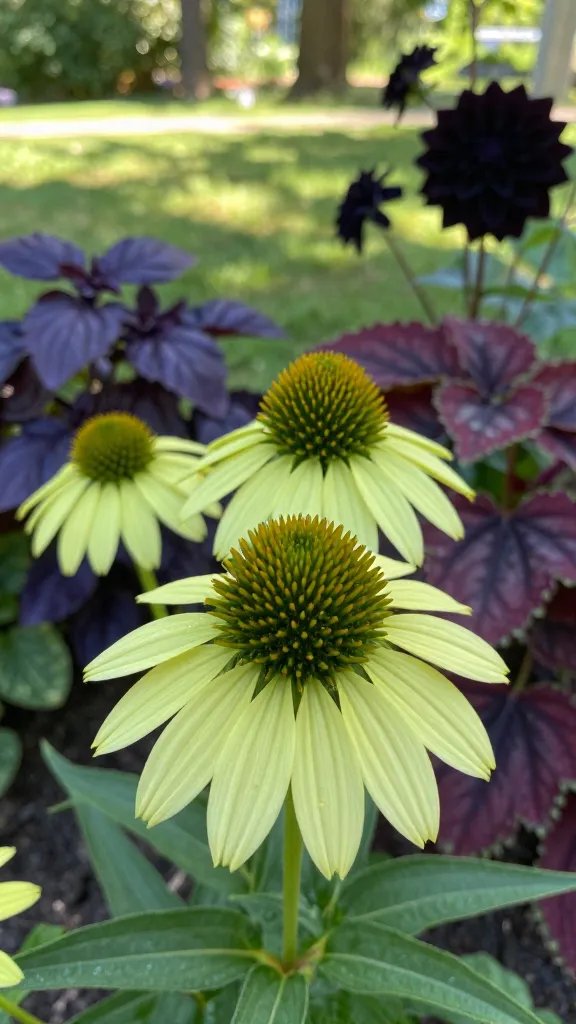
Green Jewel flips expectations with lime-green petals and a matching cone. It’s rare, elegant, and way cooler in person than photos suggest. Garden visitors will ask, “Wait, that’s a coneflower?” every time.
Good To Know
- Partial to full sun, but a touch of afternoon shade keeps color crisp.
- Long vase life—cut stems last over a week.
- Contrasts beautifully with purple basil, dark dahlias, and heuchera.
Use it as a focal plant in modern or woodland-edge beds. IMO, it’s the coolest coneflower you can grow.
6. Magnus: The Classic You Can’t Mess Up
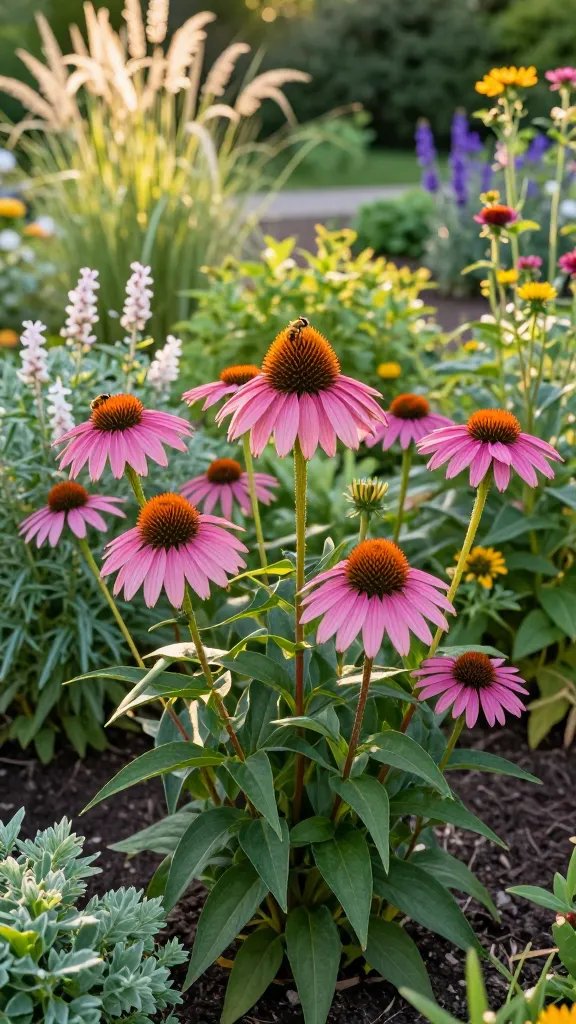
Magnus is the OG award-winner with broad raspberry-pink petals that don’t droop. It fills gaps fast and anchors mixed borders with dependable color. Think of it as the little black dress of your summer garden.
Why Gardeners Swear By It
- RHS Award of Garden Merit for reliability.
- Strong stems that don’t flop under blooms.
- Pollinator magnet from sunup to sundown.
Use it when you want heritage vibes and bulletproof performance. Add a few for instant credibility.
7. Green Twister: Tie-Dye In Plant Form
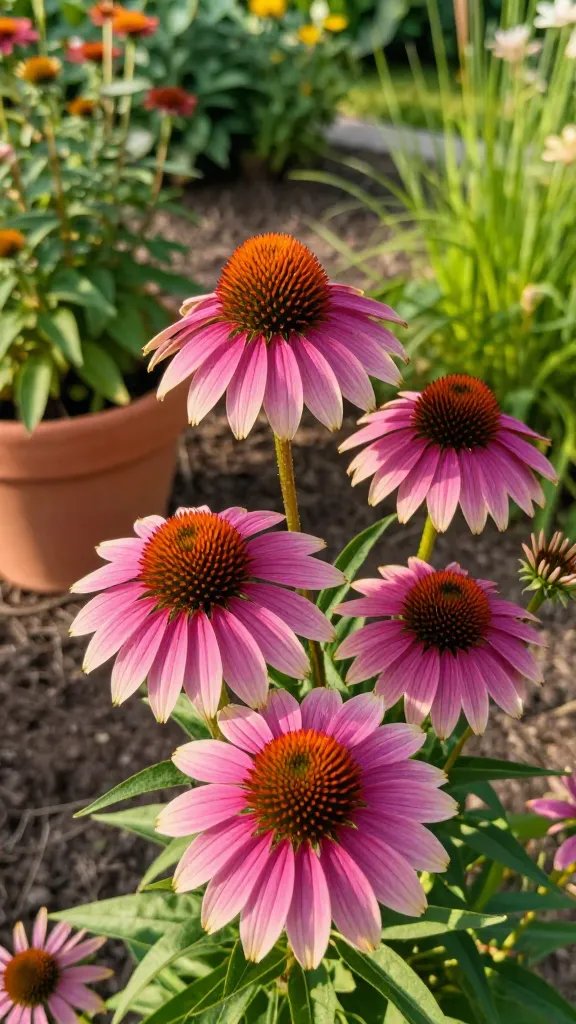
Green Twister serves pink-magenta petals edged in chartreuse, plus a copper cone. It looks like a painter got bored in the best way. The bicolor effect stays vivid all summer, especially in strong light.
Planting Notes
- Full sun brings out the bold contrast.
- Average soil works—skip rich fertilizers that cause flopping.
- Deadhead, then leave late-season cones for goldfinches.
Use it as a conversation piece in borders or big patio planters. It turns casual glances into double takes.
8. Double Decker (Doppelgänger): Two-Tiered Drama
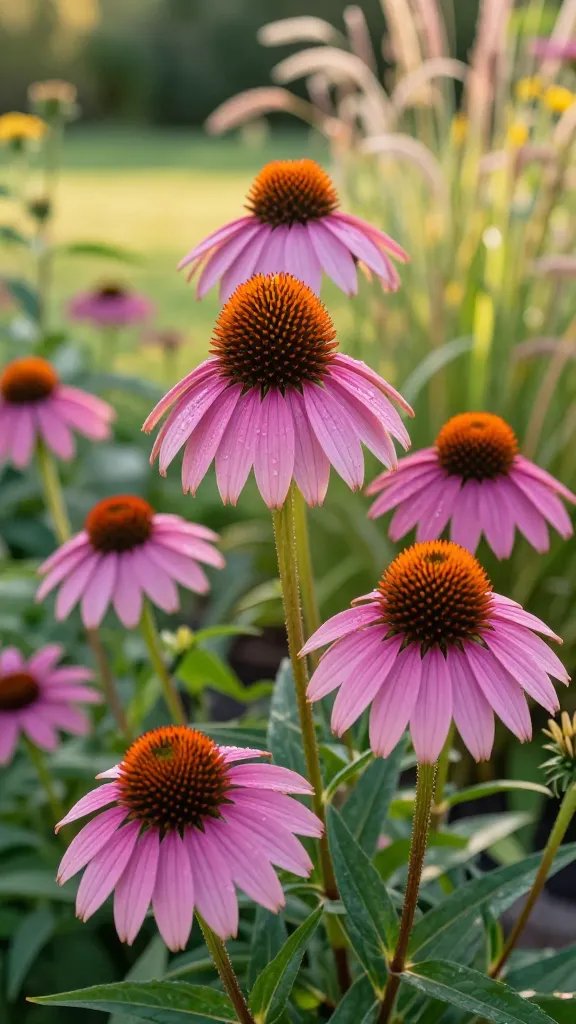
Double Decker throws a quirky second tier of petals on top of the cone, like a tiny floral hat. Not every bloom doubles, which adds to the fun. It feels whimsical without getting weird, and it still plays nicely with classic varieties.
Care Basics
- Give it full sun to encourage strong doubling.
- Average, well-drained soil—no sogginess, please.
- Divide every few years to keep form tight.
Use it when your border needs personality and you’re bored of “normal.” Trust me, it makes kids and adults grin.
9. SunSeekers Rainbow: Color-Shifting Magic
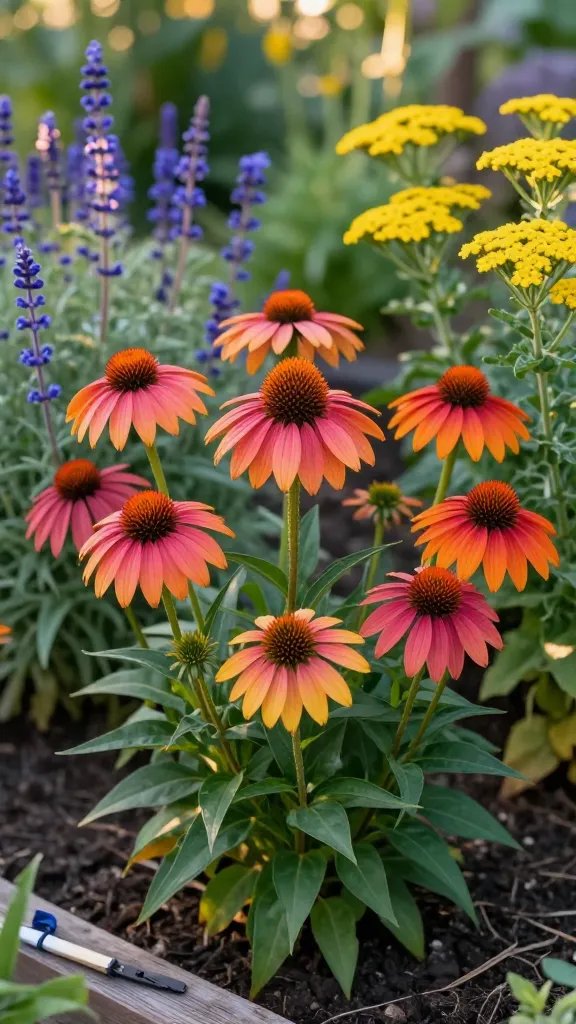
SunSeekers Rainbow lives up to its name with petals that shift shades as they age—think coral to rose to sunset tones. The gradient effect reads like a bouquet on one plant. Uniform height and strong stems make it super easy to design with.
Designer’s Cheat Sheet
- Plant in triangles of three for impact.
- Blend with blue Russian sage and yellow yarrow for a sizzling trio.
- Snip for cut flowers; fresh stems keep opening in the vase.
Use it when you want movement and dimension without constant tweaking. It brings drama, not maintenance.
10. Sombrero Lemon Yellow: Sunshine That Never Quits
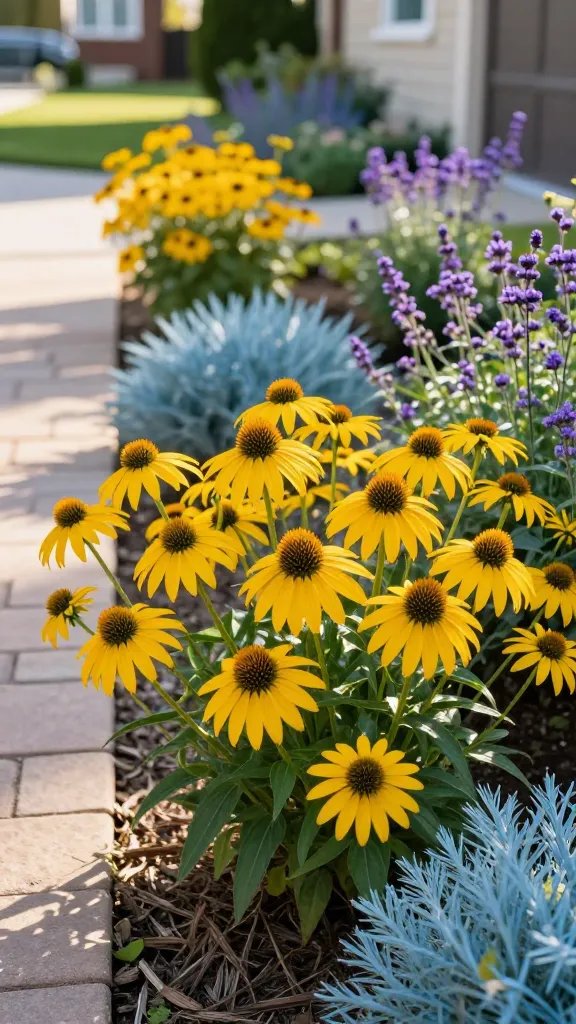
Sombrero Lemon Yellow is the cheerful, lemon-drop coneflower that brightens any bed. The color stays clear and happy even in heat waves. It blooms heavily on compact plants, which means tons of flowers, minimal footprint.
How To Make It Thrive
- Full sun for the boldest yellow.
- Water deeply the first month to help roots dig in.
- Pair with blue fescue and purple verbena for instant curb appeal.
Use it near entry paths and patios where that sunny color can flex. It’s the pop of joy every garden needs, seriously.
Care Cheatsheet For Long-Lasting Blooms
Want your coneflowers to act like overachievers? Give them what they like and they’ll return the favor with months of color and more pollinators than your neighbors can count. It’s not complicated—just a few smart moves.
Quick Wins
- Sun: 6–8 hours daily. More sun = more flowers.
- Soil: Well-drained, average fertility. Rich soil makes them floppy.
- Water: Deeply but infrequently once established. Let the top inch dry out.
- Deadhead: Snip spent blooms weekly for fresh flushes. Leave late-season cones for birds.
- Spacing: 16–24 inches apart for airflow and fewer disease issues.
- Mulch: Light layer of shredded bark or gravel to cool roots and reduce weeds.
- Divide: Every 3–4 years in spring or fall to refresh vigor.
Follow this, and your coneflowers will basically turn into a set-it-and-enjoy-it display. Low effort, high reward—the dream.
Design Combos That Just Work
Mixing coneflowers with texture-rich perennials makes the whole bed look designer-level without the drama. Contrast petals with foliage, then add a haze plant for movement. Boom—instant “I know what I’m doing” energy.
Try These
- Cheyenne Spirit + Blue Salvia + Silver Artemisia: Hot-cool contrast that sings.
- PowWow Wild Berry + Catmint + Feather Reed Grass: Pollinator buffet with structure.
- White Swan + Lavender + Lamb’s Ear: Calm, soft, sunset-glow garden.
- Green Twister + Russian Sage + Black-Eyed Susan: Color echo with electric vibes.
Use combos to tie borders together or dress up a meh mailbox bed. Your neighbors will “casually” slow down to stare.
Planting And First-Month Game Plan
Nail the first month and you’ll coast the rest of the season. Echinacea roots fast when you give them the right start. You don’t need a PhD—just follow a quick rhythm.
Step-By-Step
- Dig: Hole twice as wide as the pot, same depth.
- Loosen roots: Gently tease circling roots so they grow out, not around.
- Backfill: Use native soil; skip heavy compost or fertilizer.
- Water: Deep soak at planting, then 1–2 times weekly for 3–4 weeks.
- Mulch: 1–2 inches, but keep it off the crown.
After that, cut back on water and let them toughen up. Strong roots equal longer bloom cycles and better winter survival.
Common Oopsies To Avoid
Most coneflower fails come from too much love—or too little sun. Keep these in mind and you’ll dodge the usual drama. Consider it your preemptive victory lap.
Watch Outs
- Overwatering: Soggy soil invites crown rot. Let it dry between drinks.
- Shade Creep: Trees leaf out and steal light—move plants if blooms drop.
- Overfeeding: High nitrogen = floppy stems and fewer flowers.
- Pests: Aster leafhopper can spread aster yellows. If a plant goes weirdly green and deformed, pull and trash it.
A little vigilance keeps blooms blazing. Prevention beats playing plant doctor later.
Cutting Garden Tricks For Endless Vases
Want coneflowers that last in the vase? Harvest at the right stage and they’ll look fresh for days. Plus, strategic cutting triggers more blooms outdoors.
Cut Like A Pro
- Timing: Mid-morning, when stems are hydrated but not heat-stressed.
- Stage: Petals fully open and cone firm to the touch.
- Tools: Clean, sharp snips; strip lower leaves.
- Care: Fresh water daily; a drop of bleach keeps water clear.
Use your harvest to refresh indoor spaces, then watch the next flush pop outside. Win-win.
Wildlife Bonus Round
Plant coneflowers and you basically roll out a VIP lounge for pollinators and birds. Butterflies, bees, and goldfinches all RSVP yes. You’ll get livelier gardens and better harvests from nearby veggies, too.
Make It A Habitat
- Skip pesticides—beneficial insects do the heavy lifting.
- Stagger bloom times with early and late perennials.
- Leave seedheads through winter for birds and winter interest.
Use this approach if you want beauty with a purpose. Your yard becomes a tiny ecosystem, and that rules.
Color Themes You’ll Actually Keep Loving
Trendy colors come and go, but these schemes age well. They make your coneflower picks feel intentional and chic. Choose one and stick to it across beds for maximum impact.
Foolproof Palettes
- Sunset Glow: Sombrero Hot Coral, SunSeekers Rainbow, Lemon Yellow.
- Berry Cool: PowWow Wild Berry, Magnus, Russian sage for balance.
- Modern Calm: White Swan, Green Jewel, blue fescue, lamb’s ear.
- Electric Eccentric: Green Twister, Double Decker, black foliage heuchera.
Use themes to make even small spaces feel curated. Your garden will look planned, not accidental—promise.
Where To Plant For Maximum Payoff
Placement matters if you want long bloom windows with minimal fuss. Coneflowers shine in the sunniest, least needy parts of your yard. Put them where you’ll actually see them.
Prime Spots
- Front borders for color you’ll enjoy daily.
- Along driveways where heat radiates—echinacea loves it.
- Mixed prairie beds with grasses for movement and low water use.
- Big pots near patios for at-your-fingertips cutting.
Use these placements to maximize joy and minimize maintenance. Set it up once and enjoy the show every time you step outside.
Final Touches That Extend The Show
You can nudge a few extra weeks of color with simple tricks. Think smart cleanup and timely chops. Nothing fancy—just savvy timing.
Do This
- Shear by a third in midsummer on a few stems to stagger blooms.
- Targeted deadheading where you want constant color; leave some seedheads elsewhere.
- Light fall cleanup but keep sturdy stems for winter texture and birds.
Use these moves to stretch the party into fall. Your garden will feel alive long after the pool closes.
Wrap-Up: Your Low-Maintenance Summer Flex
These 10 summer echinacea cones bring relentless color, effortless care, and nonstop pollinator action. Mix a few, follow the easy care beats, and your garden will look curated without eating your weekends.
Plant now, then kick back and enjoy months of bright, happy blooms. Your future self will thank you every time you walk outside.