The Truth About 6 Air Plant Species That Survive in Low-Light Conditions — and the Trade-Offs of Each
When I moved into a north-facing apartment, my sun-loving plants sulked while my air plants kept chugging along. I learned fast which species tolerate dim corners — and what I had to give up to keep them healthy. In this guide, I’ll show you the six air plant species that actually cope with low light, plus the compromises on growth, color, and care. You’ll finish knowing exactly which plants to buy, where to place them, and how to keep them alive without a south window.
1. Tillandsia bulbosa: Handles Shade, But Stretches And Stays Green
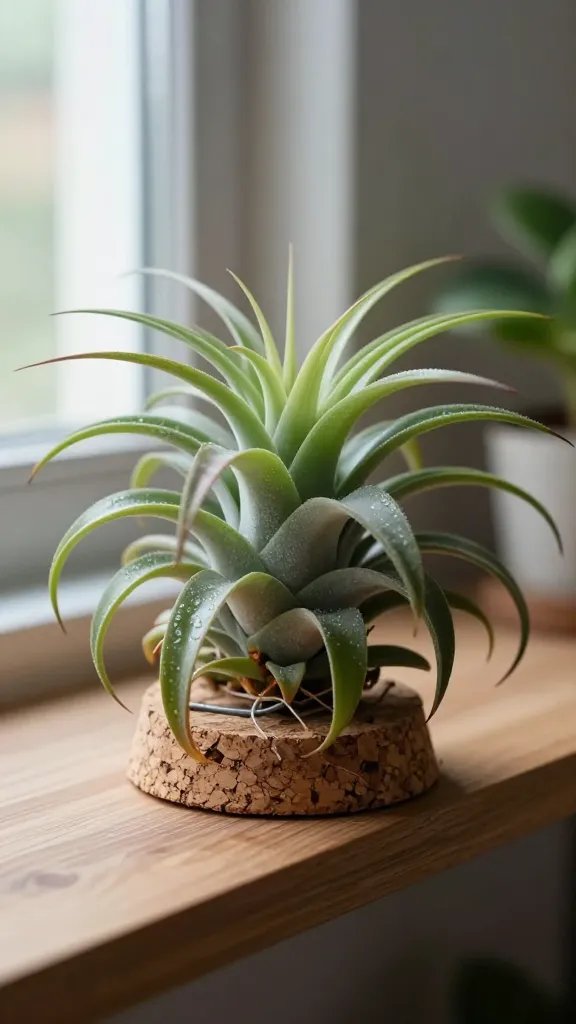
Tillandsia bulbosa survives in rooms with gentle daylight, but it grows slowly and loses its red blush without bright sun. In dim light, it elongates between leaf bases and the bulb looks less compact. Expect a healthy plant that looks “different” from the photos you see online.
Signs To Watch For
- Leggy spacing between leaf whorls instead of tight rosettes
- All-green color with no red or purple highlights
- Dry leaf tips if airflow is poor after misting
How To Make It Work In Low Light
- Place within 3–4 feet of a bright window, but out of direct sun. A north window or a bright hallway works.
- Soak for 15–20 minutes every 10–14 days, then shake off water and dry the bulb upside down for one hour to prevent rot in the base.
- Provide regular airflow. A ceiling fan on low for one hour after watering prevents trapped moisture in the bulb.
- Fertilize lightly once a month with a bromeliad-safe feed diluted to quarter strength in the soak water.
Trade-Off: You get an adaptable, sculptural plant, but you trade away compact form and bright coloration.
Action today: Move your bulbosa to the brightest low-light spot you have and schedule a 15-minute soak every other Sunday with a gentle fan dry afterward.
2. Tillandsia bergeri: The Tough Starter That Tolerates Dim Rooms But Blooms Less
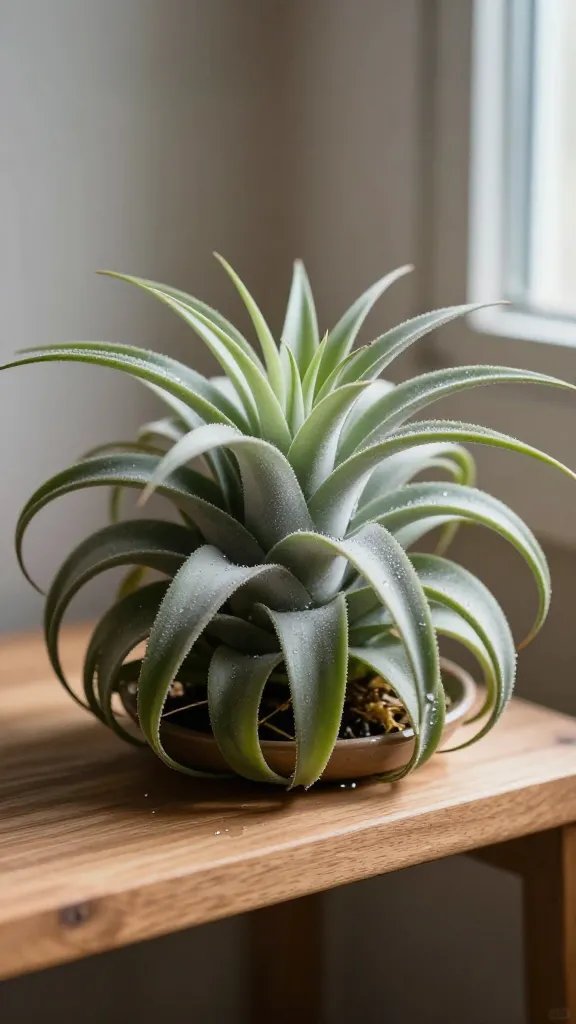
Tillandsia bergeri is one of the hardiest air plants I own. It stays alive in low light where fussier species stall, but you’ll see fewer pups and rare blooms in a dim setting. It’s a great “set-and-forget” choice if you just want green life on a shelf.
Signs To Watch For
- Stalled pup production — few or no offsets for months
- Flattened rosette instead of perky, upward leaves
- Dust build-up that gradually reduces light even more
Care Tweaks That Pay Off
- Rinse under the tap for 30–60 seconds weekly to remove dust and rehydrate. Use water that tastes clean, not salty.
- Give it one deep soak for 20 minutes every 3 weeks, then dry thoroughly in bright shade.
- Rotate the plant a quarter turn each week to even out the light it receives.
- In winter, move it one step closer to the window to compensate for short days.
Trade-Off: You get reliability and low maintenance, but you accept modest growth and infrequent flowering.
Takeaway: Put bergeri where you want living greenery that won’t complain — then rinse weekly and soak monthly for a steady, if quiet, performer.
3. Tillandsia fuchsii v. gracilis: Survives Dim Corners, But Frizzles Without Humidity Discipline
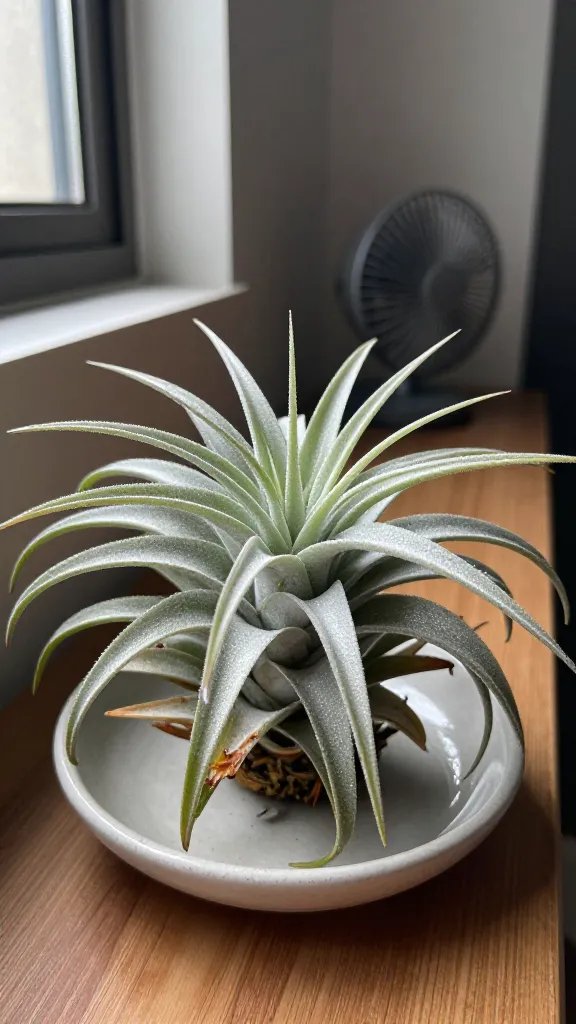
Tillandsia fuchsii v. gracilis looks delicate and threadlike, yet it tolerates lower light better than its looks suggest. The catch is moisture balance: in low light, it dries slowly and tips can brown if water sits too long. It needs a light hand with hydration and reliable drying time.
Signs To Watch For
- Brown, crispy tips after misting without airflow
- Grey, dull leaves that don’t perk up within a day of watering
- Base mushiness if it’s kept in a cup or narrow vase
Moisture Routines That Work
- Mist lightly every 3–4 days, aiming above the plant so a fine fog settles rather than drenching it.
- Skip soaking unless it looks severely dehydrated; if you soak, limit to 5–7 minutes and dry fully within 2 hours.
- Set it on a wire stand or a seashell with holes so air reaches all sides — avoid closed containers.
- Once a month, give a quick 30-second rinse to wash off dust and any soap or candle residue from indoor air.
Trade-Off: You can place this plant further from windows, but you must manage humidity and drying with precision.
Action today: Move fuchsii onto an open stand near gentle airflow and switch from soaking to a fine mist every fourth day.
4. Tillandsia brachycaulos (Green Form): Stays Healthy In Low Light, But Rarely Turns Red
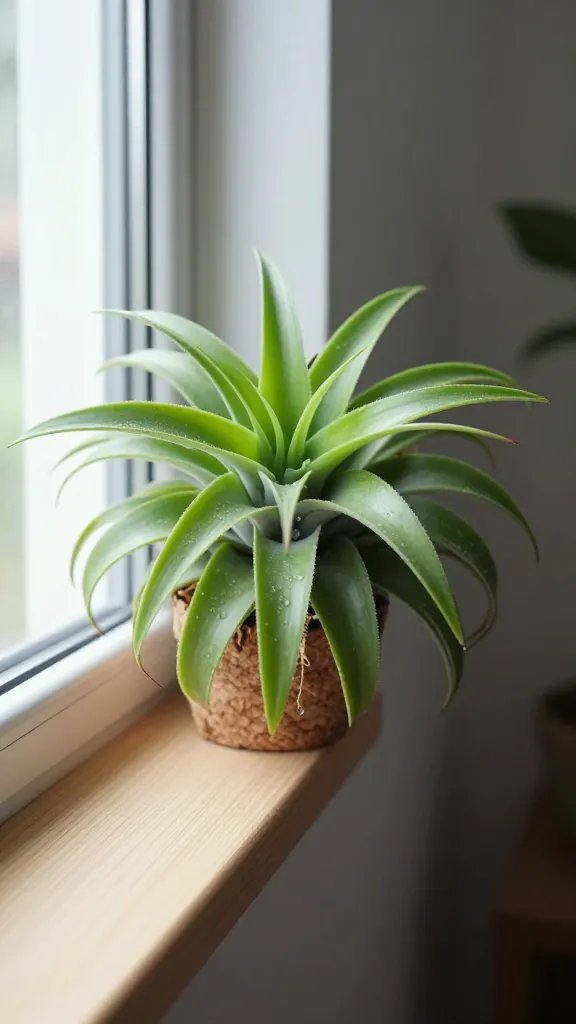
The green form of Tillandsia brachycaulos handles bright indirect light and tolerates low light better than the red forms. In a dim room, it remains a handsome green rosette, but you’ll sacrifice the dramatic red blush most people want before blooming.
Keep It Compact And Happy
- Place near the brightest wall across from a window to intercept reflected light.
- Soak for 15 minutes every 10–12 days. In winter, stretch to every 14 days as evaporation slows.
- Dry leaf centers carefully — turn the plant upside down and shake once after each soak.
- Feed monthly with a bromeliad fertilizer at quarter strength to maintain leaf thickness.
What To Expect
- Color trade-off: Expect solid green leaves with little to no red outside of bloom time.
- Growth pace: Steady but slower than in a bright window, with pups mainly after a bloom cycle.
Trade-Off: You get a sturdy, full rosette in low light, but you won’t see the red flush unless you upgrade the light.
Takeaway: Choose the green brachycaulos if you value dependable shape over color, and commit to a 10–12 day soak-and-dry routine.
5. Tillandsia ionantha (Green Or “Guatemalan” Types): Low-Light Survivor, But Compact Form And Blush Suffer
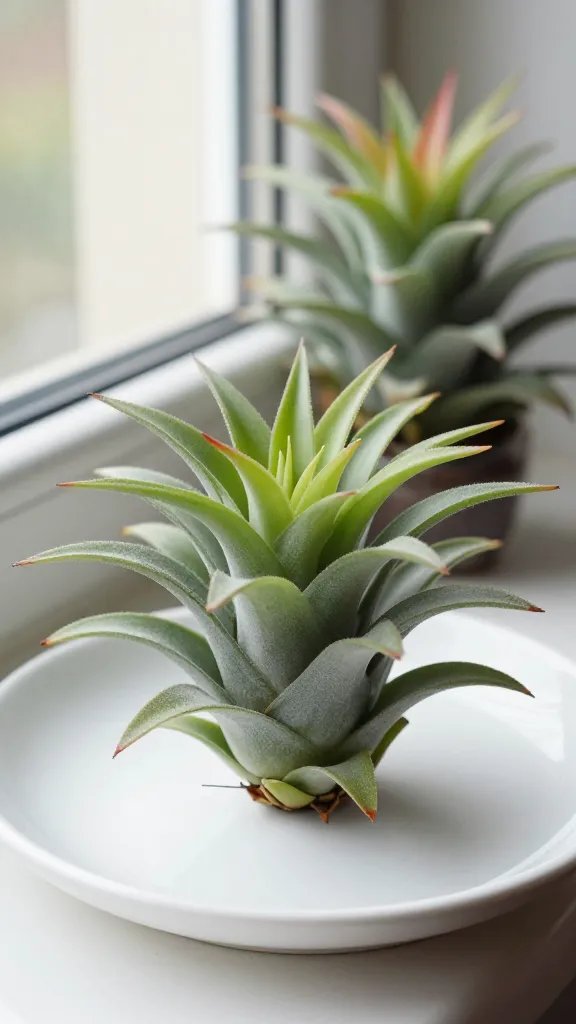
Tillandsia ionantha is the poster child for easy air plants. The common green or “Guatemalan” types stay alive in low light, but they grow looser and rarely blush red. If you bought it for that flaming color, low light will disappoint you.
Signs You’re Too Dim
- Open, floppy rosette rather than tight, pinecone-like leaves
- No blush even during spring or pre-bloom
- Slow pup set — one offset a year or less
How To Compensate Without Special Gear
- Move it within arm’s length of a window ledge that’s bright but not sunblasted — a north or east window is ideal.
- Mist lightly 2–3 times a week and give a 10-minute soak every other week. Always dry the core by tipping it upside down.
- Every two weeks, dust the leaves with a soft makeup brush so what little light you have isn’t blocked.
- Display on an open magnet, cork, or wire so air can circulate fully after watering.
Trade-Off: You keep an easy, forgiving plant in low light, but you lose tight form and showy color.
Action today: Bring ionantha within 2–3 feet of your brightest window and add a short, biweekly soak to restore turgor.
6. Tillandsia stricta (Green Forms): Lives In Shade, But Blooms Smaller And Leaves Stretch
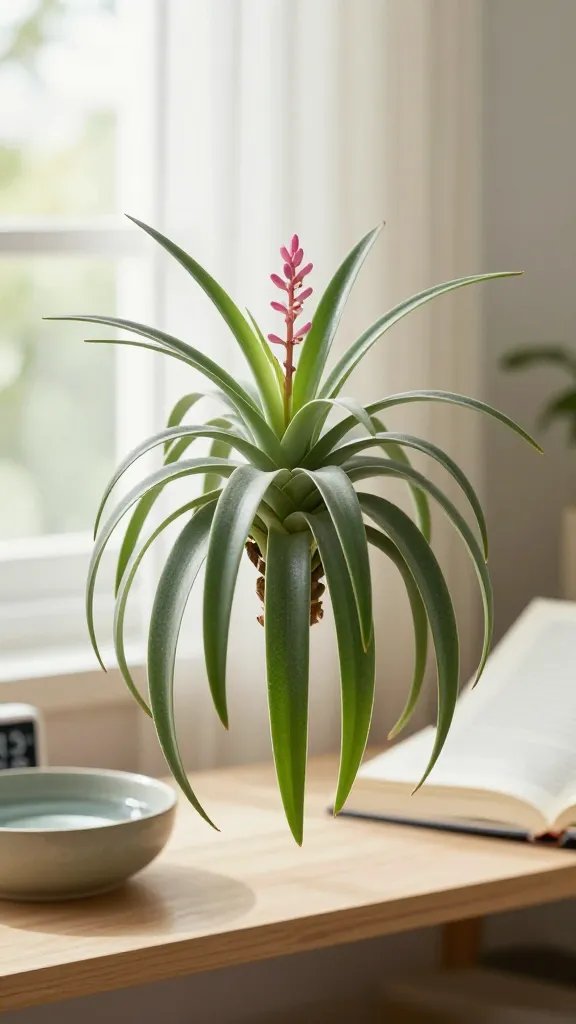
Tillandsia stricta includes many forms; the greener, softer-leaf types handle low light better than stiff, silver forms. In dim rooms, stricta keeps growing but produces smaller flowers, longer leaves, and a looser rosette. It’s still graceful — just not as tight or floriferous.
Dial In Placement And Water
- Position where you can comfortably read a book by daylight — that’s the right “bright indirect” zone for stricta.
- Soak for 12–15 minutes every 7–10 days in summer; every 10–14 days in winter. Shake dry and set on a breathable mount.
- Feed once a month at quarter strength to encourage bloom spikes even in lower light.
- Rotate weekly to prevent leaning toward the only light source.
When To Intervene
- If leaves exceed 1.5 times their usual length and flop, increase brightness by moving one step closer to the window.
- If the center feels soft after watering, improve airflow immediately to avoid rot.
Trade-Off: You get a willing grower that tolerates shade, but you accept smaller blooms and a stretched look.
Takeaway: Choose a green stricta for low-light shelves and commit to a steady 10–14 day soak schedule with monthly feeding.
Frequently Asked Questions
What counts as “low light” for air plants without a light meter?
Stand in the spot at midday and hold a book: if you can read comfortably without turning on a lamp, that’s acceptable low light. A north window, a few feet back from an east window, or a bright hallway with daylight are all fine. Avoid interior bathrooms or rooms where plants cast no shadow during the day. If you need a lamp on most of the day, the spot is too dark.
How often should I water air plants in low-light rooms?
Because evaporation is slower, water less often but with intention. Most low-light setups do well with a 10–20 minute soak every 10–14 days plus a light midweek mist if leaves feel papery. Always dry the plant within 2 hours by shaking and placing it in good airflow. In winter, extend intervals by a few days.
Can I keep air plants in glass globes in low light?
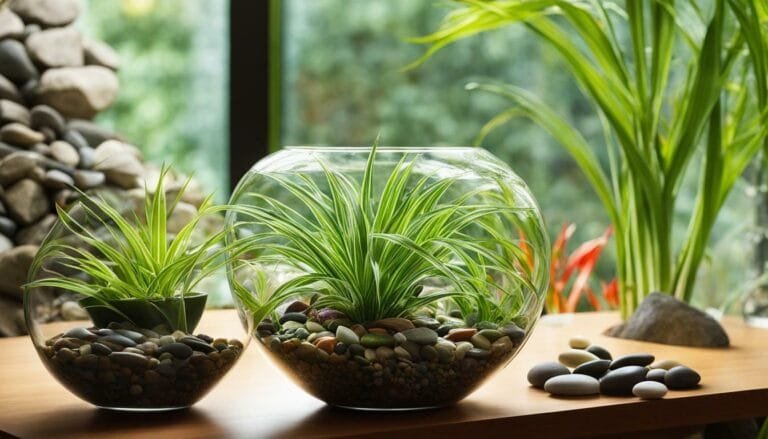
Yes, but use open-front globes and remove the plant for watering. In low light, trapped moisture lingers and causes rot, especially in bulbous species. Add a pinch of decorative gravel or a wire stand inside the globe so air reaches the base, and never return a wet plant to the globe. Aim the globe opening toward the brightest side of the room.
Do I need fertilizer if growth is already slow?
A small monthly feed helps maintain leaf thickness and encourages pups and blooms even in dim rooms. Use a bromeliad or air plant fertilizer at quarter strength in your soak water once a month. Skip heavy feeding — more isn’t better in low light. Rinse with plain water the next week to avoid residue buildup.
Why aren’t my ionanthas turning red?
Red blush requires brighter light than a low-light room provides. Keep them within 2–3 feet of the brightest window you have and dust the leaves so light isn’t blocked. You’ll still see less color than photos taken under strong light. If color is a must, display them in the brightest window or supplement with a simple clip-on grow bulb for 6–8 hours.
How do I know if my air plant is dehydrated versus rotting?
Dehydrated leaves feel thin, curled, and crispy at the tips; the base stays firm. Rot shows as a soft, squishy base and leaves that detach with a gentle tug, often with a sour smell. If dehydrated, give a 20-minute soak and improve airflow; if rot is present, trim off mushy tissue and let the plant dry for 24 hours before resuming light misting.
Conclusion
Low light doesn’t rule out air plants — it just changes which species shine and what you expect from them. Pick two from this list that match your space, set a simple soak-and-dry schedule, and place them within a few feet of your brightest window. When you’re ready to chase color and compact form, upgrade one display to a brighter sill or add a small clip-on grow bulb for a visible step up.