The Secret to How to Grow Orchids in a Terrarium — Airflow, Bark Substrate and the Root Visibility Rule
I killed my first terrarium orchid by treating it like a fern in a jar — stagnant air, soggy mix, no view of the roots. Once I fixed those three things, my mini orchids started putting out new leaves and roots instead of mold. In this guide, I’ll show you exactly how to run airflow, use the right bark substrate, and follow the simple Root Visibility Rule so your orchids actually grow instead of decline.
Choose Orchids That Tolerate Glass and High Humidity
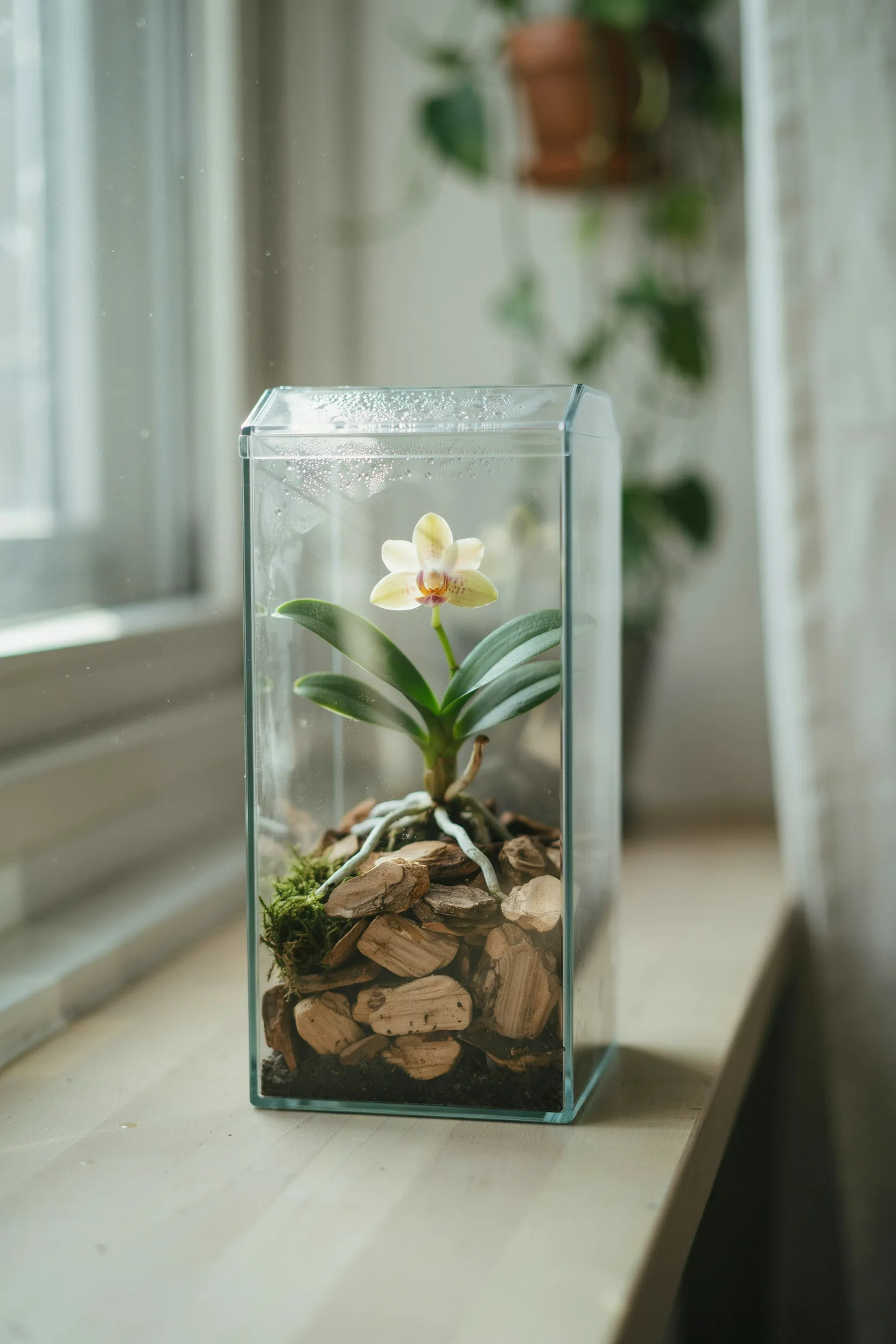
Capsule: Pick compact epiphytic orchids that stay under 15 cm tall and tolerate 60–75% humidity — mini Phalaenopsis (P. equestris, P. parishii), Lepanthes, Masdevallia minis, Bulbophyllum small species, and jewel orchids (Ludisia). Skip large cattleyas and vandas — they outgrow glass containers and need unrestricted airflow.
Not every orchid likes terrariums. You want compact species that appreciate steady humidity but still need fresh air and quick-drying roots. According to the American Orchid Society’s terrarium guidelines, the best candidates are true miniatures and small-growing species adapted to intermediate conditions, not standard-size hybrids bred for windowsill culture.
| Species | Max Height | Humidity Need | Best Setup |
|---|---|---|---|
| Phalaenopsis equestris | 12–15 cm | 60–75% | Vented closed terrarium with fan |
| Lepanthes spp. | 5–10 cm | 75–90% | High-humidity closed with strong airflow |
| Masdevallia minis | 8–12 cm | 70–85% | Cool-intermediate closed with daily venting |
| Bulbophyllum small spp. | 8–15 cm | 60–80% | Mounted on cork or bark in vented jar |
| Jewel orchid (Ludisia) | 10–15 cm | 60–80% | Substrate-grown in closed terrarium |
Action today: Pick one compact orchid that stays under 15 cm tall and label it for your terrarium project. If you’re building your first terrarium, our beginner’s terrarium guide covers container selection basics.
Airflow Comes First: How to Vent a Terrarium Without Fancy Gear
Capsule: Orchid roots suffocate in still air. Run a USB fan (40–80 mm) on low for 6–8 hours daily, or open the lid fully for 20–30 minutes every day. Target 60–75% relative humidity — above 80%, rot risk escalates even with good airflow.
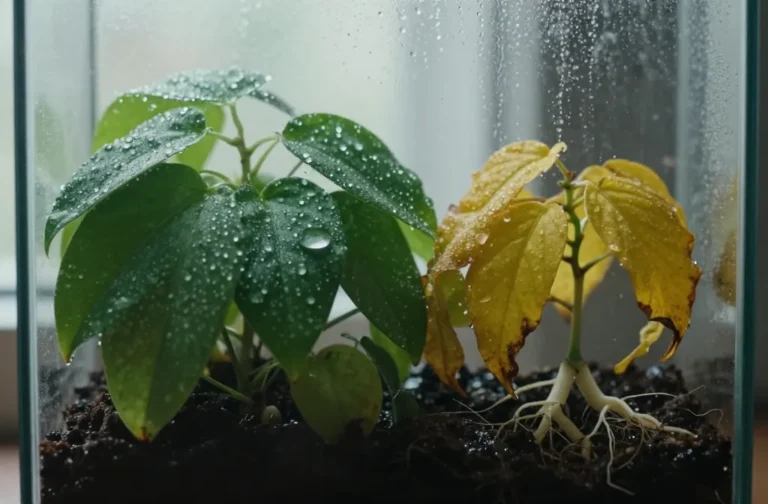
Orchid roots suffocate and rot if the air sits still. In a terrarium, that happens fast because humidity stays high and leaves hold moisture on the glass. The AOS terrarium growing guide identifies insufficient airflow as the number one cause of orchid failure in enclosed setups — more common than overwatering or wrong light.
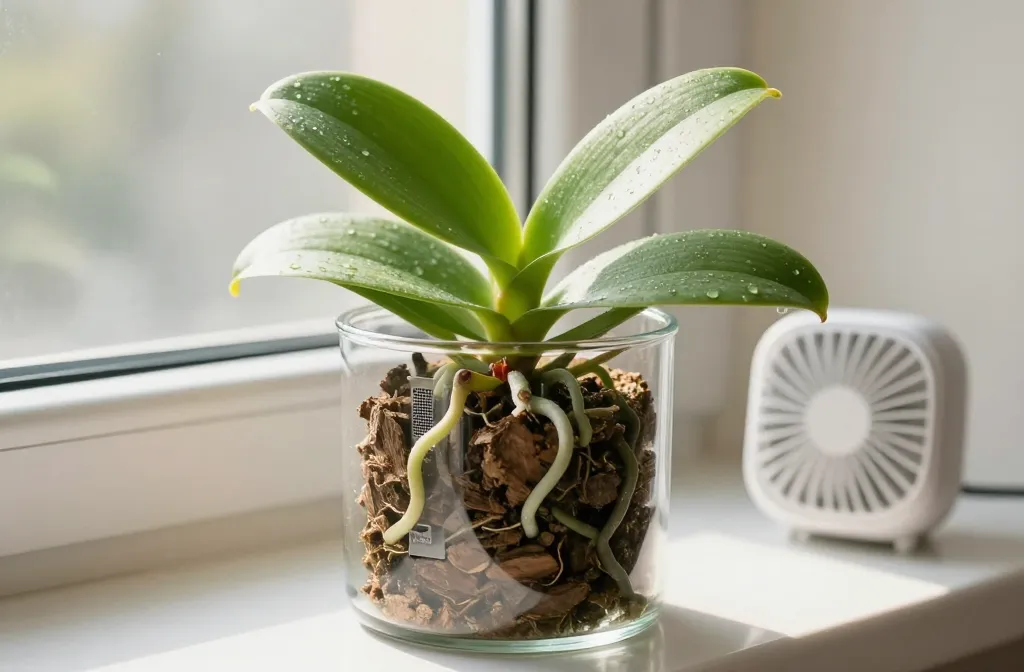
Use a lidded container with adjustable vents or create airflow by leaving a 5–10 mm gap in the lid. Add a USB fan the size of your palm pointed across the top, not directly at the plant. Run it on the lowest setting 6–8 hours a day. If you can’t use a fan, open the lid fully for 20–30 minutes daily and keep the bark mix extra airy.
Warning Signs of Poor Airflow
- Condensation stays on the glass all day.
- Leaf edges develop translucent spots or a wet look.
- White fuzzy mold on bark or roots within a week of watering.
Action today: If your glass is wet at midday, crack the lid by a finger’s width and aim a small fan across the opening. Our aquatic terrarium guide covers ventilation strategies that apply to any enclosed setup.
Build an Orchid-Safe Bark Substrate That Dries on Schedule
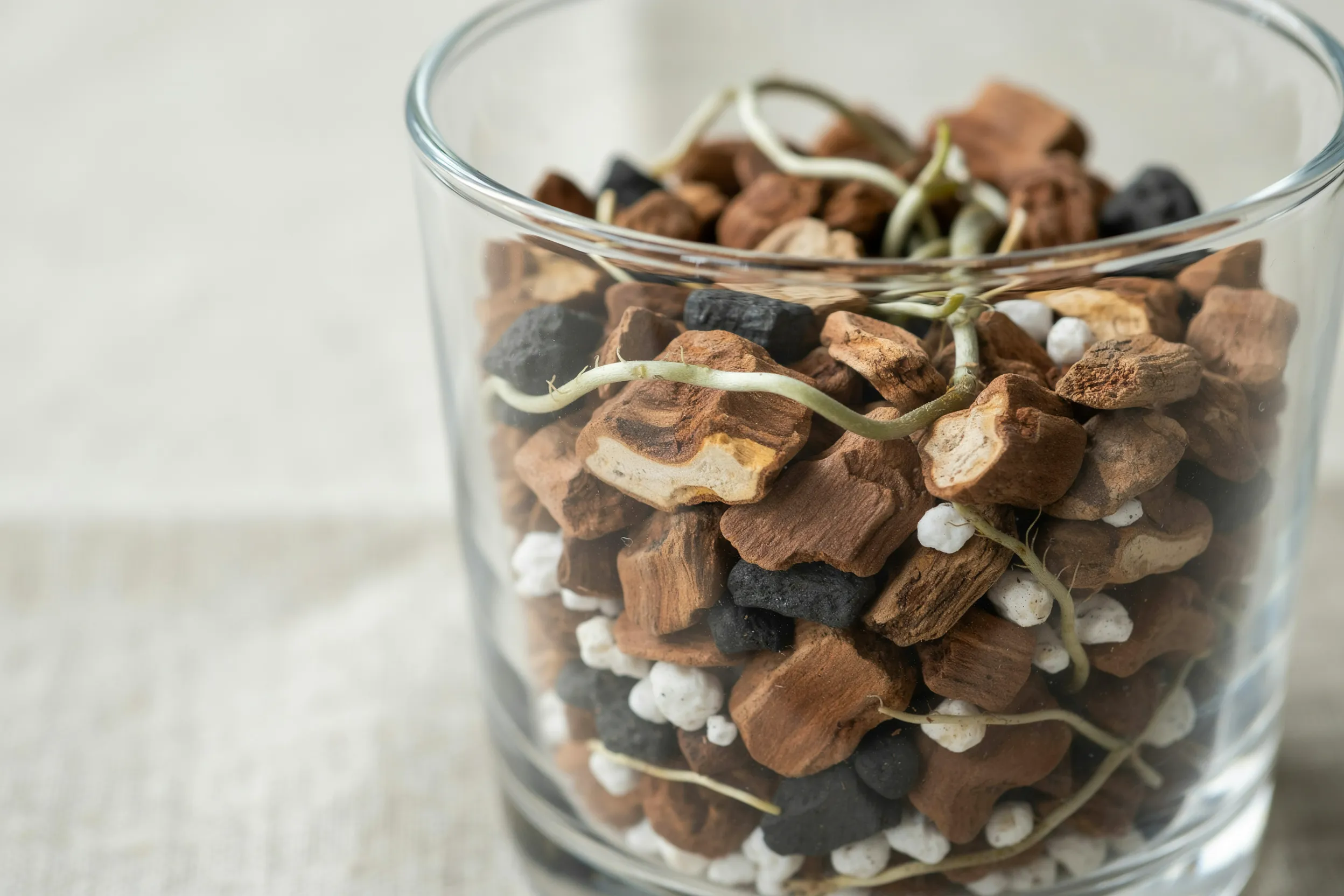
Capsule: Use medium-grade fir bark (60%), coarse perlite (20%), and chunky charcoal (20%) by volume. The mix should drain immediately and dry within 2–4 days. Avoid standard potting mix, coco peat, or fine-grade bark — they stay too wet in glass containers and suffocate epiphytic roots.
Most terrarium mixes stay too wet. Orchids want a substrate that drains immediately and dries within 2–4 days. Use chunky pieces and inert ingredients.
- 60% medium orchid bark (1–2 cm chunks) — fir bark, not pine
- 20% perlite (coarse, not the powdery fine type)
- 20% chunky charcoal (BBQ lump charcoal rinsed is fine, not briquettes)
Add a thin top dressing of live or dried sphagnum only around the rim to buffer humidity, not packed around roots. The soil add-ins for root rot prevention guide explains why each amendment works and the science behind chunky mixes. Avoid coco peat, compost, or standard potting mix — they smother orchid roots in glass.
Step-by-Step Setup
- Rinse bark, perlite, and charcoal until the water runs clear.
- Layer 1–2 cm of rinsed aquarium gravel at the bottom for stability, not as a drainage layer to catch water.
- Add 5–8 cm of your bark mix. Keep it loose — don’t press it down.
- Seat the orchid so the root crown sits above the bark surface by 0.5–1 cm.
- Secure with two bamboo skewers if needed; do not bury aerial roots.
Action today: Grab a bag of medium orchid bark and perlite, and dry-mix them in a bowl you can dedicate to plants.
The Root Visibility Rule: See Roots, Save Orchids
Capsule: If you can’t see most roots, you can’t judge moisture — and you will overwater. Keep at least 50% of roots visible against glass or above the bark surface. Silvery-gray roots = dry (water now); green roots = hydrated (wait).
I follow one non-negotiable guideline in glass: if you can’t see most roots, you can’t judge moisture — and you will overwater. Keep roots in view, either against the glass or just above the bark surface.
Angle the plant so a cluster of roots touches the glass. Use clear inner pots or root trainers if your terrarium is large. When you can see root color changes, you know when to water: silvery-gray = dry, green = hydrated.
Practical Checkpoints
- At least 50% of roots should be visible without moving the plant.
- No moss packed around the root crown — that traps moisture.
- New roots should point into open air gaps, not into compacted media.
Action today: Rotate your orchid so 2–3 roots touch the glass and the crown sits above the bark line. Our pot size and root health guide explains how root visibility connects to overall plant health.
Watering and Humidity: Wet Fast, Dry Predictably
Capsule: Water thoroughly, then let bark dry to the touch within 2–4 days (usually every 5–10 days in average home conditions). Mist the air, not the crown — water trapped in leaf bases causes crown rot. Pour out any standing water from the terrarium base after each watering.
Water thoroughly, then let the mix dry to the touch within 2–4 days. In a home, this usually means watering every 5–10 days, season dependent.
Use room-temperature water that tastes clean, not salty. Pour slowly around the pot edge until water drains freely to the bottom glass, then tilt the container to pour out any pooled water. In warm months, mist the air once or twice weekly, not the crown. If condensation stays heavy past midday, you watered too much or need more airflow.
Warning Signs and Fixes
- Yellowing from the crown: Water stayed in the leaf base. Wick it out with a tissue and increase airflow.
- Black root tips: Mix staying wet too long. Add more bark and perlite at the next watering.
- Wrinkled leaves with green roots: Underwatering. Increase watering by one day earlier.
Action today: Schedule one “flush day” this week: water thoroughly, then drain all standing water from the terrarium base.
Light Without Leaf Burn: Bright Indirect, Close to a Window
Capsule: Mini phals and jewel orchids need bright indirect light — one step back from a sheer-curtained east or bright north window. Use the hand shadow test: soft, blurry shadow = right light; crisp edges = too bright, add a sheer or move back 30–60 cm. Rotate the container a quarter turn weekly.
Most mini phals and jewel orchids thrive in bright indirect light near a window — think one step back from a sheer-curtained east or bright north window. South or west windows need a sheer or placement a metre back to avoid leaf scorch on glass.
Use the hand test: if your hand’s shadow on the leaves looks soft and blurry at midday, the light is right. If edges look crisp, add a sheer or move the terrarium back 30–60 cm. Rotate the container a quarter turn weekly for even growth.
Action today: Move the terrarium to the brightest spot where your hand’s shadow looks soft at noon.
Cleanliness, Pests, and Simple Feeding
Capsule: Wipe inside glass weekly with a vinegar-damp cloth. Feed at quarter-strength every third watering during active growth. Treat mealybugs and scale with isopropyl alcohol on a cotton swab. Replace bark every 18–24 months or when it smells sour.
Glass concentrates problems fast. I wipe inside glass weekly with a vinegar-damp cloth (avoid the substrate) and remove any fallen material the day I see it.
Feed lightly during active growth: every third watering, add a balanced orchid fertilizer at quarter strength. Salt buildup is amplified in terrariums where there’s no rain flushing — flush with plain water monthly. For pests, use a cotton swab dipped in isopropyl alcohol 70% on mealybugs and scale, and a yellow sticky tab tucked near the lid to monitor fungus gnats. Replace bark every 18–24 months or sooner if it smells sour.
Action today: Mix fertilizer at quarter strength in a labelled bottle and use it every third watering.
Frequently Asked Questions
Can I grow orchids in a completely sealed terrarium?
No. Orchids need fresh air to prevent rot. Use a vented lid or a small daily airing plus a low-speed USB fan. If you want fully sealed, choose ferns or mosses instead — our woodland plants for closed terrariums guide covers species that thrive without ventilation.
What if I only have regular potting mix, not orchid bark?
Skip regular potting mix — it stays wet and suffocates roots. If you can’t get bark today, use a temporary mix of large perlite and rinsed charcoal at a 2:1 ratio, then repot into proper bark within a month. Keep watering very light until you switch.
How do I know when to water without special meters?
Use the Root Visibility Rule. Water when most visible roots look silvery and the bark feels dry at your fingertip 2 cm down. In average home conditions, that’s every 5–10 days, faster in summer, slower in winter.
My glass fogs every morning. Is that bad?
Morning fog is fine if it clears by midday. If condensation lingers past lunch, open the lid for 30 minutes and increase airflow or reduce watering volume next time. Persistent all-day fog means your mix is too wet or your fan schedule is too short.
Can I mount orchids on wood inside the terrarium?
Yes, mounted minis thrive with strong airflow. Use cork or hardwood, secure the plant with fishing line, and add just a thumb-sized tuft of sphagnum over the roots. Mist the mount more often and keep the fan running daily. Mounting is actually preferred over potting in terrariums because roots get maximum airflow.
Should I wrap orchid roots in sphagnum moss inside a terrarium?
Avoid it. Sphagnum stays wet far too long in enclosed humid environments and is the most common cause of root rot in terrarium orchids. Use moss only as a decorative top-dressing around the rim, not packed around roots. The bark substrate handles moisture management better.
Conclusion
You don’t need lab gear to succeed — you need visible roots, drying bark, and moving air. Set those three and your terrarium orchids will reward you with steady leaves and new root tips. Start with one mini phal or jewel orchid, run a gentle fan, and commit to the Root Visibility Rule this week — you’ll see the difference by your next watering cycle.