The Secret to 6 Plants That Recover Fastest Inside a Humidity Enclosure — and How Long to Leave Them in
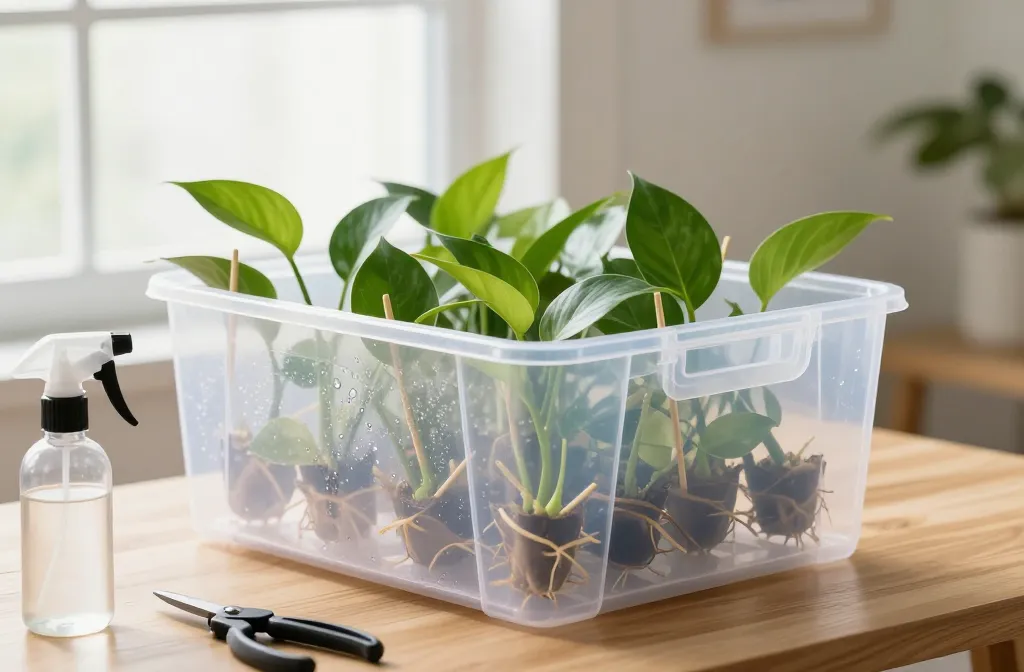
I started using makeshift humidity tents out of clear storage bins and zip-top bags when I rescued a wilted pothos from a cold stairwell. Within a week, the plant looked like it had a second life. If your cuttings droop or your rehabs stall, a simple humidity enclosure can restart growth fast. Here’s exactly which plants rebound quickest — and how long to keep each one enclosed without causing rot or pests.
1. Pothos and Philodendron (Heartleaf Types): Rapid Turgor Recovery From Dry Air Stress
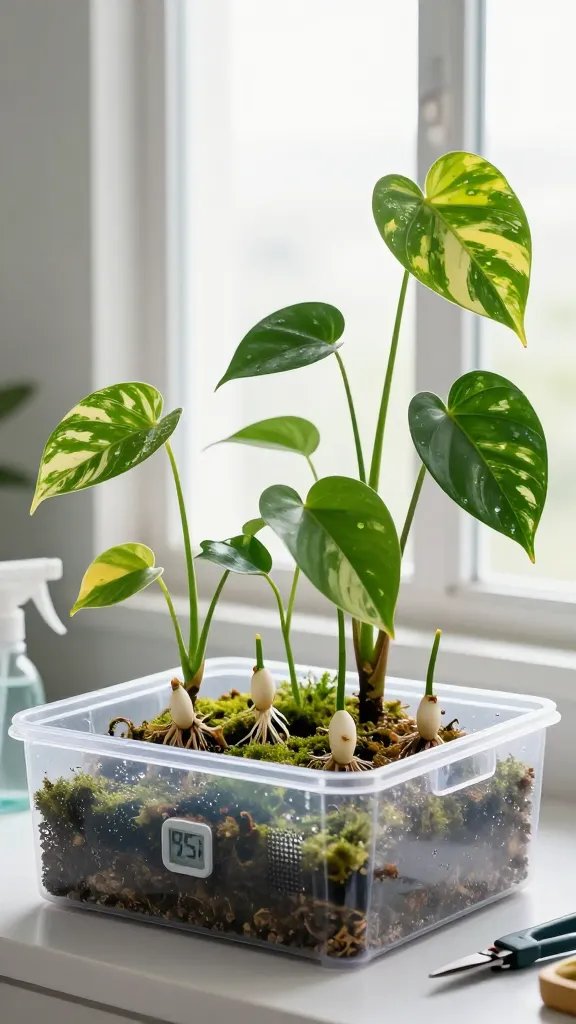
Pothos and heartleaf philodendron lose leaf firmness in dry apartments, then stall. A humidity enclosure restores leaf pressure within days and gets nodes pushing roots and new leaves again. Leave them too long and stems stretch, leaves yellow, and you invite fungus gnats.
Best Candidates
- Pothos (Epipremnum aureum, including Golden and Marble Queen)
- Philodendron hederaceum (Heartleaf), Philodendron Brasil
How Long to Leave Them In
- Unrooted cuttings: 7–14 days until you see 2–3 cm roots
- Rooted but wilted plants: 5–10 days until leaves hold shape all day
- Daily airing: 20–30 minutes with the lid cracked to prevent mold
Setup That Works With Household Gear
- Clear plastic storage bin or a large zip-top bag over the pot
- Two pencils or chopsticks as spacers so leaves don’t touch plastic
- Bright indirect light near a window — no direct sun on plastic
- Moist (not soggy) garden-centre potting mix; wring-out-damp, not dripping
Signs to Watch For
- Healthy: Perky leaves by day 3–5, new white root nubs at nodes
- Warning: Condensation running in streams at midday — air out longer
- Problem: Yellowing lower leaves and sour smell — soil is too wet
Takeaway: For pothos and heartleaf philodendron, use a humidity enclosure for 7–14 days with daily venting, and remove once leaves stay firm for 24 hours without the cover.
2. Peace Lily: Fast Leaf Rehydration After Underwatering or Repot Shock
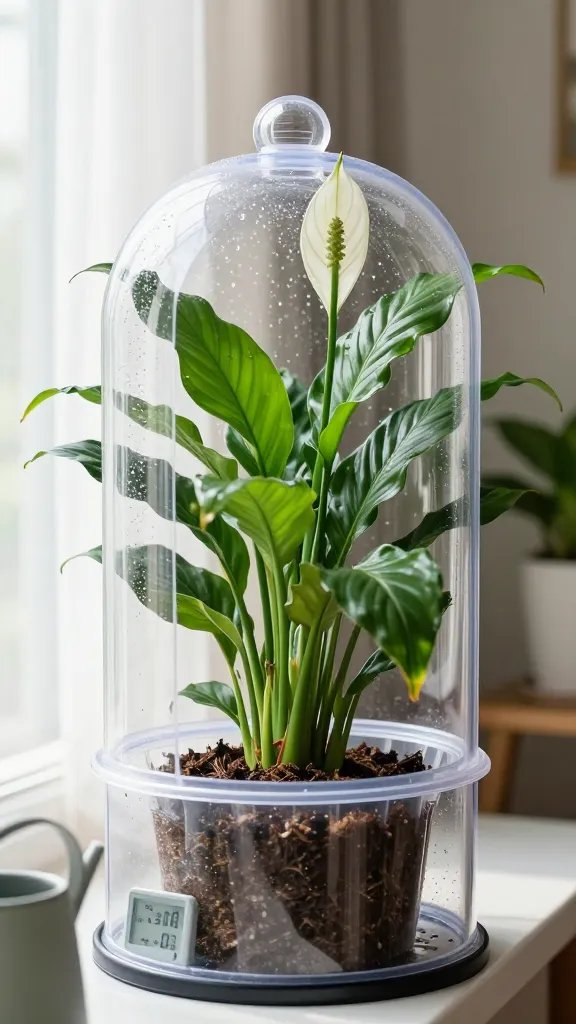
Peace lily (Spathiphyllum) collapses when the pot runs dry or after rough repotting. High humidity restores leaf cells quickly, but soggy soil under a sealed lid leads to root rot. Timing and moisture control make or break recovery.
How Long to Leave It In
- Severe wilt from underwatering: 48–72 hours to regain leaf shape
- Post-repot shock: 4–7 days until new leaf emerges or petioles stand tall
- Open the lid for 30–60 minutes daily; remove fully once leaves stay upright overnight
Moisture and Light
- Water thoroughly once, then let excess drain completely before enclosing
- Keep soil just evenly damp; no standing water in saucer
- Place in bright indirect light; avoid south-facing direct sun through plastic
Red Flags
- Persistent droop with soft stems after 72 hours — roots may be damaged or waterlogged
- Brown tips spreading — trapped heat or fertilizer salts; flush with clean-tasting water
Action today: After watering and draining, tent your peace lily for 2–3 days and vent daily; take the cover off when it holds its posture through the night.
3. Calathea, Maranta, and Prayer Plants: Leaf Edges Heal Fast With Stable Humidity
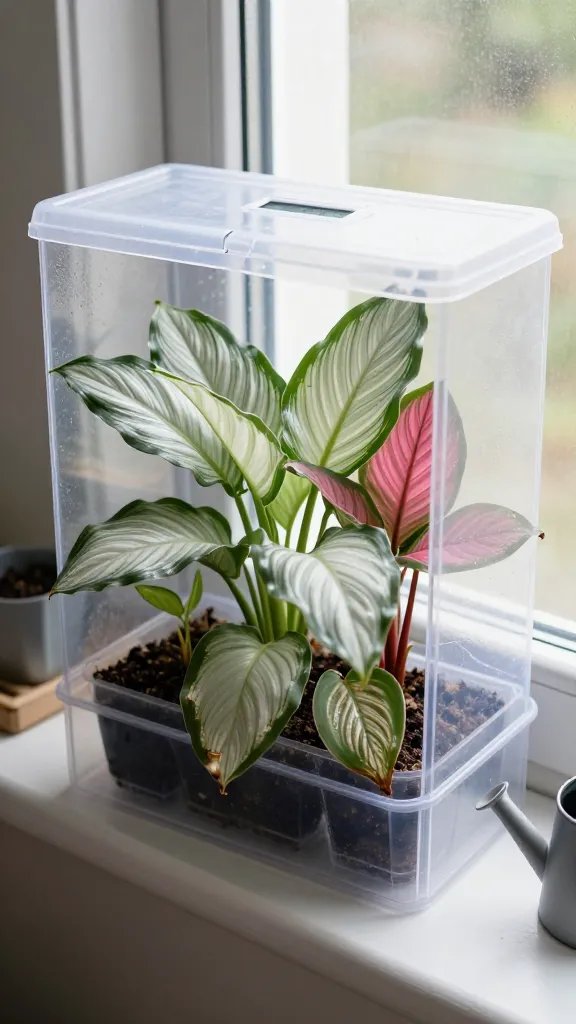
Calathea and maranta get crisp edges and curled leaves in dry rooms. A humidity enclosure halts the crisping within a week and encourages flat, glossy leaves again. Leave them sealed too long and you’ll see fungal spotting and leggy petioles reaching for light.
How Long to Leave Them In
- Edge crisping only: 5–7 days to stop damage and see new, flatter leaves
- Severe curl or transport shock: 10–14 days with daily vents
- Transition out by cracking the lid wider each day for 3–4 days
Care Details That Matter
- Use filtered or rainwater that tastes clean, not salty
- Keep potting mix slightly damp — aim for a light squeeze to feel cool moisture
- Bright, indirect light; sheer curtain if near a sunny window
Watch For
- Healthy: Night-time leaf folding returns, new leaves unfurl without tearing
- Warning: Gray fuzzy spots — reduce moisture on leaves and extend venting
Takeaway: Calathea and maranta bounce back in 1–2 weeks under a vented tent; start weaning by opening the cover more each day once new leaves open cleanly.
4. Hoya and Peperomia: Quick Root Starts on Cuttings Without Rot
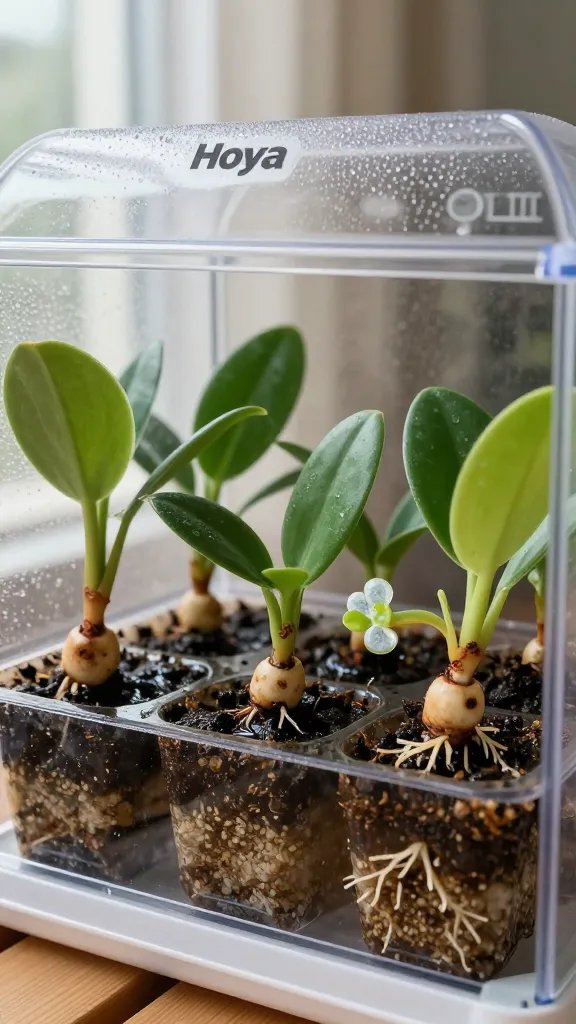
Hoya and peperomia cuttings root fast in steady humidity, but wet mix and stale air rot their thick leaves and petioles. You want a moist surface and drier bottom — not a soaked pot — and steady, filtered light.
Best Use Cases
- Leaf or node cuttings from Hoya carnosa, Hoya australis
- Peperomia obtusifolia and watermelon peperomia leaf/petiole segments
How Long to Leave Them In
- Hoya node cuttings: 10–21 days to nubs; 3–5 weeks to firm roots
- Peperomia: 14–21 days to callus and push tiny roots
- Lift the lid daily for 15–20 minutes; wipe heavy condensation
Setup Tips
- Use a shallow nursery pot with quality potting mix cut with a handful of perlite
- Stick nodes just at the surface; don’t bury leaves
- Place the enclosure where you can read a book comfortably — bright but not sun-baked
Signs and Next Steps
- Healthy: Firm leaves, slight resistance when you tug after two weeks
- Problem: Leaf blisters or translucent patches — trapped heat; move farther from window
Action today: Tent hoya and peperomia cuttings for 2–3 weeks with daily venting, and pot up fully only when you feel gentle tug resistance.
5. Ferns (Boston, Maidenhair, Bird’s Nest): Frond Perk-Up From Chronic Dryness
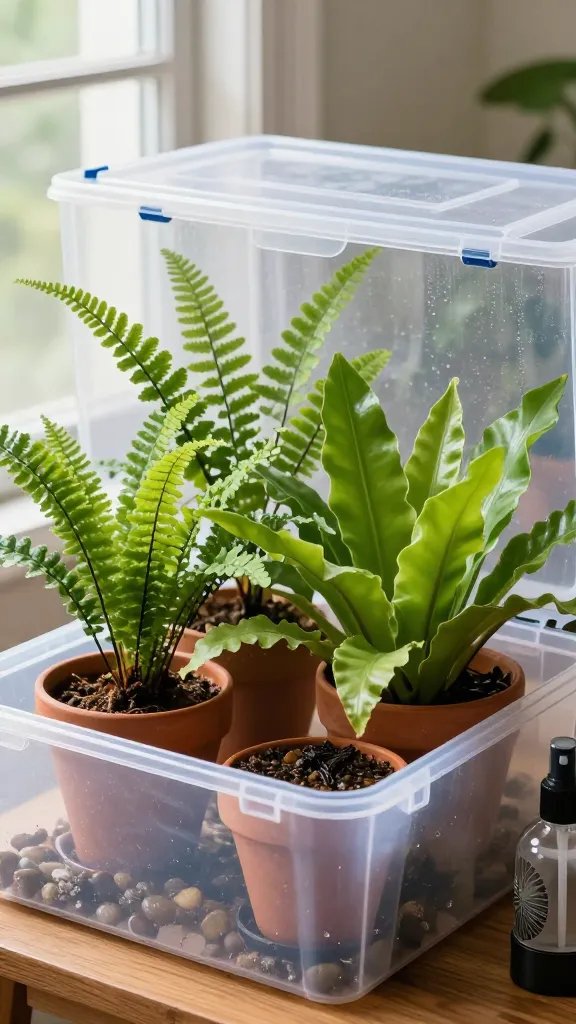
Ferns crash in dry rooms — fronds crisp, and new growth aborts. A humidity enclosure reverses this fast, but stagnant, wet conditions invite fungus and mealybugs. Balance moisture, air, and gentle light to revive fronds without creating a mold farm.
How Long to Leave Them In
- Mild crisping: 5–7 days to perk up and push fresh fiddleheads
- Severe dryness or after division: 10–14 days, then gradual venting for a week
Moisture and Air Tips
- Water thoroughly, drain fully, and mist the inside of the enclosure walls once — not the fronds
- Prop the lid open with a pencil to keep air moving
- Keep away from heat vents and midday sun
Spot These Issues Early
- Healthy: New fronds unfurling, frond tips staying green
- Warning: Brown spots with fuzzy edges — reduce moisture on foliage; increase vent time
Takeaway: Use an enclosure for 1–2 weeks to reset humidity for ferns, propping the lid for constant airflow and removing once you see steady new fronds.
6. Monstera Adansonii and Small Monstera Deliciosa: Fast Rooting and Leaf Firmness After Propagation
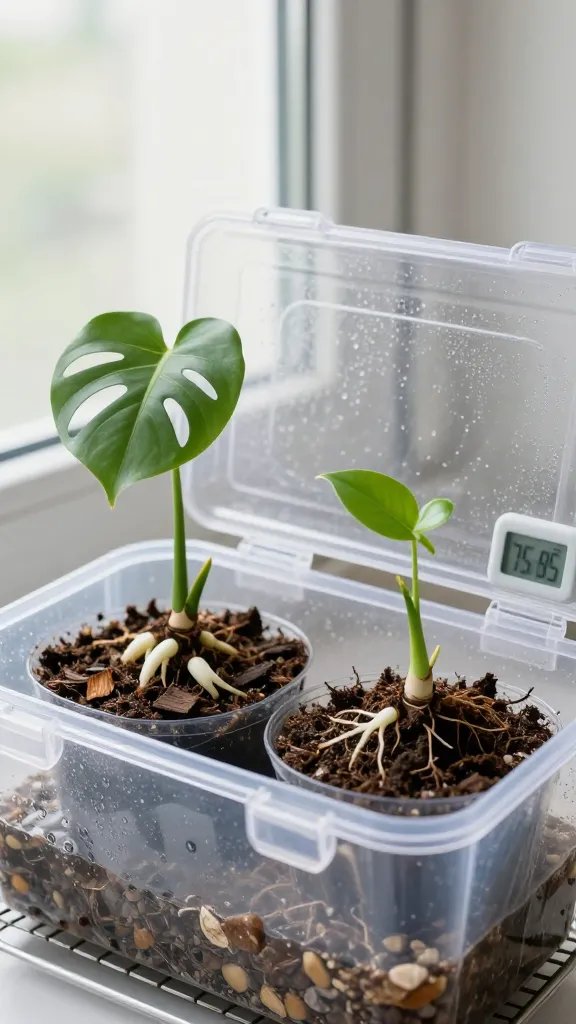
Monstera adansonii and small Monstera deliciosa rebound fast when humidity supports new roots at nodes. Enclose too long and you’ll get pale, stretched leaves and algae on the soil. Keep humidity high but light bright and indirect.
How Long to Leave Them In
- Unrooted water-to-soil transfers: 7–10 days to prevent post-transfer wilt
- Fresh soil cuttings: 10–14 days to establish roots and firm new leaves
- Vent daily for 20–30 minutes; extend to 1 hour if condensation streams
Setup and Handling
- Use a stake or chopstick to keep nodes steady against the soil surface
- Water once until evenly damp; then wait until the top 2 cm feel dry before watering again
- Place by a bright window with a sheer curtain; avoid direct sun through plastic
Progress Checks
- Healthy: New leaf unfurls without tearing, petioles stand on their own
- Problem: Yellow lower leaves — back off watering and increase venting
Action today: Tent newly potted monstera cuttings for 7–14 days and remove the cover once a new leaf hardens off without drooping.
Frequently Asked Questions
What exactly counts as a “humidity enclosure” I can make at home?
Use any clear container that traps moisture while letting in light. A transparent storage bin with a loose-fitting lid, a clear plastic bag propped up with chopsticks, or a cut-down plastic bottle over a small pot all work. Leave a small gap for air, and wipe off heavy condensation daily. Keep it out of direct sun to avoid cooking the plant.
How do I know I’m leaving the plant in too long?
Look for pale, stretched growth, persistent wet soil, and constant heavy condensation by midday. If leaves yellow from the bottom up or you notice a sour smell, you’ve gone too far. Start by venting longer each day and let the top 2 cm of soil dry before the next watering. If growth firms up, remove the cover entirely.
Should I mist inside the enclosure?
No. The enclosure already recycles moisture. Instead, lightly mist the enclosure walls once at setup to boost humidity, then rely on the plant’s normal transpiration. Wet leaves inside a closed space stay wet too long and invite fungal spots; focus on evenly damp soil and daily venting.
Can I use direct sunlight with a humidity tent?
No — plastic magnifies heat and can scorch leaves quickly. Place the setup in bright indirect light near a window where you could comfortably read a book at midday. If the plastic feels hot to the touch, move it back 60–90 cm or add a sheer curtain. Consistent light without heat spikes gives faster, safer recovery.
Do I fertilize while the plant is in the enclosure?
Skip fertilizer during the enclosure period. Tender new roots burn easily and wet, enclosed soil concentrates salts. Wait until you see steady new growth after the cover is off for at least 1–2 weeks, then feed lightly at half strength during a normal watering.
What if I see mold or fungus gnats inside?
Open the lid wider, let the top of the soil dry, and remove any dead leaves. Sprinkle a thin layer of horticultural sand or fine gravel on the soil surface to deter gnats. For mold, wipe the enclosure walls with a paper towel, then resume with longer daily vents. If the smell is sour, repot into fresh, clean potting mix and restart with drier soil.
Conclusion
Set up a simple humidity enclosure with a clear bin or bag, bright indirect light, and daily venting, and these six plants will bounce back fast. Start with one struggling plant today, follow the time windows above, and you’ll see firmer leaves and fresh roots before the week is out.