The Secret: 5 Substrate Ingredients That Improve Drainage Without Compacting Over Time
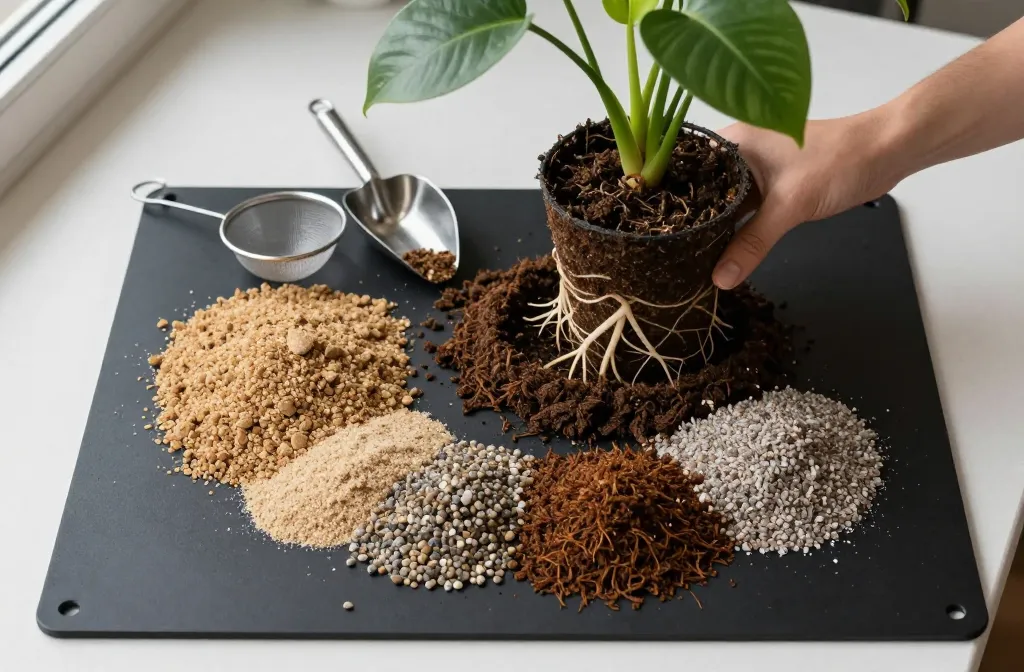
When I started potting houseplants in my apartment, I used straight bagged soil and wondered why my roots kept rotting and the mix turned brick-hard after a season. I learned the hard way that drainage isn’t just about holes in the pot — it lives or dies in the substrate. In this guide, I break down five ingredients that keep water moving and air in the root zone without turning to concrete. You’ll learn exactly what to buy at a garden centre, how to mix it by hand at your kitchen counter, and how to avoid the soggy-then-hydrophobic cycle that kills roots.
1. Pumice: Hard, Porous Rock That Keeps Air Pockets Permanent
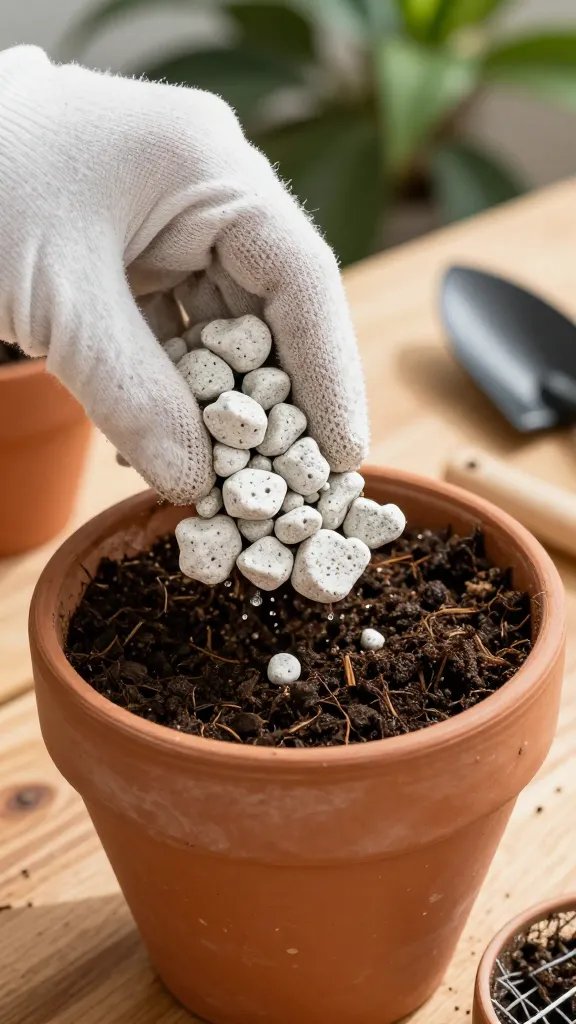
Dense, compacted soil suffocates roots even if the pot has a drainage hole. When the mix collapses, water sits around the crown and you get yellowing leaves and black, mushy stems. Pumice solves this by acting like tiny spacers that never break down.
Why Pumice Works
- It’s a lightweight volcanic rock with pores that hold a little moisture but mostly air.
- It doesn’t float or migrate to the top when you water, so your mix structure stays stable.
- Unlike organic matter, it won’t decay and collapse within a season.
How to Use Pumice at Home
- For tropical houseplants (philodendrons, pothos, peace lily): blend 2 parts good potting mix with 1 part pumice.
- For succulents and cacti: 1 part potting mix, 1 part pumice, 1 part coarse sand or fine gravel.
- If the bagged mix looks heavy or muddy out of the bag, add an extra half-part of pumice until a fistful crumbles apart when squeezed and released.
Signs You Need More Pumice
- Water sits on top of the soil for more than 10 seconds before sinking in.
- The pot feels very heavy two days after watering.
- Roots circle the pot’s edge searching for air while the centre smells sour.
Action today: Add a single top-dressing layer of pumice (1 cm) around the plant base and poke five pencil-thick holes down the pot to create quick air channels until your next full repot.
2. Pine Bark (Orchid Bark): Chunky Organic That Resists Slumping
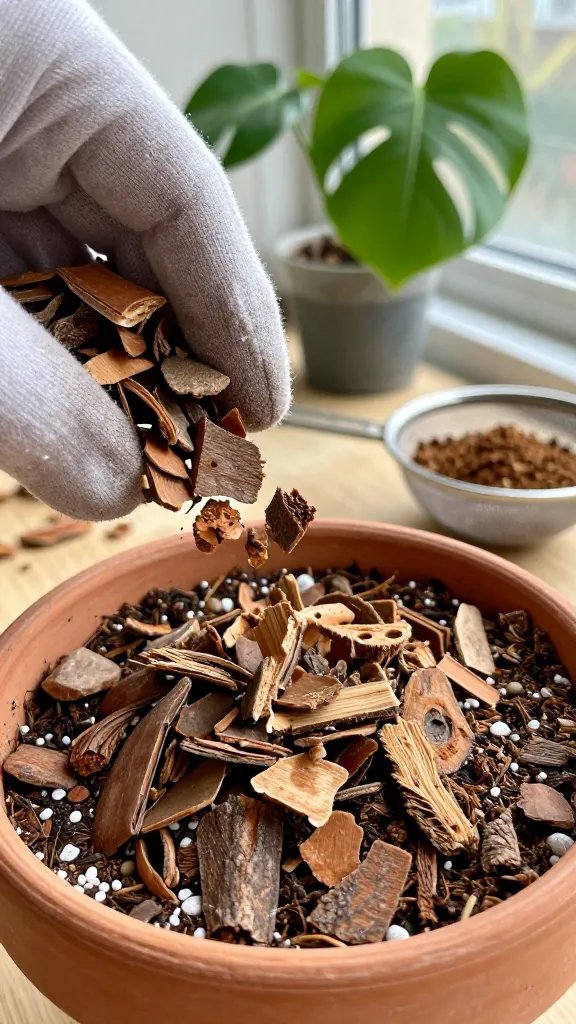
Fine peat-heavy mixes turn to sludge, then dry into a crust that repels water. Roots swing from drowning to bone-dry. Pine bark — sold as orchid bark — creates large, long-lasting gaps that stop compaction.
What Makes Bark Different
- Medium bark chips (about thumbnail-sized) interlock and hold structure for 1–2 years.
- They absorb a bit of moisture on the surface while keeping the core airy.
- They improve drainage without stripping all moisture, ideal for a bright windowsill.
How to Use Bark Without Special Gear
- For aroids (monstera, philodendron, syngonium): 2 parts potting mix, 1 part bark, 1 part perlite or pumice.
- For orchids in pots with holes: 100% medium bark, then tuck in a small handful of sphagnum around the roots for humidity.
- If chips are very large, crush a few by stepping on them inside the bag to get a mix of sizes.
When Bark Helps Most
- Plants potted in plastic that stay damp for 5+ days.
- North-facing rooms with slower evaporation.
- Large pots where the centre never fully dries.
Takeaway: When repotting any plant that “holds a grudge” after watering, add one part bark to your usual mix to build in air gaps that won’t disappear.
3. Perlite: Lightweight Bubbles That Speed Drainage Immediately
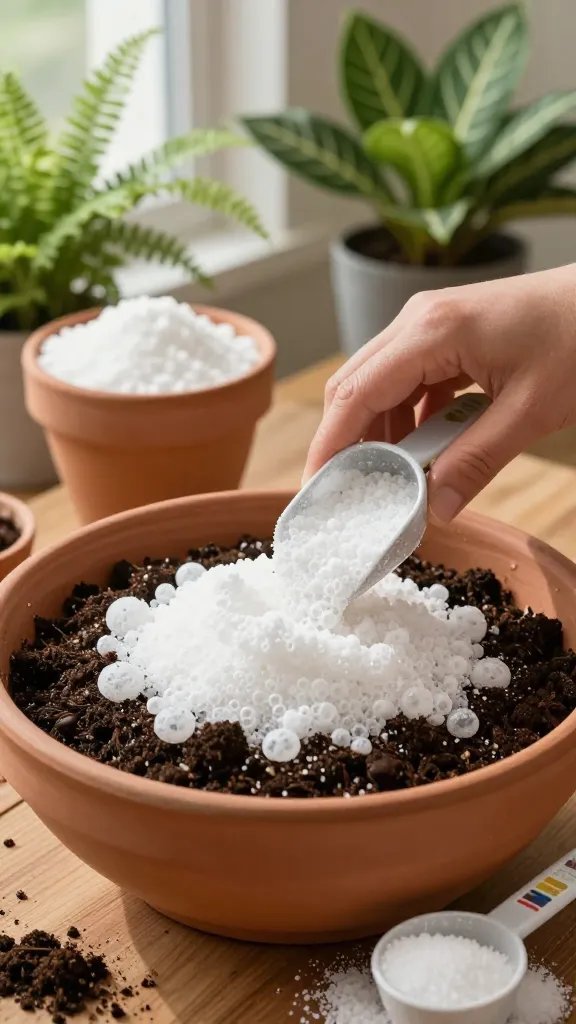
If your pot feels like a wet sponge for days, root tips starve of oxygen and rot sets in. Perlite increases drainage right away and lightens any heavy mix. Yes, it’s common — and it still works when used generously and correctly.
Make Perlite Work For You
- Rinse or lightly moisten perlite before mixing to reduce dusty particles.
- For most houseplants: 2 parts potting mix to 1 part perlite.
- For moisture-loving plants (ferns, calathea): keep perlite at 1/3 part so the mix stays evenly damp but airy.
Perlite Limitations And Fixes
- It can float and shift to the top if you pour water hard. Water gently around the inner rim, not straight down the centre.
- Very fine perlite collapses faster. If you can, pick a bag with chunkier pieces.
- Combine with bark or pumice for longer-term structure in pots you rarely repot.
Quick Diagnostic
- Soil smells like a swamp within 3–4 days of watering.
- Leaves yellow from the bottom up while the surface still looks damp.
Action today: Scratch in a handful of perlite across the top 3–4 cm of your current pots to open the surface layer and reduce perched water immediately.
4. Coarse Sand Or Grit: Weight That Improves Flow Without Sealing Up
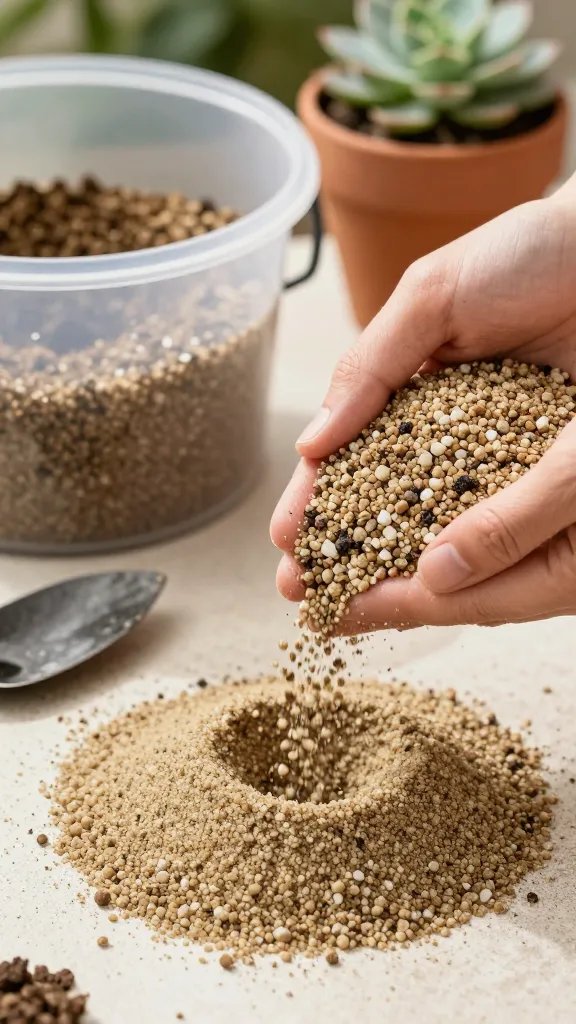
Powdery “play sand” glues soil together and makes drainage worse. The right coarse sand or horticultural grit opens channels and prevents fines from packing tight. The difference is all about particle size.
Choose The Right Sand
- Look for “horticultural grit,” “sharp sand,” or “builder’s sand” labelled washed and coarse.
- Grains should look like broken crystals, not flour. If it flows like sugar, it’s too fine.
- Rinse once in a bucket if water runs cloudy, then drain through a colander.
How To Blend It
- Succulents and herbs (rosemary, thyme): 1 part potting mix, 1 part coarse sand, 1 part pumice or perlite.
- For heavy clay-based bagged mixes: add 1/2 part coarse sand to stop stickiness and speed drainage.
- Avoid layers. Always mix sand evenly through the whole substrate; layers trap water above them.
When Grit Beats Perlite
- Outdoor containers where wind can blow perlite away.
- Top-heavy plants that need extra pot stability.
- Warm, sunny windows where mixes dry from the top down and benefit from deeper channels.
Takeaway: If your mix looks smeared and shiny when wet, blend in coarse sand at your next watering — 1 handful per litre of soil — to break that seal.
5. Lightweight Expanded Clay Aggregate (LECA): Reusable Balls That Hold Shape For Years
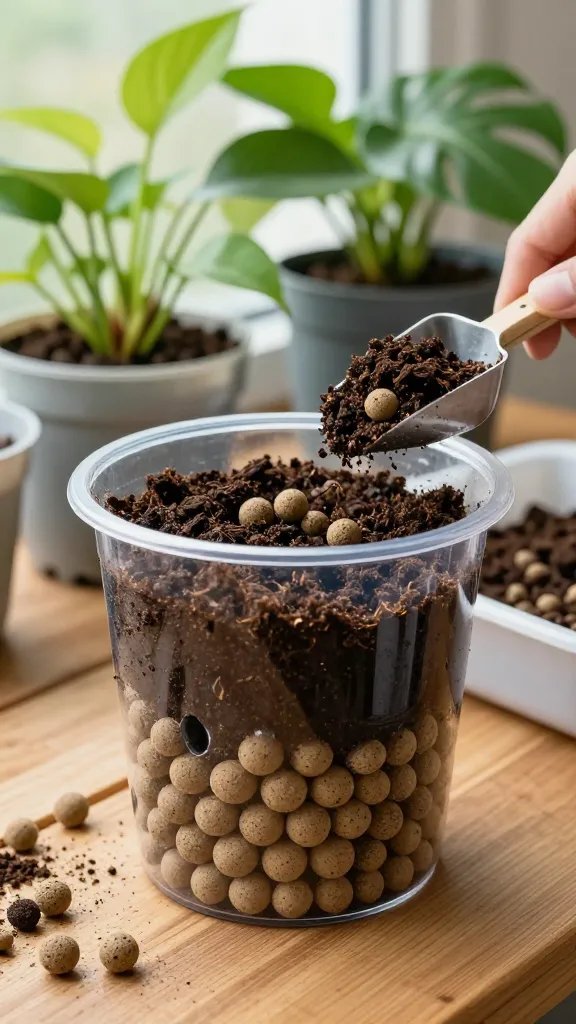
Pots with dense cores create “perched water,” a puddle that never drains from the bottom centimetres. LECA stops that by creating a stable, airy base and consistent moisture buffer. You don’t need a hydro setup to use it.
Simple Ways To Use LECA With Soil
- Bottom layer: add a 1–2 cm layer of LECA at the base of nursery pots to keep drain holes clear. Note: this doesn’t “improve” drainage speed but prevents clogging and compaction at the outlets.
- Mixed in: for thirsty plants in plastic pots, use 2 parts potting mix, 1/2 part LECA, 1/2 part bark to boost airflow without drying too fast.
- Sleeve pot trick: sit the nursery pot on a thin LECA layer inside a decorative cover pot to keep it out of any runoff.
Care And Reuse
- Rinse LECA before first use to remove clay dust.
- Boil or soak in very hot water for 10 minutes between uses to keep it clean.
- Replace only lost pieces — LECA doesn’t decay or compact.
Who Benefits Most
- Plants that sulk in heavy soil but dislike bone-dry roots: peperomia, pilea, and many aroids.
- Busy schedules — LECA stabilises moisture swings when blended into soil.
Action today: Lift your nursery pot and check the drain holes; if packed with sludge, repot with a thin LECA layer at the base to keep those exits open.
Frequently Asked Questions
How do I know if my mix actually drains well without special tools?
Water evenly until you see liquid out the bottom, then lift the pot. It should feel lighter again within 48–72 hours in a typical room. Push a wooden skewer into the centre; if it comes out slightly damp but not coated in mud after two days, your drainage is on track. If it’s still soggy on day three, add more pumice or bark at your next repot.
Can I just add rocks at the bottom instead of changing the soil?
No. A rock layer creates a perched water zone where moisture collects above the rocks, keeping roots wetter for longer. Instead, improve the entire mix with pumice, bark, or perlite. If you want to protect the drain holes, use a thin LECA layer or a mesh over the holes, but still fix the soil itself.
What’s the simplest all-purpose recipe I can mix in a bowl at home?
Start with 2 parts good potting mix, 1 part pumice or perlite, and 1 part medium orchid bark. This works for most common houseplants in bright indirect light near a window. For succulents, swap half the bark for coarse sand. If a plant stays wet too long in your space, increase pumice by a half-part next time.
Is perlite safe to use indoors? The dust worries me.
Yes, but handle it damp. Open the bag outside or in a sink, mist the perlite lightly, and wear a simple dust mask if you have one. Rinsing in a colander reduces dust fast. Once mixed and watered in, it sits harmlessly in the pot.
My mix compacts again after a few months. Do I have to repot everything?
Not always. Aerate by poking several holes with a chopstick and backfilling each hole with a pinch of pumice or perlite. Add a 1 cm top-dressing of bark or pumice to keep the surface from sealing. Plan a full repot within the next season using a chunkier blend to prevent a repeat.
Which ingredient should I choose if I can only buy one today?
Buy pumice if your garden centre has it. It doesn’t float, it won’t break down, and it works across most plant types. If pumice isn’t available, choose medium orchid bark and combine it with the perlite already in many potting mixes. You’ll see better drainage and fewer soggy spells right away.
Conclusion
You don’t need lab gear or perfect conditions to fix waterlogged pots — you need the right particles doing the right job. Start with pumice or bark, mix by hand, and watch your watering routine become simpler within a week. Next step: pick one plant that’s staying wet too long and give it a fresh, airy blend using the ratios above.