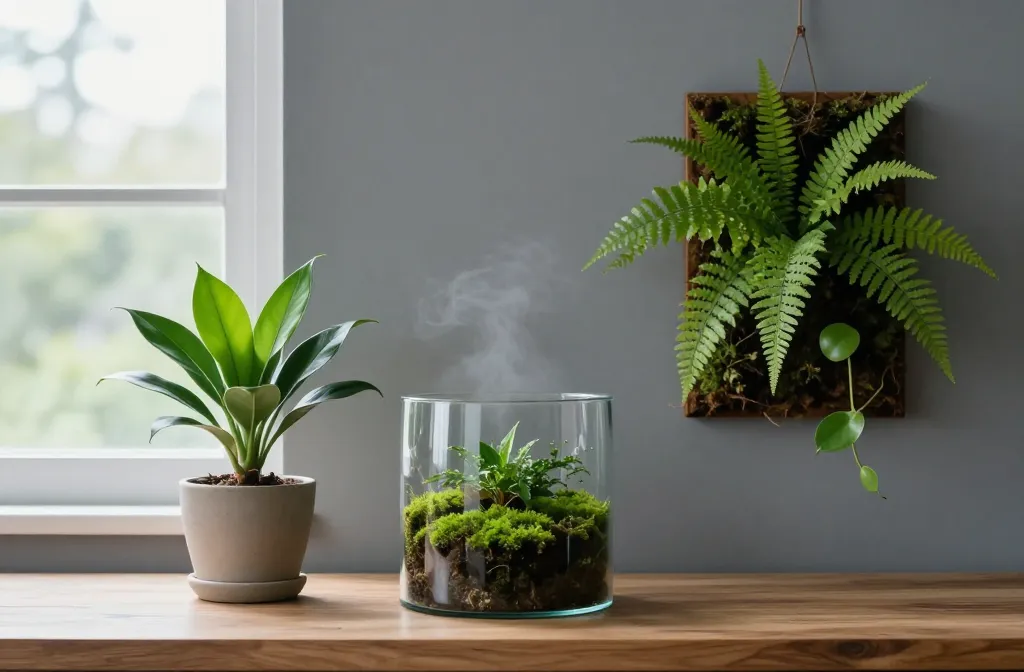
The Secret List of 8 Low-Light Plants That Work Across Terrariums, Living Walls and Windowsill Containers
I learned to garden in a dim, north-facing flat with one decent windowsill and a shoebox terrarium on my desk. When plants died, it wasn’t because I lacked care — I picked the wrong species for the light and the container. You’ll learn exactly which low-light plants thrive in terrariums, living walls, and small containers, plus how to water, trim, and place them so they don’t fade out after the honeymoon phase. Pick from these eight and you’ll get healthy growth with far less fuss.
1. ZZ Plant (Zamioculcas zamiifolia): Toughest Workhorse for Neglected Corners
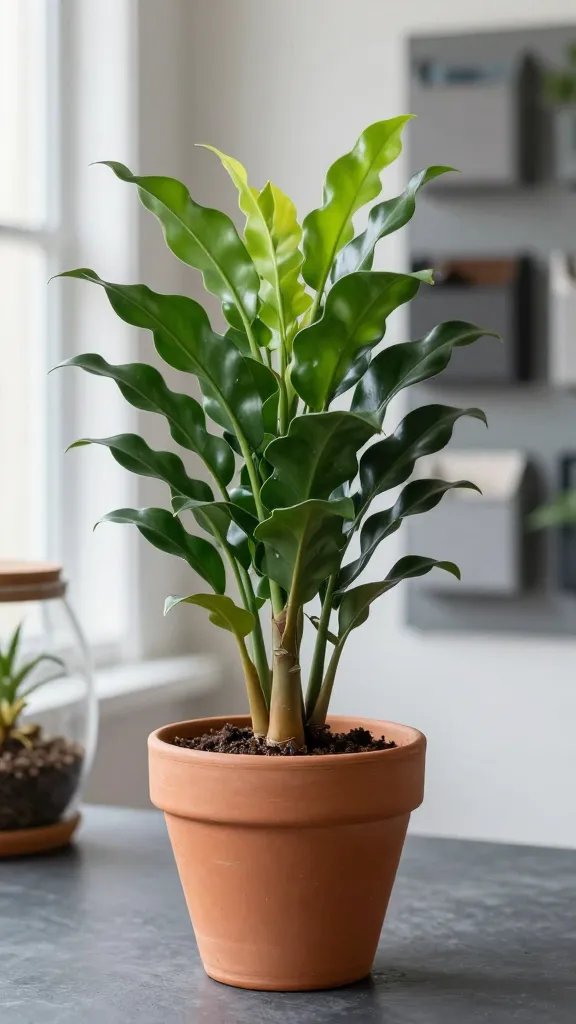
Skip watering a ZZ Plant and it shrugs; give it dim light and it still puts out glossy fronds. The consequence of ignoring light limits with other species is slow collapse, but ZZ stores water in its rhizomes and tolerates dry air, tight spaces, and inconsistent care.
Best Uses Across Setups
- Terrariums: Open-top only, and in medium bowls — it outgrows closed jars and resents constant humidity.
- Living walls: Lower pockets where it won’t get blasted by warm, dry air from vents; choose small starter divisions.
- Windowsills: North or east windows with bright indirect light; rotate the pot monthly for even growth.
Watering and Soil
- Use a good quality potting mix with 1 part perlite to 3 parts mix for drainage.
- Water every 3–4 weeks, letting the top 2–3 cm dry fully.
- Use water that tastes clean, not salty. Avoid self-watering planters — they keep roots too wet.
Action today: If your ZZ’s leaves are yellowing, tip the pot and check for soggy soil; repot into fresh, well-drained mix and water less frequently.
2. Heartleaf Philodendron (Philodendron hederaceum): Fast, Forgiving, and Easily Shaped
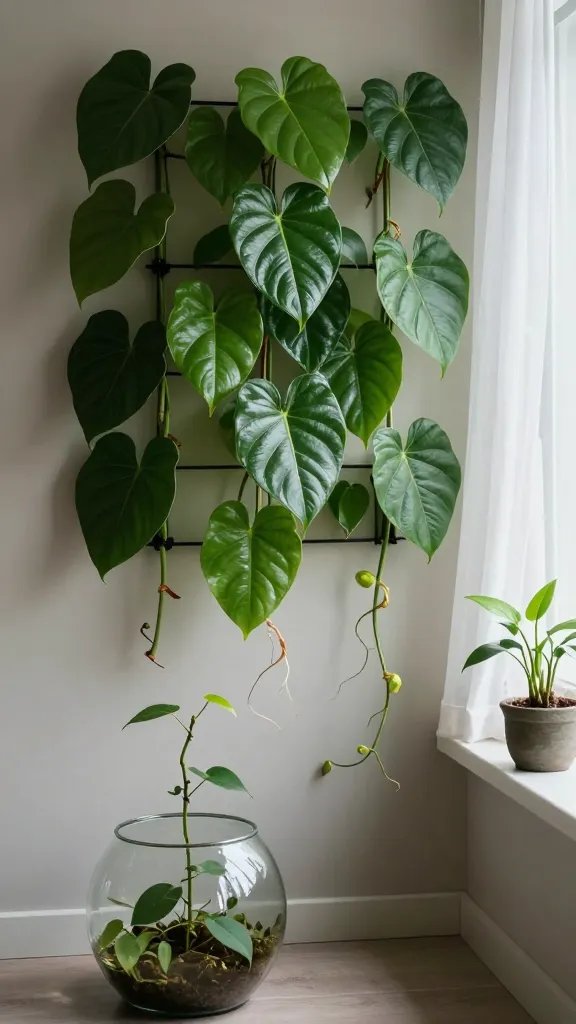
Many trailing plants get leggy in low light and look sparse within a month. Heartleaf Philodendron keeps its leaves fuller in dim rooms and bounces back from pruning without drama.
Best Uses Across Setups
- Terrariums: Only in open vessels with a small cutting; train along a miniature trellis to prevent crowding.
- Living walls: Middle rows where stems can trail downward; clips keep nodes against the panel so they root and fill in.
- Windowsills: East or north light; sheer curtain if south-facing to avoid scorch.
Maintenance and Propagation
- Pinch tips every 4–6 weeks to keep it dense.
- Root prunings in a glass of water on the sill and replant into gaps on your wall or into terrariums.
- Water when the top 2 cm feel dry — usually every 7–10 days in small pots.
Takeaway: Trim one or two vines today and replant the cuttings to thicken any thin spot in your wall or pot.
3. Pothos (Epipremnum aureum): Reliable Filler That Tolerates Missed Waterings
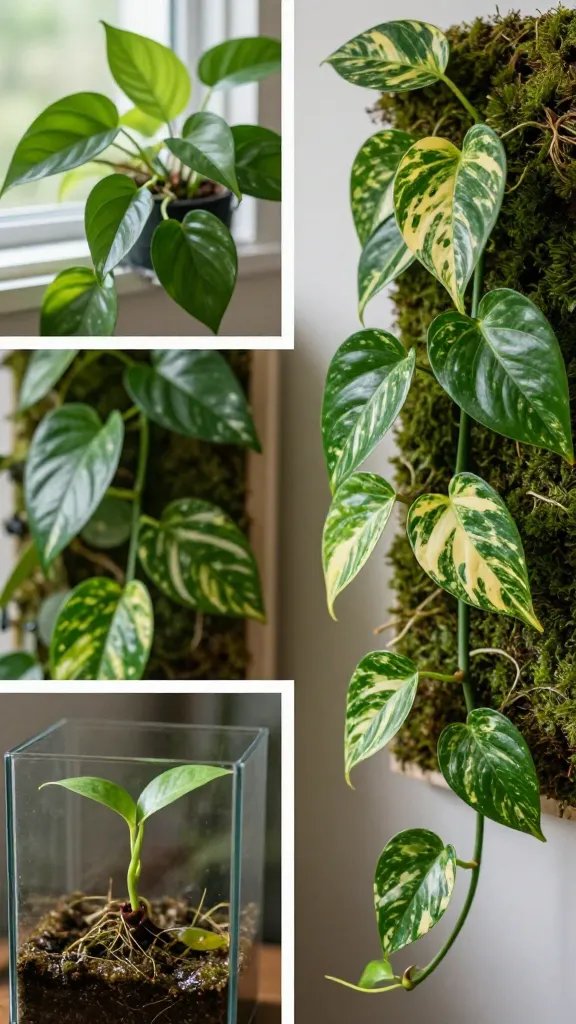
Empty-looking living walls fail because plants stall in low light. Pothos pushes new growth even in darker rooms and tolerates drier intervals, filling gaps fast.
Pick the Right Variety
- Jade/Green Pothos: Best for lower light; holds color and leaf size.
- Golden/Marble Queen: Needs a touch more brightness to keep variegation.
Best Uses Across Setups
- Terrariums: Use a single small cutting in an open terrarium and prune often; otherwise it sprawls.
- Living walls: Edge or lower pockets to drape; tuck nodes into pockets so they root and thicken.
- Windowsills: Any exposure with indirect light; water when leaves lose a touch of perk.
Key Care
- Water every 7–12 days depending on pot size; don’t keep constantly moist.
- Use a standard potting mix; add a handful of perlite for faster drainage.
- Fertilize lightly in spring and summer with a balanced liquid at half label strength every 4 weeks.
Action today: If variegated leaves fade to mostly green, move the plant one meter closer to a window and rotate weekly.
4. Snake Plant (Sansevieria/Dracaena trifasciata): Vertical Structure With Minimal Light and Water
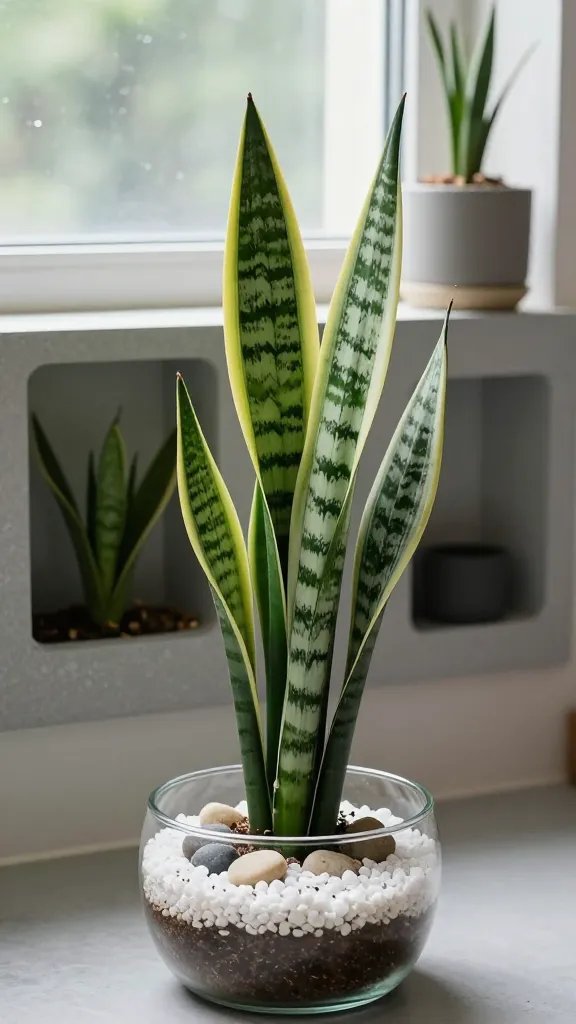
Designs flop when everything trails or sits low. Snake Plant adds clean, upright lines and copes with low light, dry air, and tight roots, so the arrangement looks deliberate rather than cluttered.
Best Uses Across Setups
- Terrariums: Not for closed glass; use in wide, open bowls with a shallow layer of decorative gravel on top to keep leaves clean.
- Living walls: Works in deeper pockets or modular planters rated for small shrubs; choose dwarf forms like ‘Hahnii’ for weight and balance.
- Windowsills: South or west sill with sheer curtain, or set back 1–2 meters from brighter windows.
Watering and Potting
- Water every 4–6 weeks in low light; less in winter.
- Use a cactus/succulent mix or potting mix cut with 30–40% perlite.
- Warning: Overwatering causes root rot — leaves fold and wrinkle from the base upward.
Takeaway: Set a phone reminder to check moisture monthly instead of watering on a weekly routine.
5. Ferns (Nephrolepis exaltata ‘Bostoniensis’ and Asplenium nidus): Soft Texture for Humid Spots
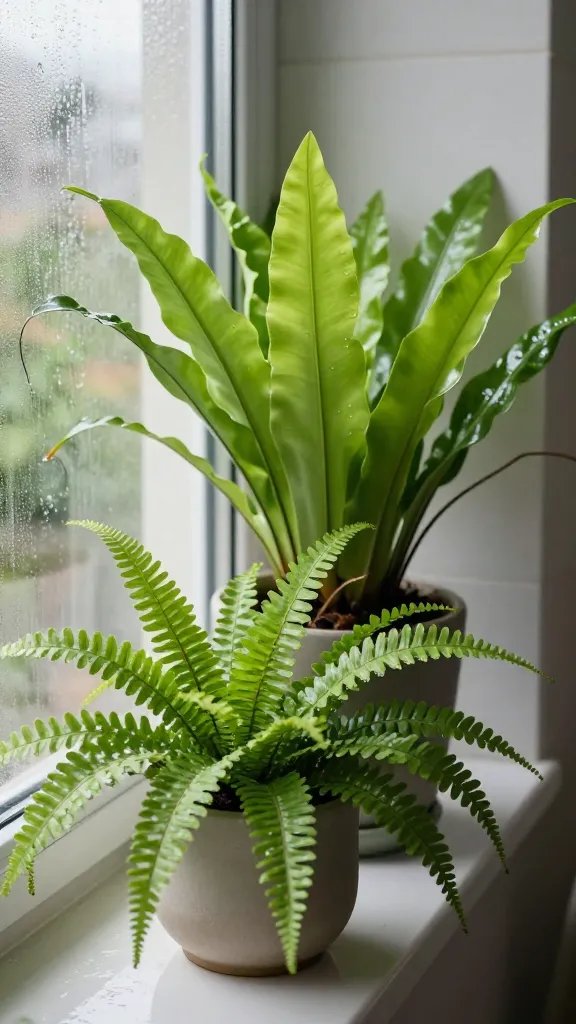
Low-light setups look harsh without a feathery plant to break hard lines. Boston Fern and Bird’s Nest Fern give lush texture, but they punish dry, drafty positions with crisped fronds.
Pick by Humidity and Space
- Terrariums: Excellent in closed terrariums (especially Bird’s Nest for tidy rosettes). Avoid crowding the crown against glass.
- Living walls: Mid to upper sections away from heater vents; mist the panel sides in dry months.
- Windowsills: Best on shaded kitchen or bathroom sills where humidity stays higher.
Care Essentials
- Keep soil evenly moist, not wet; water when the surface just loses its sheen — usually every 5–7 days.
- Use a peat-free or peat-reduced potting mix with added fine bark, if available, for airflow.
- Trim brown tips cleanly; do not cut into the central rosette on Bird’s Nest Fern.
Action today: Move any fern that’s crisping to the most humid room you have and place it one step back from the window to reduce drafts.
6. Chinese Evergreen (Aglaonema): Color and Pattern Without Bright Light
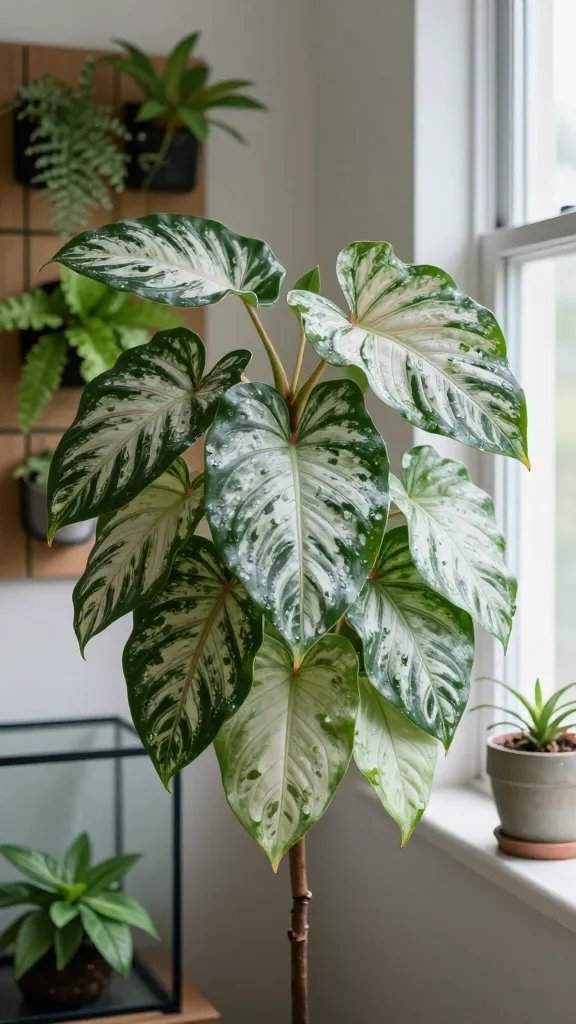
Colorful plants often fade or scorch unless they sit in bright rooms. Aglaonema holds patterned foliage in low light and tolerates irregular watering, giving you contrast where other plants sulk.
Best Uses Across Setups
- Terrariums: Only in roomy, open vessels; wipe leaves monthly to prevent fungal spotting in stale air.
- Living walls: Heavier than vines — install in sturdy middle pockets and secure with clips until rooted.
- Windowsills: North or east exposure; avoid direct midday sun that bleaches variegation.
Watering and Feeding
- Water every 10–14 days; allow the top 2–3 cm to dry.
- Use a standard potting mix; add a small handful of perlite for breathability.
- Feed monthly in spring/summer with half-strength balanced liquid fertilizer.
Takeaway: If leaves lean hard toward the light, rotate the pot a quarter turn each week to keep the plant balanced.
7. Peace Lily (Spathiphyllum): Blooming Option That Forgives Dim Rooms
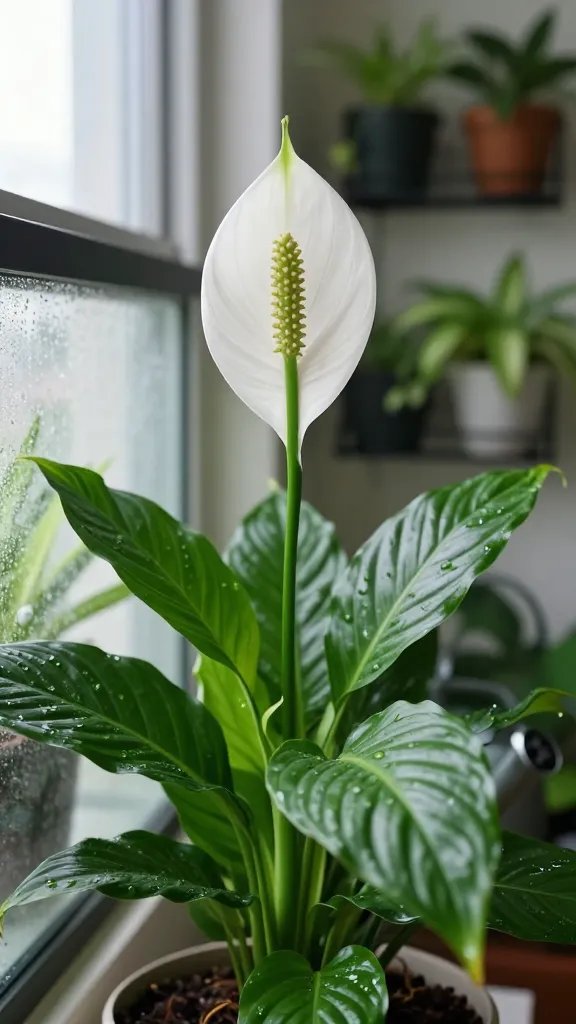
Most flowering plants refuse to bloom in low light, leaving you with only foliage. Peace Lily still produces white spathes in modest light and tells you clearly when it needs water by drooping, then recovering after a drink.
Placement and Moisture
- Terrariums: Works in large, open containers where you can reach to deadhead; closed glass stays too wet.
- Living walls: Middle or lower pockets where you can remove spent blooms and water evenly.
- Windowsills: East-facing is ideal for blooms; north-facing for steady foliage.
Care Details
- Keep soil evenly moist; water when the pot feels noticeably lighter or leaves just begin to soften — about every 5–7 days.
- Use tap water left out overnight if your water smells chlorinated; peace lilies show brown tips from harsh water.
- Snip spent blooms at the base to push new growth.
Action today: If your peace lily hasn’t bloomed in months, move it one meter closer to an east window and begin monthly half-strength feeding.
8. Nerve Plant (Fittonia albivenis): Small-Scale Color for Terrariums and Tight Pockets
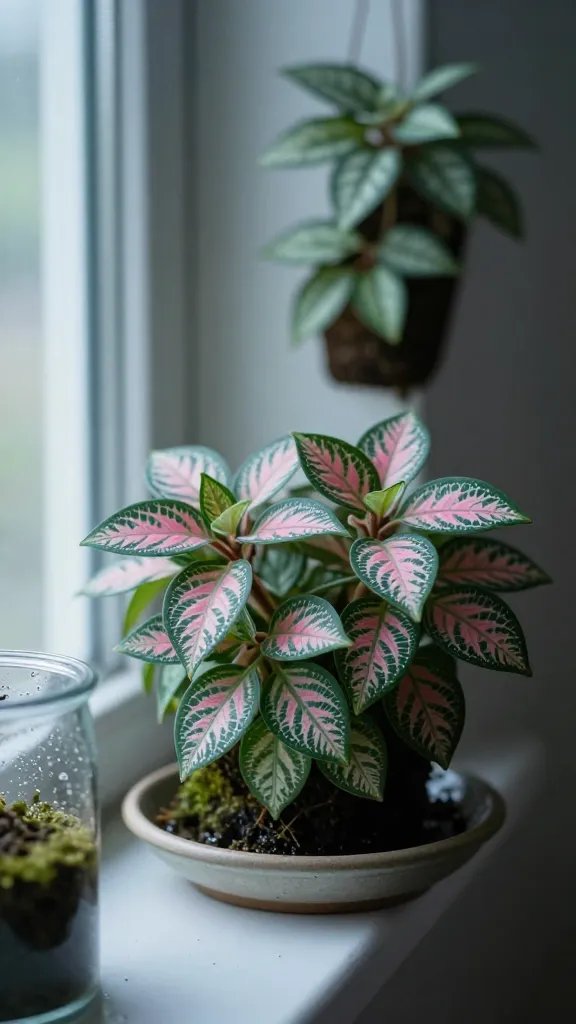
Miniature plantings often look dull because leaves are uniformly green. Nerve Plant delivers bright veining and thrives in humidity, making it a star in closed glass and small wall pockets.
Best Uses Across Setups
- Terrariums: Ideal in closed terrariums; it loves constant humidity and rebounds from wilting once watered.
- Living walls: Tuck into shaded, sheltered pockets; keep away from hot air drafts.
- Windowsills: Works on north sills in shallow dishes; protect from direct sun to prevent bleaching.
Moisture Management
- Keep soil lightly moist; water when the top 1 cm dries — typically every 4–6 days in small volumes.
- Use a fine-textured potting mix; avoid chunky mixes that dry too fast.
- Pinch tips monthly to prevent legginess and keep a compact cushion.
Takeaway: If your Fittonia flops mid-day, water lightly and increase humidity by grouping plants or adding a shallow tray of pebbles and water nearby.
Frequently Asked Questions
How do I know if my room is “low light” without a meter?
Stand at your plant’s position at midday and try to read small text without turning on a lamp. If you can read comfortably but see no sun patches on the floor, that’s low light. Place plants within 1–2 meters of a window with a clear sky view. Use sheer curtains for south or west windows to create bright, indirect light.
Can I mix these plants in the same terrarium?
Yes, as long as you match humidity and growth speed. Pair humidity lovers together — for example, Fittonia and a small Bird’s Nest Fern in a closed terrarium. Keep dry-tolerant species like ZZ and Snake Plant in open containers. Choose plants that stay small or pruneable so one doesn’t dominate.
How often should I fertilize in low light?
Plants grow slower in low light, so fertilize lightly. Use a balanced liquid fertilizer at half the label rate once a month from spring to early autumn. Skip feeding in winter. If you see salt crust on soil, flush the pot with clean water until it drains freely, then resume lighter feeding.
What potting mix should I buy if I don’t want to blend ingredients?
Pick a good quality, all-purpose potting mix from the garden centre for most species. For Snake Plant and ZZ, choose a cactus/succulent mix to avoid soggy roots. For ferns and Fittonia, stick with the standard mix and water more evenly. If your plants stay wet too long, repot into the same mix but in a pot with more drainage holes.
How do I stop algae and mold in terrariums?
Excess moisture and stale air cause growth on glass and soil. In closed terrariums, crack the lid for 1–2 hours every few weeks and reduce watering to tiny amounts — a tablespoon at a time. Remove dead leaves promptly and wipe the glass with a soft cloth. Add a thin top dressing of decorative gravel to keep soil splash down.
What’s the easiest plant here for absolute beginners?
ZZ Plant is the most forgiving for inconsistent watering and low light. Set it near a window with indirect light, water every 3–4 weeks, and leave it slightly snug in its pot. As confidence grows, add a Heartleaf Philodendron to practice pruning and propagation. Both deliver quick wins without fussy care.
Conclusion
You don’t need bright rooms or special gear to keep thriving greenery — you need the right species in the right spot. Choose two from this list and set them within two meters of a window, then adjust watering to the schedule given. Once they settle, expand to a terrarium or a wall pocket and repeat the same simple rules.