The Secret 7 Things to Check Before Buying a Succulent for a Terrarium — Size, Root Depth, Light Class
I’ve built terrariums that fogged up, rotted out, and collapsed under their own cuteness. The problem wasn’t my glass or my grit — it was the wrong succulents for the job. If you’re shopping at a garden centre and eyeing those tiny rosettes, you can avoid the common fails with a few quick checks. Here’s exactly what to look for so your terrarium stays tidy, dry, and alive for the long haul.
1. Plant Size: Oversized Rosettes Crowd, Shade, and Rot Fast
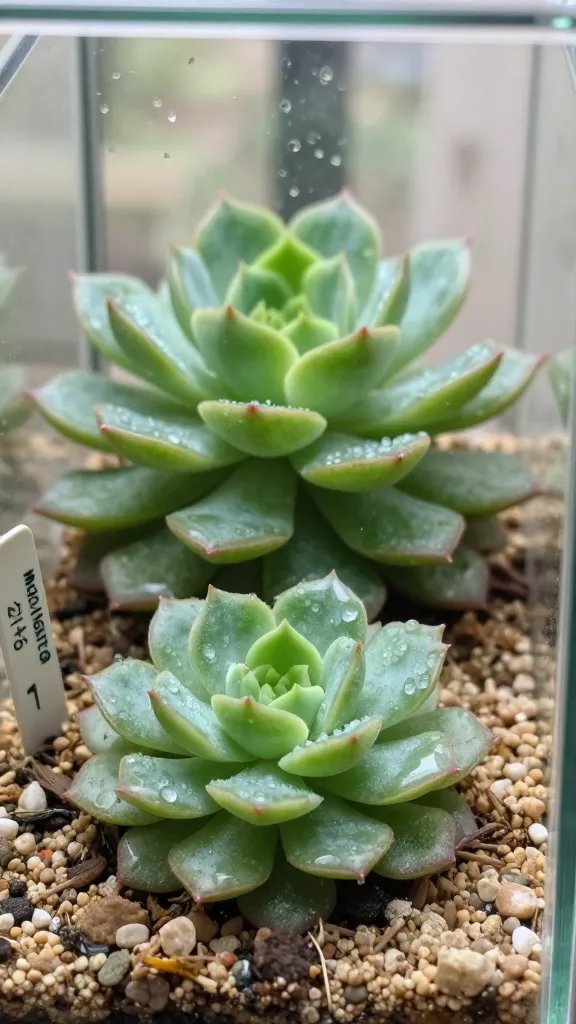
Succulents that look perfect in the tray often balloon inside a terrarium, pressing against glass and trapping humidity. Crowding blocks airflow, slows drying, and invites fungus. A plant that’s “cute now” can become a wet, rotting lid in two months.
What to Look For in the Shop
- Mature width on the label — choose plants that top out at 2–4 inches for small bowls.
- Tight rosettes like Echeveria minima or Haworthia cooperi stay compact longer than sprawling Graptopetalum.
- Short internodes (leaves stacked closely) indicate slower, tighter growth.
What to Use Instead
- Haworthia and Gasteria cultivars — compact, slow, glass-friendly.
- Small echeverias labeled “mini,” “compact,” or “dwarf.”
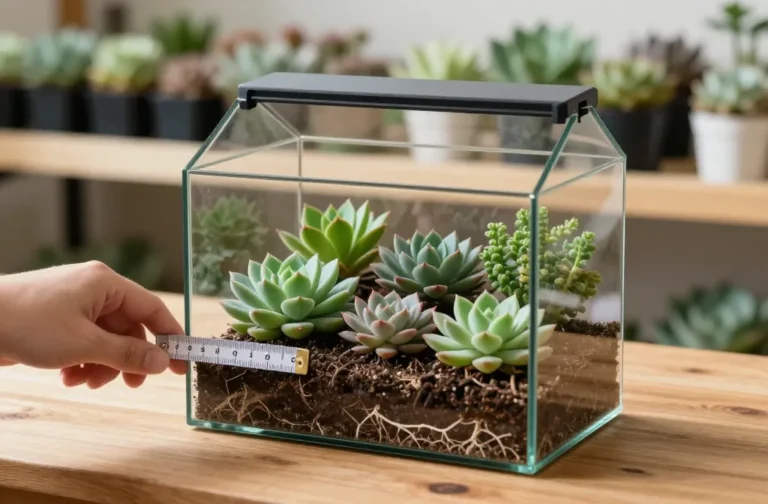
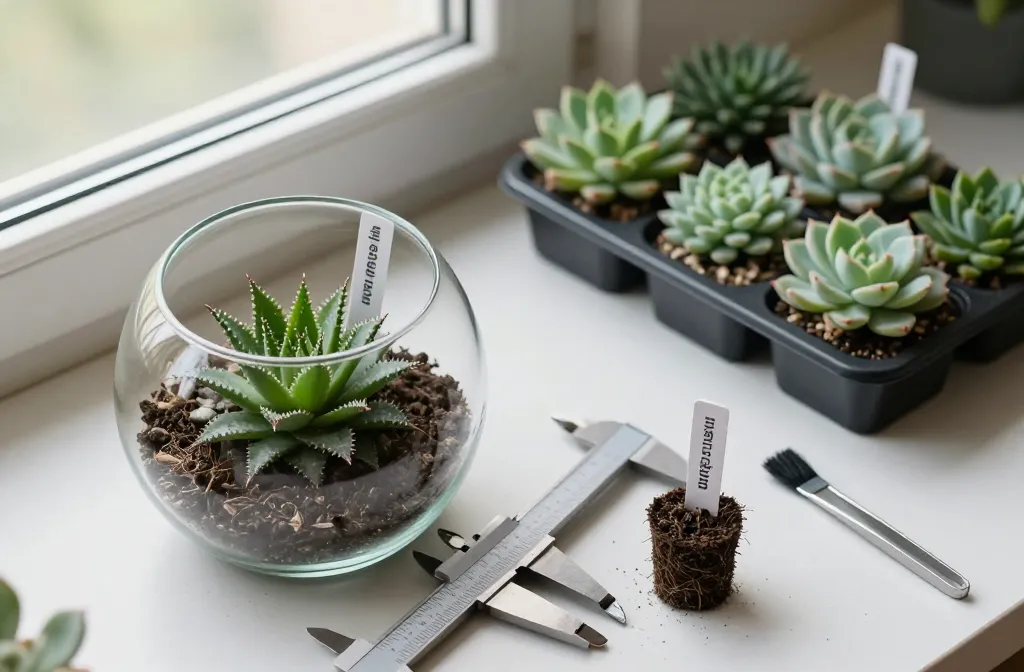
Action today: Bring your terrarium with you or measure its diameter. Only buy succulents whose mature width is no more than half your container’s inner diameter.
2. Root Depth: Deep Taproots Suffocate in Shallow Layers
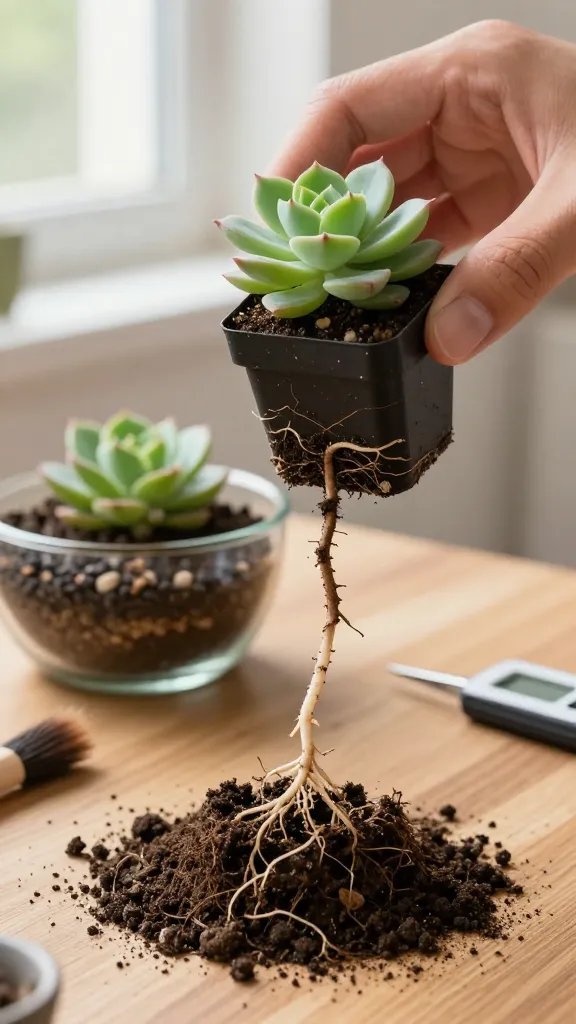
Many succulents carry deeper roots than their tiny tops suggest. In a terrarium’s shallow soil, long roots coil, stay wet, and rot. A plant with a thick taproot also pulls moisture from deeper pockets, keeping the base damp for too long.
Quick Root Check Without Repotting
- Gently pinch the crown and tip the nursery pot. Look for fine, fibrous roots near the surface vs. one thick central root diving straight down.
- Ask for a plug-grown plant — these usually have shallower, denser roots.
Better Choices
- Haworthia, Gasteria, and many Crassula forms have shallow, fibrous roots.
- Avoid Aeonium and large Agave in shallow vessels.
Takeaway: If your terrarium’s soil layer is under 2 inches, choose succulents with fine, surface-level roots and skip any plant with a thick taproot.
3. Light Class: Full-Sun Divas Stretch and Sulk Indoors
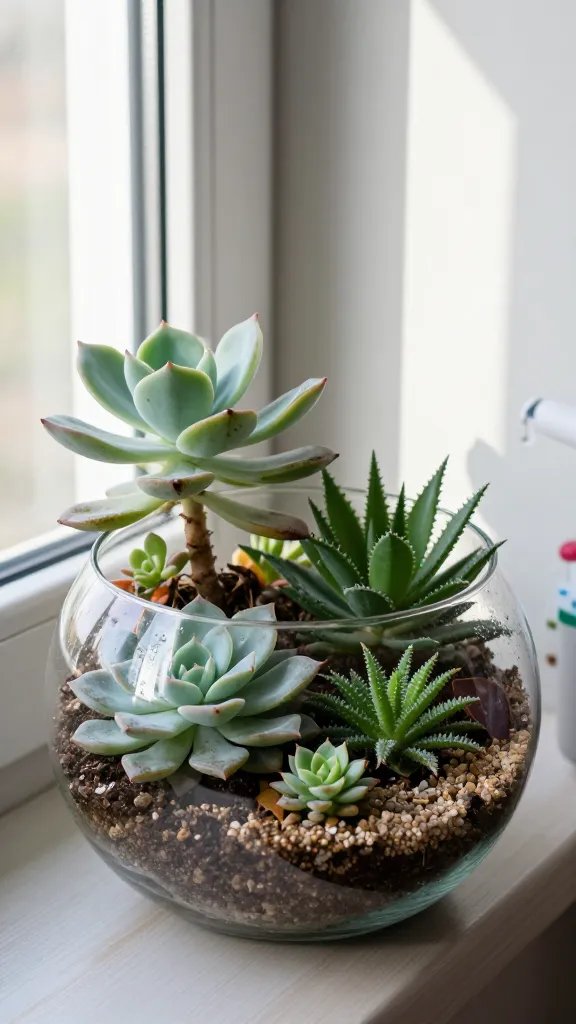
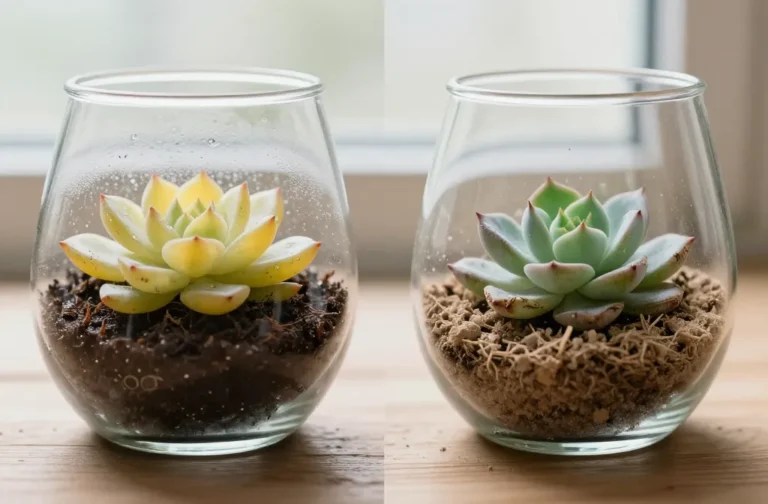
Succulents bred for full sun become pale and leggy behind glass. Stretching ruins the neat silhouette and pushes leaves against humid walls, where they rot. Choosing a plant’s light class to match indoor windows prevents this.
Match Plant to Your Window
- Bright Indirect Light (near an east window or 2–3 feet from a south window): Pick Haworthia, Gasteria, Sempervivum indoors in winter, and Crassula ovata ‘Minima’.
- Direct Sun (on a south-facing sill with 3–4 hours of sun): Small Echeveria, Graptoveria, and tight Sedum forms hold color and shape.
Signs a Plant Will Struggle Indoors
- Tag says “Full Sun Outdoors” with no indoor note.
- Already stretching in the shop — gaps between leaves, leaning to one side.
Action today: Choose succulents labeled for “bright indoor light” or “windowsill” and place your terrarium right beside a bright window, not across the room.
4. Leaf Texture and Shape: Fat Leaves Tolerate Errors; Thin Leaves Don’t
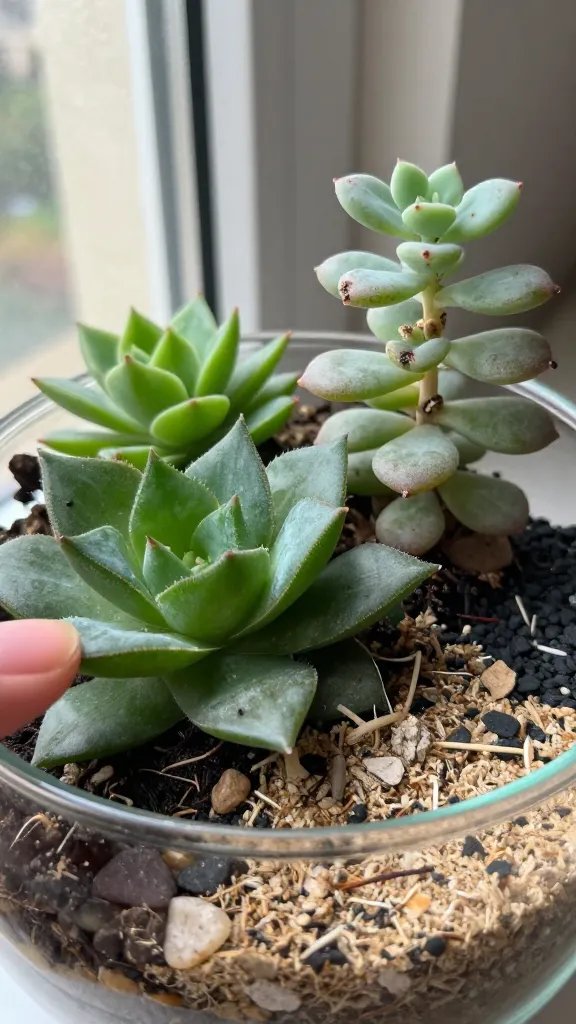
Thin, papery leaves dehydrate and mark easily in the dry spells terrariums need. They also spot and melt when humidity swings. Thick, turgid leaves store water and forgive the longer gaps between waterings that keep rot away.
Choose Forgiving Leaves
- Thick, triangular, or boat-shaped leaves (Haworthia, Gasteria, many Crassula) handle fluctuating moisture.
- Avoid ultra-thin, jelly-like leaves (some Senecio/Curio strings) that bruise and rot in enclosed glass.
Touch Test
- Gently press a leaf. Firm and springy beats soft or papery.
- Look for farina (a powdery coating). It protects leaves from humidity swings but smudges if handled roughly — hold by the pot.
Takeaway: Prioritize succulents with thick, firm leaves for terrariums; skip delicate stringing types that resent enclosed or semi-enclosed spaces.
5. Growth Habit: Creepers and Offshoot Machines Overrun the Bowl
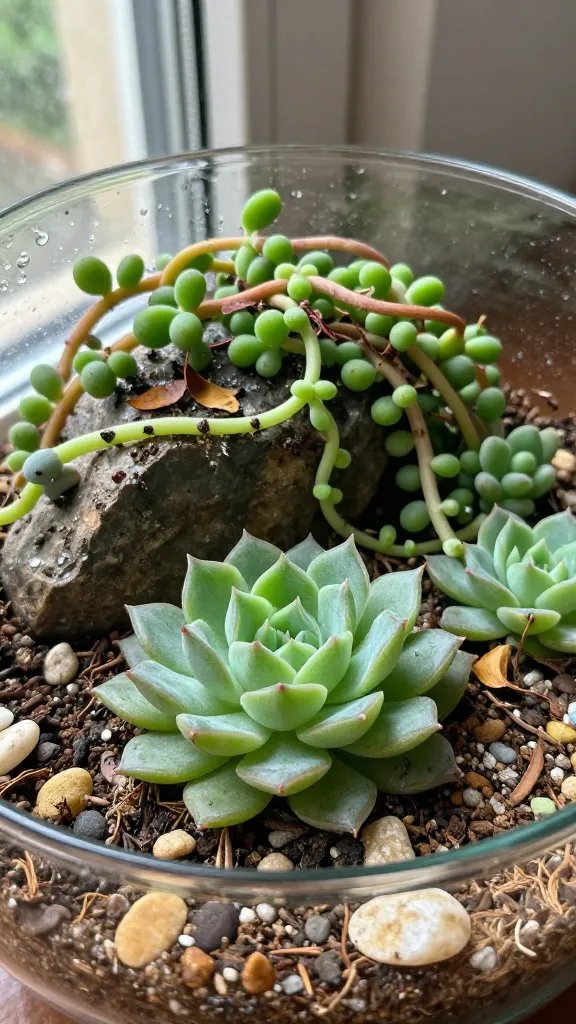
Some succulents explode with pups or send runners that sprawl over rocks and glass. Inside a terrarium, that turns into a tangle that traps debris and moisture. Overgrowth raises maintenance and makes targeted watering almost impossible.
Read the Habit on the Tag
- “Clumping slowly,” “solitary rosette,” or “compact form” are green lights.
- “Vigorous,” “trailing,” “mat-forming,” or “offsets freely” are red flags unless you want to prune monthly.
Good and Bad Actors
- Good: Haworthia truncata forms, Gasteria ‘Little Warty,’ Echeveria ‘Lola’ (small).
- Tricky: Sedum rubrotinctum, Crassula muscosa, Curio rowleyanus (string of pearls) — they spread, tangle, or rot in enclosed humidity.
Action today: Buy one slow, compact centerpiece and one small accent — resist the temptation to fill every inch on day one.
6. Health at Purchase: Hidden Pests and Rot Bloom in Glass
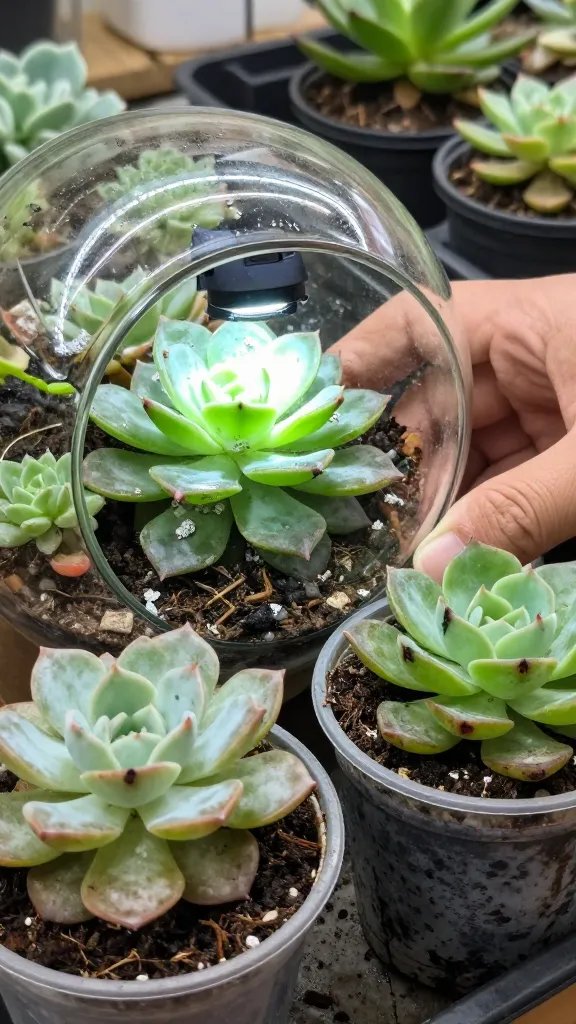
A terrarium magnifies problems. One mealybug turns into a colony you can’t reach. Invisible root rot explodes when you add the cozy humidity of a glass bowl.
Inspection Routine in the Aisle
- Leaf axils: Look for white cottony tufts (mealybugs) with a phone flashlight.
- Soil smell: Pick up the pot — musty or sour means rot; earthy is fine.
- Lower leaves: Avoid plants with mushy bases, translucent spots, or blackened scars.
- Pot weight: Skip pots that feel very heavy; they’ve been overwatered.
Quarantine and Clean
- Keep new plants on a bright sill away from others for 7 days.
- Wipe leaves with a dry soft brush to remove nursery dust that harbors pests.
Takeaway: Only buy succulents that are dry to the touch, smell clean, and show zero white fluff or mush at the base.
7. Compatibility With Your Terrarium Type: Open vs. Closed Matters
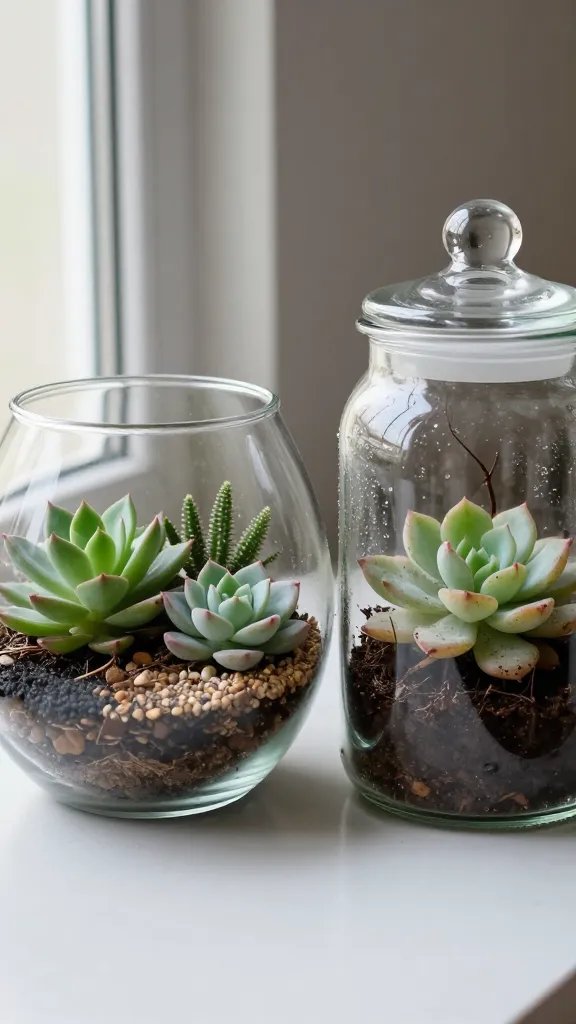
Most succulents fail in closed terrariums because trapped moisture never lets the soil dry. That leads to swollen, translucent leaves and stem rot. The right pairing of plant and container prevents this from the start.
Match Plant to Container
- Open Terrarium (no lid, wide mouth): Best for succulents. Airflow lets the mix dry every 1–2 weeks. Choose compact haworthias, gasterias, dwarf echeverias.
- Closed Terrarium (with lid): Avoid true succulents. Use humidity lovers instead, or run lid-off most of the time if you insist on a succulent look.
Layering That Actually Works
- Base: 0.5–1 inch decorative gravel.
- Separator: A circle of mesh from a sink strainer cut-out or window screen to keep soil out of gravel.
- Soil: A good quality cactus/succulent mix from the garden centre, topped with a thin layer of coarse sand or small grit.
Action today: If your container has a lid, leave it off for succulents; if you want the lid on, choose non-succulent terrarium plants instead.
Frequently Asked Questions
Can I keep succulents in a closed terrarium with the lid on?
No. Succulents need their soil to dry between waterings, and a lid traps humidity. If you love the look, keep the lid off full-time and treat it as an open display. Water sparingly — usually every 2–4 weeks depending on room conditions. If condensation forms daily, you’re creating a rot chamber.
How do I water an open succulent terrarium without overdoing it?
Use a squeeze bottle or a small syringe to aim water at the soil, not the leaves. Add enough that the top inch of soil feels evenly damp, then stop; do this every 2–4 weeks. Let the soil dry fully before watering again — check by pressing a dry finger in up to the first knuckle. If leaves feel swollen and translucent, skip the next watering.
Which succulents are best for low-light apartments?
Choose Haworthia and Gasteria — they tolerate bright indirect light near a window better than sun-demanding echeverias. Place the terrarium within arm’s reach of a bright window, not across the room. Rotate the container a quarter turn weekly to keep rosettes symmetrical. If the plant leans or spaces out, move it closer to the glass.
How many succulents should I put in a small bowl (6–8 inches wide)?
Use one main plant 2–3 inches across and one small accent, then let negative space show off stones and moss-like top dressings (use preserved reindeer moss, not live). Overfilling traps moisture and forces weekly pruning. Give at least 1 inch of clearance from leaves to glass for airflow. In three months, you’ll still have room for growth.
What soil should I buy if I don’t mix my own?
Pick a cactus/succulent potting mix from your garden centre. If your container is deep enough, add a thin top layer of horticultural grit or small aquarium gravel to keep leaves dry when watering. Avoid moisture-retaining mixes or anything labeled for tropical houseplants. Your goal is a fast-draining medium that dries within 7–14 days.
How do I stop condensation fogging the glass?
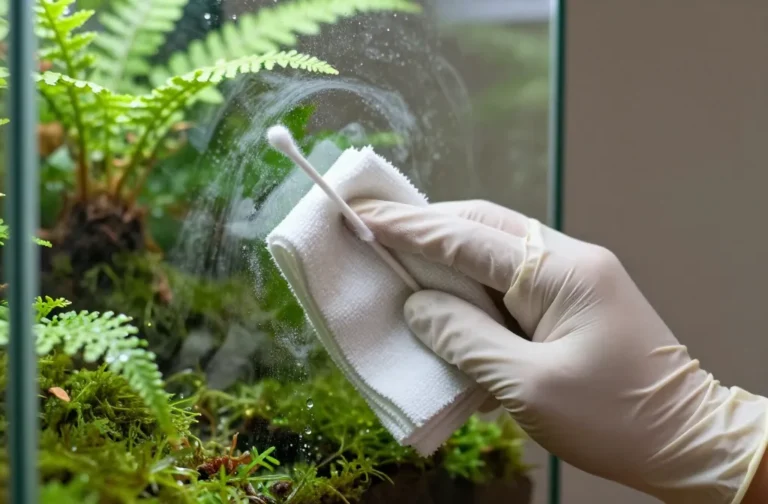
Condensation means too much moisture or not enough airflow. For open terrariums, reduce watering volume next time and keep the display near moving air (a room with normal airflow, not a sealed cabinet). For lidded containers with succulents, remove the lid permanently. Wipe the inside glass dry with a soft cloth and let the soil dry fully before the next watering.
Conclusion
Choosing the right succulent for a terrarium takes five minutes of smart checking — size, root depth, light class, habit, health, and container match. Bring this list to the garden centre and pick plants that fit your glass, not just your eyes. Your reward is a clean, dry, tidy miniature landscape that actually lasts.