The One-Sentence Guide: Why Terrarium Condensation Patterns Tell You the System Is Working — or Isn’t
I learned to read terrariums by wiping glass. The first one I built fogged so hard every morning that I couldn’t see the moss — and by week two, stems melted. When I started tracking where and when condensation formed, every problem became obvious: too much water, not enough light, poor airflow, or heat spikes. In this guide I’ll show you exactly what each pattern means and the one-step fix you can do the same day, using only what you already have at home.
Condensation Is Your Terrarium’s Weather Report
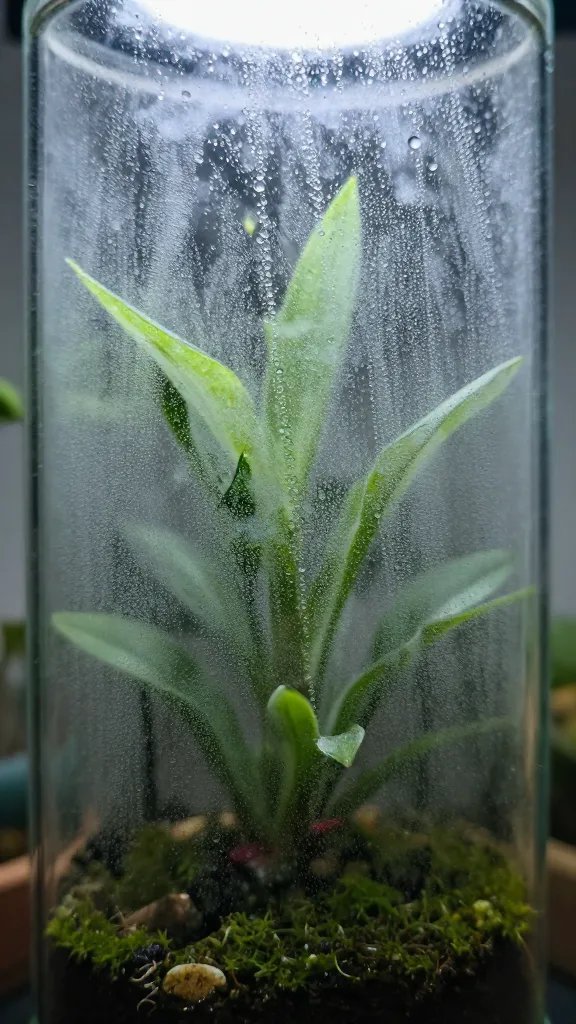
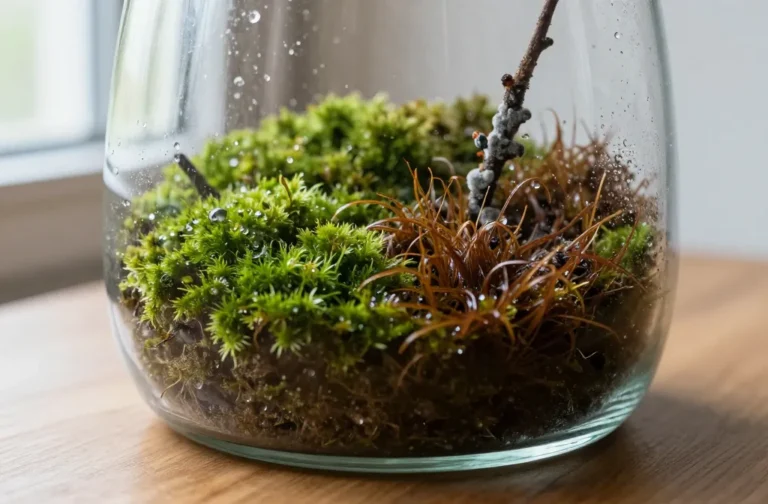
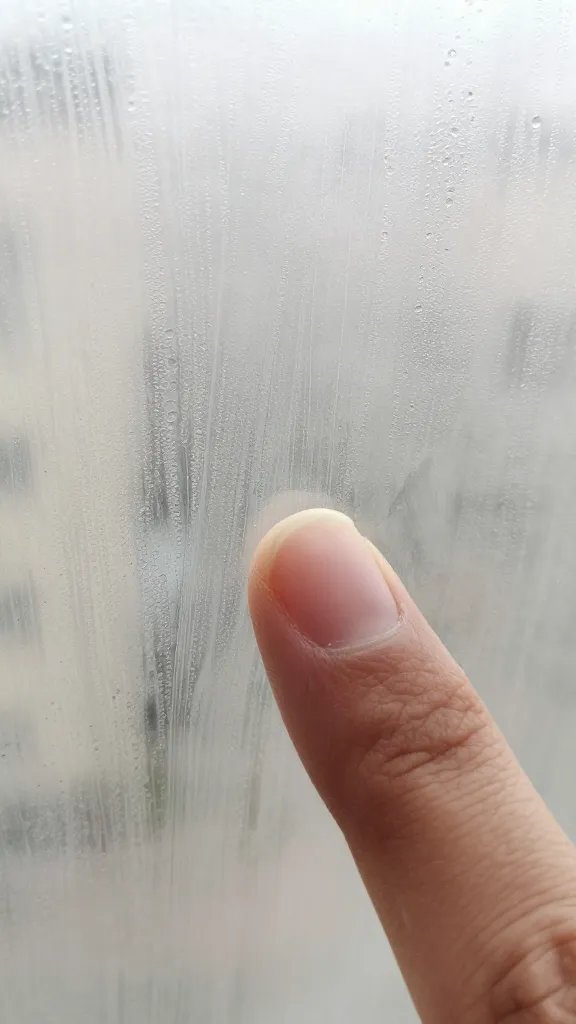
Condensation forms when warm, moist air hits the cooler glass and turns back into water. In a healthy closed terrarium, this mini water cycle runs daily: light warms the air, moisture evaporates from the substrate, and droplets collect then drip back.
You don’t guess with meters here — you watch the glass. Timing, thickness, and location of fog and droplets tell you if water, light, and heat are balanced.
Action today: Look at your terrarium three times — early morning, midday, and evening — and note how much of the glass is fogged at each time.
Healthy Pattern: Light Morning Fog, Clear by Midday
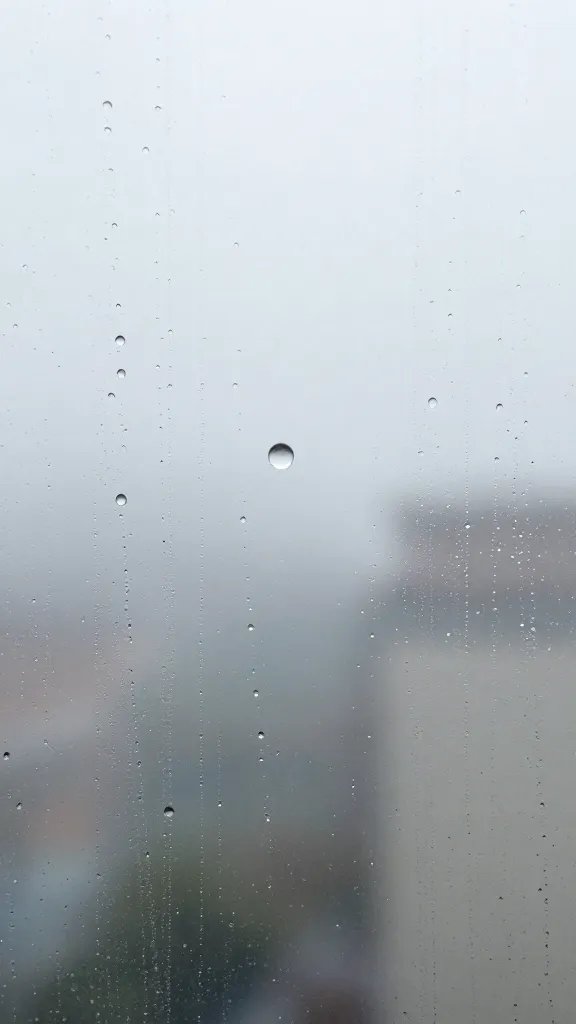
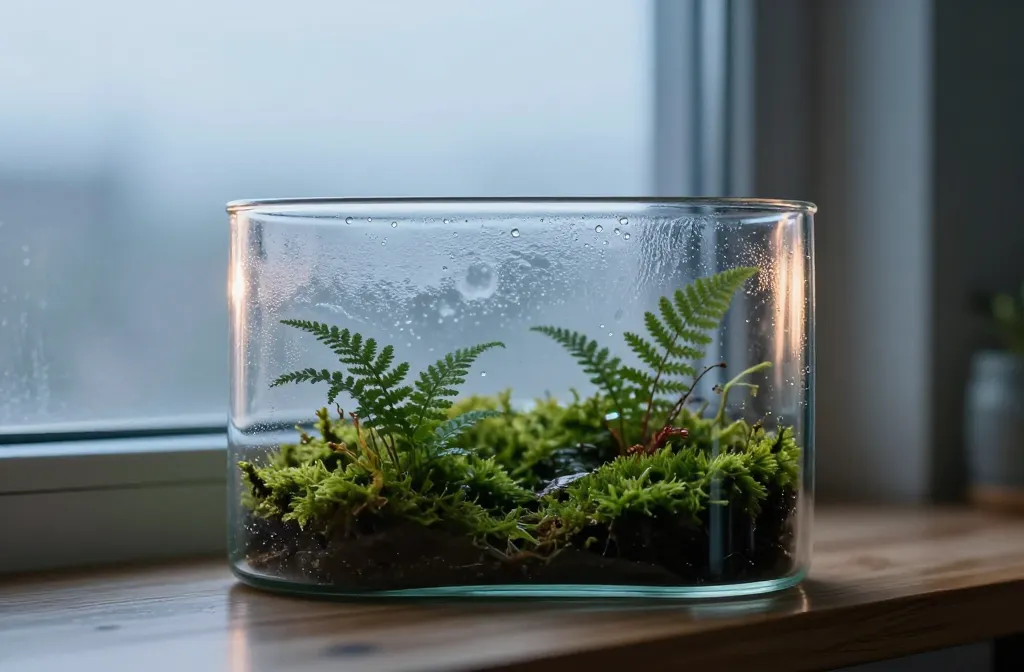
A stable closed terrarium shows a consistent rhythm. You’ll see a fine mist or small beads on the upper third of the glass in the morning, then mostly clear sides by early afternoon, with a few pinhead droplets near the lid seam.
This tells you the substrate holds enough moisture, plants are transpiring, and the heat from a bright window drives the daily cycle without cooking the system.
Warning Signs Within a “Healthy” Look
- Permanent necklace of droplets around the shoulder of the jar: substrate layer too wet or no drainage layer.
- Dry glass all day during a warm week: water level trending low, especially if moss edges look crisp.
Takeaway: If your terrarium clears by midday and plants look turgid, change nothing — stability is success.
Too Much Condensation: Flooded Cycle and Low Light
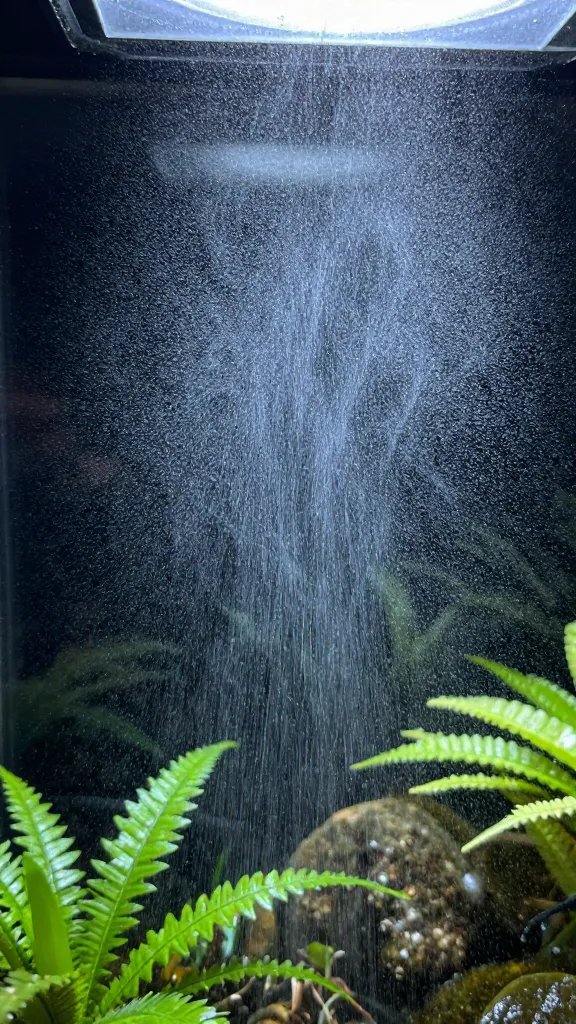
If over half the glass is fogged most of the day and droplets run in sheets, you’ve got excess moisture or insufficient light/heat to drive evaporation-recondensation properly. Leaves often yellow from the base and you’ll spot white fuzz on fallen bits.
Constant heavy fog suffocates foliage and feeds mold. This usually starts after a generous first watering or a move to deeper shade.
Step-by-Step Fix
- Vent: Open the lid for 2–4 hours at midday. Wipe the inside glass with a paper towel to remove biofilm and excess water.
- Light: Move the terrarium to bright indirect light near a window where you can comfortably read a book without switching on a lamp.
- Debris: Remove any fallen leaves; they rot fast in humid air.
- Repeat: If fog returns wall-to-wall by the next day, repeat the venting once daily for 2–3 days.
Takeaway: If condensation covers more than half the glass by midday, vent for 2–4 hours and upgrade the light spot.
Too Little Condensation: Drying Substrate and Stalled Plants
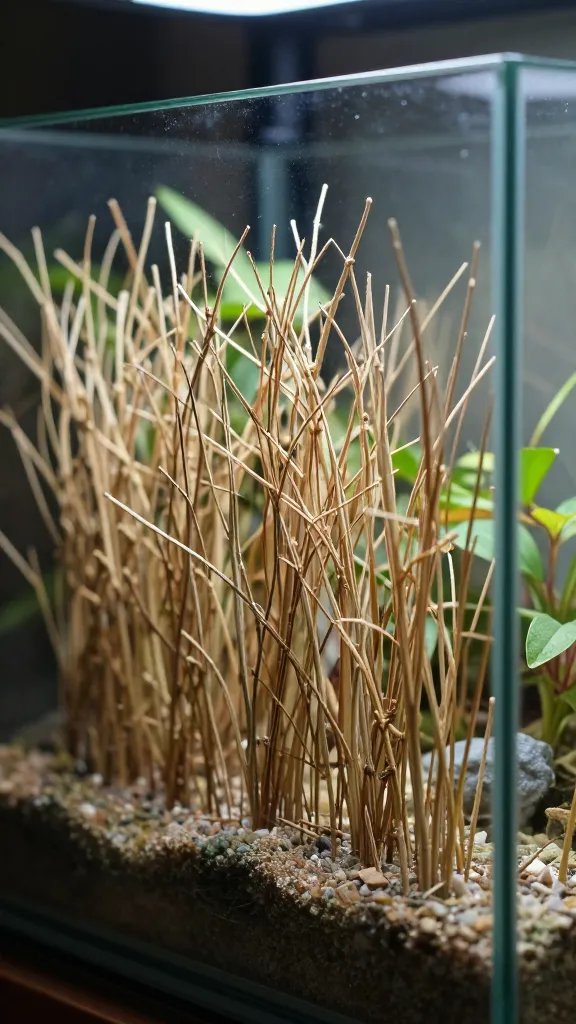
Glass that stays clear from morning to night means the water cycle has stalled. Moss tips brown, fern fronds crisp at the edges, and the substrate pulls from the glass.
This happens after weeks in strong sun with the lid slightly ajar, or simply because the initial watering was too timid.
Step-by-Step Fix
- Re-wet slowly: With a spray bottle, add 1–2 tablespoons of clean water to the substrate surface, not the leaves. Wait 30 minutes and check the glass. Repeat in small doses until you see a light film form within the hour.
- Seal well: Reseat the lid firmly. If it’s loose, add a thin ring of plastic wrap under the lid to improve the seal.
- Shade from harsh sun: Move 0.5–1 meter back from the window to avoid baking off moisture.
Takeaway: If the glass stays clear all day, mist in tablespoons, reseal, and step the terrarium back from direct sun.
Condensation in the Wrong Place: Reading Hot and Cold Spots
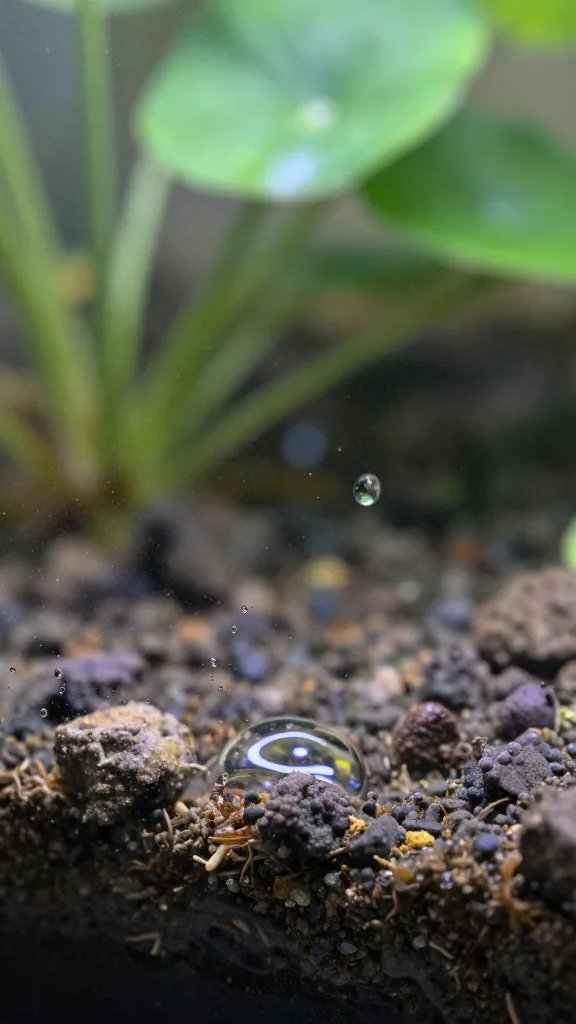
Location matters. Fog at the bottom and dry at the top points to a cool base and weak airflow — often on a stone or tile sill. Heavy fog only on the sun-facing side means localized overheating.
Corners and shoulders of jars often trap moisture; that’s normal. What isn’t normal is a single band of dense droplets that never moves.
Quick Corrections
- Bottom fog band: Lift the terrarium onto a wooden trivet or cork mat to reduce cold transfer. Add a slim drainage layer if one is missing.
- Sunside steam: Rotate the vessel 90 degrees daily for a week or add a sheer curtain to diffuse light.
- Top-only fog with dry substrate: Air is humid but soil is dry; re-wet the substrate in small doses.
Takeaway: If fog sits in one stubborn zone, change what that zone touches — rotate, lift, or diffuse.
Time-of-Day Patterns: What Morning, Midday, and Night Tell You
Morning fog should be gentle and recede as the room warms. If it intensifies after sunrise, the jar is heating too fast — move it slightly back from direct beams.
Midday clarity confirms balance. If it’s bone-dry at midday and plants slump, add water in tablespoons.
Evening return of a light mist is normal as air cools. If evenings bring dripping walls, you trapped too much heat earlier.
Takeaway: Adjust placement based on the hour that looks wrong — morning issues mean direct sun; evening deluge means heat buildup earlier.
Plant Signals That Match the Glass
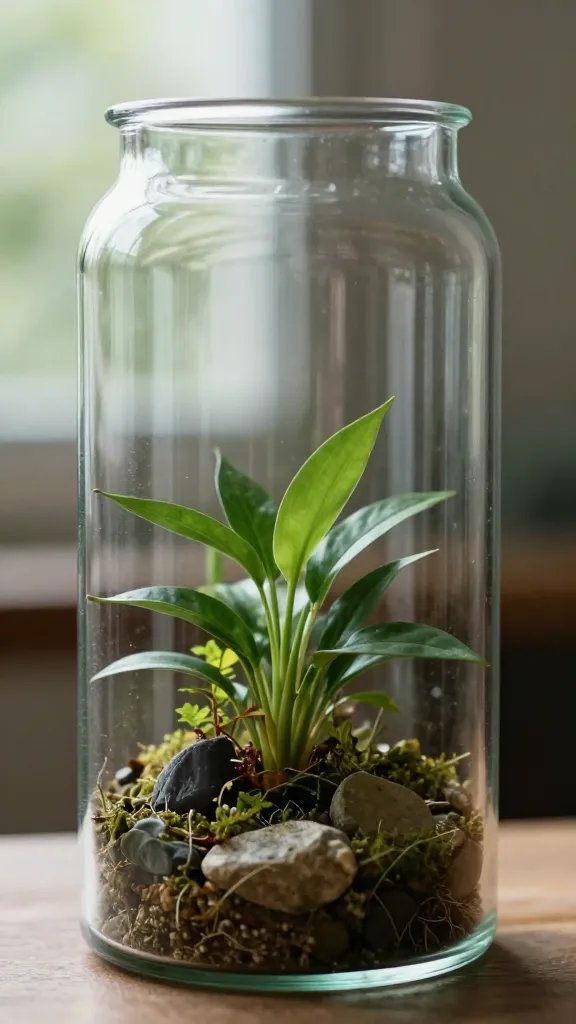
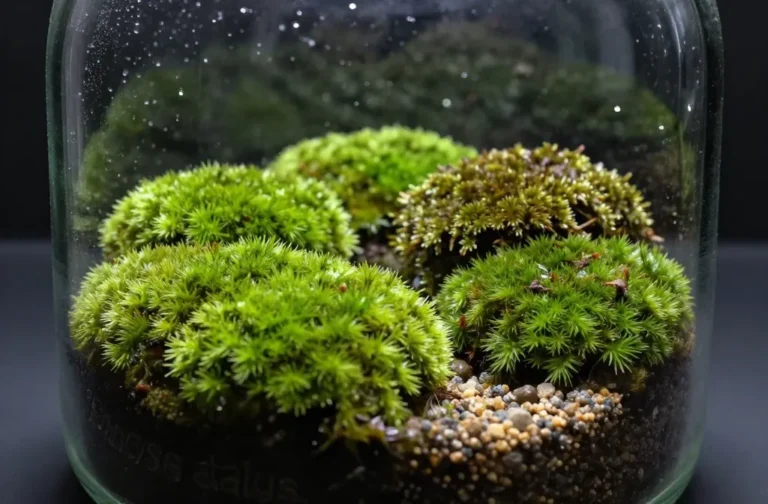
Plants confirm what the condensation suggests. Moss turns dull and wiry when dry, plush and bright when balanced. Ferns blacken at the base in constant wet and crisp at tips when too dry. Fittonia wilts dramatically from heat spikes but perks back up when conditions stabilize.
Match the leaf signal to the glass: yellowing plus heavy fog equals over-wet; crisp edges plus clear glass equals under-wet or too hot.
Good Candidate Plants for Stable Condensation
- Mosses (cushion, sheet) for visual moisture cues.
- Selaginella for lush growth at steady humidity.
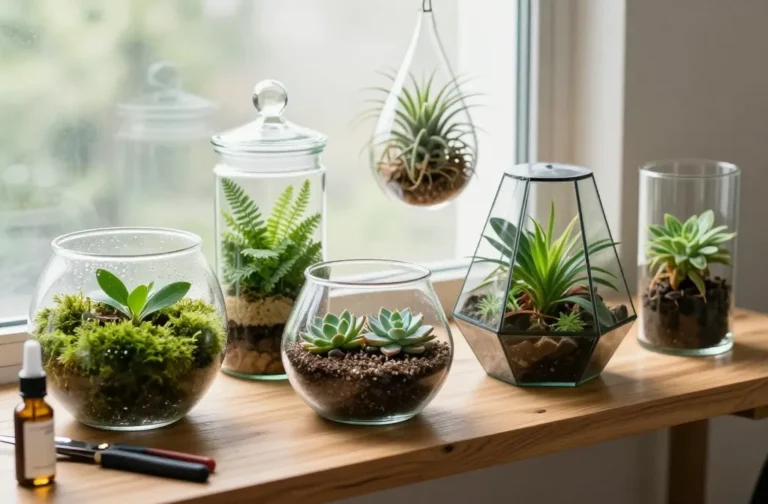
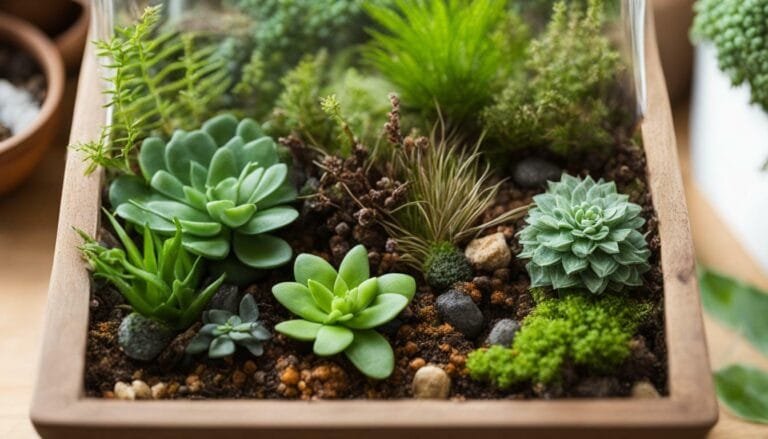
- Mini ferns like Pellaea or Asplenium ‘Parvati’ in medium vessels.
- Peperomia minis for tolerant foliage that won’t drown fast.
Takeaway: Read one plant plus one glass pattern together before you act — it prevents over-correcting.
Setups That Prevent Bad Condensation From the Start
Simple build choices stabilize the water cycle. Use a drainage layer 1–2 cm of rinsed aquarium gravel or LECA from any garden centre. Top with a good quality potting mix blended 2:1 with fine orchid bark or perlite for air pockets.
Choose a vessel with a real lid — cork, clamp, or snug glass. Place in bright indirect light near a window, not on a radiator or in a south-facing beam.
Material Checklist
- Rinsed gravel or LECA (1–2 cm depth)
- Potting mix + perlite or fine bark (2:1)
- Spray bottle for tablespoon-scale watering
- Wood or cork trivet to prevent cold-bottom fog
- Paper towels for wipe-downs during venting
Takeaway: If you’re rebuilding, add a drainage layer and a snug lid — these two choices prevent 80% of condensation problems.
Frequently Asked Questions
How much condensation is normal in a closed terrarium?
A light mist or small droplets on up to one-third of the glass in the morning is normal, clearing by midday. If more than half the glass stays fogged through the afternoon, it’s too wet or too dim. Vent for a few hours and move it to brighter indirect light. Recheck the next day at the same times.
Do I wipe condensation off the glass or leave it?
Wipe only when you’re correcting an issue. Removing water film helps reset an over-wet system during venting and lets you see plant health. For stable terrariums that clear by midday, leave the light mist alone — it’s part of the cycle.
Why does my terrarium fog up only on one side?
That side is taking the brunt of sun or touching a colder surface. Rotate the jar 90 degrees daily for a week or add a sheer curtain to even out light. If the base is cold, place the vessel on a wooden or cork trivet to stop bottom chilling.
How do I add water without overdoing it?
Use a spray bottle and add 1–2 tablespoons at a time to the substrate, never onto leaves. Wait 30 minutes and check for a fine film on the glass. Repeat in small doses until you see light morning fog that clears by midday. Avoid pouring; small increments are safer.
My terrarium is crystal clear but plants look tired. What now?
Clear glass plus droopy or crisping leaves means the cycle has dried out or overheated. Add water by tablespoons, reseal the lid firmly, and move it slightly back from direct sun. Check again at midday the next day; you want partial morning fog that recedes.
Conclusion
You don’t need meters to manage a terrarium — the glass tells you everything. Do one lap today: morning, midday, evening. Note the pattern, make one adjustment, and check again tomorrow. Once you see the rhythm, you’ll keep that mini-world stable for months with five seconds of observation a day.