Terrarium Troubleshooting: Master 9 Symptoms and What Each One Actually Means
I’ve built terrariums that looked perfect on day one and disaster-ready by day ten. If you’ve stared at foggy glass, drooping moss, or a sudden insect parade and wondered what on earth changed, you’re not alone. In this guide, I decode the nine most common terrarium symptoms and translate each into a clear cause with a simple fix. You’ll know what to adjust today so your plants settle into a stable, good-looking microclimate.
1. Overwatering: The Silent Killer Of Closed Terrariums
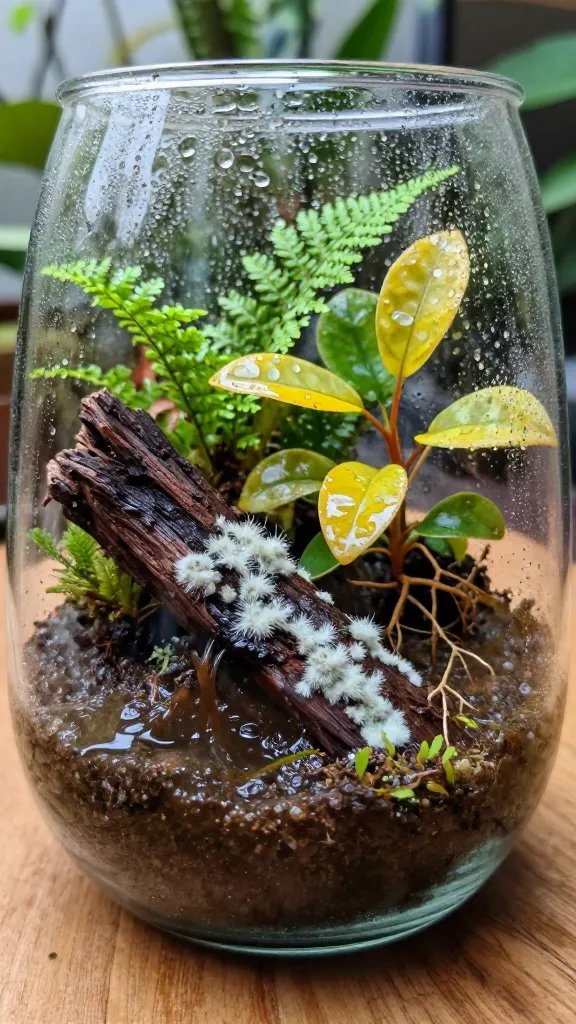
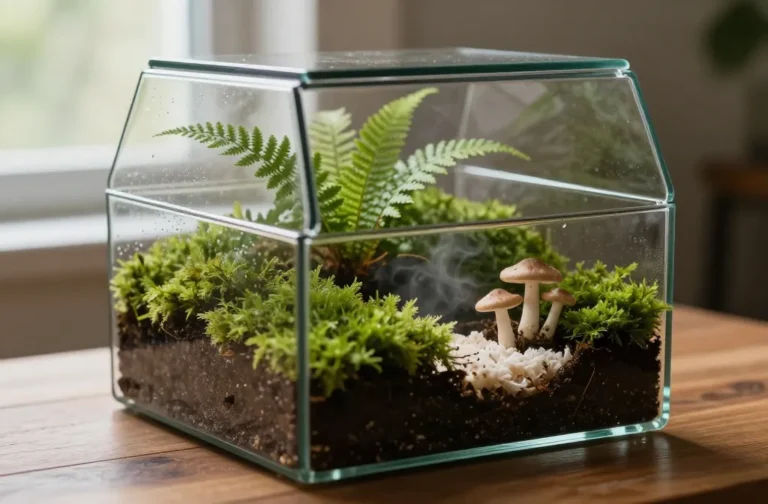
Dead leaves that feel mushy, soil that smells sour, and a terrarium that looks like a rainforest at noon all point to one thing: too much water. In a sealed glass container, excess moisture suffocates roots and invites rot in days, not weeks.
Signs To Watch For
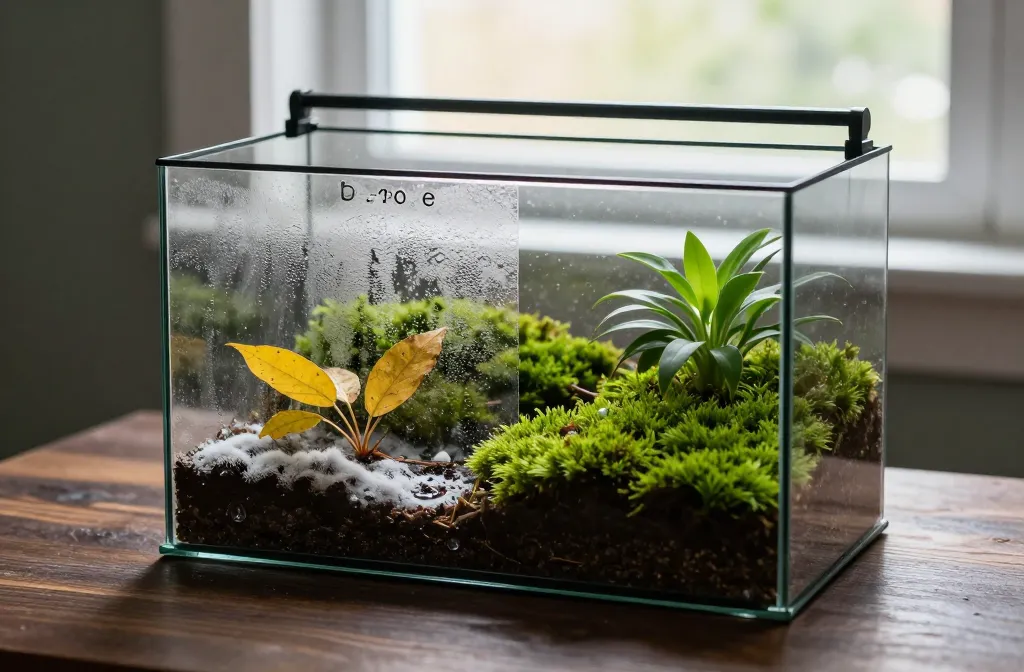
- Heavy condensation coating more than half the glass at midday
- Yellowing, translucent leaves that feel soft
- White fuzz (saprophytic mold) on soil or wood
- Soil puddling when you tilt the container slightly
How To Fix It
- Vent: Open the lid for 1–3 hours in bright room light (no direct sun) to dry the air.
- Wick out water: Press a corner of a paper towel against the substrate to soak up excess.
- Prune: Remove any mushy leaves and dead debris to stop decay from spreading.
- Reset watering: In a closed terrarium, add water by spritzing 1–2 tablespoons at a time and wait a full day before adding more.
What To Use Instead
- A fine-mist spray bottle instead of pouring
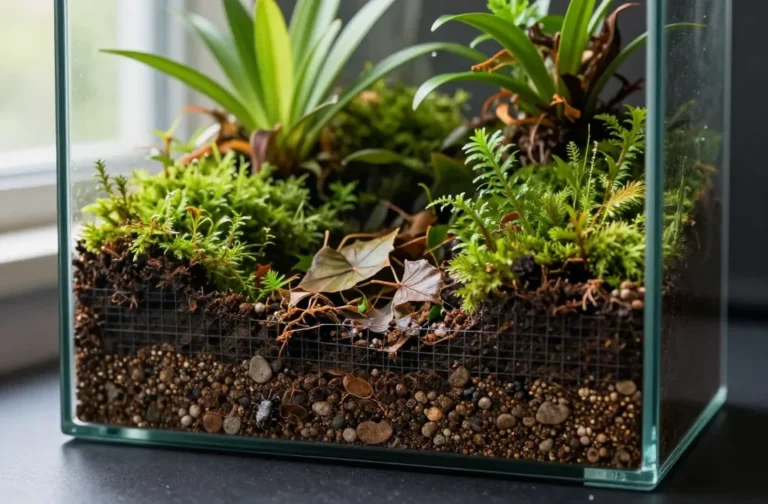
- A drainage layer of aquarium gravel or leca (1–2 cm) under a mesh screen
Action today: Check your glass at midday; if more than half is fogged, vent for two hours and wick out any visible pooled water.
2. Underwatering: The Secret Cause Of Crispy Moss And Wilting Ferns
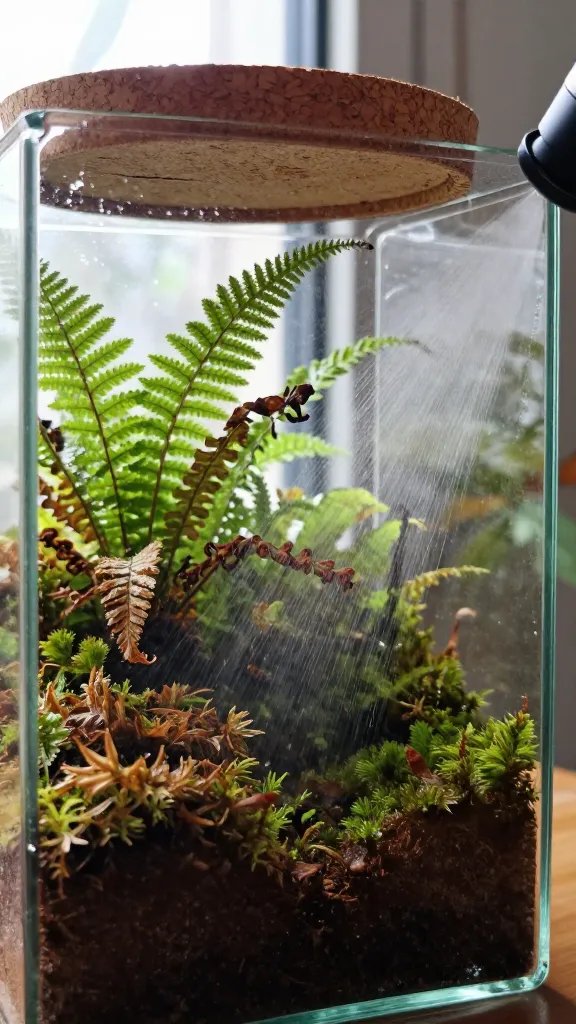
When the microclimate runs too dry, moss turns crunchy, ferns collapse, and tropicals stall. A closed terrarium is forgiving until evaporation quietly wins.
Signs To Watch For
- No midday condensation anywhere on the glass for several days
- Moss feels dry and stiff; leaves curl inward
- Soil pulling from the glass edge as it shrinks
How To Fix It
- Mist the interior walls and substrate with 2–4 tablespoons of water evenly.
- Re-seat the lid firmly to restore the seal; check for gaps around corks or gaskets.
- Move the terrarium to bright indirect light near a window rather than a hot, drafty shelf.
What To Use Instead
- Use room-temperature tap water that tastes clean (not salty or heavily chlorinated).
- If your tap water is very hard, use bottled spring water for moss-heavy builds.
Takeaway: Add small amounts of water and recheck condensation the next day; aim for a light haze covering up to one-third of the glass by midday.
3. Persistent Foggy Glass: A Ventilation And Heat Imbalance
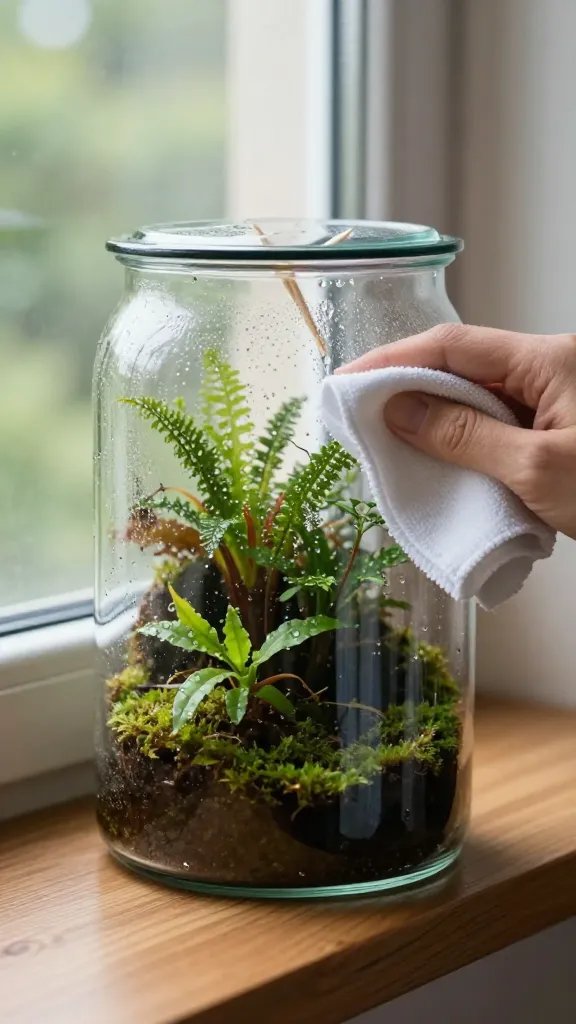
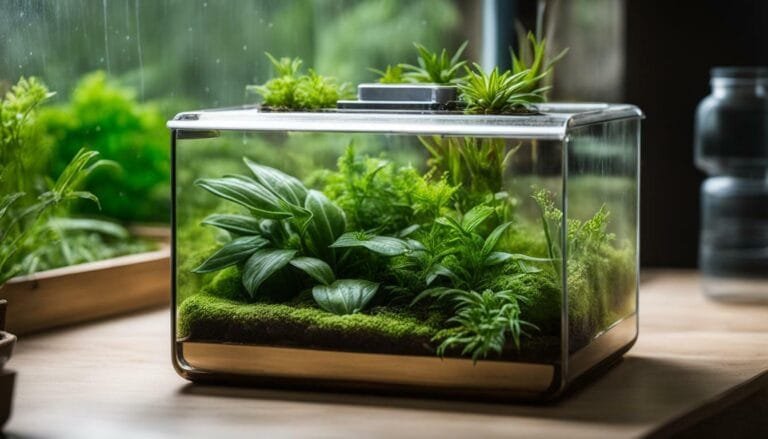
Clouded glass all day means plants can’t photosynthesize well, and you can’t see issues forming. This usually traces back to a warm spot, a tight lid, and too much recent watering.
Signs To Watch For
- Condensation beads that never clear by afternoon
- Algae film beginning on the glass where water sits
- Drooping leaves despite wet substrate
How To Fix It
- Shift the terrarium 30–60 cm back from the window to reduce heat spikes.
- Crack the lid with two toothpicks for 24 hours to release humidity.
- Wipe inside glass with a dry microfiber cloth wrapped around tongs to remove film.
What To Use Instead
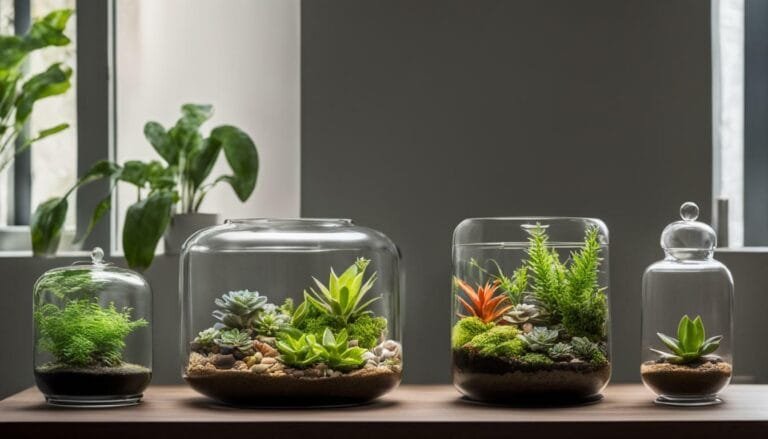
- A lidded jar with a controllable seal (cork is forgiving; rubber gaskets hold too much)
- A simple clip-on LED set to 8–10 hours if your window overheats the glass
Action today: Prop the lid slightly open for one day and move the terrarium a forearm’s length from the window; reassess the next midday.
4. Algae Bloom On Glass Or Soil: Too Much Light Or Nutrients
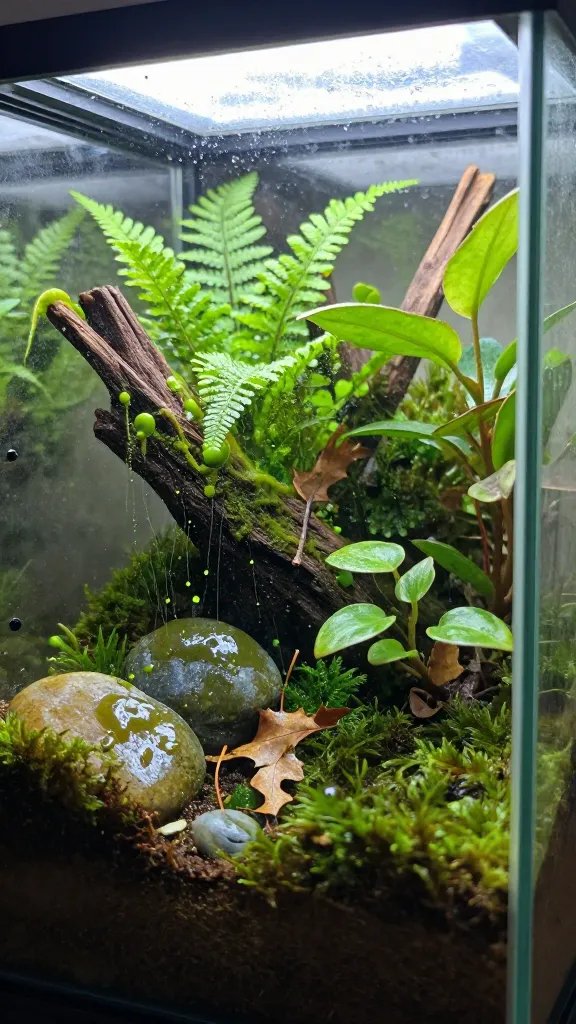
Green slime creeping over glass and substrate looks minor but quickly starves plants of light and air. Algae love bright, long light and nutrient-rich, soggy surfaces.
Signs To Watch For
- Green film or dots on glass and stones
- Slippery feel on hardscape when misted
- Faster fogging right after lights come on
How To Fix It
- Cut light to 8 hours daily; avoid direct sun through glass.
- Wipe glass with a damp microfiber cloth; use cotton swabs for corners.
- Add a thin leaf litter cap (dried oak or magnolia leaves from a garden centre) to shade soil.
- Vent for an hour daily for a week to reduce surface moisture.
What To Use Instead
- Low-fertilizer potting mix or specialty terrarium substrate from a garden centre
- Timer plug for consistent light duration
Takeaway: Put your light on an 8-hour timer and add a leaf-litter mulch to starve algae of bright, wet surfaces.
5. Mold Webs And Fuzzy Bits: Normal Decomposition Gone Wild
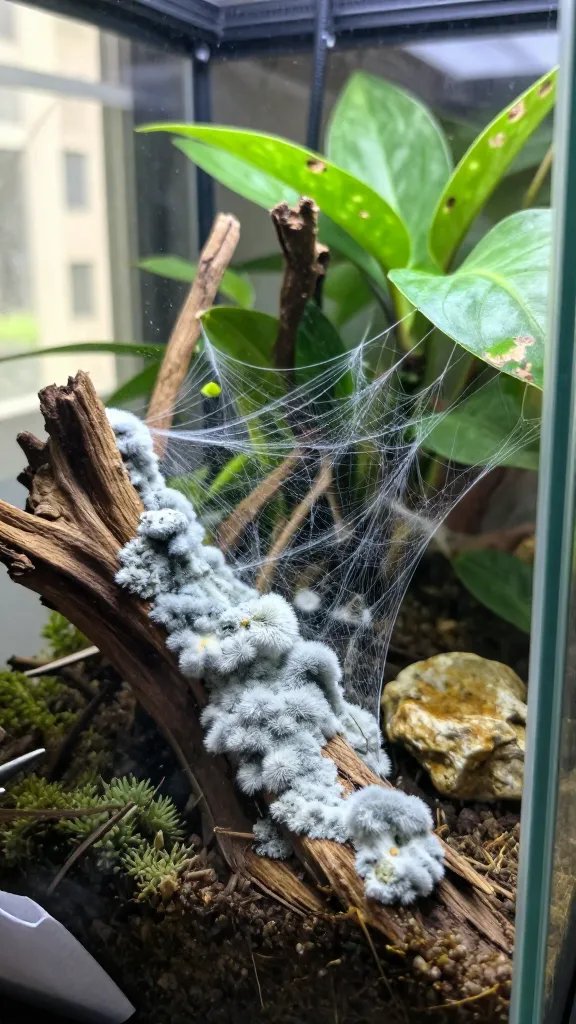
White fuzz on wood or soil is common early on, but thick webs choking stems spell trouble. Mold thrives on excess moisture and trapped stale air.
Signs To Watch For
- White or gray fuzz on wood, leaves, or soil
- Thread-like webs connecting stems and hardscape
- Musty smell when you open the lid
How To Fix It
- Remove affected leaves and wipe hardscape with a paper towel lightly dampened with clean water.
- Spot treat stubborn areas with a cotton swab dipped in 3% hydrogen peroxide, then vent for 2 hours.
- Reduce water and increase daytime ventilation for a week.
What To Use Instead
- Springtails (sold as terrarium clean-up crew at some garden centres) to eat mold
- Dead-dry wood and leaves rather than fresh, sappy pieces
Action today: Swab visible mold with hydrogen peroxide, remove soft debris, and air the terrarium for two hours.
6. Yellowing Leaves With Brown Tips: Fertilizer Or Hard Water Stress
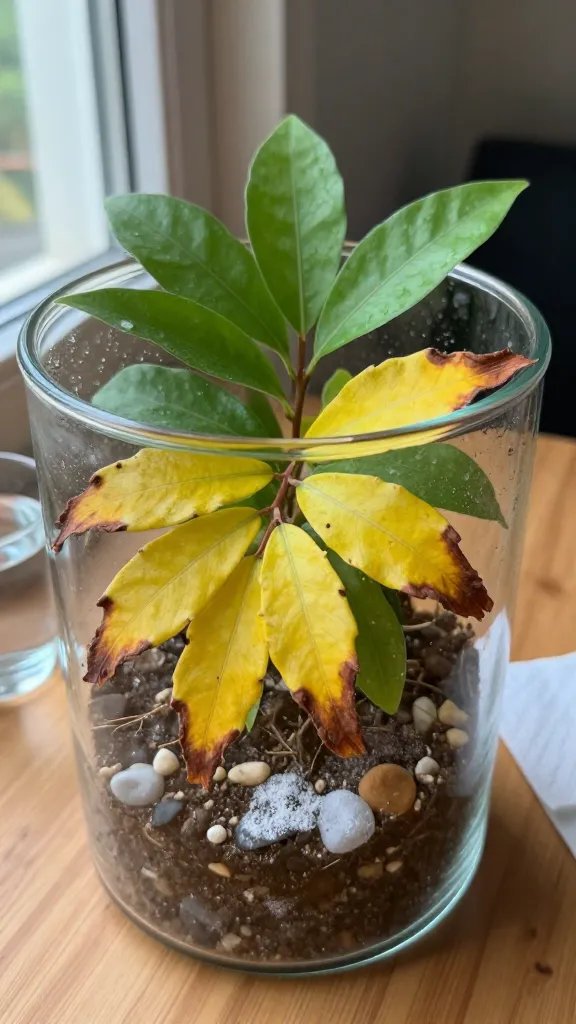
When tender terrarium plants yellow quickly while tips crisp brown, they’re telling you the water or nutrients are too strong for the closed system. Excess salts build up fast under glass.
Signs To Watch For
- Yellow leaves starting from the base, with brown crunchy tips
- White crust on soil or rocks
- Stalled growth despite good humidity
How To Fix It
- Flush gently: Add 1 cup of clean water, swirl the terrarium carefully, then wick out water with paper towels to remove dissolved salts.
- Stop fertilizing; most terrariums need no added fertilizer for months.
- Switch to bottled spring water if your tap leaves limescale on kettles.
What To Use Instead
- Nutrient-light substrate and slow-release-free potting mix
- Distilled or spring water for sensitive mosses and ferns
Takeaway: Ditch fertilizer, flush once, and use clean-tasting water to halt tip burn and yellowing.
7. Leggy, Pale Growth: Starved For Light
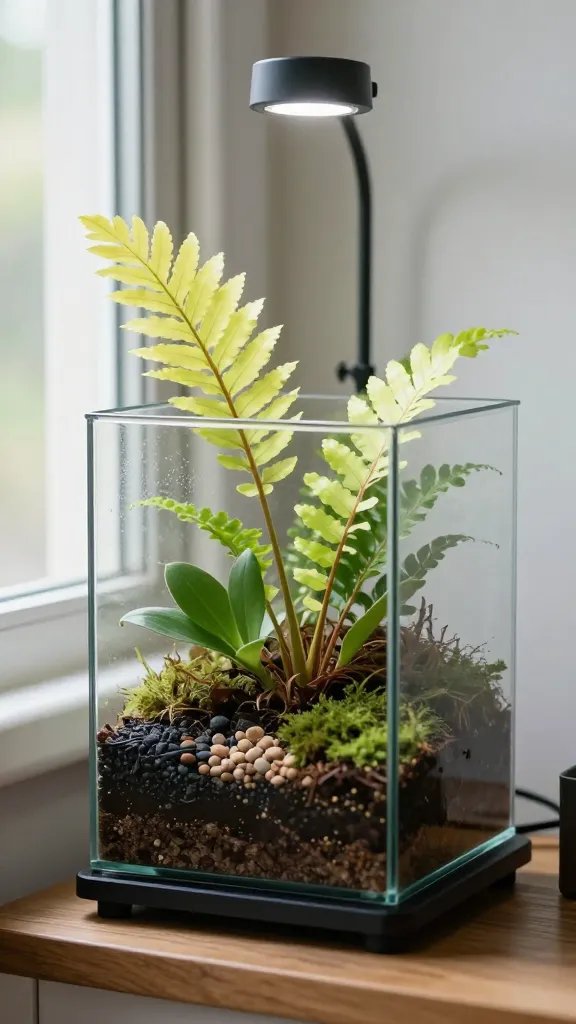
Weak stems reaching for the sky and pale leaves mean your terrarium sits too far from useful light. Plants waste energy stretching instead of filling in.
Signs To Watch For
- Long internodes (big gaps between leaves)
- Pale green or yellow new growth
- Plant leans toward the brightest side of the glass
How To Fix It
- Move to bright indirect light near a window—within arm’s length, but out of direct beams.
- Add a small LED grow light from a hardware store, 20–30 cm above, for 8–10 hours.
- Rotate the container a quarter turn every week to even out growth.
What To Use Instead
- Low-growing species (e.g., Fittonia, Peperomia, mosses) that thrive under softer light
- A plug-in timer to keep hours consistent
Action today: Relocate the terrarium to a bright spot within one step of a window and set a light timer for 9 hours.
8. Sudden Leaf Drop Or Collapse After Sun: Heat Shock
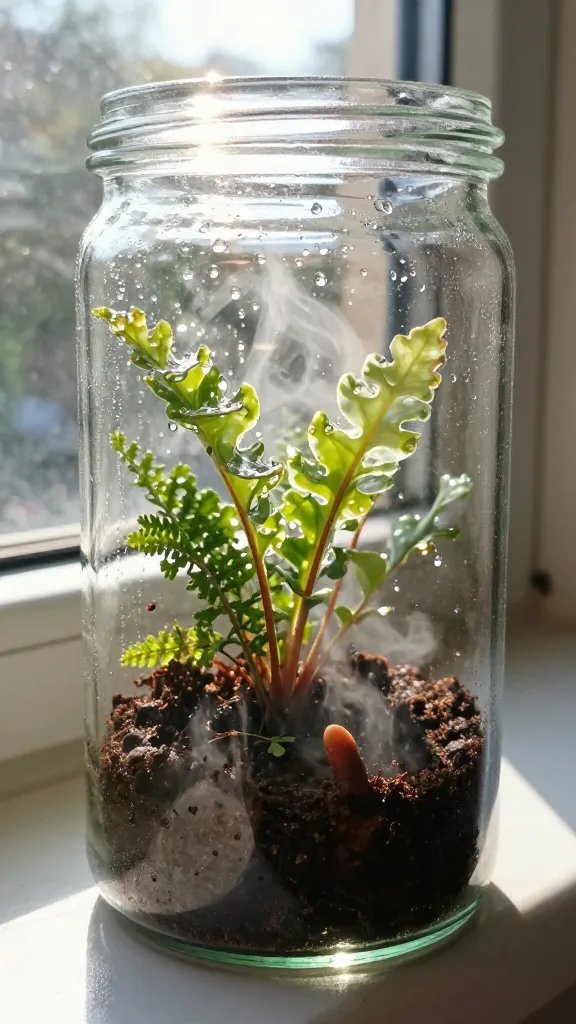
Direct sun through glass turns a terrarium into an oven. One afternoon can cook delicate plants, leaving them limp, translucent, and beyond saving.
Signs To Watch For
- Leaves turn glassy or translucent within hours
- Condensation surges right after sun exposure
- Soil feels hot to the touch
How To Fix It
- Move the terrarium out of direct sun immediately; bright, indirect light only.
- Open the lid for 30–60 minutes to dump heat and humidity.
- Trim any cooked tissue to prevent rot.
What To Use Instead
- Sheer curtain or a north/east-facing window to soften light
- LED lighting for controlled brightness without heat
Takeaway: Keep terrariums out of direct sun entirely; glass magnifies heat faster than you can react.
9. Tiny Bugs On Soil Or Glass: Fungus Gnats, Springtails, Or Mites
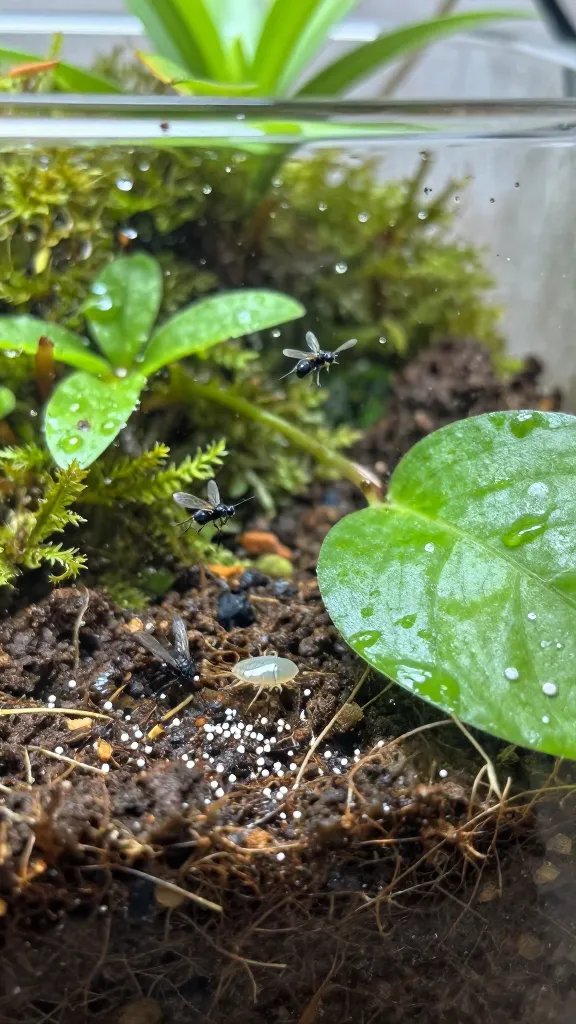
Movement in the terrarium is either helpful or harmful. Knowing which bug you’re seeing decides whether you celebrate or intervene.
Signs To Watch For
- Fungus gnats: tiny black flies hovering when you open the lid; larvae live in soggy soil.
- Springtails: tiny white specks that hop when disturbed; they clean mold and are beneficial.
- Mites: very small pale dots crawling on leaves; some are harmless, others stress plants.
How To Fix It
- For fungus gnats: Let the top 1 cm of substrate dry by venting daily; add a yellow sticky trap near the terrarium (outside) to catch adults.
- For springtails: Do nothing—they’re your cleanup crew and reduce mold.
- For pest mites: Wipe leaves with a damp cloth and apply a light neem oil wipe every 7 days for three cycles; keep oil off moss.
What To Use Instead
- Pre-rinsed substrate and hardscape to reduce eggs
- Springtail culture to balance early bio-load
Action today: Identify the insect with a phone flashlight; dry the top layer for gnats or leave springtails alone.
Frequently Asked Questions
How often should I water a closed terrarium?
Most closed terrariums need water every 3–4 weeks, and some go even longer. Add water only when midday condensation falls below roughly one-third of the glass. Start with 1–2 tablespoons using a mister, then reassess the next day. If the glass fogs heavily, vent for two hours and hold off on more water.
Why is my moss turning brown at the tips?
Brown moss tips usually mean it’s too dry, too bright, or both. Move the terrarium to bright indirect light, not a sunbeam, and mist lightly so the moss is evenly damp but not dripping. Use clean-tasting water; hard water leaves minerals that stress moss. Trim the driest tops to encourage fresh green growth.
Can I put succulents in a closed terrarium?
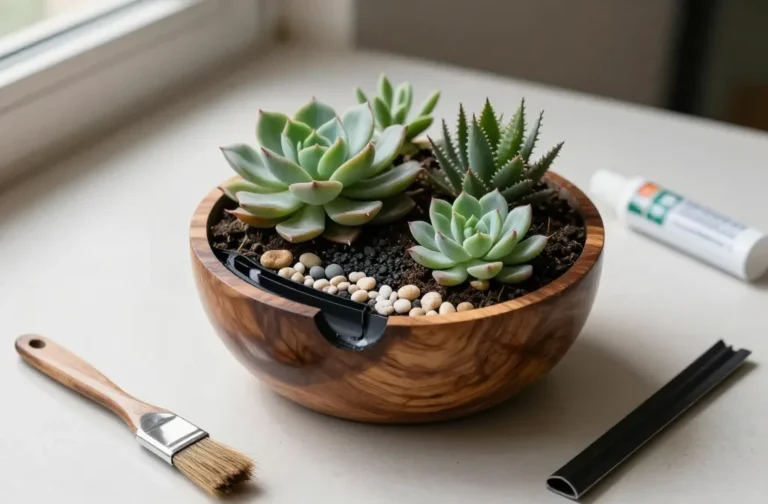
No—succulents want dry air and fast drainage, which a closed terrarium cannot provide. In closed glass, they rot at the base within weeks. If you love the look, use an open-top container with a gravel-heavy mix and keep it on a bright, sunny sill. Water thoroughly but only when the mix has been dry for a full week.
Why does my terrarium smell musty when I open it?
A musty smell points to soggy substrate and decaying organic matter. Remove dead leaves, wipe visible mold, and vent for a couple of hours daily until the smell fades. Wick out excess water with paper towels pressed to the substrate. Going forward, water by misting small amounts and watch midday condensation as your gauge.
How long should the lights be on for a terrarium?
Aim for 8–10 hours a day with a small LED placed 20–30 cm above the glass. More hours invite algae and overheating; fewer cause leggy growth. Use a plug-in timer to keep it consistent. If algae appears, cut back to 8 hours and add a leaf-litter soil cap.
Do I need a drainage layer?
Yes, a thin drainage layer prevents roots from sitting in water during early setup errors. Add 1–2 cm of aquarium gravel or leca, then a piece of mesh, then your substrate. This buys time when you overwater and reduces anaerobic rot. It’s cheap insurance for stability.
Conclusion
Every troubling symptom in a terrarium tells a clear story once you know the language—glass fog, leaf texture, and even tiny insects are reliable clues. Start with one correction today: set your light to 8–10 hours, check midday condensation, and vent or mist accordingly. From there, your mini-ecosystem will settle into the calm, low-maintenance rhythm you wanted from day one.