Stop These 5 Railing Planter Mistakes That Damage Balcony Structures
I’ve installed more railing planters than I can count, and I’ve also had to fix the mess when they go wrong. If you’ve seen rusty streaks on concrete, wobbly brackets, or water dripping onto your downstairs neighbor, you’re in the danger zone. In this guide, I’ll show you the five mistakes that quietly wreck railings, stain walls, and invite rot — and exactly how to prevent them with simple tools and off‑the‑shelf supplies. You’ll finish with a setup that’s safe for your balcony and kind to your plants.
1. Overloading Railings: Exceeding What Your Brackets And Balustrade Can Hold
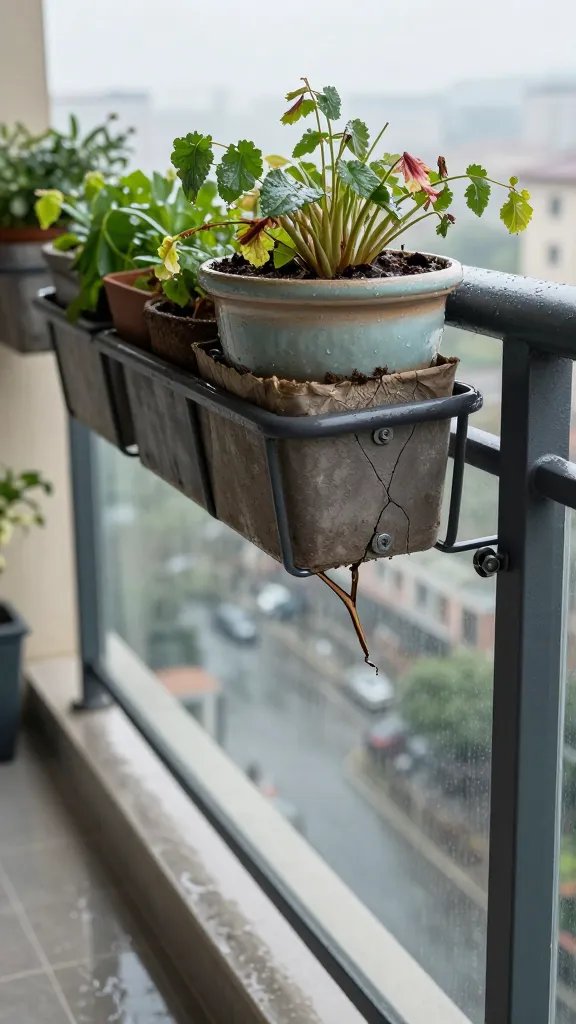
Weight is the fastest way to bend metal, crack render, and loosen anchor points. Wet soil, waterlogged coco liners, and ceramic planters get shockingly heavy after a rainstorm, which multiplies the stress on a narrow railing edge.
Signs To Watch For
- Sagging brackets or planters tilting outward after watering
- Fresh hairline cracks in stucco/render beneath the mounting points
- Rattling or play when you nudge the planter with one finger
- Shiny rub marks where metal brackets have shifted on the rail
How To Fix It
- Weigh a “wet” planter once: Fill a similar container with potting mix, soak until water drains, then weigh using a bathroom scale. That’s the real load you’re adding.
- Stay under 15–20 lb (7–9 kg) per linear foot of railing as a conservative household rule, and distribute load across multiple brackets.
- Use lightweight materials: plastic or resin troughs, potting mix (not garden soil), and perlite-heavy blends for moisture control without weight.
- Choose adjustable, top-and-bottom clamping brackets sized to your rail, not single-screw hooks. Tighten evenly.
- Split one long trough into two shorter ones to reduce leverage and make each unit manageable.
What To Use Instead
- Resin window boxes with built-in rails or lips
- Galvanized steel or powder-coated aluminum brackets rated for troughs
- Plastic saucers and reservoir inserts instead of ceramic
Action today: Weigh one of your planters fully soaked and check how many brackets share that load; if any bracket carries more than 10 lb (4.5 kg), split or lighten the setup.
2. Trapped Moisture: Water Against Metal, Wood, And Concrete Causes Rust And Rot
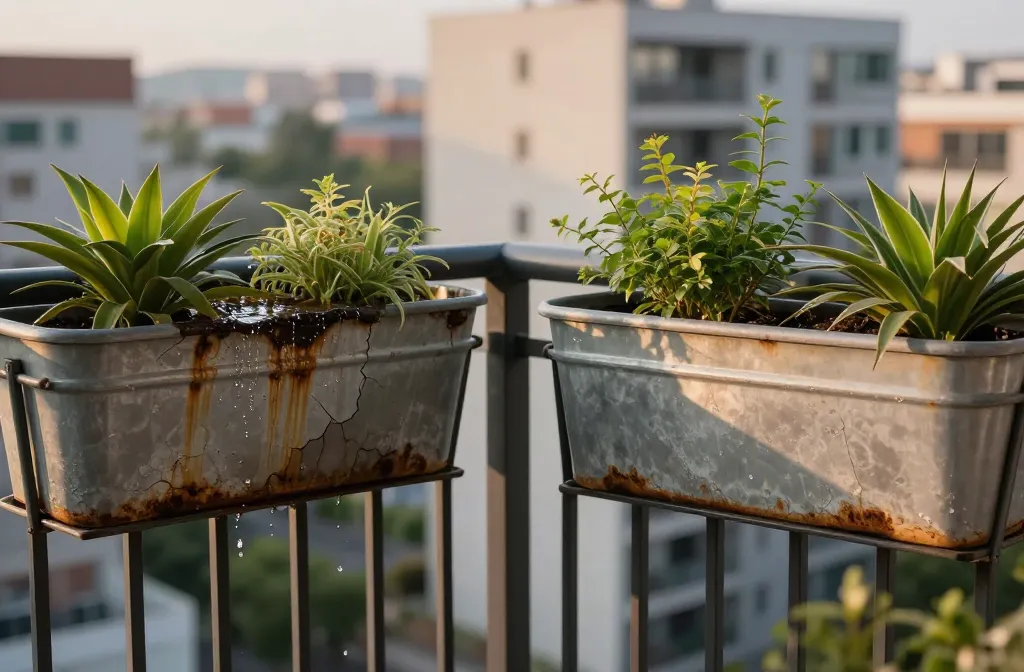
Constant dampness against a railing or balcony edge accelerates rust, wood rot, and spalling concrete. Overflowing troughs and saucers pressed against the balustrade hold water where it can’t evaporate.
Signs To Watch For
- Orange-brown streaks under brackets or screws
- Soft, darkened wood on timber rails
- White, powdery salts (efflorescence) on masonry below planters
- Mildew smell when you lift the planter
How To Fix It
- Create an air gap: Use rubber spacers, furniture pads, or short sections of garden hose slit lengthwise over bracket contact points to keep metal off the rail.
- Angle planters slightly forward so water moves away from the railing. Many brackets have an adjustment screw; otherwise, add a thin shim at the back.
- Add drainage control: A thin layer (1–1.5 inches) of coarse perlite at the bottom and a strip of landscape fabric over it prevents clogged holes.
- Seal exposed wood annually with an exterior wood sealer and touch up any chipped paint on metal rails.
What To Use Instead
- Self-watering inserts with overflow spouts directed away from rails
- Rubber bumpers or outdoor felt pads from the hardware aisle
- Plastic brackets or powder-coated metal rather than raw steel
Takeaway: Ensure at least a fingertip of daylight between every planter/bracket and your railing so surfaces can dry after watering.
3. Uncontrolled Runoff: Water And Soil Eroding Surfaces And Annoying Neighbors
Runoff carries soil fines and fertilizer onto concrete and facades, leaving permanent stains and slippery algae. Worse, steady dripping onto balconies below triggers complaints and building violations.
Signs To Watch For
- Brown or green drip lines under the balcony edge
- Soil granules collecting at weep holes or along ledges
- Water marks on the underside of your slab after watering
How To Fix It
- Switch to a quality potting mix that holds moisture without turning soupy; avoid garden soil and sand-heavy blends.
- Install overflow control: Use a trough with an internal reservoir and a side overflow spout. Aim the spout into a removable catch tray or a small bucket during heavy watering.
- Water in two passes: First pass until you see the start of drips, wait 10 minutes, then add just enough to re-wet the top inch. This prevents gushes.
- Fit mesh inlets over drainage holes (a square of window screen or landscape fabric) to keep fines from washing out.
What To Use Instead
- Self-watering window boxes with wicks and a visible fill tube
- Clip-on under-saucers sized to your trough
- Fertilizer stakes or slow-release granules rather than liquid feeds that leach
Action today: Add a small square of mesh or landscape fabric over each drainage hole so you stop losing soil and reduce stained runoff immediately.
4. Wrong Fasteners And Bracket Fit: Slipping, Scratching, And Structural Loosening
Brackets that don’t match your railing profile slide, twist, and gouge protective coatings. Over time, that scraping exposes metal to rust and loosens joints that the railing relies on for strength.
Signs To Watch For
- Bracket “walks” sideways after wind or watering
- Fresh scratches or paint chips under clamp points
- Bracket arms not sitting level or square to the rail
How To Fix It
- Measure your rail width and shape (round, square, flat). Buy brackets labeled for that exact profile, with two-point clamping (top and bottom).
- Add non-slip liners: A strip of rubber shelf liner or bicycle inner tube inside the clamp prevents scratching and movement.
- Use stainless steel or galvanized hardware only. Replace any zinc-only screws that show white rust or binding.
- Tighten evenly with hand tools. If a bracket twists while tightening, it’s the wrong fit — return it.
What To Use Instead
- Adjustable saddle-style brackets with locking nuts
- Through-bolt kits for wood rails where allowed by building rules (pre-drill and use washers)
- Powder-coated hardware with rounded edges
Takeaway: Before planting, clamp each empty bracket, then try to move it with a firm sideways push; if it shifts even a few millimeters, re-fit with liners or replace the bracket.
5. Ignoring Wind And Leverage: Planters Acting Like Sails And Pry Bars
On upper floors, planters catch gusts and act as levers on the railing. A sudden storm can flip an unsecured trough or fatigue the mounting points, risking both plant loss and structural damage.
Signs To Watch For
- Planters rocking or “flapping” during wind
- Loose fill blown out on windy days
- Micro-movements that grow over a month — today’s wiggle is tomorrow’s failure
How To Fix It
- Lower the profile: Choose shorter troughs (6–8 inches tall) and avoid overhanging lips that catch wind.
- Secure with safety ties: Add two discreet stainless steel cable ties or UV-rated zip ties from the back of the planter to the bracket frame.
- Balance the load: Keep the planter’s center of gravity over the rail, not cantilevered outward. Set heavier plants toward the balcony side.
- Use wind-tolerant plants with flexible stems (e.g., thyme, rosemary, ivy geraniums, sedums) and mulch with pea gravel to reduce blowout.
What To Use Instead
- Bracket systems with a safety pin or locking tab
- Troughs with rear hooks that “seat” over the rail plus a bottom clamp
- UV-stable zip ties or light-gauge stainless cable and clamps
Action today: Add two UV-rated zip ties from planter to bracket as a secondary restraint — it takes five minutes and prevents wind flips.
Frequently Asked Questions
How do I know if my balcony can handle railing planters at all?
Start by checking your building rules — many strata or HOAs specify what’s allowed. Then do a quick weight test: place a filled bucket (about 20 lb/9 kg) on the railing-supported bracket and watch for movement or creaks as you press down firmly. If anything shifts, your setup is wrong — upgrade brackets or move to floor-standing planters. When in doubt, keep loads small and distributed with at least two brackets per trough.
What’s the best soil mix to reduce weight and water damage?
Use a bagged, high-quality potting mix from the garden centre, not garden soil. Lighten it by mixing in one part perlite to three parts potting mix by volume. This keeps the planter lighter when wet and improves drainage, which reduces runoff and trapped moisture. Top with a 0.5-inch layer of pea gravel to prevent splash and soil loss.
How can I water without flooding the balcony below?
Water in two light rounds about 10 minutes apart, stopping as soon as you see the first drops exit. Fit self-watering inserts or troughs with side overflows and clip-on saucers to catch excess. In heavy rain seasons, leave the fill cap slightly open only if the overflow directs water away from the railing and into a catch tray. Always empty saucers after storms to avoid standing water.
My metal railing has started rusting under the brackets — what now?
Remove the planter and dry the area fully. Lightly sand the rust, wipe clean, apply a rust converter, then touch up with exterior metal primer and matching paint. Add rubber pads to the bracket contact points and ensure a small air gap so the repair stays dry. Reinstall with stainless hardware and check quarterly.
Are coco liners safe for balconies, or do they leak too much?
Coco liners drain fast and can drip heavily if you water like a standard pot. If you prefer them, add a plastic liner with a few small holes punched 1 inch above the base to create a mini-reservoir. Use a moisture-retentive potting mix and water in smaller amounts. Position a discreet catch tray or gutter beneath the liner lip to manage overflow.
What plants are least likely to cause structural issues?
Compact, drought-tolerant plants reduce watering frequency and weight swings. Choose herbs like thyme, oregano, rosemary, and small flowering plants like ivy geraniums, calibrachoa, or sedums. Avoid tall top-heavy plants that act like sails. Keep spacing generous so you’re not tempted to overwater a crowded box.
Conclusion
You don’t need special tools to keep your balcony — and your neighbor’s ceiling — safe. Weigh your planters once, create a drying gap, control runoff, match proper brackets, and give the wind less to grab. Next step: audit one planter today using the actions above; once it’s dialed in, replicate that setup across the rest of your railing with confidence.