Stop the Swamp: 5 Reasons a Closed Terrarium Needs to Be Opened — and How Often Is Too Often
I’ve built more closed terrariums than I care to admit, and I’ve also watched more than a few fog up, sour, and stall. If your glass garden looks steamy at breakfast and swampy by dinner, you’re in the same boat I was. In this guide, you’ll learn the five specific reasons a closed terrarium must be opened, the simple signs to watch for, and exactly how often to crack the lid without wrecking the ecosystem. You’ll leave knowing when to intervene and when to keep your hands off the glass.
1. Over-Humidity and Stagnant Air: When Moisture Becomes a Suffocating Blanket
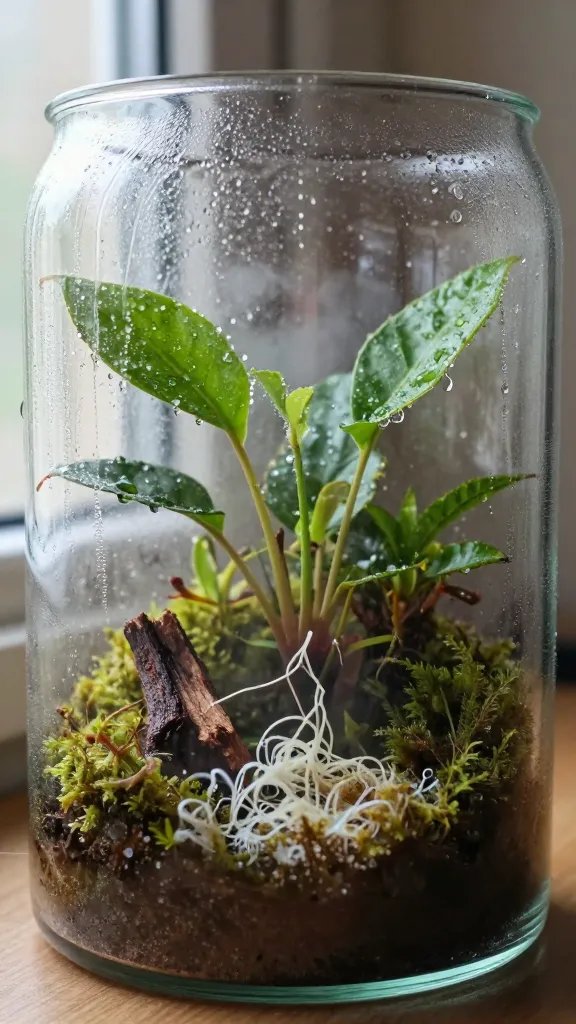
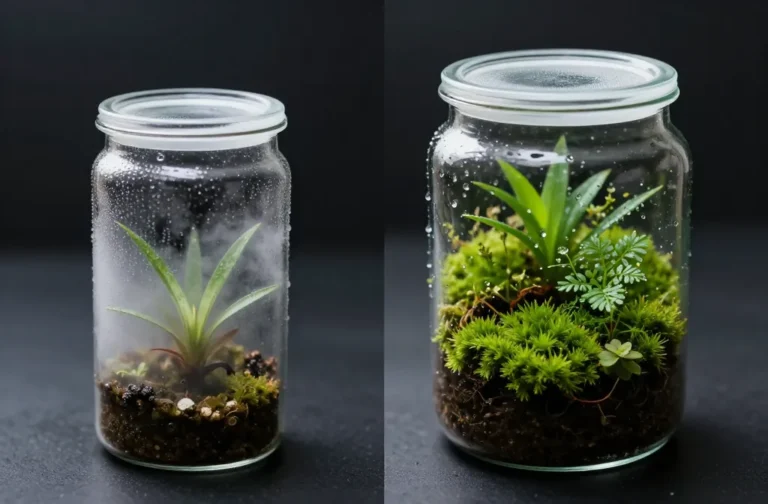
When the air stays dripping-wet all day, plants stop breathing properly and fungi thrive. Leaves soften, moss goes stringy, and the whole thing smells like a wet towel. Constant fog on the glass tells you the air isn’t circulating inside the microclimate, and opening the terrarium becomes a health reset, not a habit.
Signs to Watch For
- All-day condensation covering more than half the glass, not just mornings
- Droplets hanging on leaves for hours, not drying by midday
- Moss turning pale or slimy instead of springy and deep green
- Musty odor when you lift the lid
How to Fix It
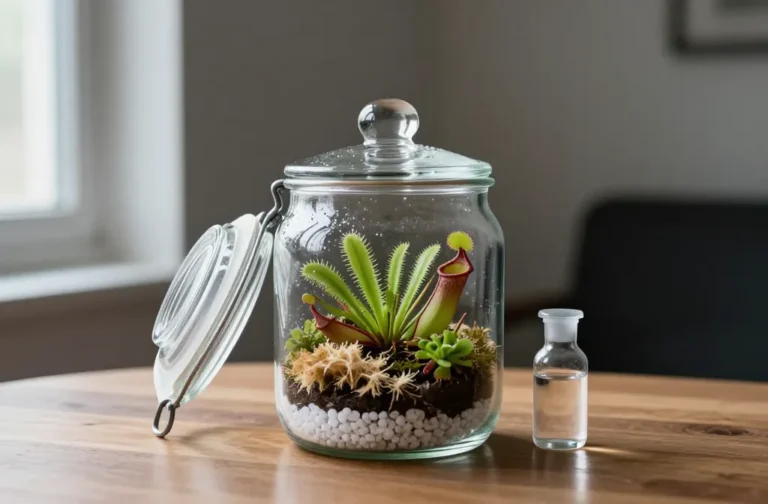
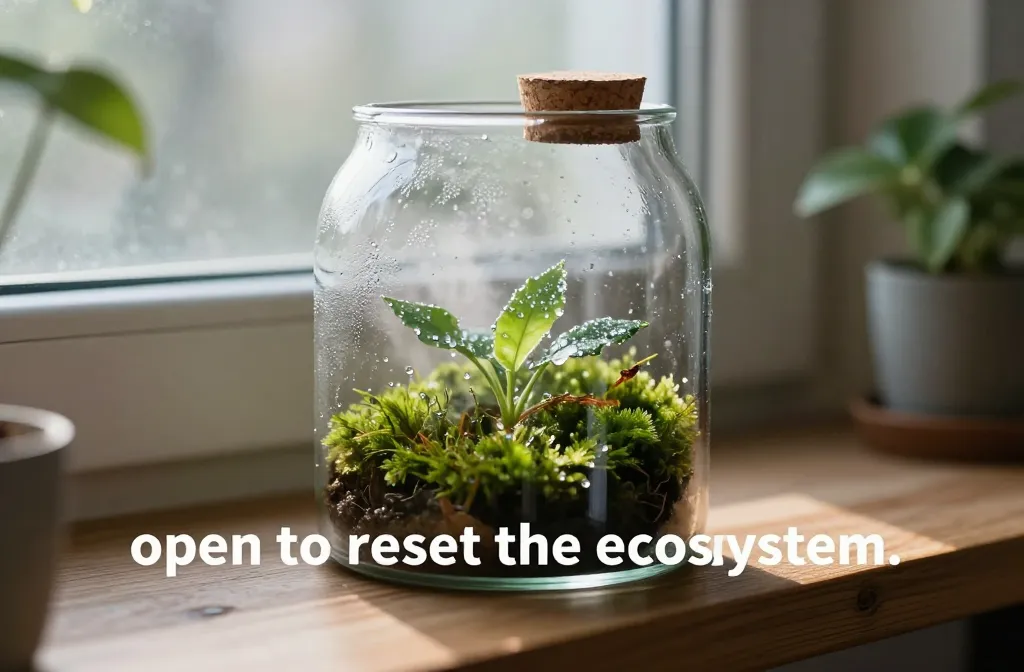
- Vent for 1–3 hours in the brightest part of the day. Prop the lid with a clean wine cork or a chopstick so air can exchange without chilling the plants.
- Wipe the glass inside with a dry paper towel to remove film and let light in.
- Thin dense patches of moss or foliage so leaves aren’t pressed against the glass.
What to Use Instead of Gadgets
- Timer cue: Set a phone reminder after breakfast to open, at lunch to close.
- Simple prop: A wooden clothes peg makes a perfect repeatable vent gap.
Action today: If your glass is fogged at midday, open the lid for two hours and wipe the inside glass dry — do this once, then reassess tomorrow rather than leaving it open daily.
2. Gas Build-Up: Ethylene and CO₂ Throw Plants Off Balance
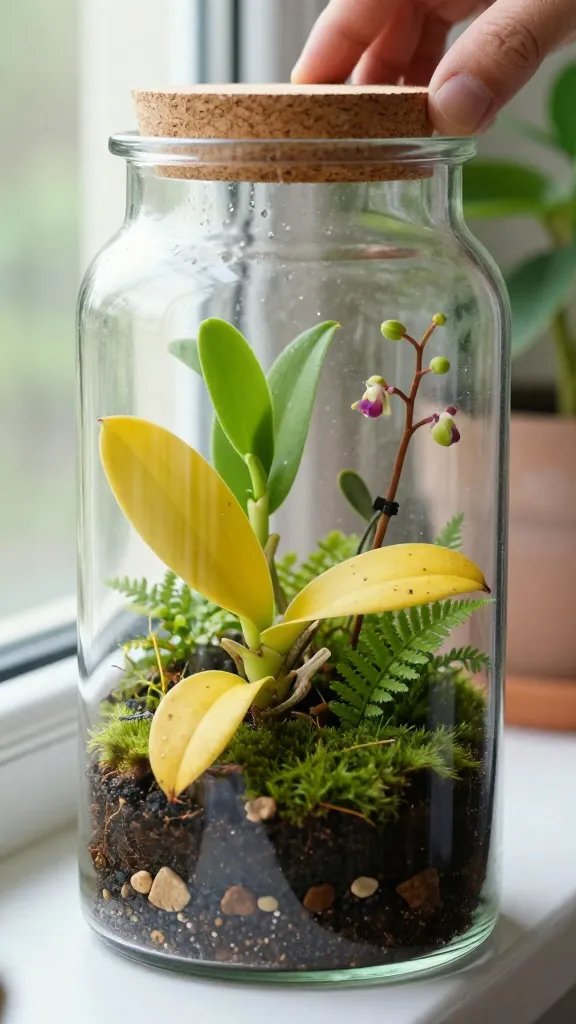
In a tightly sealed jar, plant respiration and aging leaves can skew the air mix. Too much ethylene speeds yellowing and leaf drop, and stale CO₂/O₂ balance slows growth. You’ll see healthy tops stall while lower leaves yellow out, even if moisture looks fine.
Signs to Watch For
- Yellowing from the bottom up without soggy soil
- Flower buds aborting on mini orchids or nerve plants
- No new growth for 4–6 weeks in warm, bright conditions
How to Fix It
- Full air exchange once every 2–4 weeks: remove the lid for 30–60 minutes near a bright window (no direct sun on the open container).
- Remove decaying matter: Pluck yellow leaves and brown bits; they off-gas more than healthy tissue.
- Light tune-up: Move the terrarium to bright indirect light near a window to keep metabolism steady and gas cycling predictable.
Simple Schedule That Works
- Small jars (under 2 liters): Open 30 minutes every 2 weeks.
- Medium vessels (2–10 liters): Open 45–60 minutes every 3 weeks.
- Large cases (over 10 liters): Crack the lid 1 hour every 4 weeks.
Takeaway: Do a planned 30–60 minute “fresh air” session every few weeks and remove any yellowed leaves at the same time to keep gases in check.
3. Condensation Patterns Reveal Water Balance: Correct Before Rot Sets In
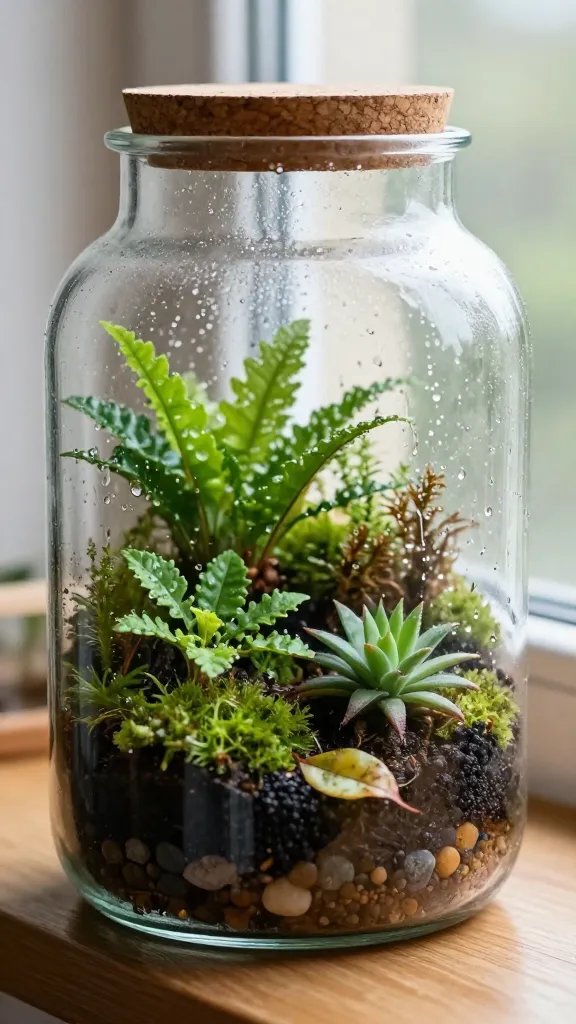
Closed terrariums recycle water, but when you overshoot, the extra has nowhere to go except the glass and the soil’s air pockets. Constantly wet leaves and soil starve roots of oxygen and invite root rot and mold. Opening strategically helps you evaporate the excess before damage spreads.
Read the Glass Like a Gauge
- Healthy cycle: Morning fog on the upper half of the glass that clears to patchy beads by midday.
- Too wet: Heavy droplets on all sides from morning through evening; puddling in the drainage layer.
- Too dry: No beads at any time and wilting tips, especially on fittonia and mosses.
How to Bleed Off Excess Water
- Open daily for 1 hour until condensation matches the “healthy cycle.”
- Wick method: Twist a paper towel into a point and dip it to the bottom layer to soak up puddles; replace until no new water wicks up.
- Soil aeration: Use a wooden skewer to poke 4–6 small holes through compacted spots to let trapped moisture rise.
If It’s Too Dry
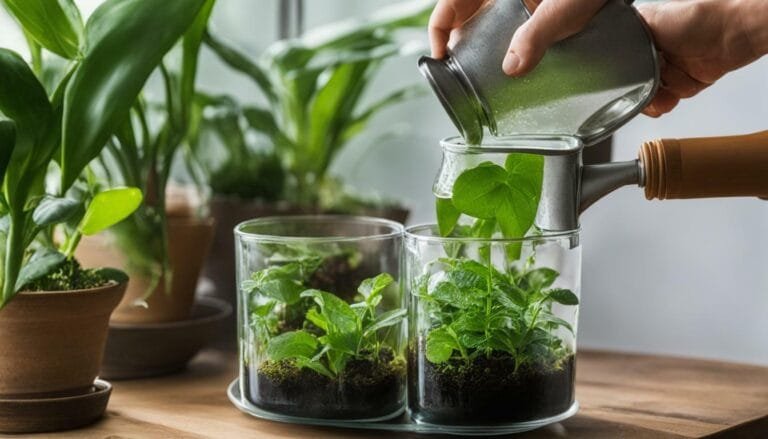
- Add 1–2 tablespoons of water with a spray bottle aimed at the soil, not the leaves.
- Recheck next morning: You want a thin mist band, not full fog.
Action today: Check the glass at midday — if more than half is fogged, open for one hour and wick out any visible puddles from the bottom layer.
4. Mold, Algae, and Fungus Gnats: Open to Interrupt the Life Cycle
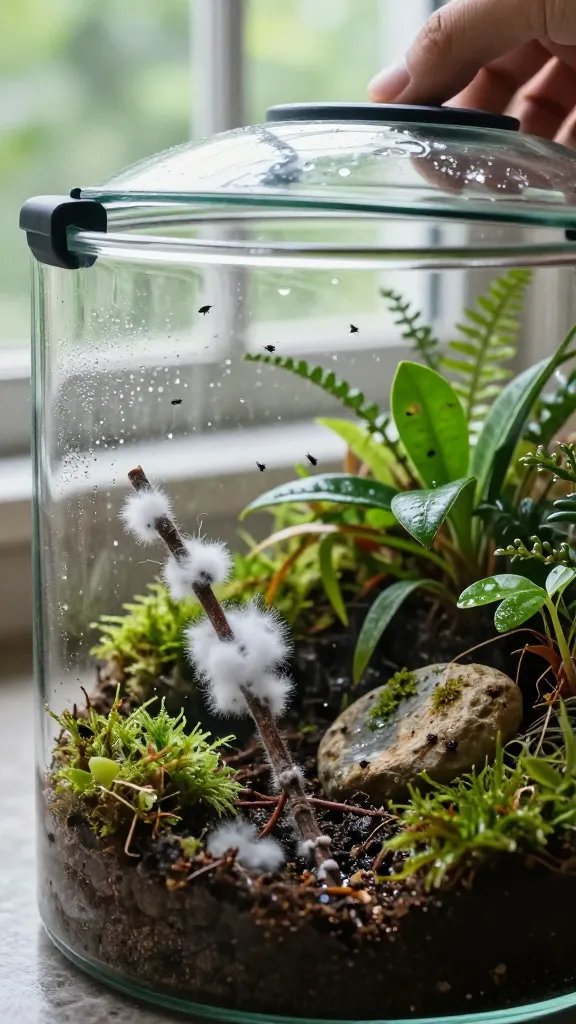
When you see white fuzz on soil, green film on the glass, or tiny gnats inside, the air and surface are staying wet long enough for pests and fungi to breed. Left alone, they’ll smother moss, spot leaves, and make maintenance a chore. Opening the terrarium dries the top layer just enough to break their rhythm.
Signs to Watch For
- White cottony mold on twigs, leaf litter, or soil
- Green slime or film on glass and rocks (algae)
- Tiny black flies that bounce at the glass (fungus gnats)
How to Fix It
- Dry-down cycle: Open the lid for 2 hours daily for 3–5 days.
- Spot clean: Dab mold with a cotton swab dipped in diluted 3% hydrogen peroxide (1 part peroxide to 3 parts water). Keep it off delicate moss tips.
- Top-dress gnats: Add a very thin layer (2–3 mm) of horticultural sand or fine aquarium gravel to the soil surface to dry it faster between cycles.
- Remove food sources: Pick out soft, decomposing leaves. Keep only a thin, dry layer of leaf litter.
What to Use Instead of Chemicals
- Sticky traps: Cut a yellow sticky card into small squares and tuck one behind a plant to catch adults.
- Brush and wipe: A soft paintbrush and paper towel remove algae from glass without sprays.
Takeaway: If you see mold or gnats, run a 3–5 day “dry-down” by opening two hours daily, and add a thin sand cap to the soil surface to keep them from returning.
5. Heat and Light Swings: Vent to Prevent Leaf Scald and Thermal Stress
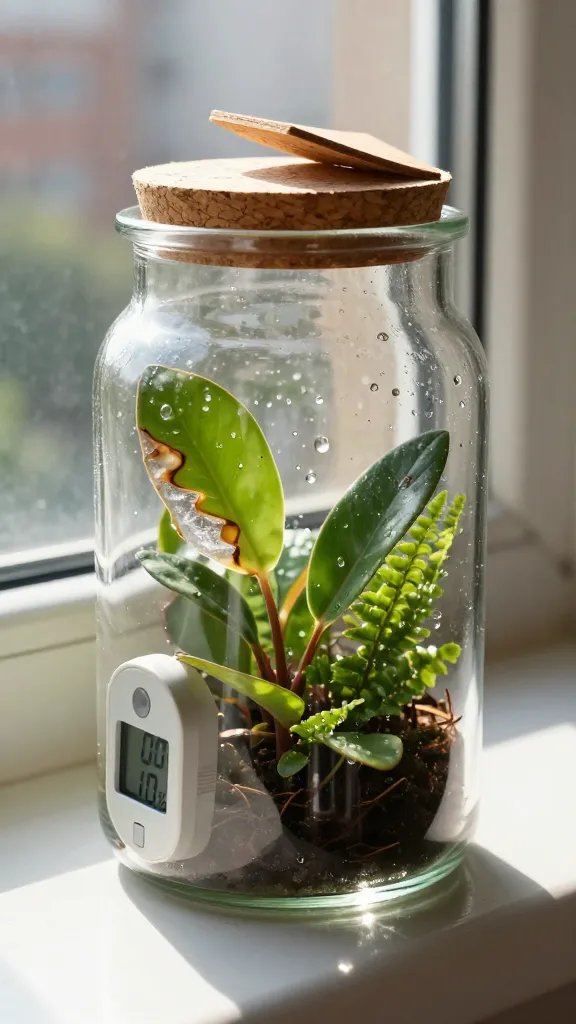
Closed glass near a sunny window can overheat fast. The temperature spikes, humidity hits 100%, and leaves can scald even without direct sun touching them. A short, purposeful vent during bright hours prevents the pressure-cooker effect while keeping the terrarium “closed” the rest of the week.
Signs to Watch For
- Clear, crisped patches on leaves facing the glass (heat scald)
- Sudden midday fog burst followed by droplet rain inside
- Leaves pressed to glass where they cook against the warm surface
How to Fix It
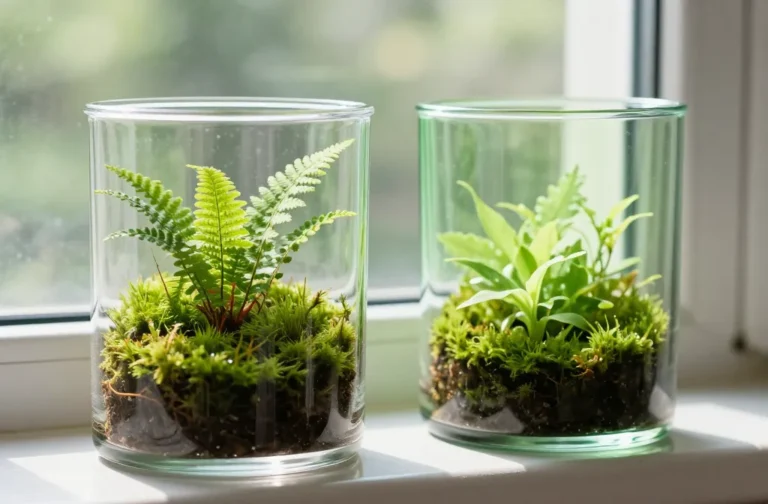
- Shift the location: Keep the terrarium in bright indirect light — within 1–3 feet of a window with sheer curtains or north/east light.
- Midday vent: On sunny days, prop the lid for 30–45 minutes between late morning and early afternoon.
- Leaf clearance: Prune back any growth touching the glass so leaves don’t conduct heat from the surface.
Low-Tech Heat Check
- Hand test: If the outside glass feels warmer than your hand, vent immediately for 30 minutes.
- Condensation pulse: If fog surges right after a sunbeam hits, move the terrarium one step back from the window.
Action today: If your terrarium sits within a sunbeam at any point, move it out of direct rays and plan a 30-minute vent on bright days around lunchtime.
Frequently Asked Questions
How often should I open a closed terrarium under normal conditions?
Open it briefly every 2–4 weeks for a full air refresh, then close it again. Use the glass as your guide: a healthy terrarium fogs lightly in the morning and clears by midday. If it stays fogged, open more often; if it never fogs, water lightly and keep it closed longer. Set a calendar reminder so you don’t overdo it.
Will opening a closed terrarium ruin the “sealed ecosystem” effect?
No. Short, purposeful vents maintain balance without dismantling the water cycle. Think of it as servicing a tiny greenhouse. Keep vents under a few hours and only as often as signs suggest. Your plants benefit from fresh air far more than they suffer from a brief opening.
What’s the best time of day to open the terrarium?
Late morning to early afternoon works best because the room is warmer and brighter. That helps evaporate excess moisture and avoids chilling plants. Avoid opening at night when cooler air can condense inside and re-wet surfaces. Close the lid once the glass looks clear and leaves feel dry to the touch.
How do I know if I’m opening it too often?
If you see no morning condensation for a week and delicate plants like fittonia or moss look thirsty or curled, you’re venting too frequently. Leaves may feel papery at the edges and growth slows. Reduce openings to once every 3–4 weeks and add 1–2 tablespoons of water to the soil, not the leaves. Watch for a light morning mist to return.
Can I leave the lid ajar permanently for “ventilation”?
Don’t. A constant gap turns a closed terrarium into a dry bottle garden, and the moisture cycle breaks. Instead, use timed, short vents and then close fully. If you want a permanently vented setup, build it as an open terrarium with plants that prefer drier air, like succulents or peperomias.
What everyday tools help me manage openings and moisture?
Use a spray bottle for precise watering, a wooden skewer for aerating soil, paper towels for wicking puddles, and a clothespin or cork to prop the lid. A small paintbrush cleans algae off glass and moss without chemicals. These simple items handle 95% of closed-terrarium maintenance at home.
Conclusion
Closed terrariums thrive when you open them with purpose, not on a whim. Start a simple routine: read the glass at midday, vent when signs say so, and close it as soon as balance returns. If you want to level up, your next step is refining plant choice and placement so humidity and light stay in that easy, self-correcting zone week after week.