Stop the Sag: 5 Plants That Are Too Heavy for a Felt Pocket Living Wall — and What to Use Instead
When I hung my first felt pocket living wall, I stuffed it with every plant I loved. Two weeks later, the top row sagged, seams bowed, and one saturated pocket dumped soil onto my floor. If your wall looks tired or droopy, the plants are likely the problem — not your watering skills. In this guide, I’ll show you five common plant choices that overwhelm felt pockets, why they fail, and what to use instead so your wall looks full, stable, and easy to care for.
1. Large Philodendrons and Monsteras: Vines That Turn into Anchors
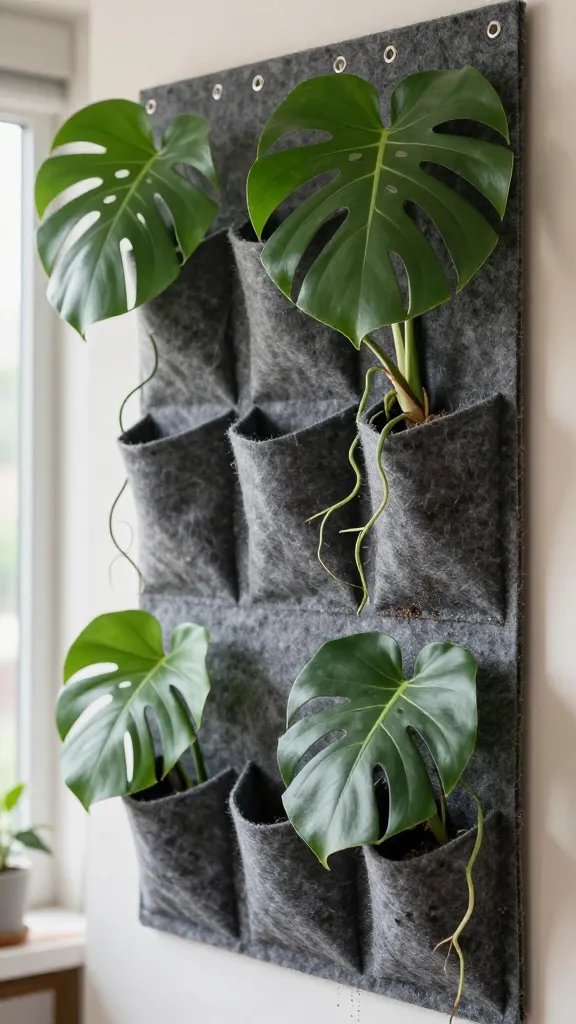
Monstera deliciosa, Philodendron selloum, and other big-leaf aroids start cute, then load each pocket with pounds of leaf and stem. Their aerial roots search for structure and pry at seams. The weight pulls on the top grommets, felt stretches, and you get tilting rows or ripped stitching.
Signs to Watch For
- Pockets leaning forward or wrinkling at the edges within a month of planting
- Felt seams pulling apart around upper corners
- Leaves larger than your open hand forming within eight weeks
What to Use Instead
- Heartleaf Philodendron (Philodendron hederaceum) — stays lighter, smaller leaves, roots easily in shallow media
- Monstera adansonii (Swiss cheese vine) — thinner stems and smaller leaves than deliciosa
- Scindapsus pictus — thin, trailing growth with a refined look and manageable mass
How to Fix It
- Swap to a good quality potting mix lightened with a few handfuls of orchid bark per pocket to reduce water weight
- Trim back long vines monthly so the center of mass stays close to the wall
- Add a light plastic trellis or two adhesive hooks above the wall and tie vines loosely with twine to offload weight
Takeaway: Keep vining aroids to small-leaf species and prune monthly to stop the “anchor effect.”
2. Peace Lilies and Dieffenbachia: Thirsty Clumps That Drench the Felt
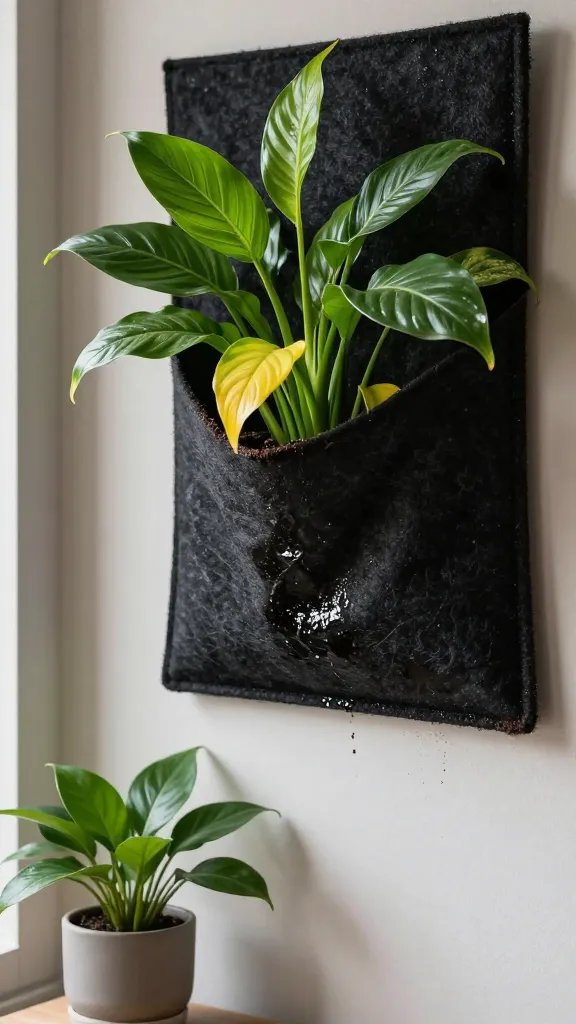
Peace lily (Spathiphyllum) and Dieffenbachia look lush, but they drink heavily, then crash hard in shallow pockets. To keep up, you water more — the felt stays soaked, the pocket sags, and soil compacts. That constant wet weight deforms fabric and invites rot.
Signs to Watch For
- Pockets that stay wet longer than 48 hours after watering
- Yellowing leaves at the base and a sour smell from the felt
- Visible bowing of the pocket lip
What to Use Instead
- ZZ plant (Zamioculcas zamiifolia) — tolerates lean water schedules, dense roots hold soil together
- Snake plant (Sansevieria trifasciata or S. laurentii, dwarf forms) — upright, drought tolerant, light root mass
- Pepperomia (Peperomia obtusifolia and similar) — compact rosettes, modest water use, stays neat
How to Fix It
- Reduce watering to when the top inch feels dry and the pocket feels lightweight in your hand
- Mix in a few handfuls of perlite to each pocket for drainage
- Top-dress with a thin layer of fine bark or horticultural charcoal to keep the surface drier
Action today: Lift a problem pocket — if it feels heavy two days after watering, replace the plant with a drought-tolerant option and lighten the mix with perlite.
3. Boston Ferns and Big Bird’s Nest Ferns: Fronds that Outgrow the Pocket
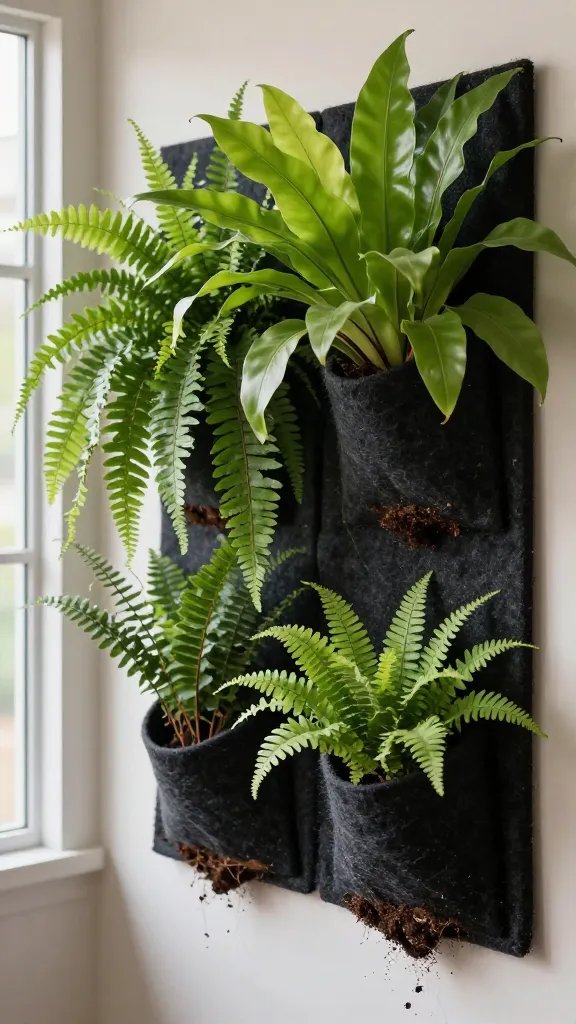
Boston fern (Nephrolepis exaltata) and large Asplenium nidus unfurl broad fronds that push outward. As fronds catch air and humidity, they act like sails, torquing the felt and loosening soil. The crown sits forward, the root ball shifts, and the whole pocket droops.
Signs to Watch For
- Fronds arching 10–14 inches beyond the wall and brushing passersby
- Soil creeping over the front lip of the pocket
- Broken frond bases from their own leverage
What to Use Instead
- Maidenhair fern (Adiantum raddianum) — delicate, light canopy if kept evenly moist
- Lemon button fern (Nephrolepis cordifolia ‘Duffii’) — compact Boston fern cousin with smaller fronds
- Button fern (Pellaea rotundifolia) — tidy habit with less outward push
How to Fix It
- Choose smaller cultivars and plant them in the upper rows where air movement is gentler
- Use a moisture-retentive but light mix: potting mix with a handful of coconut coir added
- Mist fronds in the morning and water the soil lightly; avoid soaking the felt
Takeaway: Swap out bulk ferns for compact varieties and keep canopies within 6–8 inches of the wall to protect seams.
4. Heavy Succulents and Large Aloes: Weighty Rosettes That Shear Seams
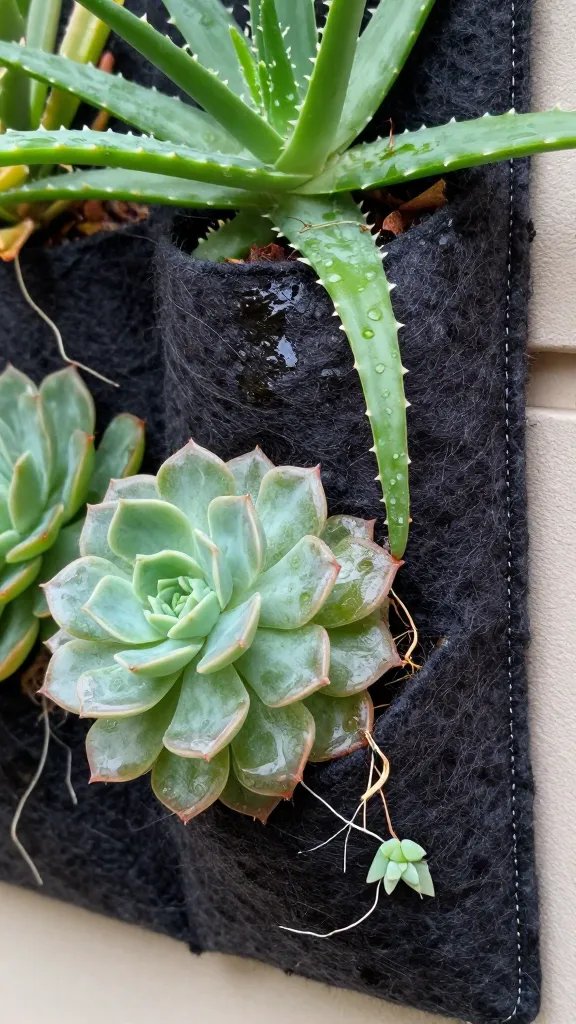
Big Aloe, mature Echeveria clusters, and chunky Haworthia hold a lot of water in their leaves. In felt pockets they become compact bricks that yank downward, especially after watering. Their need for sharp drainage also clashes with the moisture-retentive fabric, leading to rot and collapse.
Signs to Watch For
- Rosettes tilting out of the pocket or snapping off after watering
- Bottom leaves turning translucent or mushy
- Salt crust on the felt from overfertilizing a plant that drinks slowly
What to Use Instead
- Trailing succulents that stay light: String of Hearts (Ceropegia), String of Bananas (Senecio/Curio radicans)
- Small Sedum types: Sedum morganianum ‘Burrito’ in small cuttings rather than heavy, mature clumps
- Hoya (smaller-leaf species) — succulent-ish leaves, thin vines, tolerant of partial drying
How to Fix It
- Use a succulent/cactus mix blended 1:1 with regular potting mix to keep weight down while improving drainage
- Water lightly every 2–3 weeks; dribble along the root zone rather than soaking the felt
- Plant smaller cuttings and let them establish in place instead of installing heavy, mature rosettes
Action today: Rehome any aloe larger than your fist to a pot, and replace with trailing, lightweight succulents planted as small cuttings.
5. Mature Herbs and Woody Shrubs: Rigid Root Balls That Fight the Fabric
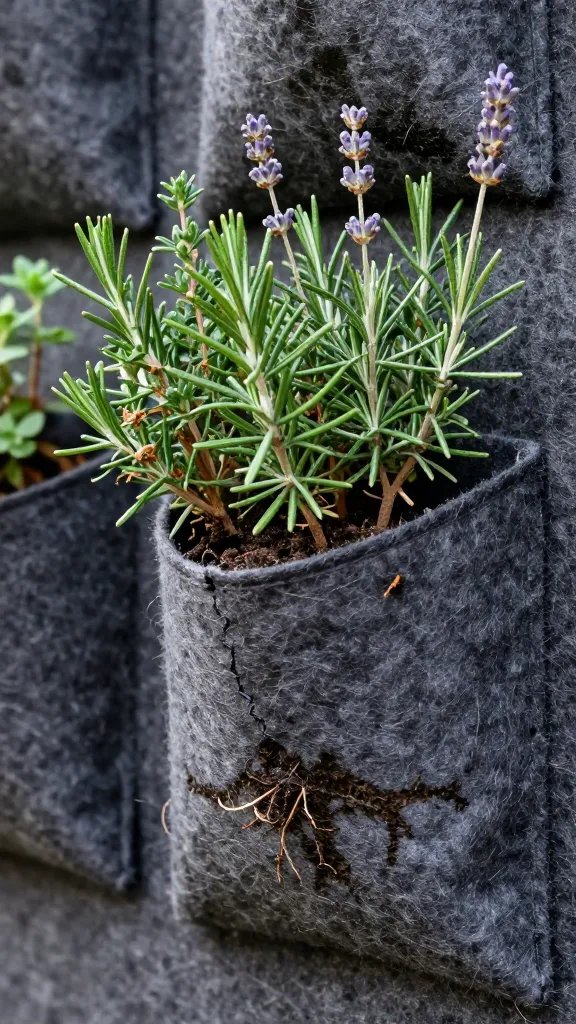
Rosemary, woody thyme, and thick-stemmed lavender look tempting, but their stiff roots and woody crowns don’t mesh with shallow, flexible pockets. They dry out fast at the face yet stay wet at the back, forcing frequent watering that overburdens the felt. The woody base pries at seams and can crack the pocket edge.
Signs to Watch For
- Plant wobbling when you touch it, even after firming the soil
- Dry, crispy tips with a still-damp pocket backing
- Visible root ball outline pressing against the felt
What to Use Instead
- Soft herbs with fine roots: Parsley, Cilantro, Chives, and Mints (mint near the top row to control spread)
- Leafy greens: Baby lettuce mixes, Arugula, and Spinach for quick harvests and light mass
- Compact basil varieties (like ‘Spicy Globe’) rather than tall Genovese types
How to Fix It
- Plant from small starter packs rather than mature 6-inch pots to avoid rigid root balls
- Use a high-quality potting mix and refresh the top inch every 6–8 weeks to keep nutrients coming
- Harvest frequently to keep plants compact and reduce leverage on the pocket
Takeaway: Skip woody herbs in felt; grow soft, leafy edibles from small starts and harvest often to keep weight and roots manageable.
Frequently Asked Questions
How do I know if my felt wall can handle heavier plants?
Check the manufacturer’s listed weight limit and count how many mounting points it uses. If it relies on two top screws only, keep total wet weight under what you can comfortably hold with one hand per column. Add wall anchors rated for at least double your estimated water-filled weight. If your wall bows when watered, it’s already overloaded.
How often should I water a felt pocket living wall?
Water when the top inch of mix feels dry and the pocket feels light to the touch — usually every 5–7 days in bright indirect light. Use a narrow-spout watering can and add slowly until water just begins to seep through, then stop. In winter, stretch intervals to 10–14 days. Avoid soaking the entire felt panel; target each pocket.
What soil mix should I use to reduce weight and sagging?
Start with a good quality potting mix from the garden centre. For most plants, blend in a few handfuls of perlite to each pocket to keep it airy and lighter. For ferns, add coconut coir to hold even moisture without turning heavy. For succulents, mix half cactus mix with half regular potting soil.
Can I reinforce my existing felt wall instead of replacing plants?
Yes, to a point. Add extra wall anchors, install a thin ledger strip (a wooden batten) screwed into studs under the bottom row, and use zip ties through grommets to share weight between rows. However, if the plants are inherently heavy or fast-expanding, reinforcement just delays failure. Swapping to lighter species is the lasting fix.
Where should I hang a felt wall so plants stay healthy without overwatering?
Choose a spot with bright indirect light near a window — the kind of light where you can easily read at midday without harsh sun on your skin. Avoid direct afternoon sun on dark felt, which overheats roots and dries pockets unevenly. Keep it away from heater vents or air-conditioning blasts. A bathroom with a window works well for ferns and trailing aroids.
Do I need fertilizer for pocket walls, and how do I apply it safely?
Yes — light, regular feeding keeps growth compact and healthy. Use a balanced liquid houseplant fertilizer at half strength once a month during spring and summer. Water with plain water first, then follow with the diluted feed so salts don’t concentrate in the felt. Skip feeding in winter when growth slows.
Conclusion
You don’t need a sturdier wall — you need smarter plant choices that suit shallow, flexible pockets. Swap the heavyweight anchors for compact, drought-tolerant, and fine-rooted plants, and your felt wall will stay upright, green, and low-maintenance.
Pick one overloaded pocket today, replant it with a lighter alternative from this list, and feel the difference the next time you water.