Pro Picks: 6 Tropical Plants That Thrive in a Closed High-Humidity Terrarium
I’ve built enough closed terrariums to learn which plants actually stay tidy and thrive once the lid goes on. If you’ve watched leaves melt or mold bloom inside your glass, you’re not alone — I’ve done that dance too. In this guide I’ll show you six tropical plants that I use for reliable growth in high humidity, plus exactly how I keep them compact and healthy. You’ll avoid the common pitfalls and enjoy a living scene that looks good month after month.
1. Cushion Moss (Leucobryum glaucum): The Moisture-Stabilizing Groundcover
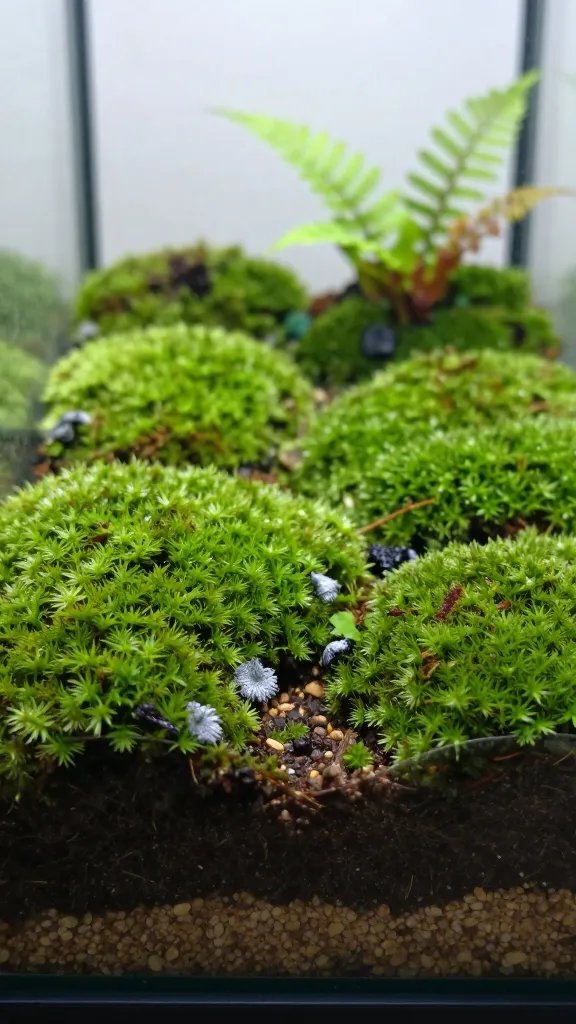
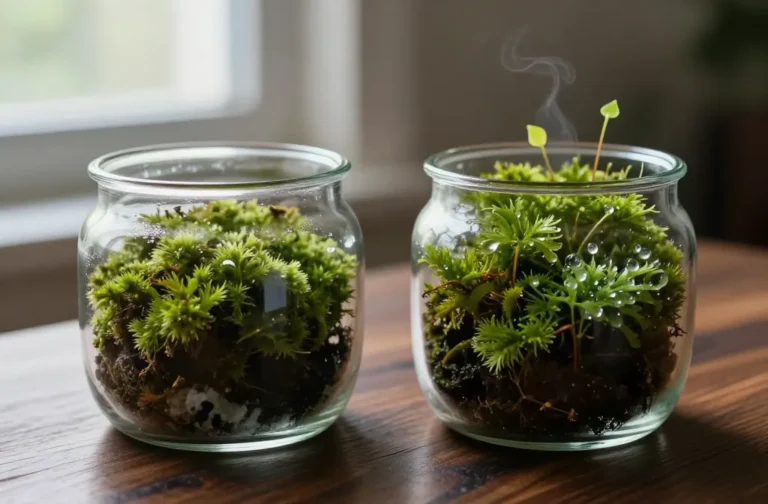
When the base layer dries or turns swampy, everything above it suffers. Cushion moss evens out moisture and temperature at soil level, reducing rot and algae flare-ups. It forms tidy green domes that hide substrate edges and keep the scene cohesive.
Signs to Watch For
- Silvery-gray cushions that don’t spring back when misted — they’re dehydrated
- Blackened patches or a sour smell — the base is waterlogged
- Algae sheen on the glass right at moss height — too much standing moisture
How to Plant and Care
- Seat cushions on top of your drainage barrier and substrate, not buried; firm them gently so they make full contact.
- Water with a fine mister until the moss feels springy, then close the lid. In a healthy cycle, you’ll re-mist lightly every 3–4 weeks.
- Give bright indirect light near a window; avoid direct sun on the glass, which overheats and bleaches moss.
What to Use Instead If Unavailable
- Sheet moss (Hypnum) from a garden centre, pre-cleaned and dried, rehydrated before laying
- Java moss on wood for a wetter look (keep water levels low to prevent pooling)
Action today: Press your moss into full contact with the substrate and remove any buried edges — this single step stops rot and keeps cushions lush.
2. Miniature Nerve Plant (Fittonia albivenis ‘Mini’): The Color-Popping Humidity Lover
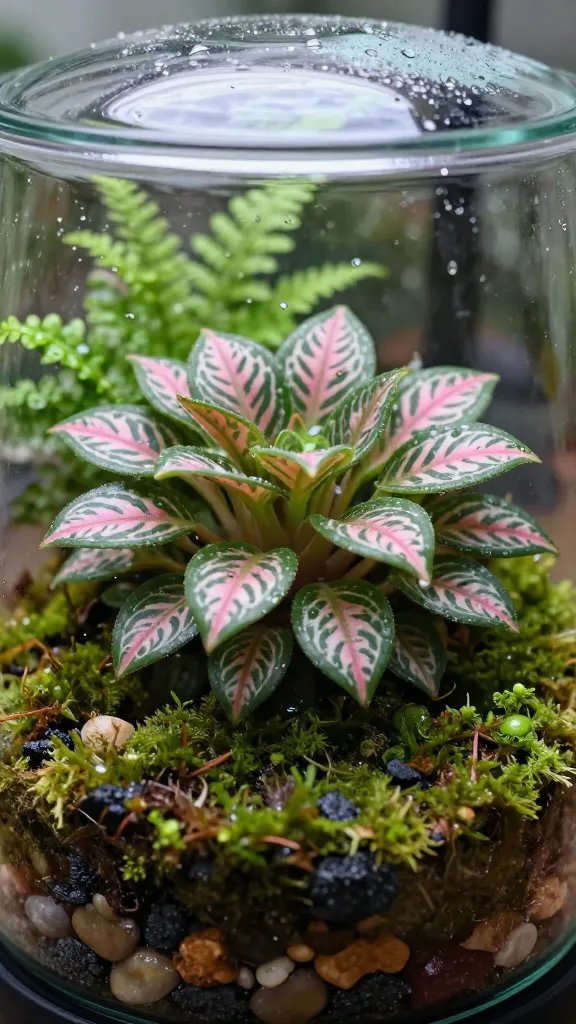
Closed terrariums without a “feature” plant look flat. Fittonia brings bold veining (white, red, or pink) and stays compact under glass. In open air it wilts constantly, but in high humidity it stays perky and fills gaps without taking over.
Signs to Watch For
- Floppy leaves at midday — heat stress from direct sun rather than thirst
- Crisped edges — the lid has been left off too long
- Leggy stems reaching upward — light is too dim
How to Plant and Care
- Choose a mini cultivar or a small cutting with 3–4 leaves; large pots outgrow closed spaces fast.
- Pinch the growing tips every 4–6 weeks to keep a low dome. Replant the cuttings as new starts.
- Keep the soil barely moist; in a closed jar, that means no free water pooling in the drainage layer.
What to Use Instead If Unavailable
- Pilea depressa for a similar small-leaved mat with bright green tone
Takeaway: Place Fittonia where it gets bright, indirect light and pinch the tips monthly — you’ll keep color and shape without sprawl.
3. Peperomia caperata (Ripple Peperomia): The Compact Focal With Texture
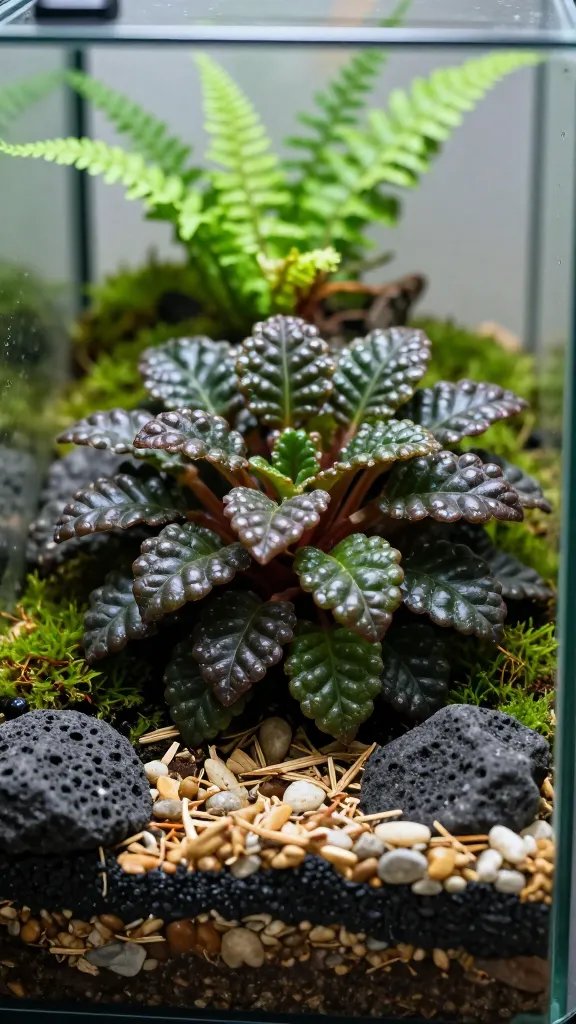
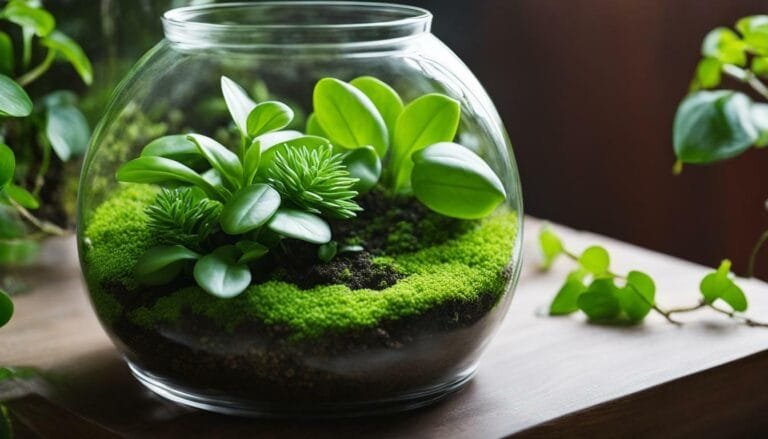
Big-leaved tropicals smash into the glass and rot. Peperomia caperata stays compact, brings corrugated leaves, and tolerates the stable moisture of a closed setup without constant trimming. It anchors the scene without hogging space.
Signs to Watch For
- Yellowing from the base — roots are sitting in saturated soil
- Pale, stretched petioles — not enough light
- Droplets collecting in the leaf cups all day — ventilation is too low; crack the lid briefly
How to Plant and Care
- Use a well-aerated potting mix from the garden centre blended 2:1 with orchid bark or perlite to add air spaces.
- Plant slightly raised on a mound so water runs off the crown; avoid burying the stem base.
- Rotate the terrarium weekly for even growth; trim stray flower spikes to keep energy in the leaves.
What to Use Instead If Unavailable
- Peperomia obtusifolia ‘Mini’ or P. rosso for similar size with glossy or two-tone leaves
Action today: Build a small mound under your peperomia so the crown sits 1–2 cm higher than the moss — this prevents crown rot in closed humidity.
4. Dwarf Ferns (e.g., Microsorum ‘Pteropus Trident’ on Wood or Asplenium ‘Crispy Wave’ Juveniles): The Fine-Texture Canopy
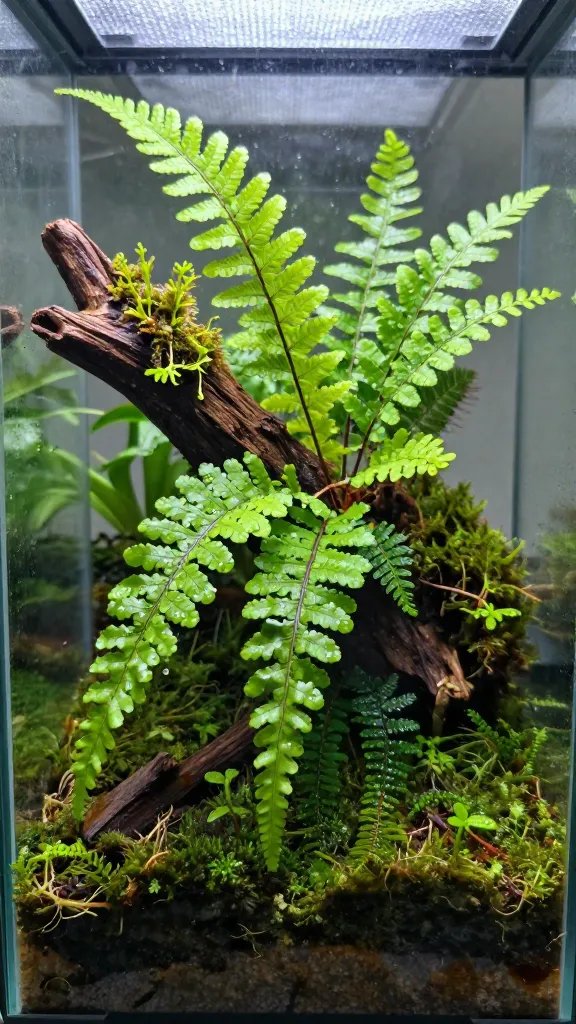
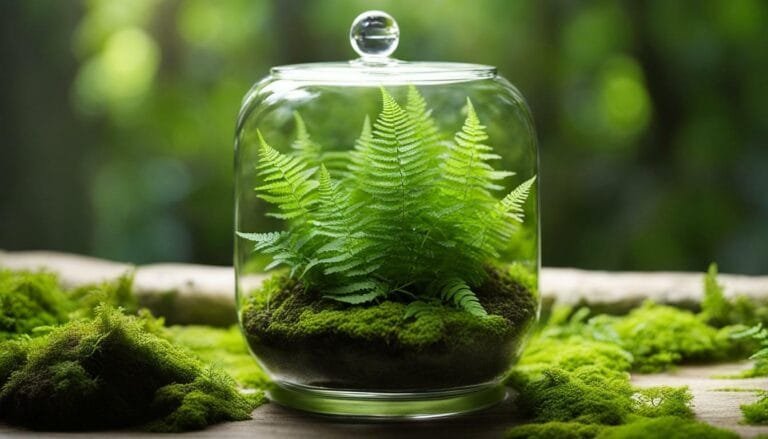
Full-size ferns turn into a wall of fronds that press the glass and collapse. Dwarf or juvenile ferns offer airy texture and love consistent moisture without needing constant pruning.
Signs to Watch For
- Brown tips or edges — stagnant heat or direct sun on glass
- Fronds turning transparent and soft — suffocation from waterlogged roots
- New fronds failing to unfurl — not enough light or stale air
How to Plant and Care
- Select a small fern in a 5–7 cm pot or a rhizome piece. Rinse soil from roots under tap water that tastes clean, not salty.
- Mount on a cork piece or driftwood above the soil line using garden twine; moss around the roots keeps them moist but not buried.
- Give bright indirect light and crack the lid for 30–60 minutes once a week if fronds stay wet after the morning.
What to Use Instead If Unavailable
- Selaginella kraussiana (spikemoss) for fern-like texture at ground level
Takeaway: Mount dwarf ferns slightly above the soil on wood or cork — this keeps roots moist and fronds dry enough to avoid rot.
5. Jewel Orchid (Ludisia discolor): The Low-Light Showpiece
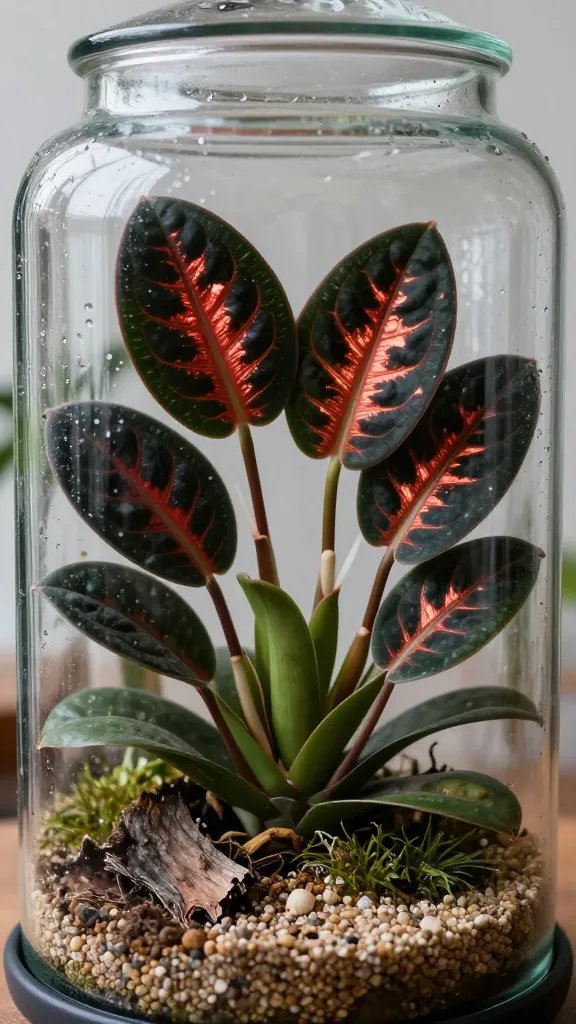
Many orchids fail under glass because they want air movement and rapid drying. Ludisia is different: it thrives in closed humidity and dimmer conditions, offering velvet leaves with glowing copper veins that shine through glass.
Signs to Watch For
- Leaf edge curl upward — too much light; move farther from the window
- Mushy lower stems — substrate stayed soggy
- Leaves dropping one by one — temperature spikes from direct sun on the jar
How to Plant and Care
- Use a shallow layer of standard potting mix blended 1:1 with orchid bark for airiness.
- Plant cuttings with at least two nodes; lay them slightly sideways and cover the lower node to root quickly.
- Water sparingly — in a closed jar, add 1–2 tablespoons at a time with a squeeze bottle and wait a week before repeating.
What to Use Instead If Unavailable
- Anoectochilus ‘Mini’ cultivars or Macodes petola if offered at specialty garden centres, treated the same way
Action today: Move your terrarium one step back from the window if Ludisia leaves feel warm at midday — this preserves the dark velvet finish.
6. Creeping Fig (Ficus pumila ‘Minima’): The Living Backdrop That Behaves
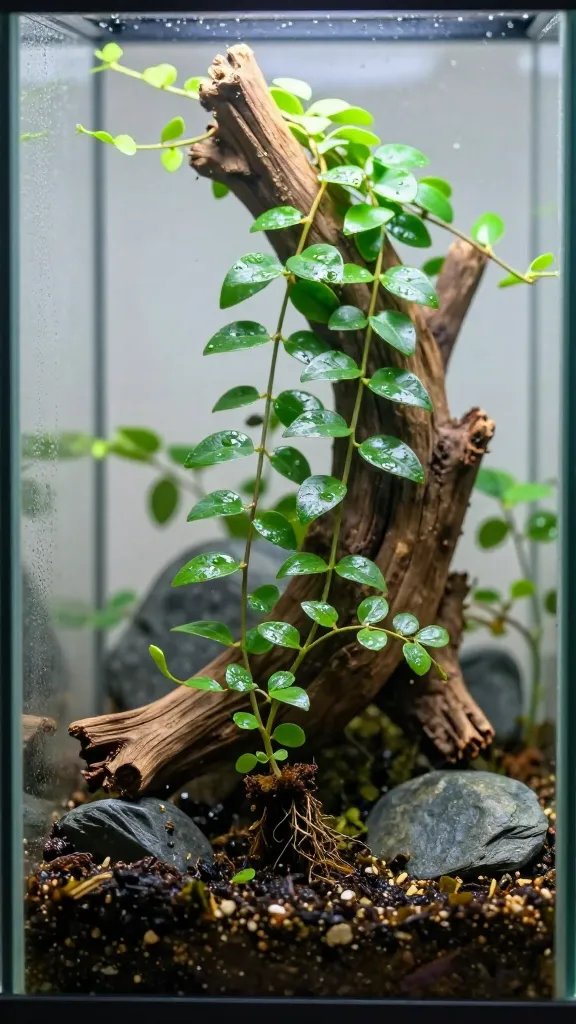
Uncontrolled vines can smother everything in a closed space. The ‘Minima’ creeping fig version stays finer-leaved and manageable, clinging to wood or background stone to frame the scene without swallowing it.
Signs to Watch For
- Long pale shoots racing upward — light too low; move to brighter, indirect position
- Thick mats shading neighbors — you’ve delayed trimming
- Sticky sap if stems break — normal for figs; dab with tissue and vent for 30 minutes
How to Plant and Care
- Plant a single small plug near a hardscape piece; train new growth along the wood with soft ties or strategic pinches.
- Trim monthly with clean scissors, leaving two leaves per stem; replant offcuts as groundcover if you want.
- Keep substrate evenly moist but never soupy; check condensation at midday and vent if more than half the glass is fogged.
What to Use Instead If Unavailable
- Ficus pumila ‘Quercifolia’ for even smaller leaves and slower spread
Takeaway: Commit to a quick monthly trim of creeping fig — two minutes prevents takeover and keeps your composition visible.
Frequently Asked Questions
How much light do these terrarium plants need?
Place the terrarium in bright indirect light near a window where the glass never feels hot to the touch at midday. Avoid direct sun striking the terrarium for more than 15 minutes — it overheats and cooks leaves. If your room is dim, use a simple desk lamp with a neutral white LED positioned 20–30 cm above the lid for 8–10 hours daily.
How often should I water a closed terrarium?
Most closed terrariums need water once every 3–4 weeks, and only a tablespoon or two at a time. Check at midday: if condensation covers more than half the glass, you have enough moisture. If the glass looks mostly clear for two days in a row and the moss feels less springy, add a small amount with a spray bottle or squeeze bottle and recheck the next day.
What soil should I use without mixing special substrates?
Use a good quality potting mix from the garden centre and lighten it with a handful of orchid bark or perlite per cup of mix. Add a 2–3 cm drainage layer at the bottom using aquarium gravel or small stones from the hardware store, topped with a piece of mesh to keep soil from sifting down. This simple setup keeps roots aerated and prevents swampy conditions.
How do I prevent mold in a closed terrarium?
Keep leaves from touching wet glass and avoid burying stems. If you see white fuzz on soil or decorations, remove the lid for 1–2 hours and wipe the glass dry; spot-treat with a cotton swab dipped in clean water. Add a tiny clean-up crew like a few springtails if available at a garden centre, or reduce watering and increase short ventilation sessions once a week.
Can I mix all six plants in a small jar?
Yes, but scale to the container. In jars under 2 liters, choose three: a moss, one focal (Peperomia or Ludisia), and one trailing frame (creeping fig). In larger vessels, use all six but place the fastest growers — creeping fig and Fittonia — at the edges where they’re easy to trim.
What temperature range keeps these plants happy?
A steady room temperature of 18–24°C works best. Keep the terrarium away from radiators and cold drafts. If the glass drips heavily every morning and stays foggy all day, move it to a cooler, brighter spot out of direct sun and vent for 30–60 minutes.
Conclusion
Pick plants that want what a closed terrarium naturally provides: steady humidity, gentle light, and compact growth. Start with one focal, one groundcover, and one slow vine, then add from this list as space allows. Your next step: set the terrarium where the glass never heats up at midday, and schedule a two-minute monthly trim — that routine keeps it lush and effortless.