Fix These 6 Common Carnivorous Plant Mistakes — Substrate, Water Type and Feeding Errors
I’ve kept carnivorous plants on a sunny apartment sill for over a decade, and I’ve made every mistake you’re probably wrestling with now. I’ve scorched a Venus flytrap in potting soil, salted a sundew with tap water, and starved a pitcher plant while trying to be “natural.” Here’s the playbook I wish I had: the six most common substrate, water, and feeding errors that quietly weaken these plants. Fix these, and your traps will color up, pitchers will fill, and you’ll stop replacing plants every season.
1. Using Regular Potting Mix: Nutrient Burn From The First Watering
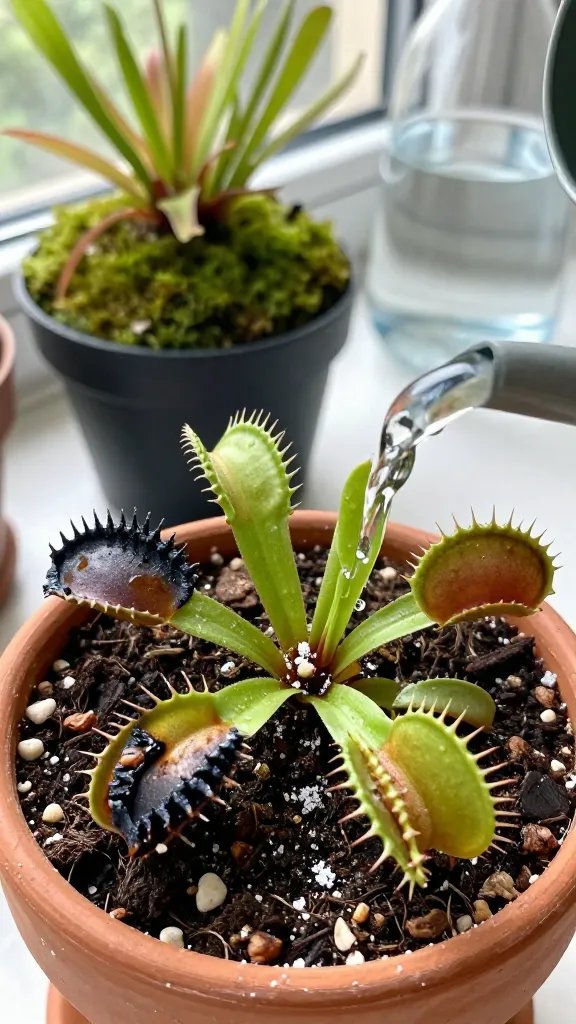
The fastest way to kill a carnivorous plant is to pot it in standard houseplant mix. Fertilized soil loads the roots with minerals they can’t handle, causing root burn, blackening traps, and stalled growth within weeks.
Why It Fails
- Regular potting mix contains compost, bark, and added fertilizer that releases salts with every watering.
- Carnivores evolved in nutrient-poor bogs; minerals in the root zone disrupt their ability to absorb water and trigger dieback.
What To Use Instead
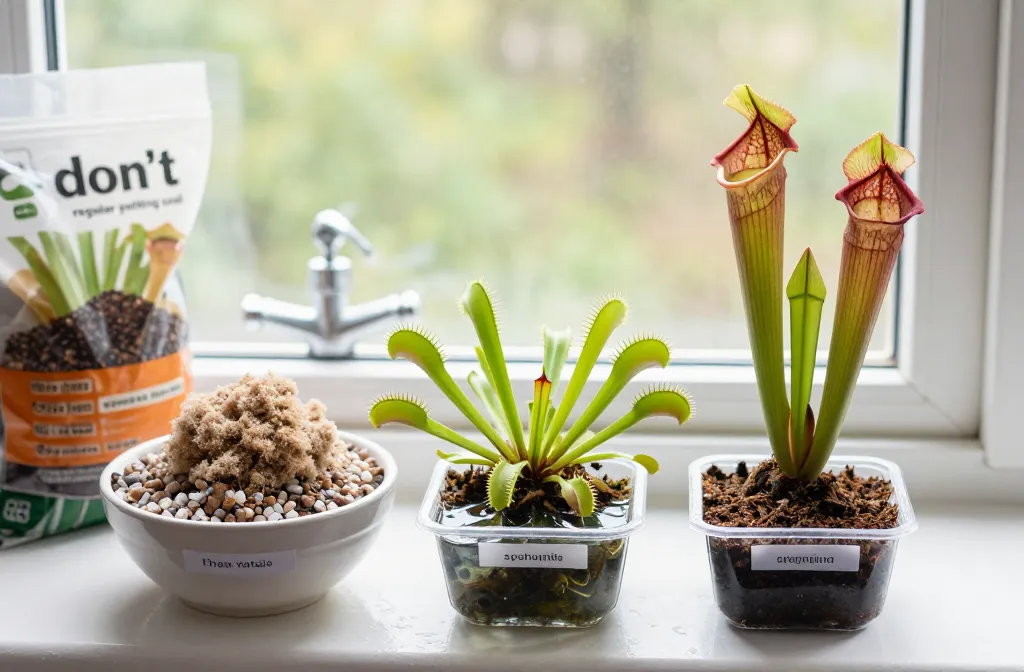
- For Venus flytraps and most sundews: 1:1 plain sphagnum peat moss to coarse horticultural sand or perlite.
- For many pitcher plants (Sarracenia): 1:1 or 2:1 peat to perlite for extra air.
- For tropical Nepenthes: long-fiber sphagnum moss mixed with perlite or orchid bark (bagged “orchid mix” plus sphagnum works from a garden centre).
How To Repot Safely
- Soak peat and perlite in a bucket with pure water until the peat darkens and stops floating.
- Rinse sand or perlite in a colander to flush dust.
- Gently tease the plant from old soil, keep roots moist, and firm the new mix around them without compressing hard.
Action today: If your plant is in regular potting soil, repot this week into a peat/perlite or sphagnum-based mix with zero added fertilizer.
2. Using Tap Or “Mineral” Water: Silent Salt Buildup That Kills Traps
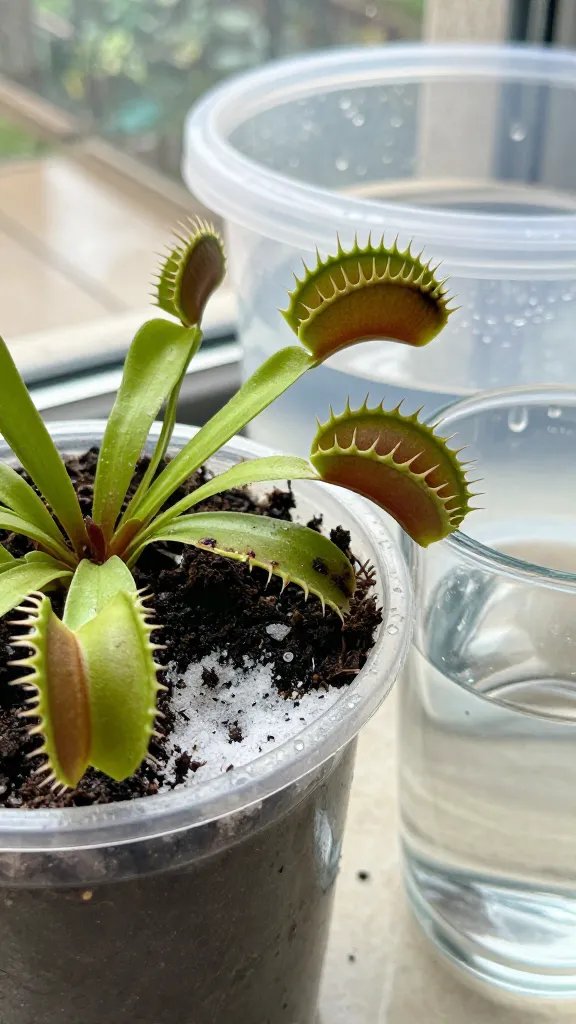
Tap water that tastes fine to you often contains dissolved minerals that poison carnivores over time. You’ll see leaf tips blacken, traps twist or stay small, and growth slow to a crawl even while the plant looks “well watered.”
Signs To Watch For
- Brown or black edges on otherwise green leaves or traps.
- White crust on the pot rim or soil surface after drying.
- Pitchers forming without liquid inside, or flytraps that don’t fully open.
What To Use
- Rainwater collected in a clean bucket or tub (avoid roofing runoff if the gutters are rusty or treated).
- Distilled water from the supermarket.
- Reverse osmosis (RO) water sold for aquariums.
How To Flush Existing Salts
- Place the pot in a sink or tub.
- Slowly pour 3–4 pot-volumes of pure water through the soil to wash out accumulated minerals.
- Let it drain fully, then resume normal watering with pure water only.
Takeaway: Switch to rain, distilled, or RO water immediately and flush the pot once to clear past salts.
3. Letting Soil Dry Out Or Stay Waterlogged: Roots Suffocate Or Collapse
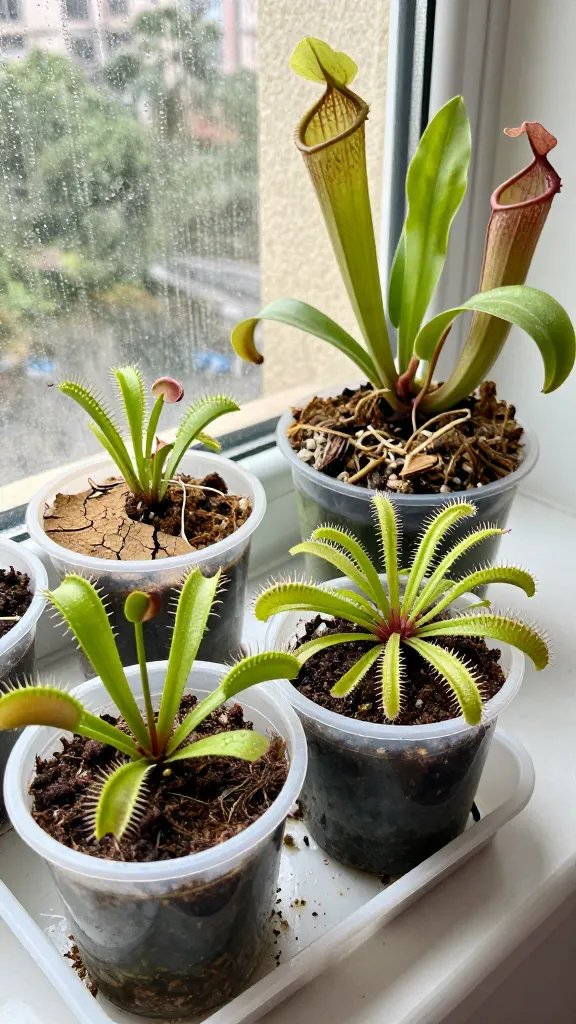
Bog plants hate rollercoaster moisture. If the mix dries even once, delicate root hairs die and growth stalls. Keep it swampy for temperate species—but not underwater—while tropical pitchers resent sitting in deep trays for days.
Know Your Group
- Venus flytraps and Sarracenia: Like consistently damp to wet. A shallow tray works.
- Many Drosera (temperate/tropical sundews): Damp to evenly moist; tolerate a shallow tray, not a deep bath.
- Nepenthes (tropical pitchers): Moist, airy mix; no standing water tray—water from above and drain well.
Easy Watering Methods
- Tray method (flytraps, Sarracenia): Keep 1–2 cm (about a finger’s thickness) of pure water in the saucer. Let it drop to just empty, then refill.
- Top-water (Nepenthes): Water until it runs out the bottom, then empty the saucer. Repeat when the top feels faintly springy but not dry.
Warning Signs
- Too dry: Peat feels crusty, traps wilt or snap shut weakly, sundew dew disappears.
- Too wet/stagnant: Sour smell, algae bloom, pale leaves, or roots turning tan to brown and mushy.
Action today: Set a simple rule: for tray-watered plants, maintain 1–2 cm of pure water; for Nepenthes, water from above every 3–5 days and always drain the saucer.
4. Starving Or Overfeeding: Traps Deform, Pitchers Abort, Or Plants Rot
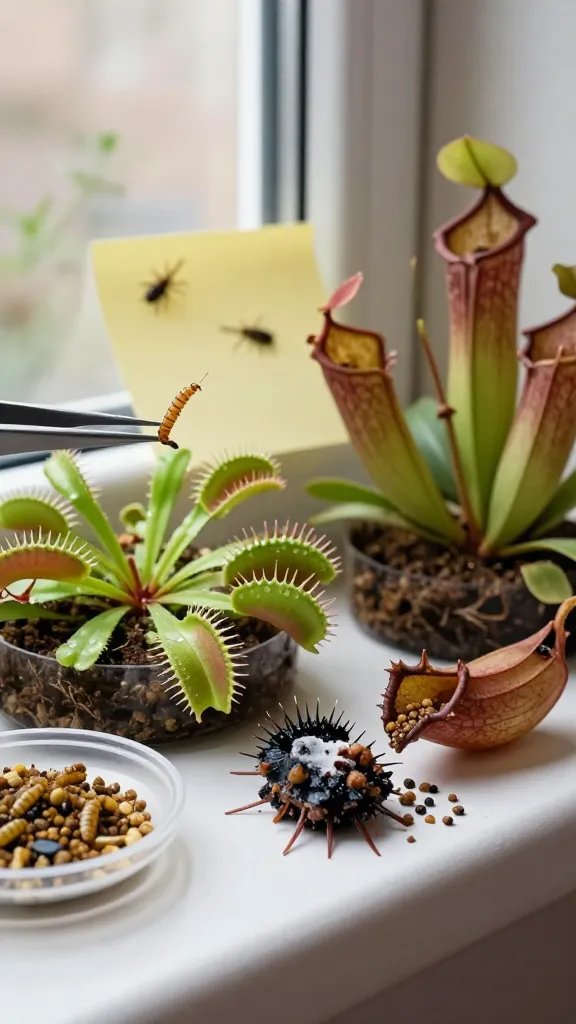
In a clean apartment, insects are scarce, and your plants stall without prey. On the flip side, stuffing traps with meat, fertilizer pellets, or frequent feedings rots the trap and invites mold.
Safe Feeding Options
- Dried insects (mealworms, crickets) from the pet aisle—break into pea-sized bits.
- Fish food flakes or betta pellets for sundews and pitcher plants—pinhead-sized per trap or a few flakes per medium pitcher.
- Live gnats caught with a yellow sticky card and offered with tweezers.
How To Feed Properly
- Venus flytraps: One small insect per healthy trap every 3–4 weeks. Gently tickle the trap edges after it closes so it seals. Do not overfill; use prey no larger than one-third the trap size.
- Sundews: Dust a few leaves with crushed fish flakes once every 2–3 weeks; stop if leaves lose their sticky dew.
- Pitcher plants: Drop 2–4 fish flakes or a tiny insect into each open pitcher once a month. If pitchers hold no liquid, add a teaspoon of pure water first.
- Nepenthes: One small insect or a couple of pellets per active pitcher every 3–4 weeks.
Red Flags
- Rotting traps after feeding = prey too large or too frequent.
- No coloration or weak growth over months = not enough prey in a bug-free home.
Takeaway: Feed small amounts on a monthly rhythm using dried insects or fish flakes—never meat, never fertilizer in the soil.
5. Wrong Light And Heat: Weak Colors, No Pitchers, Or Crispy Leaves
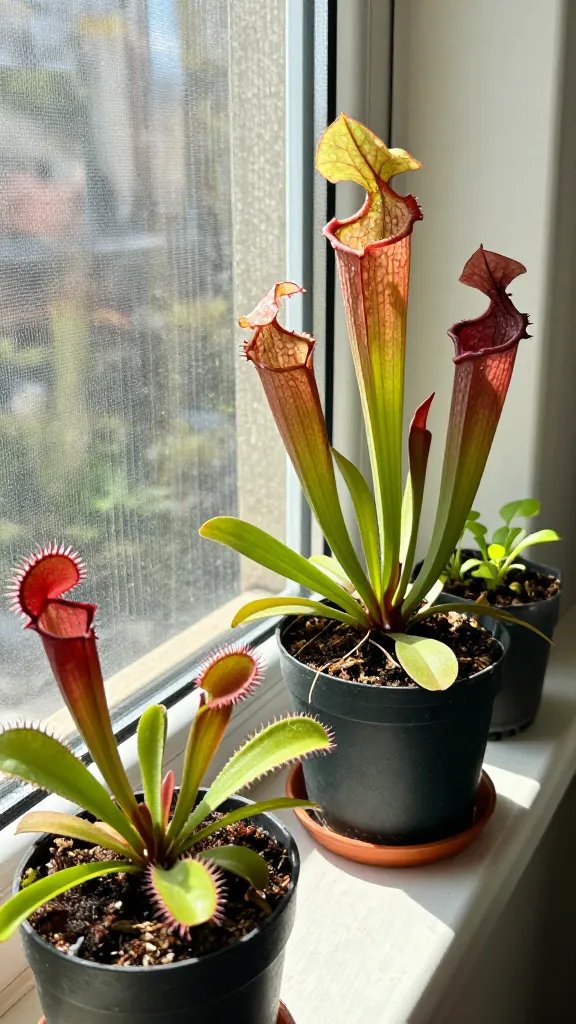
Too little light gives you floppy, green plants that refuse to color or make pitchers. Too much direct summer heat behind glass can scorch leaves in a single afternoon.
Simple Light Placement
- Venus flytraps and Sarracenia: Bright sun near a south- or west-facing window; aim for 4–6 hours of direct sun through the glass. If the glass bakes, shift 30–60 cm back or use a thin sheer curtain at midday.
- Sundews (many species): Bright indirect light near a window; a couple of hours of gentle morning sun boosts red coloration.
- Nepenthes: Bright, filtered light all day; morning sun only. Avoid hot, late-afternoon beams through glass.
Heat Reality Check
- Windowsills can exceed 30°C on sunny days. If leaves feel hot to the touch at midday, provide a sheer curtain or move the plant back from the glass.
- Pitcher loss on Nepenthes often traces to dry, hot air; move away from radiators and add a tray of water nearby for ambient humidity.
Color And Growth Clues
- Good light: Flytraps develop red interiors; Sarracenia deepen in color; sundews glisten with sticky dew.
- Too dim: Long, pale leaves, few or no traps, pitchers forming but aborting early.
- Too intense/too hot: Crispy edges, bleached patches, or rapidly drying media.
Action today: Give your plants a brighter spot—south/west window for sun-lovers, bright filtered light for Nepenthes—and add a sheer curtain if leaves feel hot at midday.
6. Skipping Dormancy For Temperate Species: Year-Over-Year Decline
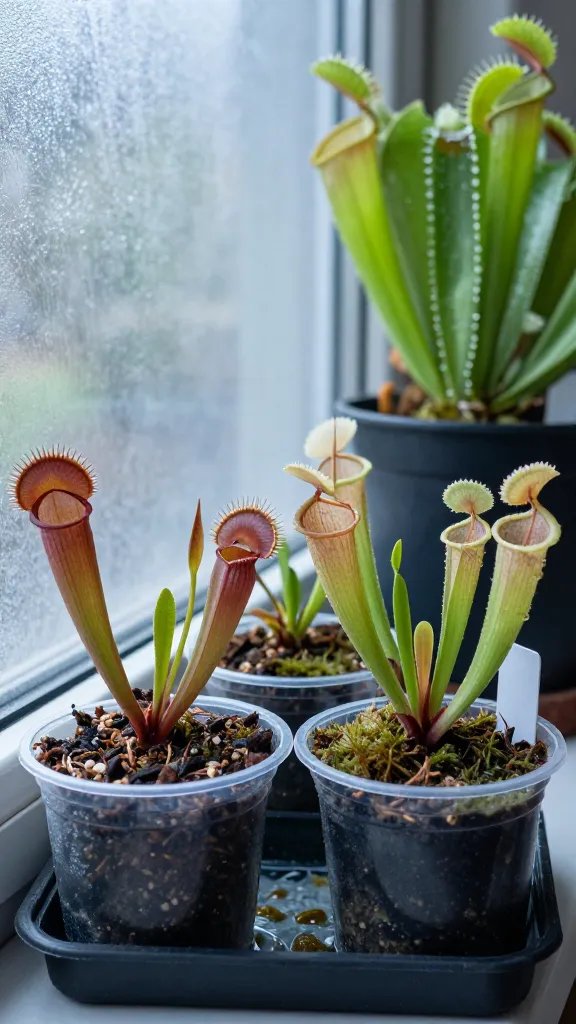
Temperate carnivores like Venus flytraps and many Sarracenia need a cool winter rest. Without it, they limp along, shrinking each year until they fade out.
Who Needs Dormancy
- Requires dormancy: Venus flytraps, Sarracenia, many temperate Drosera (like D. filiformis, D. rotundifolia).
- Does not require cold dormancy: Nepenthes, tropical sundews (D. capensis, D. spatulata), and most butterworts sold as houseplants (check the label).
Easy Apartment Dormancy
- Timing: Late autumn through late winter—about 3 months.
- Place in a bright, cool spot around 5–10°C: an unheated spare room window, enclosed porch, or the bottom shelf of a bright but chilly stairwell. Avoid freezing solid.
- Watering: Keep the tray barely wet—top up to 0.5–1 cm when the saucer dries. Do not let the soil dry out.
- Grooming: Trim brown pitchers and dead leaves; leave green growth alone.
What You’ll See
- Flytraps make small, low traps; Sarracenia pitchers brown and die back to phyllodia (flat leaves). That’s normal.
Takeaway: If you keep temperate species, plan a 3‑month cool rest each winter with minimal water and bright light.
Frequently Asked Questions
Can I use bottled spring water if I don’t have rainwater?
No—spring and “mineral” waters contain dissolved minerals that harm carnivores. Use distilled water from the supermarket, RO water from the aquarium aisle, or collect rainwater in a clean plastic tub. If you’re unsure, taste it: if it tastes “mineral” or leaves a ring in a glass, don’t use it.
How often should I feed a Venus flytrap indoors with few bugs?
Feed one small dried insect to a healthy trap every 3–4 weeks. The prey should be no larger than one-third the trap size. After the trap closes, gently tickle the edges for a few seconds so it seals and digests properly. Skip feeding during winter dormancy.
My Nepenthes grows leaves but no pitchers—what’s wrong?
That’s usually light, humidity, or watering style. Move it to bright, filtered light with gentle morning sun, water from above and keep the mix evenly moist but airy, and place a wide water tray nearby to raise ambient humidity. Also avoid hot, dry window zones and cold drafts—both halt pitcher formation.
Do I need to fertilize carnivorous plants at all?
Never fertilize the soil—this burns roots. If growth is slow indoors, you can lightly feed traps with dried insects or, for pitchers and sundews, tiny amounts of fish flakes once a month. Keep doses small and infrequent, and watch for any leaf burn as a sign to stop.
What kind of sand should I buy for the mix?
Look for “horticultural sand” or “sharp sand” at the garden centre—washed, coarse, and lime-free. Avoid play sand that compacts into concrete and builder’s sand that can contain salts. If in doubt, use perlite instead; rinse it in a colander before mixing to remove dust.
Why are my sundews not sticky?
Lack of dew signals low light, dry air, or mineral-contaminated water. Move the plant to bright light near a window, switch to distilled or rainwater, and keep the soil evenly moist with the tray method. A nearby water tray or grouping plants together also bumps humidity enough for dew to return.
Conclusion
You don’t need lab gear to grow spectacular carnivores—just the right substrate, pure water, steady moisture, sensible light, and a light feeding hand. Fix one mistake at a time, starting with water quality and soil, and watch your plants rebound within a few weeks. When you’re ready, tackle dormancy planning and species selection so every windowsill trap thrives year after year.