
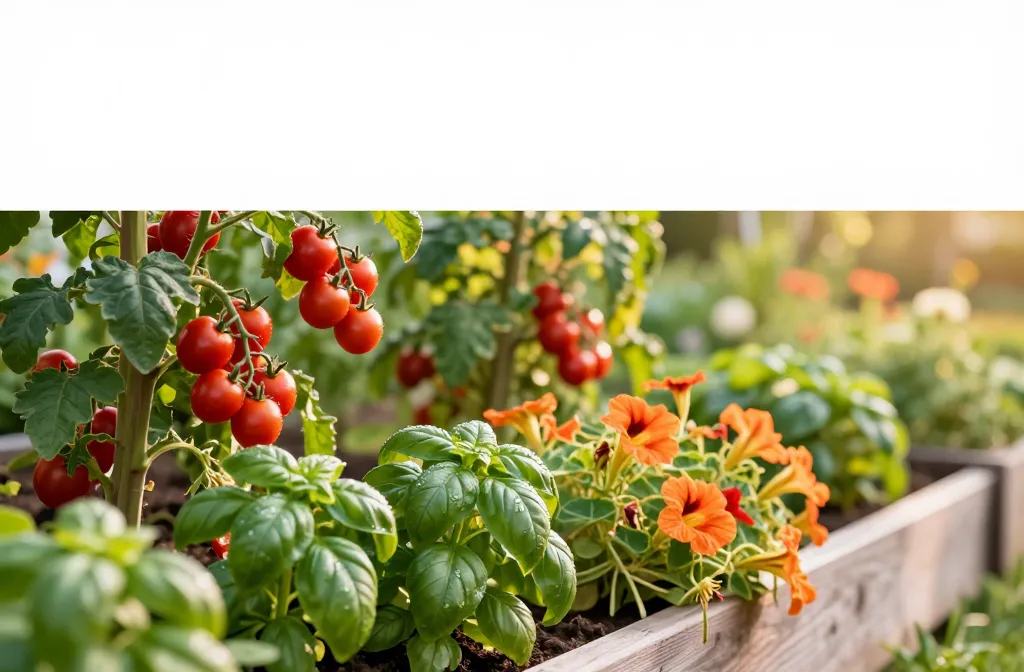
Your garden can look gorgeous and feed you at the same time—why choose? Edible flowers do double duty: they attract pollinators, repel pests, and land on your plate like tiny confetti. These pairings boost flavor, improve yields, and turn your beds into a bloom-filled buffet. Ready to plant smarter and eat prettier?
1. Basil + Tomatoes + Nasturtiums: The Caprese Glow-Up
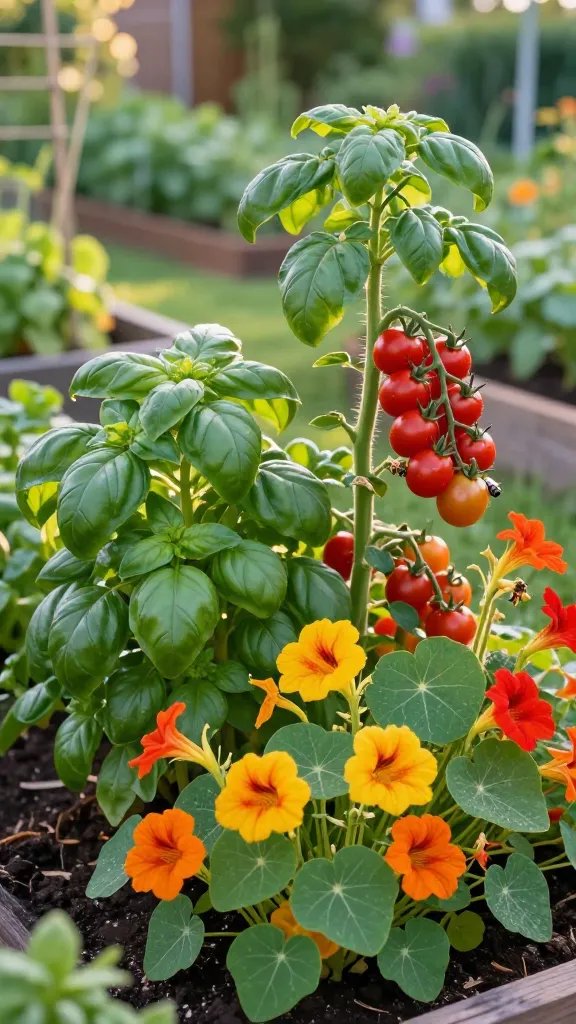
This trio is the poster child for companion planting that actually tastes as good as it looks. Nasturtiums trail between tomato vines, luring aphids away while inviting pollinators in. Basil boosts tomato vigor and allegedly improves flavor—plus you’ll snack on peppery, jewel-toned nasturtium petals.
Key Pairings:
- Basil under and around tomatoes for shade and essential oil scent that confuses pests
- Nasturtiums as living mulch to cover soil and trap aphids
- Cherry tomatoes for maximum pollinator action and fast harvests
Plant tomatoes in the center, surround with basil starters, then thread nasturtium starts along the edges to cascade. Water deeply and mulch to keep soil even—tomatoes hate drama.
Harvest Notes:
- Use nasturtium flowers and leaves in salads or to top pizza (hello, peppery punch)
- Scatter basil flowers over pasta when they bolt—yes, they’re edible and fragrant
- Slice tomatoes warm from the sun for true summer bragging rights
Best for hot, sunny beds where you want maximum color and flavor. FYI, this combo turns any patio pot into an Italian moment.
2. Cucumbers + Dill + Borage: Crunch Meets Cucumber-Cool Blooms
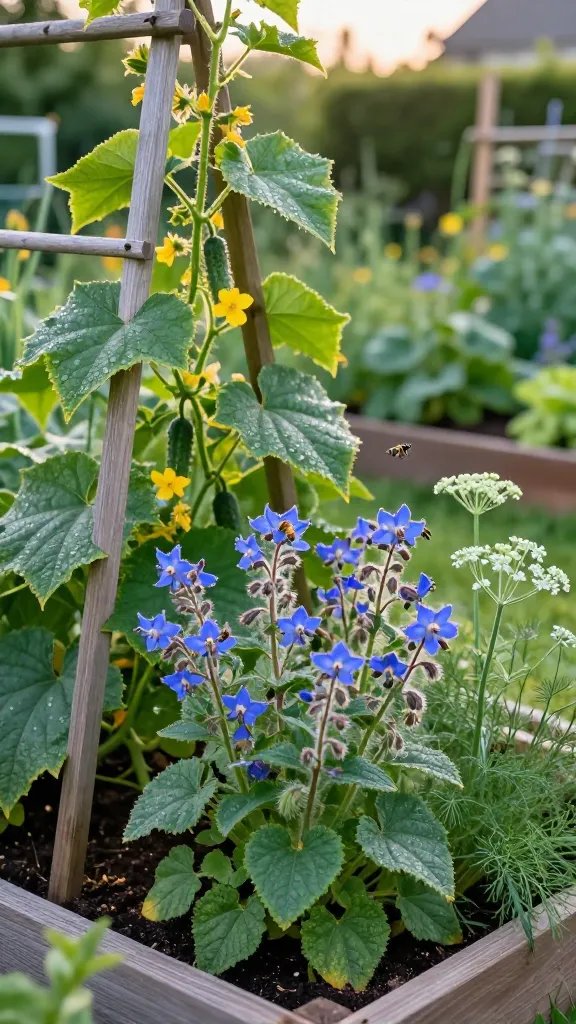
Cucumbers love friends that bring pollinators and pest control. Enter borage with its starry blue flowers and dill with feathery fronds—both edible, both irresistible to beneficial insects. The result? More fruit set, fewer pests, and salads that taste like a farmer’s market flex.
Why It Works:
- Borage attracts bees like a magnet and supposedly improves cucumber flavor
- Dill draws parasitic wasps that munch on caterpillars and aphids
- Cucumbers sprawl happily under this airy canopy
Train cukes up a trellis to save space. Tuck borage at the base and sow dill in clumps nearby. Borage reseeds like it pays rent, so deadhead if you want fewer volunteers.
Edible Moments:
- Float borage flowers in lemonade or freeze into ice cubes for a poolside vibe
- Snip dill heads for quick pickles and sprinkle fronds over yogurt-cuke salads
- Harvest cucumbers often—small ones stay crisp and sweet
Perfect when you want a lush, buzzing corner that feels like summer vacation. Seriously, those blue flowers are Instagram gold.
3. Lettuce + Chives + Viola/Pansies: Salad Lifted, Pests Ghosted
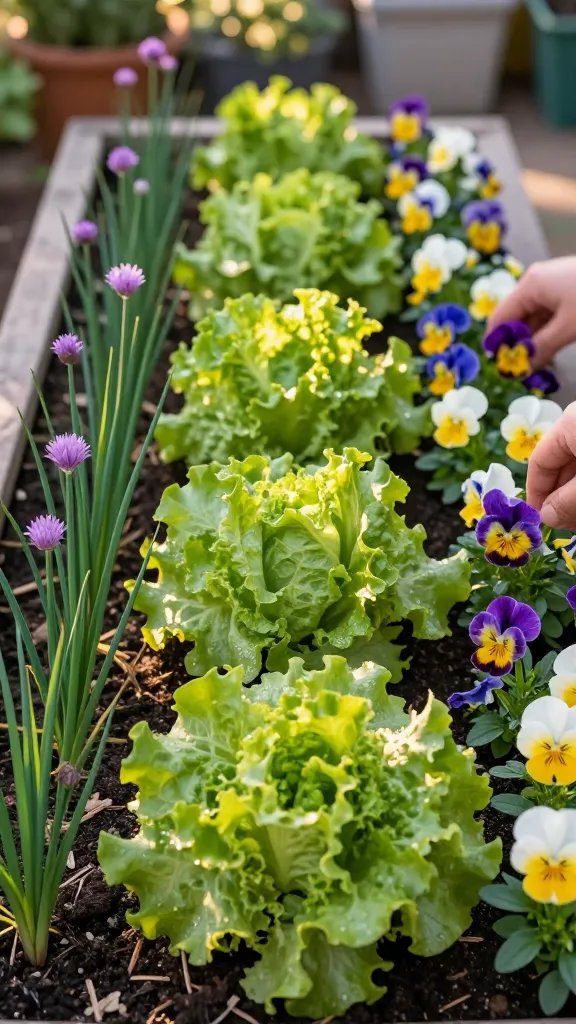
Soft greens need a security detail. Chives repel aphids with their oniony punch, while violas and pansies add gentle shade and edible color. You get tender leaves, fewer pest issues, and a salad that looks like confetti rained from a fancy bistro.
Planting Game Plan:
- Lettuce in the middle row, spaced for airflow
- Chives as borders or clumps every 12 inches
- Violas/pansies dotted between for continuous blooms
Keep the soil consistently moist and harvest outer lettuce leaves weekly. Pinch viola blooms to encourage more flowers and keep the color show going.
Flavor & Use:
- Viola and pansy flowers taste mild and slightly sweet
- Chive blossoms add oniony crunch—break into florets
- Mix baby leaves with lemony vinaigrette and a sprinkle of seeds
Use this combo for spring and fall beds or bright window boxes. It’s low drama, high reward, and IMO the easiest way to look like you “plate” at home.
4. Squash + Calendula + Marigolds: The Sunny Squad With Serious Pest Control
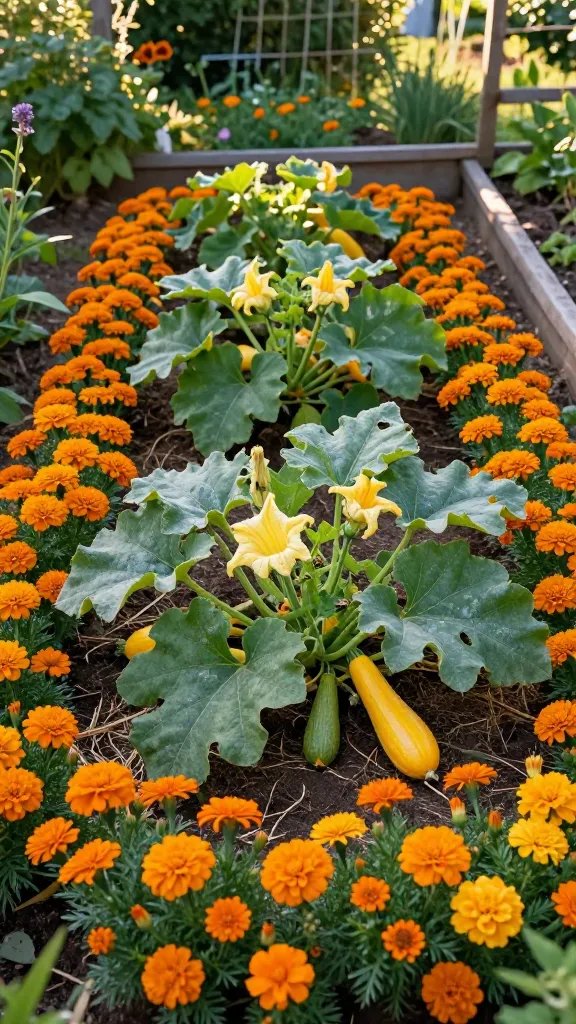
Squash can throw tantrums with pests and powdery mildew, so give it floral bodyguards. Calendula and marigolds bring cheer and backup—both draw beneficials, and marigolds help deter nematodes in soil. Bonus: you’ll harvest pumpkin-sized blooms for salads and skincare DIYs.
The Lineup:
- Squash (summer or winter) as the main act
- Calendula for edible petals with a saffron-meets-marigold vibe
- French marigolds for compact, pest-busting borders
Plant squash in mounds with plenty of space. Ring each hill with marigolds, then stitch calendula throughout. Keep leaves dry in the morning to limit mildew, and give lots of airflow.
Kitchen Extras:
- Calendula petals color rice, soups, and butter (some call it “poor man’s saffron”)
- Marigold tagetes petals can be citrusy; taste-test before tossing into salads
- Stuff squash blossoms with ricotta and herbs, then pan-fry—chef’s kiss
Go for this when you’ve got a sunny patch and big harvest dreams. The flowers earn their keep while the squash sprawls like it owns the place—because it kind of does.
5. Strawberries + Chamomile + Alyssum: Sweet Berries, Softer Soil, Zero Fuss
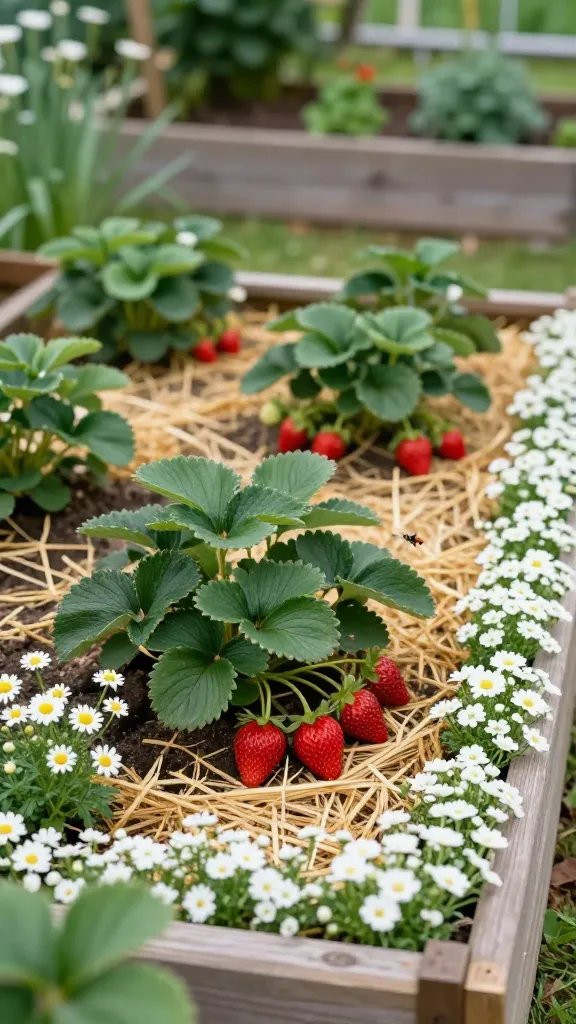
Strawberries love a supportive entourage. Chamomile brings gentle pest deterrence and a tea habit, while sweet alyssum acts as a living lace tablecloth that feeds hoverflies (aka your aphid control team). The bed looks like dessert and performs like a pro.
How To Arrange:
- Strawberries in the center with runners trained into open spots
- German or Roman chamomile dotted in small clusters
- Sweet alyssum edging the bed as low, pollinator-friendly groundcover
Mulch with straw to keep berries clean and slugs annoyed. Water consistently; uneven moisture = weird berries. Snip chamomile blooms regularly to keep plants compact and productive.
Taste & Perks:
- Alyssum’s tiny flowers are mildly sweet—perfect for garnishing tarts
- Chamomile flowers dry easily for tea or infuse into honey
- Strawberries ripen faster with all the pollinator traffic
Choose this combo for borders, raised beds, or hanging planters. It’s tidy, fragrant, and ridiculously charming—trust me, it’ll convert non-gardeners.
Bonus Reference: 14 Edible Flower Combos At A Glance
- Tomato + Basil + Nasturtium
- Cucumber + Dill + Borage
- Lettuce + Chives + Viola/Pansy
- Squash + Calendula + Marigold
- Strawberry + Chamomile + Alyssum
- Peas + Mint + Dianthus
- Beans + Sunflowers + Scarlet Runner Flowers
- Beets + Cilantro + Bachelor’s Buttons
- Carrots + Parsley + Chamomile
- Kale + Garlic Chives + Nasturtium
- Eggplant + Basil + Marigold
- Radish + Arugula Flowers + Dill
- Rosemary + Thyme Flowers + Lavender
- Corn + Squash Blossoms + Calendula
Mix and match based on your space and taste buds—these pairings keep the garden lively and the kitchen stocked.
Safety Quickie (Because We Like You)
- Only eat flowers grown without pesticides
- Double-check ID—some lookalikes aren’t friendly
- Start small if you’re new to edible blooms
Most edible flowers taste best fresh and early in the day. Rinse gently and pat dry like they’re fancy.
Ready to plant a garden that snacks back? These combos bring color, flavor, and pollinator buzz without the high-maintenance drama. Go grab a trowel—your future salads and cocktails are waiting.