Deadly Duo Alert 6 Terrarium Plants That Look Compatible but Will Kill Each Other Unmasked
I learned the hard way that “looks cute together” inside glass often equals disaster. I paired lush ferns with tiny succulents in a sealed jar and watched a weeks-long turf war end in rot, leggy stems, and fungus gnats. You’ll learn the six pairings that look compatible but sabotage each other through humidity, light, and growth-rate clashes — and exactly what to plant instead. This saves you money, time, and the heartbreak of a fogged-up jar full of dying leaves.
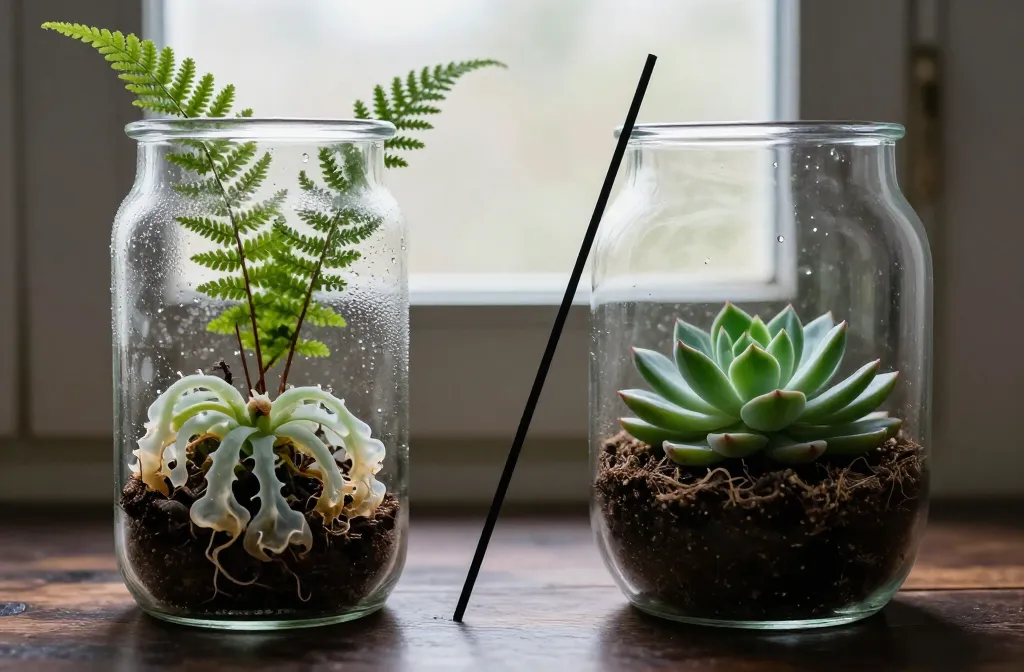
1. Humidity Clash: Ferns vs. Succulents (Closed Terrariums)
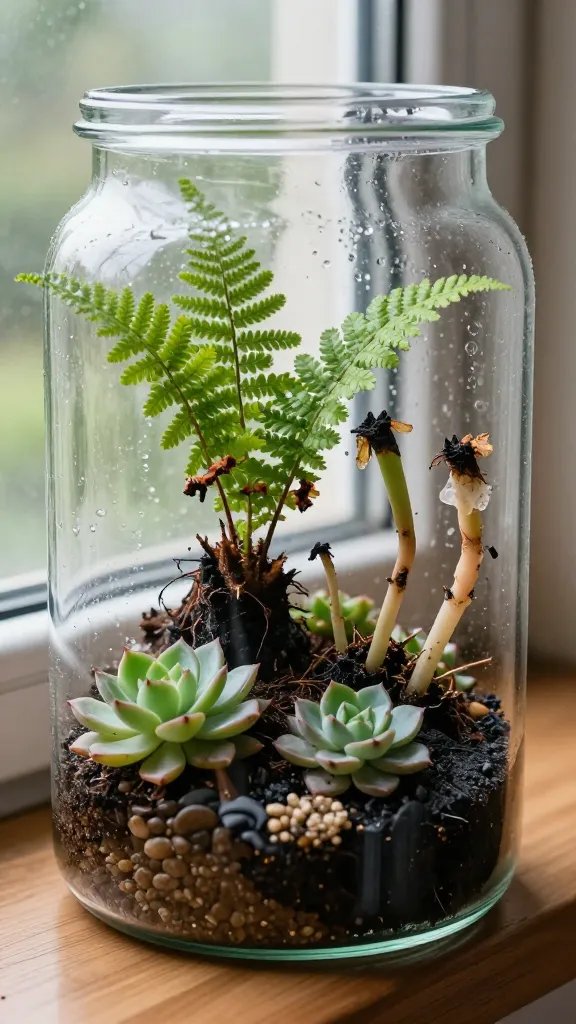
The consequence is swift: the succulents stretch, rot, and collapse while the ferns blacken at the base from recurring waterlogged pockets. A closed terrarium traps moisture and raises humidity — great for ferns, lethal for succulents. Each watering cycle makes it worse, because succulents store water and can’t respire properly in the sealed, damp air.
Signs to Watch For
- Succulents: elongated stems, pale leaves, translucent mush at the crown
- Ferns: blackened rhizomes, fronds with brown tips from stagnant, stale air
- Persistent heavy condensation by midday and a sour, earthy smell
How to Fix It
- If you already mixed them, remove succulents and pot them in a small, open bowl with a gritty mix from the garden centre labeled “cactus/succulent.” Keep them near bright indirect light.
- Keep the fern in the closed terrarium with a moisture-retentive potting mix and a thin layer of rinsed decorative gravel on top to slow evaporation swings.
- Open the lid for 1–2 hours daily for a week to clear excess moisture, then only water when condensation drops below one-third of the glass.
What to Use Instead
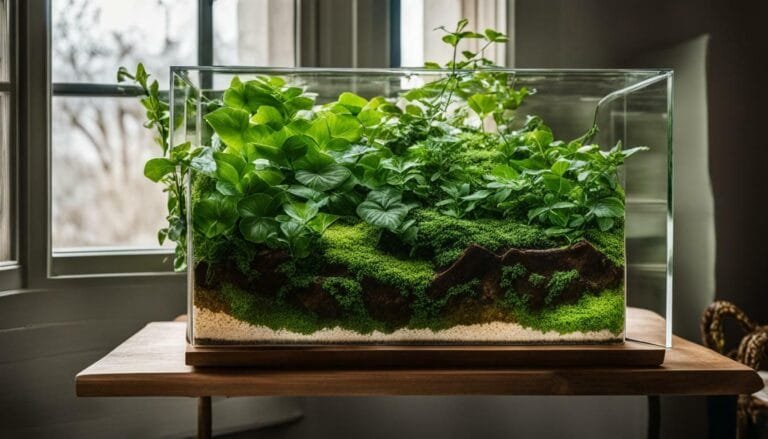
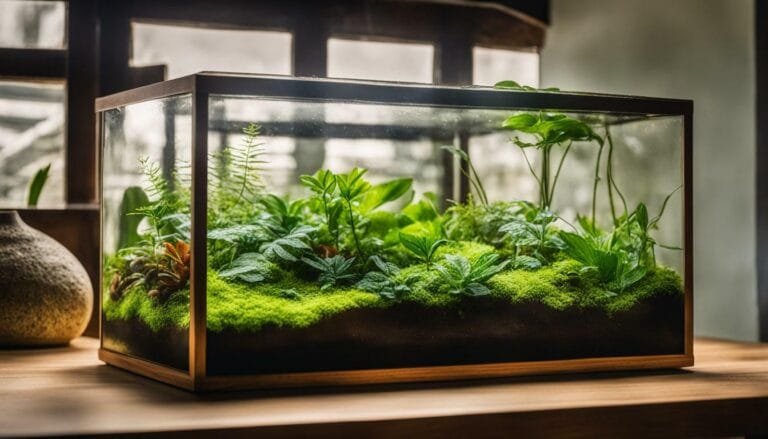
- Closed terrarium “fern friends”: mosses (sheet or cushion moss), baby tears (Soleirolia), nerve plant (Fittonia), creeping fig (Ficus pumila ‘Quercifolia’)
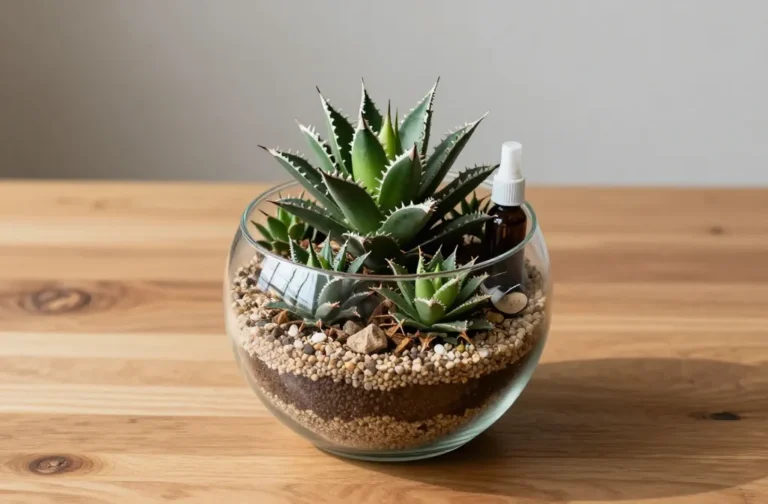
- Succulent companions (open container): haworthia, echeveria, string-of-pearls, zebra aloe — all in a shallow, open dish
Takeaway: Keep succulents in open containers and ferns in closed ones — never together under a lid.
2. Light Mismatch: Mosses vs. High-Light Miniatures (Echeveria, String-of-Pearls)
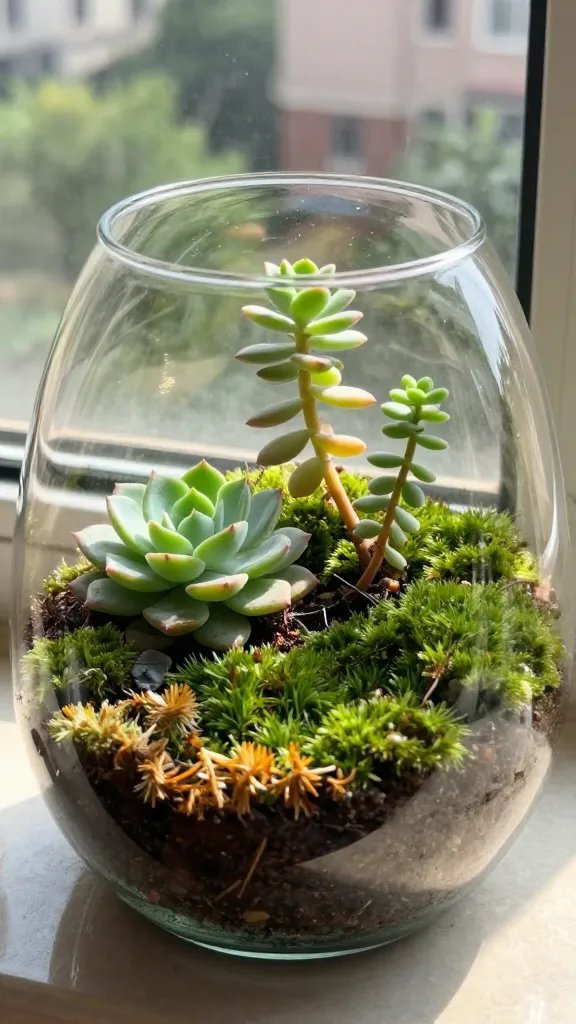
Chasing enough light for sun-loving miniatures inside glass scorches or bleaches moss, while dimming the light to save the moss leaves succulents etiolated and weak. The result is a terrarium with a crispy green carpet and floppy, pale rosettes. Glass amplifies light heat in spots, so a sunny sill that helps succulents will cook moss.
Signs to Watch For
- Moss: turns straw-yellow, shrinks back from edges, crusty texture when touched
- Succulents: long necks, spacing between leaves, leaning toward the window
- Patchy hot spots on the glass mid-afternoon
How to Fix It
- Split the display: grow mosses in a closed or semi-closed vessel in bright indirect light near a window, never in direct sun.
- Place succulents in an open container on a bright sill with 1–2 hours of gentle morning sun, rotating the container weekly for even growth.
- If combined already, move to a bright but sun-shielded spot and replant the succulents elsewhere; rehydrate moss with a fine mist once weekly.
What to Use Instead
- Moss partner plants: fittonia, peperomia (mini types), selaginella — all thrive in soft light
- High-light companions (open): sedum cuttings, lithops, small agave pups — all tolerate more sun without cooking moss-free
Action today: Decide which star you want to keep in glass — moss or succulents — and move the other to a separate open container by the end of the day.
3. Thirst Timetable Conflict: Fittonia vs. Peperomia (Same Look, Different Needs)
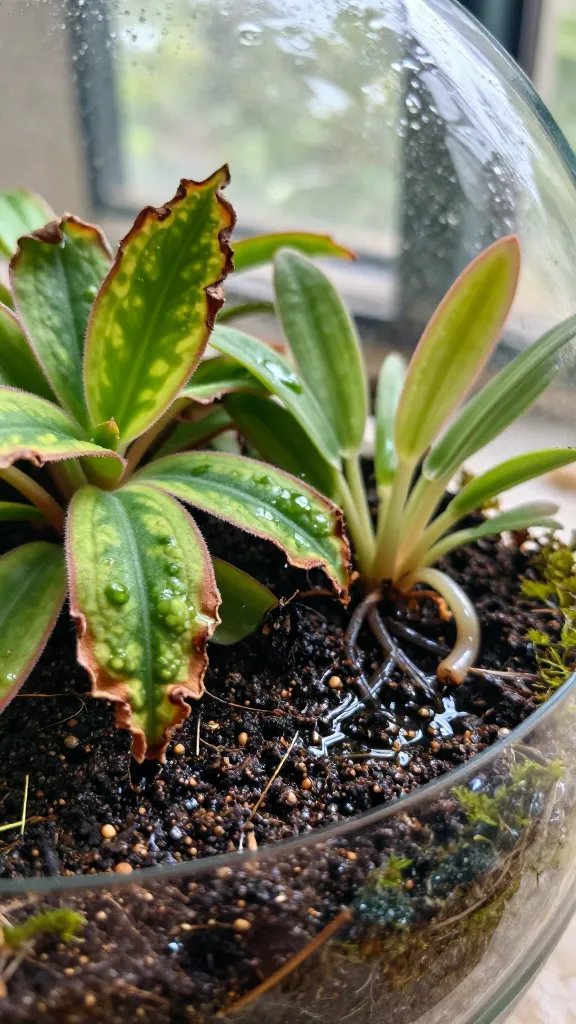
The lush, tiny leaves make fittonia and peperomia look like perfect partners, but their watering schedules clash. Fittonia droops dramatically and wants consistently moist soil, while many peperomia prefer to dry out a bit between waterings. Keep both in one substrate and you either drown the peperomia or starve the fittonia.
Signs to Watch For
- Fittonia: frequent wilting between waterings, edges crisping even when humidity looks high
- Peperomia: leaf drop at the base, soggy stems, fungus gnat sightings
- Soil that feels wet at the bottom and dry at the top for days
How to Fix It
- Divide the terrarium into zones with a thin plastic divider (cut from a food container lid). Use moisture-retentive potting mix on the fittonia side and regular houseplant potting mix on the peperomia side.
- Top each zone differently: fine bark or sphagnum over fittonia; pea gravel or orchid bark over peperomia to slow wicking.
- Water with a small syringe or straw directly into each plant’s zone so you don’t soak the entire base.
What to Use Instead
- Fittonia companions: selaginella, baby tears, mosses — all like evenly moist conditions
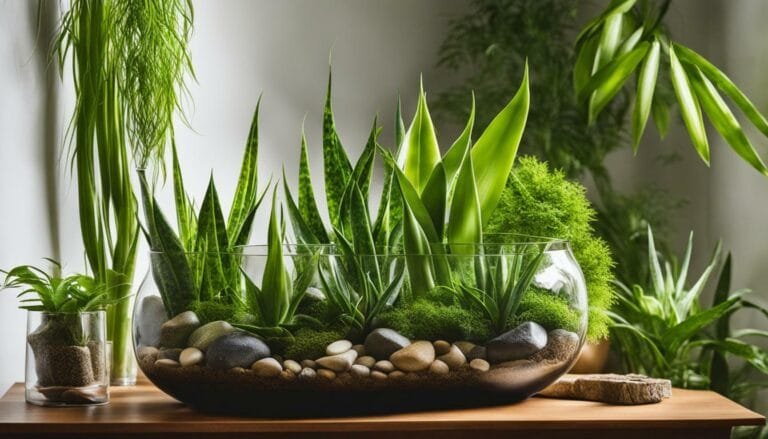
- Peperomia companions: pilea depressa, small hoya cuttings (open or vented), dwarf sansevieria pups — all prefer lighter watering
Takeaway: If you love both, build separate moisture zones or give each its own container; never water them “one-size-fits-all.”
4. Sprawl vs. Slowpoke: Creeping Fig (Ficus pumila) vs. Mini Ferns and Moss
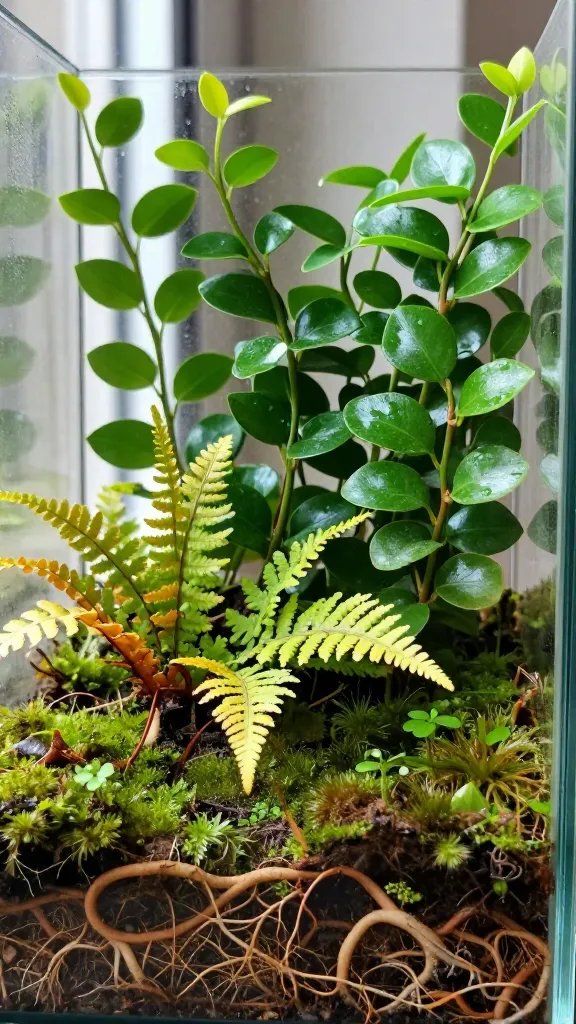
Creeping fig looks delicate but behaves like a vine with a mission. It races along glass, smothers mini ferns and moss, and hogs root space. The aftermath is a green monoculture with dead patches where slower plants ran out of light.
Signs to Watch For
- New creeping fig shoots at every seam, leaves pressing against glass
- Yellowing fronds on tiny ferns, moss turning sparse under the vine canopy
- Roots circling the base when you tug gently — clear pot-bound dominance
How to Fix It
- Prune creeping fig hard using clean scissors. Follow stems back and snip at the base, not just the tips.
- Install a vertical barrier: a strip of clear plastic or glass sunk 2–3 cm into the substrate to halt rhizome creep toward slower species.
- Replant mini ferns on a small mound of substrate or a piece of lava rock, lifting their crowns above the creeping fig’s path.
What to Use Instead
- Well-behaved trailers: pilea glauca, peperomia prostrata — slower spread, easier to restrain
- For fast coverage without takeover: selaginella “spike moss” — vigorous but trims cleanly and doesn’t root everywhere
Action today: If creeping fig shares a terrarium with slow growers, perform a base-level prune and add a buried barrier strip before the weekend.
5. Acid-Lover vs. Neutral Soil: Carnivorous Sundews/Pinguicula vs. Standard Houseplants
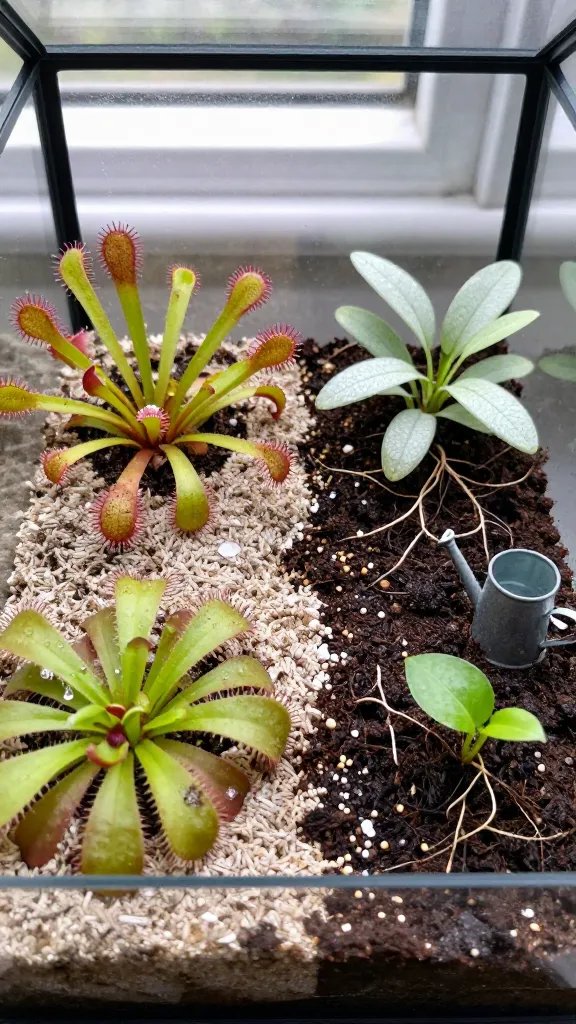
Carnivorous plants like sundews (Drosera) and butterworts (Pinguicula) thrive in low-nutrient, acidic media and rain or distilled water. Pair them with typical terrarium plants in standard potting mix and you poison the carnivores with minerals and fertilizer. At the same time, houseplants starve in the lean, acidic bog mix carnivores need.
Signs to Watch For
- Carnivores: sticky droplets disappear, leaves brown from the tips, new growth stunts
- Houseplants: pale growth, slow recovery after watering, roots failing in peat-sand mixes
- Crusty white deposits on soil surface from tap water use
How to Fix It
- Unpair immediately. Pot carnivores in a mix labeled for carnivorous plants or a simple 50:50 sphagnum peat and coarse sand, watered with rain, distilled, or deionized water.
- Keep standard terrarium plants in a good quality potting mix from the garden centre and water with clean tap water that tastes fresh, not salty.
- Avoid any slow-release fertilizer granules anywhere near carnivores.
What to Use Instead
- Carnivore companions (same needs): small sundews together, small sarracenia seedlings in a separate bog bowl, or mosses tolerant of low minerals
- Houseplant companions: fittonia, pilea, peperomia in regular mix — no cross-contamination
Takeaway: Keep carnivorous plants in their own low-mineral setup and water with rain or distilled only — never share soil or water with standard terrarium plants.
Frequently Asked Questions
Can I mix any succulents in a closed terrarium if I water less?
No. In closed glass, humidity remains high even when you water sparingly. Succulents need dry air flow as much as dry soil, and the sealed environment keeps leaf surfaces damp. Use an open container for succulents and reserve closed jars for humidity lovers.
How do I know if my terrarium has too much condensation?
Check at midday. If more than half the glass is fogged or beaded, you have excess moisture trapped. Open the lid for 1–2 hours, blot visible water on the glass with a paper towel edge, and repeat daily until midday condensation sits below one-third of the walls.
What simple substrate works for most closed terrariums?
Use a good quality potting mix from the garden centre, not cactus mix, topped with a thin layer of rinsed decorative gravel or fine bark. Add a 1–2 cm drainage-looking base only if you can keep water off it; otherwise, rely on light watering. Keep soil evenly moist, not soupy — water every 3–4 weeks, adjusting to condensation.
How can I water different plants in the same terrarium without overdoing it?
Deliver water precisely. Use a syringe, turkey baster, or a straw to drip water at each plant’s base, and stop when the top 1 cm of soil darkens. For mixed needs, create zones with a thin buried divider and topdress differently so moisture moves slower on the drier side.
Why does my moss turn yellow under a bright window even without direct sun?
Glass can create warm hotspots that stress moss, especially in low airflow. Shift the terrarium 1–2 feet back from the window, or place a sheer curtain between the glass and light. Mist lightly once a week and keep the lid on for closed setups to maintain stable humidity without heat spikes.
Can I safely trim aggressive plants like creeping fig inside the jar?
Yes, but prune at the base, not just the tips, so it doesn’t rebound twice as fast. Remove cuttings with tongs so they don’t rot in place, and install a simple plastic barrier sunk into the substrate to block runners. Revisit trimming every 2–3 weeks until growth stabilizes.
Conclusion
Terrariums thrive when every plant agrees on humidity, light, and watering rhythm. Split the “deadly duos” into the right vessels today, and your glass gardens will switch from constant triage to steady, effortless growth. Next step: choose one closed terrarium palette from the “What to Use Instead” lists and rebuild a stress-free mini-ecosystem this weekend.