Companion Plants for Families with Young Children: 11 Safe and Educational Pairings Guide
Want a garden that teaches kids, feeds pollinators, and doesn’t stress you out about safety? These companion plant pairings keep little hands busy and curious while staying kid-friendly. You’ll get fewer pests, more harvests, and tons of teachable moments—without turning your yard into a science fair gone rogue. Ready to plant smarter and play outside more?
1. Sunflower + Bush Beans
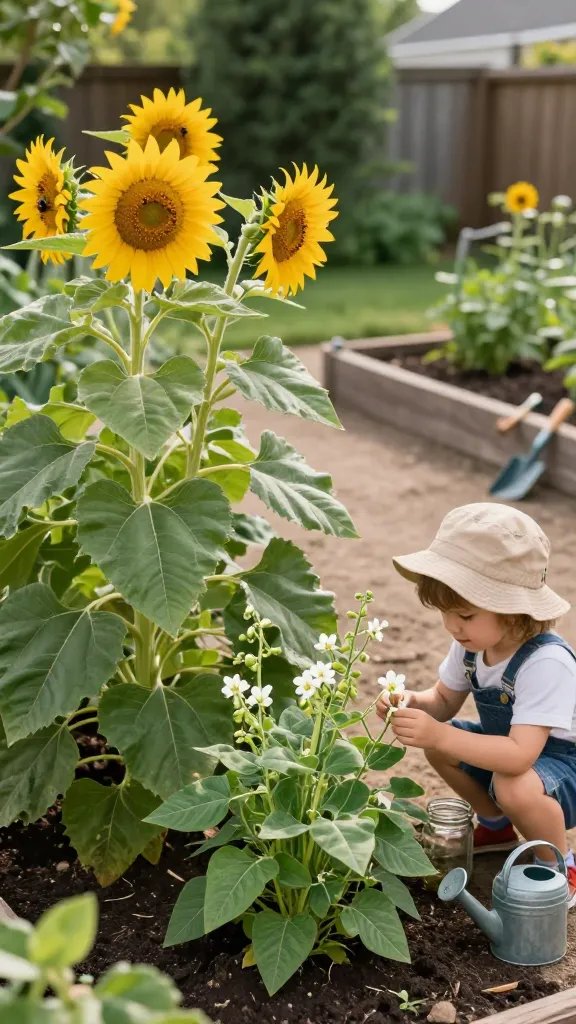
This duo turns your garden into a living fort with snacks. Sunflowers act like cheerful scaffolding, and bush beans bring nitrogen to the soil so both plants thrive. Kids get a front-row seat to pollinators while counting bean flowers like tiny trophies.
Why It Works
- Sunflowers lure bees and give beans some shelter from wind and heat.
- Bush beans add nitrogen and cover the soil, keeping it cool and moist.
- Both grow fast, so kids see results without losing interest.
Kid-Safe Tips
- Choose non-branching sunflowers like ‘Autumn Beauty’ or ‘Teddy Bear’ to avoid toppling hazards.
- Stick with bush beans, not pole beans, so no tall trellises to climb.
- Use a mulch path so little feet can explore without compressing roots.
Short on space? Plant them in a big container with at least 12 inches of depth. You’ll get a compact “mini meadow” that still feels magical.
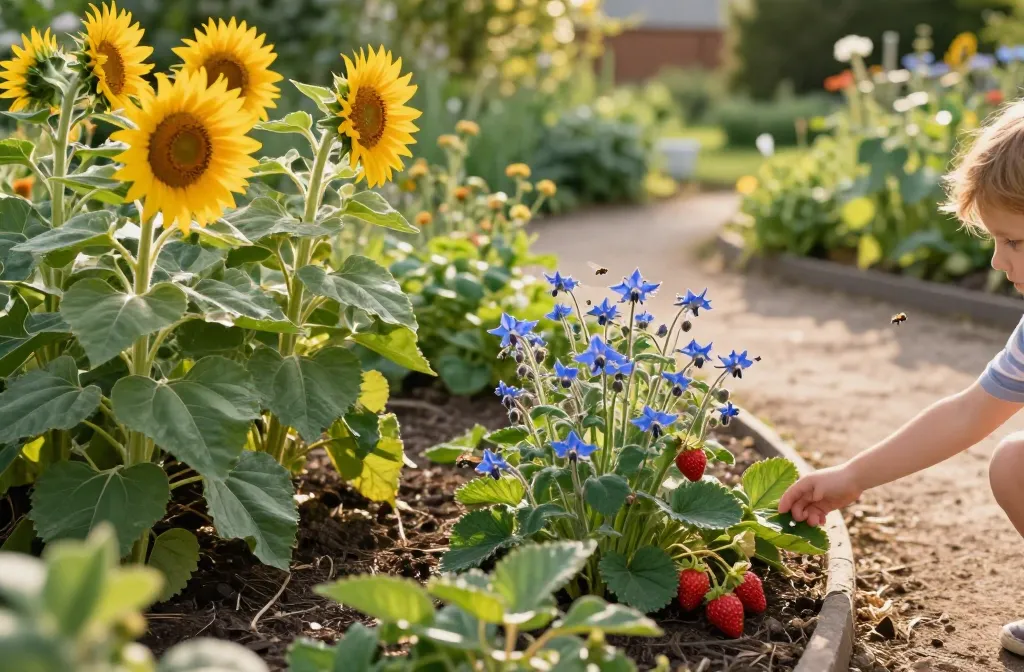
2. Strawberries + Borage
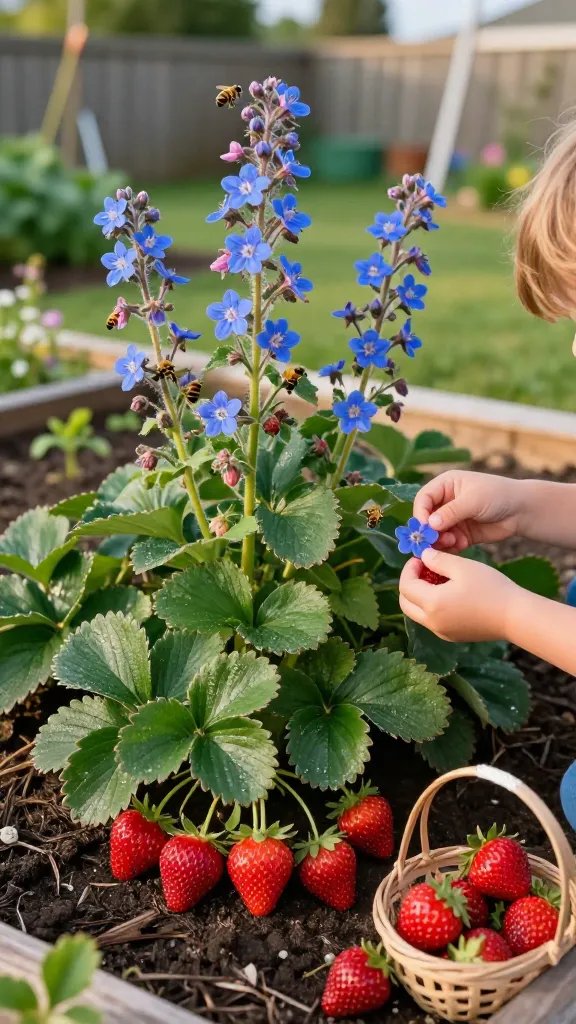
Strawberries are the gateway fruit for kids—super sweet, easy to spot, and fun to harvest. Pair them with borage to invite pollinators and keep pests guessing. Borage flowers taste like cucumber, so you’ve got edible science experiments in bloom.
Why It Works
- Borage draws bees and helps distract pests that nibble on strawberries.
- Strawberries spread as a groundcover, protecting soil and reducing weeds.
- Both prefer full sun and enjoy similar watering schedules.
Kid-Safe Tips
- Let kids pinch borage flowers and float them in water for a fancy lemonade moment.
- Choose everbearing strawberry varieties like ‘Albion’ or ‘Seascape’ for frequent harvests.
- Keep plants in a raised bed for easy pick-and-snack access at kid height.
Plant this combo near the patio, and you’ll have instant “garden snacks” during playtime. FYI: Less whining, more munching.
3. Carrots + Radishes + Dill
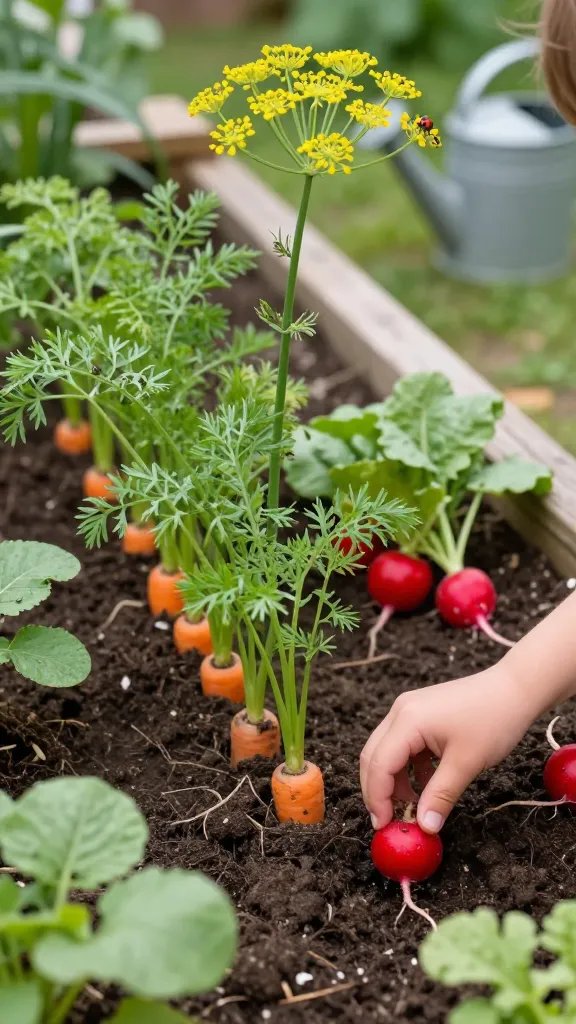
This is the patience-builder that still pays off quickly. Carrots take their sweet time, but radishes pop up in a couple weeks and mark the rows so nobody weeds the carrots by mistake. Dill brings ladybugs and tiny parasitic wasps that help keep aphids under control—nature’s pest patrol.
Why It Works
- Radishes break up soil and harvest fast, keeping kids engaged.
- Carrots fill in after radishes are pulled, using the loosened soil.
- Dill attracts beneficial insects and offers fragrant learning moments.
Kid-Safe Tips
- Sow in a wide row, not single lines, so kids can sprinkle seeds without aiming like a surgeon.
- Teach “tickle harvesting”: wiggle radishes to test readiness without yanking carrots.
- Choose short carrots like ‘Parisian’ or ‘Thumbelina’ for shallow beds and impatient gardeners.
Use this trio for a backyard “root reveal” day. Kids pull, rinse, and crunch—instant success story, IMO.
4. Basil + Cherry Tomatoes + Marigolds
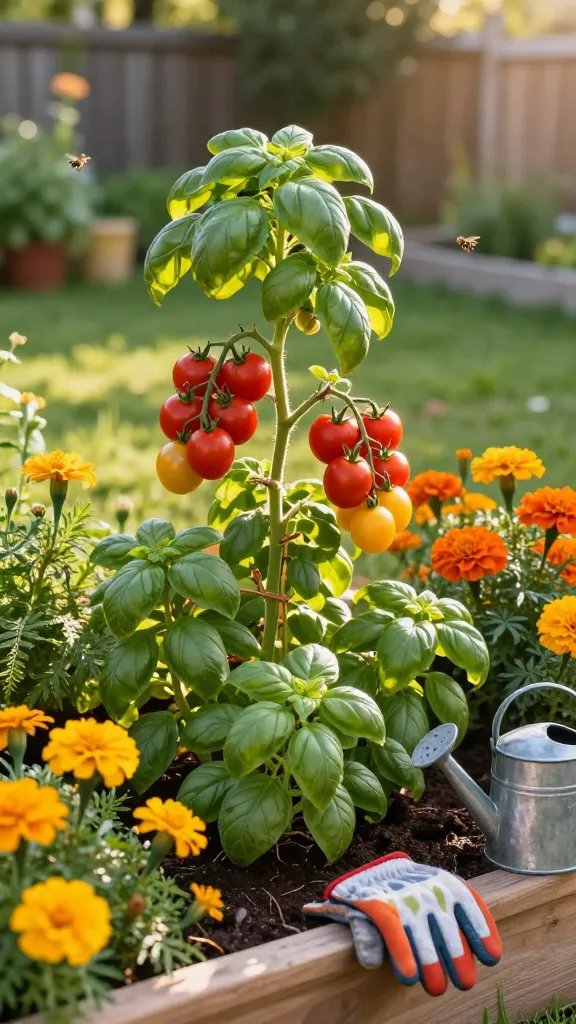
Tomatoes are the summer stars, and this combo keeps them happy and kid-approved. Basil boosts flavor and draws pollinators, while marigolds help deter nematodes and confuse pests. Plus, cherry tomatoes come at kid height and in snackable sizes—so yes, they’ll actually eat them.
Why It Works
- Cherry tomatoes ripen faster and tolerate kid-level grazing.
- Basil thrives in tomato shade and makes the garden smell amazing.
- Marigolds add color and help with pest pressure without chemicals.
Kid-Safe Tips
- Plant determinant cherry varieties like ‘Tumbler’ or ‘Tiny Tim’ to reduce staking drama.
- Let kids sniff-test basil varieties—lemon, cinnamon, and classic sweet basil spark fun comparisons.
- Use drip irrigation or a soaker hose to avoid muddy splash zones under tomatoes.
Host a mini “pizza garden” day: pick tomatoes and basil, then top flatbreads. Quick garden-to-table win that feels like magic.
5. Lavender + Blueberries + Thyme
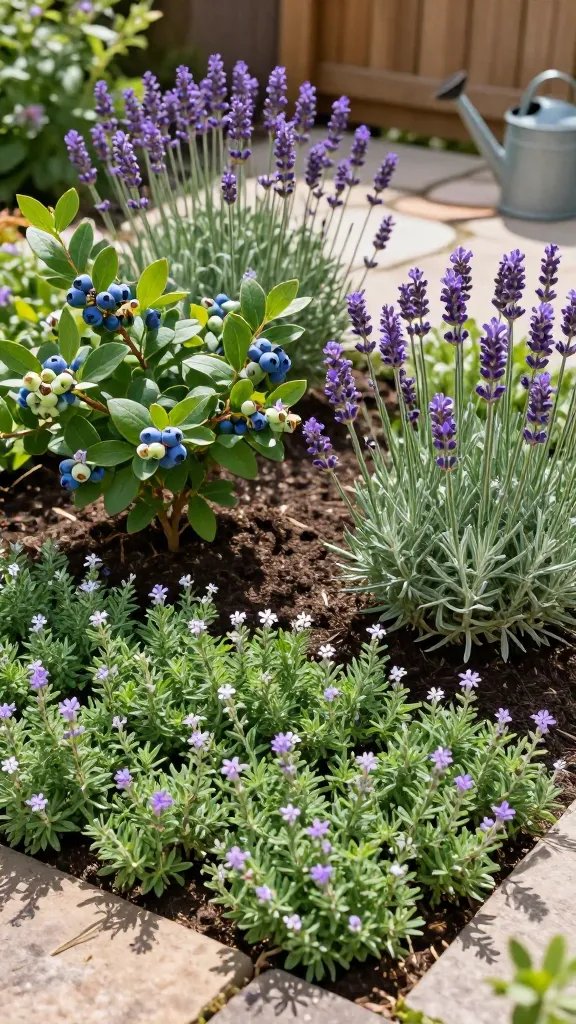
Want a calming corner that still feeds the family? This trio loves slightly acidic soil, thrives in sun, and smells like a vacation. Bees adore the blooms, and the whole bed looks clean and low-maintenance—perfect for a busy household.
Why It Works
- Blueberries need acidic soil—pairing with lavender and thyme keeps the vibe dry and friendly.
- Lavender invites pollinators and offers sensory play with scent and texture.
- Thyme creeps around as living mulch, reduces weeds, and survives kid footsteps.
Kid-Safe Tips
- Stick to edible, kid-safe varieties: culinary lavender (Lavandula angustifolia), creeping thyme (Thymus serpyllum), and highbush blueberries.
- Use pine bark mulch to help maintain acidity and keep things neat.
- Let kids taste-test blueberries for ripeness: blue all around, no pink shoulders.
Plant this near a reading nook or outdoor blanket zone. It’s the chill-out garden every family deserves—seriously.
Ready to dig in? Pick one pairing and start small—one bed, one container, one weekend. You’ll grow food, curiosity, and a few epic memories. And when the kids brag about “their” plants at dinner, just smile and take the win.