
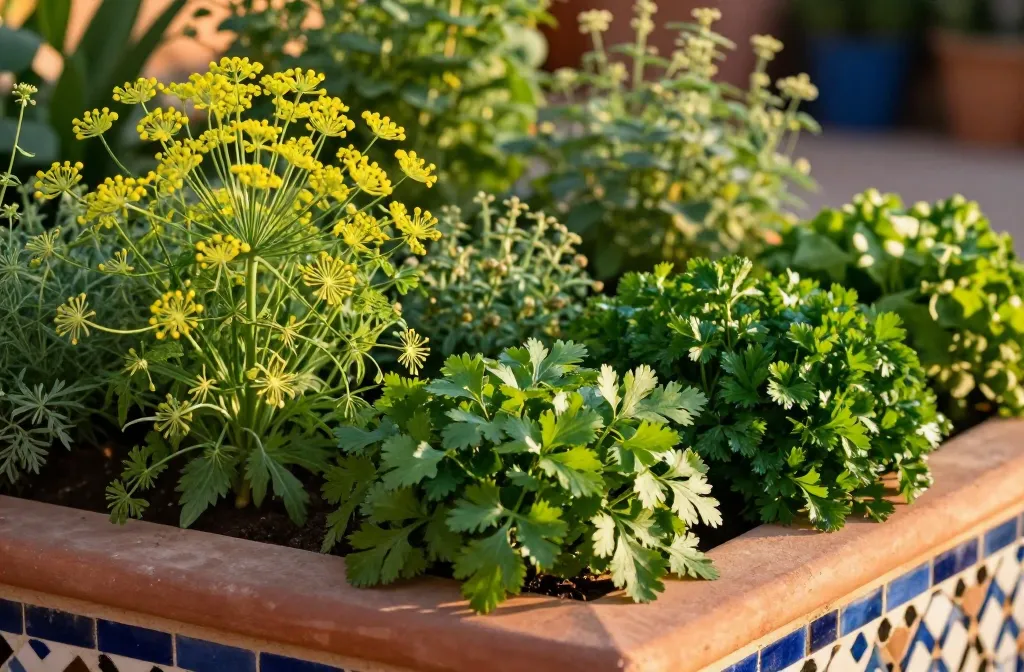
Think your herb bed is just about basil and mint? Time to take a spicy detour. A Moroccan-style garden packs fragrance, flavor, and color into every corner—plus clever plant pairings that support each other like besties. Ready for 14 knockout North African combos that make your cooking and your garden pop? Let’s plant smarter and eat better.
1. Couscous Kings: Cumin + Coriander + Parsley
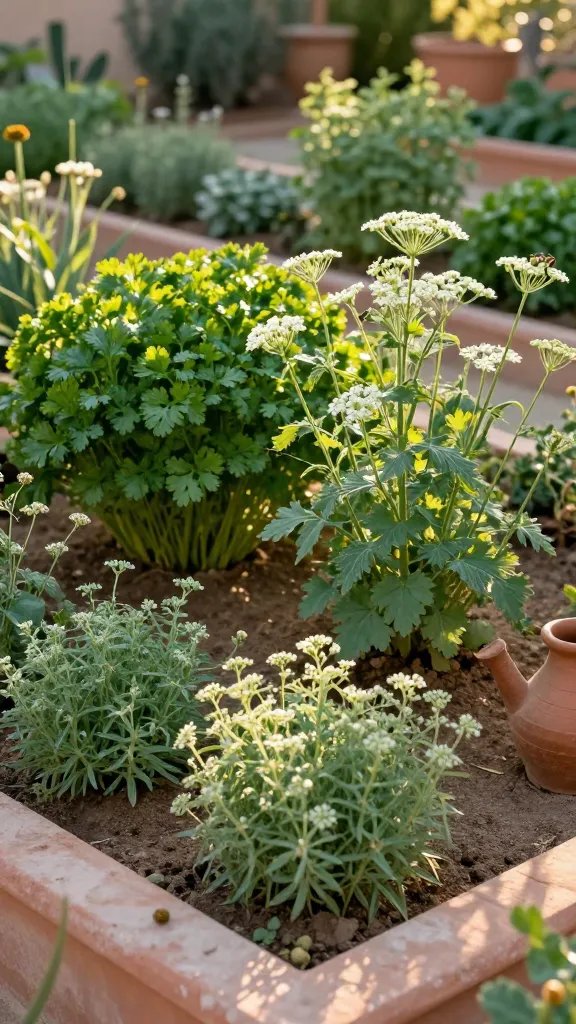
These three carry the soul of Moroccan spice blends and play beautifully together in the garden. They share sunny, dry conditions and won’t crowd each other if you stagger heights and sowings. You also get a continuous harvest: leaves, seeds, and fresh sprigs for garnish.
Why This Trio Works
- Cumin (Cuminum cyminum) loves heat and drains fast—perfect for a raised bed edge.
- Coriander (cilantro leaves, coriander seeds) bolts quickly, so let some flower for pollinator action and seed collection.
- Flat-leaf parsley anchors the bed, offering steady greens for tabbouleh and tagines.
Tips
- Sow coriander in waves every 2–3 weeks for steady leaves before it bolts.
- Use sandy, gritty soil and avoid heavy manure—it pushes weak, floppy growth.
- Harvest coriander seeds when they turn tan and fragrant, then dry in paper bags.
Use this combo when you want a low-effort, high-flavor base for spice blends and garnishes—seriously versatile.
2. Minty Oasis: Spearmint + Moroccan Mint + Lemon Verbena
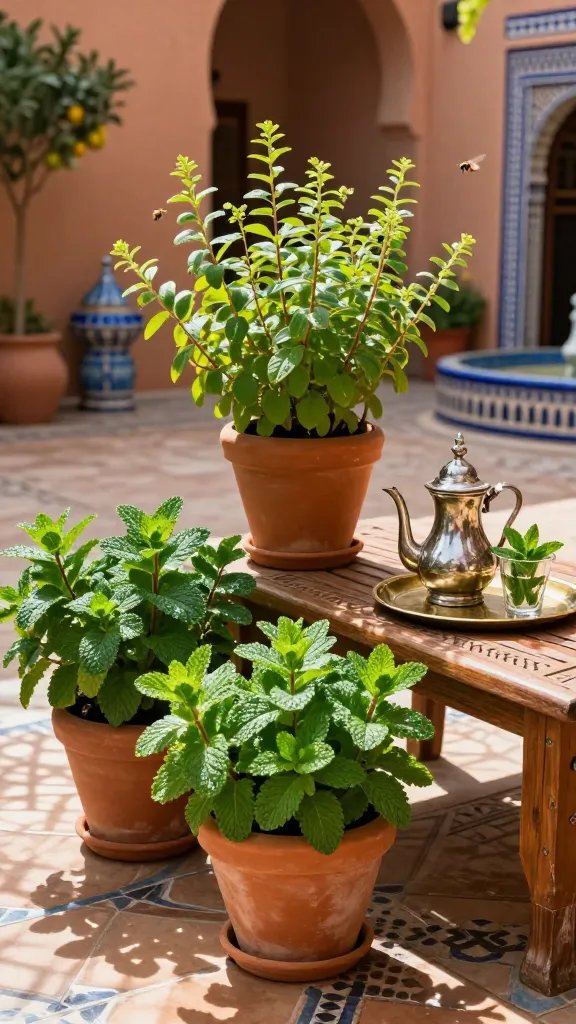
If you crave the perfect atay (mint tea), this is your dream team. Mint keeps things fresh, lemon verbena brings a citrus kiss, and together they perfume the garden like a Marrakech courtyard. Bonus: they attract beneficial insects while discouraging some pests.
Container-Friendly Strategy
- Spearmint and Moroccan mint spread like gossip—keep them corralled in pots.
- Lemon verbena enjoys full sun and good airflow; place the pot where it gets all-day light.
- Cluster pots near a seating area—you’ll brush past and release that gorgeous scent.
Brewing Notes
- Pick young mint tips for the sweetest tea flavor.
- Steep verbena lightly to avoid overpowering—think accent, not headliner.
- Add a sprig of each to iced tea with a drizzle of honey. Thank me later.
Use this when you want a fragrant, pollinator-friendly corner that doubles as a tea bar—FYI, it’s a crowd-pleaser.
3. Berber Heat: Harissa Garden With Chilies + Garlic + Caraway
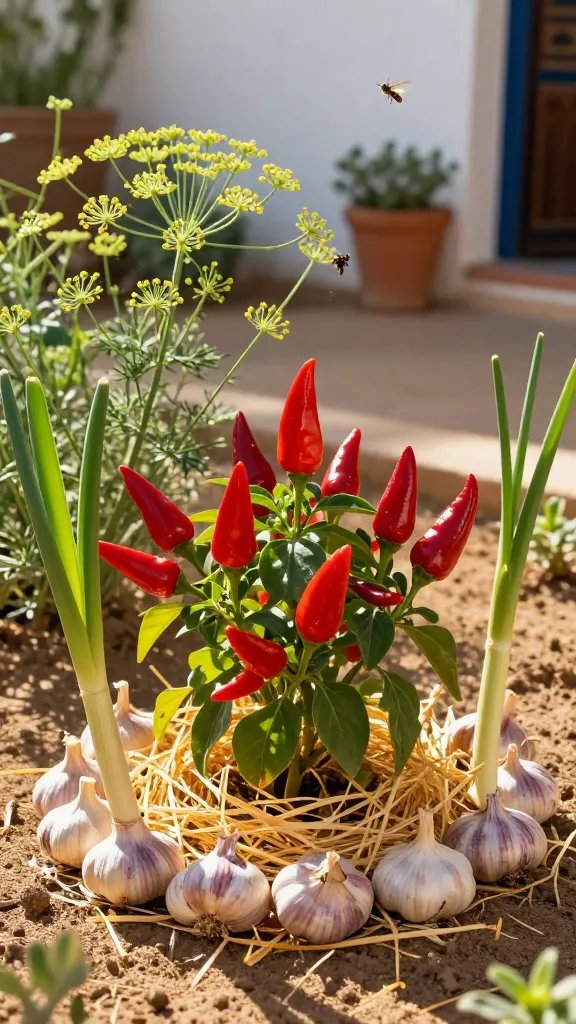
Harissa owes its spark to chilies and its depth to garlic and caraway. Plant them together and you get a self-contained sauce factory. The colors and aromas? Total summer mood.
Planting Setup
- Chilies (like Espelette-type, cayenne, or bird’s eye) front and center for sun and heat.
- Garlic tucked around the edges—its sulfur compounds can deter some pests.
- Caraway (Carum carvi) attracts hoverflies and lacewings with its umbel flowers—built-in pest control.
Care Tips
- Mulch chilies with straw to keep soil warm and even.
- Water deeply but infrequently; let the top inch of soil dry between sessions.
- Stake taller chili varieties early—wind snaps stems faster than you think.
Use this trio when you want homemade harissa with layers of smoky, nutty, and bright flavors—all from one bed.
4. Ras El Hanout All-Stars: Fennel + Anise + Nigella + Rose
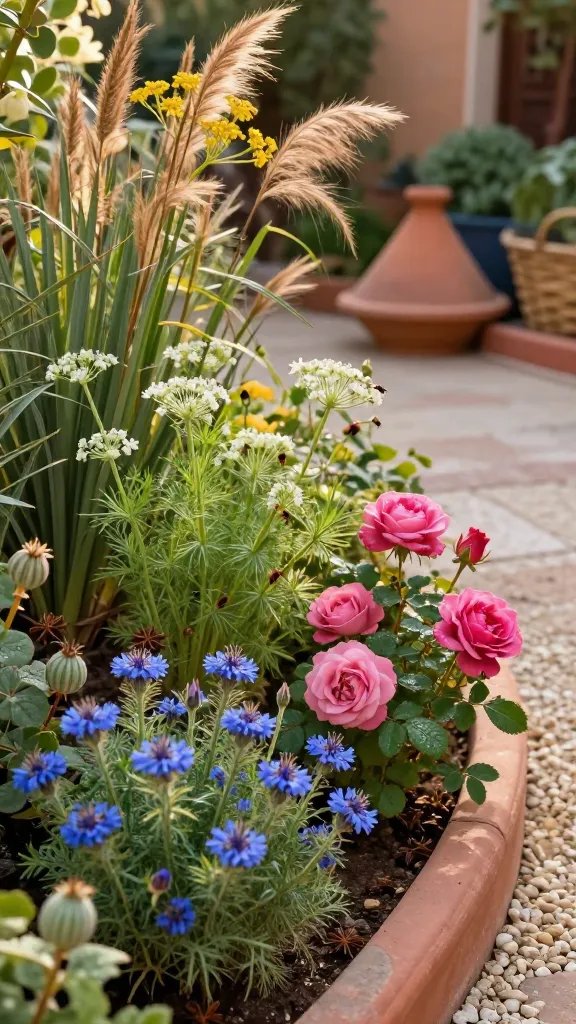
Ras el hanout literally means “head of the shop,” and this pairing reads like a spice merchant’s poem. You get licorice notes from fennel and anise, subtle nuttiness from nigella, and floral magic from rose. It’s basically perfume you can eat.
Design It Like a Mini Spice Souk
- Fennel (bulb or bronze fennel) at the back—tall, feathery, and elegant.
- Anise (Pimpinella anisum) mid-bed—airy and pollinator-friendly.
- Nigella (Nigella sativa) at the front—blue flowers turn to sculptural seed pods.
- Damask rose or another fragrant variety on a trellis or pillar nearby.
Harvest & Use
- Pick fennel fronds for fish dishes; let some go to seed for spice blends.
- Collect nigella seeds once pods dry; they taste toasty and a bit oniony.
- Dry rose petals gently in shade for teas and desserts; avoid any sprayed flowers.
Use this set when you want fragrant, photogenic beds that translate into complex spice mixes and desserts—IMO, it’s the most stylish combo here.
5. Tagine Dream Team: Rosemary + Thyme + Bay + Saffron Crocus
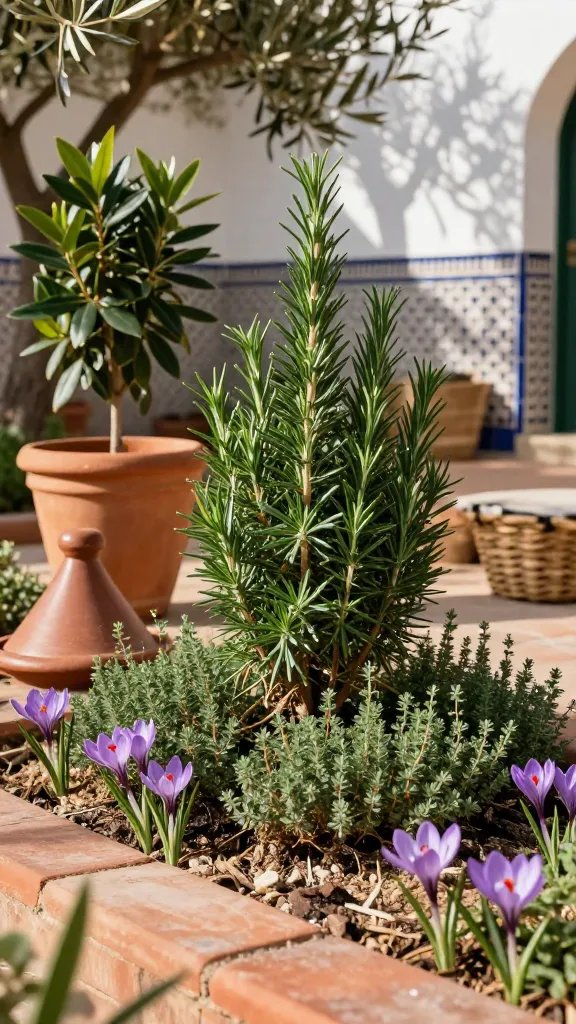
Earthy, piney, and deeply aromatic, this mix turns braises and tagines into weeknight legends. These herbs love the same lean, sunny conditions and reward a little benign neglect. Saffron crocus sneaks in with autumn flowers and the most luxurious spice threads around.
How To Plant
- Rosemary as the anchor shrub—choose upright varieties for small spaces.
- Thyme as a living mulch—creeps, suppresses weeds, and smells divine.
- Bay laurel trained as a patio standard or kept in a large container for winter protection.
- Saffron crocus (Crocus sativus) bulbs tucked between thyme clumps for fall blooms.
Care & Harvest
- Prune rosemary lightly after flowering to keep it dense.
- Pick thyme sprigs often; frequent trimming boosts new growth.
- Harvest saffron stigmas the morning flowers open—dry on a paper towel for a few days.
Use this quartet when you want a hardy, drought-tolerant bed that delivers year-round flavor and a little culinary luxury, trust me.
Ready to plant your passport? These five sections pack 14 powerhouse herbs into smart, sun-loving pairings that taste like Morocco and look like a magazine spread. Start with one mini-guild, then layer more as your confidence grows. Your kitchen—and every curious neighbor—will thank you.