Avoid These 7 Drainage Mistakes Every Apartment Gardener Makes
When I moved into my first apartment, I lined my windowsill with pretty pots that had no holes. Within a month, my succulents were melting and my herbs smelled swampy. I learned the hard way that drainage is the difference between thriving plants and a slow, smelly decline. In this guide, you’ll learn the seven most common drainage errors, how to spot them early, and the exact fixes you can do today with basic tools and supplies from any garden centre.
1. Pots Without Drainage Holes: Pretty Containers That Suffocate Roots
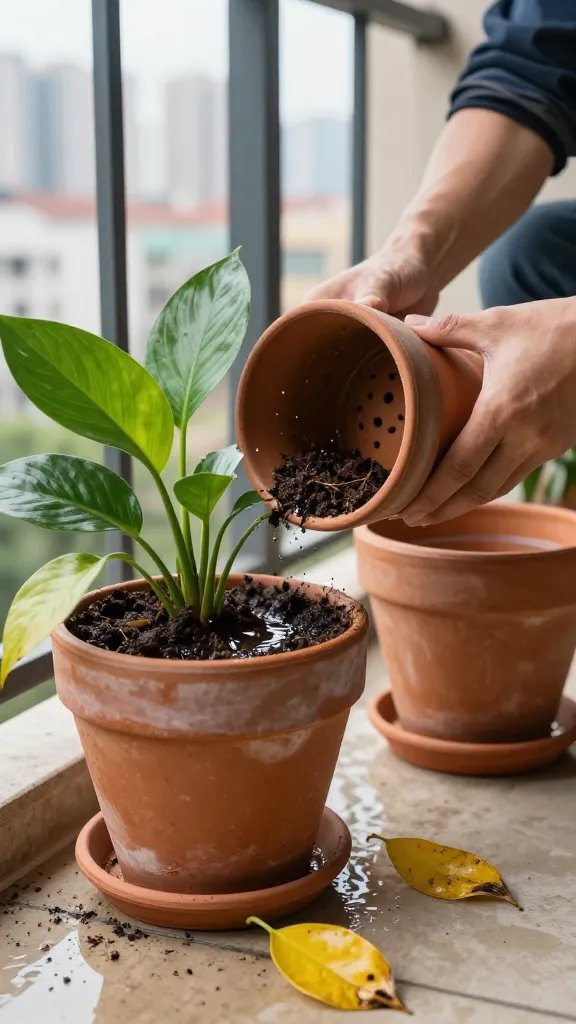
Plants rot in standing water, and containers without holes guarantee standing water. Roots sit in stale, airless soil, leading to yellowing leaves, fungus gnats, and a sour smell you can’t ignore.
Signs to Watch For
- Water puddles on the soil surface for more than 30 seconds after watering
- Lower leaves yellowing in sets, then dropping
- A sour, swampy smell when you put your nose close to the pot
- Fungus gnats hovering when you disturb the soil
How to Fix It
- Choose containers with at least one hole the size of a pencil eraser.
- If you love a hole-less pot, use it as a cachepot: place your plant in a plastic nursery pot with holes, then drop that pot into the decorative container. Empty any water that collects in the bottom within 10 minutes of watering.
- Can’t replace the pot? Use a ceramic or glass drill bit to add 1–3 holes in the base. Support the pot on a towel, go slow, and mist the drill point to keep dust down.
Action today: Pick one pot without a hole and convert it into a cachepot by slipping the plant into a plastic nursery pot that fits inside, then dump any standing water after each watering.
2. The “Pebble Layer” Myth: Rocks At The Bottom Don’t Improve Drainage
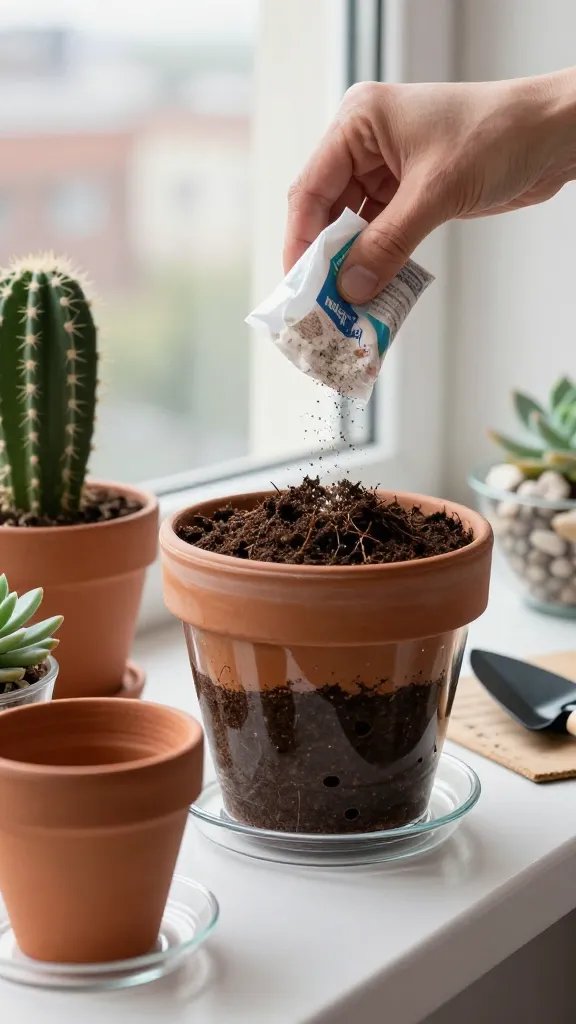
A rock layer raises the water table into the root zone, turning the bottom third of your pot into a permanent swamp. Water perches at the boundary between soil and stones, keeping roots wetter for longer.
What to Use Instead
- Fill the entire pot with a good quality potting mix from your garden centre — no rocks, marbles, or shards at the bottom.
- For succulents and cacti, use a cactus/succulent mix or lighten regular mix with up to one-third bagged perlite.
- Keep your saucer empty. Drainage only works if excess water can leave the pot.
How to Fix a Pebble-Layered Pot
- Slide the plant out and gently shake off the bottom third of soil and rocks.
- Refill the pot base with fresh mix, tapping the pot to settle — don’t compress hard.
- Replant so the root ball sits level with the rim minus a finger-width of space for watering.
Takeaway: Use soil from top to bottom; skip the rock layer and let the drainage hole do its job.
3. Soil That’s Too Dense: Garden Dirt And Moisture-Retentive Mixes Smother Roots
Dense soil holds water for days and blocks the air roots need. You end up watering less yet still see rot because the center of the root ball never dries.
Signs to Watch For
- Soil stays cold and wet in the center a week after watering
- Water runs off the top because the surface is compacted
- Plants look droopy and pale even though the pot feels heavy
How to Fix It
- Start with a light, bagged potting mix labeled for indoor plants.
- For plants that hate wet feet (snake plant, ZZ plant, jade), mix in one-third perlite or pumice by volume.
- Break up compacted root balls with your fingers during repotting so new mix can reach the center.
- Never use garden soil from outdoors in containers. It compacts and invites pests.
Action today: Press a chopstick into the soil in three spots; if it comes out muddy after 5–7 days, plan to repot with a lighter mix this weekend.
4. Oversized Pots: Too Much Mix Means a Wet, Cold Root Zone
When the pot is much bigger than the root ball, excess soil holds water the plant can’t use. The outer soil stays soggy, roots stall, and the plant declines even as you water less.
Right-Size Rule
- Step up only 2–5 cm (about 1–2 inches) wider than the current pot.
- Use deep pots for deep-rooted plants like rosemary, and squat pots for shallow-rooted succulents.
- Feel the weight: a freshly watered pot should be heavy, and it should be clearly lighter before the next watering.
Rescue Plan For A Too-Big Pot
- Slip the plant out and downsize to a pot that leaves a finger-width of soil around the root ball.
- Backfill with fresh mix, then water once to settle. Don’t “wash in” with repeated waterings.
Takeaway: Choose the smallest pot that comfortably fits the current roots plus a finger-width of space — not the pot you hope to need next year.
5. Trapped Water In Saucers And Cachepots: Roots Sitting In A Hidden Bath
Water that drains out is supposed to leave the container. If it pools in a saucer or decorative cover pot, the root zone reabsorbs it and stays wet for days.
Checks And Fixes
- After watering, set a timer for 10 minutes, then pour off any water from the saucer or cachepot.
- Use pot feet or three coins under the pot so the drainage hole doesn’t seal against the saucer.
- For balcony plants, use saucers only during watering, then remove them so rain can escape.
Tell-Tale Signs
- White crust (mineral salts) around the pot base
- Algae or mosquito larvae in outdoor saucers
- Mushy, brown roots near the drainage hole
Action today: Water one plant thoroughly, wait 10 minutes, and empty the saucer — then lift the pot and add pot feet or three flat pebbles to keep the hole clear.
6. Mismatched Mix To Plant: Treating Succulents Like Ferns (And Vice Versa)
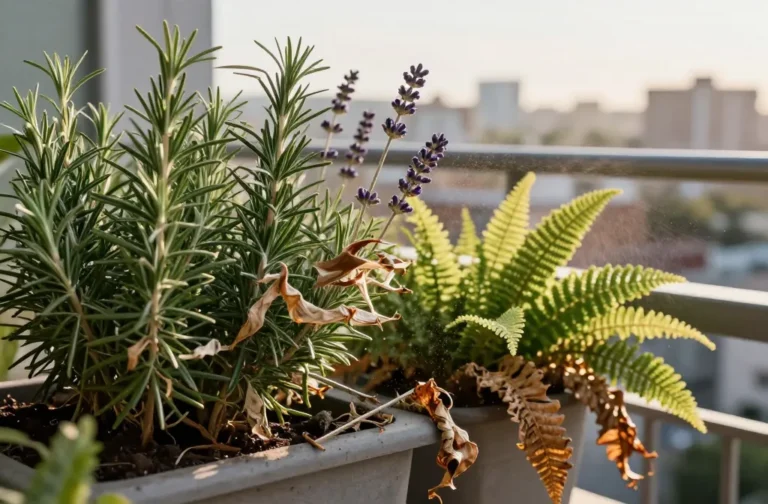
Using one universal soil and one watering routine creates chronic stress. Succulents rot in moisture-holding mix, while ferns crisp in fast-draining soils that dry every two days.
Match Plant To Mix
- Succulents, cacti, jade, snake plant: Cactus/succulent mix or indoor mix cut with one-third perlite or pumice. Water when the top 5–7 cm (2–3 inches) is dry.
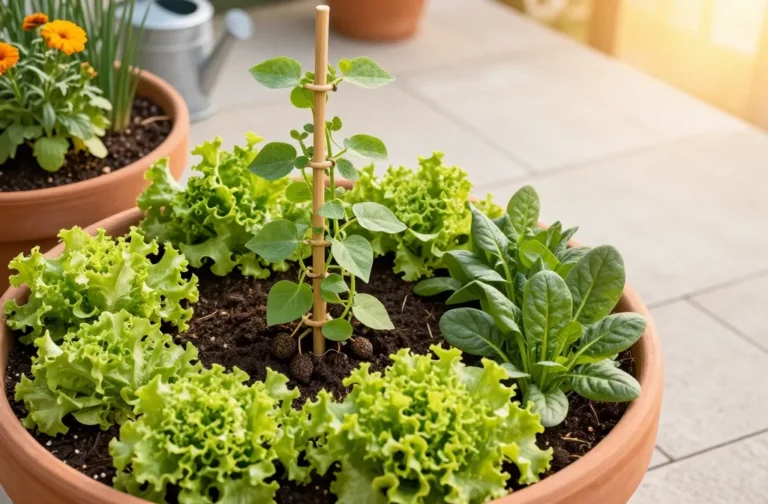
- Herbs (basil, parsley), peppers, tomatoes in pots: Regular potting mix with a handful of perlite per small pot for airflow. Water when the top 2–3 cm (1 inch) is dry.
- Ferns, calatheas, fittonia: Indoor mix with added coco coir or fine bark if available. Keep evenly moist but never waterlogged.
Container Helpers
- Terracotta wicks moisture through the pot wall and speeds drying — great for plants prone to rot.
- Glazed ceramic and plastic hold moisture longer — better for thirsty plants.
Takeaway: Pair thirsty plants with moisture-retentive pots and mixes, and drought-tolerant plants with faster-draining pots and mixes.
7. Watering Technique That Beats The Soil: Pour-And-Pray Creates Channels And Dry Pockets
Dumping water fast down one side carves channels and leaves the center dry while water races out the bottom. You see drainage and assume the soil is wet, but roots in the core stay thirsty and weak.
How To Water For Even Moisture
- Water in two passes: pour slowly around the entire surface until water appears in the saucer, wait 60 seconds, then water once more to re-wet any dry pockets.
- Use a small watering can with a narrow spout or a squeeze bottle for control.
- Pierce 4–6 small holes into compacted soil with a chopstick before watering to reopen channels.
Dry-Back Targets
- Succulents/cacti: Let the top 5–7 cm dry completely before watering again.
- Most foliage houseplants: Let the top 2–3 cm dry.
- Herbs and fruiting annuals in pots: Keep steadily moist; don’t allow full dry-down between waterings.
Action today: On your next watering, use the two-pass method and a chopstick to reopen compacted spots — you’ll get even moisture without waterlogging.
Frequently Asked Questions
Do I really need drainage holes if I’m careful with watering?
Yes. Even careful watering builds up salts and moisture over time, and without an escape route, roots sit in stale water. A drainage hole lets you water thoroughly and flush the soil. If you love a decorative pot without a hole, use it as a cachepot and keep the plant in a plastic nursery pot with holes inside.
How do I know when to repot because of poor drainage?
If the soil stays wet in the center longer than a week, you smell sourness, or water pools on top, it’s time. Slide the plant out: if roots are tan and firm but the mix is dense or compacted, repot into a lighter mix. If roots are brown and mushy, trim them back and pot into fresh, airy soil in a slightly smaller or right-sized pot.
Can I fix bad drainage without changing the pot?
Often, yes. Add pot feet, switch to a lighter potting mix, and water using two slow passes. If the pot has no hole, convert it to a cachepot system so excess water can be emptied after 10 minutes. If the pot shape narrows at the base and traps water, consider drilling one or more holes with a ceramic/glass bit.
What’s the simplest soil setup for houseplants if I don’t want to mix my own?
Buy a bag labeled “Indoor Potting Mix” and a small bag of perlite. Use the indoor mix straight for most foliage plants. For succulents and snake plants, stir in about one-third perlite by volume. For ferns and calatheas, use the indoor mix as-is and choose a glazed pot to retain moisture.
Why do my succulents rot even though I water once a month?
They’re likely in a moisture-holding mix or a pot without proper drainage. Repot into a cactus/succulent mix or indoor mix cut with one-third perlite, and choose terracotta or a pot with generous holes. Water deeply, then wait until the top 5–7 cm is bone dry before watering again.
Is terracotta always better for drainage?
Terracotta helps moisture evaporate through the pot walls, which speeds drying and improves airflow. It’s great for plants prone to rot or in cool, dim rooms. For thirsty plants like ferns or basil on a hot windowsill, glazed ceramic or plastic may be better to keep moisture longer. Match the pot material to your plant’s preference.
Conclusion
Good drainage isn’t fancy — it’s a hole in the pot, the right mix, and a watering habit that respects both. Pick one plant today, fix its container and soil, and you’ll see healthier growth within a few weeks. When you’re ready, dive into repotting basics next so every new plant starts with the right foundation.