9 Fern Species That Thrive in a Closed Terrarium — Ranked by Humidity Requirement Secrets
I used to think any “shade plant” would love a sealed glass jar. Then I watched two gorgeous ferns crisp at the edges while a third melted into mush. The difference wasn’t luck — it was humidity tolerance and how each species handles the constant moisture of a closed terrarium. In this guide, I rank nine reliable ferns by how much humidity they need, explain exactly what to watch for, and show you how to set each one up with standard garden-centre supplies.
1. Filmy Fern (Hymenophyllum spp.): Demands Near-Saturated Humidity
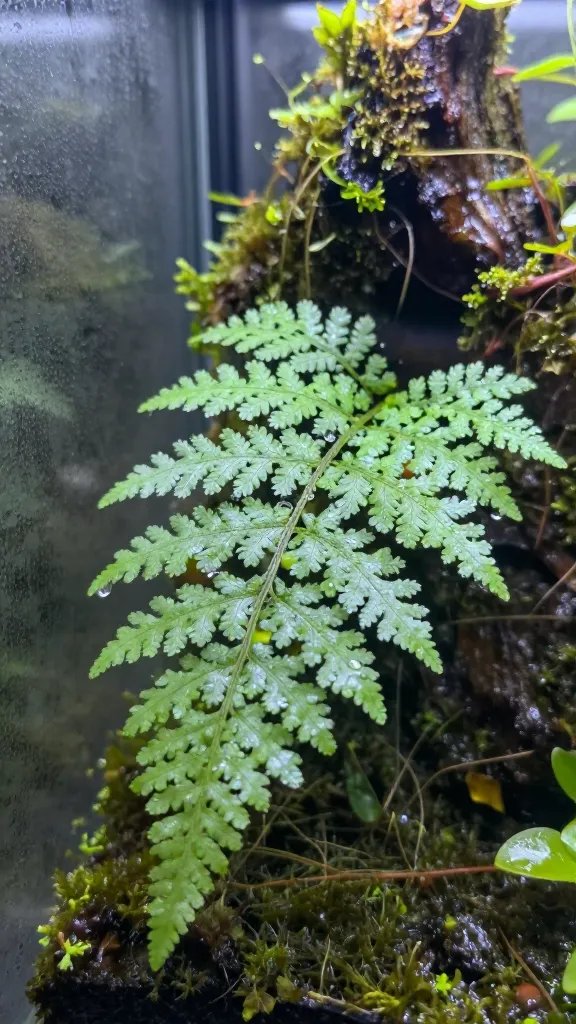
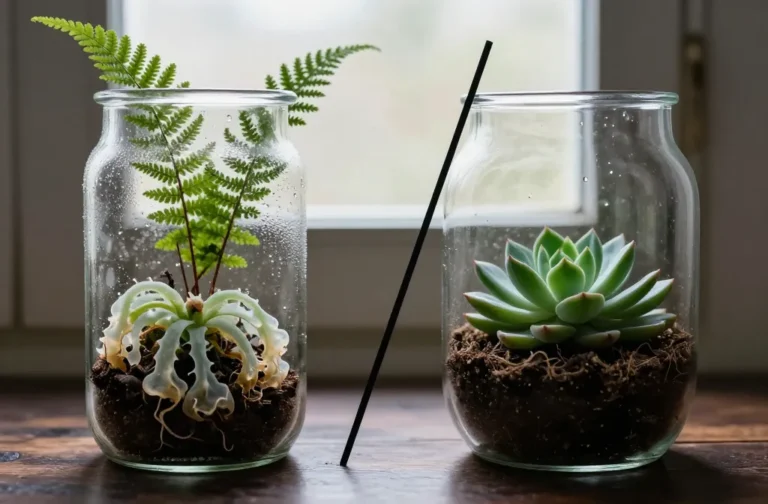
If the air inside isn’t constantly moist, filmy ferns collapse fast. Their paper-thin fronds dry within hours in anything less than a foggy microclimate. In a well-sealed terrarium with steady condensation, they become luminous green lace and stay compact.
Signs to Watch For
- Frond edges turn transparent, then brown within a day
- Condensation disappears for part of the day and fronds curl
- Fronds detach easily when touched
How to Fix It
- Seal the lid fully and reduce direct sun to stop midday overheating
- Add a tablespoon of water along the glass, not onto the plant
- Place a layer of damp sphagnum moss around the base to trap humidity
What to Use
- Clean glass jar with tight lid
- Thin layer of rinsed aquarium gravel, then a mesh or coffee filter
- Fine-textured, peat-free potting mix blended by hand with extra orchid bark and sphagnum (about 2 handfuls mix to 1 handful bark and 1 handful damp sphagnum)
Takeaway: Keep condensation visible most of the day — if the glass dries by noon, reseal and add one tablespoon of water.
2. Trident Fern (Cephalomanes/Crepidomanes spp.): Loves Foggy, Stable Air
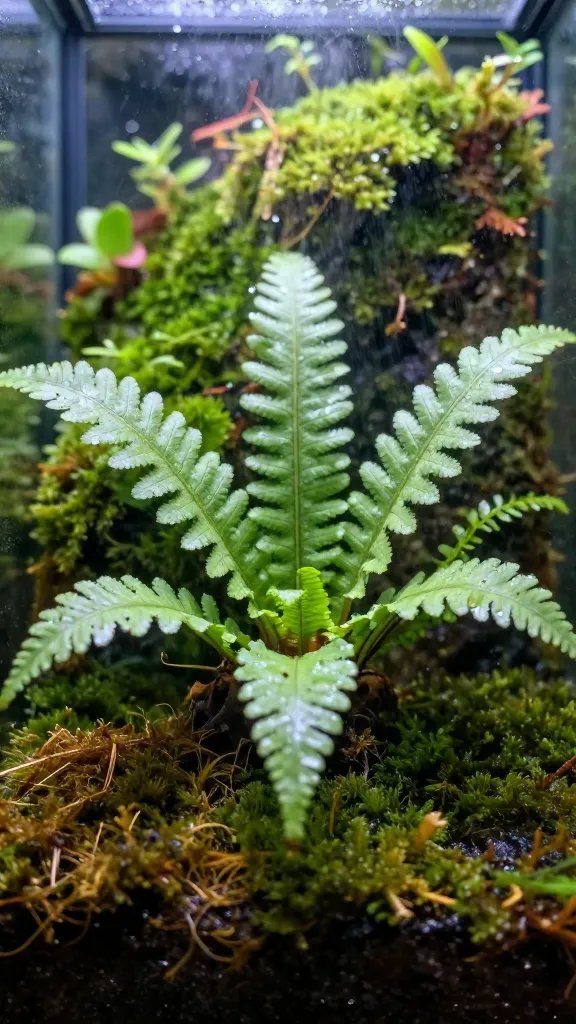
This delicate fern thrives when the glass stays misted. A brief dry spell leaves tips crisp. Given steady moisture and shade, it forms tidy, slow-growing rosettes.
Signs to Watch For
- Brown pinpoints at leaflet tips
- Fronds stiffen and lose their gloss
- Slow, patchy growth while mosses thrive
How to Fix It
- Move 2–3 feet back from any sunny window; use bright indirect light
- Tuck a ring of damp sphagnum around the roots without burying the crown
- Vent only briefly if mold appears; otherwise keep sealed
Action today: If tip burn is visible, shift the terrarium to bright but sunless light and add a thin sphagnum collar at the base.
3. Maidenhair Fern (Adiantum raddianum and kin): Constant Moisture, Zero Drafts
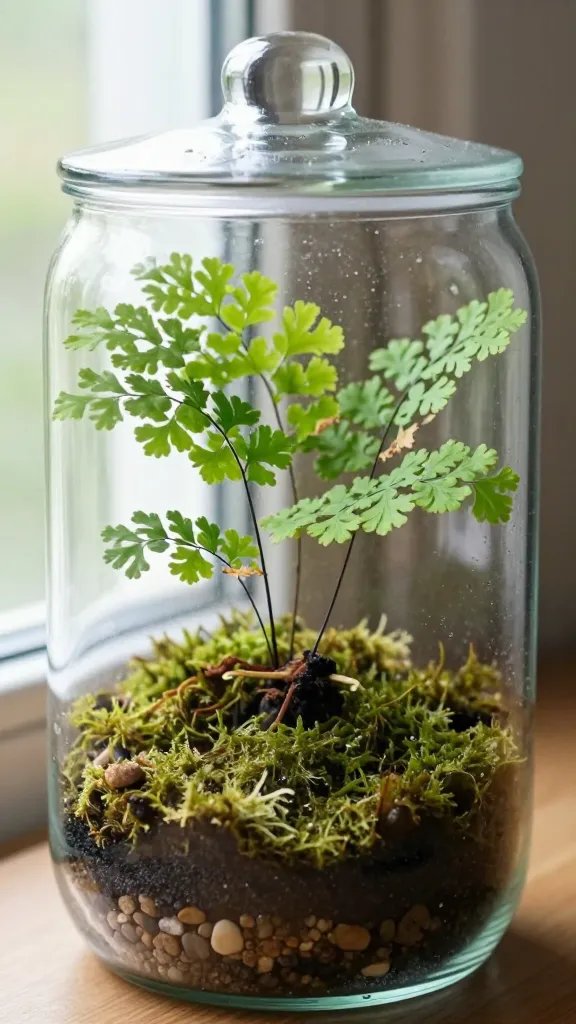
Maidenhair ferns turn crispy overnight in dry rooms, but in a closed terrarium they can be effortless if you avoid heat spikes. Too much sun bakes them; too little airflow when overwatered rots the stems at soil level.
Signs to Watch For
- Crisp, beige leaflet edges while stems stay green
- Soggy black stems at the base (rot)
- Condensation pooling and dripping steadily (overwatering sign)
How to Fix It
- Keep the lid on but move to bright, indirect light — no direct sun on glass
- If stems blacken, vent for 1–2 hours and dab away surface water with a paper towel
- Water with 1–2 tablespoons at a time only when midday condensation falls below one-third of the glass
Takeaway: Aim for consistently dewy glass and stable shade — small sips of water, never soggy soil.
4. Button Fern (Pellaea rotundifolia): High Humidity, But Hates Wet Feet
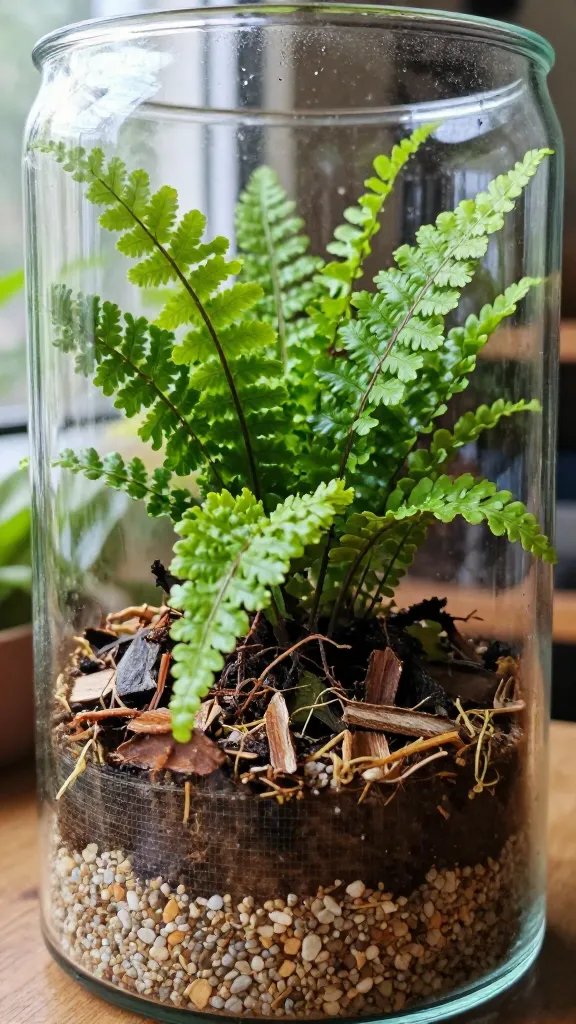
Button fern enjoys humid air but sulks in saturated soil. In a sealed jar, it grows compact and tidy if the roots sit above any standing moisture and the crown breathes.
Signs to Watch For
- Yellowing lower leaves with firm, dark roots (too wet)
- Dull, matte leaflets and slow growth (too dry/too bright)
- Fuzzy white mold at the soil surface
How to Fix It
- Use a chunky mix: standard potting mix pinch-tested with added bark/perlite for air pockets
- Build a 1–2 cm drainage layer of gravel with a barrier (mesh or coffee filter)
- Trim any moldy bits and briefly vent for an hour
Action today: Lift the plant slightly on a mound so the crown sits just above the moss line and never stays splashed.
5. Kangaroo Paw Fern (Microsorum diversifolium): Tolerates High Humidity, Forgives Brief Dry Spells
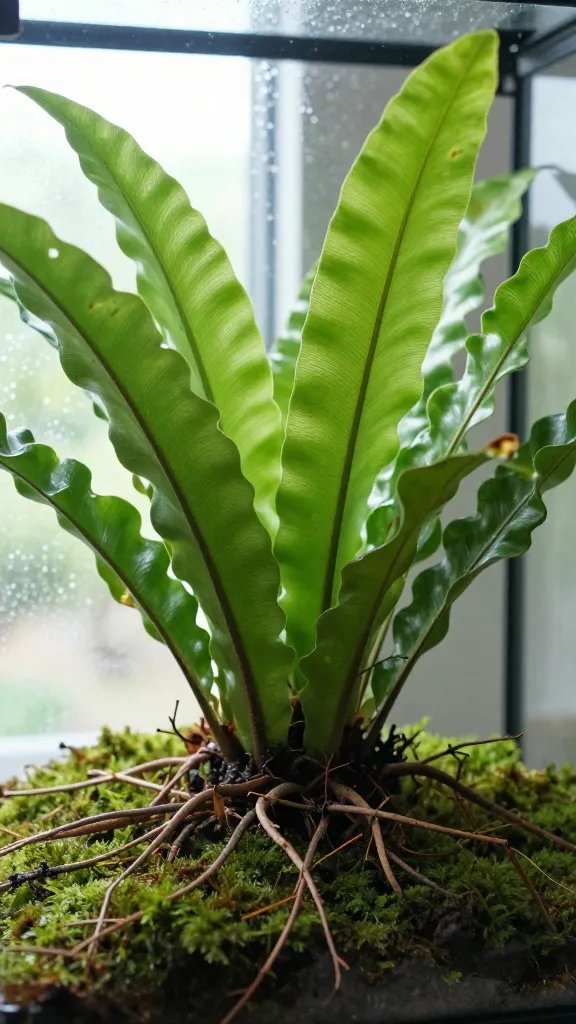
This fern accepts the sealed life and shrugs off a missed watering. Overheat it, though, and the leathery fronds scorch at the glass side. It appreciates space to spread rhizomes across the surface.
Signs to Watch For
- Brown patches where fronds press the glass in sunny spots
- Pale, stretched growth (too little light)
- Algae bloom on the glass from constant puddling
How to Fix It
- Place 2–4 feet from a bright window with no direct beams on the glass
- Top with a thin layer of rinsed orchid bark to keep rhizomes drier
- Wipe algae with a soft cloth; reduce watering by half
Takeaway: Keep fronds off sunlit glass and run rhizomes along barky, airy topdress for steady health.
6. Bird’s Nest Fern (Asplenium nidus, compact forms): Enjoys Humid Air, Needs an Open Crown
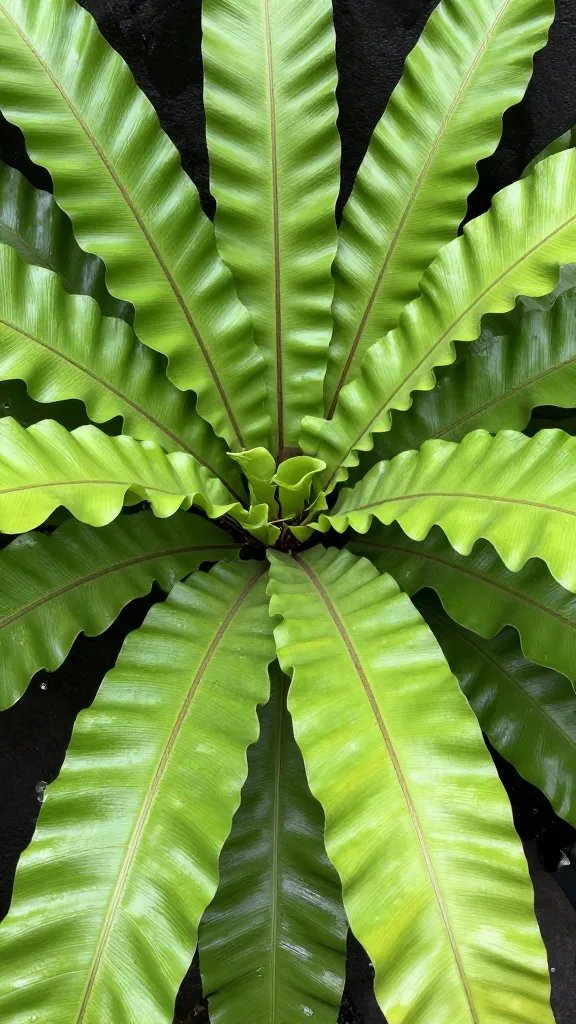
Compact bird’s nest ferns handle closed terrariums if you never bury or soak the central cup. Water sitting in the crown leads to rot, even when humidity is perfect.
Signs to Watch For
- Black lesions at the base of new fronds
- Stalled, puckered leaves emerging from the center
- Persistent droplets trapped in the crown
How to Fix It
- Water the substrate at the edge, not the crown
- Use a spoon to wick out any standing water in the center
- Raise the plant slightly so the rosette sits above the general soil level
Action today: Tilt the jar and blot the crown dry with a folded paper towel; resume watering only at the outer soil.
7. Lemon Button Fern (Nephrolepis cordifolia ‘Duffii’): Humidity-Friendly and Compact
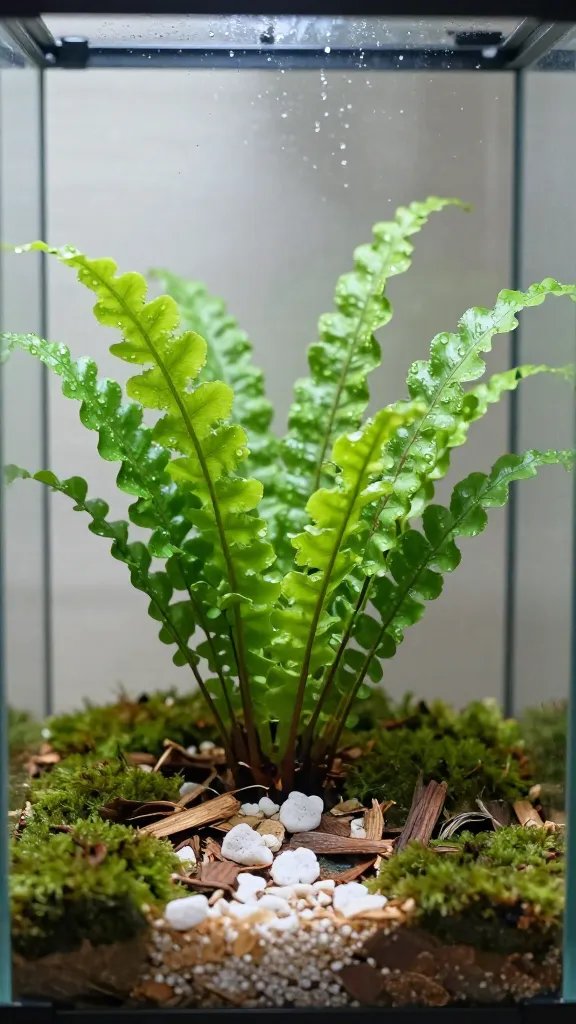
This small Nephrolepis stays neat in glass and tolerates brief dips in humidity better than many. Overwatering still invites rot; underwatering shows as pale, papery leaflets.
Signs to Watch For
- Fronds go lime-green and thin (needs water or more humidity)
- Brown bases and a swampy smell (too wet, no air space)
- Condensation dripping constantly down all sides (oversaturated system)
How to Fix It
- Use a light, airy substrate with visible bark/perlite chunks
- Vent 1 hour, then stop watering until midday condensation is under one-third
- Trim browned fronds at the base to prevent spread
Takeaway: Keep humidity high but soil springy and airy — think “dewy, not drenched.”
8. Heart Fern (Hemionitis arifolia): Likes Humid Glass, Sensitive Roots
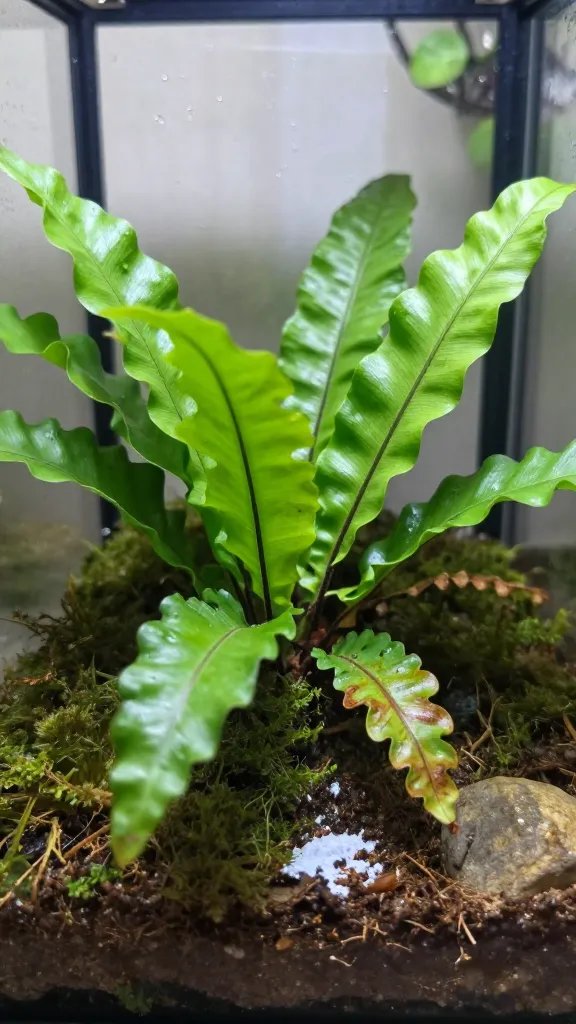
Heart fern is tidy and showy, with glossy, heart-shaped fronds that shine in a jar. It resents rough handling and salty tap water, showing edge burn and stalled growth.
Signs to Watch For
- Brown rims on older leaves after watering
- New fronds emerge tiny and distorted
- Soil crusts white on top (mineral buildup)
How to Fix It
- Use water that tastes clean, not salty — filtered or left to sit overnight
- Flush gently with a small amount of clean water and blot any excess
- Top up humidity with a fresh, damp sphagnum ring around, not over, the crown
Action today: Switch to cleaner water for every top-up and remove any white-crusted topsoil, replacing it with fresh mix.
9. Java Fern (Microsorum pteropus, terrestrial edge use): Adaptable Rhizome in Humid Air
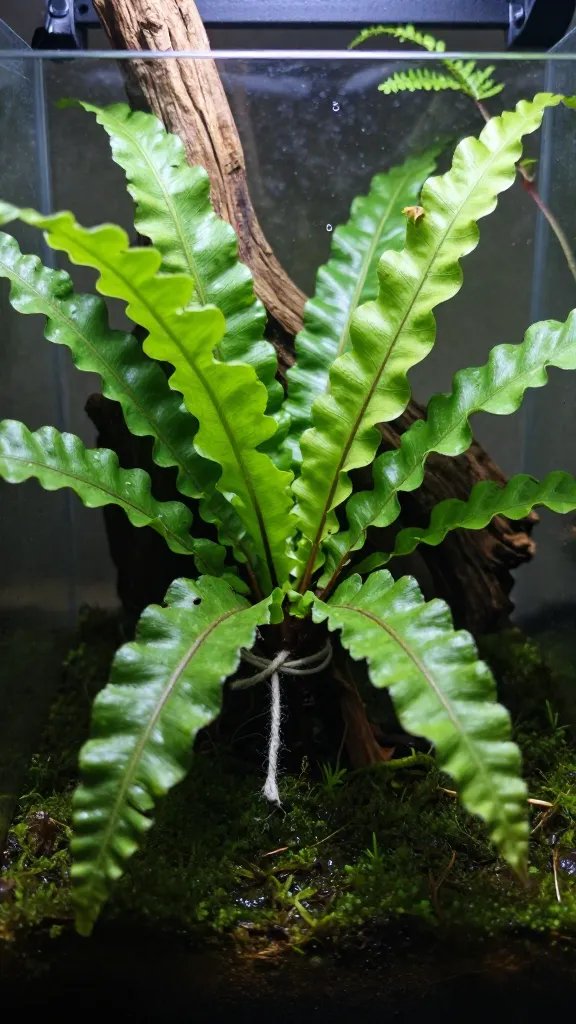
Known from aquariums, Java fern also handles humid air if you anchor the rhizome on wood or bark and keep it off wet soil. Constantly wet roots rot; consistently moist air keeps it glossy and slow-growing.
Signs to Watch For
- Rhizome turns mushy where it contacts soggy substrate
- Black pinholes on older fronds (stress)
- Algae sheen on glass near direct sun
How to Fix It
- Tie the rhizome to a piece of driftwood or cork with cotton thread
- Keep substrate damp below, not touching the rhizome
- Shift to bright indirect light away from hot windowsills
Takeaway: Mount the rhizome above the soil and let humidity, not puddles, do the work.
Frequently Asked Questions
How do I know my closed terrarium has enough humidity for ferns?
Check the glass at midday. Aim for light condensation on one-third to one-half of the walls, not a constant downpour. If the glass is dry by noon, add 1–2 tablespoons of water along the side. If it drips steadily, vent for 1–2 hours and hold off watering for a week.
What soil mix should I use with no special sieves or meters?
Use a good quality potting mix from the garden centre as the base. Hand-mix in a handful of orchid bark and a handful of perlite for every two handfuls of potting mix. Add a thin top layer of damp sphagnum around, not over, the crowns to hold humidity. Always include a gravel layer and a mesh or coffee filter to keep roots out of standing water.
Where should I place a closed terrarium for fern health?
Set it in bright indirect light near a window but out of direct sun. Direct beams overheat the glass and scorch fronds, especially on the side touching the wall. A coffee table 3–6 feet from a bright window or a north-facing sill works well. Rotate the jar weekly so growth stays even.
How often do I water a closed terrarium with ferns?
Usually every 3–4 weeks, but only based on the glass check, not the calendar. Add one tablespoon at a time, letting it run down the side. Wait a day and reassess condensation before adding more. Small sips prevent root rot and mold.
What if mold appears on the soil or moss?
Pinch off the visible mold and any rotting leaves. Vent the terrarium for 1–2 hours, then resume sealed conditions. Reduce watering and improve air pockets in the mix by adding a little bark on top. Keep dead leaves out — they’re mold fuel.
Can I mix different ferns in one closed terrarium?
Yes, if their humidity and size needs match. Pair species from the same tier above (for example, filmy fern with trident fern) and keep faster growers trimmed. Give each plant a defined mound or mount so roots don’t smother neighbors. If one species starts to dominate, rehome it to a separate jar.
Conclusion
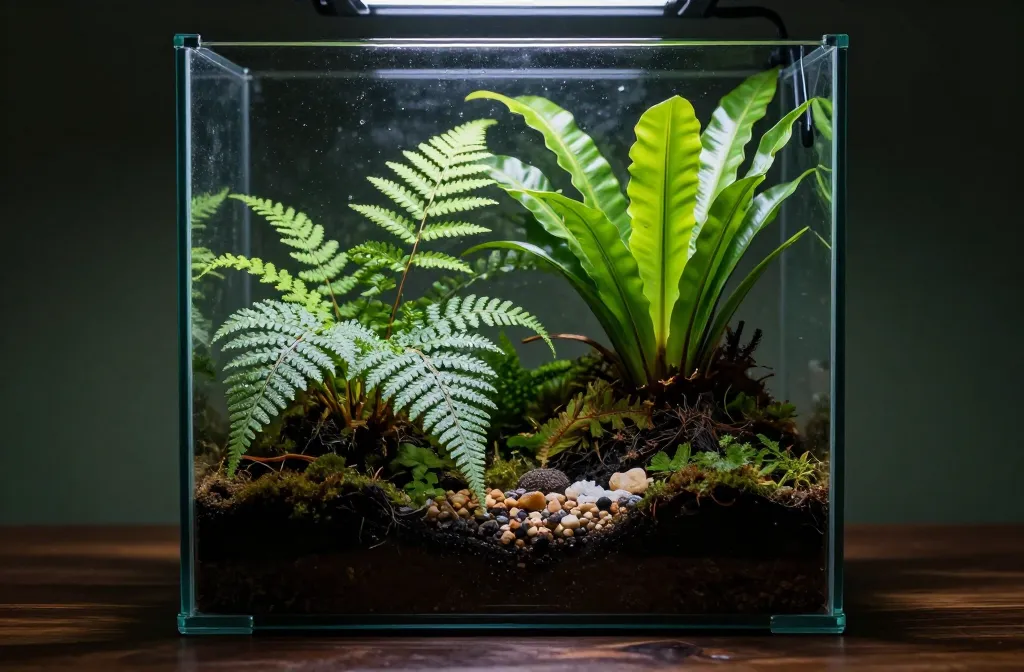
Pick ferns that match your jar’s humidity, then fine-tune by watching the glass at midday. Start with one from the middle of this list, master the condensation test, and add a filmy fern once you’ve nailed the balance. Your reward is a living, green diorama that stays lush for years with the lightest touch.