7 Wind-Resistant Plants for Exposed Balconies — Ranked by Tolerance Cheat Sheet
I garden on a twelfth-floor balcony that funnels wind like a subway tunnel. My first season, I watched herbs snap and petunias shred within a week. After a lot of trial and replacement, I found tough plants that shrug off gusts, keep their shape, and still look good. Here’s exactly what to grow, how to pot it, and the small adjustments that keep containers upright and thriving when the weather turns blustery.
1. Saltbush (Atriplex halimus): Survives Gale-Force Gusts and Reflects Heat
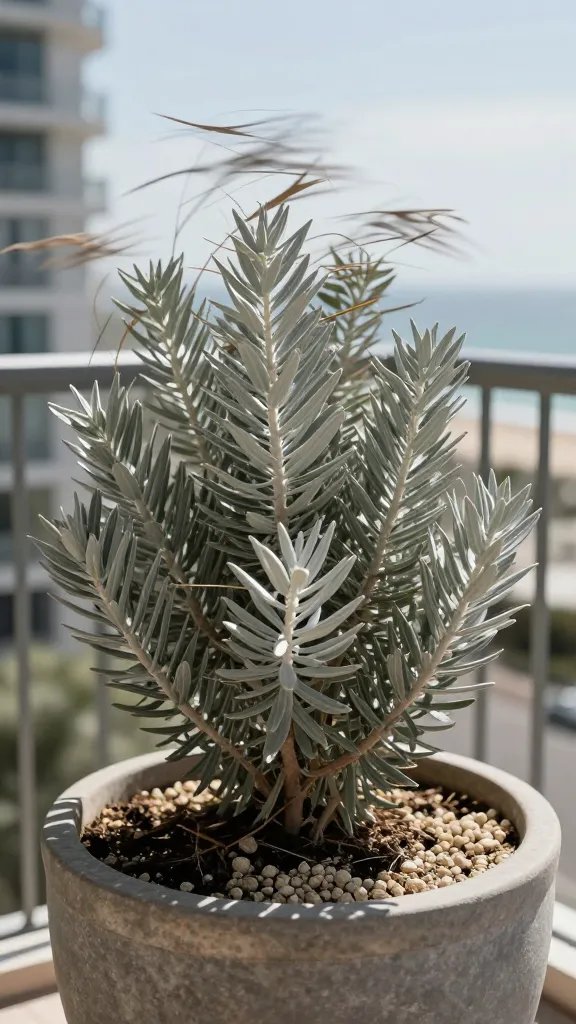
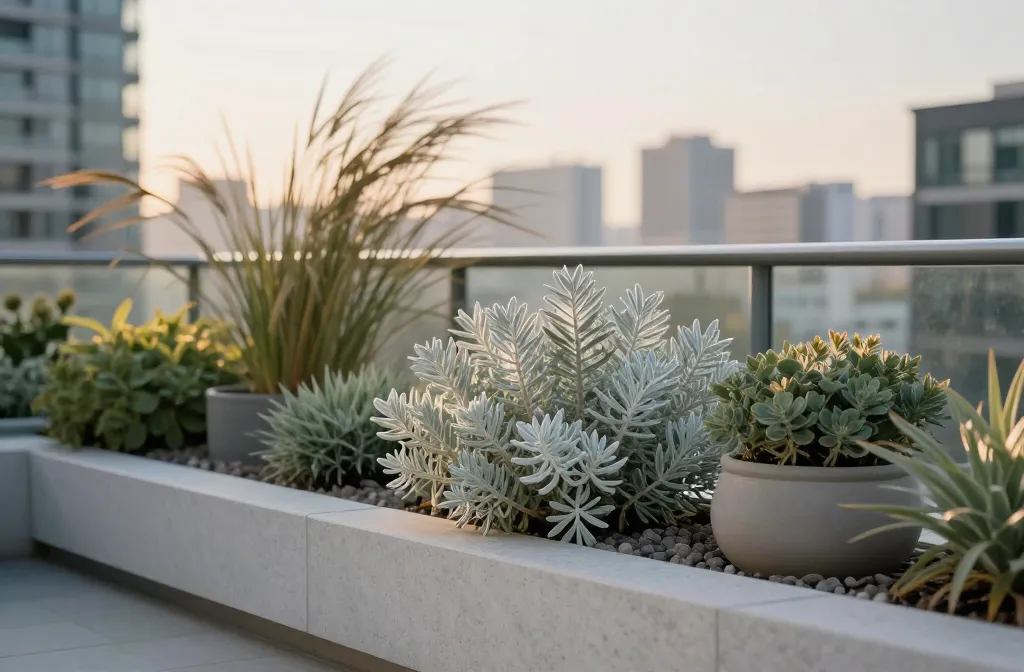
When wind scours tender leaves, most balcony plants desiccate and snap; saltbush keeps its structure. Its tough, silvery foliage reduces water loss and reflects heat, so it stands up to drying winds and strong sun. I rank it first because it stays upright without staking and keeps its leaves even after a bad blow.
Best Container Setup
- Use a 35–45 cm wide, heavy ceramic or fiberstone pot to add base weight.
- Fill with a good quality potting mix from the garden centre blended 1:1 with bagged coarse sand for drainage.
- Top with a 2–3 cm layer of pea gravel to stop soil blow-off.
Care Notes
- Place in bright full sun; it tolerates reflected light from glass and walls.
- Water deeply every 10–14 days in summer; let the top 5 cm dry first.
- Shear by one-third in early spring to keep it compact.
Action today: Pot a 2–3 L nursery saltbush in a weighted container and add pea gravel mulch to stop wind from lifting soil.
2. New Zealand Flax (Phormium spp.): Flexible Blades That Bend, Not Break
Exposed balconies turn broad leaves into sails; New Zealand flax has strap-like foliage that spills wind rather than catching it. The clumping base anchors the plant, and the arching leaves ride out gusts without snapping. It also gives instant architectural height without a trellis.
Signs to Watch For
- Leaf tips browning means the pot is drying out too far between waterings.
- Floppy center growth signals the plant is rootbound and needs a wider pot.
How to Set It Up
- Choose a 40–50 cm wide, low bowl or tall, heavy pot; add bricks at the base to lower the center of gravity.
- Plant in standard potting mix fortified with one shovel of compost per pot for moisture retention.
- Trim frayed tips with clean scissors along the natural angle for a tidy look.
Takeaway: Give flax a wide, heavy container and trim tips lightly—its strap leaves handle wind if the base is stable.
3. Rosemary (Rosmarinus officinalis): Woody, Fragrant, and Storm-Steady
Herb planters often fail first in wind because soft stems snap; rosemary is woody and springy. It tolerates drying breezes, stays compact with light pruning, and you can harvest it year-round. I’ve had the same plant ride through winter storms with minor scorch only on the windiest edge.
What to Use Instead (of Weak Herbs)
- Swap basil and cilantro for rosemary, thyme, and oregano on exposed rails.
- Use trailing thyme at the pot rim to reduce wind swirl over the soil.
Care Steps
- Plant in a 30–35 cm terracotta pot for breathability and weight.
- Mix in a couple of handfuls of coarse sand or perlite from the garden centre.
- Water every 7–10 days in summer; less in winter. Keep leaves dry when possible.
- Pinch the tips monthly to keep it dense and less top-heavy.
Action today: Replace wind-tattered basil with a 30 cm pot of upright rosemary and edge it with creeping thyme to stabilize the soil surface.
4. Dwarf Olive (Olea europaea ‘Little Ollie’ or similar): Compact Tree With Wind-Hardened Leaves
Small trees usually act like sails, but a dwarf olive forms a dense, low canopy and thick, leathery leaves that don’t shred. The woody frame resists snapping, and the silver-green foliage handles sun glare typical of high balconies. It grows slowly, so you won’t fight constant pruning.
Wind-Proofing the Pot
- Pick a 45–55 cm pot—heavy ceramic or concrete-look fiberstone.
- Position the trunk slightly off-center toward the windward side to counterbalance lean.
- Add a single, discreet stake on the leeward side with a soft tie for the first season.
Maintenance
- Water every 10–14 days in summer; avoid soggy soil.
- Feed lightly in spring with a slow-release, all-purpose fertilizer.
- Clip lightly after flowering to maintain a rounded shape.
Takeaway: Anchor a dwarf olive in a wide, heavy pot and give it one soft tie for its first windy season; it will harden and stand alone after.
5. Sea Thrift (Armeria maritima): Low Cushion That Laughs at Gusts
Tall stems snap; cushions stay put. Sea thrift forms tight mounds that hug the soil, so wind flows over it. Pink or white pom-pom blooms add color without adding height that catches the breeze.
Signs You Need a Change
- Leaves yellowing from the center usually means the crown is buried—raise it slightly above soil level.
- Floppy flower stalks indicate overfertilizing—skip rich feeds.
Right Conditions
- Plant at the lip of a shallow, wide bowl or window box.
- Use a gritty mix: standard potting soil blended 1:1 with coarse sand or fine gravel.
- Water when the top 3–4 cm are dry; never let it sit in saucers of water.
Action today: Add two sea thrift mounds to the windward edge of your box to break airflow and hold the mix in place.
6. Feather Reed Grass (Calamagrostis x acutiflora ‘Karl Foerster’): Vertical Lines That Spring Back
Wind can flatten many grasses, but feather reed grass grows in stiff, upright clumps that flex and rebound. The narrow plumes look delicate yet hold their shape through gusts and even winter. It provides height without heavy foliage that turns into a sail.
Setup That Prevents Toppling
- Use a 35–40 cm deep, narrow planter; wedge two house bricks flat at the base.
- Plant 1–2 clumps per 60 cm of planter for airflow between crowns.
- Mulch with gravel to stop soil from blowing out during storms.
Annual Care
- Cut back to 15–20 cm in late winter before new growth.
- Water weekly in summer the first year; every 10–14 days after established.
- Do not overfertilize—too much feed makes floppy growth.
Takeaway: Choose a narrow, weighted planter and keep feed light so reeds stay upright and wind-resilient.
7. Trailing Portulaca (Portulaca umbraticola and P. grandiflora): Low, Succulent Color That Hugs the Rim
Showy annuals often shred in wind; portulaca stays below the breeze and stores water in its leaves. It spills gently over edges without catching gusts, and flowers through heat and neglect. It’s the easiest way to get bright color on a harsh balcony without babying.
How to Keep Blooms Coming
- Full sun is non-negotiable—place on the brightest, least shaded rail.
- Water every 5–7 days in midsummer; let the top 3 cm dry between waterings.
- Pinch spent flowers weekly to keep new buds forming.
What to Pair It With
- Combine with rosemary or dwarf olive to create a wind-baffling tier: woody center, trailing edge.
- Avoid pairing with thirsty, lush annuals like impatiens—they wilt and look mismatched.
Action today: Tuck three portulaca starters along the front edge of any windy planter for instant, low-profile color that won’t tear.
Frequently Asked Questions
How do I stop pots from blowing over on a high balcony?
Use heavy containers like ceramic, terracotta, or fiberstone instead of thin plastic. Add weight by placing two house bricks flat at the bottom before soil, and keep the tallest plants centered. Group pots shoulder-to-shoulder so they block wind for each other, and avoid tall saucers that raise the center of gravity.
What soil mix works best for windy, exposed planters?
Start with a good quality potting mix from the garden centre and blend in coarse sand or fine gravel at about 1:1 for wind-hardy, sun-loving plants. This drains fast so roots don’t rot after sudden storms. Top with a 2–3 cm gravel mulch to prevent soil from blowing out and to reduce splash during heavy rain.
Can I grow vegetables on a windy balcony?
Yes, choose compact, sturdy types like chili peppers, dwarf cherry tomatoes, and bush beans. Use tomato cages or a single bamboo stake with soft ties to prevent wind-whip. Keep the pot large and heavy—at least 35–40 cm wide—and water consistently so wind doesn’t dry the fruiting plants between irrigations.
How often should I water wind-exposed containers?
Wind accelerates drying, so check with your finger daily in hot weather. Water when the top 3–5 cm feel dry, then water until it drips from the drainage hole. Plan on every 5–7 days for succulents and portulaca, and every 7–14 days for woody plants like rosemary and dwarf olive, adjusting after rain.
Do I need to fertilize these wind-resistant plants?
Feed lightly so you don’t push soft, floppy growth that catches wind. In spring, mix a slow-release, all-purpose fertilizer into the top 5 cm of soil, following the label. Skip extra feed for sea thrift and feather reed grass; too much fertilizer makes them lanky and less wind-stable.
What’s the best layout to reduce wind damage?
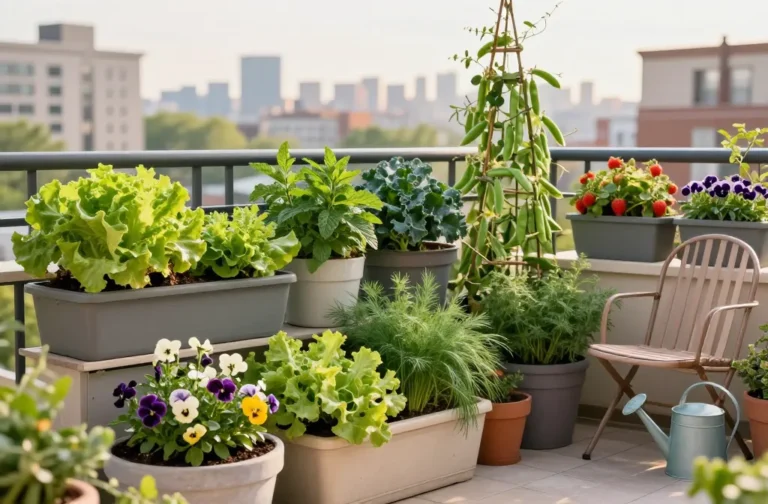
Place the densest, tallest plants like dwarf olive or New Zealand flax toward the windward side to break gusts. Fill the middle with medium plants like rosemary and feather reed grass, then edge with low, trailing plants such as portulaca or sea thrift. Keep pots close together to create a mini windbreak without blocking sunlight.
Conclusion
Exposed balconies don’t require constant replanting—just the right mix of wind-smart species and sturdy containers. Start with one anchor plant from the top three, add a low edging plant, and weight your pots today; you’ll see calmer foliage and fewer broken stems by the next windy forecast.