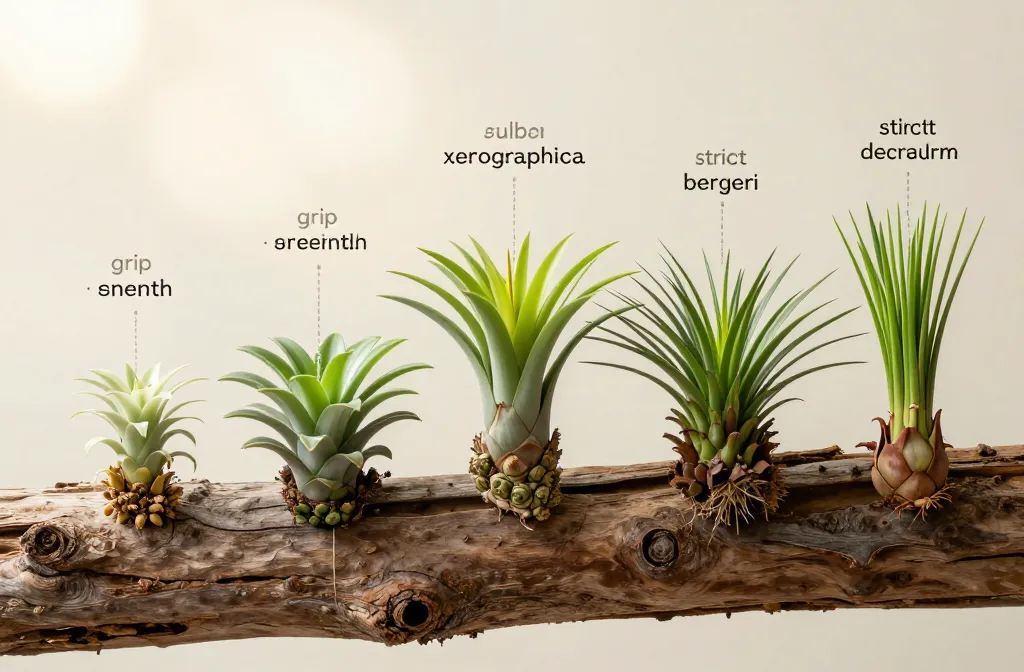
7 Tillandsia Species That Mount Successfully on Wood — Ranked by Root Grip and Weight Secrets to Zero-Fall Mounts
I’ve mounted dozens of air plants to driftwood and reclaimed branches over the years, and I’ve watched some hold like rock climbers while others slid off the moment I misted them. If you’ve had a plant tumble off the wall or twist loose after a watering, you’re not alone. In this guide, I rank seven reliable Tillandsia species by two things that matter most on wood: how well their roots and bases grip, and how much their body weight stresses the mount. You’ll learn which species to pick, how to secure them with common supplies, and how to avoid the mid-week crash to the floor.
1. T. ionantha (Compact Rosettes, Excellent Base Grip, Feather-Light)
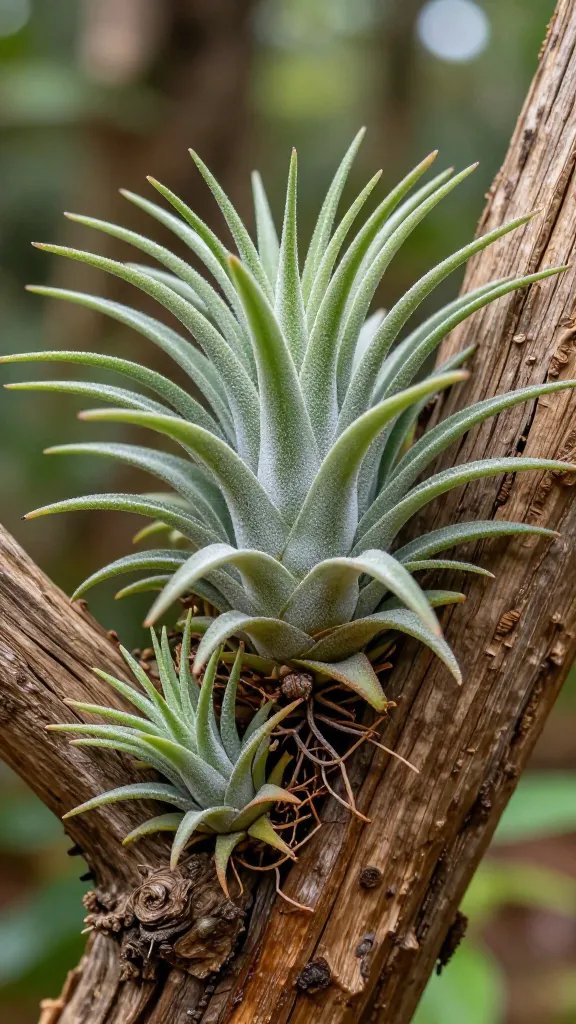
Loose mounts fail because a plant’s weight exceeds the friction at the contact point. T. ionantha stays put because it’s light and forms a stubby, clumping base that nests into wood grooves. Even after watering, it doesn’t sag or twist off.
Why It Stays Mounted
- Low mass: Tiny rosettes weigh very little, so gravity exerts minimal pull.
- Textured bases: Short, overlapping leaves create friction against bark.
- Clumping habit: Pups build outward, increasing contact over time rather than levering the plant off.
How to Mount It
- Choose rough bark (cork, manzanita, or grape wood) with a natural pocket.
- Seat the base tightly; wrap once with florist wire or cotton string just above the base, not across tender leaves.
- Seal the tie with a dab of clear silicone where it meets the wood, not the leaves.
Action today: Mount an ionantha in a wood nook the size of a bottle cap and secure it with one discreet wire wrap.
2. T. aeranthos (Stiff Leaves, Reliable Root Nubs, Moderate Weight)
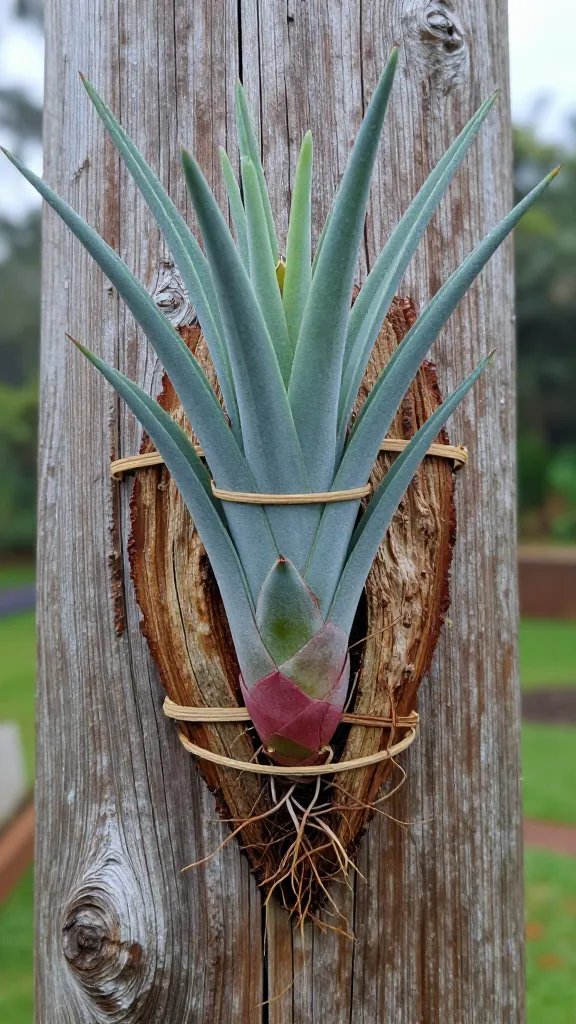
Falling plants often rotate on a slick surface during misting. T. aeranthos resists rotation because its stiff leaves and triangular base dig into bark. It’s heavier than ionantha, but it throws small holdfast roots that anchor to textured wood within a season.
Signs It’s Secure
- Base doesn’t shift when you nudge it after watering.
- Reddish sheaths at the base press firmly against wood edges.
- Fine, brown root threads appear where base meets bark.
Mounting Tips
- Use two-point ties (one low, one high) to prevent torque.
- Pick grooved wood so the keel of the rosette seats into a channel.
- Let ties stay for 3–4 months until roots grab; then trim flush.
Takeaway: Give aeranthos two tie points and a bark groove to eliminate rotation before roots take over.
3. T. stricta (Broad Base, Fast Rooting, Medium-Light Weight)
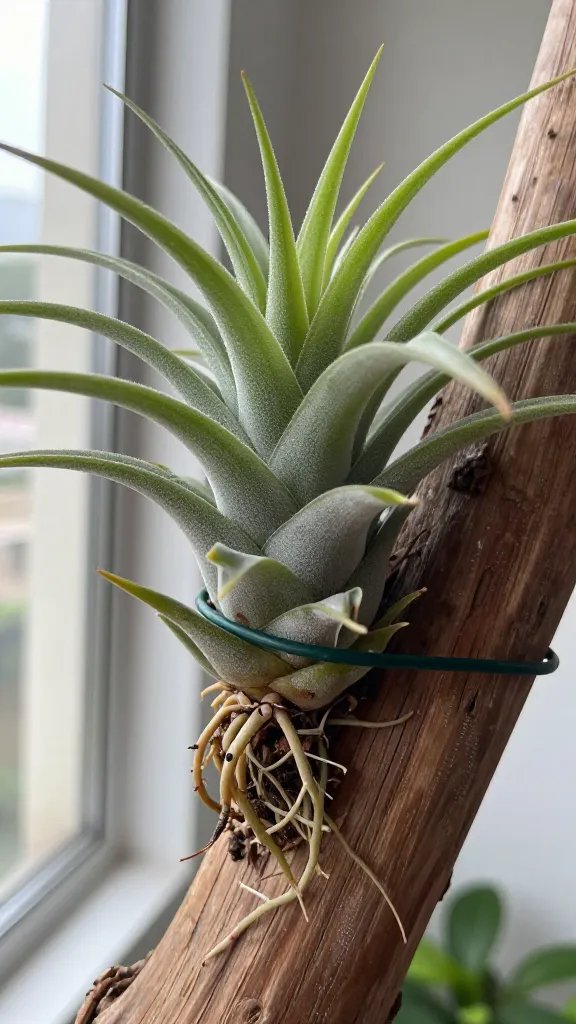
Many mounts fail during the first month when plants haven’t rooted yet. T. stricta bridges that gap because it roots faster than most common air plants and spreads force over a wider base. It handles routine misting without slipping if you seat it firmly.
How to Fix a Slippy Stricta
- Remove any loose outer leaves that act like skates on smooth wood.
- Roughen the contact area with 80–120 grit sandpaper to add tooth.
- Use a figure‑eight tie with soft-coated wire to lock the base in place.
Good Wood Choices
- Cork bark flats for a shallow, stable base seat.
- Weathered hardwood with fissures; avoid glossy driftwood.
Action today: Sand a quarter-sized patch on your mount, then re-seat stricta and secure with a single figure‑eight wrap.
4. T. caput-medusae (Curved Bulb, Good Grip When Seated, Moderate Weight)
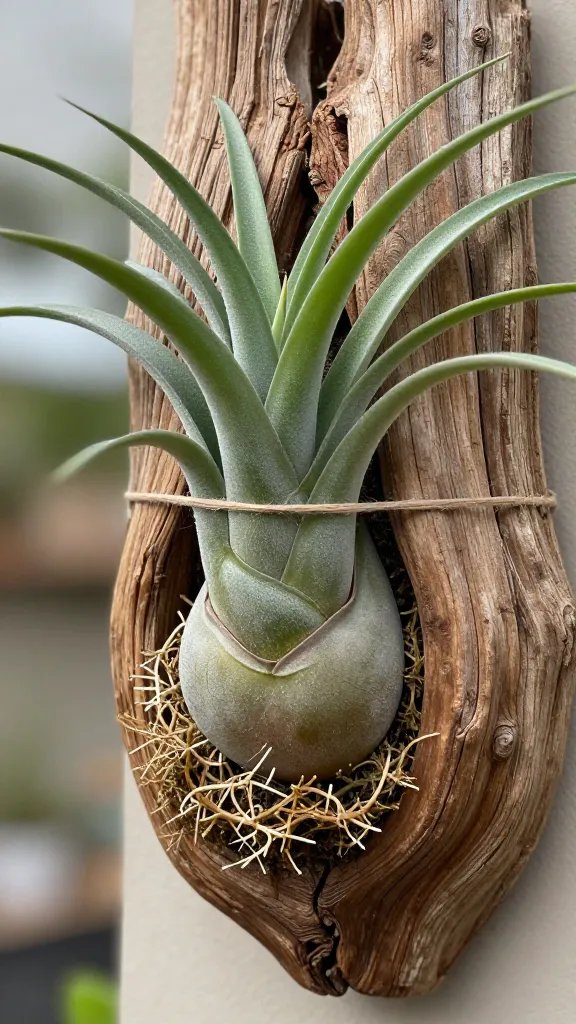
Bulbous tillandsias often pop off because their rounded bases act like rollers. T. caput‑medusae bucks that trend when you nest its bulb in a pocket so the “shoulders” contact wood at two or three points. Once seated, the twisting leaves brace the plant.
Seat It Like a Wedge
- Find a thumb-deep pocket in the wood that matches the bulb curve.
- Pack a tiny tuft of dry sphagnum under the bulb to stop micro‑wobble (keep it minimal so it dries fast).
- Secure with two opposing ties to remove side‑to‑side play.
Watering Note
- Dunk or heavy mist in the morning and dry by evening to avoid softening the bulb base.
- Shake excess water out; don’t let water pool between bulb and wood.
Takeaway: Treat caput‑medusae like a wedge—seat the bulb in a pocket and tie from two sides to eliminate roll.
5. T. brachycaulos (Chunky Rosette, Good Grip When Dry, Heavier When Wet)
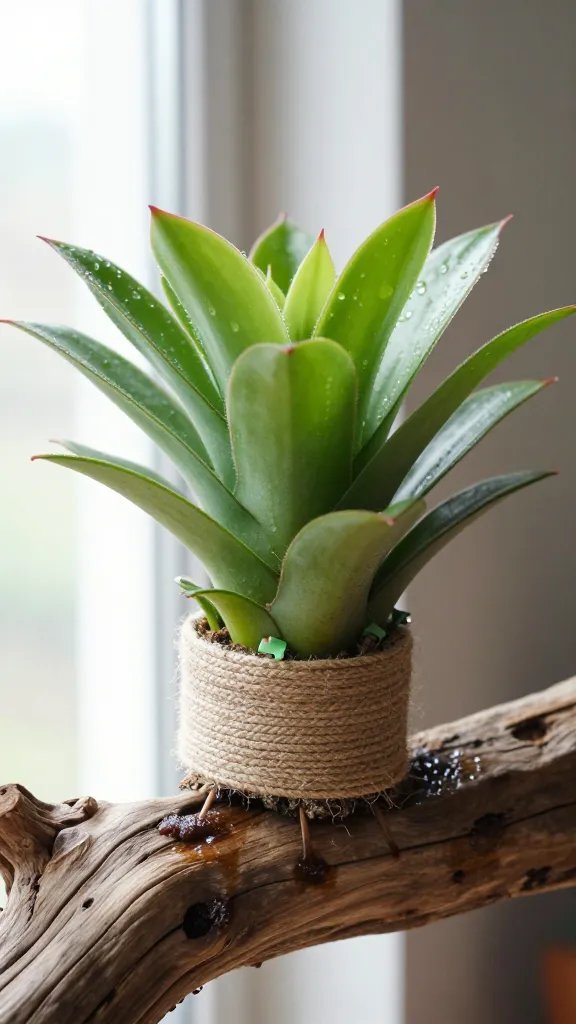
Many people lose T. brachycaulos after a dunking because it drinks deeply, gets heavier, and overcomes weak ties. Dry, the broad rosette grips well; wet, it becomes a lever. Plan for its wet weight from day one.
Prevent Post‑Soak Slips
- Mount slightly upward, with the base angled 10–15° above horizontal.
- Use a wide tie band (flat jute twine or soft ribbon wire) to distribute pressure.
- Place a micro dab of silicone under two opposite leaf sheaths at the base for anti‑skid.
Signs to Watch For
- Plant dips nose‑down after watering.
- Tie marks biting into outer leaves.
- Base rotates when you blow on it—weak friction.
Action today: Re‑tie brachycaulos with a flat band and tilt it slightly upward to counter wet‑weight sag.
6. T. streptophylla (Bulbous “Shirley Temple” Curls, Decent Grip, Noticeable Weight)
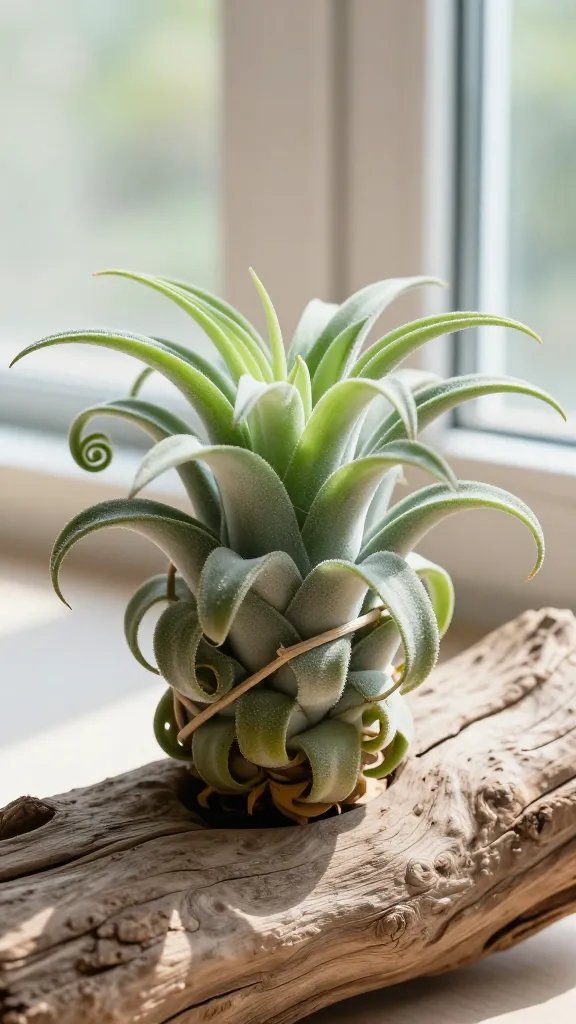
T. streptophylla charms people into mounting it high—and then it “corkscrews” off because the curls shift as humidity changes. It grips better than it looks, but its bulb and size create torque on smooth wood.
Humidity‑Smart Mounting
- Mount where you get bright indirect light near a window and steady airflow so curls don’t relax into a heavier, droopier shape.
- Seat the bulb against two wood ridges to form a cradle.
- Use two crisscrossed ties that meet behind the bulb, hidden from view.
Aftercare That Protects the Mount
- Mist lightly 2–3 times a week; give a deeper soak every 2–3 weeks, then dry fully.
- Trim ties only after new roots visibly grip the wood.
Takeaway: Cradle streptophylla between two ridges and cross‑tie it so shifting curls don’t twist the plant loose.
7. T. xerographica (Large Rosette, Slow Rooting, Heavy—But Mountable With Proper Support)
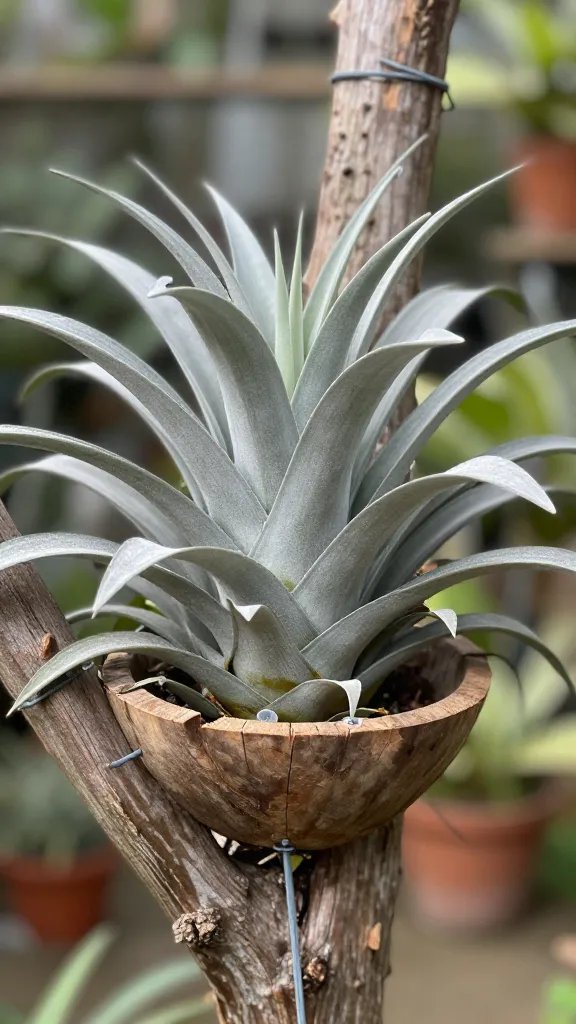
T. xerographica fails on wood when mounted like a small air plant. Its broad, heavy rosette creates strong downward torque, and it roots slowly, so weak ties and slick wood guarantee a fall. Give it structure and you’ll win.
Structural Mounting That Works
- Select a sturdy branch fork or a wide, shallow bowl in the wood that supports at least one‑third of the plant’s base.
- Use two or three anchor points with coated wire; hide ties beneath overlapping leaves.
- Add silicone anchors at three contact points; let cure 24 hours before watering.
Reality Check on Weight
- Wall mounts need solid studs or heavy‑duty anchors. Don’t trust small picture hooks.
- Keep the center of mass inside the wood’s footprint—no overhangs.
Action today: Re‑seat xerographica in a branch fork and add a third hidden tie before your next soak.
Frequently Asked Questions
Do air plants need soil or moss when mounted to wood?
No soil at all, and only a tiny tuft of dry sphagnum as a shim if the base wobbles. The plant takes water through its leaves, not the roots. Keep any moss minimal and airy so it dries within a few hours after watering. A thick, wet moss pad invites rot.
What’s the easiest way to secure an air plant without damaging it?
Use soft-coated florist wire or cotton string and wrap just above the base, never across tender leaf tips. Tighten only until the plant stops moving when tapped. For a cleaner look, add a small dab of clear silicone between the wire and wood. Let silicone cure a full day before watering.
How often should I water mounted tillandsias indoors?
In a bright room with normal home humidity, mist lightly 2–3 times a week and give a deeper soak every 2–3 weeks. Always dry the plant within 4 hours—aim a small fan or place near an open window. If your tap water tastes clean and not salty, it’s fine; otherwise use filtered water.
My plant keeps falling after I soak it. What am I doing wrong?
You’re under‑securing for the plant’s wet weight. Add a second tie point and angle the plant slightly upward so gravity pulls it into the wood, not off it. Seat the base in a textured pocket and use a silicone anti‑skid dab at two contact points. Always shake off excess water before rehanging.
Can I glue air plants directly to wood?
Use neutral‑cure silicone sparingly on the base sheaths, not on live green leaf tissue. Avoid hot glue on fresh leaves; it can scorch and fail when re‑wetted. Silicone provides grip while roots establish, and you can still remove the plant later by gently cutting the bond with a craft knife.
Which woods are best for mounting?
Cork bark, manzanita, grape wood, and weathered hardwoods with natural texture give the best grip and airflow. Avoid treated lumber and glossy, varnished driftwood; they’re too slick and may off‑gas. If you only have smooth wood, roughen a quarter‑sized patch with sandpaper where the base will sit.
Conclusion
Pick the right species for the job, match it to textured wood, and secure it for its wet weight—not its dry look. Start with T. ionantha or T. stricta to build confidence, then graduate to statement plants like T. xerographica with proper support. Next step: choose a rugged piece of cork bark and mount your first trio using two tie points each—you’ll stop chasing fallen air plants for good.