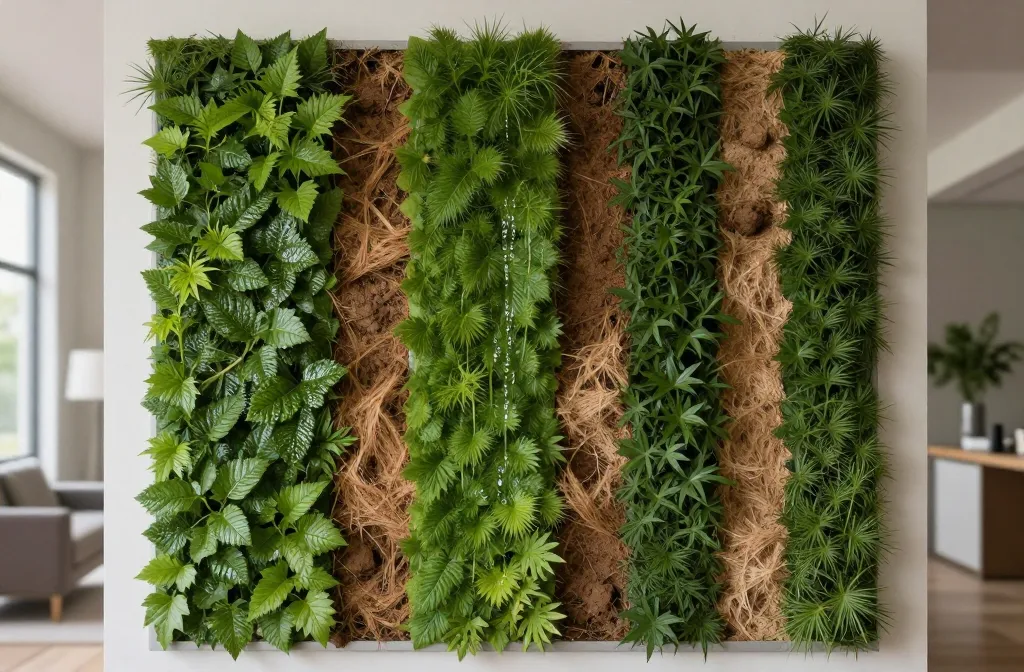
7 Signs Your Living Wall Is Failing — and the Intervention Each Symptom Needs
I’ve built living walls in cramped apartments and bright lofts, and I’ve watched them slump, crisp, and flood before I learned what each symptom was telling me. If your wall looks tired, patchy, or keeps dropping leaves, you’re not unlucky — you’re encountering a short list of predictable failures. I’ll show you how to read the signs and apply a straightforward fix using tools you already own. You’ll know exactly what to adjust this week to stop decline and restart steady growth.
1. Water Channeling: Green Stripes With Dead Zones
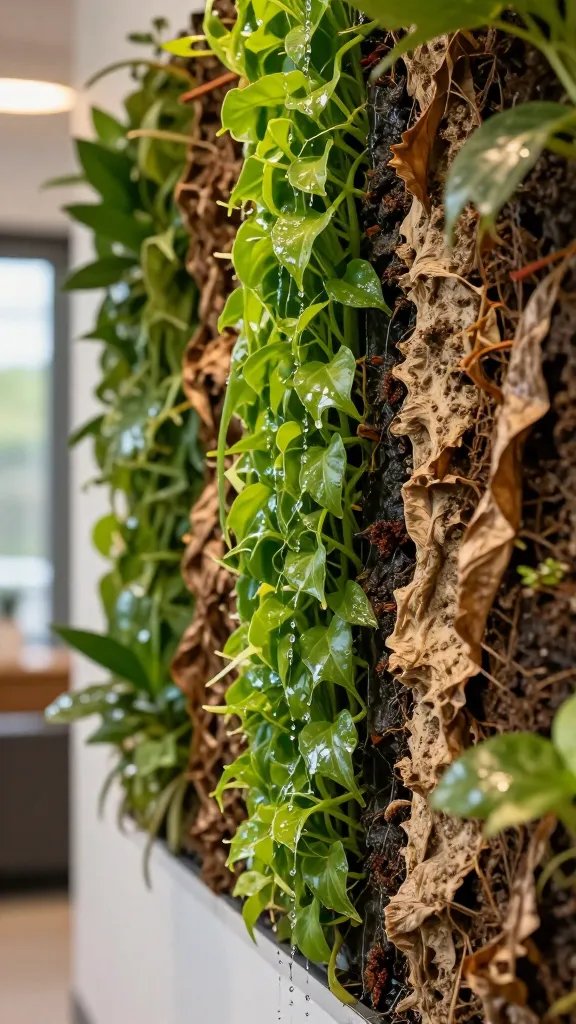
When water rushes down the same paths, some pockets stay bone-dry while others get drenched. You see vertical green “racing stripes” and, beside them, crispy patches that never catch up. Left alone, plants in the dry lanes stall, then die, while roots in the wet lanes rot.
Signs to Watch For
- Vertical bands of healthy growth next to narrow columns of brown, dry plants
- Water runs out the bottom within seconds of watering from the top
- Soil behind the crispy plants feels light and dusty even right after watering
How to Fix It
- Slow the flow: Use a watering can with a fine rose or a squeeze bottle to apply water evenly across the face, row by row.
- Baffle the path: Tuck strips of coconut fiber mat or sphagnum across the face where channels form to slow and spread water.
- Break hydrophobic pockets: Remove the driest plants, dunk their root balls in a bowl of water for 10–15 minutes, then replant.
What to Use Instead
- Coconut fiber liner or sphagnum moss from the garden centre to act as simple spreaders
- A basic drip kit with inline valves if you want set-and-forget, run for 3–5 minutes until the surface darkens evenly
Action today: Water slowly left to right across one horizontal row at a time, pausing until the surface darkens evenly before moving to the next row.
2. Overwatering and Root Rot: Leaves Yellow, Then Mushy
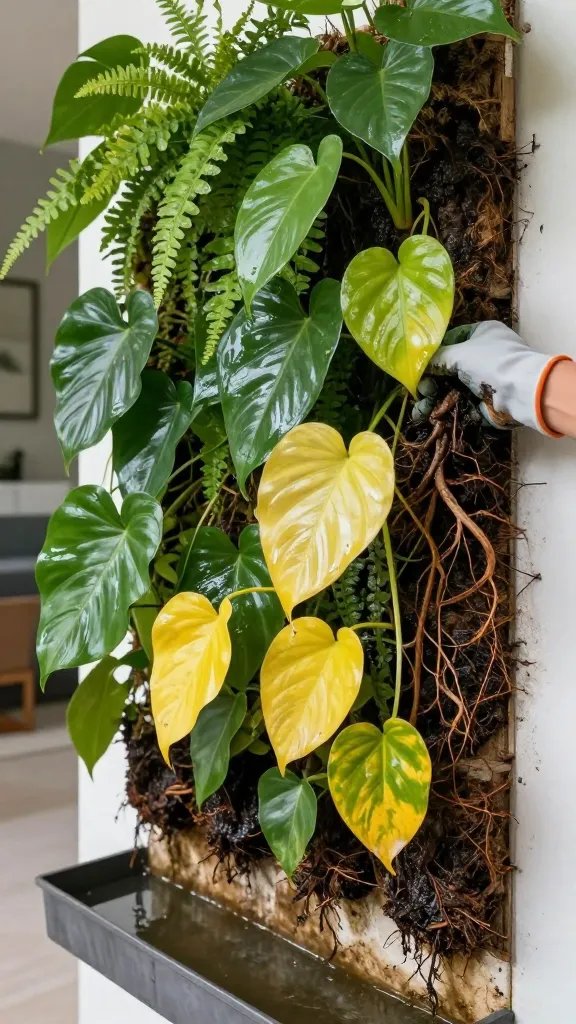
Drowning roots suffocate and invite rot. You’ll see yellowing that starts at the lowest, oldest leaves and moves inward, plus a swampy smell from the wall base. Keep pouring and everything softens, then collapses.
Signs to Watch For
- Yellow, soft leaves that detach with a gentle tug
- Dark, slimy roots when you pop out a plant to inspect
- A musty, sour smell in the catch tray or along the bottom row
How to Fix It
- Drain and dry: Empty the catch tray after every watering. Leave the wall without water for 5–7 days.
- Improve airflow: Add a small desk fan on low for 2–3 hours daily to dry the face between waterings.
- Root triage: Unpot mushy plants, trim back to firm, white roots, repot in fresh potting mix, and replant.
Watering Rhythm That Works
- Water only when the top 2–3 cm of the pockets feel dry and lightweight.
- For tropical foliage (pothos, philodendron, ferns): every 5–7 days in summer, 10–14 days in winter.
- For succulents: every 14–21 days year-round with smaller volumes.
Takeaway: Do not rewater until the top 2–3 cm feel dry and light and the catch tray is empty and odorless.
3. Underwatering: Crispy Edges and Stalled Growth
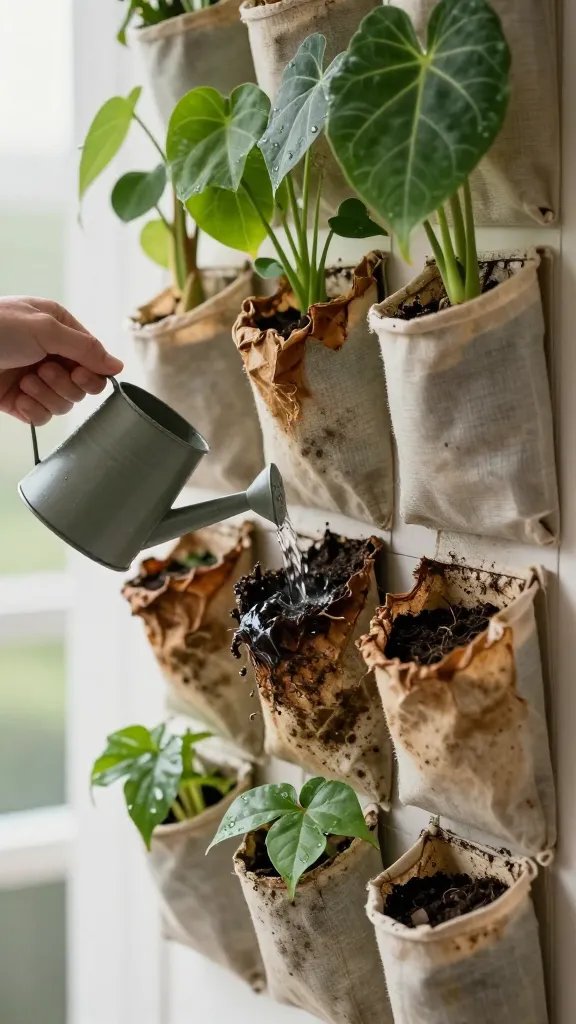
Thirst shows up as papery leaf edges, droop that improves right after watering, and soil that pulls away from the pocket liner. Starved roots stop expanding, so even when you resume watering, recovery lags.
Signs to Watch For
- Brown, crispy margins while veins stay green
- Pockets feel feather-light; mix shrinks from the pocket sides
- Plants perk up within an hour of watering, then droop again the next day
How to Fix It
- Rehydrate fully: Water twice in one session, 10 minutes apart, to overcome shrinkage and let the mix re-swell.
- Add moisture holders: Blend a handful of coconut coir or fine bark into the top 5 cm of dry pockets.
- Shield from midday sun until vigor returns to reduce demand.
Simple Schedule
- Test pockets by weight every 2–3 days. Water any that feel much lighter than a freshly watered pocket.
- Aim for even dampness — not soaked — across all rows after each watering.
Action today: Give one full, slow soak, wait 10 minutes, then repeat; press the mix back against the pocket sides to remove air gaps.
4. Light Mismatch: Leggy, Pale, or Sun-Scorched Leaves
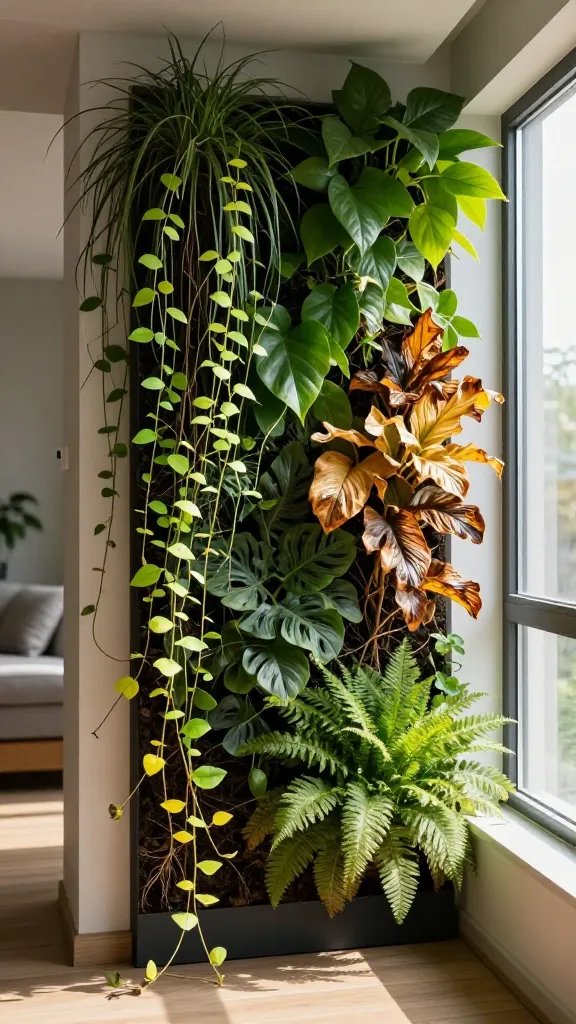
Too little light gives you leggy vines and pale, stretched leaves that drop easily. Too much sun scorches foliage, leaving bleached or crispy patches that never green up. Plants waste energy trying to adapt instead of rooting deeply.
Signs to Watch For
- Low light: Long gaps between leaves, small new leaves, pale green color
- Excess light: Bleached spots that turn tan, dry patches on the sunniest side, hot pockets at midday
How to Fix It
- Relocate: Place the wall in bright indirect light near a window — bright room with no direct midday sun on leaves.
- Diffuse: Hang a sheer curtain or use a white shower curtain liner to soften harsh rays.
- Supplement: Use a simple LED grow bar from the hardware store, 20–30 cm from the foliage, on for 10–12 hours daily.
Plant the Right Cast
- Low to medium light: Pothos, heartleaf philodendron, ZZ cuttings, ferns
- Bright light: Peperomia, hoya, pilea, small herbs
Takeaway: Move the wall so you can comfortably read a book there at midday without switching on a lamp, and block direct sun with a sheer.
5. Nutrient Starvation or Burn: Faded Leaves or Brown Tips After Feeding
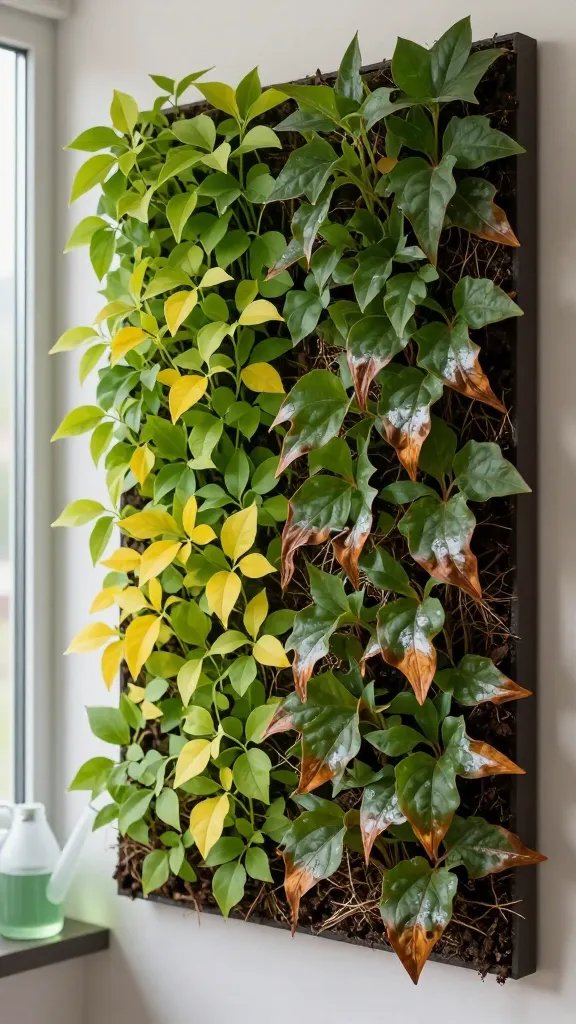
Walls run lean because thin pockets leach quickly. Starvation shows as overall pale color and slow growth; burn shows as dried, brown tips right after feeding. Both stall the wall and invite pests.
Signs to Watch For
- Starvation: Uniform light green leaves, small new growth, older leaves yellow evenly
- Burn: Brown, crispy tips within 48 hours of feeding, white crust on the soil surface
How to Fix It
- Feed light, frequent: Use a liquid houseplant fertilizer at half strength every 4 weeks in spring and summer, every 8 weeks in winter.
- Flush salts: Every second month, water thoroughly from the top until 20–30% drains out to rinse buildup.
- Switch water: Use tap water that tastes clean, not salty. If yours is hard, mix half-and-half with filtered water.
Rescue Move for Burn
- Rinse pockets with plain water until runoff is clear, trim browned tips with clean scissors, and pause feeding for 4 weeks.
Action today: Mix fertilizer at half the label rate and apply only to already damp pockets — never to dry mix.
6. Airflow and Humidity Imbalance: Mildew, Algae, and Funky Smells
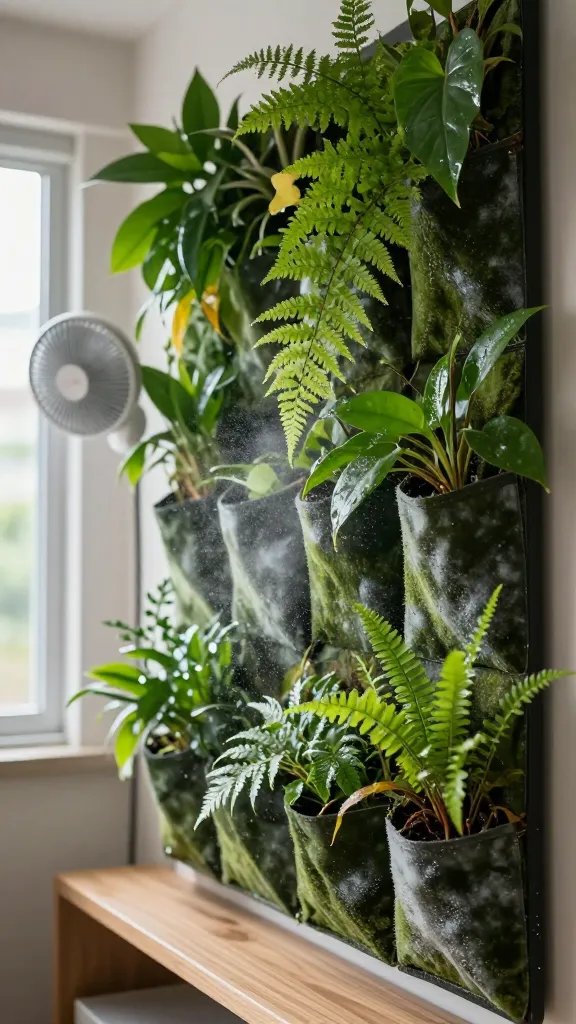
Stagnant air lets mildew bloom on leaves and algae paint the pocket fronts. Your wall looks clammy, and the smell turns earthy-sour. Growth slows because leaves can’t dry between waterings.
Signs to Watch For
- Fine gray-white fuzz on lower leaves or stems
- Green film on fabric pockets or liners
- Persistent dampness that never seems to dry
How to Fix It
- Ventilate: Run a small fan on low pointing across, not directly at, the wall for 1–2 hours morning and evening.
- Thin foliage: Prune crowded clumps so you can see daylight between plants.
- Clean surfaces: Wipe pocket fronts with a cloth dipped in a 1:10 mix of household bleach and water, then rinse lightly.
Safe Leaf Care
- Remove affected leaves, then spray remaining foliage with a ready-to-use garden sulphur or copper fungicide per label, once, in the evening.
Takeaway: Add 60 minutes of gentle cross-breeze daily and keep foliage from touching wet fabric — that alone stops most mildew.
7. Wrong Plants in the Wrong Pockets: Fast Failures From Poor Pairing
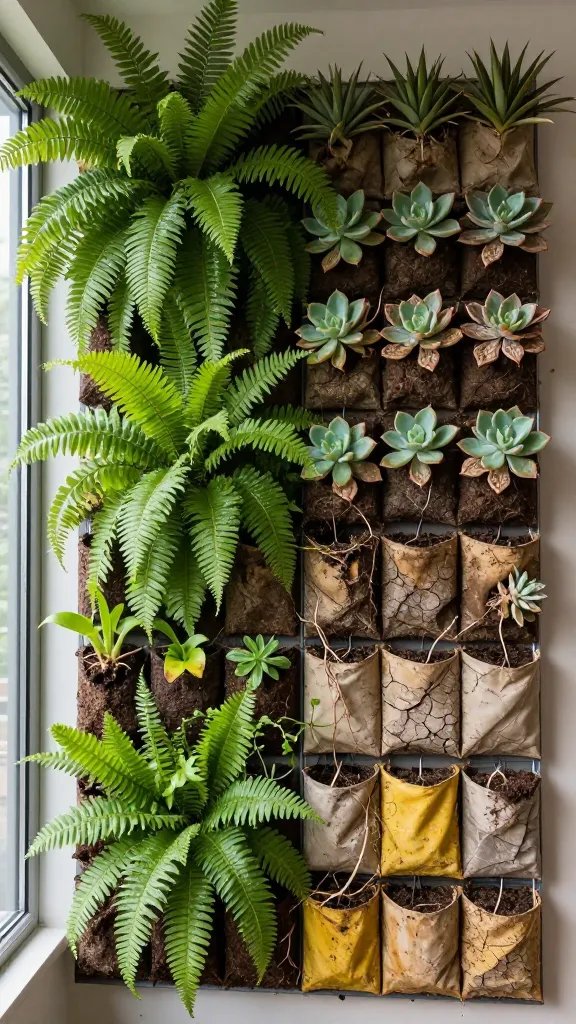
Mixing thirsty ferns with drought-loving succulents in the same watering zone guarantees one group suffers. Tall bullies shade out compact plants, leaving bald pockets. Over time, maintenance becomes constant crisis.
Signs to Watch For
- One type thrives while its neighbor declines under the same care
- Top rows dominate; bottom rows stay sparse
- Plants outgrow pockets within weeks and split seams or flop
How to Fix It
- Group by thirst: Keep tropical foliage together and succulents together on separate panels or rows.
- Size match: Put slow, compact growers at eye level; trailing or vigorous vines up high to cascade.
- Root right: Use a good quality potting mix for tropicals and a cactus/succulent mix for dry-lovers.
Simple Replant Plan
- Pull out anything failing next to a very different species.
- Refill the pocket with the correct mix for the replacement plant.
- Replant with 2–3 small starters of the same care type per pocket for a full look.
Action today: Relocate any succulents away from fern or calathea rows and standardize the mix per row before your next watering.
Frequently Asked Questions
How often should I water a living wall without an irrigation system?
Check every 3 days by touch and weight. Water when the top 2–3 cm feel dry and the pocket feels light compared to a recently watered one. In most homes, that’s every 5–7 days in summer and 10–14 days in winter for tropicals. Always empty the catch tray the same day.
What’s the easiest lighting setup if my room is dim?
Mount a simple LED grow bar or two from the hardware store 20–30 cm from the foliage. Run them on a plug-in timer for 10–12 hours daily. Choose a “full spectrum” or “daylight” product and keep it far enough away to avoid leaf heat. Combine with a sheer curtain to prevent glare if any sun does hit.
Can I use regular potting soil for the whole wall?
Use standard potting mix for most tropical foliage pockets. For succulents, blend in a bagged cactus/succulent mix or perlite at roughly half-and-half to keep it quick-draining. Keep each row consistent so you can water evenly. Refresh the top 3–5 cm with fresh mix every 6 months.
Why does my wall smell musty after watering?
That smell signals standing water and low airflow. Empty the catch tray right after watering, then run a small fan across the wall for 1–2 hours. Space plants so leaves dry within a few hours; wipe any algae from pocket fronts with diluted bleach (1:10) and rinse. If it persists, reduce your watering volume by one-third.
How do I stop leaves from burning near a sunny window?
Keep the wall in bright indirect light, not direct midday sun. Hang a sheer curtain or a white shower curtain liner to diffuse harsh light. Water early morning so leaves dry before the hottest hours. Trim damaged leaves and shift sensitive plants (ferns, calatheas) to shadier rows.
What’s a simple feeding plan that won’t burn my plants?
Use a liquid houseplant fertilizer at half strength once every 4 weeks in spring and summer. Water the wall first, then feed so you’re never applying concentrate to dry mix. In winter, feed every 8 weeks or pause if growth slows. Flush with plain water every second month to prevent salt buildup.
Conclusion
Your living wall speaks through patterns — stripes, smells, and leaf texture — and each has a direct fix you can apply with a watering can, a fan, and a few shelf-stable supplies. Pick the one symptom you recognize most, make today’s single adjustment, and watch for improvement over the next two weeks. When you’re ready, tackle lighting next — that one upgrade multiplies every other fix you make.