7 Plants That Survive the Dry Conditions of a Felt Panel Living Wall That Thrive
I mounted my first felt panel living wall above a radiator and watched plant after plant crisp at the edges. The pockets dried out faster than any pot I owned, and anything thirsty sulked. After a few swaps and a season of testing, I found a set of plants that shrug off missed waterings and shallow roots. You’ll learn which species work, how to plant them in felt pockets, and the simple care tweaks that keep a vertical garden green without daily fuss.
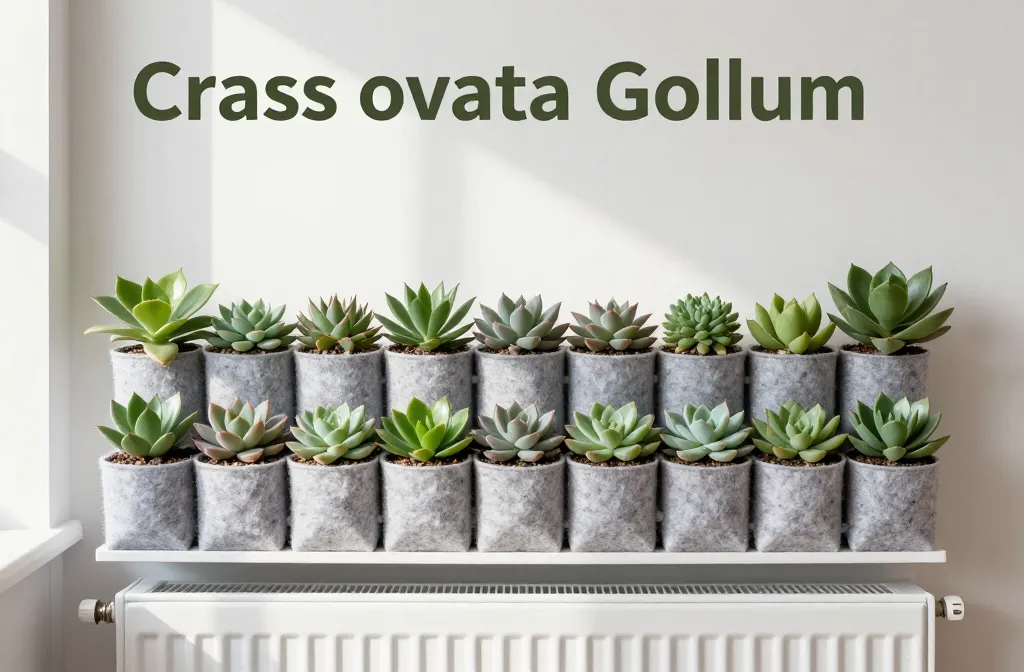
1. Succulent Workhorse: Crassula ovata ‘Gollum’ (Jade)
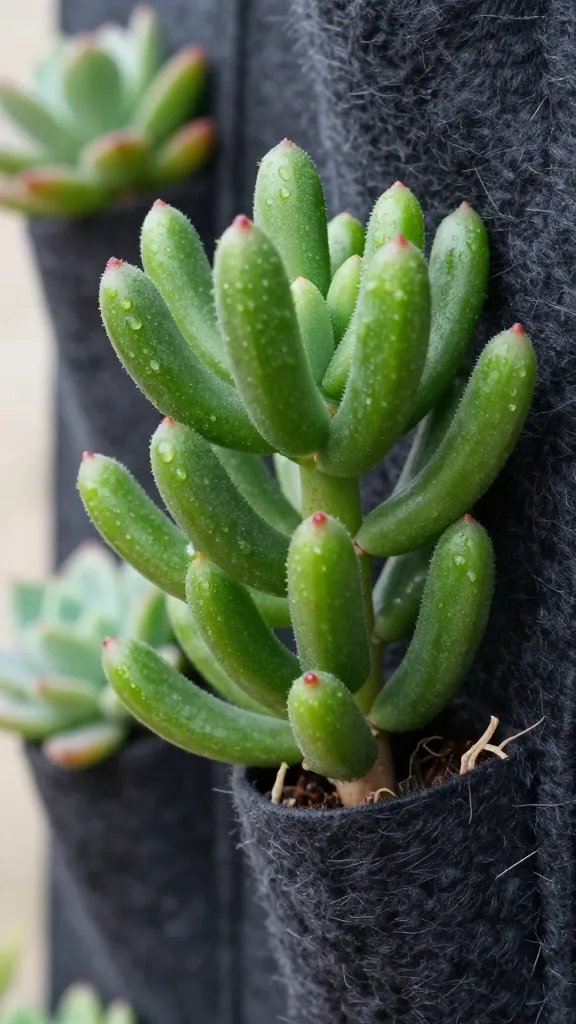
Overwatered plants rot fast in felt pockets because excess moisture has nowhere to pool and roots sit air-pruned. The opposite problem appears a week later — the pocket dries hard and regular jades wilt. Crassula ovata ‘Gollum’ handles both swings, storing moisture in its fingers and tolerating the brief droughts felt walls create.
Why It Survives Dry Pockets
- Thick, water-storing leaves buffer missed waterings for 2–3 weeks.
- Compact roots adapt to shallow pockets without collapsing the felt.
- Takes bright indirect light near a south or west window without crisping when kept off hot glass.
How to Plant in Felt
- Use a cactus and succulent potting mix from the garden centre; if it feels heavy, stir in two handfuls of perlite per 4 litres.
- Tuck the root ball snugly so the crown sits level with the pocket edge to prevent stem rot.
- Water once after planting, then wait 10–14 days before the next drink.
Action today: Add one ‘Gollum’ jade per 20–25 cm pocket and space plants so no leaf touches the felt edge where evaporation is highest.
2. Tough Trailers: Senecio (Curio) rowleyanus ‘String of Pearls’
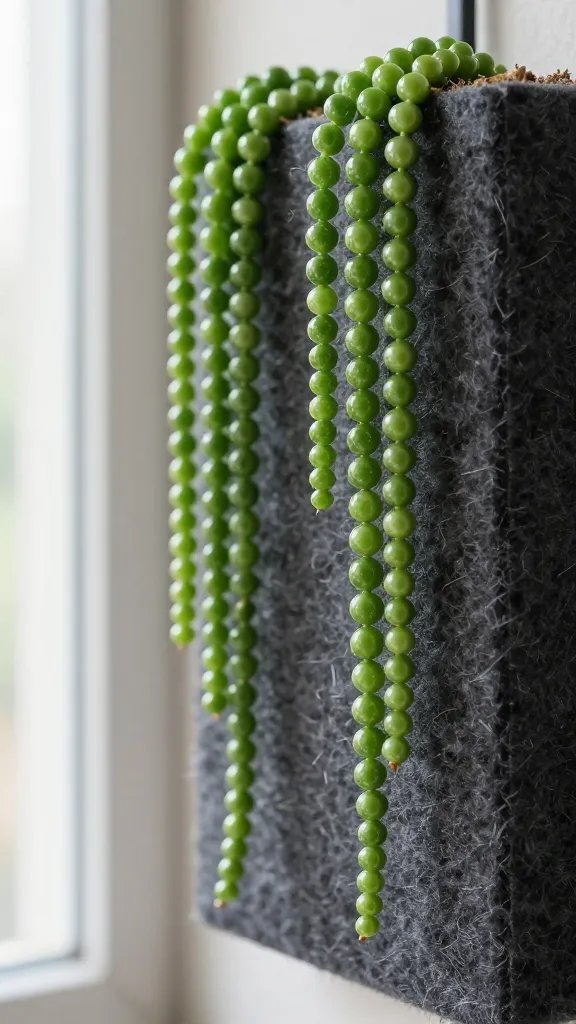
Most trailing plants demand constant moisture, which felt panels don’t provide. String of Pearls thrives with dry spells, and its beaded stems use little water while quickly covering bare felt.
Placement and Light
- Hang from upper pockets so pearls drape and shade the felt, slowing evaporation.
- Give bright, filtered light — 1–2 feet back from a sunny window or beside sheer curtains.
- Avoid blasting radiators or heat vents beneath the panel.
Watering Routine
- Let the top 3–4 cm of mix dry fully; water every 2–3 weeks in summer, monthly in winter.
- Use a squeeze bottle or narrow-spout watering can to wet the root zone only, not the strings.
Takeaway: Keep pearls high and dry — water at the crown, not the vines, and they’ll blanket the wall without constant care.
3. Reliable Filler: Sansevieria (Dracaena) trifasciata ‘Hahnii’ Dwarf Snake Plant
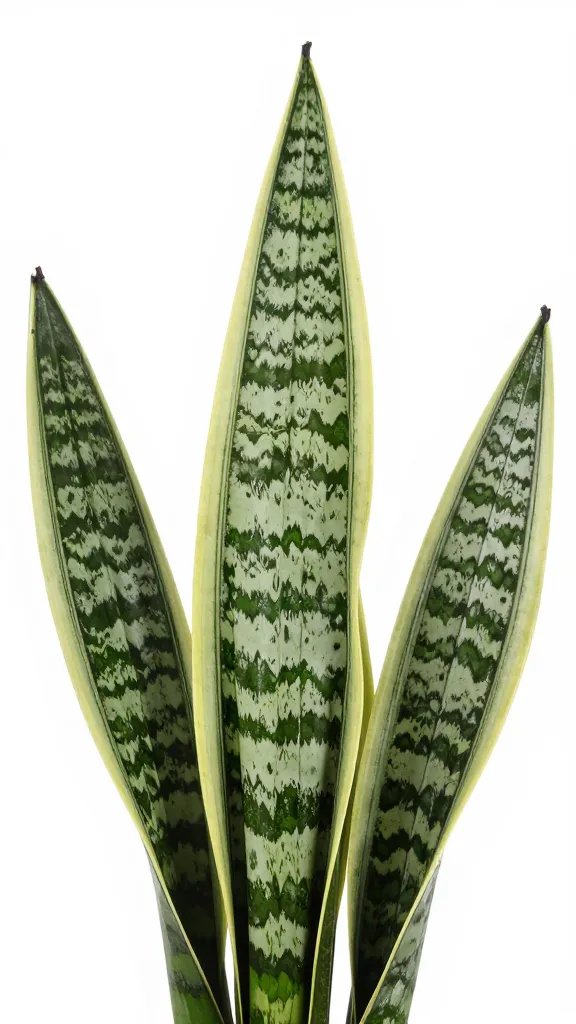
Felt pockets punish plants that need deep soil. Dwarf snake plants have shallow, rhizomatous roots that anchor well and power through neglect. They won’t flop or desiccate even if you forget two waterings.
Signs It’s Happy
- Leaves stand firm and glossy with no inward curl.
- New pups appear at pocket edges within a season.
- No brown mush at the base — a sign you’re not overwatering.
Simple Care
- Use standard indoor potting mix lightened with a few handfuls of perlite.
- Water every 3–4 weeks; check by pressing a finger into the pocket — if the felt inside feels cool but not damp, wait.
- Wipe leaves with a damp cloth every month to keep pores open.
Action today: Slot one ‘Hahnii’ into a mid-height pocket where it won’t be splashed by sink or shower overspray — excess moisture is the only real risk.
4. Hardy Accent: Haworthia fasciata (Zebra Plant)
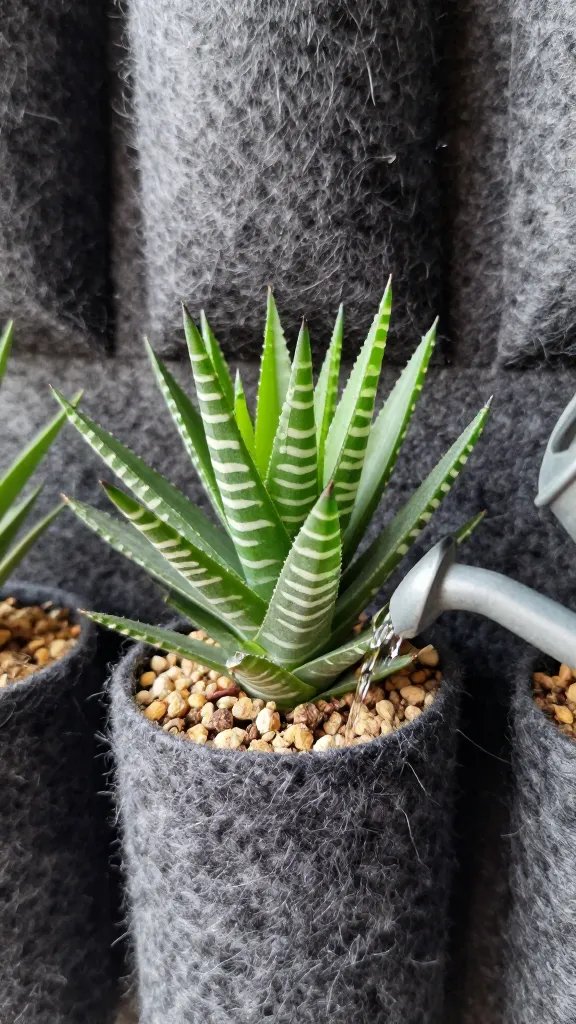
Pretty rosettes often collapse on walls because they rot where the crown meets damp felt. Haworthia tolerates dry mix, needs little feeding, and stays compact so pockets don’t sag.
How to Keep the Crown Dry
- Plant the rosette slightly proud of the pocket edge — think 0.5–1 cm above the felt line.
- Direct water to the sides of the root ball, not into the centre of the rosette.
- Give morning sun or bright indirect light; avoid hot afternoon beams right through glass.
Feeding and Maintenance
- Feed once in spring with a diluted all-purpose liquid fertiliser (half the label rate).
- Twist away dry, lower leaves with your fingers to maintain airflow.
Takeaway: Keep the rosette above the splash zone and water the edges — Haworthia will look pristine with very little input.
5. Low-Water Texture: Sedum morganianum ‘Burrito’ (Burro’s Tail)
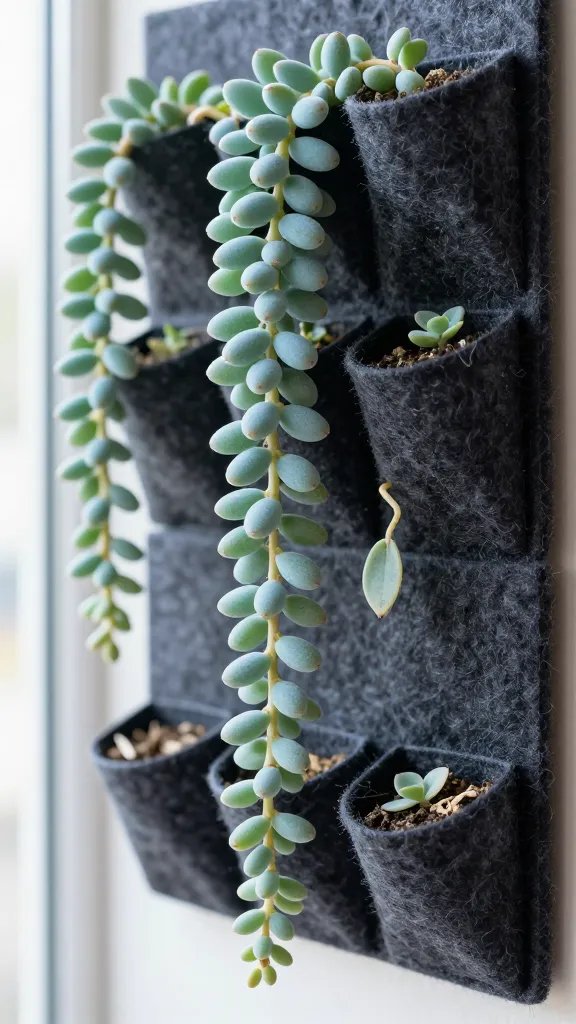
Many felt walls look flat because drought-tolerant choices stay small. Burro’s Tail adds lush, trailing mass without frequent watering. The leaves are fragile, but the plant roots from dropped pieces, which suits a wall you rarely disturb.
Handling Without Breakage
- Plant once, then stop touching it — use a chopstick to guide stems over neighboring pockets.
- If leaves fall, lay them on a spare pocket filled with mix; they’ll root in 3–4 weeks.
- Water every 2–3 weeks in warm months; monthly in cool months.
Pocket Setup
- Use a sandy, well-draining mix labeled for succulents.
- Add a small handful of coarse sand or perlite to the immediate planting area if your panel mix feels dense.
Action today: Reserve top-row pockets for Burro’s Tail so the weight hangs freely and doesn’t kink against lower pocket flaps.
6. Drought-Tolerant Foliage: Peperomia obtusifolia (Baby Rubber Plant)
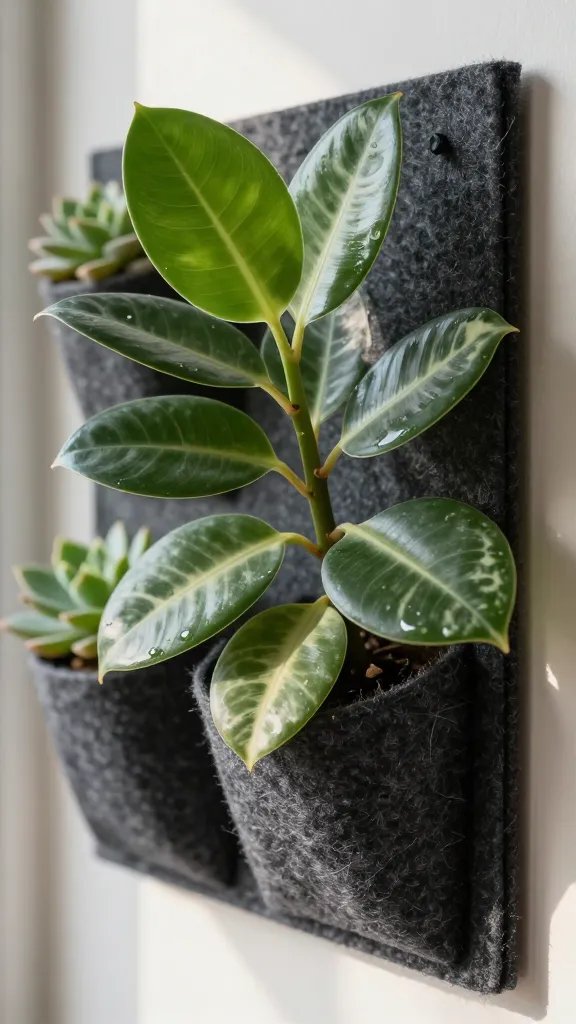
Not every dry-tolerant option must be a succulent. Peperomia obtusifolia stores moisture in its thick leaves, tolerates missed drinks, and offers glossy green or variegated color that breaks up all the blue-greens of succulents.
Light and Water Balance
- Place in bright, indirect light — an east window or 1–2 metres from a south window is ideal.
- Water when leaves go slightly flexible and the pocket feels light — usually every 10–14 days.
- Avoid cold drafts; peperomia dislikes temps below 13°C.
Root-Friendly Planting
- Use a standard indoor potting mix; no need for extreme drainage, but don’t pack it tight.
- Pinch the growing tips every couple of months to keep it compact in a shallow pocket.
Takeaway: Add a Peperomia to middle rows for body and gloss; water on a leaf-flex test rather than a calendar.
7. Silver Shield: Plectranthus (Coleus amboinicus) ‘Cuban Oregano’ or Plectranthus argentatus
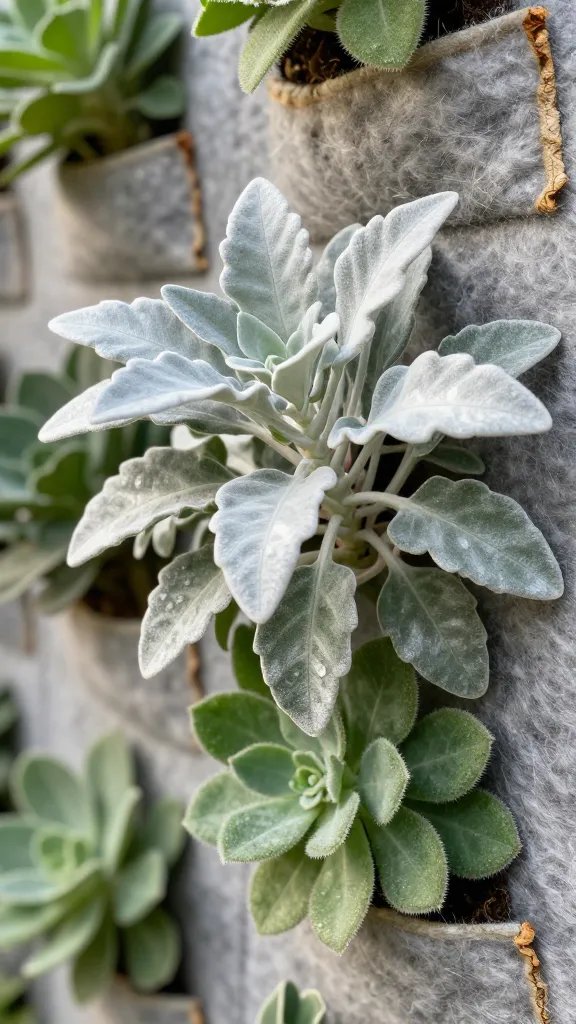
Edges of felt panels dry first and scorch plants that can’t handle airflow. Plectranthus species with slightly fuzzy, aromatic leaves hold moisture and shrug off dry edges while adding a soft, silvery contrast.
Choosing the Right Type
- Pick Plectranthus argentatus for silvery, velvety leaves that reflect light and reduce heat stress.
- Or use ‘Cuban Oregano’ for thicker, scented foliage that tolerates brief drought and bright light.
Care in a Felt Pocket
- Water when the top of the pocket is dry to the touch; every 10–14 days is typical.
- Trim stems to 10–12 cm monthly to keep it dense and prevent top-heaviness.
- Use a balanced slow-release fertiliser prill mixed into the pocket at planting for 3–4 months of steady growth.
Action today: Tuck Plectranthus along the outermost pockets to act as a living windbreak for thirstier neighbors.
Frequently Asked Questions
How often should I water a felt panel living wall?
In a typical heated apartment, water every 10–14 days for drought-tolerant plants and every 3–4 weeks for true succulents. Always test the pocket: press two fingers into the felt at root level — if it feels cool and slightly damp, wait 3–4 days. In brighter, warmer spots, shorten the interval by a few days. In winter, extend by a week and reduce volume.
What soil should I use in the pockets?
Use a good quality potting mix from the garden centre for foliage plants, and a cactus/succulent mix for jades, haworthia, and sedums. If your mix feels heavy or stays wet for days, stir in a few handfuls of perlite. Fill pockets firmly enough to anchor roots but don’t compress to a brick — roots need air. Top up mix after the first two waterings as it settles.
My wall dries out too fast. What can I change without installing irrigation?
Move the panel 30–45 cm away from radiators or heat vents and out of direct afternoon sun. Group more plants per pocket to shade the felt and reduce exposed surface area. Add a light layer of decorative pebbles on top of the soil inside each pocket to slow evaporation. Lastly, water in the evening so moisture isn’t lost immediately to daytime heat.
Do I need fertiliser for these low-water plants?
Yes, but lightly. Mix a small amount of slow-release fertiliser granules into each pocket at planting, or feed with a half-strength all-purpose liquid fertiliser once in spring and again in mid-summer. Succulents need even less — half-strength once in spring is enough. Avoid feeding in winter when growth is slow.
Can I mix succulents with non-succulents on the same panel?
You can, as long as you group plants by watering needs. Keep true succulents together in the sunniest, warmest upper pockets and water them less often. Place peperomia and plectranthus on shadier sides or middle rows where pockets dry a bit slower. Use a squeeze bottle to target water at specific pockets instead of soaking the whole panel.
How do I keep the panel from sagging or pockets tearing?
Distribute heavier plants like dwarf snake plants across multiple pockets rather than clustering them. Don’t overfill with wet soil at planting — aim for snug but not swollen pockets. Use wall anchors appropriate for your wall type and keep the top row slightly lighter with trailing species. Check stitching monthly and reinforce with a few hand stitches of nylon thread if you notice stretching.
Conclusion
Your felt panel can stay green without daily watering if you pick plants built for the job and plant them correctly. Start with two succulents, one dwarf snake plant, and a trailing species on the top row, then tune your watering to the pocket touch-test. When that’s humming, expand with texture and color — your wall will thrive on neglect, not suffer from it.