
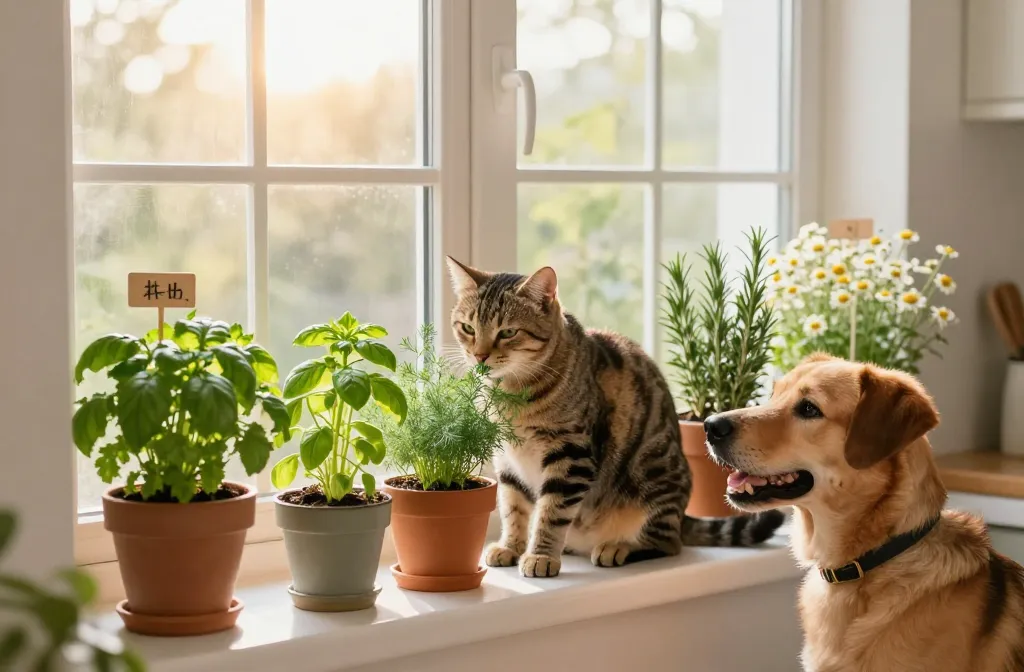
Your pets sniff everything, so why not give them something safe, tasty, and helpful to sniff? These pet-friendly herbs pull double duty: they flavor your food and offer gentle wellness perks for your furry co-stars. No fancy gardening degree required—just a sunny windowsill and a little curiosity. Ready to grow a mini apothecary your cat and dog can share?
1. Catnip, But Make It Classy
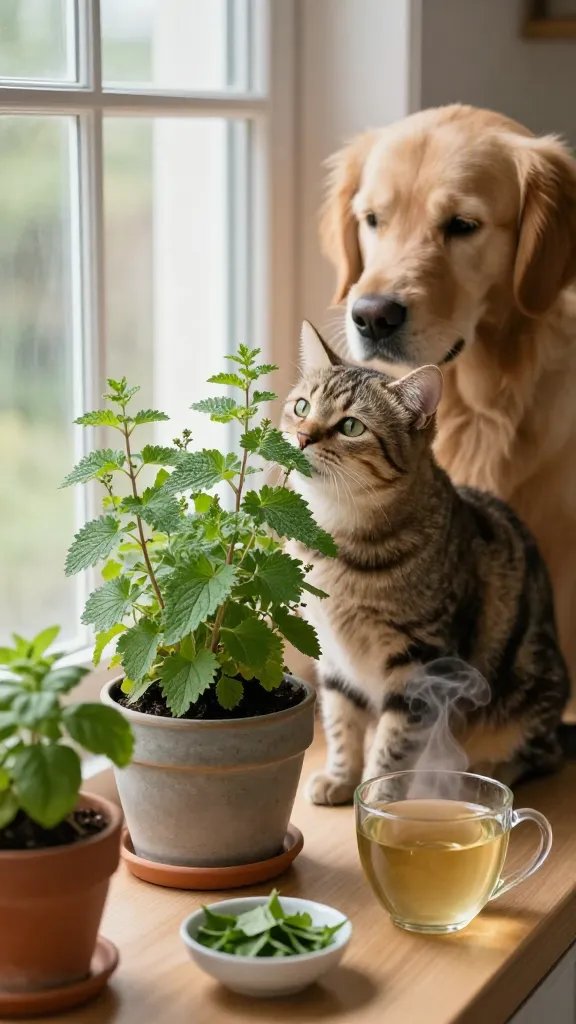
Let’s start with the crowd-pleaser. Catnip thrills many cats and most dogs find it mildly interesting (some even enjoy the grassy chew). It’s easy to grow, totally safe, and doubles as a fun enrichment plant.
Why It’s Awesome
- For cats: Stimulates play, reduces stress post-zoomies, and supports enrichment.
- For dogs: Usually neutral to slightly calming when brewed as a light tea.
- For you: Fresh leaves add a subtle minty note to salads or tea.
Grow it in a pot because it spreads like it pays no rent. Give your cat fresh leaves to sniff or rub into a toy. For dogs, steep a tiny pinch in warm water for a gentle “spa day” sip.
Tips
- Offer short sessions: 5–10 minutes of play, then let your cat chill.
- Rotate toys with dried catnip so the magic doesn’t fade.
- Harvest right before bloom for peak aroma.
Use it when your cat needs a mood boost or your dog needs a mellow moment. It’s enrichment in plant form.
2. Parsley: The Fresh-Breath Wingman
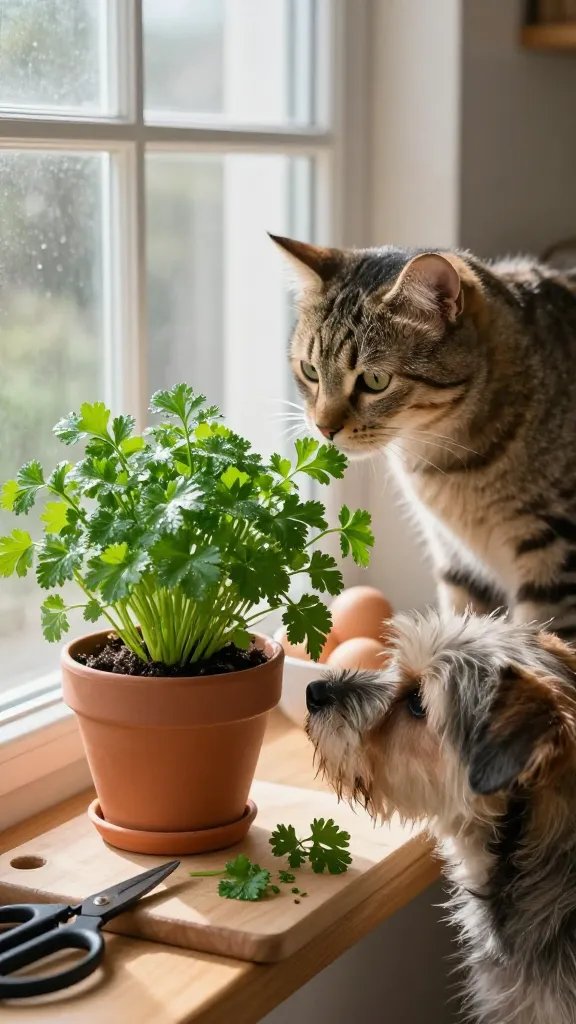
Parsley does more than garnish plates. It freshens breath, offers antioxidants, and brings a crisp, bright flavor pets often accept in tiny amounts. It’s easy, fast-growing, and cute on your kitchen sill.
Why It’s Awesome
- Breath helper: Chlorophyll can help neutralize funky pet breath between brushings.
- Nutrient perks: Vitamins A, C, and K in a sprinkle-sized package.
- Culinary bonus: Elevates your eggs, soups, and grain bowls.
Flat-leaf (Italian) parsley tastes better than curly, IMO. Chop it super fine and sprinkle a pinch over your dog’s meal. Cats can handle a few tiny flecks—go slowly and watch for side-eye.
Tips
- Use tiny amounts: think a pinch for small pets, up to a teaspoon for big dogs.
- Skip if your pet has kidney issues unless your vet says otherwise.
- Harvest outer stems first to keep the plant producing.
Perfect for post-treat breath, quick nutrient boosts, and dressing up your own dinner. Everyone wins, including your nose.
3. Basil: The Sunny-Day Soother
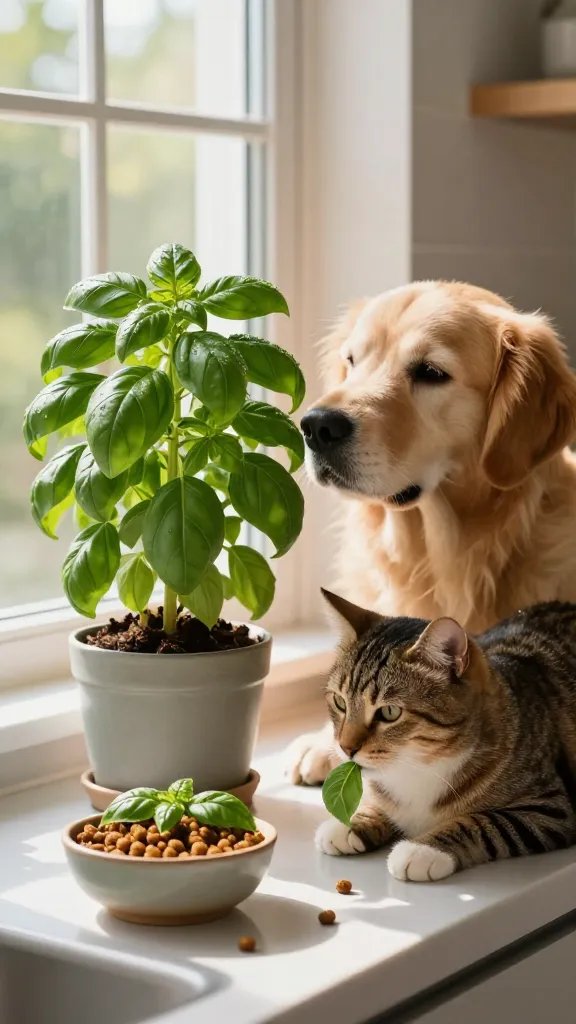
Basil screams summer and pairs surprisingly well with pet meals in micro-doses. Many dogs enjoy the aroma, and some cats’ll nibble a leaf like it’s their job. It brings gentle antioxidant support and a fresh, peppery lift.
Why It’s Awesome
- Flavor upgrade: A few torn leaves make kibble smell exciting.
- Gentle support: Contains antioxidants and a little anti-inflammatory flair.
- Grower-friendly: Thrives in sun, tolerates your “oops I forgot to water” moments (a little).
Start with tiny amounts—basil has a strong personality. Tear leaves to release aroma and mix into wet food or a lick mat. Cats may prefer the smell over eating; dogs often go for the taste.
Key Points
- Pinch off flower buds to keep leaves tender and sweet.
- Rotate with other herbs so your pet doesn’t decide you’re serving salad forever.
- Try Thai basil for a hint of anise if your pet gets picky.
Reach for basil when meals feel boring and you want a fresh vibe without heavy changes. It brightens bowls and moods, seriously.
4. Rosemary: The Sniff-First Powerhouse

Rosemary smells like a forest that pays taxes. It’s potent, so you only need a whisper. Dogs especially engage with rosemary’s scent, and it’s a hardy plant that basically refuses to die.
Why It’s Awesome
- Aroma enrichment: Great for scent games—rub a sprig on a toy and hide it.
- Antioxidant lift: Strong compounds support overall wellness in tiny amounts.
- Human kitchen hero: Roasted veggies, focaccia, grilled anything—yes please.
Offer a teeny minced amount mixed into dog meals—think a few needles, not a branch. Cats may prefer rosemary as enrichment rather than a snack; waft the scent and let them investigate.
Tips
- Use sparingly; it’s intense. Too much can upset tummies.
- Grow in a sunny pot with great drainage—rosemary hates wet feet.
- Try a rosemary “sniff station”: a sprig in a breathable sachet near a resting spot.
Use rosemary for scent-based play and occasional flavor on dog food. It shines when you want engagement without extra calories.
5. Dill: The Gentle Tummy Buddy
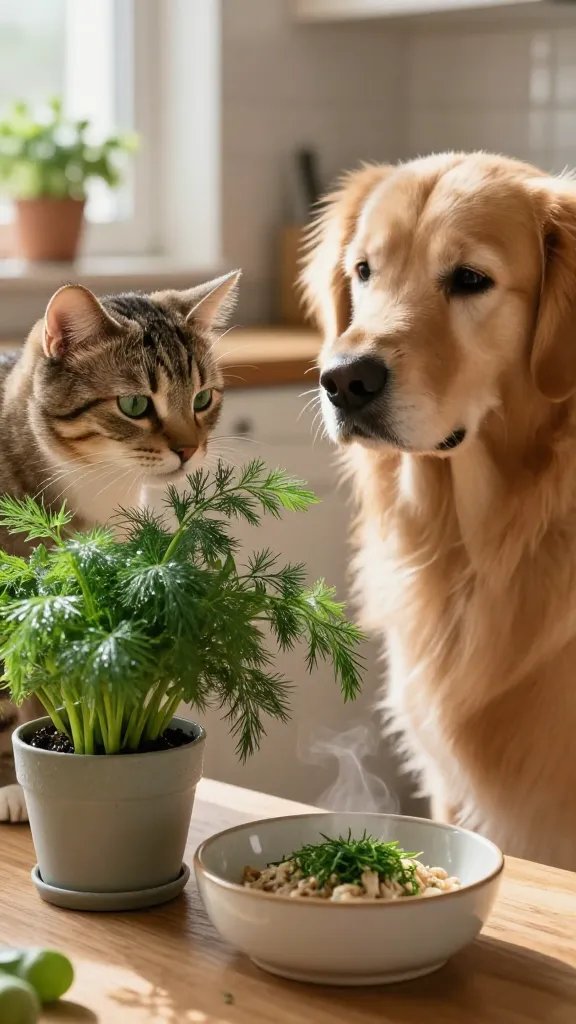
Dill brings a soft, sweet aroma that many pets accept more easily than stronger herbs. It’s known for digestive calm and can make meals feel special without overwhelming picky eaters.
Why It’s Awesome
- Digestive support: Traditionally used to ease gassy bellies—handy after treat-heavy days.
- Light flavor: Good starter herb for skeptical pets.
- Garden quick-win: Sprouts fast, looks feathery and cheerful.
Snip fine fronds and sprinkle just a pinch over your dog’s dinner. Cats might lick it off wet food or ignore it entirely—both are normal. You’ll love it on potatoes, salmon, or yogurt dips.
Tips
- Keep portions tiny to avoid digestive flips (irony, I know).
- Stake taller plants—they flop dramatically like fainting goats.
- Successive sowing every few weeks keeps dill coming.
Grab dill when your pet needs a calm, gentle introduction to herbs or their tummy deserves a little TLC.
6. Cat Grass: The Ultimate Crunchy Green
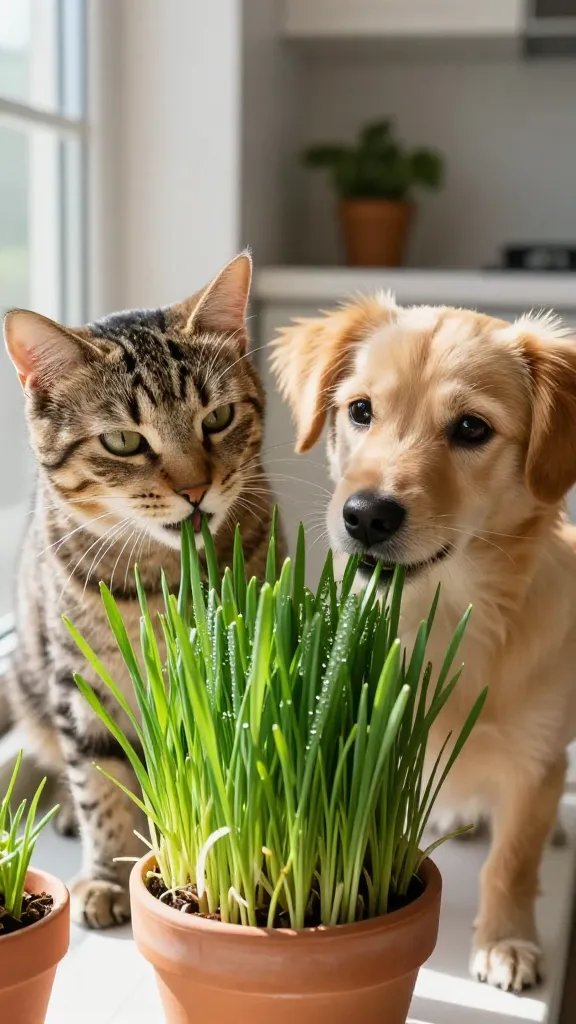
Okay, cat grass isn’t a single herb, but it belongs on this list. It’s usually oat, wheat, barley, or rye grass, and both cats and dogs love nibbling it. It satisfies the need to chew greens and can help keep hairball drama to a minimum.
Why It’s Awesome
- Natural enrichment: Lets pets graze safely instead of attacking your houseplants.
- Fiber boost: Supports digestion and may reduce hairballs for cats.
- Ridiculously easy: Plant, water, wait a week, boom—mini meadow.
Set out a fresh pot and let your pet self-serve. Replace when it gets gnarly or droopy. Dogs often enjoy a few blades; cats sometimes act like they discovered agriculture.
Tips
- Use organic seed and potting mix—no fertilizers or pesticides.
- Offer in short sessions if your pet hoovers grass and barfs (we’ve all been there).
- Rotate two pots so one can recover while the other gets devoured.
Use cat grass as your daily go-to for safe chewing, especially if your pet already raids the ficus. It’s the enrichment MVP.
Safety Notes You’ll Actually Remember
- Introduce any herb in tiny amounts and watch for tummy upset or allergies.
- Avoid essential oils on or around pets unless your vet gives a clear thumbs-up.
- If your pet has medical conditions, is pregnant, or takes meds, check with your vet first.
- Stick to the edible herbs above; some common herbs (like large amounts of oregano, pennyroyal, or comfrey) can cause issues.
Ready to turn your windowsill into a pet-approved flavor lab? Start with one herb, keep it tiny, and see what gets tail wags or happy head-butts. With a few pots and a little curiosity, you’ll upgrade dinner, enrichment, and your kitchen vibes—FYI, that’s a triple win.