5 Bog Plants That Work in a Carnivorous Terrarium Setup — and the Substrate Each Needs Guide
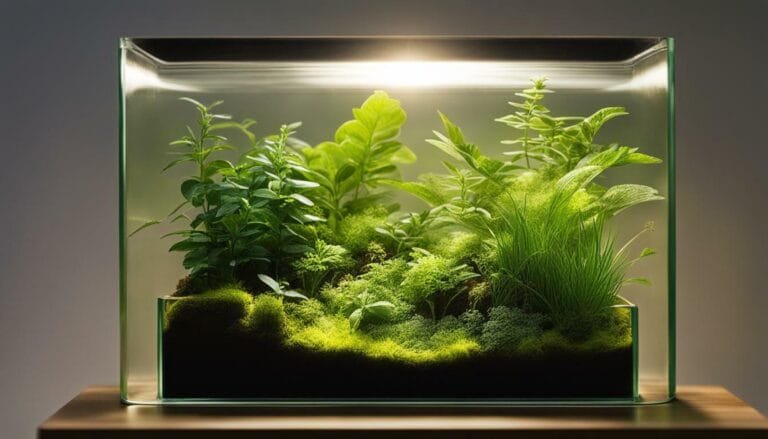
I built my first carnivorous terrarium on a coffee table with a desk lamp and an old fish tank. The plants looked fantastic for two weeks, then stalled because I treated them like regular houseplants. If you’ve watched moss thrive but lost the stars of the show, you’re not alone. Here’s exactly which bog plants belong with carnivores — and the simple, store-bought substrates that keep each one thriving.
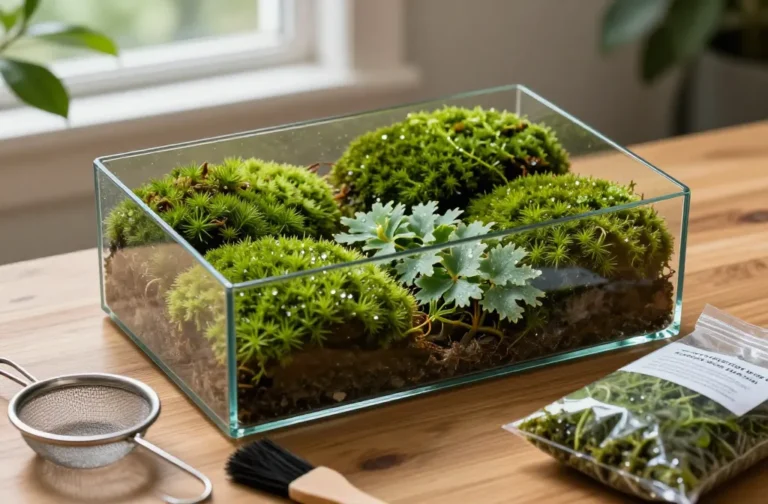
1. Sphagnum Moss: The Living Sponge That Prevents Root Rot
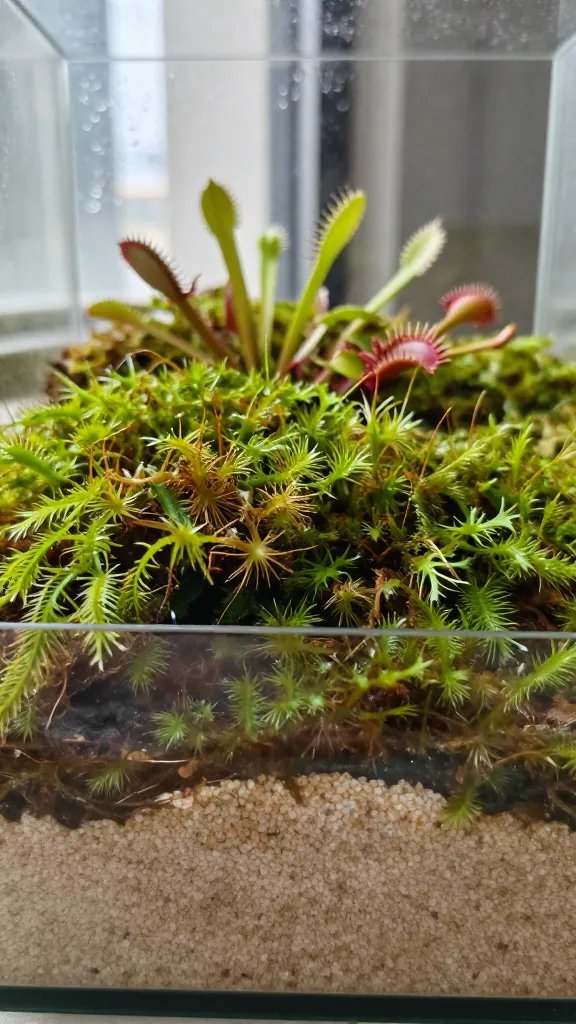
When carnivores fail in terrariums, the rot usually starts at the roots. Water sits stale around the crowns, and minerals build up, suffocating the plant. Live sphagnum moss acts like a breathable sponge, keeping roots wet but aerated and buffering acidity so the glass never turns into a swampy soup.
Substrate Mix That Works
- Top layer: 2–3 cm live sphagnum moss (or soaked long-fiber dried sphagnum if live isn’t available)
- Base: 1 part long-fiber sphagnum + 1 part rinsed horticultural sand (play sand thoroughly rinsed until water runs clear)
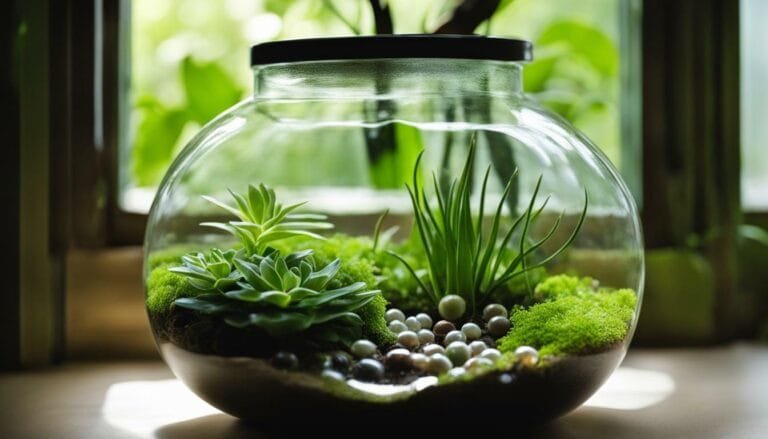
- Drainage option in tall jars: 1–2 cm rinsed aquarium gravel with a mesh or coffee filter on top to keep fines out
Why It Belongs With Carnivores
- Holds water without going sour, keeping Venus flytraps, sundews, and small pitcher plants evenly moist
- Lowers pH naturally, discouraging algae and fungus gnats
- Creates tidy anchor points for delicate roots and stolons
Signs to Watch For
- Sphagnum tips turning brown and crispy = air too dry or light too intense
- Moss collapsing and smelling earthy-sour = mineral buildup; flush with pure water
Action today: Soak a brick of long-fiber sphagnum in rain, distilled, or reverse-osmosis water for 20 minutes, then rebuild the top 2–3 cm of your terrarium to give carnivore crowns a breathable cushion.
2. Drosera (Sundews): Sticky Fly Traps That Hate Rich Soil
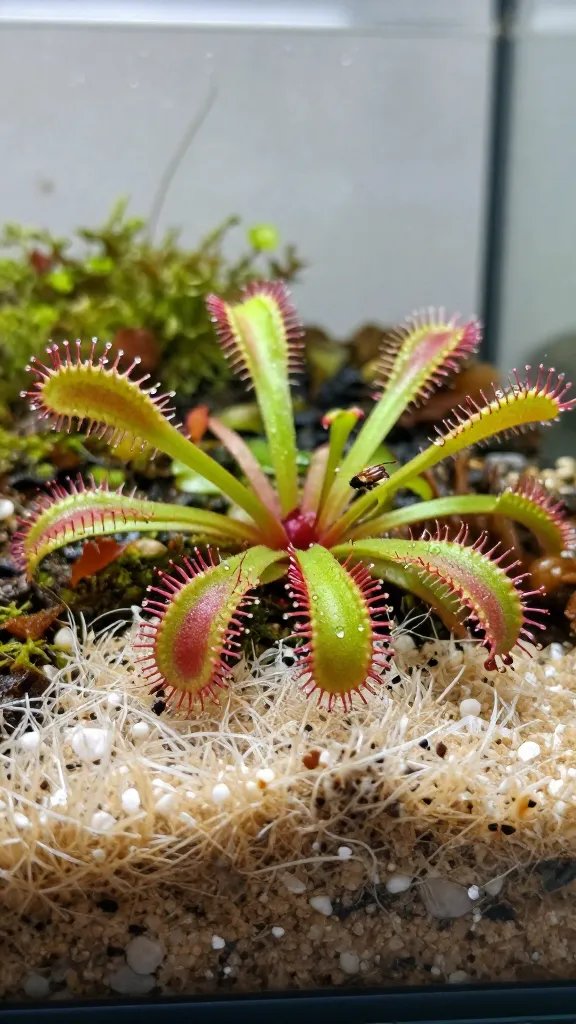
Most failures with Drosera come from “nice” potting mix. Nutrient-rich compost burns roots and kills the dew. In a terrarium, that mistake shows up fast as dull, threadbare leaves and no sticky tentacles.
Substrate Mix That Works
- Classic bog blend: 1 part unfertilised peat moss (the brown bale from the garden centre, no added feed) + 1 part rinsed horticultural sand
- For tiny species (D. pygmaea, D. adelae): 2 parts long-fiber sphagnum + 1 part perlite rinsed until it no longer floats dusty
- Top-dress: A thin sprinkle of live sphagnum strands to trap humidity around the rosette
Light and Water Notes
- Place near a bright window with gentle morning sun; add a simple clip-on LED if leaves stretch
- Keep substrate constantly damp, never flooded; water with rain or distilled water only
Signs to Watch For
- No dew after a week in good light = minerals in water or soil; flush thoroughly
- Leaves turning tan from the edges inward = air too hot and dry; raise light or move back from glass
Takeaway: Repot sundews into an unfertilised peat-and-sand mix, then water only with rain or distilled water to bring back the dew within 7–10 days.
3. Dionaea muscipula (Venus Flytrap): Demands Wet Feet and Open, Acidic Media
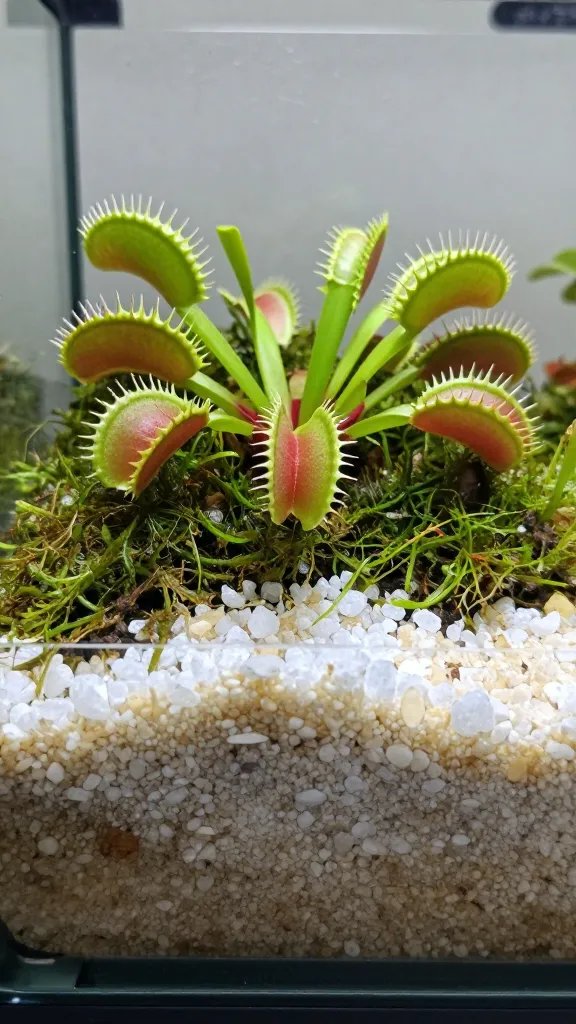
Venus flytraps fail in terrariums when planted too deep or smothered by fine, soggy soil. Traps blacken early, and new growth emerges weak and pale. The fix is a springy, acidic substrate that stays wet but airy, with the crown sitting high.
Substrate Mix That Works
- Primary blend: 1 part unfertilised peat moss + 1 part perlite, both pre-soaked and squeezed just to damp
- Supporting layer: 1–2 cm of rinsed sand on top to steady the rhizome and prevent algae glare
- Optional ring: A skirt of live sphagnum around (not over) the crown to keep humidity even
Placement and Watering
- Set the white rhizome crown level with the surface; never bury it
- Keep a shallow “moat” of water 3–5 mm deep at the jar edge; let it drop to barely visible before re-filling
- Provide 4–6 hours of bright window light; add a basic 6500K LED if color fades
Signs to Watch For
- All traps staying small and green = not enough light; move closer to the brightest window
- Black, mushy traps at the soil line = crown buried or medium too compact; re-seat higher and fluff the mix
Action today: Gently lift and reset your flytrap so the crown sits at the surface, then switch to a 1:1 peat and perlite mix kept evenly damp with distilled water.
4. Sarracenia Seedlings and Mini Hybrids: Pitcher Builders That Need Depth and Drainage
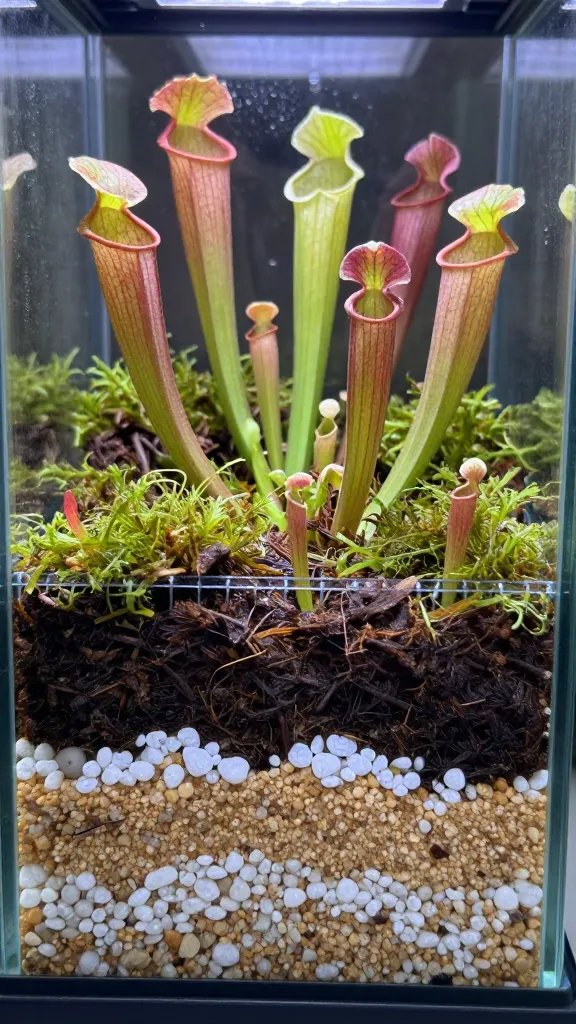
Small Sarracenia struggle in shallow glass where water stagnates. Pitchers twist or collapse, and growth stalls for months. They want a deeper, looser column of peat with a wicking path for fresh water and air.
Substrate Mix That Works
- Deep bog column: 2 parts unfertilised peat moss + 1 part perlite + 1 part rinsed sand
- Base layer (optional): 2 cm aquarium gravel with a circle of mesh to prevent peat from sinking into it
- Top dress: A light scatter of live sphagnum around, not over, young pitchers
Container and Light Tips
- Use a tall jar or cylinder at least 15–20 cm deep
- Stand the container in a shallow saucer of distilled water for easy wicking; let the saucer dry for a day weekly
- Give strong, bright light near a south or west window; rotate weekly for straight pitchers
Signs to Watch For
- Pitchers forming but never opening = light too weak; add a clip-on LED 15–20 cm above the rim
- Green scum on the soil = minerals; flush thoroughly until runoff tastes neutral and not salty
Takeaway: Rebuild a deep peat–perlite–sand column at least 15 cm tall and water via a shallow saucer to push steady, oxygenated moisture up through young Sarracenia roots.
5. Utricularia (Bladderworts): Mat-Forming Flowers That Thrive in Fine, Clean Media
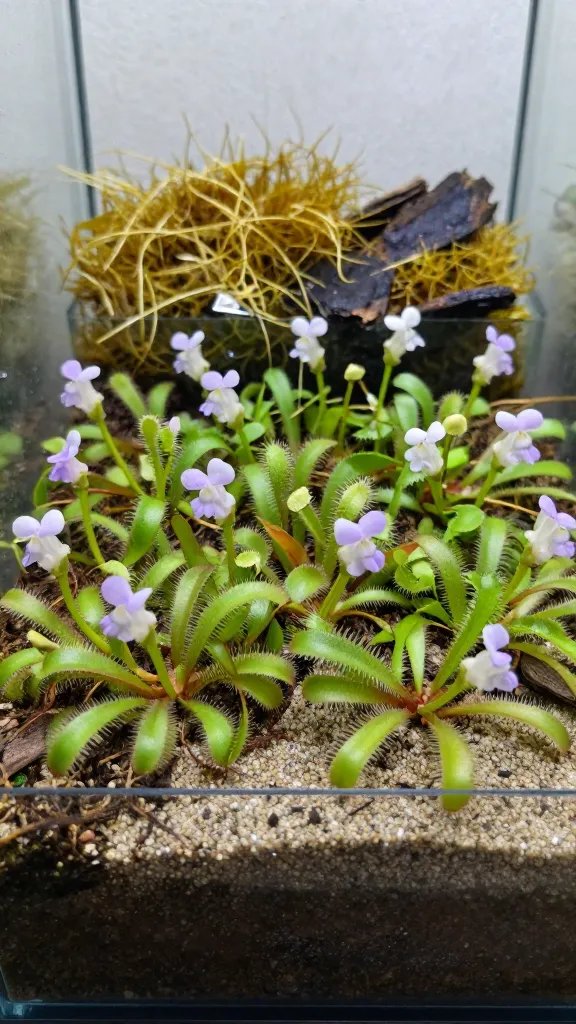
Utricularia look innocent until fed with regular compost — then they melt. Their hair-thin stolons clog in chunky mixes, and flowers never appear. In a terrarium, a clean, fine-textured bed lets them weave a tight green carpet and bloom.
Substrate Mix That Works
- Fine mat mix: 2 parts unfertilised peat moss + 1 part rinsed fine sand (play sand rinsed clear)
- Alternative for epiphytic types (U. sandersonii, U. livida): 1 part long-fiber sphagnum + 1 part fine orchid bark soaked and rinsed
- Moisture: Keep evenly damp with a barely visible water line at the bottom glass
Planting and Care
- Press a thumbnail-sized starter against the surface; don’t bury
- Cover with a loose veil of live sphagnum strands to keep humidity tight
- Trim overgrowth with scissors to prevent smothering neighbors
Signs to Watch For
- Pale growth with no spread = water too hard; switch to rain or distilled and flush
- Moss overtaking the mat = thin with tweezers and improve light
Action today: Create a 2:1 peat-to-sand surface, press in a small Utricularia plug, and mist daily with distilled water until you see a green net spreading in 2–3 weeks.
Frequently Asked Questions
Can I use tap water for carnivorous terrariums if I let it sit?
No. Letting tap water sit only removes chlorine, not the dissolved minerals that harm carnivores. Use rainwater, distilled water, or reverse-osmosis water. If you’re unsure, taste it — it should taste clean, not salty or mineral-heavy. Flush the terrarium monthly with pure water to prevent buildup.
Do carnivorous plants need fertilizer in a terrarium?
No fertilizer in the substrate — ever. These plants evolved to pull nutrients from captured insects and rain. For faster growth, let a few fungus gnats or fruit flies find their way in, or tap a single drop of diluted orchid fertilizer (1/10 strength) onto a sundew leaf monthly, never into the soil. Skip feeding Venus flytraps more than one trap per month.
How much light do these bog plants need near a window?
Place the terrarium where you can comfortably read a book in natural light most of the day. A bright east window is ideal; a south or west window works with a sheer curtain to soften heat. If leaves stretch or lose color, add a basic clip-on 6500K LED 15–25 cm above the plants for 10–12 hours daily. Keep glass from overheating by cracking the lid during the brightest hours.
How do I prevent mold and algae on the substrate?
Start with clean, rinsed materials and avoid rich potting mixes. Keep air moving by leaving a small gap in the lid for two hours every few days, and trim dead leaves promptly. Add a thin top layer of live sphagnum, which suppresses algae. If algae appears, gently scrape the surface and flush with distilled water.
Can I mix all these plants in one terrarium?
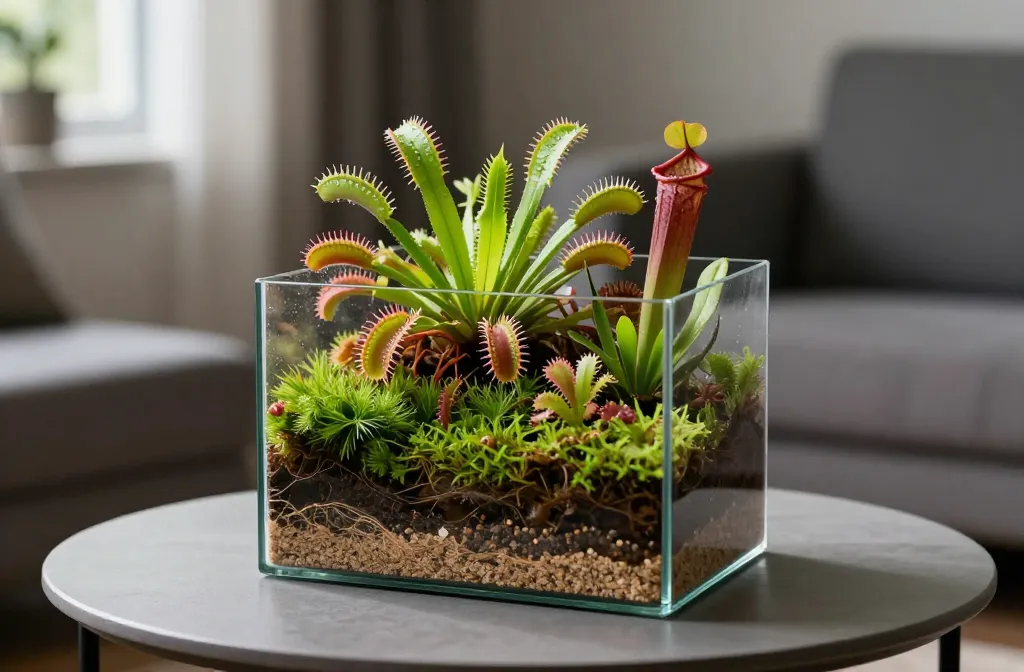
Yes, but give each plant its preferred pocket of substrate. Build zones: a peat–perlite mound for Venus flytraps, a peat–sand bed for Utricularia, and sphagnum-rich edges for sundews. Keep crowns unburied and avoid crowding fast growers like sphagnum over slow species. Group plants with similar water depth so maintenance stays simple.
How deep should the substrate be in a glass jar or tank?
Go at least 8–10 cm for sundews and Utricularia and 12–20 cm for Venus flytraps and small Sarracenia. Depth buffers moisture and temperature, reducing rot. If your container is shallow, choose sundews and Utricularia first and skip Sarracenia. Add a thin gravel base with a mesh separator if you want a visible water line without clogging.
Conclusion
Build your terrarium around the substrate each plant wants, and the rest becomes easy. Start by replanting one species into its proper mix this weekend, then expand zones as you gain confidence. Your reward will be sticky dewdrops, snapping traps, and upright pitchers that actually last.