
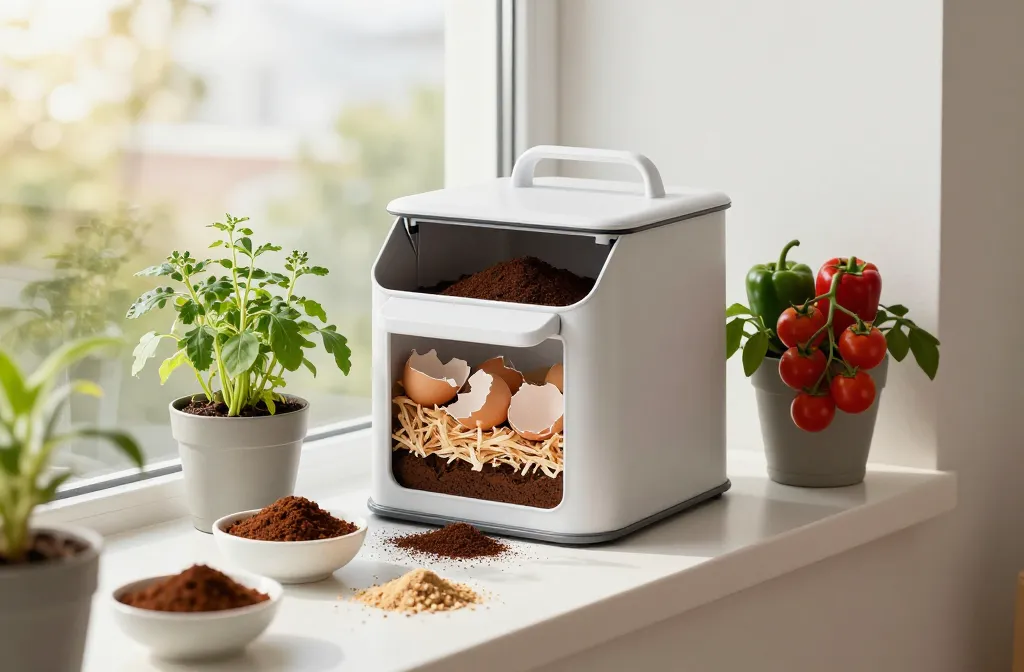
Your tiny apartment can churn out black gold—no backyard needed. These composting pairings turn scraps into soil magic while keeping smells and pests under control. We’re talking practical combos you can pull off with a tote bin, a balcony, or even a sunny windowsill. Ready to make plants and planet happy at the same time?
1. Coffee Grounds + Crushed Eggshells = Mineral-Rich, Odor-Taming Boost
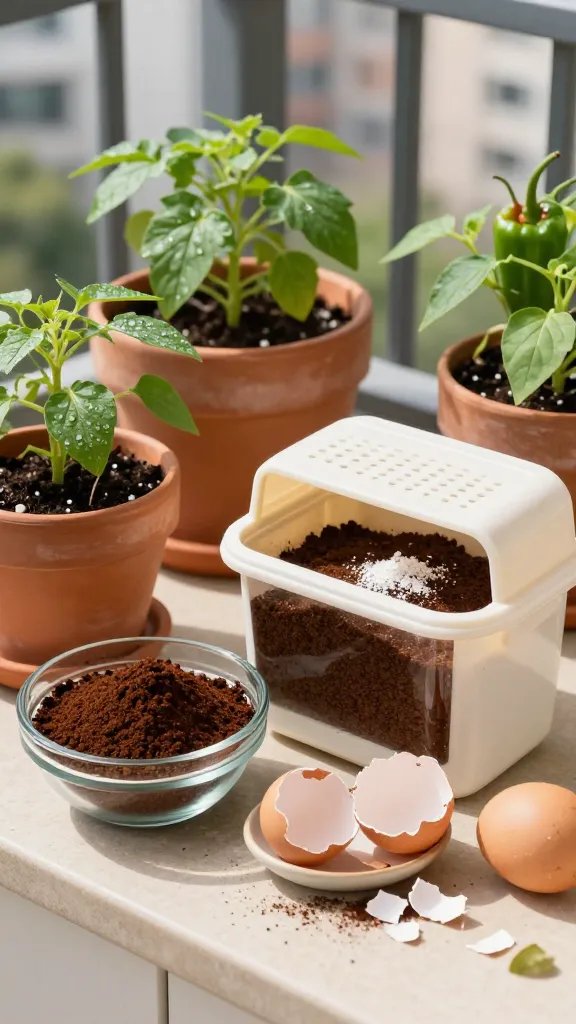
This duo hits way above its weight. Coffee grounds bring nitrogen and texture; eggshells bring slow-release calcium that helps prevent blossom end rot in tomatoes and peppers. Together, they keep your bin balanced and less stinky—apartment win.
Why It Works
- Nitrogen + Calcium: Grounds feed microbes; shells remineralize your potting mix.
- Texture Matters: Grounds add fluff to compact soil, shells reduce acidity over time.
- Smell Control: Dry shells help moderate moisture so things don’t get swampy.
Tips
- Dry eggshells in the oven at low heat and crush to a coarse powder.
- Mix grounds and shells 2:1, then layer with browns (shredded paper) in your bin.
- Sprinkle a spoonful onto container soil every few weeks for a gentle mineral bump.
Use this pairing if your apartment compost tends to get wet or if your plants show weak growth or calcium deficiency. Seriously, it’s the easiest upgrade.
2. Banana Peels + Shredded Paper = Potassium Lift Without the Fruit Fly Party
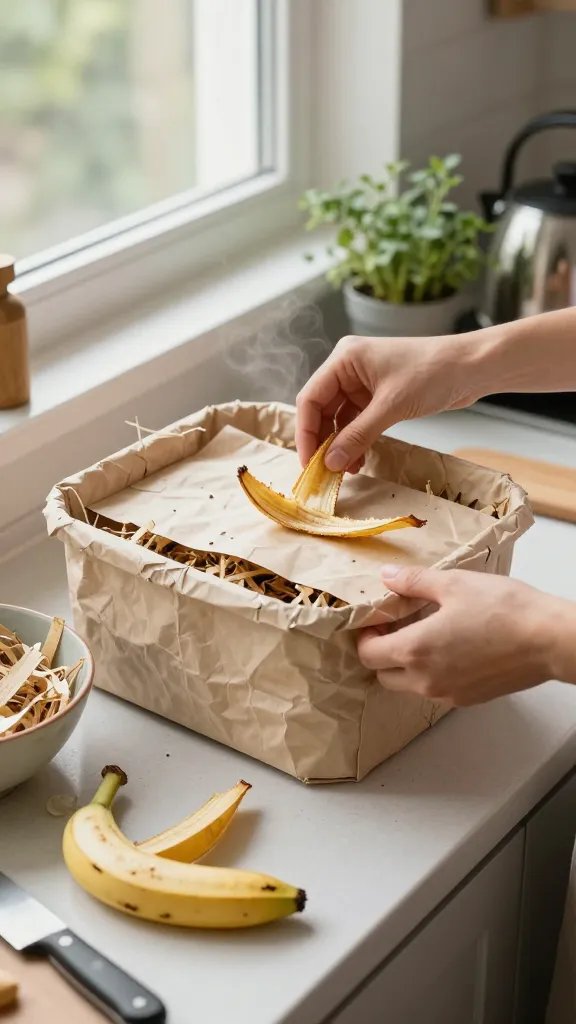
Banana peels bring potassium and micronutrients, but they can attract pests when tossed in whole. Shredded paper pairs as your carbon “blanket,” keeping airflow high and odors low. It’s a tidy solution for an indoor system.
How To Pair
- Prep the Peels: Chop into small pieces or dehydrate, then tuck under a layer of paper.
- Paper Types: Plain mail, paper bags, and old notebooks. Skip glossy, colored, or heavily inked stuff.
- Balance Ratio: One handful peel pieces to two handfuls dry paper.
Extra Perks
- Paper soaks up excess moisture and prevents anaerobic funk.
- Potassium supports strong stems and flowering—perfect for balcony tomatoes.
- Cleaner bin surface means fewer fruit flies cruising your kitchen.
Perfect for composters who generate lots of mail and love smoothies. FYI: Smaller peel pieces break down faster, so your bin won’t look like a banana graveyard.
3. Vegetable Scraps + Coco Coir = Moisture-Smart Compost for Small Spaces
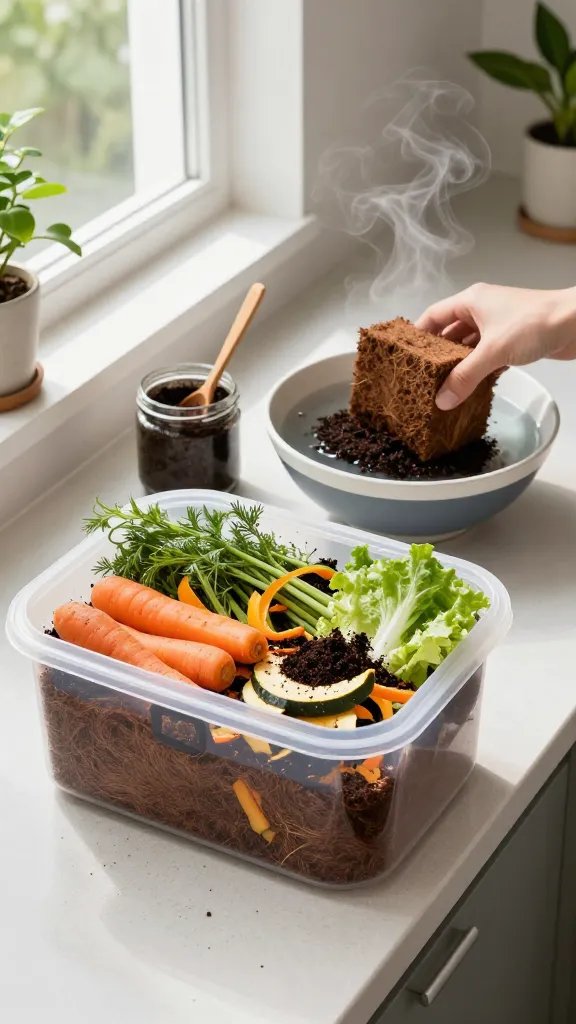
Veggie odds and ends bring lush nitrogen, but they get slimy fast in tight apartment bins. Coco coir (rehydrated brick) acts like a spongey carbon buffer that keeps aeration on point. The combo yields a dark, crumbly mix your houseplants will inhale.
Materials
- Veg Scraps: Herb stems, carrot peels, squash skins, salad greens.
- Coco Coir: Rehydrate with hot water; fluff with your hands.
- Optional Add-ins: A pinch of garden soil or finished compost to inoculate microbes.
Method
- Layer 1 inch coir, then a thin scatter of chopped scraps.
- Top with coir again and lightly mix. Keep everything as damp as a wrung-out sponge.
- Stir weekly to prevent compacting and check moisture.
Use this pairing if your bin trends wet or you live in a humid climate. Your plants get consistent texture without the gnarly swamp vibes—trust me, it saves drama.
4. Tea Leaves + Citrus Peels (Zest Only) + Cardboard = Fragrant, Fruit Fly–Resistant Mix
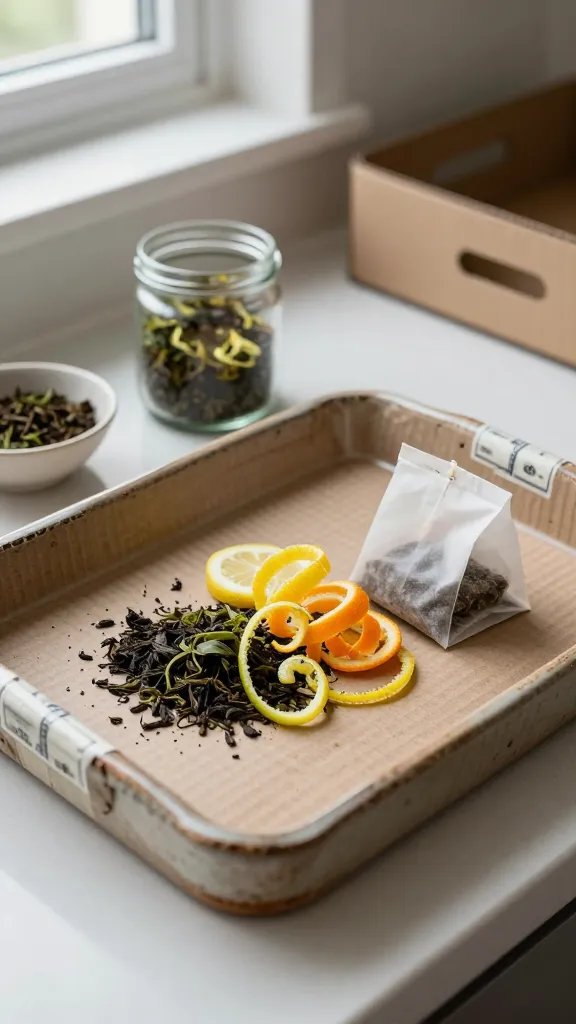
Loose tea or spent tea bags (staples removed) add gentle nitrogen and tannins; citrus zest adds antimicrobial oils and fresh scent. Corrugated cardboard shreds provide airflow and structure. Together, they make a low-odor compost layer that actually smells…nice.
Key Points
- Use Zest, Not Wedges: Thick pith and whole segments break down slowly; zest works fast.
- Tea Types: Black, green, and herbal all fine. Avoid plastic-mesh tea bags.
- Cardboard: Remove tape and glossy labels; rip into postage-stamp pieces.
Assembly
- Mix equal parts tea leaves and cardboard by volume.
- Add a tablespoon or two of citrus zest per quart of mix.
- Layer this blend between wetter food scraps to keep airflow steady.
Great for folks who drink tea daily and want a fresh-smelling bin. Bonus: the cardboard gives worms (if you vermicompost) cozy tunnels to roam.
5. Onion Skins + Mushroom Stems + Wood Ash Pinch = Mineral Microdose For Container Kings
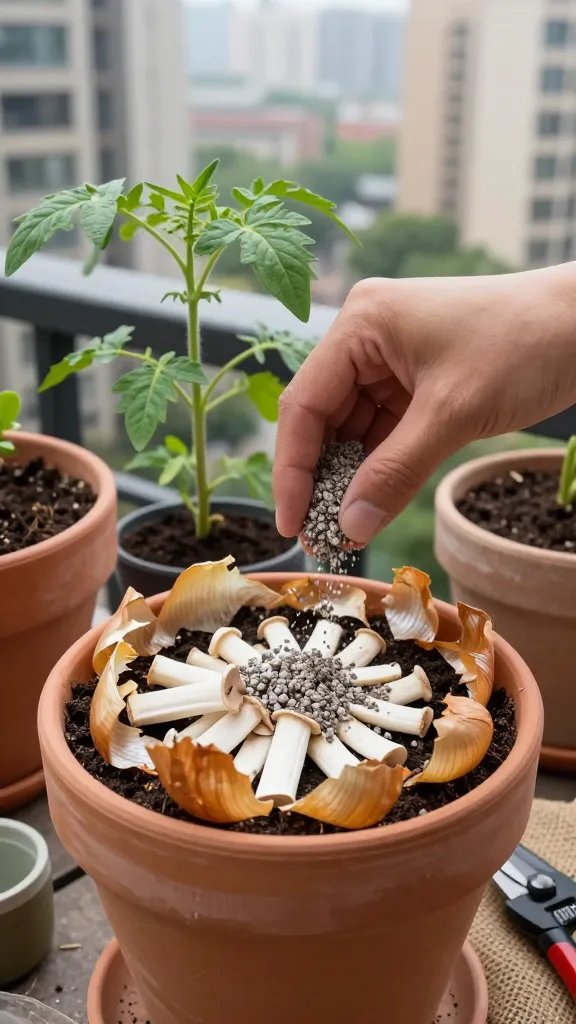
This trio turns kitchen “nothingness” into a micro-mineral powerhouse. Onion skins hold quercetin and trace nutrients, mushroom stems deliver chitin that can encourage robust plant defenses, and a tiny pinch of wood ash adds potassium and raises pH. Done right, you get a balanced booster without risking alkalinity overload.
What To Know
- Onion Skins: Dry and crunchy—perfect as a carbon-like layer that breaks down slowly.
- Mushroom Stems: Chop fine for faster breakdown; they also help structure the pile.
- Wood Ash: Use from untreated hardwood only; add sparingly (think: 1 teaspoon per gallon of compost).
How To Use
- Toss chopped mushroom stems and skins into the bin, cover with shredded paper.
- Sprinkle a tiny pinch of ash and mix gently to distribute.
- Let cure well before top-dressing containers to avoid pH spikes.
Use this when your potting mix feels tired or acidic and your leafy greens need a lift. IMO, it’s the dark horse pairing that makes containers bounce back fast.
Quick Pairing Cheat Sheet (All 5 at a Glance)
- Coffee Grounds + Eggshells: Nitrogen and calcium; cuts odors.
- Banana Peels + Shredded Paper: Potassium boost; fruit-fly control.
- Veg Scraps + Coco Coir: Moisture balance; crumbly texture.
- Tea Leaves + Citrus Zest + Cardboard: Low odor; good airflow.
- Onion Skins + Mushroom Stems + Wood Ash: Mineral microdose; pH nudge.
Apartment Composting Logistics That Actually Work
- Containment: Use a lidded bin with small air holes or a bokashi bucket for pre-fermenting wet scraps.
- Pest-Proofing: Always cap fresh scraps with a dry “brown” layer (paper, coir, cardboard).
- Aeration: Stir weekly with a hand trowel. Compaction = smell, and nobody wants Eau de Swamp.
- Moisture Check: Aim for damp sponge feel. Add coir/paper if wet; a splash of water if dry.
- Curing: Let finished compost rest 2–4 weeks before using to mellow out any hot spots.
When To Use the Finished Compost
- Top-Dress Houseplants: 0.5–1 inch layer every 6–8 weeks.
- Container Refresh: Mix 20–30% compost into old potting soil at repot time.
- Seedling Mix: Keep it light—compost at 10–20% with lots of perlite for airflow.
Common Mistakes (And Easy Fixes)
- Funky Smell? Add more browns (paper/coir), stir, and bury wet scraps deeper.
- Fruit Flies? Freeze banana peels first, then chop; always cap with dry material.
- Too Dry? Mist lightly and add fresh veg scraps; avoid dumping water.
- White Fuzz? Relax. That’s beneficial fungi breaking things down.
Small-Space Gear Rec
- Countertop Caddy: Stainless or ceramic with a charcoal filter to collect scraps.
- Main Bin: 3–5 gallon food-safe bucket with gasket lid; drill small air holes high on sides.
- Backup Browns: Keep a shoebox of shredded paper or dry coir ready.
You don’t need a yard to grow jungle-level plants or reduce trash like a champ. These pairings keep your bin sweet, your soil rich, and your space surprisingly clean. Start with one combo this week, and watch your pots glow—your future harvest will thank you, seriously.