
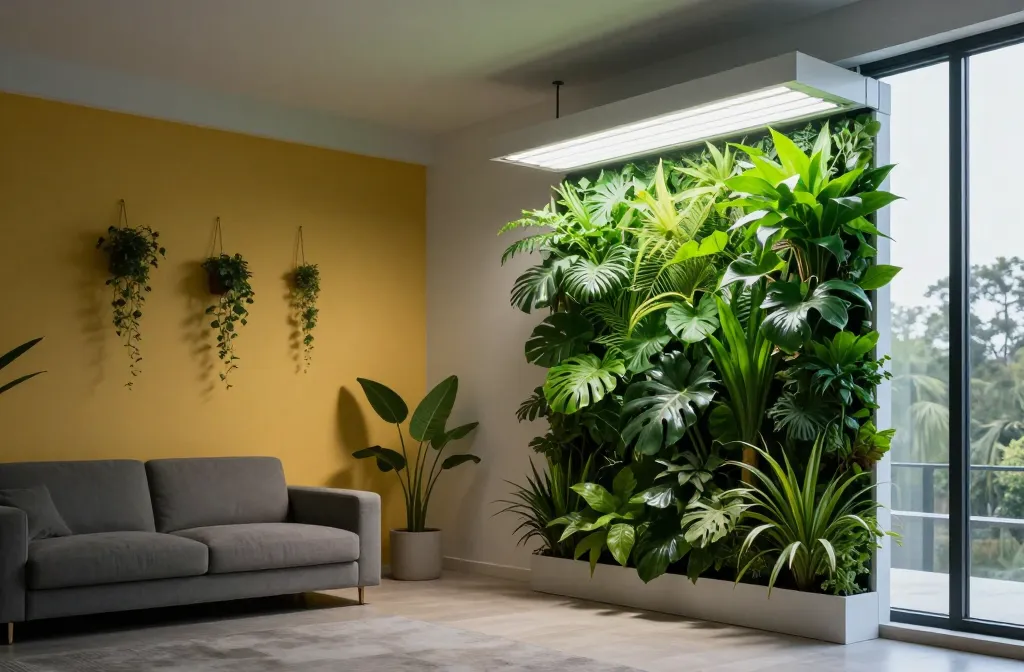
I installed my first indoor living wall on a rented apartment wall and watched it crisp, droop, and shed leaves for months. Every fix I tried — more misting, new plants, fancier fertilizer — failed because I misunderstood one basic need. If your wall keeps yellowing, smelling, or dropping plants, you’re facing the same handful of predictable problems. I’ll show you exactly why most walls fail and the one shared feature that keeps successful walls thriving.
Light: Walls Fail Where Rooms Look Bright but Plants Don’t
Most indoor walls sit in “bright rooms” that are dim to plants. A wall needs bright indirect light for at least 6 hours daily — the kind you get 3–6 feet from a large south or east window, or with a simple LED grow light on a timer.
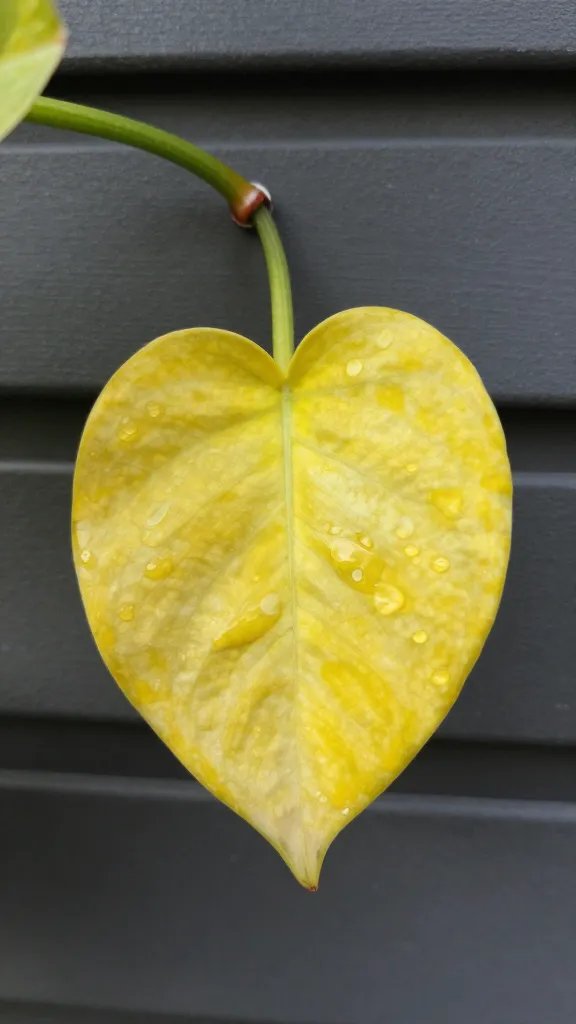
Without enough light, plants stretch, pale, and shed lower leaves. You then water more, but the roots can’t use it, so rot sets in and fungus gnats arrive. This spiral is the number one killer.
Warning signs
- New leaves come in smaller and farther apart on the stem.
- Plants lean hard toward the nearest window.
- Soil stays wet for a week and still looks sad.
Step-by-step fix
- Move the wall within 3–6 feet of a bright window with no heavy curtains.
- Add a basic, full-spectrum LED grow bar from the garden centre and set a timer for 10–12 hours daily.
- Rotate trailing plants every two weeks so growth stays even.
Action today: Stand where your wall is at midday and read a small-print label for 30 seconds — if it feels slightly dim to your eyes, add a grow light.
Watering: Misting Is Not Watering and “Wet All the Time” Is Rot
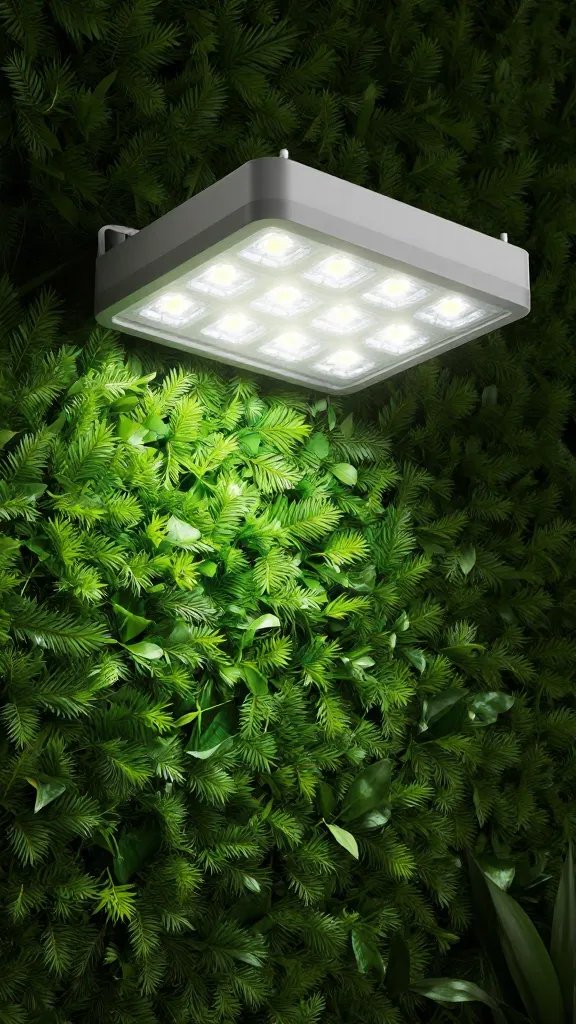
Most living walls die from chronic overwatering or chronic underwatering — often both in different pockets. Misting leaves does almost nothing for roots. At the same time, soaking the whole panel daily suffocates roots and breeds slime.
Roots need a drench-then-drain cycle. That means water should pass through quickly and exit into a catch tray you can empty. No standing water behind the panel, ever.
Step-by-step fix
- Water with a small watering can fitted with a narrow spout. Aim for the base of each plant, not the leaves.
- Drench until you see runoff in the bottom tray, then stop. Empty the tray within 10 minutes.
- Wait to water again until the top inch of the mix feels dry to the touch. For most indoor walls, that’s every 3–7 days in summer, 7–14 in winter.
Action today: Press your finger into the top inch of the wall’s pockets — if it feels cool and sticks to your skin, skip watering and check again tomorrow.
Substrate: Potting Mix Works in Pots, Not in Vertical Pockets
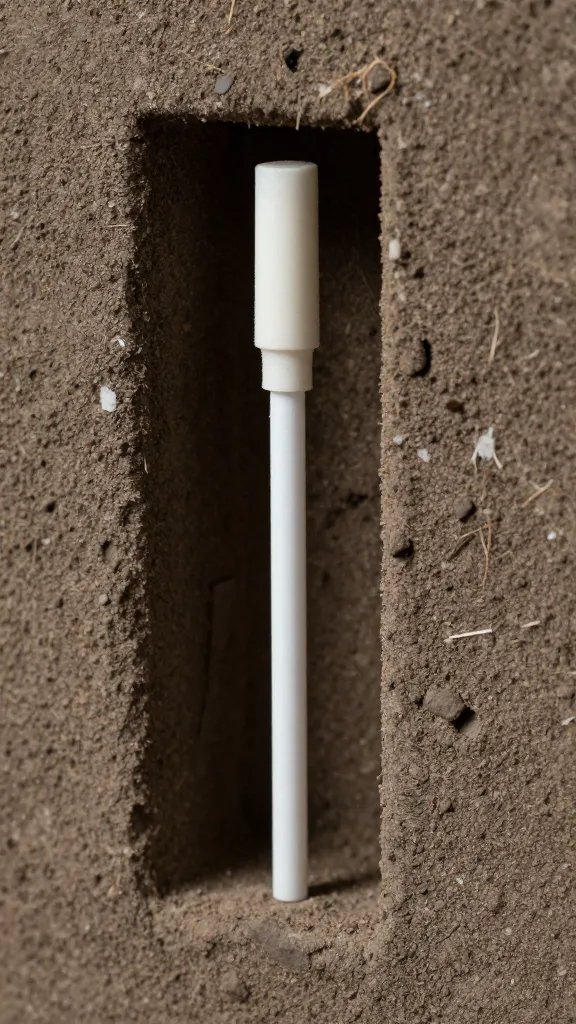
Standard potting mix compacts in vertical systems, turning into a soggy brick. Plants then suffocate at the back and dry out at the front. You need a free-draining, fibrous medium that holds moisture without clogging.
Material recommendations
- Mix equal parts good quality potting mix, fine bark (orchid bark), and perlite. If you can’t find bark, use coco coir chips from the garden centre.
- Pre-moisten the mix so it’s damp like a wrung-out sponge before filling pockets.
- Line felt pockets with a thin layer of moss or coir to stop fines from washing out.
Action today: Scoop a handful of your current substrate and squeeze — if water streams out or the clump holds its shape like clay, repack with a barky, airy blend.
Plant Choice: Mixing Thirsty Sun-Lovers with Shade Tolerant Vines Dooms Both
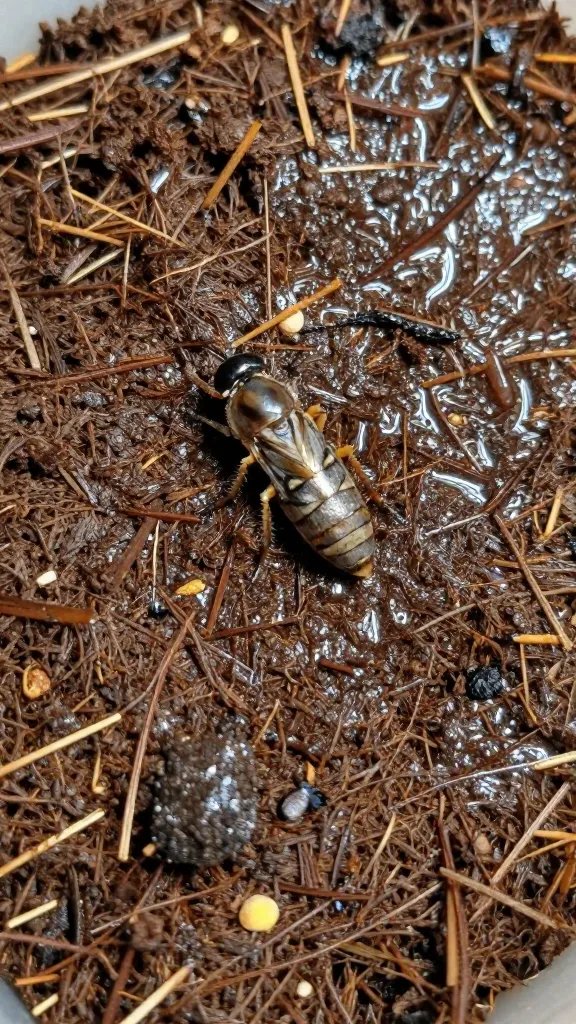
Living walls thrive when all residents want the same conditions. Mixing high-light, high-drinkers with low-light, slow sippers forces you to over- or under-serve half the wall.
Reliable, indoor-tough plant list
- Low to medium light, forgiving: Epipremnum aureum (Pothos), Philodendron hederaceum, Scindapsus pictus, Asplenium nidus (Bird’s Nest Fern), Nephrolepis exaltata (Boston Fern), Chlorophytum comosum (Spider Plant).
- Brighter light near windows or under LEDs: Peperomia varieties, Tradescantia zebrina, Fittonia (if humidity stays up), Herbs like mint and oregano if you water more often.
- Avoid for indoor walls: Calatheas (fussy about water quality), succulents (hate frequent wall watering), high-light herbs like rosemary (too dry-loving).
Action today: Remove any plant that needs very different light or watering than the rest — replacing two mismatches often stabilizes the whole wall.
Drainage and Air: Hidden Stagnant Water Is the Silent Killer
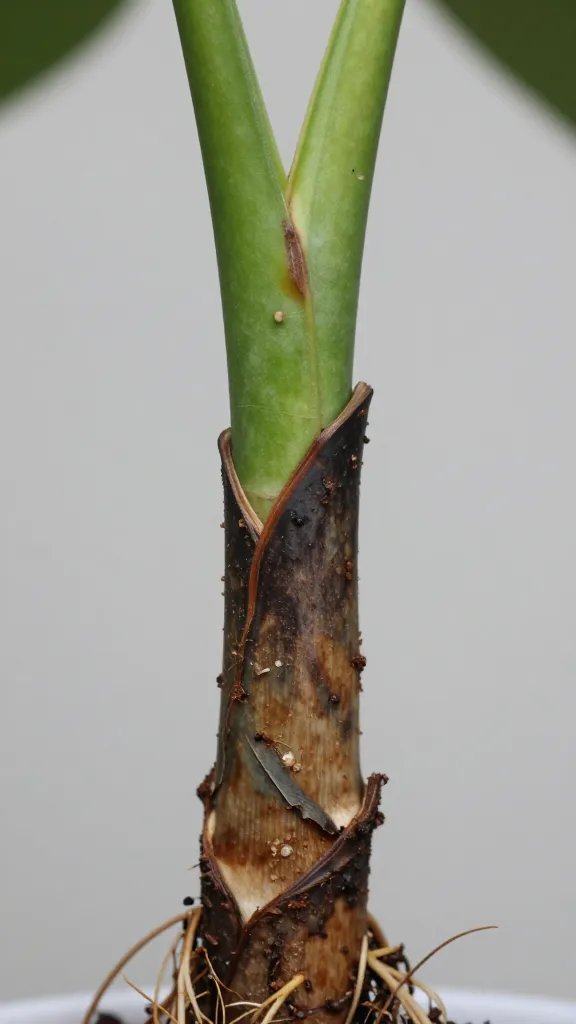
Water that can’t escape collects at the bottom of felt pockets or behind plastic panels. That stagnant layer turns anaerobic, smells, and rots roots. You don’t see it until plants collapse.
Warning signs
- Earthy-to-sour smell near the wall after watering.
- Algae or green slime lines along seams.
- Mushy stems at the base while top leaves still look fine.
Step-by-step fix
- Confirm there’s a catch tray or bucket to collect runoff. If not, add a low-profile tray and tilt the panel 2–3 degrees toward it using felt pads.
- After every watering, empty the tray. Wipe it weekly with a cloth dipped in diluted dish soap, then rinse.
- Space plants so leaves don’t mat together. Leave a finger-width gap between crowns for airflow.
Action today: After your next watering, time how long runoff takes to appear — if it’s more than 30 seconds or never shows, improve drainage before watering again.
Fertilizer: Walls Need Light Feeding Little and Often, Not Big Gulps

Because you water more frequently, nutrients flush out faster. Heavy doses scorch roots trapped in thin media. Light, regular feeding keeps growth steady without salt buildup.
Simple feeding plan
- Use a balanced, water-soluble houseplant fertilizer at half strength.
- Feed every 2 weeks in spring and summer, monthly in autumn and winter.
- Once every 2 months, water with plain tap water until you see extra runoff to rinse salts.
Action today: Mark your calendar for a repeating 2-week feeding reminder and mix at half the label dose — consistency beats intensity.
The One Thing Survivors Have in Common: A Clean, Predictable Water Path

Every thriving indoor living wall I’ve kept or fixed shares one trait: a drench-then-drain routine that repeats like clockwork. Water goes in at the top, passes evenly through airy media, and exits to a catch tray you can empty. No mystery moisture, no standing pools, and no guessing.
When this water path is clean and predictable, light, fertilizer, and plant choice all work. When it isn’t, even tough plants fail. Build your wall around drainage first, and everything else becomes easy maintenance.
Action today: Do a “water path audit” — water once from the top row and watch for even flow and collected runoff you can empty within 10 minutes. Fix any block, pool, or dry pocket you see.
Frequently Asked Questions
Can I build a living wall without a water connection?
Yes — hand-water with a small watering can and a narrow spout. Focus on a drench-then-drain cycle and include a catch tray you can empty. Plan for 5–10 minutes of watering two to four times a week depending on season and light. A simple plug-in timer for a grow light keeps the rest predictable.
How do I stop fungus gnats in a wall?
Let the top inch of the mix dry between waterings and improve drainage so pockets don’t stay soggy. Add a thin layer of coarse sand or fine gravel on exposed media to reduce egg-laying. Use yellow sticky traps near the wall and water once with a diluted dish-soap solution, then rinse the next day. Fixing overwatering is the lasting cure.
What if my tap water is hard and leaves white crust?
Hard water builds salts that stress roots in thin media. Once a month, flush with bottled or filtered water until runoff is clear, and wipe crust from edges. If buildup returns quickly, alternate: one feeding with tap water, the next with filtered water. Avoid “extra strong” fertilizer doses, which worsen salt crust.
Do I need a humidifier for my living wall?
No for tough species like pothos, philodendron, and spider plants. Yes if you grow humidity lovers like ferns and fittonia in heated winter rooms. If you skip a humidifier, group ferns lower on the wall, away from warm air vents, and water a bit more often. Aim to keep leaves from touching heat sources or direct drafts.
How often should I replace plants on a wall?
Expect to refresh 10–20% of plants every 6–12 months as you fine-tune conditions. Replace weak performers with duplicates of what thrives in your setup. When swapping, pre-moisten the pocket mix and tuck roots firmly so they contact the medium on all sides. Trim neighboring plants to give newcomers space and light.
Conclusion

You don’t need plumbing, sensors, or a contractor to keep a living wall alive. You need bright, reliable light, an airy mix, matched plants, and a drench-then-drain watering path you control. Start with the water path audit today, add a simple grow light if reading feels dim, and replant mismatches. Once the routine clicks, your wall becomes a weekly 10-minute ritual — and it stays green for years.