
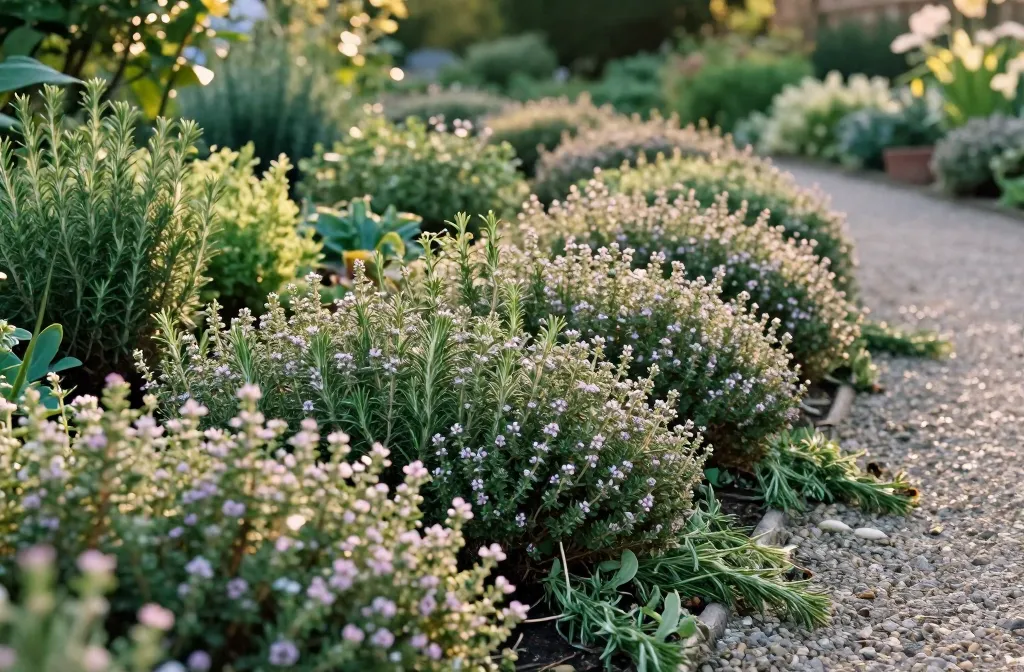
Tired of pulling weeds every weekend? Let plants do the heavy lifting while you sip something cold and admire your yard. These ground cover combos lock out weeds, protect soil, and look ridiculously lush. Grab a trowel—your future self will thank you.
1. Fragrant Armor: Thyme + Creeping Rosemary
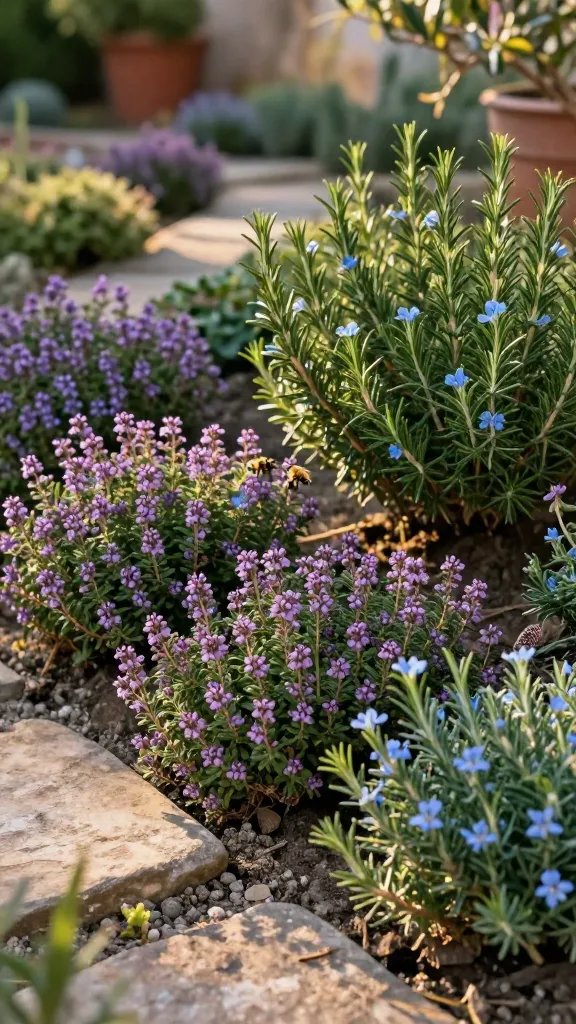
These two Mediterranean legends form a low, fragrant carpet that smothers weeds and begs for a footpath. They love sun, hate soggy roots, and keep soil covered year-round. Bonus: they attract pollinators and make dinner taste better—IMO, that’s a win.
Why It Works
- Creeping thyme (Thymus serpyllum) weaves tight mats that shade out weed seedlings.
- Prostrate rosemary (Rosmarinus officinalis ‘Prostratus’) sprawls, creating woody architecture that blocks light.
- Both prefer lean, well-drained soil, which weeds don’t exactly love.
Planting Tips
- Full sun, 6–8 hours daily.
- Space thyme 6–12 inches apart; rosemary 18–24 inches.
- Add a little gravel or sand to improve drainage.
- Trim lightly after flowering to keep it dense and tidy.
Use this combo along hot pathways, sunny slopes, and rock gardens. It smells amazing and it’s tough as nails, seriously.
2. Shade Blanket: Sweet Woodruff + Hosta + Ferns
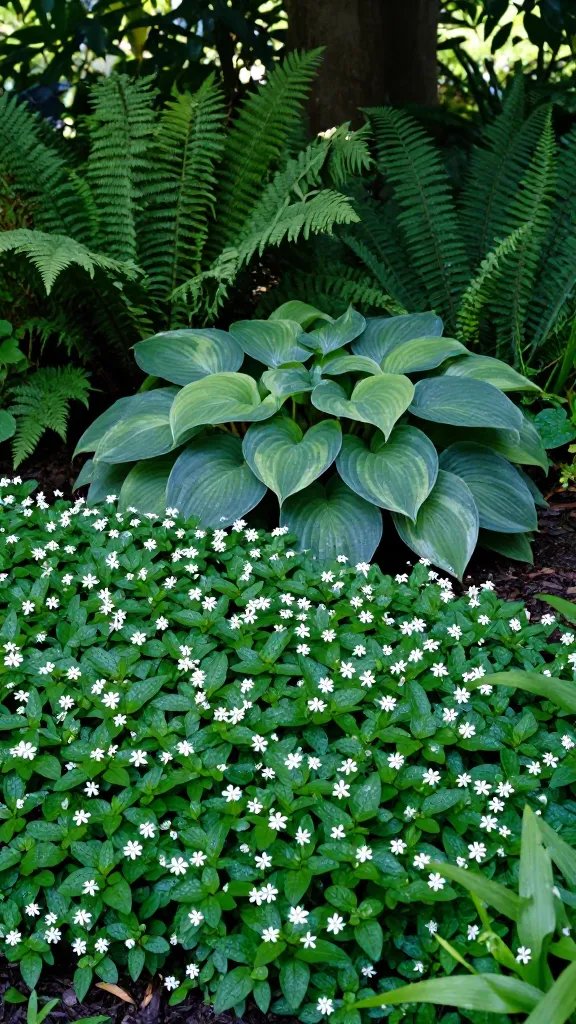
Got a shady corner where weeds throw a party? This combo cancels the invite. Sweet woodruff makes a soft, starry carpet under the bold leaves of hostas and feathery ferns, leaving no space for invaders.
Why It Works
- Sweet woodruff (Galium odoratum) spreads gently by stolons, forming a dense ground layer.
- Hosta offers big, overlapping leaves that block light at mid-height.
- Ferns add height and dapple light, reducing weed-friendly gaps.
Planting Tips
- Partial to full shade; morning sun is fine.
- Moist, humus-rich soil with good organic matter.
- Space woodruff 8–12 inches apart; hostas 18–30 inches; ferns as tag suggests.
- Mulch lightly the first season, then let plants do the rest.
Use this under trees, along north-facing foundations, or in woodland borders. It looks layered and intentional without trying too hard.
3. Pollinator Carpet: Creeping Phlox + Mountain Sandwort
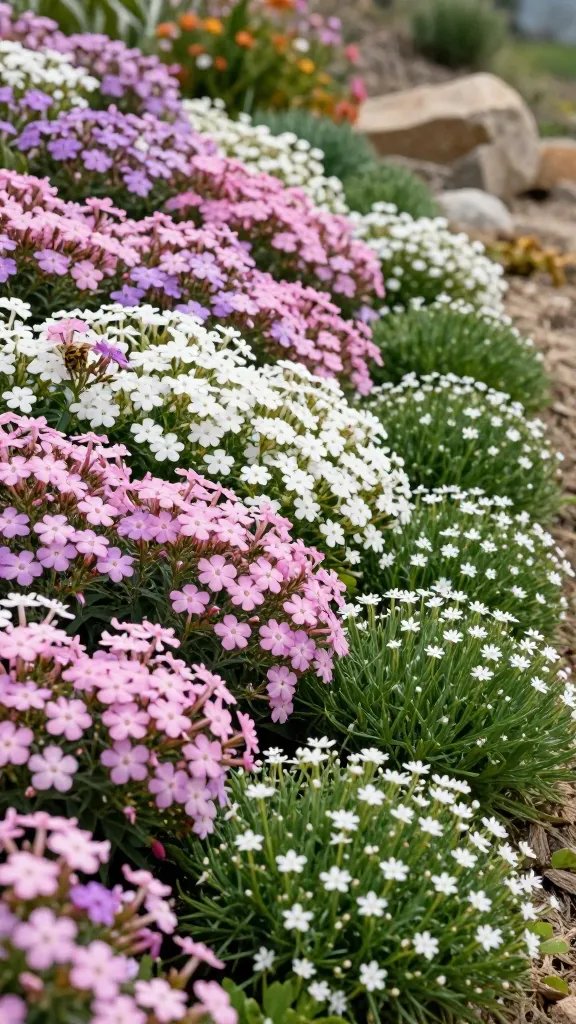
Want spring color and zero bare soil? Creeping phlox pours out flower confetti while sandwort fills the gaps with evergreen tufts. Together, they squat low, hold slopes, and keep weeds starved of sunlight.
Why It Works
- Creeping phlox (Phlox subulata) forms solid mats that bloom like crazy, then keep covering ground.
- Mountain sandwort (Arenaria montana) creates dense cushions that lock in soil and block seedlings.
- Both thrive in poor soil and full sun—exactly where weeds often try to crash.
Planting Tips
- Full sun, excellent drainage.
- Phlox 12–18 inches apart; sandwort 10–12 inches.
- Plant on gentle slopes or rock outcrops to exploit their rooting habit.
- Shear phlox lightly after bloom to thicken growth.
Perfect for front-of-border edges, rock gardens, and mailbox beds. You get a living mulch and a pollinator magnet in one move.
4. Edible Ground Squad: Strawberries + Chives + Marigolds
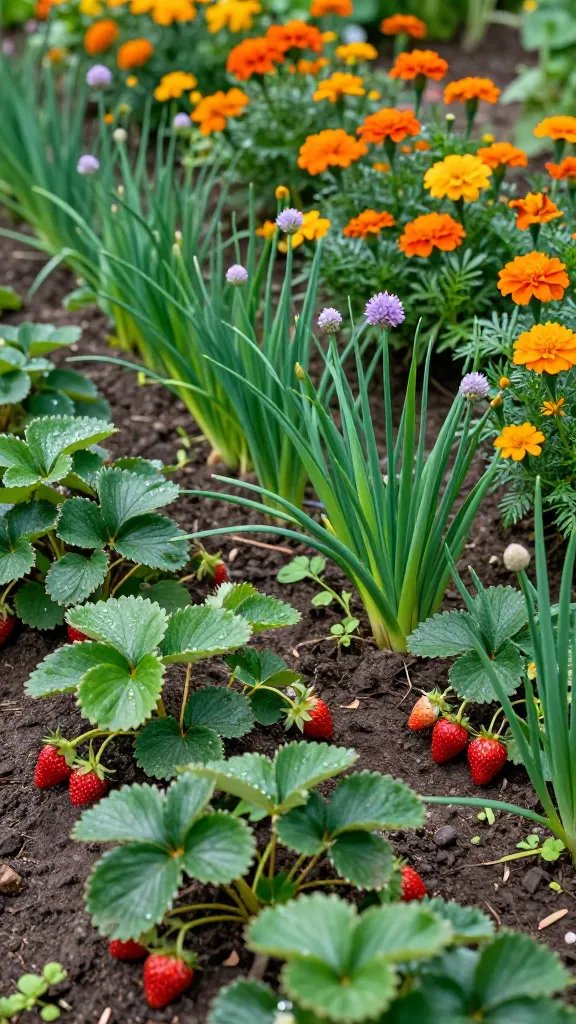
Who says the weed barrier can’t be delicious? Strawberries carpet the soil, chives pop up between them, and marigolds bring color and pest deterrence. You’ll harvest berries, discourage nematodes, and keep weeds begging for sunlight they’ll never get.
Why It Works
- Strawberries (Fragaria × ananassa or alpine types) fill space with runners and big leaves.
- Chives (Allium schoenoprasum) thread through beds, crowding gaps and attracting beneficial insects.
- Marigolds (Tagetes) add allelopathic oomph and shaded mulch under their foliage.
Planting Tips
- Full sun, consistent moisture, rich soil.
- Space strawberries 12–18 inches; chives in clumps 8–12 inches; marigolds 10–12 inches.
- Top-dress with compost in spring; remove a few strawberry runners to prevent overcrowding.
- Deadhead marigolds to keep the show going.
Use this along veggie beds, in edible borders, or as a front-yard foodscape. FYI, kids will “weed” the bed by eating it.
5. Drought-Proof Quilt: Blue Fescue + Sedum + Yarrow
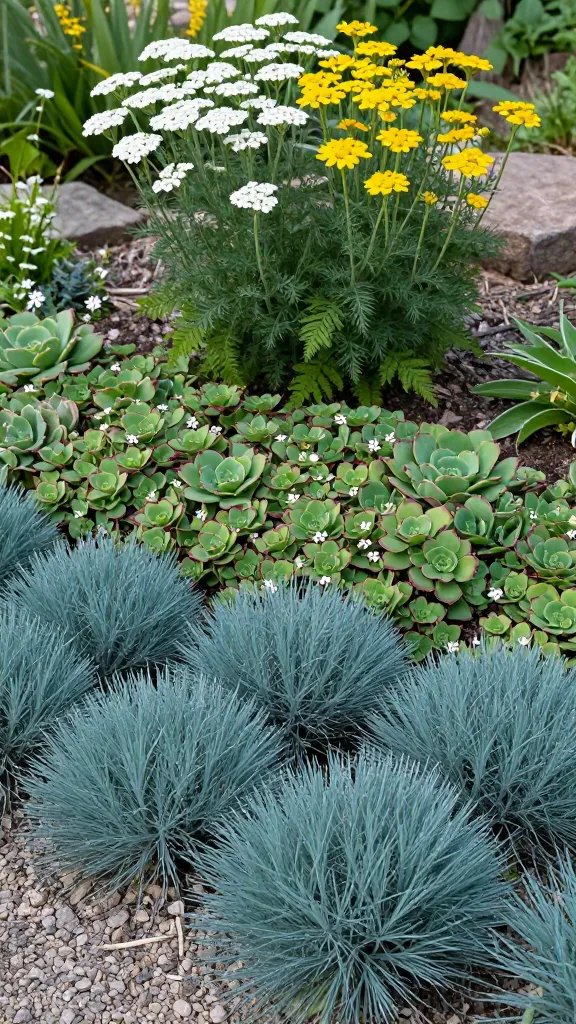
You want tough? This set laughs at heat waves and poor soil. Blue fescue gives clumping structure, sedum spreads like a living mosaic, and yarrow steps over everything with ferny foliage and long-lasting blooms.
Why It Works
- Blue fescue (Festuca glauca) creates tidy clumps that break wind and shade roots.
- Sedum (e.g., S. spurium, S. acre) roots at nodes, sealing soil from light.
- Yarrow (Achillea millefolium) knits the bed together and attracts beneficial insects.
Planting Tips
- Full sun, sharp drainage; gravelly soil welcomed.
- Fescue 12–18 inches apart; sedum 8–12 inches; yarrow 18–24 inches.
- Water to establish, then dial it way back.
- Cut yarrow after bloom to prevent too many volunteers.
Ideal for hellstrips, curbside plantings, and low-maintenance borders. It’s a living mulch that looks designer without the designer price.
Ready to stop waging war on weeds and start stacking plant power? These combos create shade, competition, and beauty—all in one go. Try one bed this season and watch the maintenance drop. Trust me, your hoe will get lonely.