
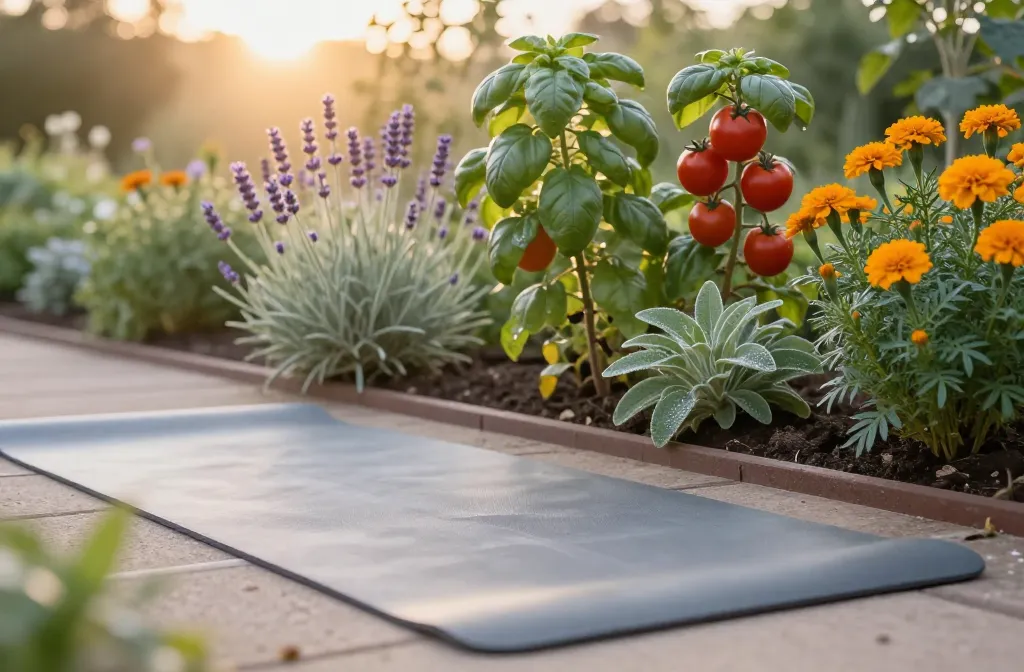
Your yoga mat isn’t the only place to cultivate calm. Pair your flow with plants that balance each other, boost growth, and spark your senses. These companion combos bring focus, fragrance, and fresh harvests right to your practice space. Ready to turn your garden into a serene studio? Let’s dig in—literally.
1. The Grounding Duo: Lavender + Sage
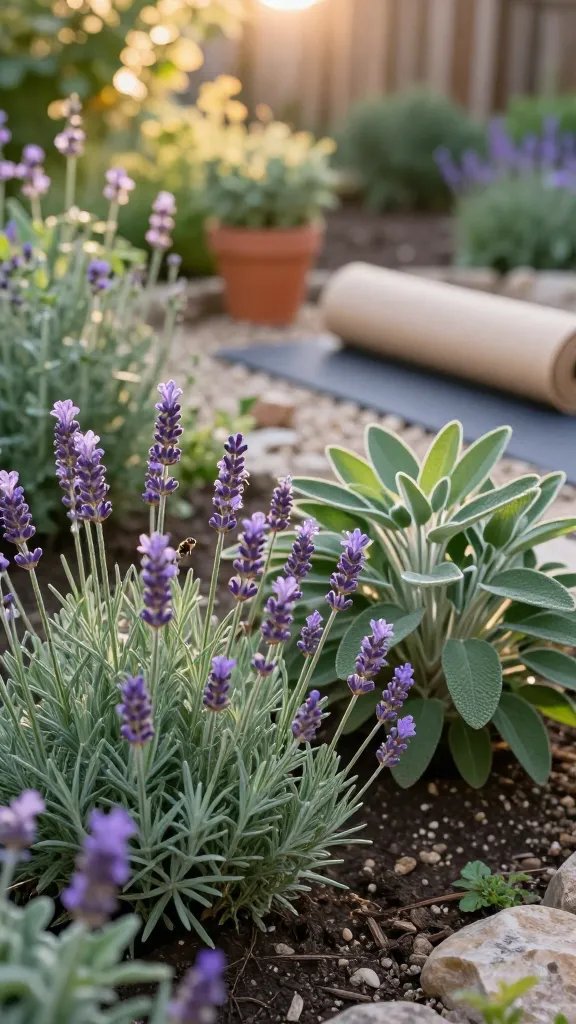
When you want calm without the yawn, this duo delivers. Lavender soothes the nervous system, while sage sharpens attention and clears mental clutter. Together they create a grounded, focused vibe—perfect before a deep stretch or meditation.
Why They Work
- Shared sunlight needs: Both love full sun and well-drained soil.
- Pest control perks: Lavender’s aroma confuses pests; sage deters munchers like cabbage moths.
- Sensory synergy: Herbal brightness from sage elevates lavender’s soft floral notes.
Plant them in a raised bed or large pot with sandy soil. Pinch lavender blooms for sachets and dry sage bundles for a light cleanse before practice. Use this combo when you need grounded energy with clear intention—like before balancing work or a tough flow.
2. The Flow State Trio: Basil + Tomato + Marigold
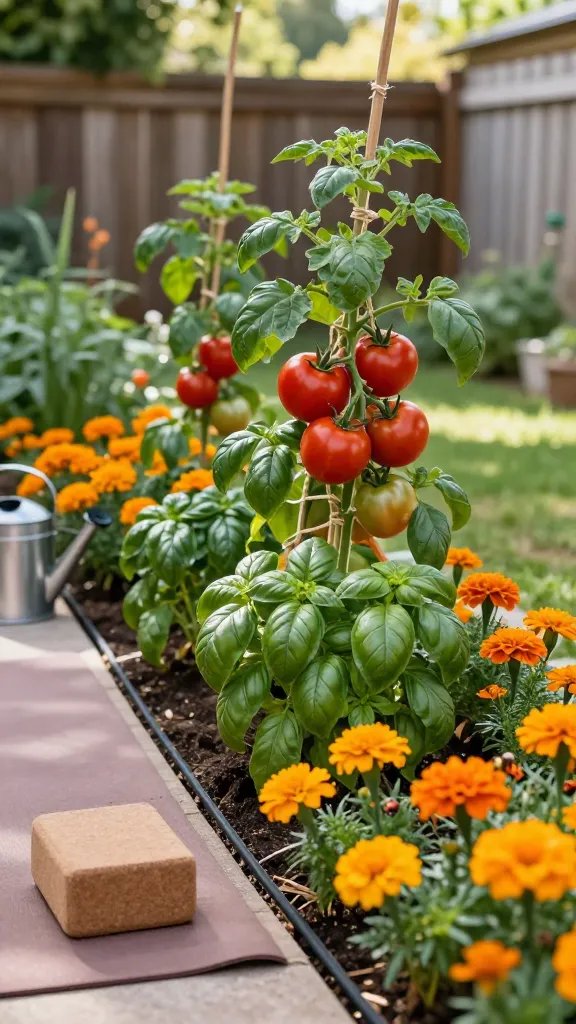
For a practice that feels steady and satisfying, this classic kitchen trio brings big synergy. Basil stimulates the senses, tomatoes nourish, and marigolds defend like tiny golden guardians. It’s the vinyasa of companion planting—harmonious and hardworking.
Planting Game Plan
- Tomatoes anchor the bed; give them sturdy support to climb.
- Basil snuggles nearby to boost tomato flavor and growth.
- Marigolds ring the plot to repel nematodes and attract pollinators.
Water at the base to keep foliage dry. Harvest basil leaves right before class, rub them between your fingers, and inhale—instant alertness. Post-practice, slice a sun-warmed tomato for a quick, balanced snack. Use this trio when you crave routine, rhythm, and a bit of culinary joy.
Quick Tips
- Space tomatoes generously for airflow (FYI, overcrowding = disease drama).
- Choose French marigolds for better nematode control.
- Pinch basil often to prevent flowering and keep leaves sweet.
Great for high-energy flows and athletes needing tasty recovery fuel. This bed works hard so you don’t have to—IMO, it’s a must.
3. The Breathwork Bed: Mint + Chamomile + Lemongrass
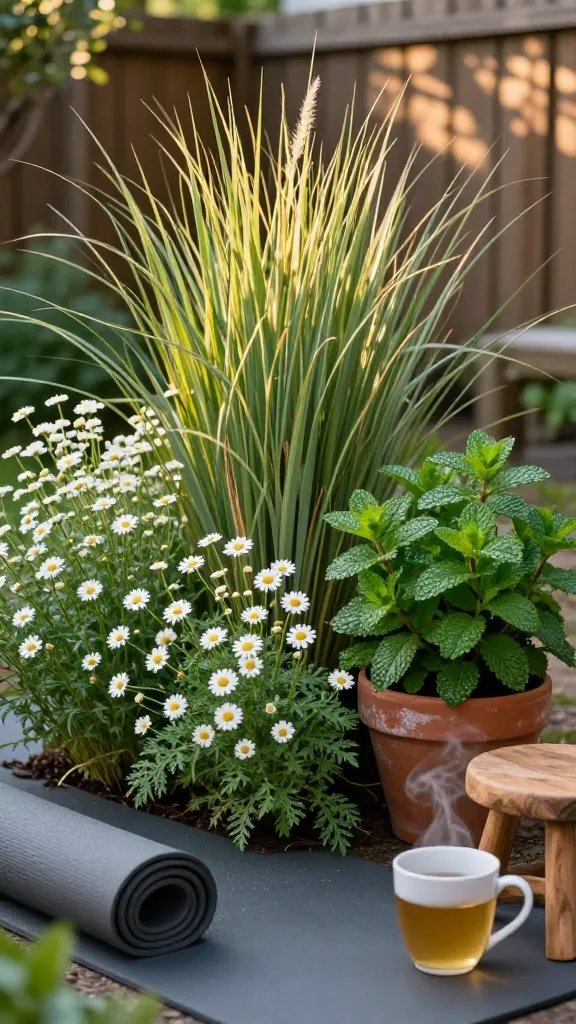
Need a sensory reset? This combo turns a small corner into a perfumed exhale. Mint invigorates, chamomile soothes, and lemongrass opens the senses with bright citrus. Together, they transform your pranayama into a full-body experience.
Arrangement That Makes Sense
- Pot the mint separately (seriously, it spreads like gossip).
- Chamomile fills the gaps as a friendly groundcover.
- Lemongrass stands tall, creating a soft privacy screen.
Snip chamomile flowers for a calming tea before yin or restorative sessions. Crush a lemongrass blade between your fingers for a clean, uplifting scent during breathwork. Use mint post-practice for a refreshing cool-down—leaf in water, instant spa vibes.
Care Notes
- Full sun to partial shade works; keep soil consistently moist but not soggy.
- Fertilize lightly—too much and you’ll get leggy, floppy plants.
- Harvest often to encourage lush, dense growth.
Perfect for early morning flows or evening wind-downs when you want calm clarity without feeling sleepy.
4. The Strong-But-Soft Set: Rosemary + Thyme + Oregano
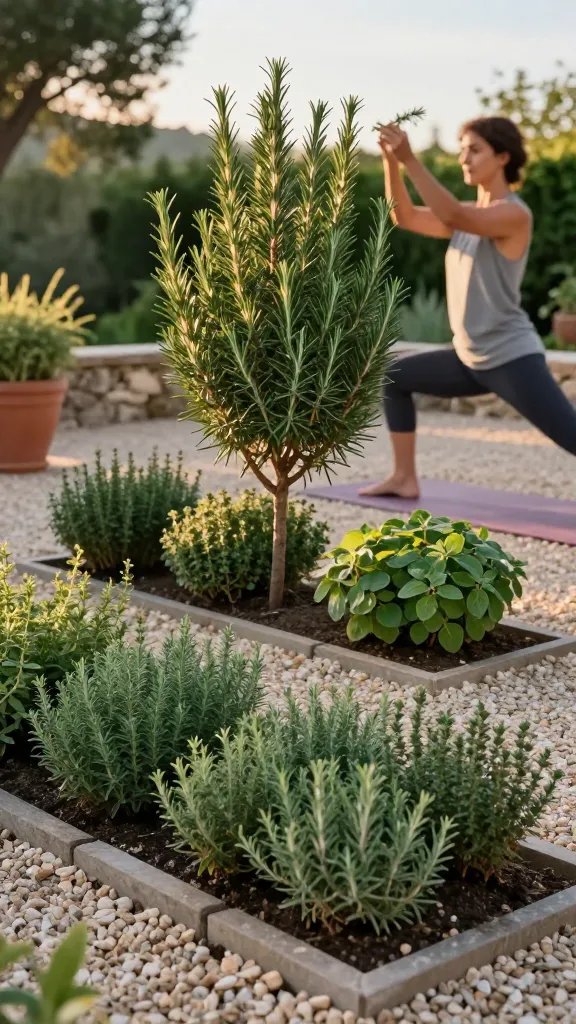
If your practice leans toward strength and resilience, plant this Mediterranean power squad. Rosemary boosts memory and confidence, thyme steadies the mood, and oregano warms the body. They thrive on neglect and reward you with heady aromas every time you brush by.
Design For Easy Wins
- Gravelly, well-drained soil keeps roots happy and healthy.
- Plant thyme at the edges to cascade and soften hard borders.
- Keep rosemary as a focal shrub; prune lightly to shape.
Rub a sprig of rosemary before inversions for a sharp mental wake-up. Sprinkle fresh thyme on post-practice avocado toast—tiny leaves, big flavor. Oregano shines in warm tea with honey when your throat feels scratchy after breathwork.
Maintenance Made Simple
- Full sun is non-negotiable—these are sun worshippers.
- Water deeply but infrequently; let soil dry between drinks.
- Trim lightly to prevent woody stems and encourage new growth.
Use this set when you want sustainable intensity—build heat, hold shape, and stay focused without burning out.
5. The Calm-And-Courage Patch: Calendula + Nasturtium + Kale
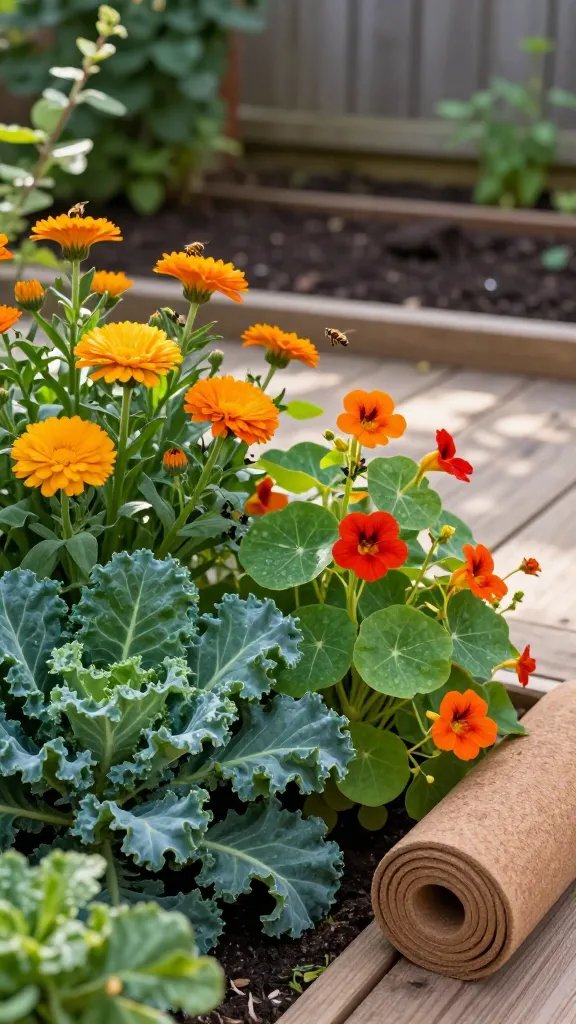
Yes, kale belongs in your yoga garden. This trio brings bright petals, peppery leaves, and nutrient-dense greens—aka confidence on a plate. Calendula soothes, nasturtiums repel pests and add zip, and kale anchors everything with sturdy, reliable growth.
Companion Magic
- Calendula attracts beneficial insects and offers skin-loving petals.
- Nasturtium acts as a trap crop for aphids and adds edible color.
- Kale appreciates the pest break and partial shade from taller neighbors.
Pick a few nasturtium blossoms for your water bottle—subtle spice, major style. Calendula petals make a beautiful salve for post-practice knee scrapes. Harvest kale after class for a quick sauté with garlic and lemon—body thanks you later.
Growing Notes
- Cooler temps bring sweeter kale; partial shade helps in hot regions.
- Deadhead calendula to keep blooms coming.
- Let nasturtiums trail over edges for a whimsical, low-maintenance vibe.
Reach for this patch when you want nourishing comfort and a little courage before trying a new pose. It’s cheerful, practical, and surprisingly elegant—trust me.
There you go: five mindful plant combos that support your practice and your plate. Start with one bed or mix and match to fit your space—even a balcony can handle these. Roll out your mat between the herbs, breathe deep, and let your garden cue the calm. You’ll never look at savasana—or salad—the same way again.