
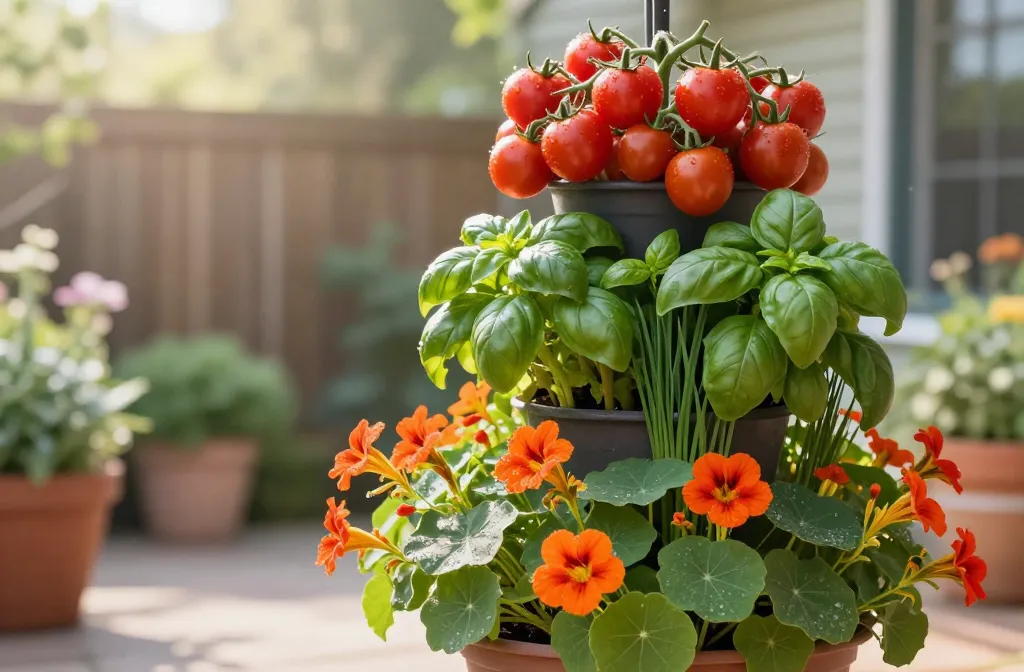
Ready to turn your tower planter into a compact, flavor-packed jungle? These combo stacks squeeze more harvest, fewer pests, and nonstop color into a tiny footprint. We’re talking smart plant roommates that support each other while you sit back and snack. Let’s build five vertical “recipes” you can copy right now—no guesswork, just good vibes and great yields.
1. The Salsa Stack: Tomatoes, Basil, Nasturtiums, And Chives
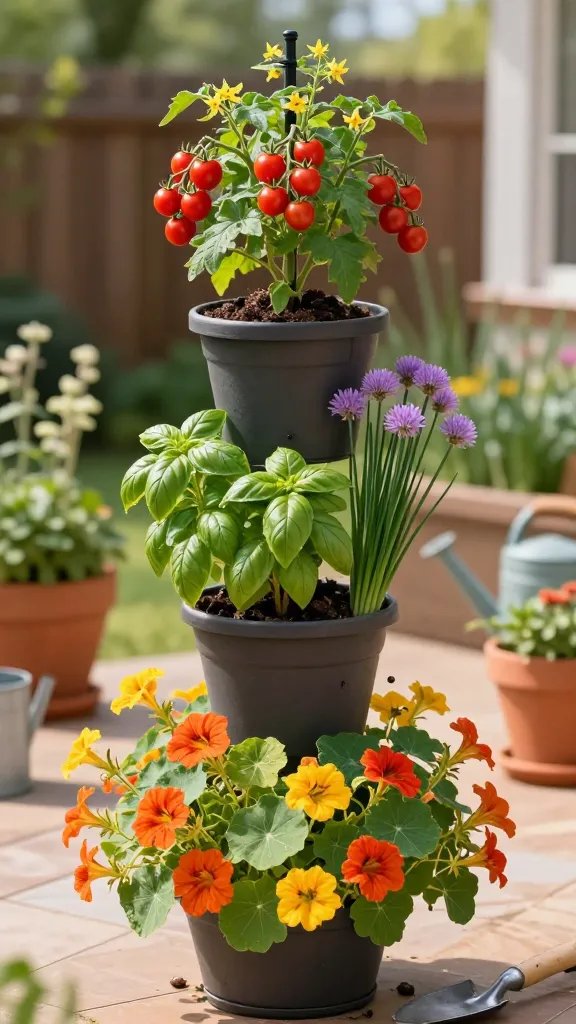
This stack nails flavor and pest control while using every inch of vertical space. Tomatoes own the top where the sun hits hardest, while basil and chives boost taste and repel pests. Nasturtiums cascade down the sides and snag aphids like magnets—cute and useful.
How To Stack It
- Top tier: Compact cherry tomato (e.g., ‘Tumbler’, ‘Tiny Tim’)
- Mid tiers: Genovese or Thai basil + chives
- Lower tiers/edges: Trailing nasturtiums (edible flowers!)
Tomatoes sip more water and nutrients, so place them near the central reservoir if your tower has one. Basil likes consistent moisture, chives can handle occasional dryness, and nasturtiums forgive your Sunday naps.
Tips
- Prune tomato suckers weekly to prevent shade overload.
- Pick nasturtium leaves for peppery salads and to reduce aphid condos.
- Fertilize with a balanced organic feed every 10–14 days; tomatoes are hungry.
End result: pizza-night herbs, snackable tomatoes, and fewer pests—without adding a single square foot.
2. The Pollinator Fountain: Strawberries, Thyme, Alyssum, And Calendula
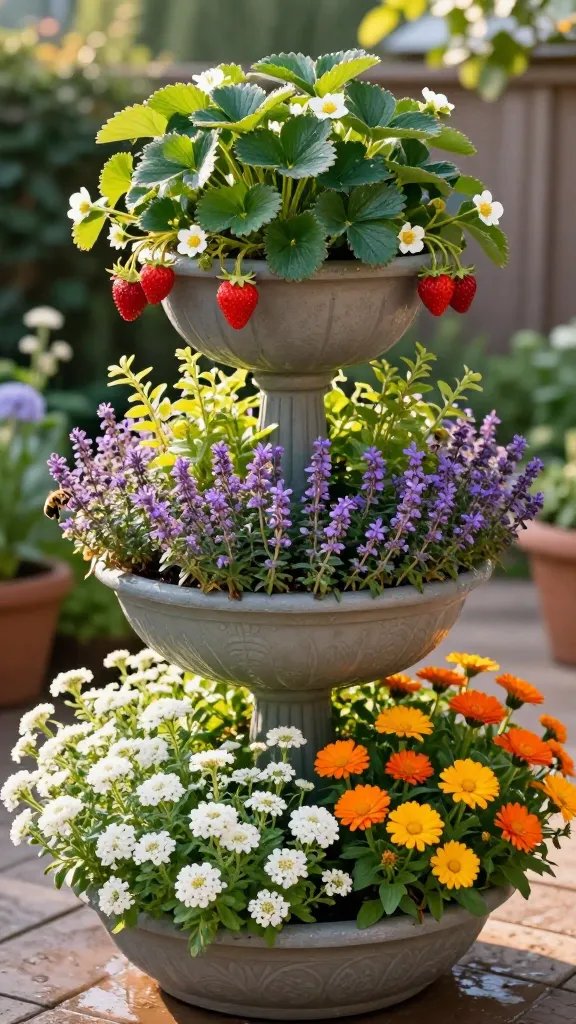
Want fruit and flowers that practically pour over the sides? This combination attracts pollinators, covers bare pockets, and smells like a summer farmers market. It’s low-fuss and ridiculously pretty.
How To Stack It
- Top tier: Day-neutral strawberries (e.g., ‘Albion’, ‘Seascape’)
- Mid tiers: Creeping thyme (lemon or common)
- Lower tiers/edges: Sweet alyssum + calendula for a floral skirt
Strawberries love sun, steady moisture, and good drainage. Thyme stays compact and brings in bees. Alyssum flowers nonstop and suppresses weeds, while calendula draws beneficial insects and gives you petals for salves or garnish.
Care Notes
- Water evenly; strawberries hate wet feet but need consistency.
- Trim runners if you want bigger berries rather than more plants.
- Deadhead calendula and alyssum to keep blooms pumping.
Use this when you want steady snacking and buzzing pollinator traffic without high maintenance. FYI: it smells like a bakery in the best way.
3. The Curry-Ready Green Machine: Kale, Dill, Cilantro, And Marigolds
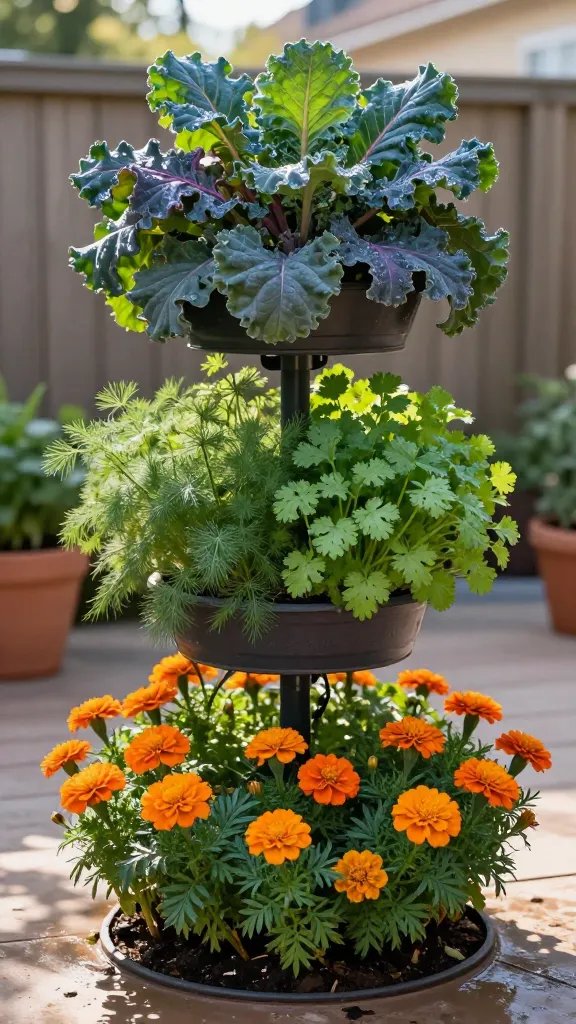
Greens plus aromatics equals all-you-can-eat flavor with built-in pest patrol. Kale anchors the structure and thrives in cooler temps, while dill and cilantro give lift and perfume. Marigolds help keep nematodes and bad bugs in check—like little floral bouncers.
How To Stack It
- Top tier: Tender kale (e.g., ‘Lacinato’, ‘Red Russian’)
- Mid tiers: Dill on one side, cilantro on the other
- Lower tiers: French marigolds (compact varieties)
Kale likes generous moisture and a touch of afternoon shade in hot climates. Cilantro bolts fast in heat, so let dill cast light shade or succession-plant cilantro every 3–4 weeks. Marigolds flower fast, feed pollinators, and look like sunshine.
Quick Wins
- Harvest kale lower leaves first to keep air moving.
- Let one dill plant flower—beneficial wasps love it.
- Snip cilantro often to delay bolting; or embrace it and collect coriander seeds.
Perfect for shoulder seasons and for anyone who loves a quick herb-and-greens harvest. IMO, this is the easiest tower to keep looking lush.
4. The Mediterranean Mezze: Eggplant, Oregano, Parsley, And Petunias

Craving smoky eggplant dips and herb-packed salads? This sun-worshipping combo balances one heavy feeder with tough, flavorful understudies. Petunias bring cheerful color and can distract pests—plus they tumble beautifully.
How To Stack It
- Top tier: Dwarf eggplant (e.g., ‘Patio Baby’)
- Mid tiers: Oregano (creeping or Greek) + flat-leaf parsley
- Lower tiers: Trailing petunias (or calibrachoa for smaller pockets)
Eggplant wants heat, full sun, and consistent moisture with excellent drainage. Oregano tolerates drier pockets and perfumes the whole tower. Parsley fills in shady nooks as eggplant leaves expand, staying lush and useful.
Pro Moves
- Mulch the top pocket to hold moisture for eggplant.
- Fertilize lightly but regularly; eggplant will hog nutrients.
- Pinch petunias monthly for bushy cascades and more blooms.
Use this when summer hits and you want a Mediterranean vibe—grill nights, here you come. Seriously, the colors slap.
5. The Cool-Weather Power Lunch: Lettuce, Radishes, Green Onions, And Pansies
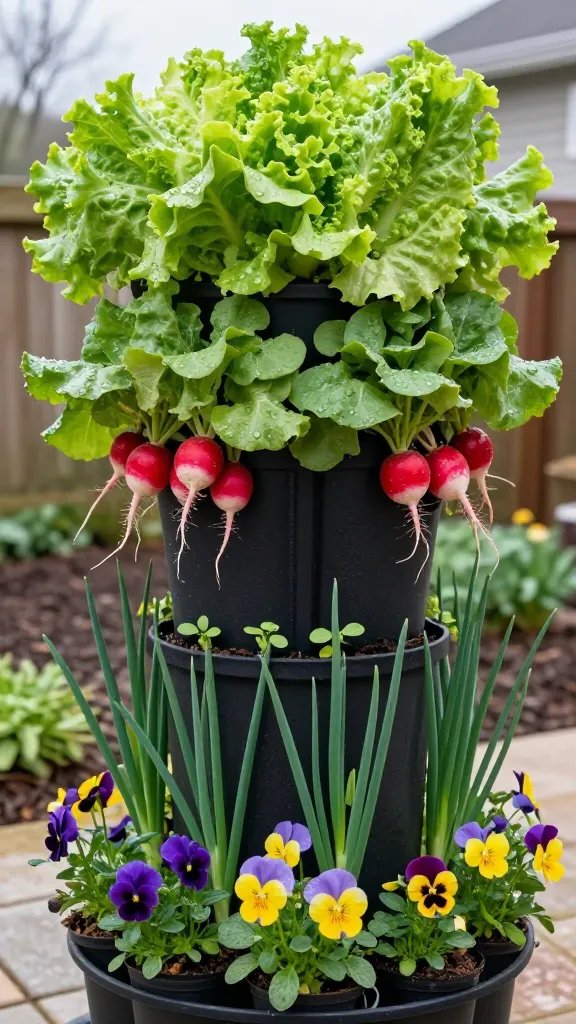
This combo grows fast, looks adorable, and keeps salads interesting. Lettuce blankets the tower, radishes fill gaps and mature in weeks, and green onions thread between everything. Pansies add edible petals and tolerate chilly mornings like champs.
How To Stack It
- Top tier: Loose-leaf lettuce mix or mini romaine
- Mid tiers: Radishes tucked into corners (e.g., ‘French Breakfast’)
- Lower tiers: Green onions + pansies for color and garnish
Short roots and quick turnover make this a beginner-friendly stack. Radishes loosen soil for lettuce roots. Green onions mind their business and give steady flavor boosts.
Grower Notes
- Water lightly but often; shallow roots dry fast.
- Reseed radishes every 2 weeks for continuous crunch.
- Harvest outer lettuce leaves to keep the party going.
Ideal for spring and fall—or shady summer balconies. You’ll feel like a salad bar CEO.
Tower Planting Fundamentals (Read This Before You Stack)
- Match sun to crop: Fruiting plants on top or south-facing pockets; leafy and herbs on shadier sides.
- Water smart: Top tiers dry out first; add drip spikes or water from the top until runoff.
- Stagger root depths: Pair shallow-rooted herbs with deeper-rooted fruiting crops to avoid resource battles.
- Feed consistently: Small soil volume = nutrients vanish fast. Use slow-release granules plus light weekly liquid feed.
- Prune for airflow: Towers trap humidity. Remove crowded leaves to dodge mildew and aphids.
- Rotate seasonally: Swap summer divas (tomatoes, eggplant) with cool-season pros (lettuce, kale) to keep yields rolling.
Common Problems And Easy Fixes
- Leggy growth? Not enough sun—rotate the tower or elevate it.
- Uneven watering? Add coco coir to your mix and mulch the top pocket.
- Aphids or whiteflies? Blast with water, then apply diluted neem or insecticidal soap at dusk.
- Blossom drop on tomatoes? Heat stress—add shade cloth during peak afternoon sun.
Soil And Setup (Quick Start)
- Mix: 60% high-quality potting mix, 30% compost, 10% coco coir or perlite for drainage.
- pH target: 6.0–6.8 for mixed veggies and herbs.
- Starter feed: A gentle, organic 4-4-4 at planting, then supplemental liquid feed as needed.
- Spacing: One main hog per side (tomato/eggplant), fill with two to three companions.
When To Use Each Stack
- Salsa Stack: Peak summer, full sun, flavor-obsessed gardeners.
- Pollinator Fountain: Balcony beauty + berries for snacking and cocktails.
- Green Machine: Spring/fall, cool nights, fast greens and herbs.
- Mediterranean Mezze: Hot climates, patio parties, grill season.
- Power Lunch: Quick harvests, partial sun, kid-friendly crunch.
That’s your vertical game plan. Pick one stack and plant it this weekend—then mix and match once you feel unstoppable. Your tower is about to become the most productive square foot on your property, trust me. Happy stacking and happy snacking!