

Think your garden is just for looks? Nah—make it a soundtrack. With the right plants, your backyard can whisper, click, rattle, and hum every time the wind rolls through. We’re talking shimmery foliage, seedpods that chatter, and stems that strum like nature’s wind chimes. Ready to plant a playlist?
Below are five themed plant pairings that turn breezes into music. Each combo blends texture, movement, and subtle sound, so you get a garden that’s both gorgeous and gloriously noisy—in the best way.
1. The Silver Shimmer Duet: Quaking Aspen + Russian Sage

Want instant ASMR every time the wind picks up? Pair a quaking aspen with airy Russian sage. The aspen’s tiny, round leaves tremble at the slightest breeze, while Russian sage adds a soft, dry rustle and a haze of purple-blue blooms.
Why It Works
- Movement + Sound: Aspen leaves flutter like confetti, creating a delicate, high-frequency rustle.
- Textural Contrast: Russian sage brings wispy stems and a faint, papery swish.
- Color Vibes: Silvery foliage plays beautifully with lavender flowers—chef’s kiss.
Plant the aspen as your anchor and flank it with a drift of Russian sage. Give the aspen room—those roots spread—while the sage thrives in full sun and lean soil. Add a bench nearby so you can actually sit and listen (novel idea, right?).
Best for: Sunny edges, modern-meets-natural gardens, and anyone who loves soft, continuous rustling.
2. The Beach-Wind Chorus: Bamboo + Feather Reed Grass
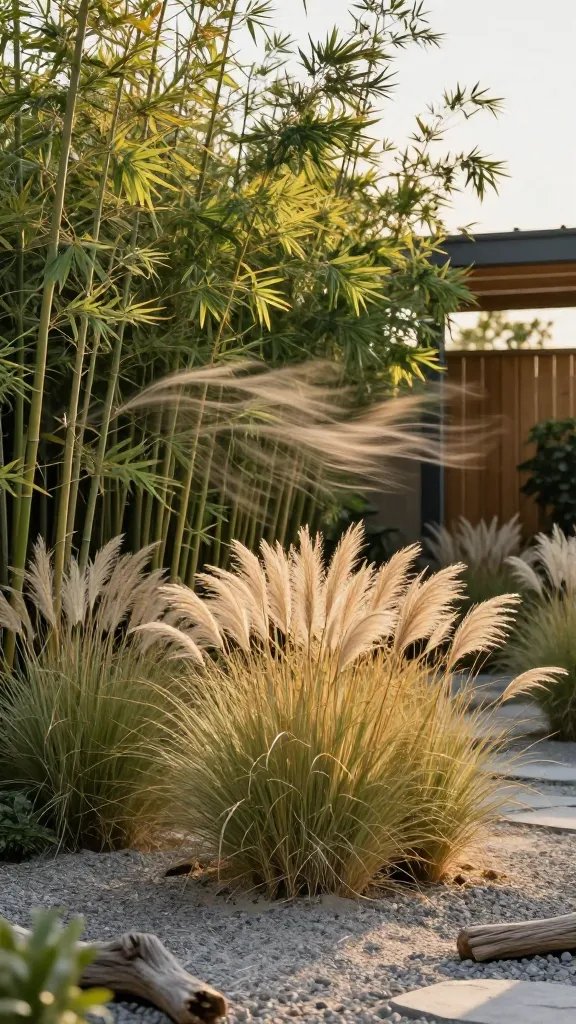
Crave that coastal dune sound without living near a beach? Go for clumping bamboo and feather reed grass. You get bamboo’s hollow canes clicking and sighing, with the grass adding a silky, rhythmic whisper.
Tips For A Non-Chaotic Jungle
- Choose Clumping Bamboo: Fargesia species won’t invade your neighbor’s yard (FYI, running bamboo will).
- Layer Heights: Taller bamboo at the back, ‘Karl Foerster’ feather reed grass in front for vertical sways.
- Wind Corridor: Leave a breezeway between structures to amplify the sound.
This pairing looks sleek and architectural, but still wild enough to feel alive. The bamboo’s gentle clicks sound almost percussive, and the grass plays the constant hush underneath—like a natural white-noise machine you don’t have to plug in.
Best for: Narrow side yards, privacy screens that double as soundscapes, and minimalist designs that still want personality.
3. The Seedpod Rhythm Section: Honesty (Lunaria) + Nigella (Love-in-a-Mist)
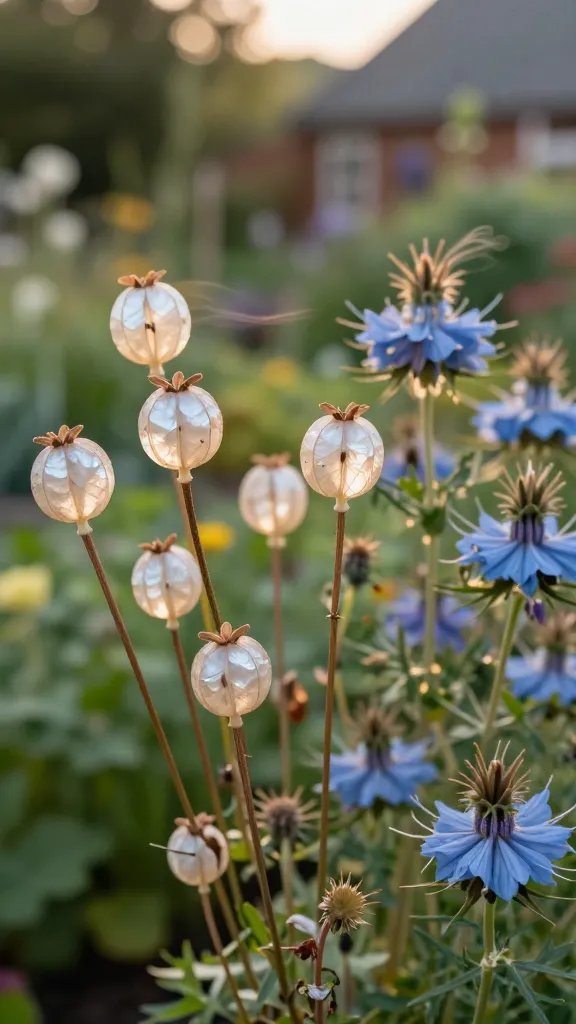
Ready for a little garden percussion? Plant honesty and nigella together for a late-season rattle that’s oddly addictive. Their papery seedpods dry into translucent coins (honesty) and sculptural pods (nigella) that tap and rustle with every breeze.
Key Points
- Self-Seeders: Both will reseed if you let them, creating an evolving, musical border year after year.
- Textural Drama: Feathery nigella foliage plus honesty’s tall, coin-like pods = instant intrigue.
- Sound Quality: Think gentle clacking and crisp whispers—subtle but distinct.
Sow in spring for summer bloom and fall seedpods. Leave the stems standing through autumn for maximum music, and harvest a few for dried arrangements—those pods look incredible indoors and still make a faint tick if the window’s open.
Best for: Cottage gardens, low-maintenance borders, and anyone who appreciates a little clatter with their color.
4. The Dusky Dune Ensemble: Switchgrass + Little Bluestem + Purple Love Grass

If you want your garden to sound like twilight on the prairie, this trio brings the vibe. These native grasses move in layers—switchgrass sways steadily, little bluestem flickers, and purple love grass adds a soft, velvety hiss.
Planting Notes
- Spacing: Group in drifts—3 to 5 of each—to create a united “whoosh” instead of random whispers.
- Seasonal Color: Little bluestem blushes copper in fall, while purple love grass throws a rosy mist late summer.
- Wildlife Bonus: Seedheads feed birds; the swish scares off exactly zero pollinators—win/win.
These grasses thrive in full sun and lean, well-drained soil. They don’t need fussing, which IMO makes them perfect for folks who want high sensory impact without babysitting. Add a gravel path through the planting so footsteps layer in a crunchy backbeat.
Best for: Naturalistic plantings, low-water landscapes, and sunset listeners who like their gardens moody but chill.
5. The Aromatic Soundtrack: Rosemary + Bay Laurel + Olive (With Chimes Optional)
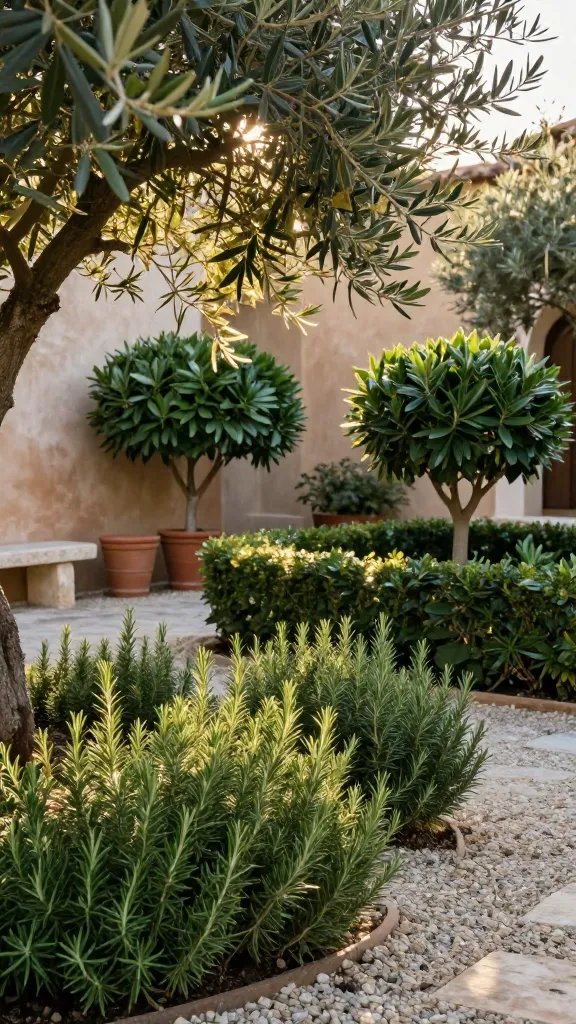
Some gardens smell like music—this one sounds like it, too. Stiff, evergreen leaves of rosemary and bay make a soft, leathery rustle, while olive trees add a gentle flutter and light tap when branches touch.
How To Set The Scene
- Structure + Scent: Use bay as clipped forms, rosemary as billowy edging, and olive as an airy canopy.
- Microclimate: Full sun, excellent drainage, and a warm wall or courtyard if winters bite.
- Sound Booster: Place a small metal wind chime deeper in the planting so the foliage filters the tone.
This combo shines near seating, grills, and patios. Brush past the rosemary and bay to release scent, then listen as the olive leaves answer with a papery flutter. It’s like a backyard aperitivo hour on loop—seriously soothing.
Best for: Mediterranean-style patios, edible landscapes, and anyone who wants fragrance, flavor, and a gentle soundscape in one go.
Ready to build your botanical band? Start with one pairing, then layer in more textures as you go. The magic happens when you hear that first breeze turn into a melody—proof your garden doesn’t just look alive, it sounds alive. Now grab a trowel and cue the wind—your sound garden awaits.