
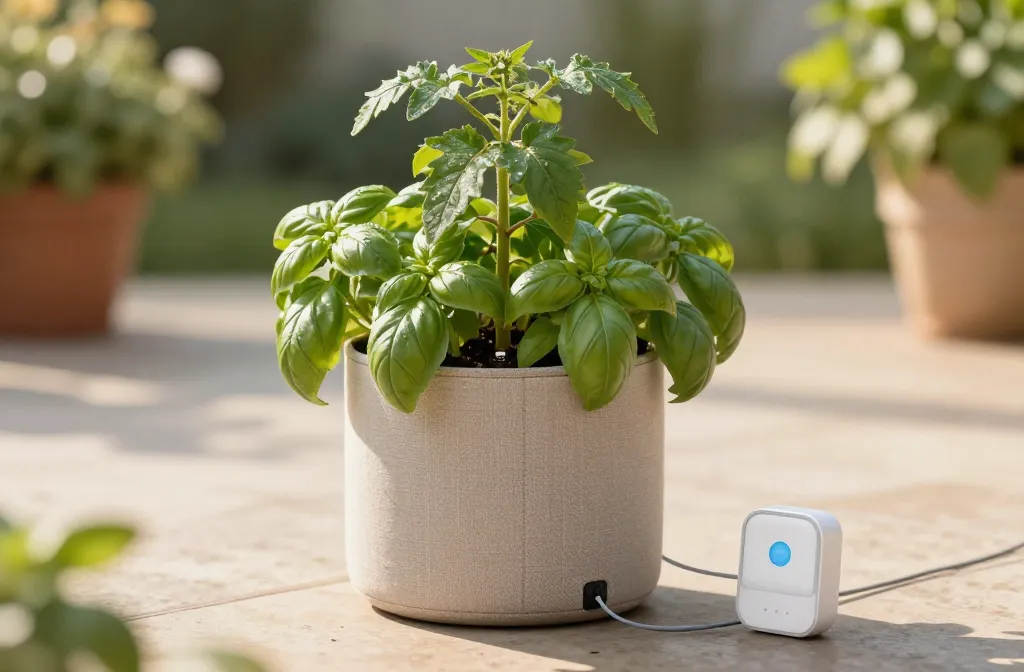
Your containers can do more than just look cute on the patio. Pair the right plants and add a sprinkle of smart tech, and boom—bigger harvests, fewer pests, and less guesswork. We’re talking sensor-savvy, app-guided, data-fueled combos that actually work in small spaces. Ready to turn your smart pots into tiny, high-performing ecosystems?
1. Basil + Tomatoes With Sensor-Driven Watering
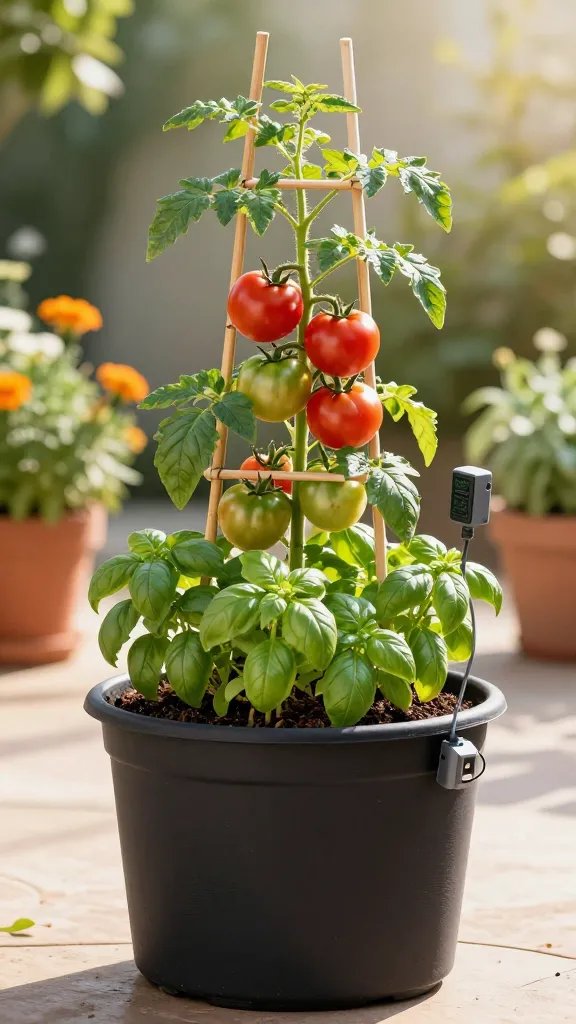
The classic Italian duo gets a 2026 upgrade. Basil can repel pests like thrips and improve tomato flavor, while tomatoes throw shade that keeps basil from bolting. Add a moisture sensor and you’ll never overwater and split your tomatoes again.
Why It Works
- Basil deters pests (and boosts flavor—fight me on this).
- Tomato foliage gives basil just enough shade in summer.
- Moisture sensors prevent water stress that ruins fruit quality.
Setup Tips
- Use a 15–20 gallon fabric smart pot for airflow and root health.
- Place one indeterminate tomato in the center; ring the base with 3–4 basil plants.
- Install a Bluetooth soil moisture probe at 4–6 inches deep and connect to a drip emitter on a smart timer.
- Target moisture: keep the top 2 inches slightly dry, but the mid-root zone evenly moist.
Use this when you want caprese-level flavor, healthy foliage, and fuss-free watering automation.
2. Peppers + Marigolds + Chives With App-Guided Pest Control
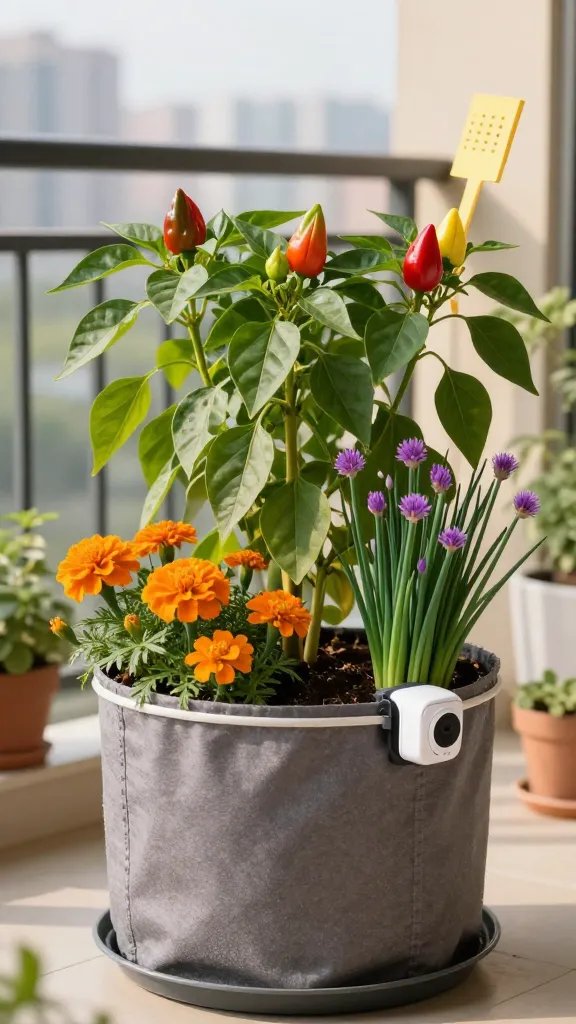
Peppers love company that fends off aphids and nematodes. Marigolds pull double duty underground, while chives repel leaf-munchers and look adorable. Pair the trio with a camera or sticky trap tracker, and you’ll catch outbreaks before they explode.
Key Points
- Marigolds help reduce soil nematodes in containers and attract beneficials.
- Chives discourage aphids and add edible garnish vibes.
- Smart scouting (camera + app) flags leaf curl, discoloration, and pest spikes fast.
Setup Tips
- Use a 10–15 gallon pot for a pair of peppers; tuck 2–3 marigolds and 2 clumps of chives around the edges.
- Mount a compact outdoor camera or place yellow sticky traps; log photos weekly.
- Run a gentle, low-flow drip ring and schedule a short morning cycle; peppers hate wet feet.
- Set app alerts for heat spikes over 90°F so you can shade cloth ASAP.
Use this when you want spicy harvests without aphid drama, plus pretty flowers your neighbors will compliment.
3. Cucumbers + Dill + Nasturtiums With Trellis Analytics
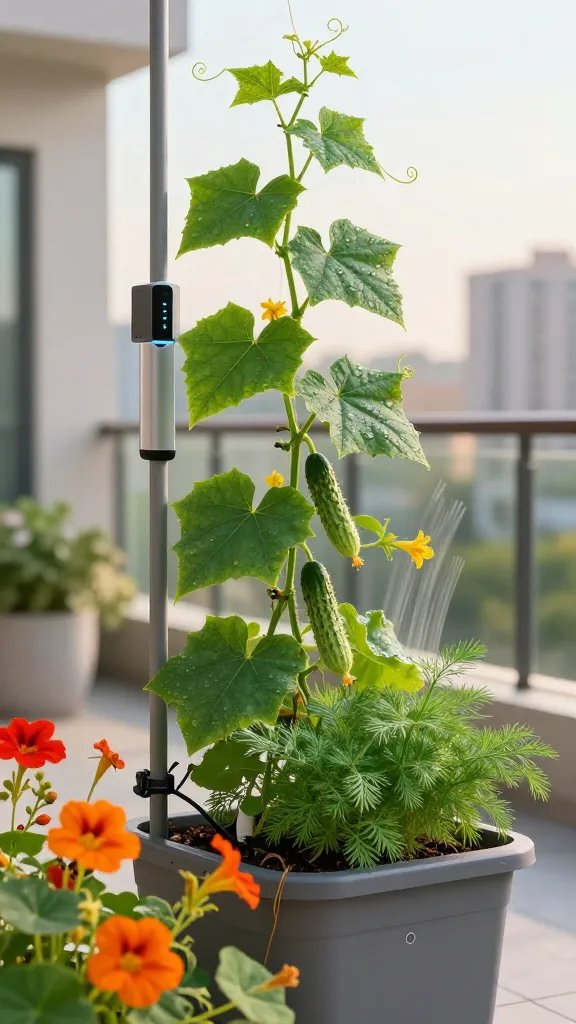
Vining cucumbers turn any patio into a snack bar. Dill attracts parasitic wasps that keep cucumber beetles in check, and nasturtiums act as a flashy trap crop. Add a smart trellis with light and growth tracking, and you’ll know exactly when to prune and harvest.
Why It Works
- Vertical growth boosts airflow and reduces powdery mildew pressure.
- Dill lures beneficial predators—your free pest control squad.
- Nasturtiums magnetize aphids away from cucumber vines (and they’re edible!).
Setup Tips
- Choose a 20–25 gallon smart pot with a sturdy 5–6 ft trellis.
- Plant 1–2 cucumber starts; sow dill at the back and nasturtiums around the front edge.
- Clip a small light/temperature sensor to the trellis; track sunlight hours and heat stress days in your app.
- When you log three consecutive days over 85°F, add mid-day shade and increase morning watering slightly.
Use this when you want crisp cucumbers, cheerful blooms, and data-backed pruning and watering decisions. FYI: You’ll snack every time you walk by.
4. Carrots + Radishes + Scallions With Predictive Harvest Timing
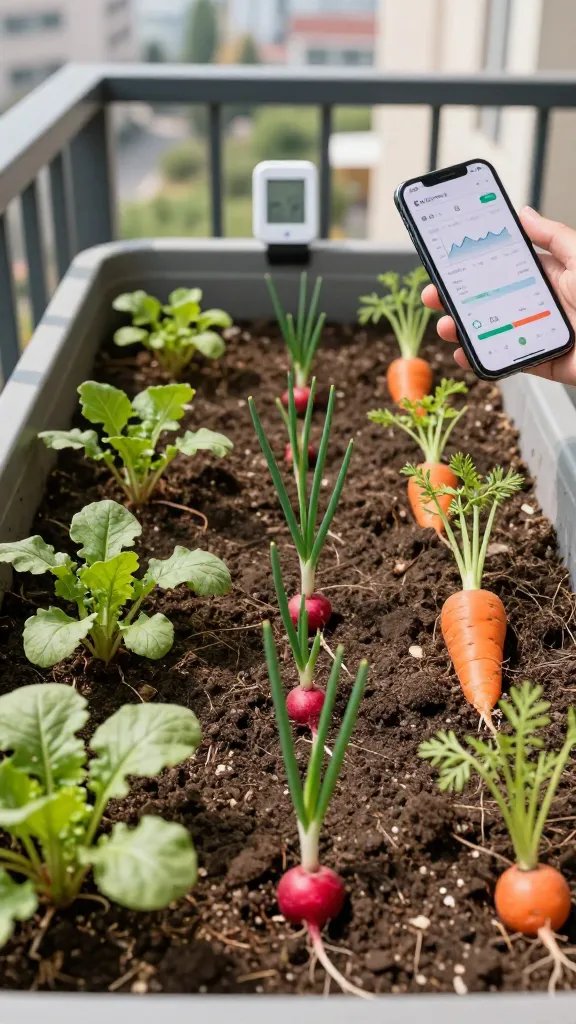
Root crops can thrive in containers if you manage spacing and moisture. Radishes loosen soil for carrots, and scallions tuck in without hogging resources. Use a growth-tracking app and a simple temperature logger to nail harvest windows like a pro.
Key Points
- Radishes sprout fast, breaking crust and aerating for carrots.
- Scallions take vertical space and help deter carrot flies.
- Thermal time tracking predicts harvest readiness accurately.
Setup Tips
- Use a 10–15 gallon pot at least 12 inches deep with fluffy, sifted mix.
- Sow a ring of radishes and scallions, then a centered patch of carrots.
- Place a small temp sensor (or use local station data) to calculate growing degree days (GDD).
- Keep surface evenly moist with a micro-mister; carrots hate dry crusts.
When To Harvest
- Radishes: 25–35 days once roots firm up at thumb width.
- Carrots: 600–800 GDD after emergence, depending on variety—check shoulders for color.
- Scallions: Anytime once pencil-thick; snip outer ones first.
Use this when you want crunchy, perfectly timed roots without guesswork. Seriously, no more woody carrots.
5. Strawberries + Thyme + Lettuce With Climate-Smart Scheduling
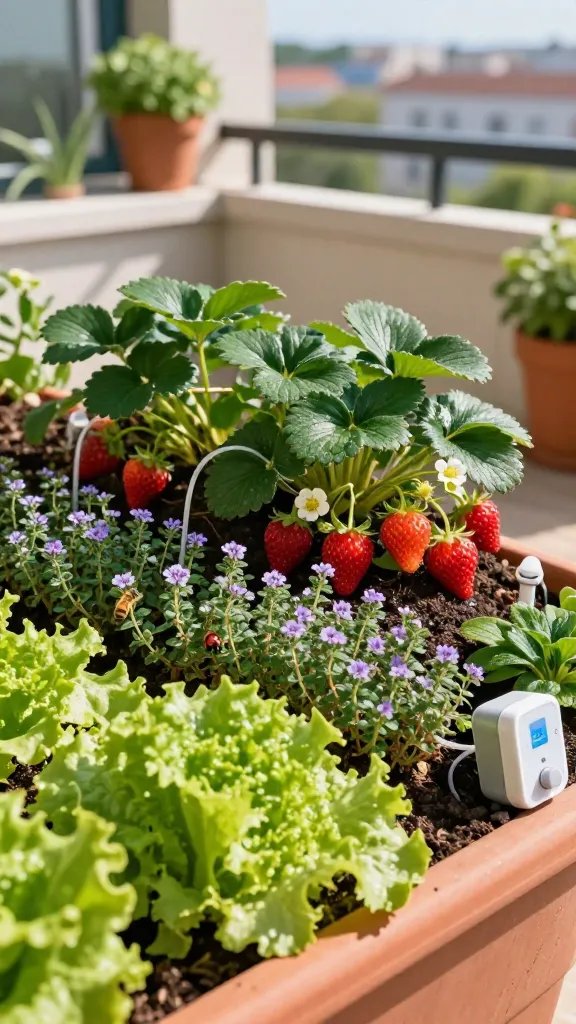
Mix a fruit, a herb, and a leafy green for a container that looks like a tiny edible meadow. Strawberries adore consistent moisture, thyme hates soggy roots, and lettuce bolts when cooked by noon sun. Smart scheduling lets you juggle everybody’s mood swings gracefully.
Why It Works
- Thyme creeps and suppresses weeds while inviting pollinators.
- Lettuce acts as a living mulch that shades soil for strawberries.
- Programmable irrigation delivers precise water where and when each plant needs it.
Setup Tips
- Use a 15–20 gallon pot with a multi-outlet drip manifold.
- Plant 3–4 strawberry crowns evenly spaced, tuck thyme along the rim, and slot 2–3 lettuce starts between berries.
- Program two daily micro-cycles for strawberries in heat; give thyme a separate, lighter line.
- Add a light sensor to trigger afternoon shade cloth if sunlight exceeds 9–10 hours during heatwaves.
Pro Moves
- Run a pollinator-friendly schedule: water early morning so flowers stay dry during bee hours.
- Set a weekly reminder to rotate the pot 90° for even berry ripening.
Use this when you want sweet berries, fresh salad leaves, and a container that looks designer-level gorgeous. IMO, this combo wins the patio beauty contest.
Ready to play garden Tetris with brains and beauty? Pair plants that help each other, then let sensors and apps handle the nerdy stuff. You’ll harvest more, stress less, and maybe flex your smart pots on your group chat—no judgment here, trust me.